











Parrots are incredibly diverse birds found across the world, each with unique colors, behaviors, and care needs. To help you understand these fascinating creatures, this guide highlights 20 popular parrot species, covering their identification, natural habitats, behaviors, diet, and lifecycles. Whether you’re a bird enthusiast or a new parrot owner, this overview offers valuable insights into their characteristics and long-term care.
1. African Grey Parrot

The African Grey Parrot is one of the most intelligent and popular companion parrots in the world. Known for their incredible talking ability and long lifespan, they are highly social birds that require mental stimulation, proper diet, and a stable environment. Below is a detailed breakdown of their characteristics.
Identification
- Medium-to-large parrot, typically 12–14 inches long
- Primarily grey feathers with lighter scalloping
- Bright red tail (Congo African Grey) or maroon tail (Timneh African Grey)
- Black beak and pale yellow eyes in adults
- Strong, curved beak and zygodactyl feet (two toes forward, two back)
Habitat
African Greys originate from the rainforests and woodland savannas of central and western Africa. They prefer dense canopy cover where they can forage, nest, and stay protected. In the wild, they often roost in tall trees and gather in large, noisy flocks.
Behaviors
African Grey Parrots are known for their exceptional intelligence and problem-solving abilities. They mimic human speech with remarkable accuracy and understand context better than most parrots. They bond deeply with their owners, may become anxious if left alone frequently, and require enrichment to prevent boredom-related behaviors such as feather plucking.
Diet
Their diet consists of a wide range of foods in the wild, including seeds, nuts, fruits, berries, and leafy vegetation. In captivity, they thrive on a balanced mix of pellets, fresh vegetables, fruits, and occasional nuts. Diet variety is essential for preventing nutritional deficiencies, especially calcium-related issues.
Lifecycle
African Grey Parrots have a long lifecycle. They reach maturity around 4–6 years of age and may live 40–60 years or more with proper care. Breeding pairs typically lay 2–5 eggs and raise their chicks for several weeks before they fledge. Their long life expectancy requires long-term commitment from owners.
2. Blue-and-Gold Macaw
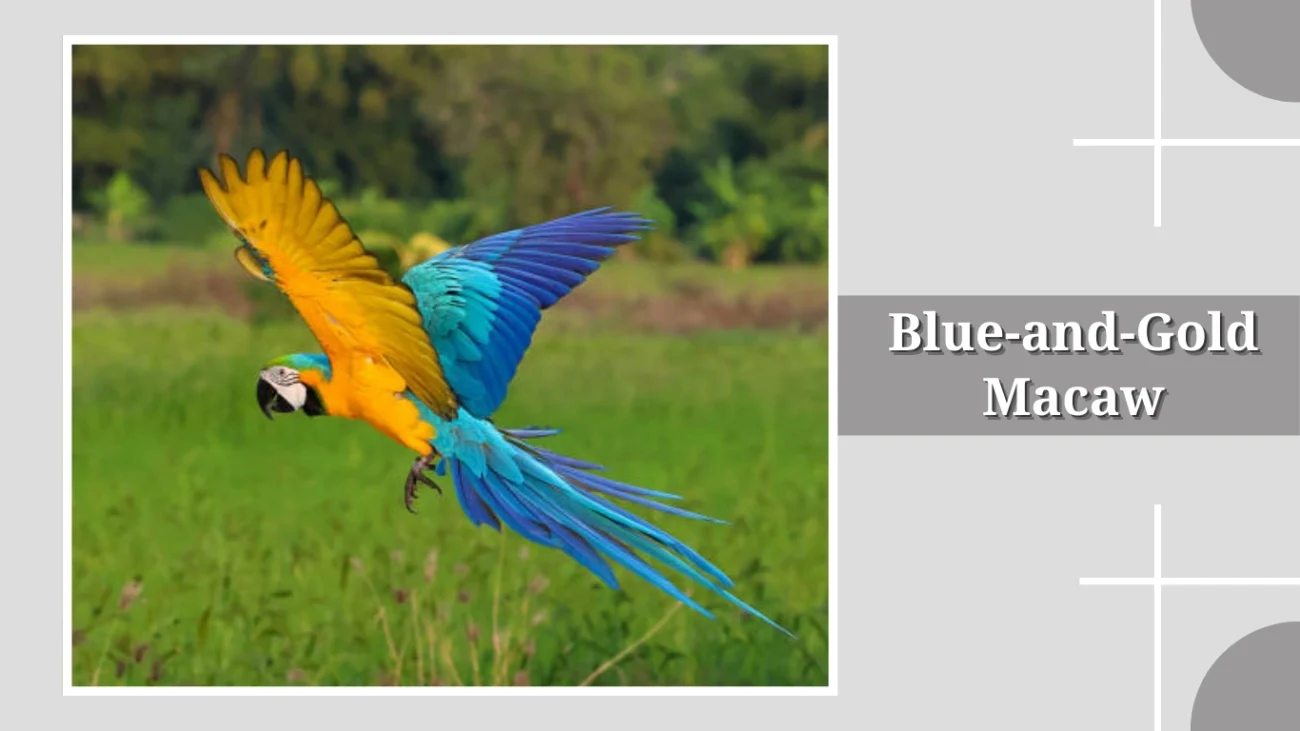
The Blue-and-Gold Macaw is a large, striking parrot known for its vibrant coloring, loud vocalizations, and strong bond with owners. It is highly intelligent and requires ample space, enrichment, and social interaction.
Identification
- Large parrot reaching 30–36 inches
- Bright blue wings and back
- Golden-yellow chest and underparts
- Green forehead and black beak
- White facial patch with black feather lines
Habitat
Native to South American rainforests, they live in tall trees near rivers and swamps, forming small groups or pairs. They prefer areas with abundant fruiting trees and access to large nesting cavities.
Behaviors
Blue-and-Gold Macaws are social, expressive, and highly vocal. They enjoy climbing, chewing, and interacting with people. Their intelligence makes them excellent mimics, but they require regular mental stimulation to prevent destructive behaviors.
Diet
In the wild, they eat fruits, nuts, seeds, leaves, and occasional clay from riverbanks to neutralize toxins. In captivity, a diet of pellets, fresh fruits, vegetables, and limited nuts keeps them healthy.
Lifecycle
These macaws can live 40–50 years or more. They mature at 3–5 years, typically lay 2–3 eggs, and raise their chicks in tree cavities. Long-term care is essential due to their long lifespan.
3. Scarlet Macaw
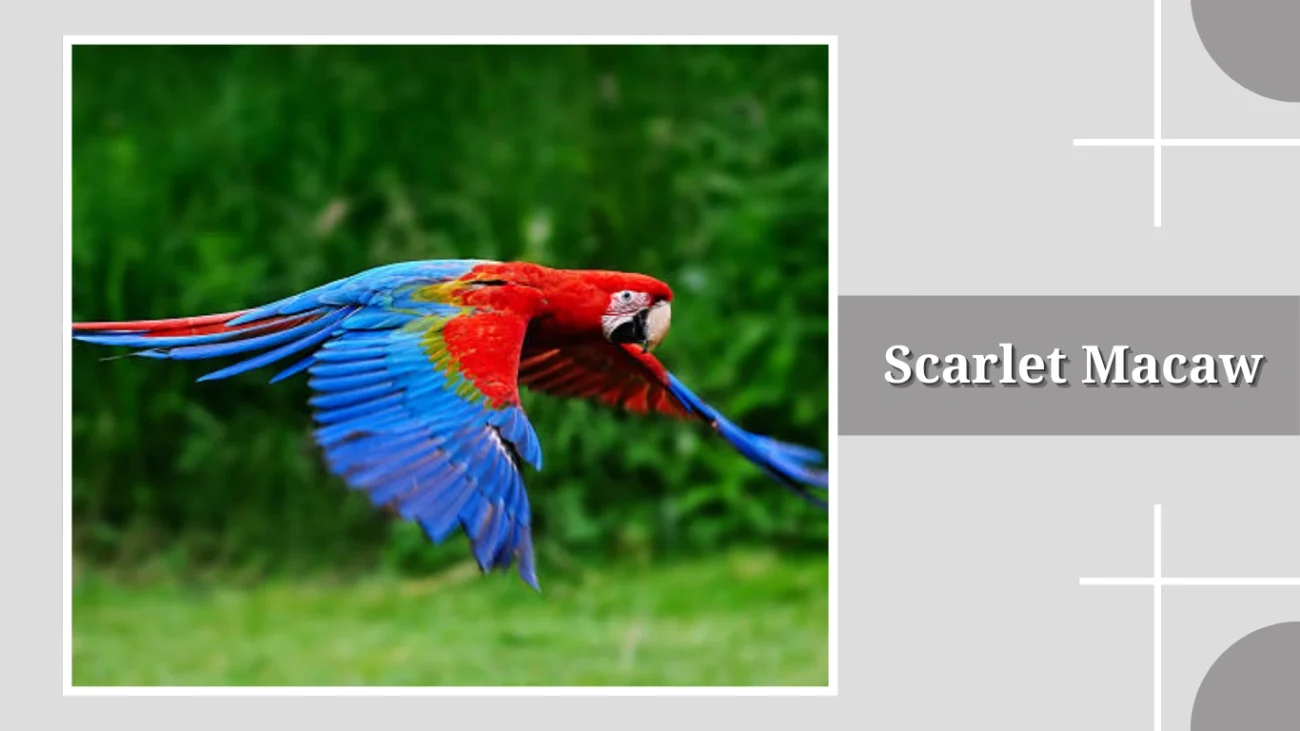
The Scarlet Macaw is a brilliantly colored parrot known for its striking red, yellow, and blue plumage. It is highly social, intelligent, and one of the most iconic macaw species found in Central and South America.
Identification
- Large parrot, 32–36 inches long
- Vibrant red body
- Yellow bands on wings with blue tips
- White facial skin with tiny feather lines
- Strong horn-colored beak
Habitat
Scarlet Macaws inhabit humid lowland rainforests, river edges, and open woodlands. They prefer tall emergent trees for nesting and gathering in flocks, often near fruit-rich areas.
Behaviors
They are energetic, loud, and playful birds with strong social bonds. Scarlet Macaws are excellent fliers and can travel long distances daily. They display strong pair bonding and require significant enrichment when kept in captivity.
Diet
Their wild diet includes fruits, nuts, seeds, flowers, and clay from riverbanks to detoxify plant chemicals. In captivity, they thrive on pellets, fresh produce, and controlled portions of nuts.
Lifecycle
Scarlet Macaws live 40–50 years or more. They mature around 3–4 years, lay 2–3 eggs, and raise their young in deep tree cavities. Their long lifespan and high intelligence demand lifelong commitment.
4. Hyacinth Macaw
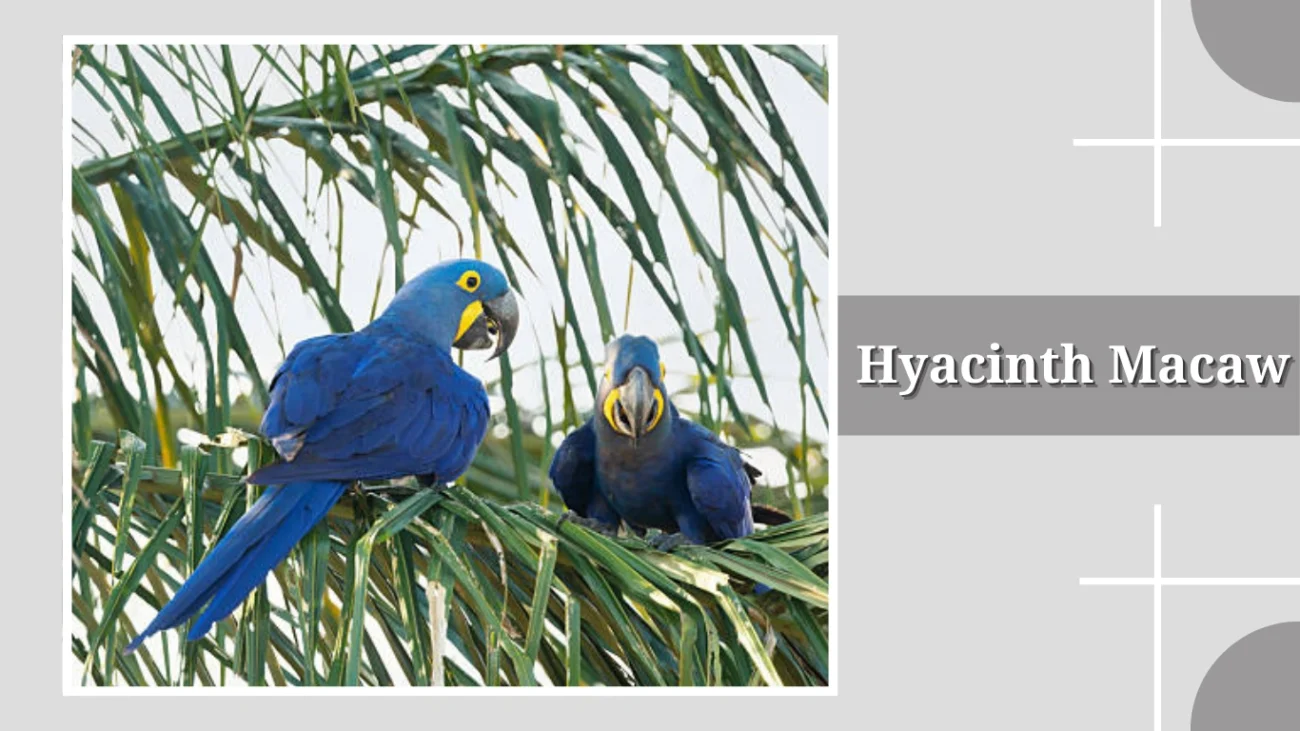
The Hyacinth Macaw is the largest flying parrot species in the world, famous for its cobalt-blue feathers and powerful beak capable of cracking hard nuts.
Identification
- Very large parrot, 40 inches long
- Deep cobalt-blue plumage
- Bright yellow eye ring and chin patch
- Massive black beak
- Long tail and strong flight abilities
Habitat
They inhabit palm-rich areas of Brazil, Bolivia, and Paraguay, including savannas, woodlands, and semi-open forests. Hyacinths rely heavily on specific palm species for both food and nesting.
Behaviors
Hyacinth Macaws are gentle, affectionate, and intelligent. Despite their size, they are known for calm temperaments and strong pair bonds. They require constant stimulation and prefer social interaction.
Diet
In the wild, their diet consists mainly of palm nuts from acuri and bocaiuva palms. In captivity, they need specialized pellets, fresh fruits, vegetables, and high-fat nuts such as macadamias due to their unique nutritional needs.
Lifecycle
They typically live 50–70 years, sometimes longer. They breed slowly, producing only 1–2 chicks every few years. Their long lifespan and specialized care requirements make them a serious responsibility.
5. Amazon Parrot

Amazon parrots are medium-to-large, charismatic birds known for their loud personalities, strong vocal abilities, and vibrant green plumage. They are highly social and require interactive environments to stay mentally healthy.
Identification
- Medium-to-large parrot, 12–18 inches
- Predominantly green plumage
- Colorful markings on head depending on species (yellow, blue, red)
- Strong, curved beak
- Short, rounded tail
Habitat
Amazon parrots live in tropical forests, woodlands, and savannas throughout Central and South America. They prefer nesting in tree hollows and often gather in large, noisy flocks.
Behaviors
These parrots are bold, vocal, and expressive. They love attention and can become excellent talkers. Without proper enrichment, they may develop stubborn or territorial behavior. They thrive on human interaction and mental challenges.
Diet
In the wild, Amazons eat fruits, nuts, seeds, flowers, and leafy vegetation. Captive diets should include pellets, fresh vegetables, fruit, and controlled nuts to prevent obesity—a common issue in this species.
Lifecycle
Amazon parrots live 30–50 years or more. They reach maturity around 4–5 years, lay 2–4 eggs, and raise their chicks in tree cavities. With proper care, many live well into their 60s.
6. Cockatoo

Cockatoos are affectionate, expressive parrots known for their dramatic crests and emotional bonding with humans. They are highly intelligent and require significant interaction and enrichment.
Identification
- Medium-to-large parrot, 12–24 inches
- White, pink, grey, or black plumage depending on species
- Prominent head crest that raises when excited
- Strong, curved beak
- Powdery feathers producing natural dust
Habitat
Cockatoos originate from Australia, Indonesia, and surrounding islands. They inhabit woodlands, rainforests, grasslands, and open bush areas, often forming large social groups.
Behaviors
Cockatoos are extremely affectionate and emotionally sensitive. They bond deeply with caretakers and can become vocal or destructive if lonely. Their intelligence makes them great problem-solvers, but they require constant stimulation to prevent boredom.
Diet
Wild cockatoos eat seeds, nuts, fruits, roots, and blossoms. In captivity, they need pellets, vegetables, fruits, and limited nuts. They are prone to obesity, so fat intake must be controlled carefully.
Lifecycle
Cockatoos have some of the longest lifespans among parrots, commonly living 40–70 years. They mature around 3–7 years and lay 2–3 eggs per clutch. Their deep emotional needs require lifetime dedication.
7. Galah Cockatoo
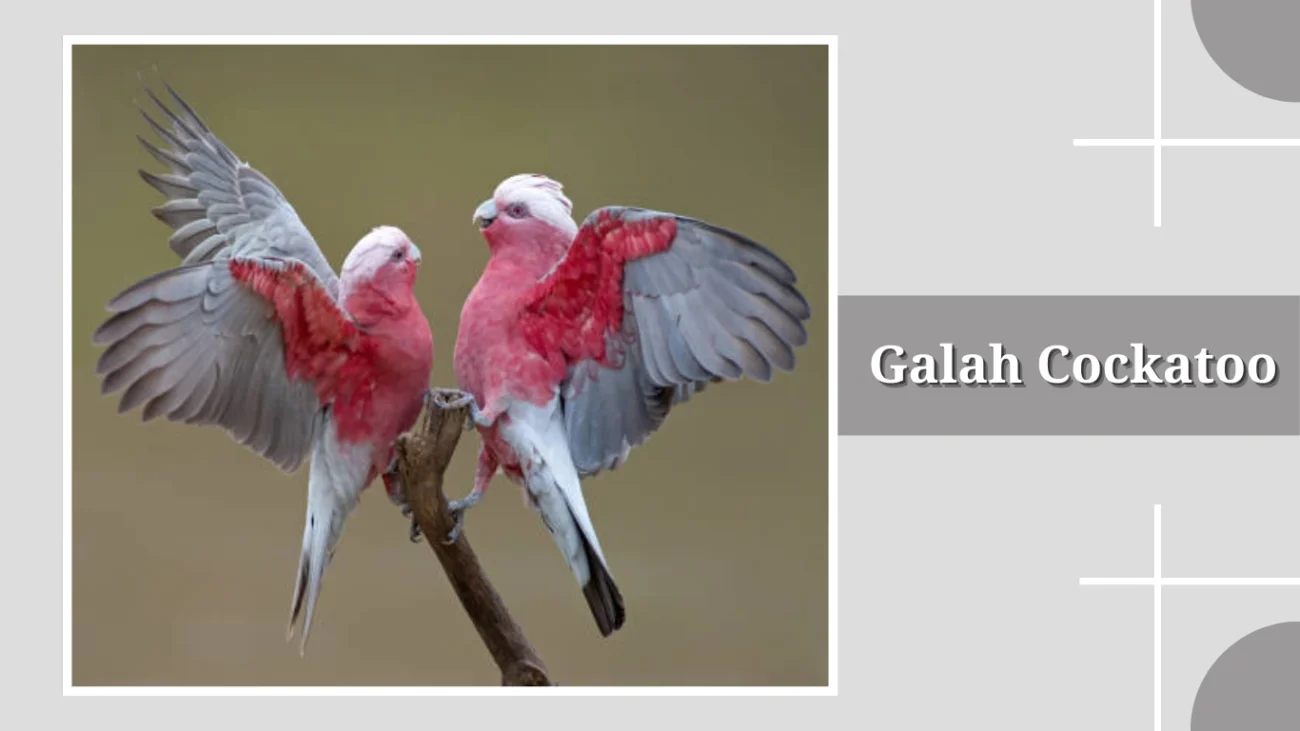
The Galah Cockatoo, also known as the Rose-Breasted Cockatoo, is a highly social and intelligent parrot native to Australia. Its playful nature and striking pink-and-grey coloring make it a popular companion bird.
Identification
- Medium-sized parrot, 12–14 inches
- Pink chest and face
- Soft grey wings and back
- White-to-light pink crest
- Grey beak and pale eye ring
Habitat
Galahs inhabit open grasslands, woodlands, farmlands, and suburban areas across Australia. They form large, noisy flocks and adapt easily to human-modified environments, often seen feeding on the ground.
Behaviors
These cockatoos are energetic, comical, and very social. They enjoy learning tricks and interacting with their flock or owners. Without stimulation, they may become mischievous or develop behavioral issues due to boredom.
Diet
Their natural diet includes seeds, grasses, nuts, berries, and shrubs. In captivity, they require pellets, vegetables, greens, and minimal seeds to prevent obesity, which they are prone to.
Lifecycle
Galah Cockatoos typically live 25–40 years in captivity. They reach maturity around 3–4 years and usually lay 2–5 eggs per clutch. With good care, some live into their 50s.
8. Cockatiel
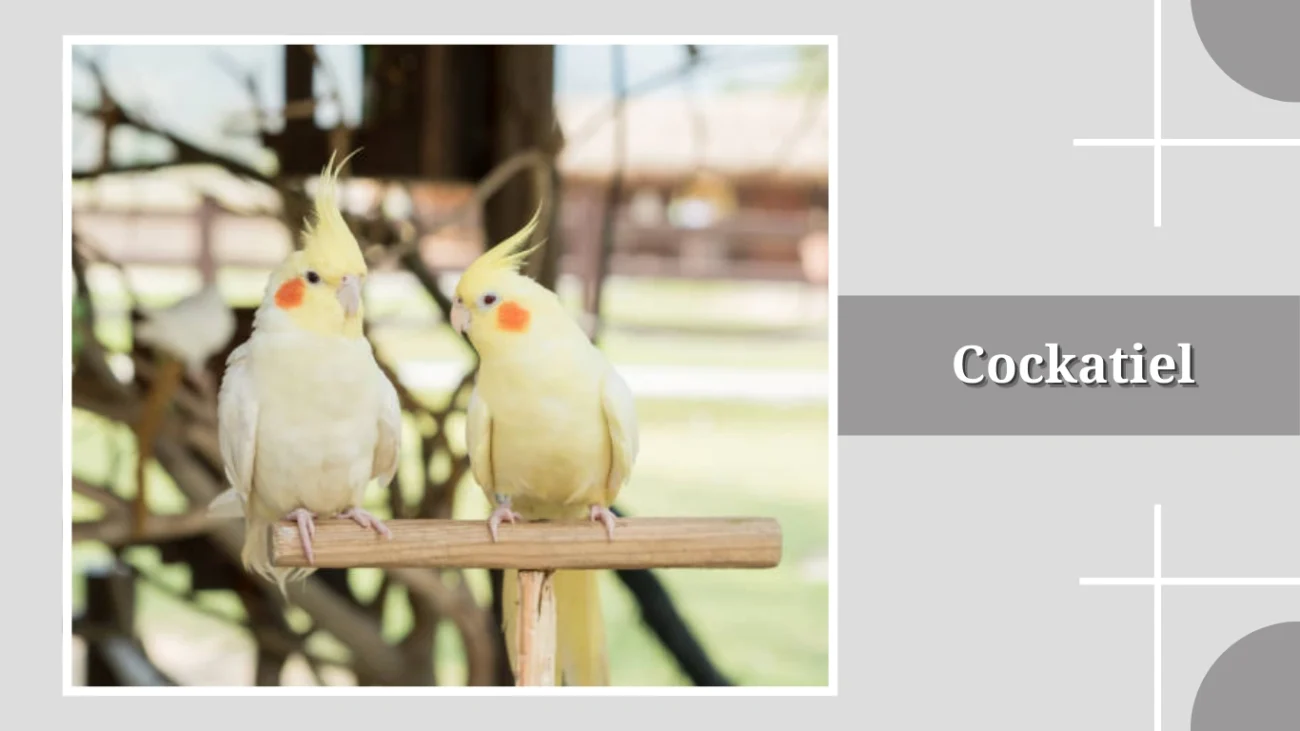
The Cockatiel is a small, gentle parrot known for its friendly nature and charming crest. As one of the most popular pet birds, cockatiels bond quickly with humans and are easy to train.
Identification
- Small parrot, 11–13 inches
- Grey body with yellow face (common form)
- Bright orange cheek patches
- Long slender tail
- Upright crest that moves with mood
Habitat
Cockatiels originate from Australia’s arid inland regions, where they gather in flocks near water sources. They prefer open environments with access to seeds and nesting sites in tree hollows.
Behaviors
Cockatiels are affectionate, calm, and playful. They whistle well, enjoy being handled, and are less demanding than larger parrots. They thrive on gentle interaction and consistent routines.
Diet
Wild cockatiels feed on seeds, grasses, berries, and vegetation. In captivity, a balanced diet of pellets, fresh vegetables, and limited seeds keeps them healthy. They are prone to high-fat diets if seed intake is not controlled.
Lifecycle
Cockatiels typically live 10–20 years, though some reach 25 with excellent care. They mature around 12–18 months and lay 4–6 eggs per clutch. Their manageable size and gentle personality make them ideal for many bird owners.
9. Budgerigar (Budgie)
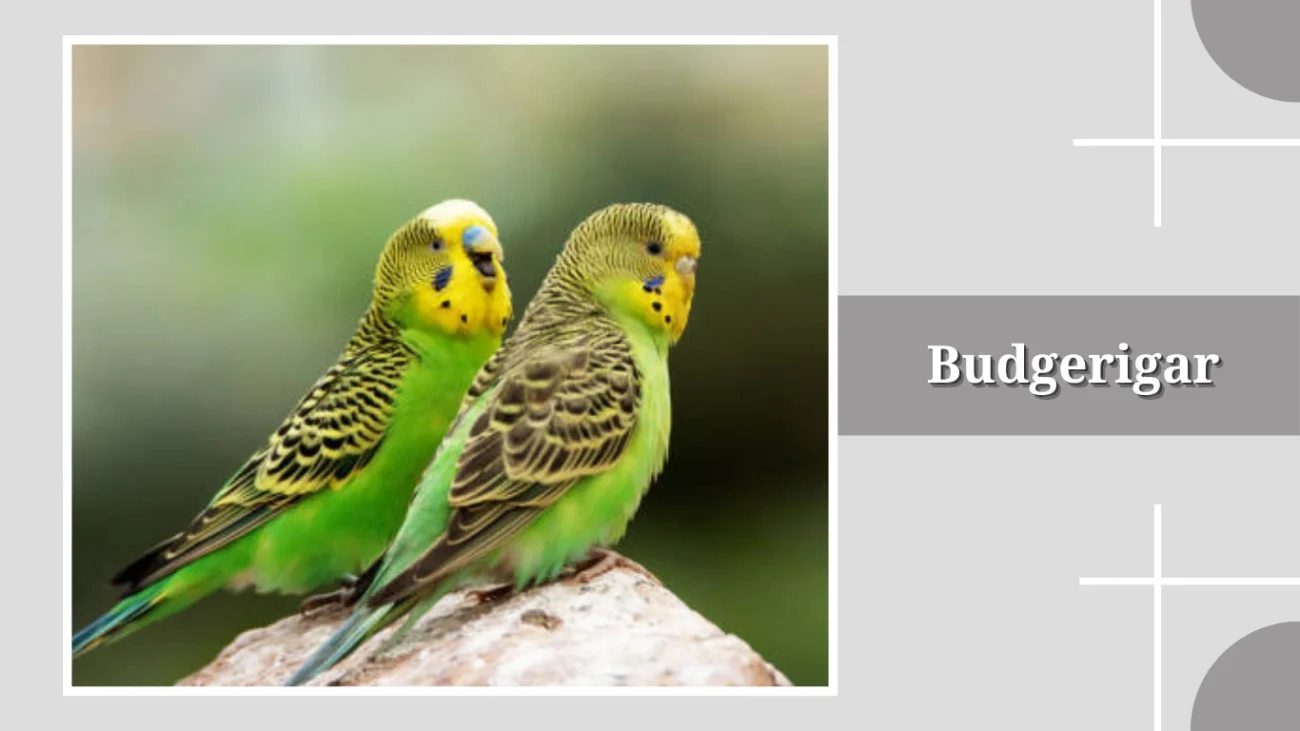
The Budgerigar, commonly known as the Budgie or Parakeet, is one of the world’s most popular pet birds. Small, colorful, and highly social, budgies are easy to care for and enjoy interactive environments.
Identification
- Small parrot, 6–8 inches
- Green, yellow, blue, or white color variations
- Black scalloped patterns on wings
- Long tapered tail
- Small curved beak and dark or red eyes
Habitat
Wild budgies are native to Australia’s dry grasslands and open woodlands. They travel in large flocks and follow seasonal rains, seeking areas rich in seeds and water. Their natural environment is warm, open, and full of low vegetation.
Behaviors
Budgies are cheerful, social, and highly active. They communicate constantly with chirps and whistles and can learn to mimic words and sounds. They thrive in pairs or groups and enjoy toys, mirrors, and climbing activities.
Diet
In the wild, budgies feed mainly on grass seeds, grains, and small vegetation. In captivity, their diet should include pellets, fresh greens, vegetables, and a limited portion of seeds. A varied diet helps prevent nutritional deficiencies.
Lifecycle
Budgies typically live 5–15 years, depending on diet, care, and genetics. They reach maturity around 6–8 months and lay 4–6 eggs per clutch. With excellent care and enrichment, some budgies may live beyond 15 years.
10. Lovebird
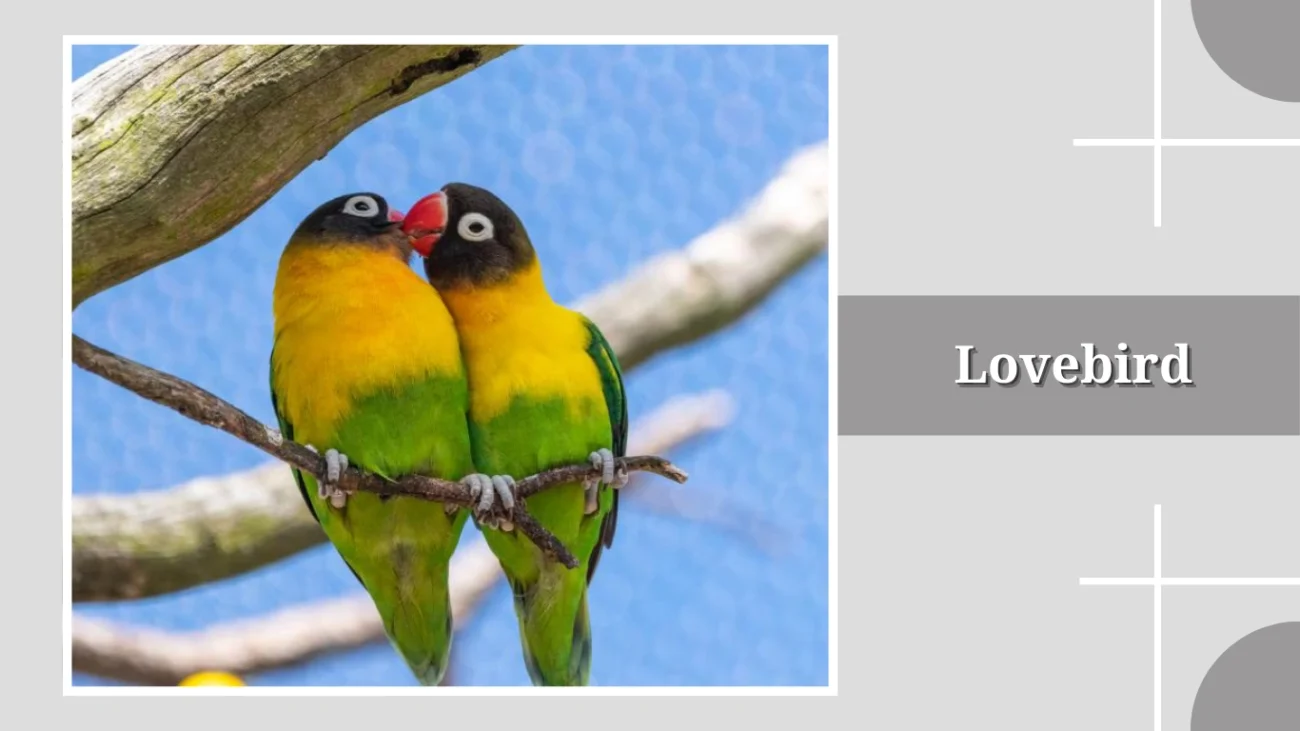
Lovebirds are small, energetic parrots known for their strong pair bonds and vibrant colors. They are affectionate, playful, and social, making them popular among bird enthusiasts.
Identification
- Small parrot, 5–7 inches
- Bright plumage in green, peach, blue, yellow, or mixed mutations
- Short, blunt tail
- Sturdy, hooked beak
- Distinctive eye ring in some species
Habitat
Lovebirds originate from Africa and Madagascar, inhabiting savannas, scrublands, and lightly wooded areas. They nest in tree holes, shrubs, and sometimes even rocky crevices. In the wild, they travel in small flocks and adapt well to semi-arid climates.
Behaviors
These birds are highly social and enjoy close companionship, often bonding deeply with mates or human caretakers. They are active explorers, enjoy chewing toys, and can be territorial if not well socialized. Their lively personality makes them entertaining but requires attentive handling.
Diet
Lovebirds eat seeds, fruits, berries, and leafy vegetation in the wild. In captivity, they thrive on a diet of pellets, fresh vegetables, fruits, and controlled seed intake. Providing enrichment foods like sprouts supports their nutritional health.
Lifecycle
Lovebirds typically live 8–15 years. They reach maturity around 8–12 months and lay 4–6 eggs per clutch. With proper diet and care, some individuals may live beyond 15 years.
11. Conure

Conures are medium-sized, playful parrots known for their vibrant colors, outgoing personalities, and strong social nature. They are popular pets thanks to their affectionate behavior and high energy levels.
Identification
- Medium-sized parrot, 10–14 inches
- Color varies by species: green, yellow, red, orange, or multicolored
- Long tapering tail
- Slender body and expressive eyes
- Strong curved beak suitable for climbing and chewing
Habitat
Conures originate from Central and South America, inhabiting forests, savannas, and wooded mountain regions. They often form large flocks and are highly adaptable to different environments with abundant food sources.
Behaviors
These parrots are lively, social, and enjoy physical interaction. Many conures love cuddling, playing with toys, and participating in family activities. They can be vocal, and some species produce louder calls than others. Because of their intelligence, they need daily stimulation to prevent boredom.
Diet
Wild conures feed on fruits, seeds, nuts, berries, and vegetation. In captivity, they thrive on pellets, vegetables, leafy greens, limited fruit, and occasional nuts. A balanced diet ensures proper health and reduces the risk of nutritional issues.
Lifecycle
Conures typically live 20–30 years with proper care. They reach maturity between 1–3 years and lay 3–7 eggs per clutch, depending on species. Regular enrichment and a healthy environment greatly contribute to their longevity.
12. Sun Conure

The Sun Conure is one of the most colorful parrot species, known for its bright plumage and friendly, playful personality. It is a highly social bird that bonds closely with its owners.
Identification
- Medium-sized parrot, 11–13 inches
- Brilliant mix of yellow, orange, red, green, and blue
- Dark beak and expressive dark eyes
- Long tapered tail
- Loud, attention-seeking vocalizations
Habitat
Sun Conures are native to northeastern South America, inhabiting tropical forests, savannas, coastal woodlands, and palm groves. They travel in flocks and often nest in tree cavities close to food sources.
Behaviors
These parrots are affectionate, energetic, and enjoy constant interaction. They are known for their clown-like playfulness and love of attention. Sun Conures can be quite loud, using their calls to communicate and bond with their flock or human companions.
Diet
In the wild, Sun Conures feed on fruits, berries, seeds, nuts, and blossoms. In captivity, they thrive on pellets, fresh vegetables, leafy greens, limited fruit, and occasional nuts. A varied diet supports their high activity level.
Lifecycle
Sun Conures typically live 20–30 years. They mature around 1–2 years and lay 3–5 eggs per clutch. With proper care, sunlight, and enrichment, many Sun Conures enjoy long, healthy lives.
13. Quaker Parrot (Monk Parakeet)

The Quaker Parrot, also known as the Monk Parakeet, is a small, intelligent, and highly social bird known for its exceptional talking ability and charming personality.
Identification
- Small parrot, 11–12 inches
- Green body with grey chest and face
- Blue or green flight feathers
- Short, square tail
- Pale beak and expressive dark eyes
Habitat
Quaker Parrots originate from South America, especially Argentina, Brazil, and Paraguay. They thrive in savannas, woodlands, and agricultural areas. Unique among parrots, they build large communal stick nests rather than using tree cavities.
Behaviors
Quakers are energetic, clever, and excellent mimics. They bond closely with their owners and enjoy learning tricks. Their playful and often comical personalities make them entertaining pets. However, they may become territorial around their cage due to their nest-building instincts.
Diet
In the wild, they eat seeds, fruits, nuts, berries, and leafy plants. In captivity, a balanced diet of pellets, vegetables, greens, and limited seeds keeps them healthy. Avoid excessive seeds to prevent weight issues.
Lifecycle
Quaker Parrots live 20–30 years with proper care. They reach maturity around 1–2 years and lay 5–8 eggs per clutch. Their long lifespan and intelligence make them engaging long-term companions.
14. Eclectus Parrot

The Eclectus Parrot is known for its striking sexual dimorphism—males and females look completely different. They are gentle, intelligent birds with calm temperaments and exceptional talking ability.
Identification
- Medium-to-large parrot, 12–14 inches
- Males: Bright green with orange beak
- Females: Red and purple with black beak
- Short tail and rounded wings
- Smooth, hair-like feathers
Habitat
Eclectus Parrots are native to rainforest regions of the Solomon Islands, Indonesia, Papua New Guinea, and northern Australia. They live high in the canopy and prefer dense forests with abundant fruiting trees.
Behaviors
They are calm, observant, and highly intelligent birds. Eclectus Parrots communicate gently and bond well with humans. They are less hyperactive than many parrots but still need enrichment and interaction. Their sensitive nature means they respond strongly to stress or environmental changes.
Diet
In the wild, they eat tropical fruits, figs, blossoms, palm nuts, seeds, and leafy vegetation. In captivity, they require a high-fiber diet rich in fresh fruits, vegetables, sprouted foods, and pellets. They have a unique digestive system sensitive to artificial additives.
Lifecycle
Eclectus Parrots typically live 30–50 years. They mature around 3–4 years and lay 2 eggs per clutch, often raising only one chick. Their long lifespan and special dietary needs require dedicated care.
15. Senegal Parrot

The Senegal Parrot is a compact, quiet, and affectionate species that forms strong bonds with its owners. Its calm nature and moderate size make it a popular choice for both beginners and experienced bird keepers.
Identification
- Small-to-medium parrot, 9–10 inches
- Green body
- Yellow or orange belly patch (varies by subspecies)
- Grey head with dark beak
- Short, rounded tail
Habitat
Senegal Parrots are native to West Africa, inhabiting open woodlands, savannas, and agricultural areas. They prefer nesting in tree cavities and often travel in small flocks or pairs while foraging for food.
Behaviors
These parrots are known for their quiet, steady temperament. They enjoy gentle interaction and can learn to talk, whistle, and mimic sounds. Senegal Parrots are less noisy than many species, making them suitable for homes with noise sensitivities. They thrive with daily attention and enrichment.
Diet
In the wild, they eat seeds, fruits, flowers, nuts, and grains. In captivity, a balanced diet of pellets, fresh vegetables, leafy greens, and limited seeds keeps them healthy. They enjoy foraging activities that mimic natural feeding behaviors.
Lifecycle
Senegal Parrots typically live 25–30 years, with some reaching 35 or more with excellent care. They mature at about 1–2 years and lay 3–4 eggs per clutch. Their moderate lifespan and calm nature make them a long-term but manageable companion bird.
16. Indian Ringneck Parakeet
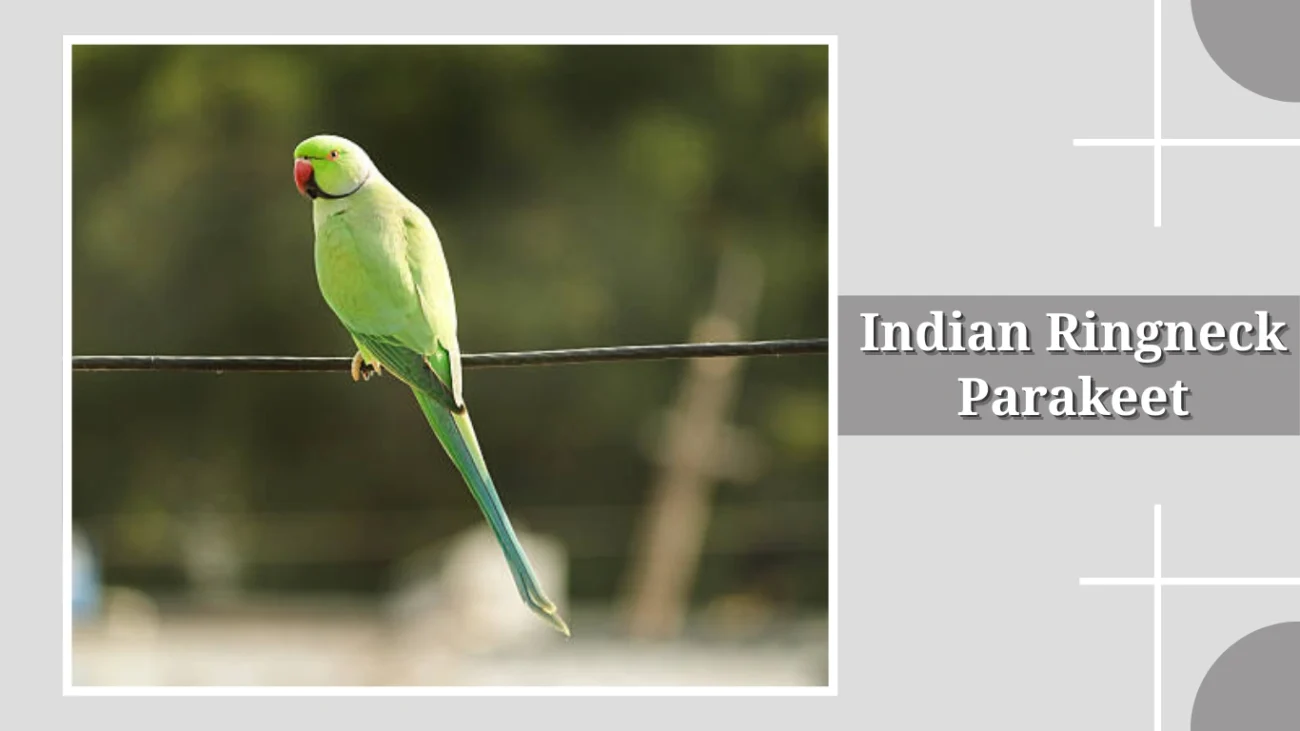
The Indian Ringneck Parakeet is a medium-sized, slender parrot known for its bright coloring, intelligence, and impressive talking ability. It is curious, energetic, and thrives in interactive environments.
Identification
- Medium parrot, 14–17 inches including tail
- Males: Green body with a distinctive black and rose ring around the neck
- Females: Green without a complete ring
- Long, tapered tail
- Red beak and expressive eyes
Habitat
Indian Ringnecks are native to India, Pakistan, Sri Lanka, and surrounding regions. They inhabit forests, farmland, orchards, and urban areas. They adapt easily to human environments and often form large, noisy flocks.
Behaviors
These parrots are intelligent, alert, and playful. They are excellent talkers and learn words quickly with repetition. Ringnecks can be independent and may develop nippy behavior without proper training and socialization. They enjoy toys, puzzles, and frequent interaction.
Diet
In the wild, they eat seeds, berries, nuts, fruits, blossoms, and grains. In captivity, they thrive on pellets, vegetables, leafy greens, fruits, and limited seeds. A varied diet helps maintain their energetic nature and bright plumage.
Lifecycle
Indian Ringnecks typically live 20–30 years. They mature around 2–3 years and lay 3–6 eggs per clutch. With proper handling and enrichment, they become affectionate, long-lived companions.
17. Alexandrine Parakeet

The Alexandrine Parakeet is a large, elegant parakeet known for its striking coloration, long tail, and calm yet playful personality. It is closely related to the Indian Ringneck but noticeably larger and more robust.
Identification
- Large parakeet, 22–24 inches including the long tail
- Green body with a distinctive maroon shoulder patch
- Males: Black and rose-colored neck ring
- Females: No complete neck ring
- Red beak and bright yellow eyes
Habitat
Alexandrine Parakeets are native to India, Sri Lanka, Myanmar, and Southeast Asia. They inhabit forests, mangroves, wooded farmlands, and urban parks. They prefer tall trees for nesting and often form flocks that travel long distances in search of food.
Behaviors
These parakeets are intelligent, calm, and social. They can learn to talk clearly and enjoy interactive play. Alexandrines are more laid-back than many medium parrots, but they still need plenty of enrichment and space to climb and explore. They may become vocal, especially at dawn and dusk.
Diet
In the wild, they feed on fruits, seeds, nuts, grains, and blossoms. In captivity, they thrive on pellets, fresh vegetables, leafy greens, limited fruits, and occasional nuts. A balanced diet supports their strong beaks and high energy levels.
Lifecycle
Alexandrine Parakeets typically live 25–35 years, with some reaching 40 under ideal care. They mature around 2–3 years and lay 2–4 eggs per clutch. Their long life and gentle nature make them a rewarding species for dedicated owners.
18. Rainbow Lorikeet
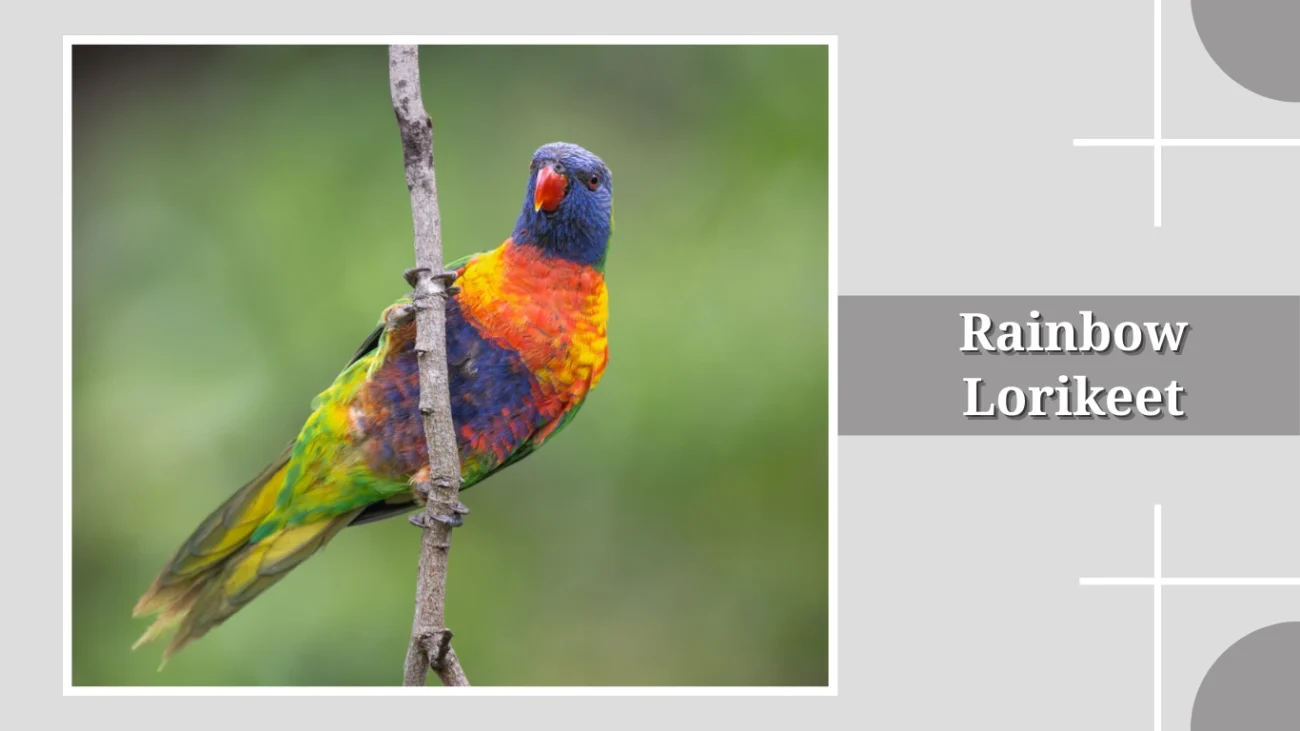
The Rainbow Lorikeet is a vibrant, energetic parrot known for its rainbow-colored feathers and playful personality. It is highly social and thrives in lively, interactive environments.
Identification
- Medium-sized parrot, 10–12 inches
- Bright blue head
- Orange and yellow breast
- Green wings and back
- Long tail and slender body
- Brush-tipped tongue for nectar feeding
Habitat
Rainbow Lorikeets are native to Australia, Indonesia, Papua New Guinea, and surrounding islands. They live in rainforests, coastal woodlands, urban parks, and gardens. They travel in noisy flocks and are often seen feeding on blossoming trees.
Behaviors
These parrots are extremely active, playful, and vocal. They enjoy socializing, flying, and exploring. Rainbow Lorikeets are curious birds that bond strongly with their owners. Their energetic nature requires plenty of space and enrichment to prevent boredom.
Diet
Unlike most parrots, Rainbow Lorikeets specialize in nectar and pollen. In captivity, they require commercial lorikeet nectar mixes, fresh fruits, vegetables, and occasional flowers. Seed diets are harmful for lorikeets and should be avoided entirely.
Lifecycle
Rainbow Lorikeets typically live 15–25 years with proper care. They reach maturity around 1–2 years and lay 1–2 eggs per clutch. Their unique diet and high activity levels require attentive, specialized care.
19. Meyer’s Parrot
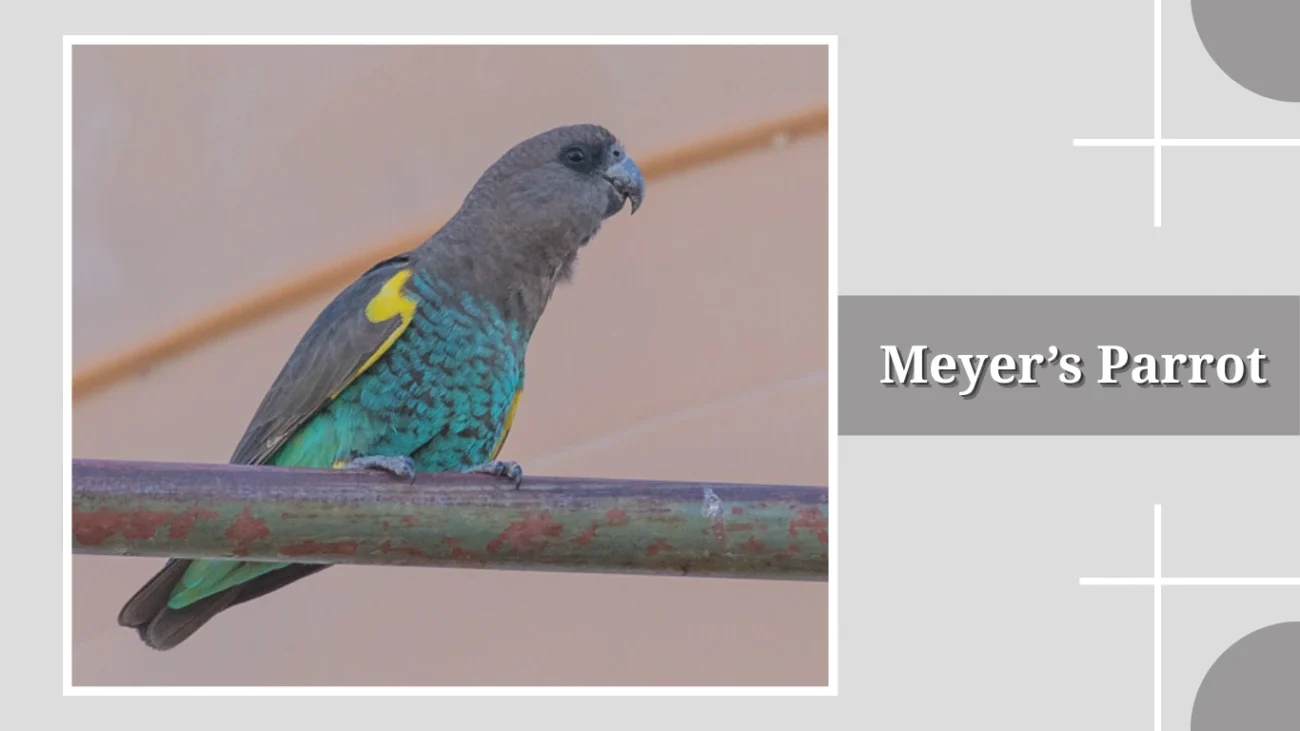
The Meyer’s Parrot is a small, calm, and gentle African bird known for its sweet temperament and adaptability. It is quieter than many parrot species, making it an excellent choice for households that prefer a more peaceful companion.
Identification
- Small parrot, 8–9 inches
- Dark grey head
- Green body with blue lower back
- Yellow patches on the wings and sometimes under the belly
- Dark beak and bright eyes
Habitat
Meyer’s Parrots are native to sub-Saharan Africa, inhabiting savannas, woodlands, and dry forests. They prefer areas with scattered trees and forage in small groups or pairs. They are adaptable and often follow seasonal food sources.
Behaviors
These parrots are quiet, affectionate, and easygoing. They enjoy gentle interaction and can learn simple tricks and sounds. Meyer’s Parrots are not overly demanding and generally exhibit fewer behavioral issues than more energetic species. They thrive with steady routines and social engagement.
Diet
In the wild, they feed on seeds, nuts, berries, fruits, and blossoms. In captivity, they do best with pellets, vegetables, leafy greens, limited fruits, and occasional nuts. A balanced diet prevents obesity and supports long-term health.
Lifecycle
Meyer’s Parrots typically live 20–30 years. They mature around 1–2 years and lay 3–4 eggs per clutch. Their calm nature and moderate lifespan make them a suitable option for many bird owners.
20. Caique
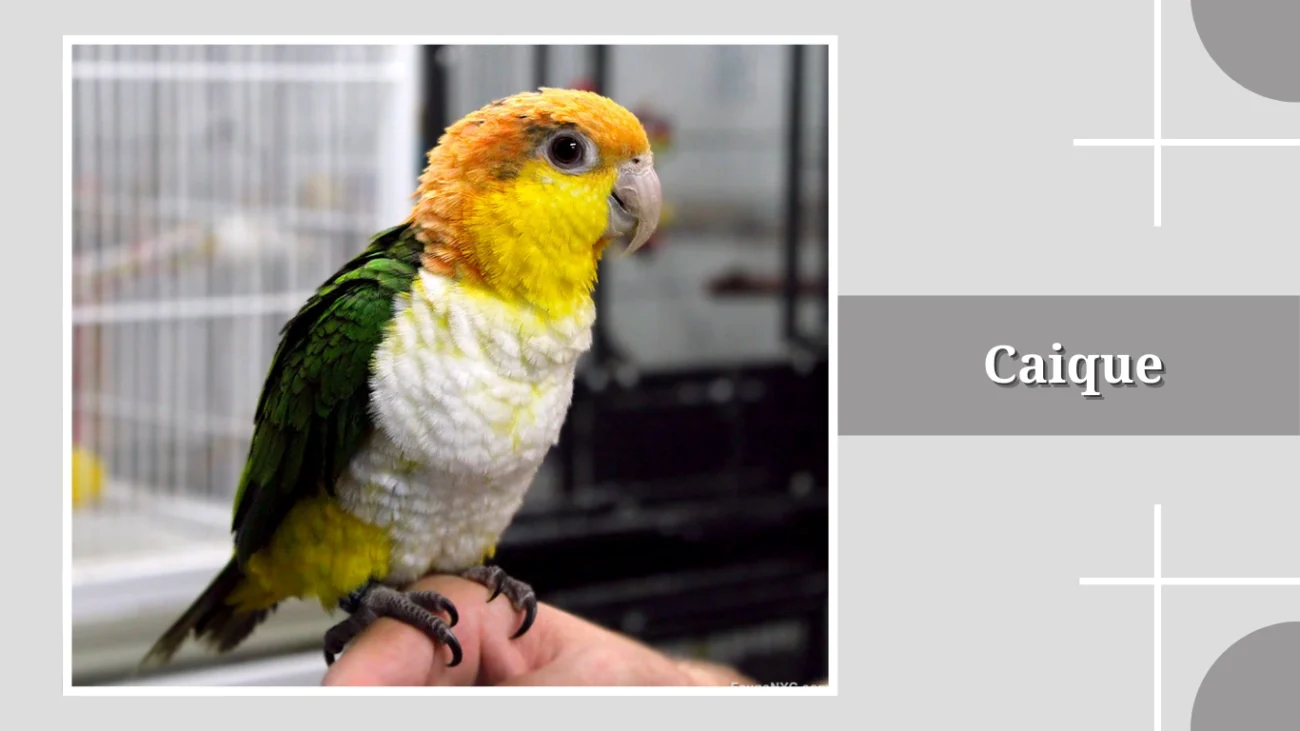
Caiques are lively, energetic parrots known for their playful antics and clown-like behavior. Often called the “acrobats” of the parrot world, they are extremely social and active, making them highly entertaining companions.
Identification
- Small-to-medium parrot, 9–10 inches
- Two main types: Black-headed Caique and White-bellied Caique
- Bright green wings and back
- White or orange belly depending on species
- Short tail and strong, stocky body
- Dark beak and expressive eyes
Habitat
Caiques are native to the Amazon Basin of South America, including Brazil, Peru, Ecuador, and Bolivia. They inhabit tropical rainforests, forest edges, and palm-rich areas. They often travel in small flocks and roost in tree cavities.
Behaviors
Highly energetic and playful, Caiques love climbing, hopping, and engaging in physical interaction. They are mischievous, curious, and require plenty of toys and activities to stay stimulated. They bond strongly with humans but may show territorial behavior if not well socialized.
Diet
In the wild, Caiques eat fruits, seeds, berries, insects, and blossoms. In captivity, they need a balanced diet of pellets, vegetables, fruits, and occasional protein sources. Their high energy level means they benefit from varied, nutrient-rich foods.
Lifecycle
Caiques typically live 25–30 years. They mature around 2–3 years and lay 2–4 eggs per clutch. Their long life, high intelligence, and energetic personality make them rewarding but demanding pets.


