











The Quaker Parrot—also known as the Monk Parakeet—is one of the most charming, intelligent, and social parrots kept as pets. Known for their excellent talking ability, playful personality, and deep bonding with their owners, Quakers have become a favorite among bird enthusiasts worldwide. This guide covers their colors, care needs, diet, lifespan, behavior, price, and more to help you fully understand this remarkable species.
What Is a Quaker Parrot?

The Quaker Parrot is a small, bright, and talkative parrot species native to South America. Their name comes from their “quaking” or “shivering” movements, especially when excited or bonding. They are affectionate, clever birds that thrive on interaction and enrichment.
Identification
- Small-to-medium parrot, 11–12 inches long
- Green body with grey chest (standard color)
- Blue, yellow, albino, and lutino mutations exist
- Short, square tail
- Strong curved beak
- Expressive face with dark eyes
Origin and Natural Habitat
Quaker Parrots originate from Argentina, Brazil, Paraguay, and nearby regions. They inhabit woodlands, savannas, farms, and city outskirts. In the wild, they form highly social flocks and are well-known for building large communal nests made of sticks—unique among parrots. These nests can house multiple pairs, creating entire “Parrot communities” in tall trees or structures.
Quaker Parrot Colors & Mutations

Quaker Parrots come in a wide range of beautiful colors, from classic green to rare mutations developed through ethical breeding programs. Each mutation has its own appearance, rarity, and price range.
Standard Green Quaker
The natural and most common form. Green body, yellowish underparts, and grey chest. These are typically the most affordable and easiest to find.
Blue Quaker Parrot
A popular mutation featuring a sky-blue body and white or pale chest. Blue Quakers tend to cost more and are considered visually striking pets.
Yellow / Lutino / Albino Variations
These lighter mutations include bright yellow birds, white-bodied albinos with red eyes, and lutino Quakers with yellow plumage and pinkish features.
Rare Color Mutations (Turquoise, Grey, Red, Purple)
Rare colors such as turquoise, grey, red, and purple Quakers are uncommon, often bred selectively. Their rarity often increases their market price significantly.
Quaker Parrot Lifespan
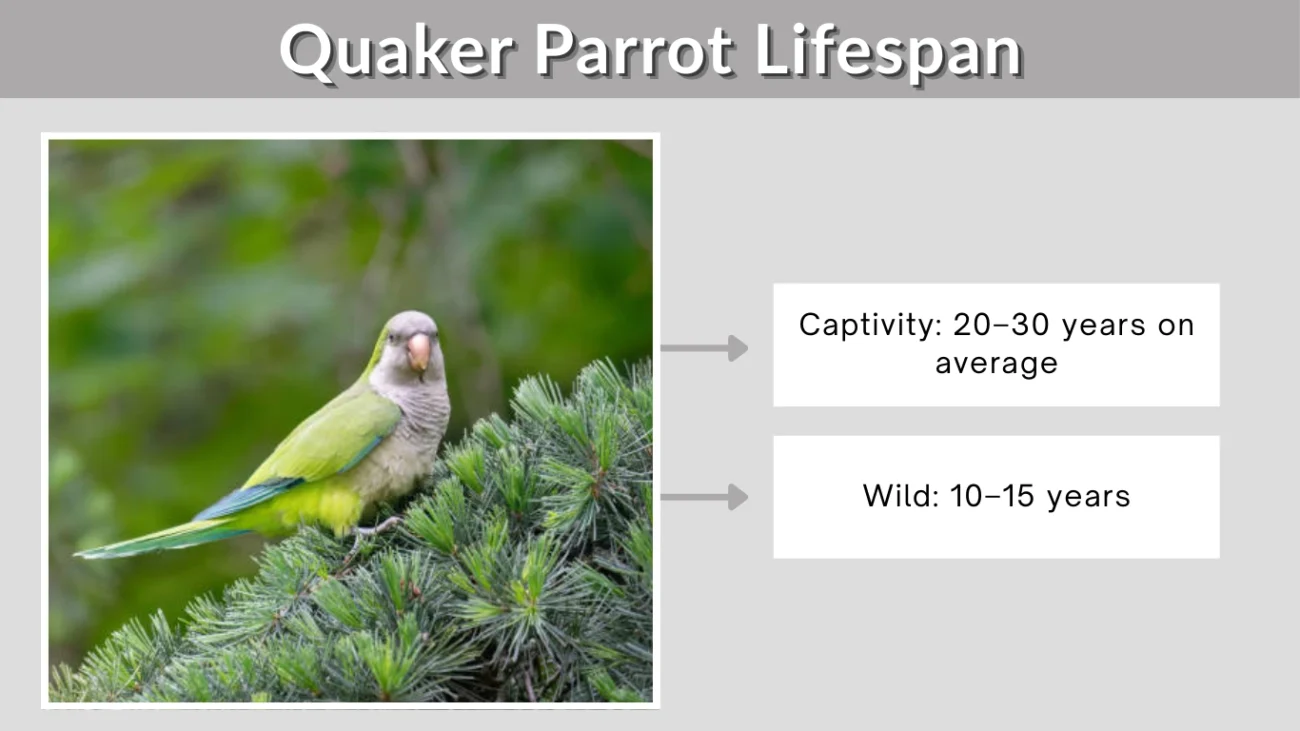
Quaker Parrots are long-lived birds, especially when cared for properly. Their lifespan varies depending on diet, environment, and overall care.
Average Lifespan in Captivity vs. Wild
- Captivity: 20–30 years on average
- Wild: 10–15 years (due to predators, climate, and lack of vet care)
In a stable home with proper nutrition and enrichment, many Quakers live into their late twenties or early thirties.
Factors That Influence Their Longevity
Several important factors affect how long a Quaker lives:
- Diet quality
- Cage size and activity space
- Regular vet checkups
- Social interaction and mental stimulation
- Safe, toxin-free environment
Neglect in any of these areas can significantly shorten their lifespan.
How to Help Your Quaker Live Longer
Provide a balanced diet, large cage, daily out-of-cage time, enrichment toys, and annual health exams. Avoid Teflon fumes, aerosols, smoke, and harmful chemicals that can damage their respiratory system. A healthy, stress-free environment is key to long-term wellness.
Talking Ability & Intelligence
Quaker Parrots are famous for their impressive talking skills and sharp intelligence. Many owners compare their vocal ability to African Greys—just in a smaller package.
Do Quaker Parrots Talk?
Yes, and often extremely well. Quakers can mimic words, phrases, tones, and even household sounds. Some develop a vocabulary of over 50–100 words when trained consistently.
How to Train Them to Speak
- Use repetition and simple words
- Speak enthusiastically to engage them
- Reward attempts with treats or praise
- Practice daily for short periods
- Use positive reinforcement
Quakers learn best in calm settings with consistency.
Common Noises & Sounds They Make
Beyond talking, Quakers make chirps, squawks, whistles, and playful vocalizations. They often “chatter” to themselves, especially during bonding moments or when excited.
Quaker Parrot Behavior & Temperament

Quaker Parrots are known for their bold, affectionate, and charming personalities. They are social birds that crave interaction and become deeply attached to their owners.
Personality Traits
They are playful, curious, and love exploring. Many Quakers enjoy cuddling and sitting on shoulders. They are naturally confident and rarely shy once bonded.
Social Behavior & Bonding
Quakers see their owners as part of their flock and often develop strong loyalty. They enjoy being included in daily activities and can become vocal if ignored.
Size, Growth, and Adult Characteristics
Full-grown Quakers reach 11–12 inches, with strong beaks and sturdy bodies. They mature around one year old, developing their adult behavior and temperament.
Diet & Feeding Guide

A healthy diet is key to a Quaker Parrot’s long-term wellness, energy levels, and feather quality. Because they are active birds with strong digestive systems, they need balanced nutrition every day.
What Do Quaker Parrots Eat?
A complete Quaker diet should include:
- High-quality pellets (60–70%)
- Fresh vegetables (20–30%)
- Fresh fruits (5–10%)
- Limited seeds and nuts (treats only)
Leafy greens like spinach, kale, and romaine lettuce are especially beneficial. Bright-colored vegetables provide essential vitamins that support eye and immune health.
Best Foods for Health and Longevity
- Carrots
- Broccoli
- Bell peppers
- Sweet potatoes
- Apples (without seeds)
- Blueberries
- Bananas
- Sprouts and microgreens
These foods support energy, digestion, and feather condition.
Foods to Avoid (Toxic List)
- Chocolate
- Avocado
- Onion and garlic
- Alcohol
- Caffeine
- Salty or sugary snacks
- Fruit seeds or pits
Avoid anything processed or seasoned.
Can Quaker Parrots Eat Grapes?
Yes, Quaker Parrots can eat grapes in moderation. Grapes are nutritious and hydrating but contain natural sugar, so they should be offered as an occasional treat rather than a daily snack.
Housing Requirements
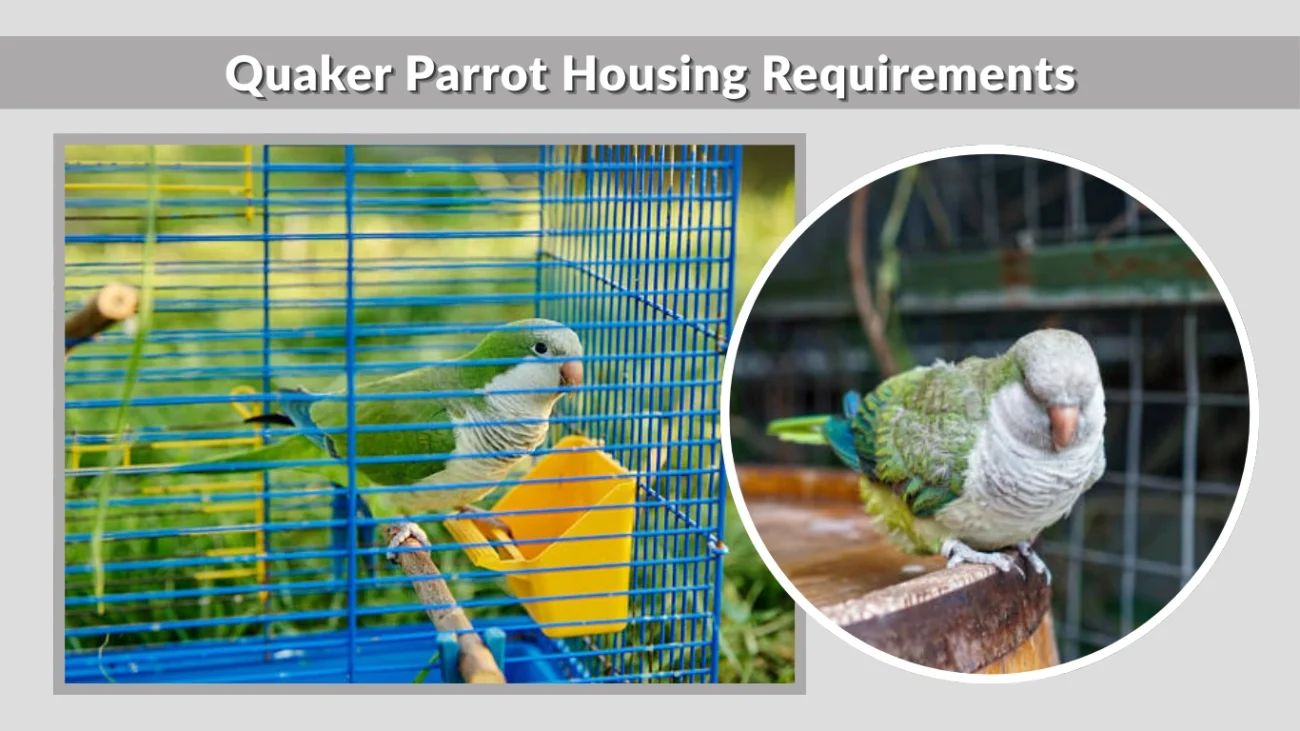
Quaker Parrots are active climbers and require a spacious, safe environment. A proper cage setup helps keep them mentally stimulated and physically fit.
Recommended Cage Size
The ideal cage should be:
- Minimum: 24 x 24 x 24 inches
- Better: 30 x 22 x 36 inches
- Bar spacing: 1/2 inch to 5/8 inch
Vertical space for climbing and horizontal space for flight are both important.
Necessary Cage Accessories
Include:
- Natural wooden perches (varied sizes)
- Foraging toys
- Chew toys
- Swings and ladders
- Stainless steel food/water bowls
- A cuttlebone for calcium
- Newspaper or paper liners
Rotate toys weekly to prevent boredom.
Nesting Behavior
Quaker Parrots are unique because they build large nests out of sticks. In captivity, they may attempt to create nests using toys or household items. Providing safe nesting materials or discouraging hormonal behavior may be necessary depending on your bird’s personality.
Caring for a Quaker Parrot
Caring for a Quaker involves daily attention, environmental safety, enrichment, and health monitoring. They thrive in households where they receive consistent interaction.
Daily Care Routine
- Provide fresh food and water
- Clean bowls and spots inside the cage
- Offer out-of-cage exercise
- Interact with the bird (talking, petting, training)
- Replace soiled cage liners
Regular routines help reduce anxiety and improve bonding.
Grooming Needs
- Bathing: Offer showers or misting several times a week
- Claw trimming: Every 4–8 weeks or as needed
- Beak care: Usually maintained naturally with toys
- Feather maintenance: Ensure adequate vitamin A and protein
Healthy grooming supports feather shine and overall comfort.
Common Health Problems
Quakers may experience:
- Respiratory infections
- Fatty liver disease (from excessive seeds)
- Feather plucking (stress-related)
- Vitamin deficiencies
- Digestive issues
Regular checkups with an avian vet help prevent and detect issues early.
Price: How Much Does a Quaker Parrot Cost?
Quaker Parrots vary widely in price depending on color mutation, breeder, and location. They are considered moderately priced parrots.
Average Price by Color Mutation
- Green Quaker: $200–$350
- Blue Quaker: $400–$700
- Lutino / Yellow: $500–$900
- Albino / White: $600–$1,200
- Rare Colors (Red, Turquoise, Grey, Purple): $800–$2,500+
Color rarity is the biggest pricing factor.
Factors That Affect Price
- Breeder quality and reputation
- Genetic lineage
- Color mutation rarity
- Age (younger birds cost more)
- Vet certification
- Demand in your region
Hand-fed, well-socialized babies typically cost the most.
Monthly & Lifetime Care Costs
Monthly expenses (food, toys, cages) average $40–$70. Over a 20–30 year lifespan, owning a Quaker is a long-term financial commitment.
Buying Guide
Where to Buy a Quaker Parrot
- Reputable breeders
- Avian rescue organizations
- Specialized bird stores
- Adoption centers
Avoid sellers who cannot show parent birds or health records.
How to Choose a Healthy Bird
Look for:
- Bright eyes
- Clean feathers
- Active and curious behavior
- No discharge or wheezing
- Clean vent area
- Good grip strength
A healthy bird should be alert, social, and responsive to your presence.
Quaker Parrots for Sale Near Me (Buyer Tips)
When searching locally, compare reviews, ask for health guarantees, and meet the bird in person if possible. Always avoid impulse purchases.
Legal Status
Why Are Quaker Parrots Illegal in Some States?
Quakers are banned or restricted in certain states (e.g., California, Colorado, Georgia) because their wild colonies can damage crops and electrical infrastructure. Their large stick nests can interfere with utility systems.
Florida, Chicago & Other Regional Rules
Florida and Chicago have established feral Quaker populations. Some areas allow ownership with permits, while others restrict breeding. Always check your local laws before buying.
Quaker Parrots in the Wild
Feral Populations in the U.S.
Quakers thrive in cities like Miami, Austin, and Chicago, where flocks build massive communal nests on towers and trees. They adapt well to urban life.
Wild Nesting Behavior & Colony Structures
Quakers are the only parrots that build multi-chamber stick nests. These nests can house dozens of birds, offering warmth and protection.
Pictures & Visual Guide
Color Comparison
Use images to show blue vs green vs yellow vs rare mutations.
Blue vs Green vs Rare Colors
Explain differences in feathers, rarity, and pricing.
FAQs
Are Quaker Parrots good pets for beginners?
Yes, Quaker Parrots can be great for beginners as long as the owner can commit time daily. They are intelligent, social, and relatively easy to train. However, they require mental stimulation, proper diet, and a spacious cage. Beginners must be prepared for their vocal nature and long lifespan.
How long do Quaker Parrots live as pets?
Quaker Parrots typically live 20–30 years in captivity with proper care. Their lifespan depends heavily on diet, environment, enrichment, and regular veterinary checkups. Some Quakers have lived beyond 30 years when raised in a stress-free, enriched home with a balanced diet and adequate exercise.
Do Quaker Parrots really talk?
Yes. Quaker Parrots are known for being excellent talkers and can learn dozens of words, phrases, and sounds. With consistent training, repetition, and positive reinforcement, they often begin talking within their first year. Their speech is clear, expressive, and often surprisingly advanced compared to many small parrots.
Why are Quaker Parrots illegal in some states?
Some states ban or restrict Quaker Parrots because wild colonies can damage crops, electrical infrastructure, and local ecosystems. Their large communal nests can interfere with utility poles and buildings. Laws vary by region, so it’s important to check local regulations before purchasing or adopting a Quaker Parrot.
What is the best diet for a Quaker Parrot?
A healthy Quaker Parrot diet should include pellets, fresh vegetables, leafy greens, and small amounts of fruit. Seeds and nuts should be offered only as treats. Rotating foods, adding sprouts, and avoiding harmful items like avocado, chocolate, and salty snacks help maintain long-term health and strong feather condition.


