










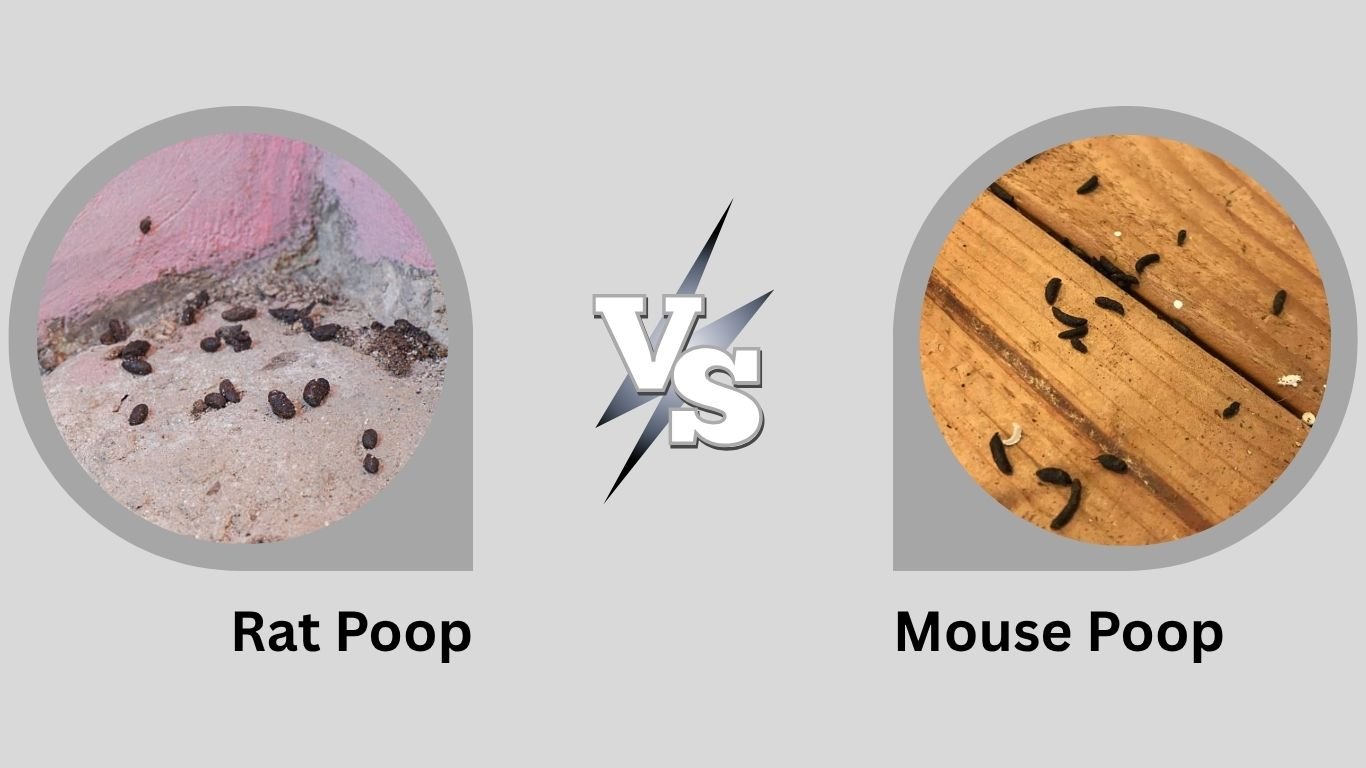
Identifying whether droppings come from a rat or a mouse is one of the fastest and most reliable ways to determine which rodent is in your home. Because rats and mice often hide during the day, their waste becomes the most visible sign of an infestation. The size, shape, color, and location of droppings can reveal important clues that help you choose the right traps, seal entry points properly, and understand the severity of the problem.
This guide explains every difference—appearance, regional variations, picture-based identification, and comparisons with other animals—so you can confidently determine what type of rodent you’re dealing with.
Rat Poop vs Mouse Poop – Key Differences at a Glance
Shape Comparison
Shape is one of the easiest ways to tell rodent droppings apart. Mouse poop typically appears as small, rice-sized pellets with sharp, pointed ends, giving them a tapered look. Rat droppings are noticeably larger and have rounded or blunt ends, resembling small black or brown capsules. If the droppings are pointed like seeds, you’re likely dealing with mice. If they look thicker and more cylindrical, rats are the more probable culprit.
Size Comparison

Size is another strong indicator. Mouse pellets are usually ⅛ to ¼ inch long, whereas rat droppings can reach ½ to ¾ inch or more depending on the species. Norway rats, being larger, leave the biggest pellets, while roof rats leave slightly slimmer, banana-shaped ones. If you find droppings that vary in size, you may be dealing with rats of different ages. Consistently small pellets usually indicate mice.
Color & Texture
Fresh droppings—rats or mice—tend to be shiny, moist, and dark brown or black. As they age, they dry out and lighten in color, appearing gray or chalky. Rat droppings generally look heavier and denser, while mouse droppings are lighter and dry out faster because of their smaller size. Texture also helps: rat poop feels firmer and thicker, while mouse pellets are more fragile and crumble easily when very old.
Mouse Poop – What It Looks Like
Characteristics of Mouse Droppings
Mouse droppings are small, smooth, and pointed at both ends. They resemble black grains of rice and are typically found scattered rather than in tight clusters. A single mouse can produce 40–80 droppings per day, which often accumulate in drawers, behind appliances, along baseboards, or near food storage areas. Their pellets tend to be consistent in size and shape, making them easier to identify.
Pictures & Visual Indicators
In photos, mouse poop appears slender, sharply tapered, and uniformly dark. The pellets are usually found in random, scattered patterns rather than piles. When compared side-by-side with rat poop, mouse pellets are visibly thinner and shorter with straighter sides. Even without photos, imagining rice grains with sharp ends gives you a good mental reference for what mouse droppings look like.
Rat Poop – What It Looks Like
Characteristics of Rat Droppings
Rat droppings are much larger, more substantial, and more widely spaced compared to mouse pellets. Most adult rat poop ranges from ½ to ¾ inch long, with blunt ends and a thicker, heavier appearance. Rats tend to leave droppings near walls, in corners, inside basements, attics, and garages, and in areas where they consistently travel. You’ll often find them in clusters, especially around nesting sites or feeding spots. Roof rat pellets may look slightly curved, while Norway rat pellets are bulkier and more capsule-shaped.
Rat Poop in Photos
In visual comparisons, rat poop is immediately identifiable due to its large size and rounded ends. It appears more robust and darker in most images. Rat droppings are also spaced farther apart because rats move more deliberately, leaving pellets at intervals rather than scattered randomly like mice. If the droppings in photos look broad, heavy, and cylindrical, you’re likely looking at rat poop rather than mouse pellets.
Rat Poop vs Mouse Poop Pictures – Visual Identification Guide

Side-by-Side Comparison
When viewed next to each other, mouse poop looks tiny and pointed while rat droppings appear thick and blunt. This contrast is often enough for immediate identification. In a picture comparison, note:
- Mouse = small, sharp ends
- Rat = thick, rounded ends
- Mouse = scattered pattern
- Rat = clustered or spaced larger distances
Even without actual images, remembering these patterns helps replicate the same visual identification process.
High-Detail Description (For No-Image Environments)
If you don’t have photos handy, imagine this:
- Mouse poop looks like dark rice grains.
- Rat poop looks like small olive pits or black capsules.
Mouse pellets are slim; rat pellets are stout. This mental comparison works for identification in real-life scenarios where photos might not be available.
Regional Variations & Species Comparison
Rat Poop vs Mouse Poop in Different Regions
Rodent droppings can appear slightly different depending on the region and species present.
In Australia, for example, large bush rats and roof rats leave longer, more curved droppings, while house mice leave the same small, pointed pellets familiar worldwide. In the UK, Norway rats dominate urban areas, so droppings tend to be thicker and more robust. Despite these regional differences, the core identifiers—size, shape, and end-tapering—remain consistent across all locations.
Pack Rats, Roof Rats & Other Species
Pack rats, also known as woodrats, leave droppings that resemble small cylinders similar to Norway rats but sometimes slightly lighter in color. Roof rats, being slimmer and more agile, leave narrower, slightly curved droppings. These variations help identify specific rat types, but they still remain significantly larger than mouse pellets. Understanding these subtle differences can help pinpoint not just the rodent type but also the species, which can be useful for targeted pest control.
Rat Poop vs Mouse Poop vs Other Animals
Chipmunk & Squirrel Droppings
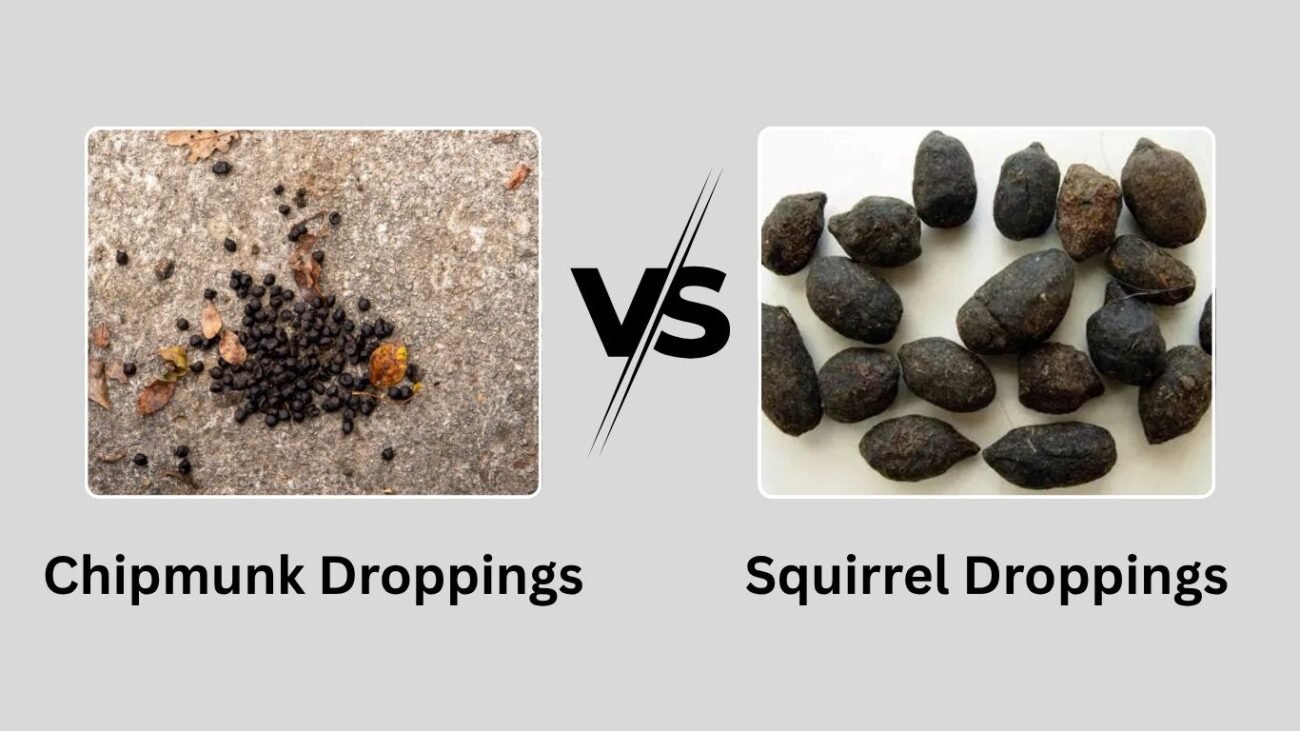
Chipmunk and squirrel poop can sometimes resemble rat or mouse droppings, but there are notable differences. Squirrel droppings are thicker, slightly curved, and usually have rounded ends. Chipmunk droppings are slimmer but still larger than mouse pellets. These animals generally leave pellets outdoors near trees, sheds, or attics—rarely in kitchens or living rooms—making location a key factor in identification.
If the droppings appear outdoors and are slightly curved with rounded tips, they likely belong to a squirrel or chipmunk, not a rodent inside your home.
Lizard, Gecko & Frog Droppings
Reptile droppings are frequently mistaken for rodent poop because of their similar size and shape. The easiest way to differentiate them is by looking for a white tip on the pellet. This white cap is uric acid, a signature of reptiles and amphibians. Frog, gecko, and lizard droppings can mimic both rat and mouse shapes but almost always include this white section. If you see a white tip on the droppings, you’re not dealing with a mouse or rat at all.
Identifying Fresh vs Old Droppings
Color Changes Over Time
Fresh rodent poop is dark—usually black or very deep brown—and slightly shiny. As the droppings age, they become hard, dry, and turn lighter in color, eventually fading to gray or off-brown. Recognizing whether droppings are new or old helps determine if the rodents are still active in the area and whether an infestation is growing or declining.
How Environment Affects Appearance
Warm, humid areas keep droppings moist longer, while dry spaces cause them to harden quickly. Droppings near heat sources like ovens or water heaters may dry faster. Food sources also influence appearance: a rodent eating seeds may leave a different pellet texture compared to one eating pet food. These variations are normal, but size, shape, and end-tapering still reveal the species.
Health Risks – Why Identifying Droppings Correctly Matters
Diseases Spread by Mouse Poop
Mouse droppings can contain harmful pathogens such as Hantavirus, which becomes airborne when droppings are disturbed. Mice can also contaminate food with salmonella, leading to food poisoning. Because they produce so many pellets daily and often explore kitchens and pantries, mouse poop poses a significant contamination risk even in small infestations.
Diseases Spread by Rat Poop
Rat droppings carry many of the same risks as mouse pellets but often in higher concentrations due to the rat’s size. Diseases associated with rat waste include leptospirosis, rat-bite fever, and listeria. Their larger droppings can contaminate surfaces more heavily, increasing the importance of identifying and cleaning the area quickly and safely.
Cleaning Rat vs Mouse Droppings Safely
Precautions Before Handling Droppings
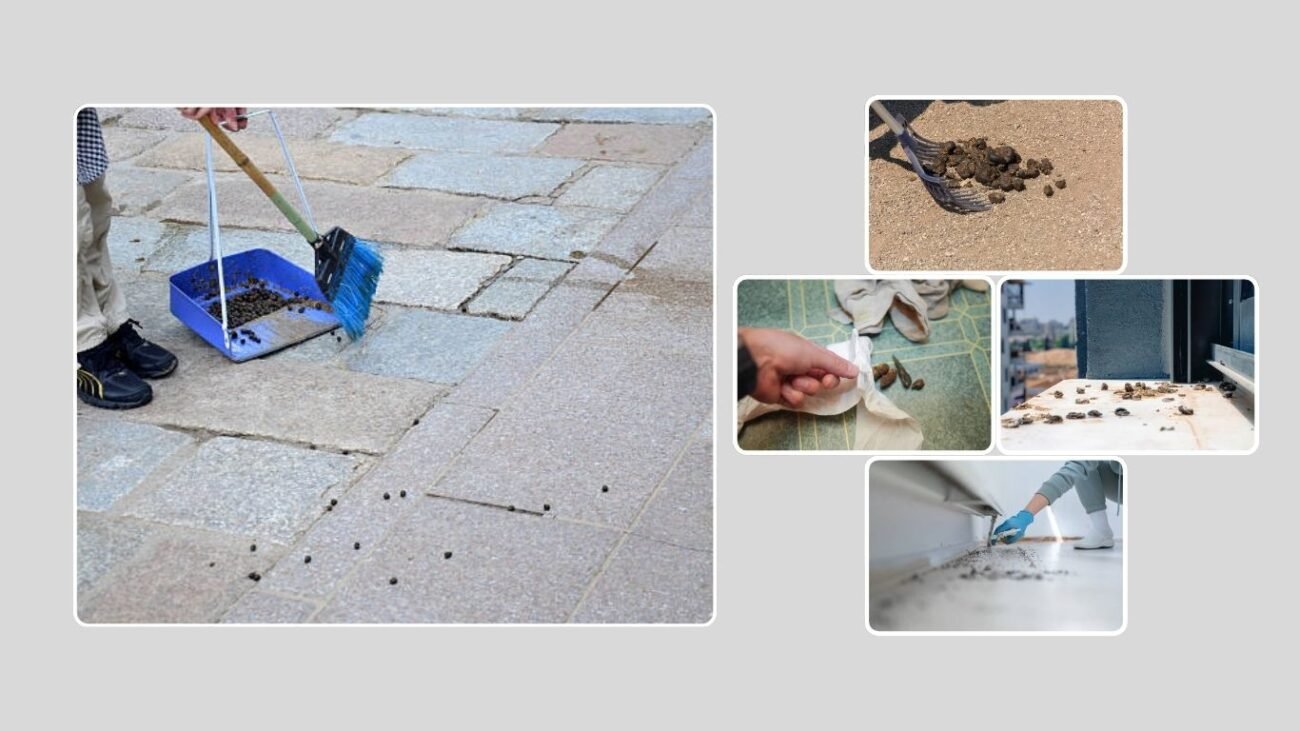
Never sweep or vacuum rodent droppings directly, as this spreads particles into the air. Before cleaning, ensure proper ventilation and wear gloves, a mask, and, ideally, protective eyewear. Avoid touching droppings with bare hands and do not spray them directly with high-pressure cleaners.
Step-by-Step Cleanup
- Lightly spray the droppings with a disinfectant or bleach solution.
- Allow the area to soak for several minutes to prevent airborne particles.
- Carefully pick up droppings with paper towels.
- Dispose of materials in a sealed plastic bag.
- Disinfect the entire area again to remove remaining bacteria.
- Wash your hands thoroughly, even if gloves were worn.
This method works for both rat and mouse droppings and is the safest way to prevent contamination.
Quick Identification Table – Mouse Poop vs Rat Poop
| Feature | Mouse Poop | Rat Poop |
| Size | ⅛–¼ inch | ½–¾ inch |
| Shape | Pointed ends | Blunt, rounded ends |
| Texture | Light, dries quickly | Thick, dense, heavier |
| Color | Dark brown/black | Dark brown/black |
| Pattern | Scattered | Clustered |
| Quantity | 40–80 per day | 20–50 per day |
| Common Locations | Kitchens, drawers | Basements, walls, attics |
FAQs
How can I tell if droppings belong to a small rat or a big mouse?
Check the ends—mouse pellets are pointed; rat pellets are blunt. Even a young rat’s droppings are thicker and more cylindrical than mouse pellets.
Can baby rat poop look like mouse poop?
Yes, sometimes. But baby rat droppings still appear thicker and less pointed than mouse droppings. Location and pattern also help identify the species.
Does rat poop smell different from mouse poop?
Not significantly. The smell usually comes from urine rather than the pellets themselves, although larger rat droppings may create a stronger odor when fresh.
Are rodent droppings dangerous to touch?
Yes. Both rat and mouse droppings can transmit bacteria and viruses. Always handle them with caution and proper protective gear.
Can other animals leave similar droppings?
Yes—squirrels, chipmunks, lizards, frogs, and geckos can leave similar pellets, but their shapes, curves, or white uric acid caps help differentiate them.


