Hippopotamuses are among the largest and most powerful land mammals on Earth, famous for their massive bodies, wide mouths, and semi-aquatic lifestyle. Although only two true hippo species live today, hippos across Africa are often grouped into different regional and environmental types based on where they live and how they adapt to rivers, lakes, and wetlands. Understanding these hippopotamus types helps reveal their diversity, behavior patterns, and ecological importance across the African continent.
1. Common Hippopotamus
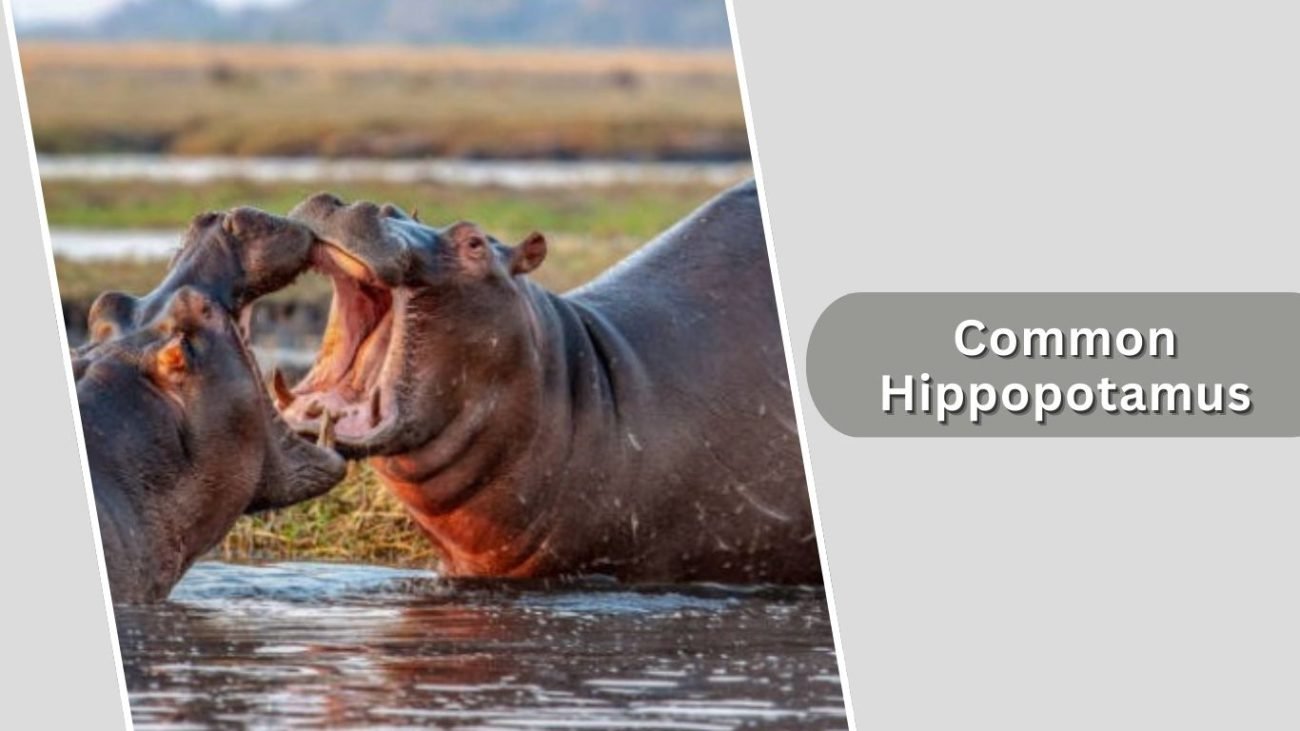
The common hippopotamus (Hippopotamus amphibius) is the largest and most widespread living hippo species. Native to sub-Saharan Africa, it is well known for its massive body, semi-aquatic lifestyle, and powerful jaws. Although hippos spend much of their time resting in rivers and lakes, they are highly active grazers at night and play an important ecological role in African freshwater ecosystems.
Identification
- Large, barrel-shaped body with a broad chest and rounded back
- Thick gray to brownish skin with a nearly hairless surface
- Huge head with wide mouth, prominent nostrils, eyes, and ears on top
- Extremely large canine and incisor teeth (tusks)
- Short, sturdy legs adapted for walking underwater
Habitat
Common hippopotamuses live near permanent water sources such as rivers, lakes, floodplains, and swamps. They prefer slow-moving or still freshwater where they can submerge most of their bodies during the day to stay cool and protect their sensitive skin. At night, they leave the water and travel several kilometers inland to graze on grasslands, savannas, and riverbank vegetation.
Behaviors
Hippos are highly social and usually live in groups called pods, consisting of females, young, and a dominant male. They are mostly inactive during daylight hours, resting in water or mud. At dusk, they become active and move onto land to feed. Despite their bulky appearance, hippos can run surprisingly fast over short distances and are known to be very territorial in water, especially adult males.
Size & Weight
The common hippopotamus is the third-largest land mammal after elephants and white rhinoceroses. Adult males typically weigh between 1,500 and 3,200 kilograms, while females are slightly smaller. They usually measure about 3.3 to 5 meters in length and stand around 1.4 to 1.6 meters tall at the shoulder. Their enormous mass is supported by dense bones that help them stay submerged.
Lifespan & Lifecycle
In the wild, common hippos generally live around 40 to 50 years, though some individuals can live longer under protected conditions. After a gestation period of about eight months, females give birth to a single calf, often in shallow water. Calves can swim almost immediately and nurse both on land and underwater. They remain closely bonded to their mothers for several years before reaching maturity.
2. Pygmy Hippopotamus
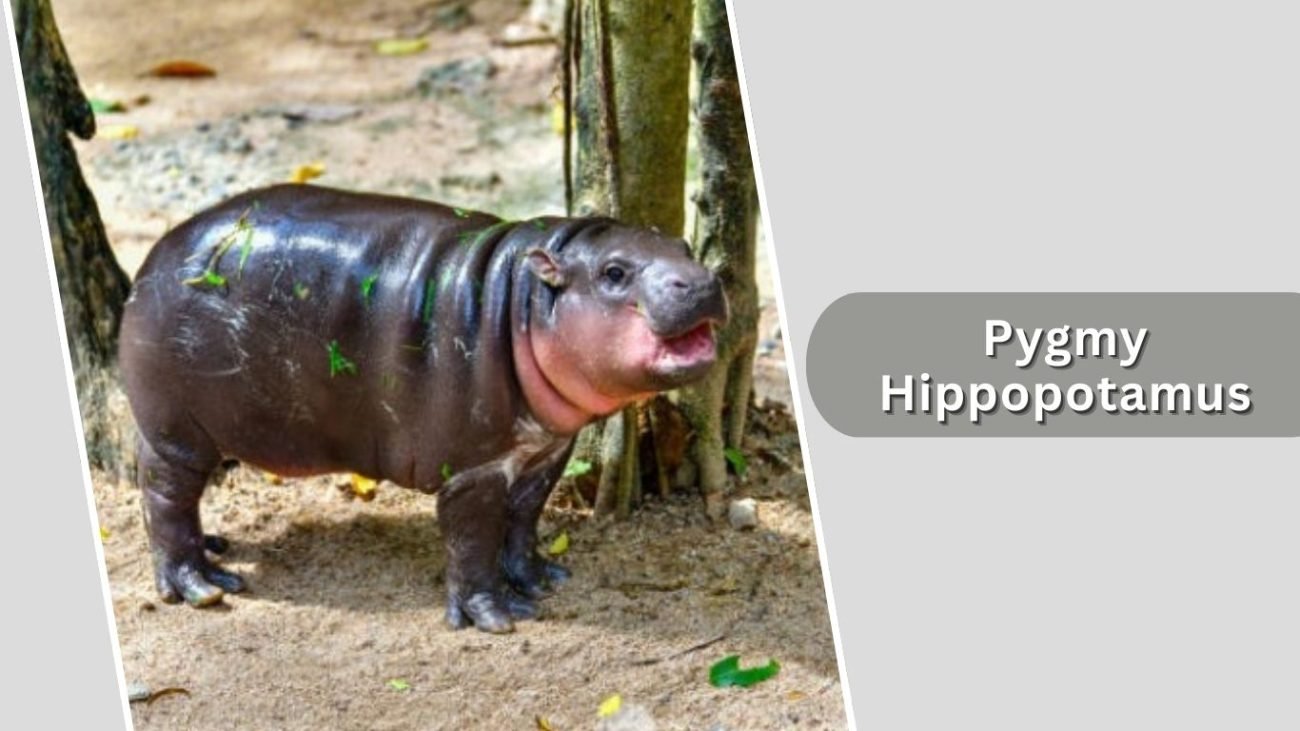
The pygmy hippopotamus (Choeropsis liberiensis) is much smaller and rarer than the common hippo. It is native to the rainforests and swamps of West Africa, especially Liberia, Sierra Leone, Guinea, and Ivory Coast. Unlike its larger relative, the pygmy hippo is mostly solitary and spends more time on land, living a quieter and more secretive life.
Identification
- Much smaller, compact body compared to the common hippo
- Dark brown to blackish skin with a smoother appearance
- Narrower head with less prominent eyes and nostrils
- Short legs but more proportionate to body size
- Less pronounced tusks and smaller mouth
Habitat
Pygmy hippopotamuses live in dense tropical forests, lowland swamps, and slow-moving forest streams. They rely heavily on moist, shaded environments to keep their skin hydrated. Instead of large open rivers, they prefer hidden waterways, muddy wallows, and thick vegetation where they can move quietly and avoid predators and human activity.
Behaviors
This species is mostly solitary, with adults typically living alone except during mating or when females are raising calves. Pygmy hippos are primarily nocturnal, spending the night foraging and the day resting in water or dense cover. They are shy, cautious animals and are far less aggressive and territorial than common hippopotamuses.
Size & Weight
Adult pygmy hippopotamuses usually weigh between 180 and 275 kilograms. They measure about 1.5 to 1.75 meters in length and stand roughly 75 to 100 centimeters tall at the shoulder. Their smaller size allows them to move more easily through forested terrain and narrow water channels.
Lifespan & Lifecycle
Pygmy hippos typically live 30 to 40 years in the wild and often longer in captivity. After a gestation period of around six to seven months, the female gives birth to a single calf. The calf can swim soon after birth and depends heavily on its mother for protection and nourishment during its early development stages.
3. Nile Hippopotamus
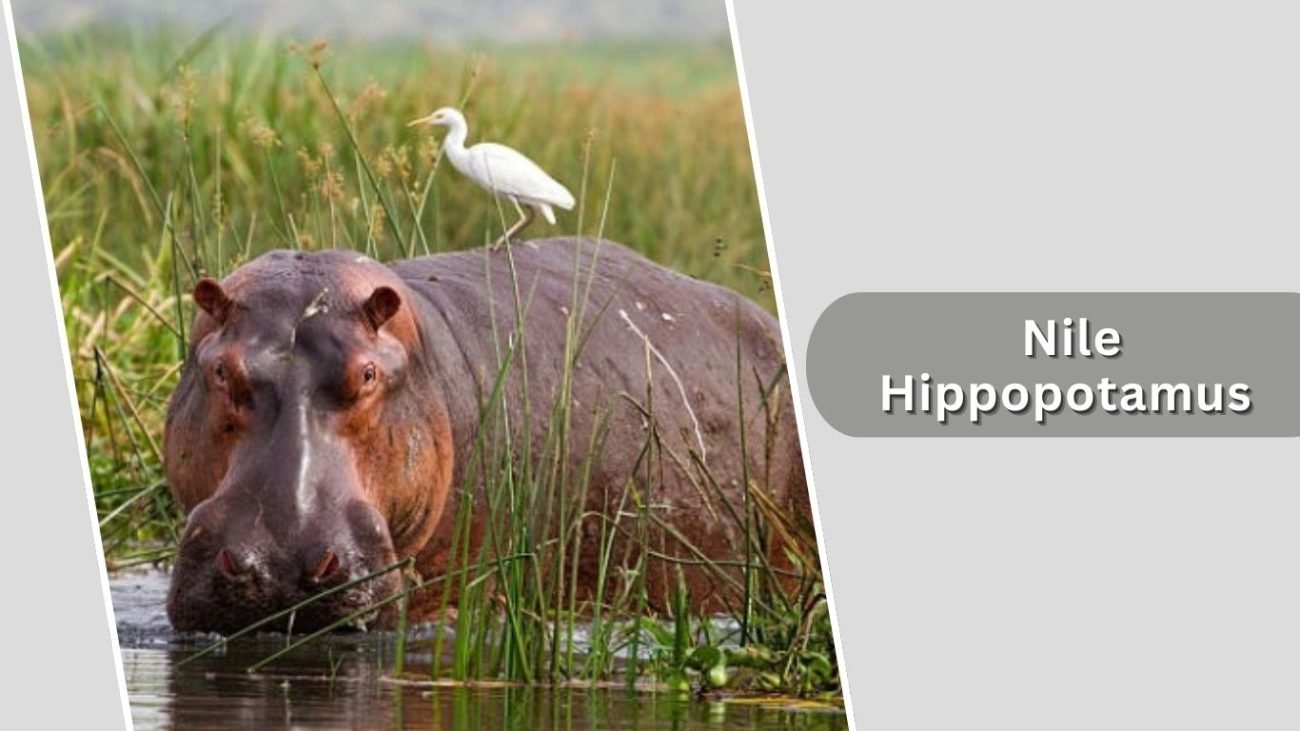
The Nile hippopotamus refers to populations of the common hippopotamus historically and currently found along the Nile River system. These hippos have played an important role in African ecosystems and ancient human cultures for thousands of years. While not a separate species, Nile hippos are well known for their strong association with large river habitats.
Identification
- Massive, thick-set body with rounded torso
- Grayish-brown, almost hairless skin that secretes oily moisture
- Large head with wide jaws and long curved tusks
- Eyes, ears, and nostrils positioned high on the skull
- Short, powerful legs built to support heavy weight
Habitat
Nile hippopotamuses inhabit major rivers, freshwater lakes, irrigation channels, and floodplains connected to the Nile Basin. They favor deep, slow-flowing water where they can remain submerged for long periods. At night, they move out onto nearby grasslands and agricultural edges to graze on short grasses.
Behaviors
These hippos are social animals that live in pods dominated by a mature male. They spend daylight hours resting in water to avoid overheating. At night, they travel to feeding grounds, often following the same paths for years. Nile hippos are highly territorial in water and can become extremely aggressive when their space is threatened.
Size & Weight
Nile hippopotamuses are among the largest living hippos, with adult males weighing between 1,600 and 3,200 kilograms. Body length commonly ranges from 3.5 to 5 meters, and shoulder height averages around 1.5 meters. Their enormous jaws and tusks make them one of Africa’s most dangerous mammals.
Lifespan & Lifecycle
Their average lifespan is about 40 to 50 years in natural conditions. Females usually give birth to a single calf after roughly eight months of pregnancy. Calves nurse both on land and underwater and remain close to their mothers for several years before gradually becoming independent and joining larger groups.
4. River Hippopotamus
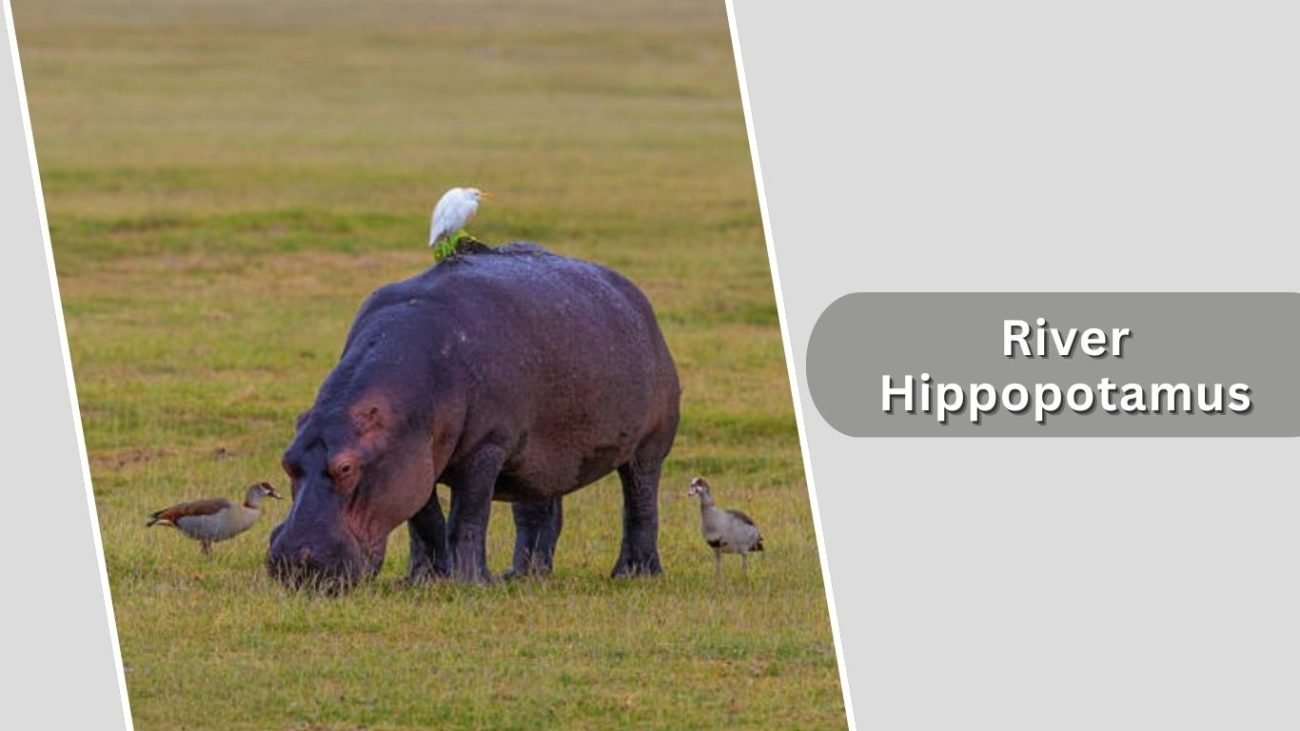
The river hippopotamus is a general term often used for common hippopotamus populations that live mainly in large rivers rather than lakes. These hippos are strongly tied to freshwater systems and depend on rivers for cooling, protection, and social life. They are powerful semi-aquatic mammals that spend most daylight hours submerged and become active on land after sunset.
Identification
- Enormous barrel-shaped body with thick, heavy torso
- Smooth gray to muddy-brown skin, almost hairless
- Very large head with wide mouth and long tusks
- Eyes, ears, and nostrils positioned high on the skull
- Short, stocky legs adapted for walking on riverbeds
Habitat
River hippopotamuses live along slow-moving rivers, deep channels, and connected wetlands. They prefer areas with permanent water and gently sloping banks that allow easy entry and exit. During the dry season, many individuals crowd into shrinking river pools, while in rainy seasons they spread into floodplains and side streams.
Behaviors
These hippos are social and form pods that may include 10 to 30 individuals, sometimes more. They spend most of the day resting in water to regulate body temperature. At night, they walk out along riverbanks to graze. Males defend sections of river, using vocalizations, displays, and occasionally violent fights.
Size & Weight
River hippopotamuses are as massive as typical common hippos. Adult males often weigh between 1,500 and 3,000 kilograms, while females are slightly smaller. Body length commonly reaches 3.5 to 5 meters, with a shoulder height of around 1.4 to 1.6 meters. Their dense bones help them stay submerged.
Lifespan & Lifecycle
They usually live 40 to 50 years in the wild. Females give birth to a single calf after about eight months of gestation. Birth often occurs in shallow water. Calves can close their nostrils to nurse underwater and remain under their mother’s protection for several years before becoming independent.
5. Cape Hippopotamus
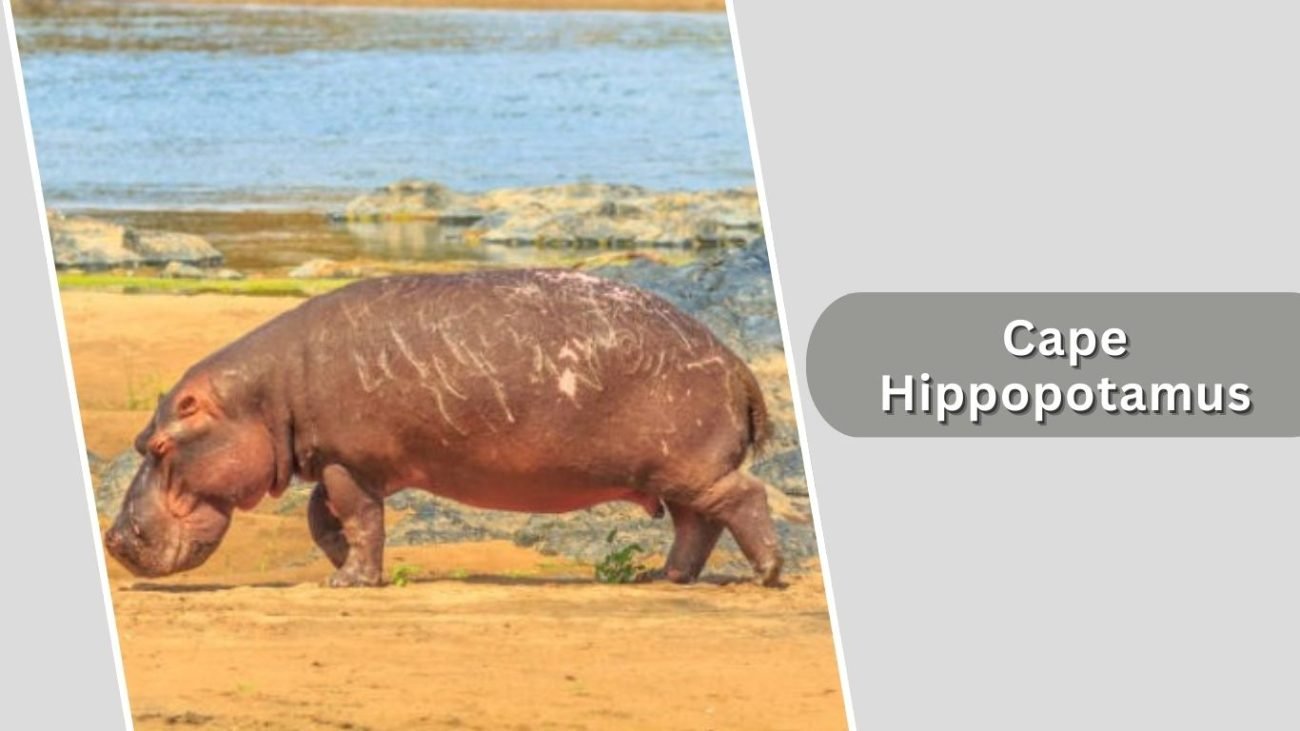
The Cape hippopotamus refers to common hippopotamus populations historically abundant in southern Africa, especially around the Cape region and major river systems. These hippos were once widespread and played an important ecological role in shaping riverbanks, grasslands, and aquatic nutrient cycles.
Identification
- Very large, thick-bodied mammal with rounded belly
- Grayish to brown skin with pinkish tones around eyes and ears
- Huge skull with powerful jaws and prominent tusks
- Broad snout with high-set eyes and nostrils
- Short, pillar-like legs supporting extreme weight
Habitat
Cape hippopotamuses inhabit rivers, lakes, floodplains, and large natural dams across southern Africa. They favor freshwater systems with nearby grazing areas. During the day, they remain mostly submerged. At night, they move into open grasslands and savannas to feed on short grasses.
Behaviors
They live in social groups dominated by a mature bull. Daytime is spent resting, vocalizing, and interacting in water. At dusk, they emerge to feed and may travel several kilometers from water. Although they appear slow, Cape hippos can charge quickly and are highly defensive of their space.
Size & Weight
Adult Cape hippopotamuses typically weigh between 1,400 and 3,200 kilograms. They measure around 3.3 to 5 meters long and stand about 1.5 meters at the shoulder. Males are heavier than females and develop larger tusks, which are used mainly for fighting and display.
Lifespan & Lifecycle
Their lifespan usually ranges from 40 to 50 years. Females give birth to one calf at a time, often in shallow water. The calf stays very close to its mother, riding on her back in deeper water and nursing frequently. Sexual maturity is reached after several years, with males maturing later than females.
6. East African Hippopotamus
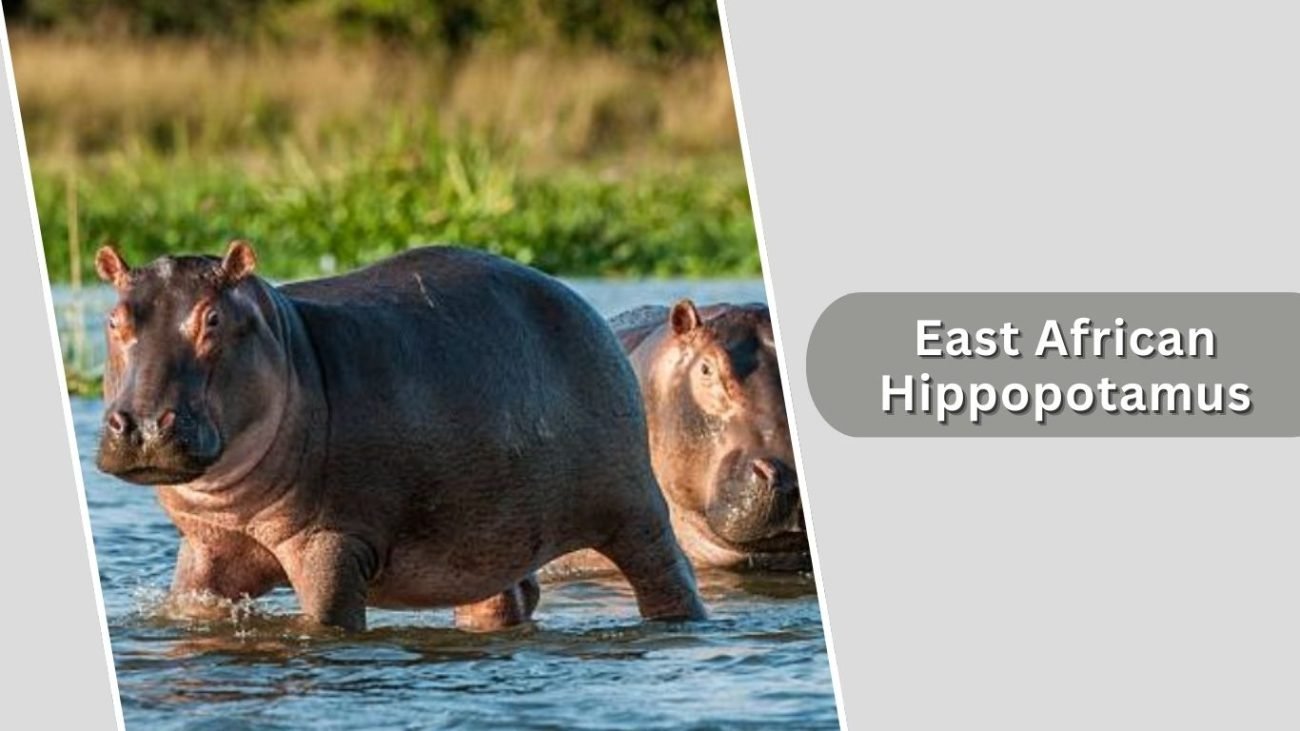
The East African hippopotamus refers to common hippo populations found across East Africa, especially in countries such as Kenya, Tanzania, Uganda, Ethiopia, and parts of South Sudan. These hippos are an iconic part of the region’s rivers and lakes and are closely associated with famous ecosystems like the Nile Basin, Lake Victoria, and the Serengeti–Mara river systems.
Identification
- Huge, rounded body with thick, grayish skin
- Massive head with a wide mouth and large tusks
- Eyes, ears, and nostrils set high on the skull
- Short but powerful legs adapted for semi-aquatic movement
- Nearly hairless body with sparse bristles around the mouth and tail
Habitat
East African hippopotamuses live in major rivers, freshwater lakes, marshes, and floodplains. They depend on permanent water for cooling and protection and prefer areas with nearby grasslands. Seasonal flooding allows them to expand into new habitats, while dry periods force them to concentrate in deeper pools.
Behaviors
They are highly social and usually live in pods led by a dominant male. Most of the day is spent resting in water, with only the eyes and nostrils visible. At night, they emerge to graze. East African hippos are known for loud vocalizations, strong territorial behavior in water, and long, well-worn paths between rivers and feeding grounds.
Size & Weight
Adult males commonly weigh between 1,600 and 3,200 kilograms, while females are smaller. Body length ranges from about 3.5 to 5 meters, and shoulder height averages around 1.4 to 1.6 meters. Their thick skin and dense bones make them well suited to a life split between land and water.
Lifespan & Lifecycle
They typically live 40 to 50 years in the wild. After an eight-month pregnancy, the female gives birth to a single calf. The calf can swim soon after birth and often rests on its mother’s back. Young hippos stay within the pod and remain dependent for several years before reaching maturity.
7. West African Hippopotamus
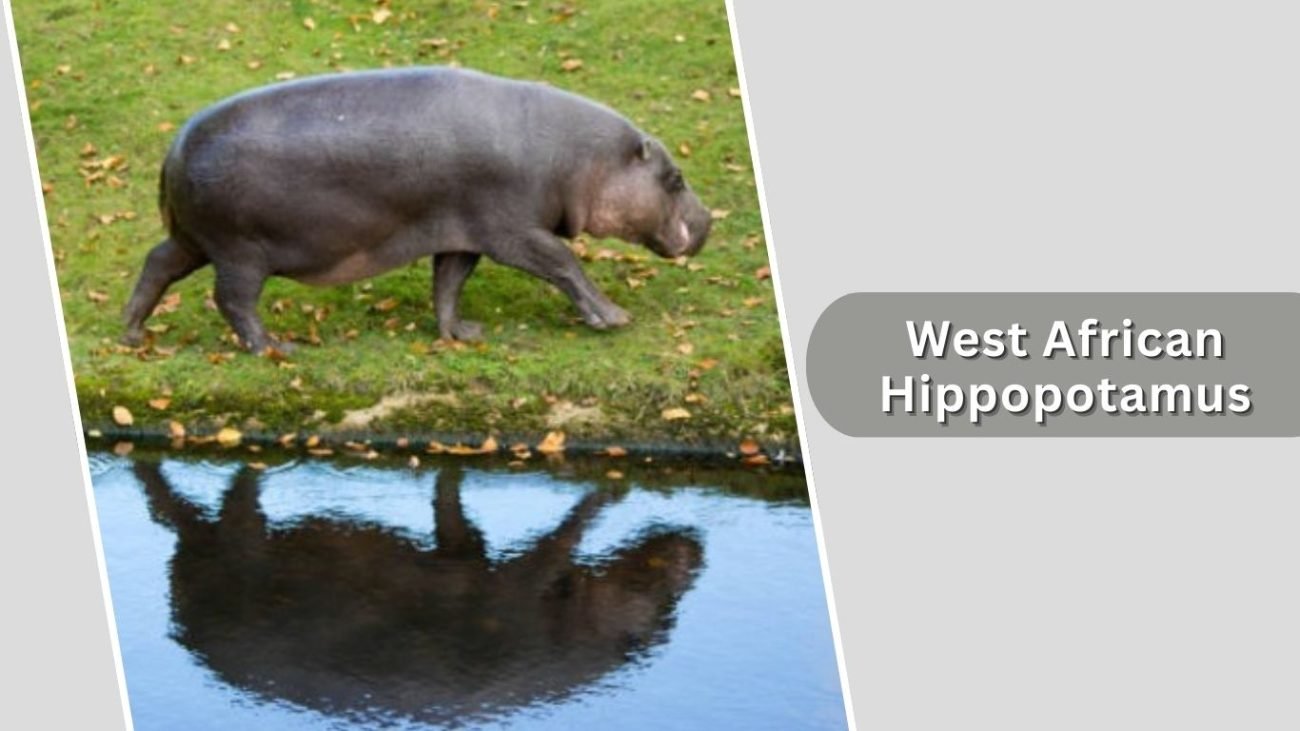
The West African hippopotamus refers to hippo populations inhabiting the river systems and wetlands of West Africa. These hippos are less numerous than those in East and Southern Africa due to habitat loss and human pressure, but they still occupy important freshwater ecosystems across the region.
Identification
- Large, heavy body with smooth gray to dark brown skin
- Broad head with thick lips and long canine tusks
- Eyes and nostrils positioned high for surface breathing
- Short, thick legs and wide feet with webbing
- Sparse hair around the muzzle and tail
Habitat
West African hippopotamuses live along rivers, oxbow lakes, swamps, and seasonal floodplains. They favor slow-moving water bordered by grassy areas. In forested regions, they may use shaded streams and marshes. Access to both water and grazing land is essential for their survival.
Behaviors
They live in groups that may range from a few individuals to large pods. Daytime is spent mostly submerged to avoid heat stress. At night, they travel out to feed on grasses, crops, and riverbank plants. They can be aggressive when disturbed, particularly in narrow waterways.
Size & Weight
Their size is comparable to other common hippos. Adults usually weigh between 1,400 and 3,000 kilograms. Body length commonly reaches 3.3 to 5 meters, with shoulder height around 1.4 to 1.5 meters. Males are heavier and have more developed tusks.
Lifespan & Lifecycle
West African hippos typically live 35 to 45 years in natural conditions. Females give birth to one calf after about eight months of gestation. The calf stays close to its mother, nursing frequently and learning social behavior within the pod as it grows.
8. Ethiopian Hippopotamus
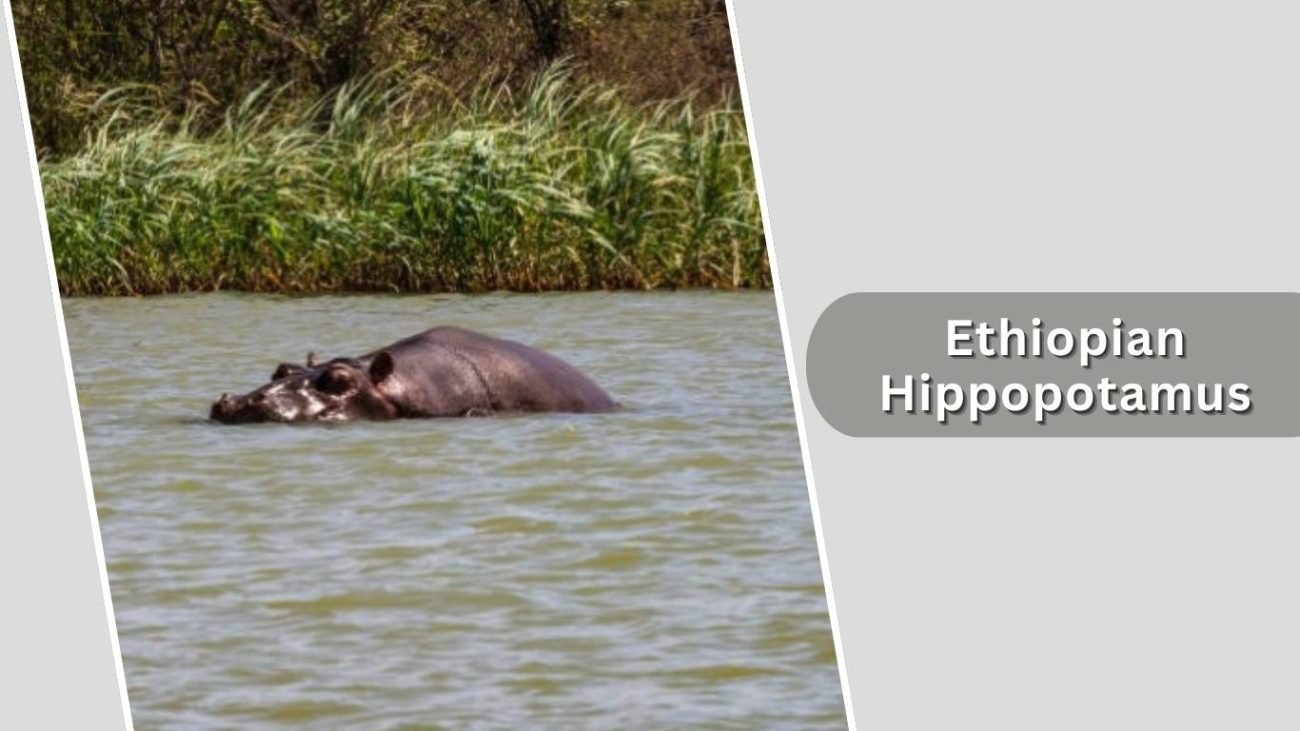
The Ethiopian hippopotamus refers to hippo populations found in and around Ethiopia’s major river systems, including parts of the Blue Nile and Omo basins. These hippos are part of the wider common hippopotamus species and are adapted to both highland river valleys and lowland floodplains, where permanent water supports their semi-aquatic lifestyle.
Identification
- Very large, heavy-set body with rounded shape
- Thick gray to brownish skin, nearly hairless
- Broad head with huge jaws and curved tusks
- Eyes, ears, and nostrils located high on the skull
- Short, strong legs and wide feet
Habitat
Ethiopian hippopotamuses inhabit large rivers, seasonal waterways, wetlands, and floodplains. They prefer deep pools and slow-moving stretches of rivers that allow them to remain submerged during the day. Nearby grasslands and riverbanks provide essential nighttime grazing areas.
Behaviors
They are social animals that form pods made up of females, calves, and a dominant male. During daylight hours, they rest in water or mud. At night, they leave the rivers to graze. Ethiopian hippos are highly vocal, using grunts and bellows to communicate, and adult males can be extremely territorial.
Size & Weight
Adults commonly weigh between 1,500 and 3,000 kilograms. They usually measure about 3.3 to 5 meters long and stand roughly 1.4 to 1.6 meters tall at the shoulder. Their immense size makes them one of the largest mammals found in Ethiopian freshwater habitats.
Lifespan & Lifecycle
They generally live around 40 to 50 years. After a gestation period of about eight months, the female gives birth to a single calf, often in shallow water. Calves nurse both on land and underwater and remain dependent on their mothers for several years.
9. Sudanese Hippopotamus
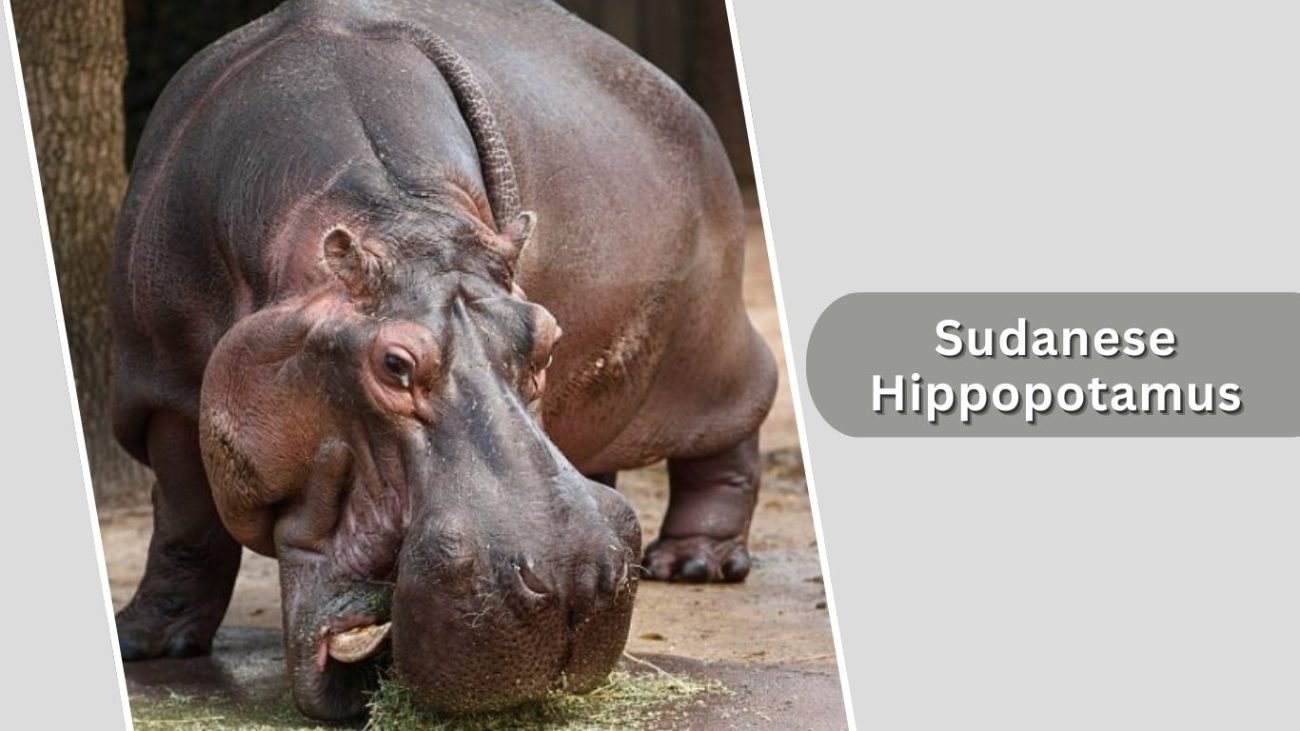
The Sudanese hippopotamus refers to hippo populations living in Sudan and South Sudan, mainly along the Nile, White Nile, and connected wetlands. These hippos are an important part of the region’s river ecosystems and have long been associated with seasonal flooding cycles.
Identification
- Massive barrel-shaped body with thick torso
- Smooth grayish-brown skin that secretes oily moisture
- Huge head with wide jaws and prominent tusks
- Elevated eyes, ears, and nostrils
- Short, pillar-like legs with broad feet
Habitat
Sudanese hippopotamuses inhabit major rivers, swamps, and floodplains. They depend on deep water for daytime shelter and nearby grassy areas for nighttime feeding. During flood seasons, they spread widely across wetlands; in dry periods, they concentrate in permanent river pools.
Behaviors
They live in pods led by a dominant bull. Most of the day is spent resting in water. At night, they travel to graze, often following traditional paths. Sudanese hippos can be very aggressive if disturbed in water, especially when calves are present.
Size & Weight
Adult males often weigh between 1,600 and 3,200 kilograms, with females slightly lighter. They are usually 3.5 to 5 meters long and stand about 1.5 meters tall at the shoulder. Their jaws are powerful enough to cause serious injury to predators and rivals.
Lifespan & Lifecycle
Their average lifespan ranges from 35 to 50 years. Females give birth to a single calf after about eight months of pregnancy. Calves remain close to their mothers, learning swimming and grazing behaviors before gradually integrating into the pod.
10. Congolese Hippopotamus
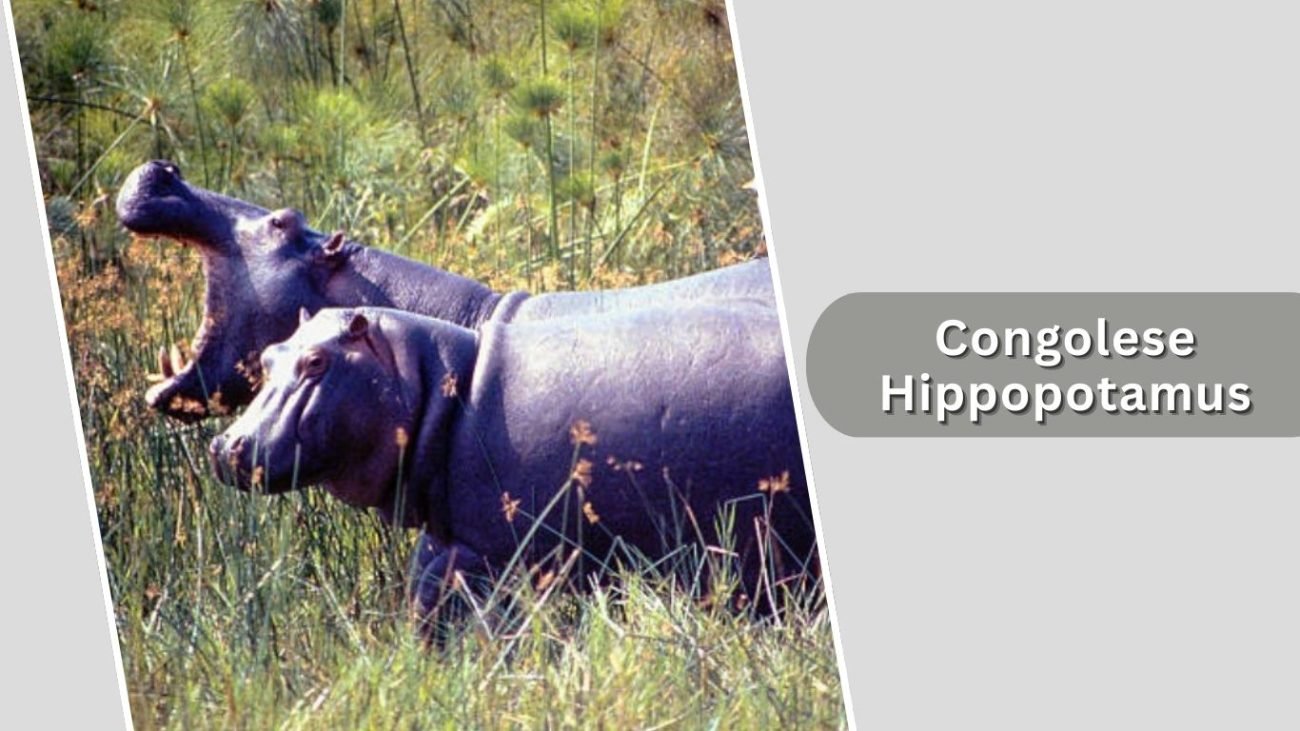
The Congolese hippopotamus refers to hippo populations found within the river systems of the Democratic Republic of the Congo, particularly the Congo River and its vast network of tributaries. These hippos are part of one of the largest remaining strongholds for the common hippopotamus and are closely tied to rainforest rivers and swamp ecosystems.
Identification
- Extremely large, thick-bodied mammal with rounded form
- Gray to dark brown skin, nearly hairless and smooth
- Massive head with wide jaws and long tusks
- Eyes, ears, and nostrils set high on the skull
- Short, powerful legs and wide, splayed toes
Habitat
Congolese hippopotamuses inhabit large rivers, swamp forests, oxbow lakes, and flooded lowlands. They prefer slow-moving or still waters with muddy bottoms. Dense surrounding vegetation and extensive floodplains provide cover and rich grazing areas, especially during seasonal floods.
Behaviors
They live in social pods that may range from small family groups to large gatherings in favorable habitats. Most of the day is spent submerged to avoid heat. At night, they leave the water to graze on grasses and riverbank plants. They communicate with grunts and bellows and are highly defensive in water.
Size & Weight
Adults commonly weigh between 1,500 and 3,000 kilograms. Body length ranges from about 3.3 to 5 meters, with shoulder height near 1.5 meters. Males are larger and possess more developed tusks, which are used mainly for dominance battles.
Lifespan & Lifecycle
They usually live around 40 to 50 years. After an eight-month gestation, females give birth to a single calf. The calf can swim soon after birth and stays closely bonded to its mother for several years.
11. Ugandan Hippopotamus
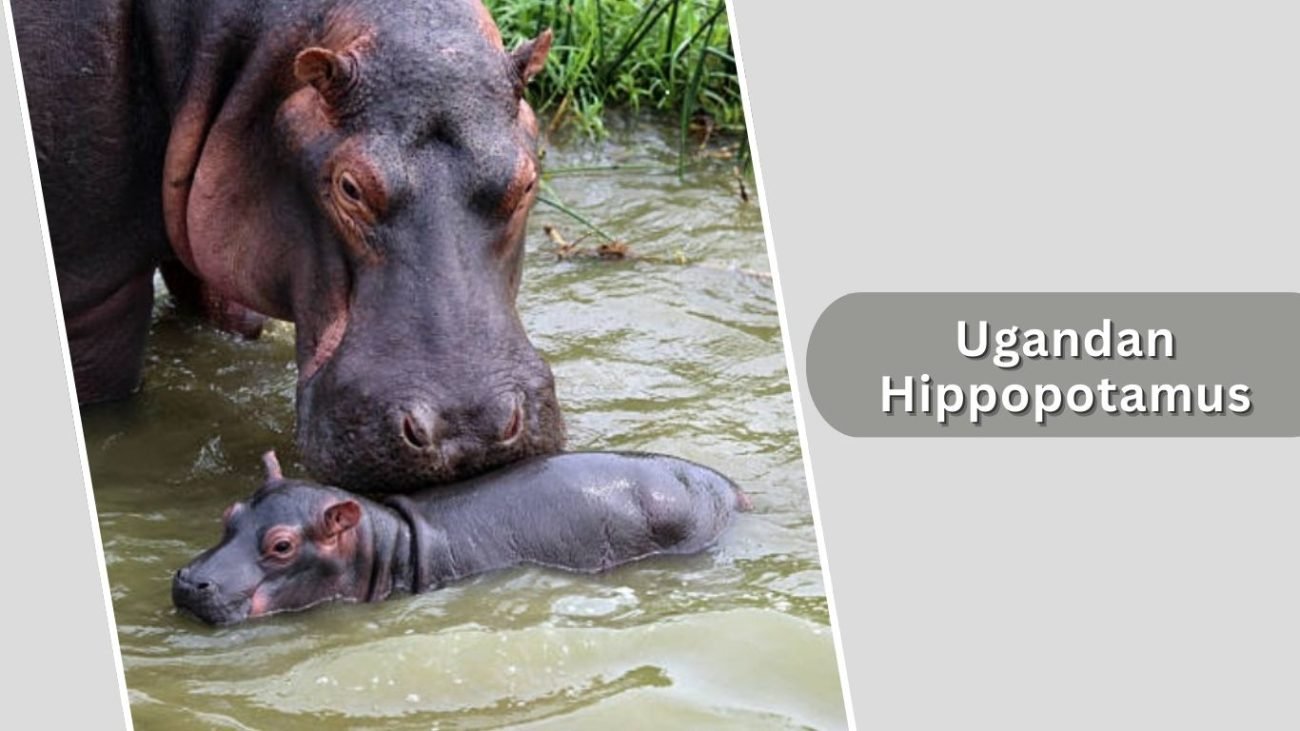
The Ugandan hippopotamus refers to hippo populations living throughout Uganda’s extensive freshwater systems, including the Nile River, Lake Victoria, Lake Albert, and numerous wetlands. Uganda hosts one of the highest hippo densities in Africa, making them a prominent feature of the country’s wildlife.
Identification
- Very large, heavy-set body with rounded torso
- Thick grayish skin with pinkish tones around eyes and ears
- Huge mouth with long canine tusks
- High-set eyes, ears, and nostrils
- Short, strong legs with wide hooves
Habitat
Ugandan hippopotamuses inhabit lakeshores, major rivers, papyrus swamps, and floodplains. They require deep, permanent water for resting and nearby grazing areas for nighttime feeding. Large lake systems allow them to form especially dense populations.
Behaviors
They are social animals forming pods that can include dozens of individuals. During the day, they remain mostly in water. At night, they emerge to graze. Ugandan hippos are well known for using established trails between water and grasslands and for strong territorial behavior in crowded waterways.
Size & Weight
Adult males often weigh between 1,600 and 3,200 kilograms. Body length ranges from 3.5 to 5 meters, and shoulder height is about 1.4 to 1.6 meters. Females are smaller but still extremely massive animals.
Lifespan & Lifecycle
They typically live 40 to 50 years. Females give birth to one calf after about eight months of pregnancy. Calves stay close to their mothers, riding on their backs in deep water and nursing frequently until they grow strong enough to be more independent.
12. Zambian Hippopotamus
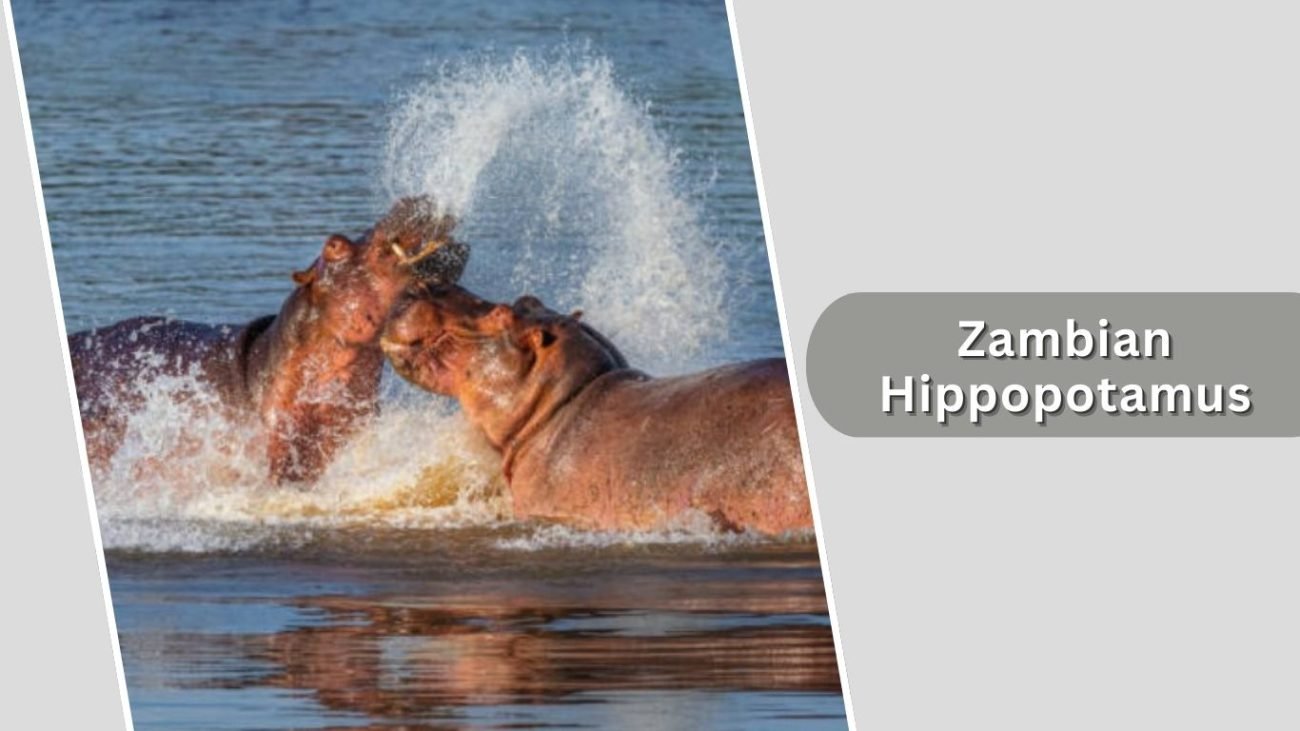
The Zambian hippopotamus refers to hippo populations living in Zambia’s major river and lake systems, especially the Zambezi River, Luangwa River, and associated floodplains. These hippos are a vital part of aquatic ecosystems and are commonly seen in large pods along slow-moving waterways.
Identification
- Massive, rounded body with thick grayish-brown skin
- Extremely large head with wide jaws and long tusks
- Eyes, ears, and nostrils set high on the skull
- Short, stocky legs with broad feet
- Sparse hair mainly around the mouth and tail
Habitat
Zambian hippopotamuses inhabit big rivers, oxbow lakes, wetlands, and seasonal floodplains. They prefer permanent water with gently sloping banks and nearby grasslands. During flood seasons, they spread widely into newly submerged areas; during dry seasons, they gather in deeper pools.
Behaviors
They are social animals forming pods that may include dozens of individuals. Daytime is spent resting in water or mud. At night, they leave the water to graze on grasses, sometimes traveling several kilometers. Adult males are territorial in water and will aggressively defend favored sections.
Size & Weight
Adults generally weigh between 1,500 and 3,000 kilograms. They measure about 3.3 to 5 meters in length and stand roughly 1.4 to 1.6 meters at the shoulder. Their dense skeleton helps them remain stable underwater.
Lifespan & Lifecycle
They usually live 35 to 50 years. After about eight months of pregnancy, a female gives birth to a single calf. The calf learns to swim quickly and remains dependent on its mother for nourishment and protection for several years.
13. Tanzanian Hippopotamus
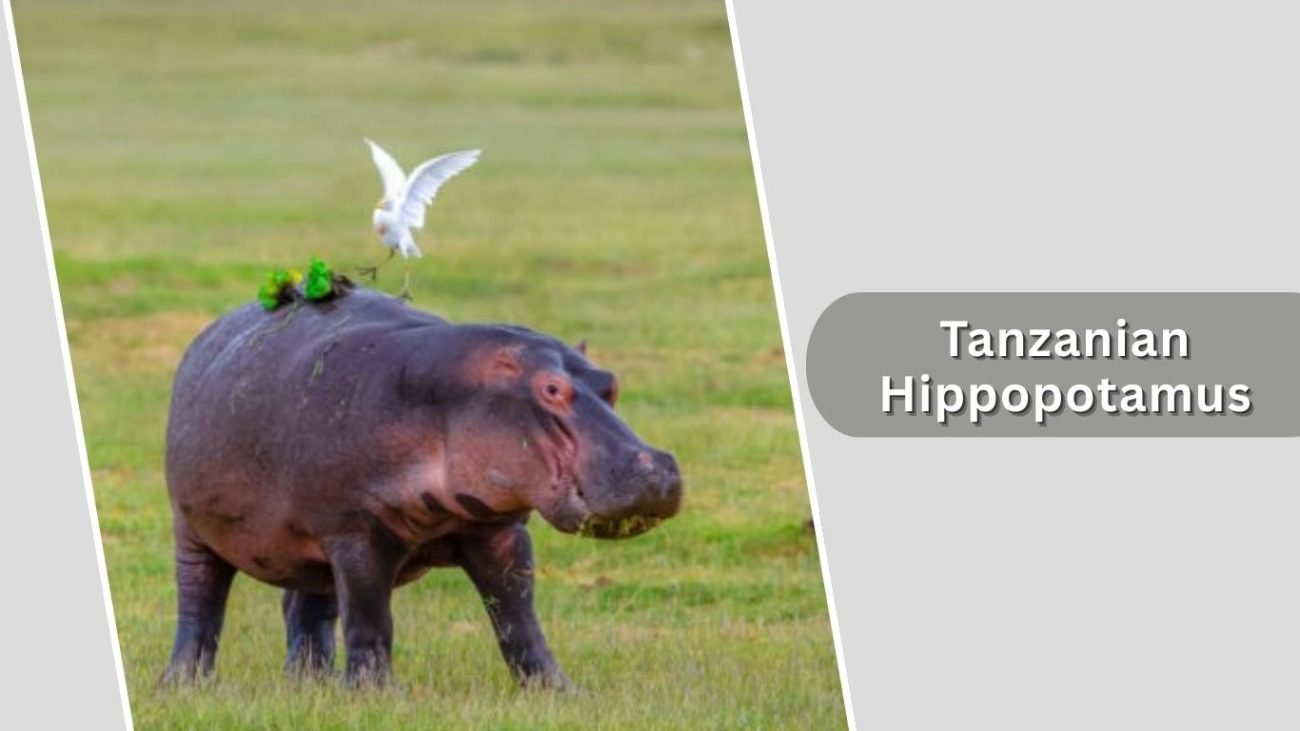
The Tanzanian hippopotamus refers to hippo populations inhabiting Tanzania’s lakes and river systems, including Lake Victoria, Lake Tanganyika, and rivers flowing through national parks such as Serengeti and Selous. These hippos are among the most visible large mammals in East Africa’s protected areas.
Identification
- Very large, barrel-shaped body with thick smooth skin
- Gray to brown coloration with pinkish areas around the face
- Huge mouth with powerful jaws and tusks
- Elevated eyes, ears, and nostrils
- Short, strong legs supporting great weight
Habitat
Tanzanian hippopotamuses live in lakes, major rivers, swamps, and floodplains. They favor deep, slow-moving waters and shorelines with open grasslands. National parks and protected reserves provide ideal habitats where water and grazing grounds remain relatively undisturbed.
Behaviors
They are highly social, living in pods dominated by a bull. During the day, they remain submerged. At night, they move out to feed on short grasses. Tanzanian hippos are known for dramatic river crossings during migrations of other animals and for intense territorial disputes in crowded waterways.
Size & Weight
Adult males often weigh between 1,600 and 3,200 kilograms. Body length usually ranges from 3.5 to 5 meters, and shoulder height averages around 1.5 meters. Females are somewhat smaller but still extremely heavy.
Lifespan & Lifecycle
They typically live around 40 to 50 years. Females give birth to a single calf after about eight months of gestation. Calves stay close to their mothers, nursing both on land and underwater, and gradually become independent as they grow.
14. Kenyan Hippopotamus
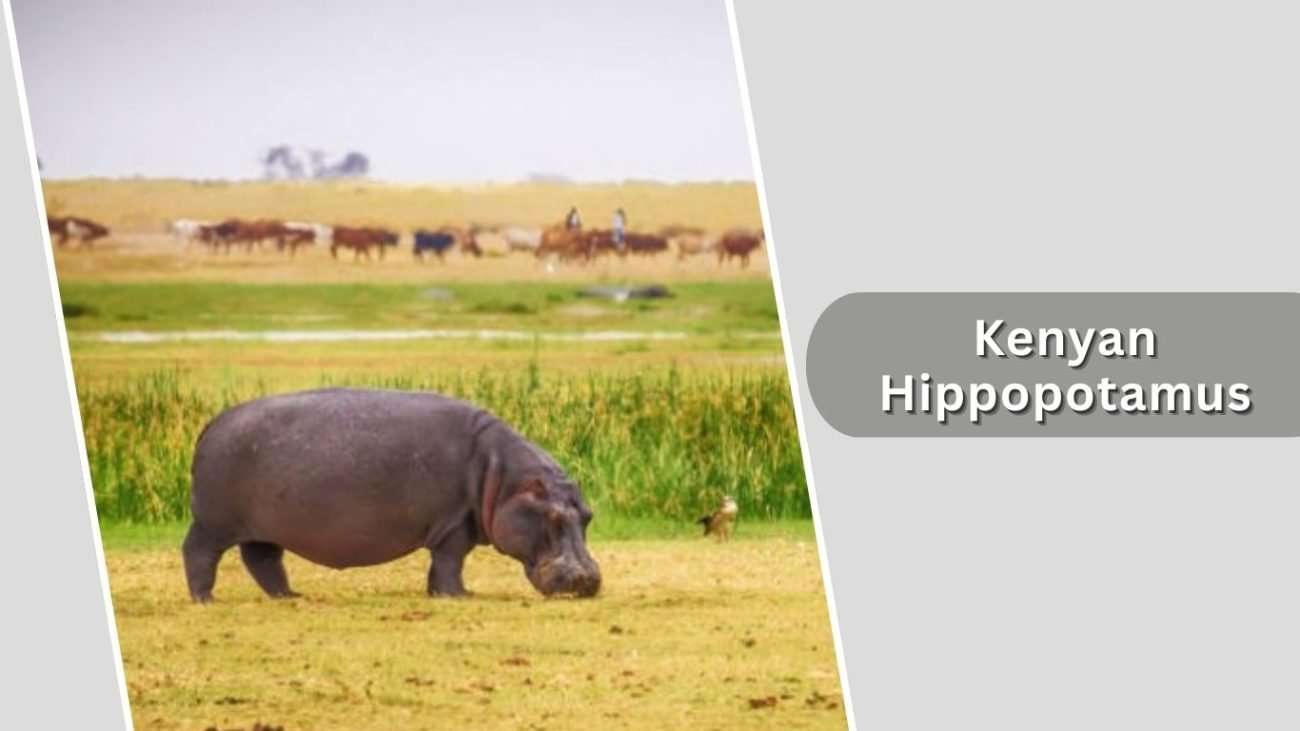
The Kenyan hippopotamus refers to hippo populations living throughout Kenya’s freshwater systems, including the Mara River, Tana River, Lake Naivasha, and parts of Lake Victoria. These hippos are an iconic part of Kenya’s wildlife and play a major role in shaping riverbank vegetation and aquatic ecosystems.
Identification
- Very large, rounded body with thick grayish skin
- Massive head with a wide mouth and prominent tusks
- Eyes, ears, and nostrils positioned high on the skull
- Short, sturdy legs with wide feet
- Sparse hair mainly around the snout and tail
Habitat
Kenyan hippopotamuses inhabit major rivers, lakes, marshes, and floodplains. They depend on deep freshwater for daytime resting and nearby grasslands for nighttime grazing. River systems within savannas and wildlife reserves provide ideal conditions for large, stable populations.
Behaviors
They live in social pods dominated by an adult male. During the day, they rest in water, often packed closely together. At night, they emerge to graze. Kenyan hippos are well known for defending river territories and for dramatic interactions with crocodiles and other wildlife.
Size & Weight
Adult males often weigh between 1,600 and 3,200 kilograms. They usually measure about 3.5 to 5 meters in length and stand roughly 1.4 to 1.6 meters tall at the shoulder. Females are slightly smaller but still extremely massive animals.
Lifespan & Lifecycle
They generally live 40 to 50 years. Females give birth to a single calf after about eight months of pregnancy. The calf stays very close to its mother, often riding on her back in deep water, and remains dependent for several years.
15. Angolan Hippopotamus
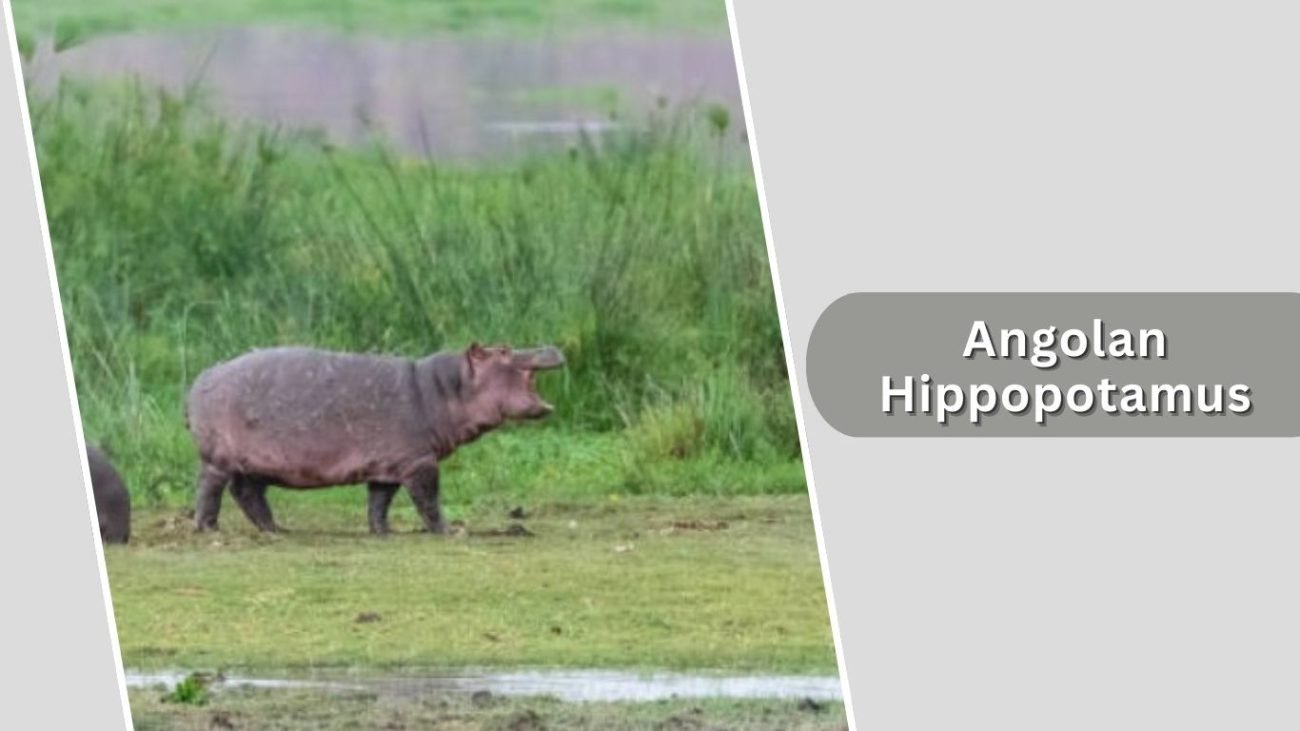
The Angolan hippopotamus refers to hippo populations inhabiting Angola’s rivers, lakes, and floodplains, particularly within the Congo and Zambezi drainage systems. These hippos are part of the common hippopotamus species and are adapted to both woodland river valleys and open floodplain environments.
Identification
- Enormous, heavy-set body with thick smooth skin
- Gray to dark brown coloration
- Very large head with broad mouth and long tusks
- Elevated eyes, ears, and nostrils
- Short, strong legs and wide hooves
Habitat
Angolan hippopotamuses live in major rivers, wetlands, seasonal floodplains, and permanent lakes. They prefer slow-moving water with muddy bottoms and nearby grazing areas. Flood seasons allow them to spread widely across wetlands, while dry seasons concentrate them in deeper channels.
Behaviors
They are social animals that form pods of varying size. Most of the day is spent resting in water or mud. At night, they leave the water to graze. They can be highly territorial in water, with males defending favored stretches of river.
Size & Weight
Adults commonly weigh between 1,400 and 3,000 kilograms. Body length ranges from about 3.3 to 5 meters, with shoulder height around 1.4 to 1.6 meters. Their massive jaws and tusks make them one of the most powerful herbivores in Africa.
Lifespan & Lifecycle
They typically live around 35 to 50 years. After about eight months of gestation, the female gives birth to a single calf. The calf quickly learns to swim and remains closely bonded to its mother for nourishment and protection during early life.