










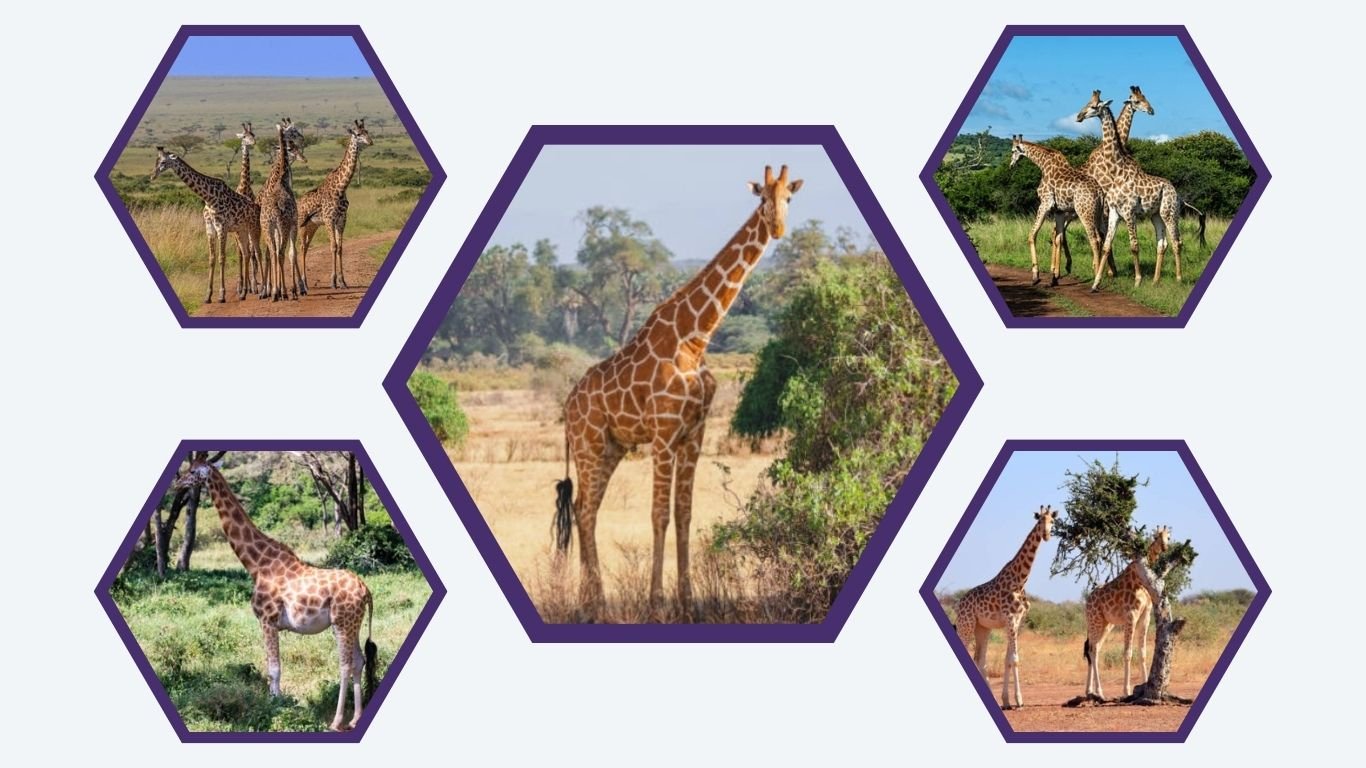
Giraffes are one of the most iconic animals in the animal kingdom, known for their towering height and unique coat patterns. There are several distinct types of giraffes, each with its own physical characteristics and habitat preferences. From the striking reticulated giraffe to the rare West African giraffe, these majestic creatures play a vital role in their ecosystems. In this article, we’ll explore the different types and their key features.
1. Reticulated Giraffe
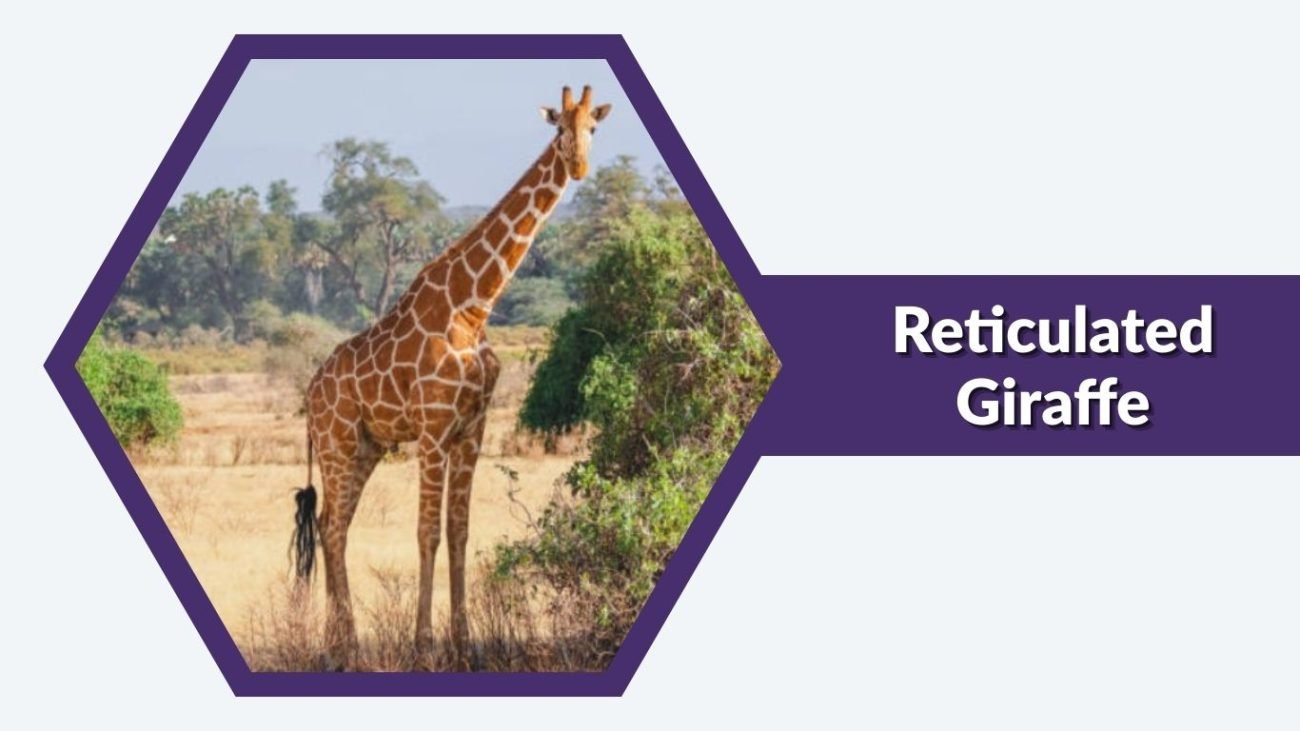
The reticulated giraffe is one of the most visually striking giraffe types, easily identified by its bold and sharply defined coat pattern. Large polygon-shaped patches are outlined by bright white lines, creating a net-like appearance that gives this giraffe its name. This pattern is not only beautiful but also helps with camouflage among trees and shadows. Known for its elegant build and alert nature, the reticulated giraffe is well adapted to open landscapes where visibility is high and predators can be spotted from a distance. It is also one of the more social giraffe types, frequently observed in loose, mixed-age groups.
Identification
- Large, clearly defined polygon-shaped patches
- Bright white lines separating dark brown or orange markings
- Very tall stature with long neck and slender legs
- Smooth and glossy coat compared to other giraffe types
- Horn-like ossicones covered with skin and hair
Habitat
Reticulated giraffes are primarily found in dry savannas, open grasslands, and lightly wooded areas. They favor regions with scattered tall trees rather than dense forests, as open spaces allow easier movement and better visibility. Acacia-dominated landscapes are especially important, providing both food and shelter. These giraffes tend to avoid swampy or heavily forested regions and are most comfortable in semi-arid environments where seasonal rainfall supports tree growth without creating thick underbrush.
Behaviors
This giraffe type is highly social and often forms groups that change in size and composition throughout the day. Individuals may join or leave groups freely without aggressive interactions. Reticulated giraffes spend much of their time feeding, walking slowly between feeding sites, and resting while standing. They rely on excellent eyesight to detect predators early and may use their height advantage to remain alert while other animals graze nearby. Communication includes body posture, movement, and occasional low-frequency sounds.
Diet
The diet of the reticulated giraffe consists mainly of leaves, shoots, buds, and twigs from tall trees. Acacia leaves are a major food source, thanks to their abundance in the giraffe’s range. Their long, flexible tongues and tough lips help them strip leaves from thorny branches with ease. By feeding high above the ground, reticulated giraffes reduce competition with other herbivores and play an important role in shaping tree growth within their habitat.
2. Masai Giraffe
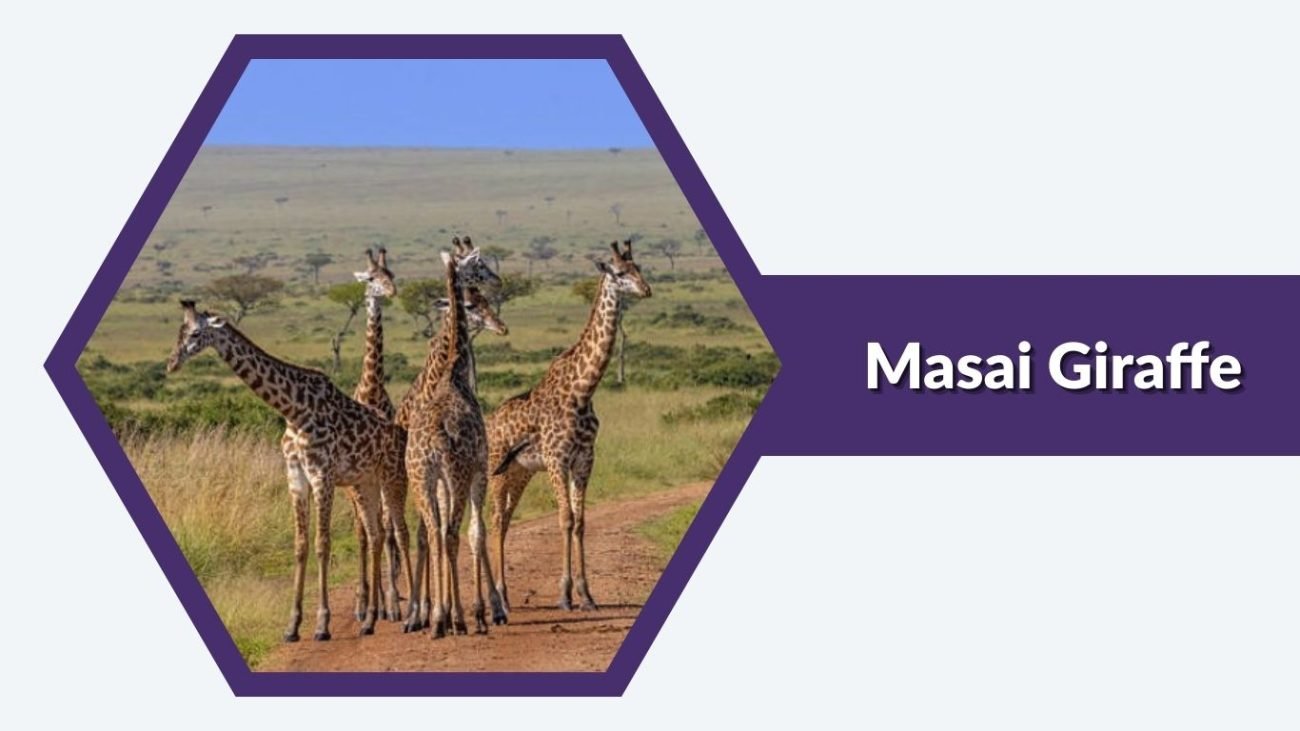
The Masai giraffe is one of the largest and most widespread giraffe types, known for its bold, irregular coat pattern. Unlike giraffes with neatly defined markings, this species has jagged, star-like patches that extend down the legs. Its appearance varies slightly across regions, making each individual look unique. Strongly built and highly adaptable, the Masai giraffe thrives in a range of natural landscapes and is well suited to both dry and moderately wet environments.
Identification
- Irregular, jagged-edged patches with star-like shapes
- Dark brown markings on a lighter tan background
- Patches often extend down the legs
- Large body size with a thick neck and strong frame
- Ossicones usually thicker and more noticeable
Habitat
Masai giraffes inhabit savannas, open woodlands, and grasslands with scattered trees. They are commonly found in regions that experience seasonal rainfall, which supports the growth of browse plants. These giraffes prefer areas with a mix of open space and tall trees, allowing them to move freely while still accessing food. They can adapt to drier areas as long as suitable tree species are available.
Behaviors
Masai giraffes are generally calm and social, often seen in small to medium-sized groups. Group membership is flexible, with individuals frequently changing companions. Males may engage in necking behavior, using their necks to spar and establish dominance. Most of their day is spent feeding, walking, and resting while standing. They are alert animals and rely heavily on their height and vision to stay aware of predators.
Diet
Their diet mainly consists of leaves, shoots, flowers, and seed pods from tall trees. Acacia species are particularly important, though they also feed on other browse plants when available. The Masai giraffe’s long tongue and tough mouth tissues allow it to feed on thorny vegetation with little difficulty, helping it survive in environments where softer plants are limited.
3. Northern Giraffe
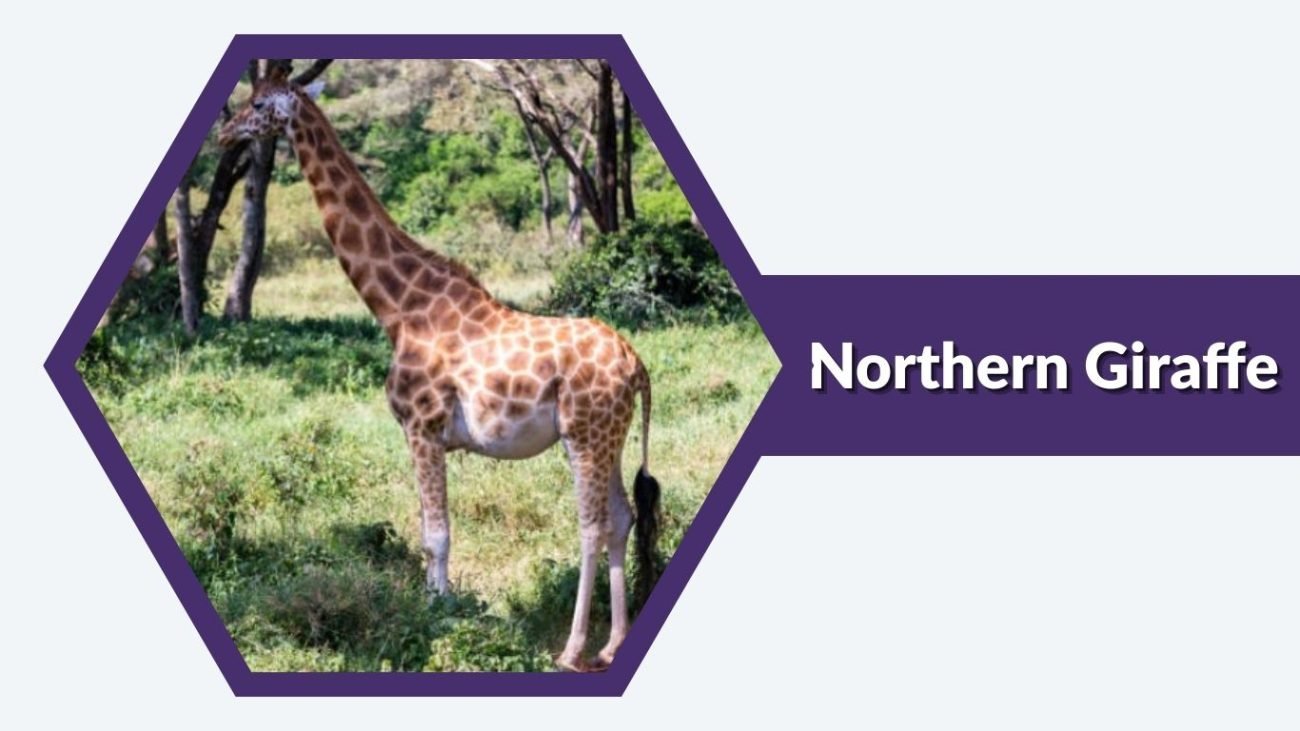
The northern giraffe is a tall and graceful giraffe type recognized for its relatively light-colored coat and large, blocky patches. Compared to other giraffes, its markings appear more spaced out, giving it a cleaner and less crowded pattern. This giraffe is adapted to open environments where height and visibility are major advantages. It is generally calm in nature and moves slowly across its range while feeding and monitoring its surroundings.
Identification
- Large, pale brown patches with uneven edges
- Creamy or off-white background color
- Patches are more separated than in many other giraffes
- Long legs and an elongated neck
- Ossicones are well developed, especially in males
Habitat
Northern giraffes inhabit dry savannas, open plains, and lightly wooded regions. They prefer landscapes with tall trees and shrubs rather than dense vegetation. These areas provide easy access to food while allowing wide visibility to detect predators. Seasonal changes influence their movement, and they may travel longer distances during dry periods to find suitable feeding areas.
Behaviors
This giraffe type is social but not overly dependent on large herds. Small groups form and dissolve regularly, often based on feeding needs. Northern giraffes spend much of their time browsing and walking between trees. Males may display dominance behaviors such as necking, while females are more focused on feeding and caring for calves. They are generally quiet animals, relying more on posture and movement than sound.
Diet
Northern giraffes are herbivores that mainly feed on leaves, buds, and young shoots from tall trees. Acacia and similar species make up a significant portion of their diet. Their long tongues and tough lips allow them to reach and consume vegetation that is unavailable to most other grazing animals, helping reduce competition for food.
4. Southern Giraffe
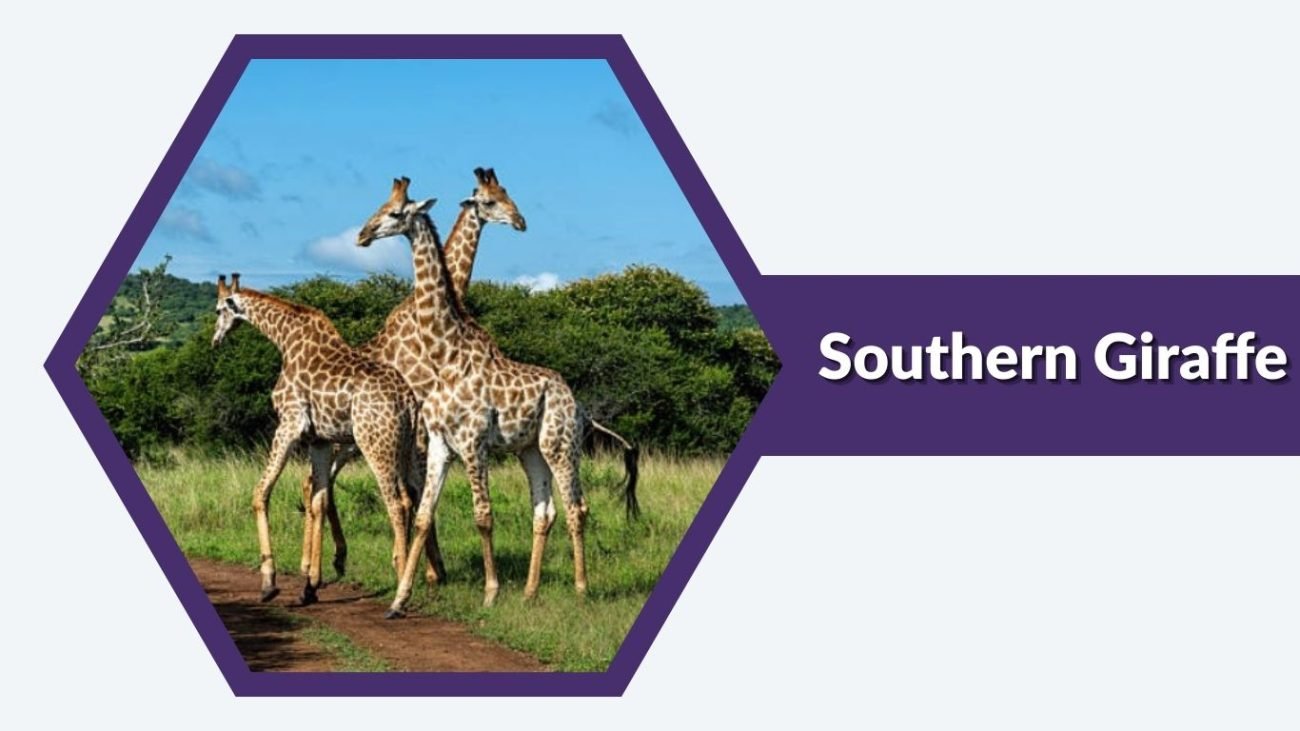
The southern giraffe is known for its balanced build and rounded coat markings, which give it a softer appearance compared to other giraffe types. Its patches are large and smooth-edged, often darker in color, and evenly spaced across the body. This giraffe is well adapted to varied environments and is considered one of the more adaptable giraffe types. Calm and observant by nature, it spends much of its time browsing at a relaxed pace.
Identification
- Rounded or irregular patches with smooth edges
- Brown to chestnut-colored markings on a light background
- Patches do not extend far down the lower legs
- Long neck with a proportionate, sturdy body
- Ossicones present in both males and females
Habitat
Southern giraffes inhabit savannas, open woodlands, and lightly forested regions. They are commonly found in areas with mixed vegetation, including shrubs and tall trees. These giraffes can tolerate both dry and moderately wet environments, as long as sufficient browse plants are available. They tend to favor regions where trees are spaced widely, allowing easy movement and access to food.
Behaviors
This giraffe type is social and usually seen in loose groups that change frequently. Individuals may separate and reunite without conflict. Southern giraffes are generally peaceful, with males only becoming aggressive during mating competitions. Necking behavior is observed among males to establish dominance. Most of their day is spent feeding, walking slowly between trees, and resting while standing or occasionally lying down.
Diet
The southern giraffe feeds mainly on leaves, shoots, and twigs from tall trees. Acacia species are an important part of their diet, along with other browse plants depending on availability. Their long tongues and flexible lips allow them to carefully strip leaves from branches, including thorny ones. By feeding at different heights, they reduce competition with other herbivores sharing the same habitat.
5. West African Giraffe
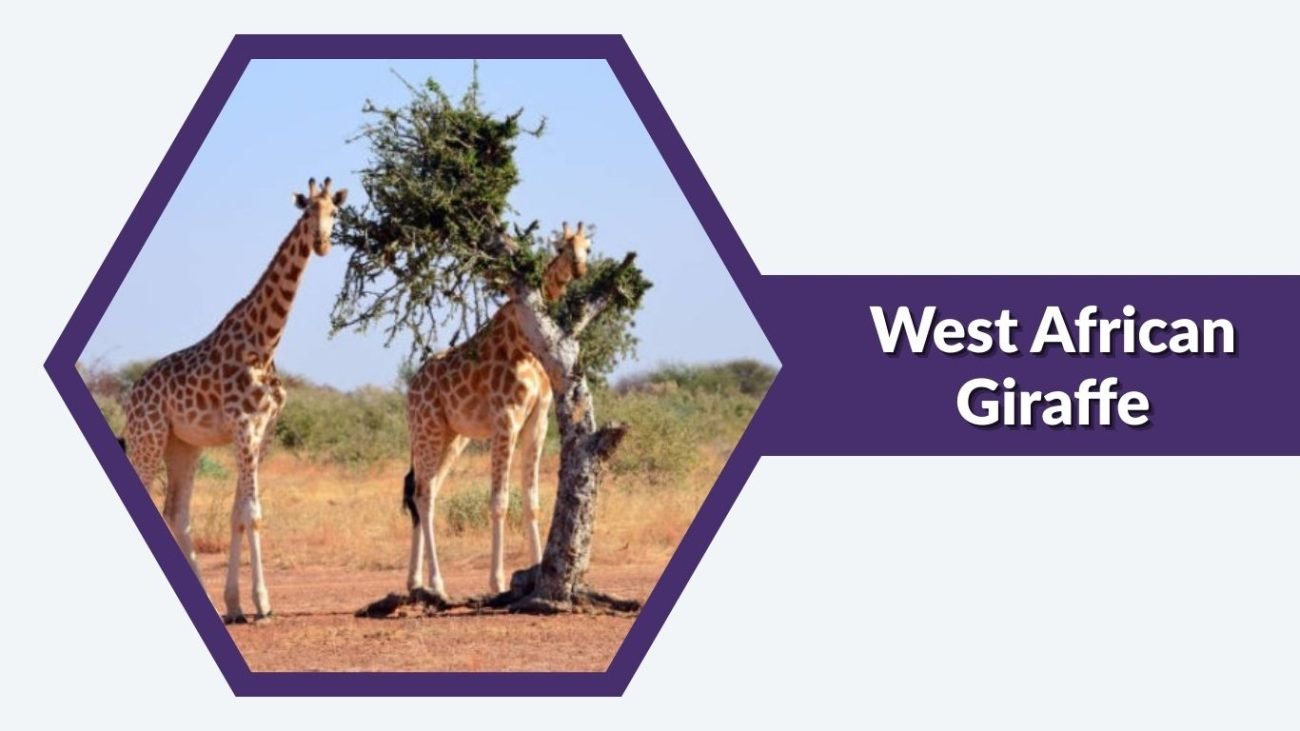
The West African giraffe is one of the rarest giraffe types and is easily recognized by its light, almost golden-colored coat. Its patches are pale and less sharply defined, giving it a softer and more uniform appearance than other giraffes. This giraffe is known for its gentle nature and strong adaptation to human-influenced landscapes, as it often lives close to farming areas. Despite its limited range, it has shown resilience through careful conservation efforts.
Identification
- Very light tan or cream-colored patches
- Pale markings with softer, less distinct edges
- Overall lighter appearance compared to other giraffe types
- Long legs and tall neck with a slim frame
- Ossicones are present but usually less prominent
Habitat
West African giraffes inhabit dry savannas, open woodlands, and semi-arid regions. Unlike many other giraffe types, they are often found in areas near villages and agricultural land, where trees still provide adequate food. They prefer open landscapes with scattered trees rather than dense forests. Seasonal changes influence their movement, especially during dry periods when food sources become limited.
Behaviors
This giraffe type is generally calm and tolerant, showing less aggressive behavior than some other giraffes. They form small, loosely organized groups that change over time. West African giraffes are active during daylight hours, spending most of their time feeding and slowly walking between feeding sites. They have adapted well to living near humans and are less likely to flee unless directly threatened.
Diet
The diet of the West African giraffe mainly consists of leaves, buds, and young shoots from tall trees. Acacia trees are an important food source, but they also browse on other native tree species. Their long, flexible tongues help them reach high branches and strip leaves efficiently. By feeding on tree canopies, they reduce competition with ground-feeding herbivores and help shape vegetation growth in their habitat.
6. Rothschild’s Giraffe
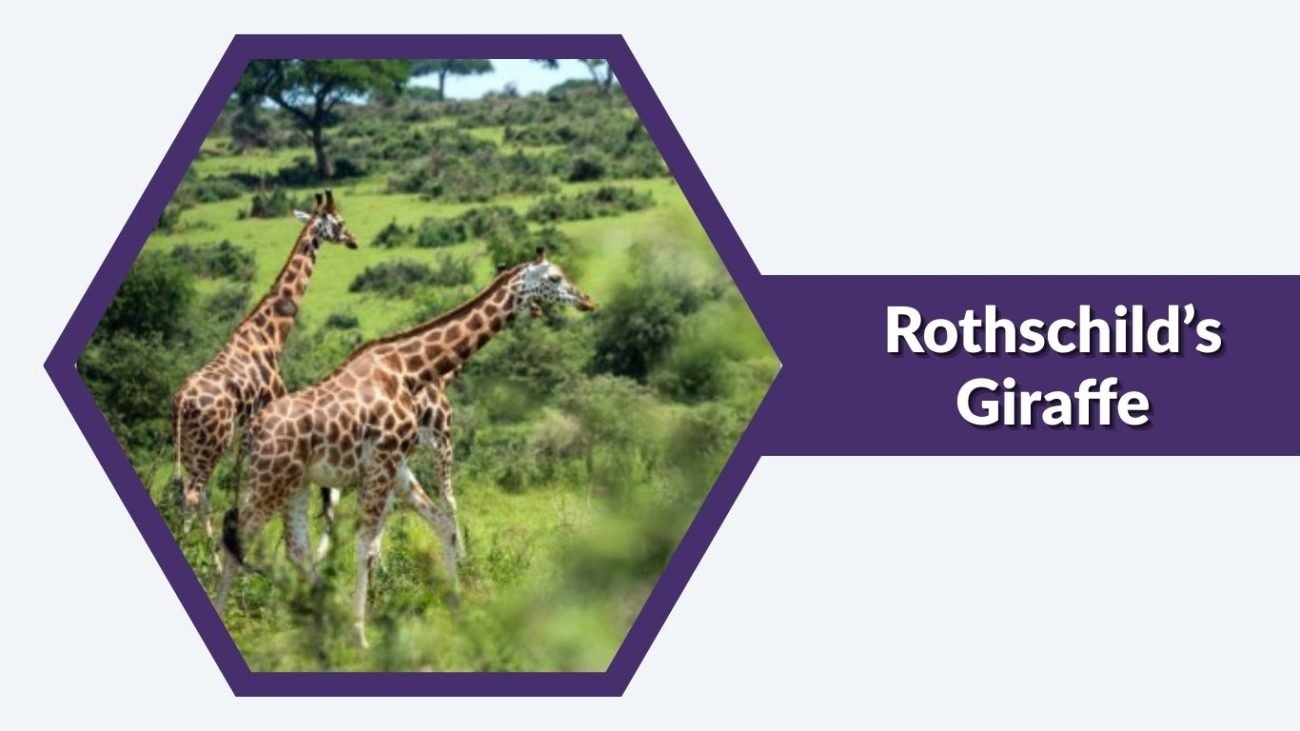
Rothschild’s giraffe is one of the most distinctive giraffe types, often recognized by its elegant appearance and unique leg markings. Its coat pattern is cleaner and more defined than many other giraffes, giving it a refined look. This giraffe is also notable for its limited natural range and its importance in conservation programs. Calm and observant, it spends much of its time feeding quietly in open landscapes.
Identification
- Large, clearly defined patches with smooth edges
- Creamy white lower legs without markings
- Light tan to chestnut-colored coat patterns
- Tall body with a long, slender neck
- Ossicones often larger and more noticeable in males
Habitat
Rothschild’s giraffes inhabit open savannas, grasslands, and lightly wooded areas. They prefer regions with scattered tall trees that provide easy access to food. These giraffes avoid dense forests and swampy land, favoring dry, open environments instead. Their movement often follows seasonal changes in vegetation, ensuring a steady supply of browse throughout the year.
Behaviors
This giraffe type is social and usually seen in small, loosely organized groups. Group members change frequently, and interactions are generally peaceful. Males may engage in necking behavior to establish dominance, especially during the breeding season. Rothschild’s giraffes spend most of their day feeding, walking slowly between trees, and resting while standing, relying on their height and vision for safety.
Diet
Rothschild’s giraffes are herbivores that mainly feed on leaves, shoots, buds, and twigs from tall trees. Acacia species are a key part of their diet, though they also browse other trees depending on availability. Their long tongues and tough lips allow them to feed efficiently on thorny branches, helping them access food sources that are unavailable to most other herbivores.
FAQs
1. What are the main differences between the giraffe types?
Each giraffe type has distinct characteristics. For example, the reticulated giraffe has sharp, net-like patches, while the Masai giraffe has jagged, star-shaped markings. The northern giraffe has more spaced-out patches, while the southern giraffe features rounded, smooth-edged patches. Rothschild’s giraffe has a cleaner appearance with unmarked lower legs, while the West African giraffe is lighter in color with softer markings.
2. Where can I find each giraffe type?
Giraffe types are spread across different regions in Africa. The reticulated giraffe is mainly found in Kenya and Somalia. The Masai giraffe inhabits central and southern Kenya and Tanzania. Northern giraffes are found in West and Central Africa, while southern giraffes are prevalent in southern Africa, particularly in South Africa, Namibia, and Botswana. Rothschild’s giraffe is native to Uganda and parts of Kenya, while the West African giraffe is limited to the Sahel region of West Africa.
3. Are giraffe types endangered?
Yes, some giraffe types are endangered or facing a decline in numbers. The West African giraffe is considered vulnerable, with fewer than 600 individuals remaining in the wild. Rothschild’s giraffe is also endangered, though its population has been increasing due to conservation efforts. Other giraffe types, such as the reticulated and Masai giraffes, are listed as endangered or near-threatened, mainly due to habitat loss and poaching.
4. How do giraffes communicate with each other?
Giraffes communicate through body language, sounds, and physical gestures. They use their height to stay alert and detect potential threats. Necking, where males swing their necks at each other, is a common form of communication during mating battles. They may also make low-frequency sounds, like grunts or snorts, though they are not as vocal as some other animals.
5. What is the lifespan of a giraffe?
In the wild, giraffes typically live between 20 to 25 years. However, their lifespan can be shorter due to predation, diseases, or harsh environmental conditions. Giraffes in protected areas or zoos may live longer, up to 30 years, due to better care and fewer threats.


