
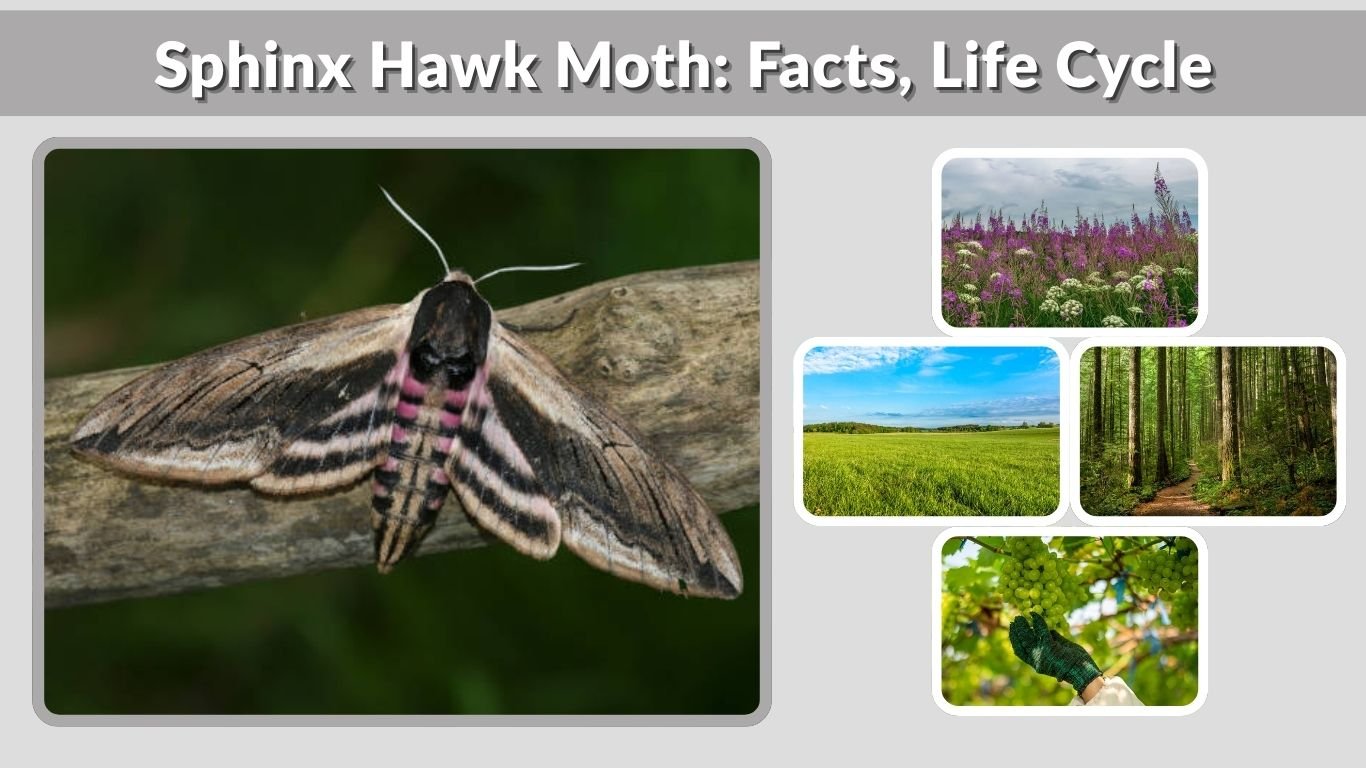
Sphinx hawk moths are among the most fascinating insects in the world, known for their powerful flight and ability to hover like hummingbirds. Found across many regions, these moths are often mistaken for small birds due to their speed and feeding behavior. With their large size, unique caterpillars, and important role as pollinators, sphinx hawk moths attract the interest of gardeners, scientists, and nature lovers alike.
What Is a Sphinx Hawk Moth?
A sphinx hawk moth refers to a group of moths belonging to the family Sphingidae, which includes over 1,400 species worldwide. These moths are commonly known as hawk moths or sphinx moths, depending on the region and context.
They are found across:
- North and South America
- Europe
- Africa
- Asia
Sphinx moths are known for their fast, direct flight and their ability to hover while feeding on nectar. This behavior makes them similar to hummingbirds, and they are sometimes called “hummingbird moths.”
These insects play a vital role in ecosystems as pollinators, helping plants reproduce by transferring pollen between flowers.
Why Are They Called Sphinx or Hawk Moths?
The names “sphinx moth” and “hawk moth” both come from distinctive characteristics of these insects.
The term “sphinx” originates from the caterpillar stage. When resting, the caterpillar often raises the front part of its body, resembling the famous Egyptian Sphinx statue.
The name “hawk moth” refers to:
- Their strong, swift flight
- Their ability to hover and dart quickly
- Their streamlined body shape
Together, these names highlight both the appearance and behavior of these unique insects.
Physical Appearance and Size
Adult Moth
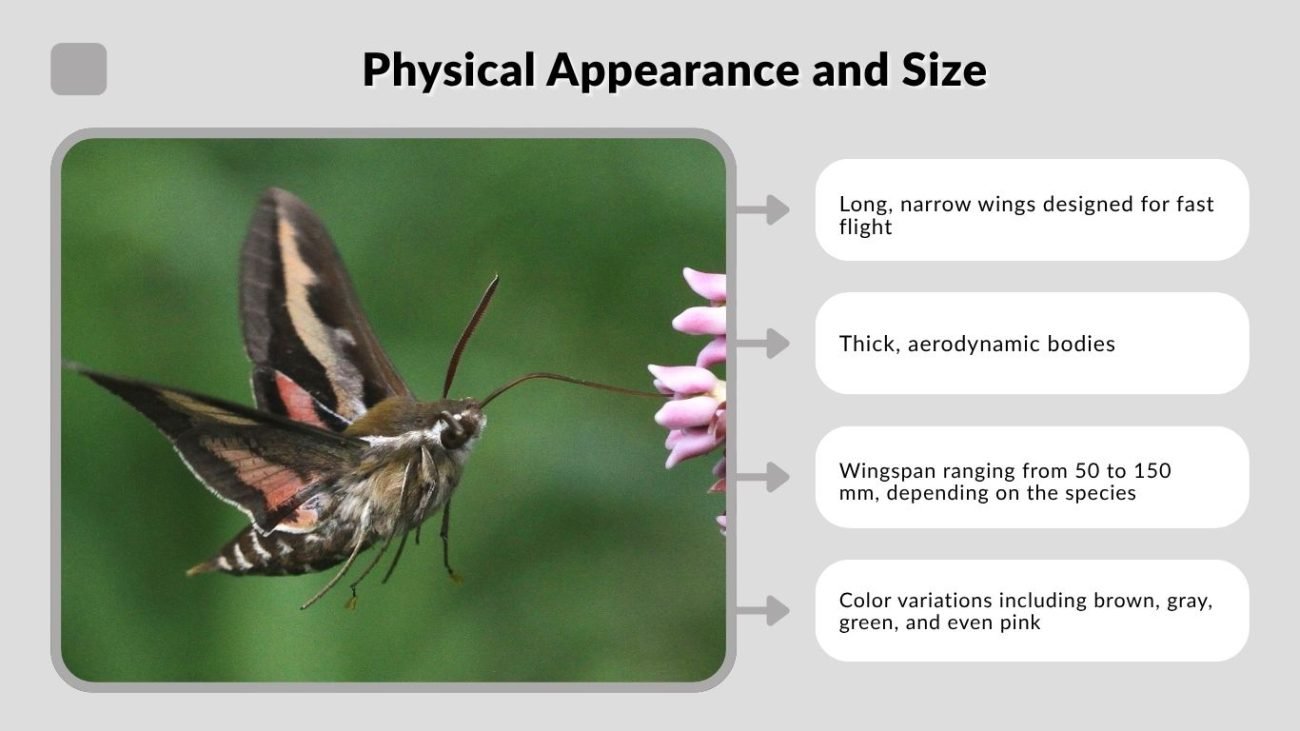
Adult sphinx hawk moths are built for speed and efficiency.
Key features include:
- Long, narrow wings designed for fast flight
- Thick, aerodynamic bodies
- Wingspan ranging from 50 to 150 mm, depending on the species
- Color variations including brown, gray, green, and even pink
Their body shape allows them to move quickly through the air and hover in place while feeding.
Caterpillar
The caterpillar stage of sphinx moths is just as distinctive and is often called a hornworm.
Common characteristics include:
- Thick, smooth bodies
- A curved horn-like structure at the rear
- Bright green or patterned coloration
- Large size compared to other caterpillars
These caterpillars are often seen feeding on plants and can grow rapidly during this stage.
Life Cycle of a Sphinx Hawk Moth
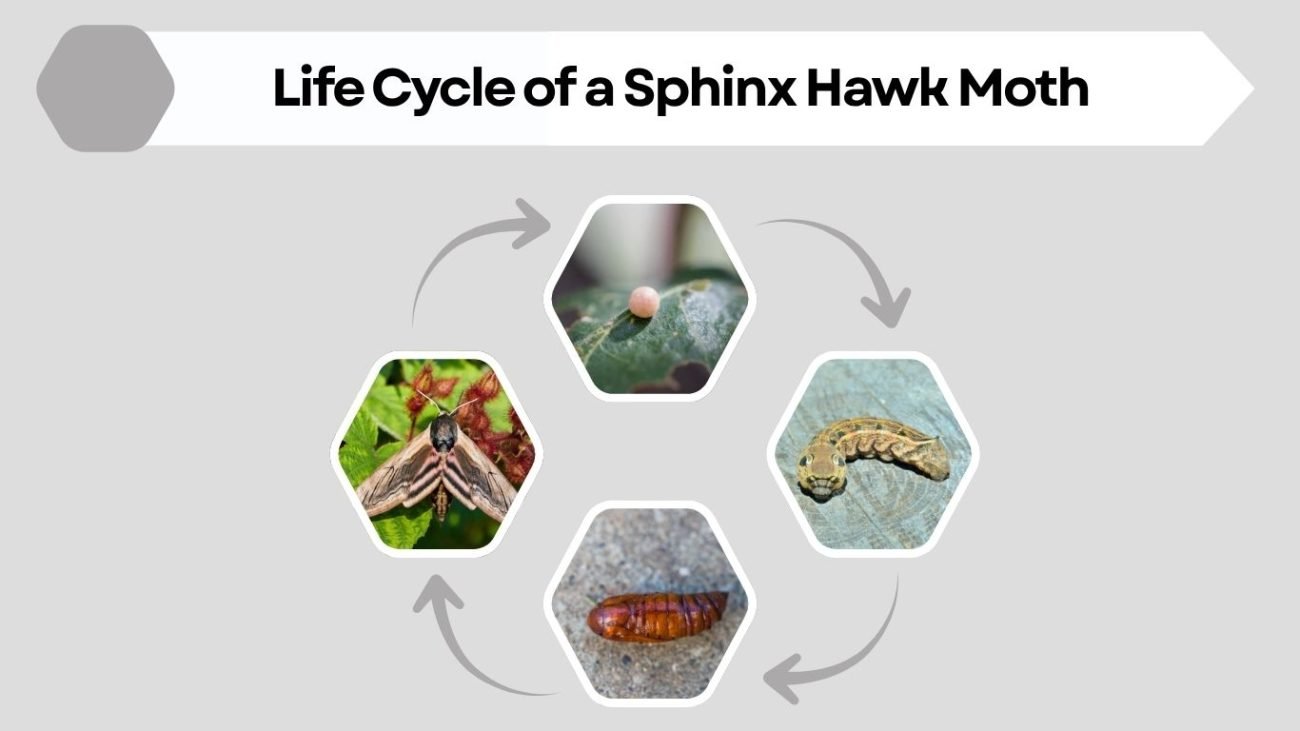
Like all moths, sphinx hawk moths undergo complete metamorphosis, consisting of four main stages.
Egg Stage
Female moths lay eggs on suitable host plants. The eggs are usually small and placed on leaves where the larvae will have immediate access to food once they hatch.
Larva (Caterpillar)
After hatching, the caterpillar begins feeding right away. This is the stage focused on growth and development.
During this phase:
- The caterpillar consumes large amounts of leaves
- It molts several times as it grows
- It may change color or pattern depending on the species
This stage is often the most visible and sometimes the most damaging to plants.
Pupa
Once fully grown, the caterpillar forms a pupa, usually in soil or leaf litter.
Inside the pupa:
- The insect undergoes a complete transformation
- Adult structures such as wings develop
This stage can last from a few weeks to several months depending on environmental conditions.
Adult Stage
The adult moth emerges fully developed and ready to fly.
Adults are:
- Mostly active during dusk or night
- Strong fliers capable of hovering
- Focused on feeding and reproduction
They play a key role in pollination by visiting flowers for nectar.
Habitat and Distribution
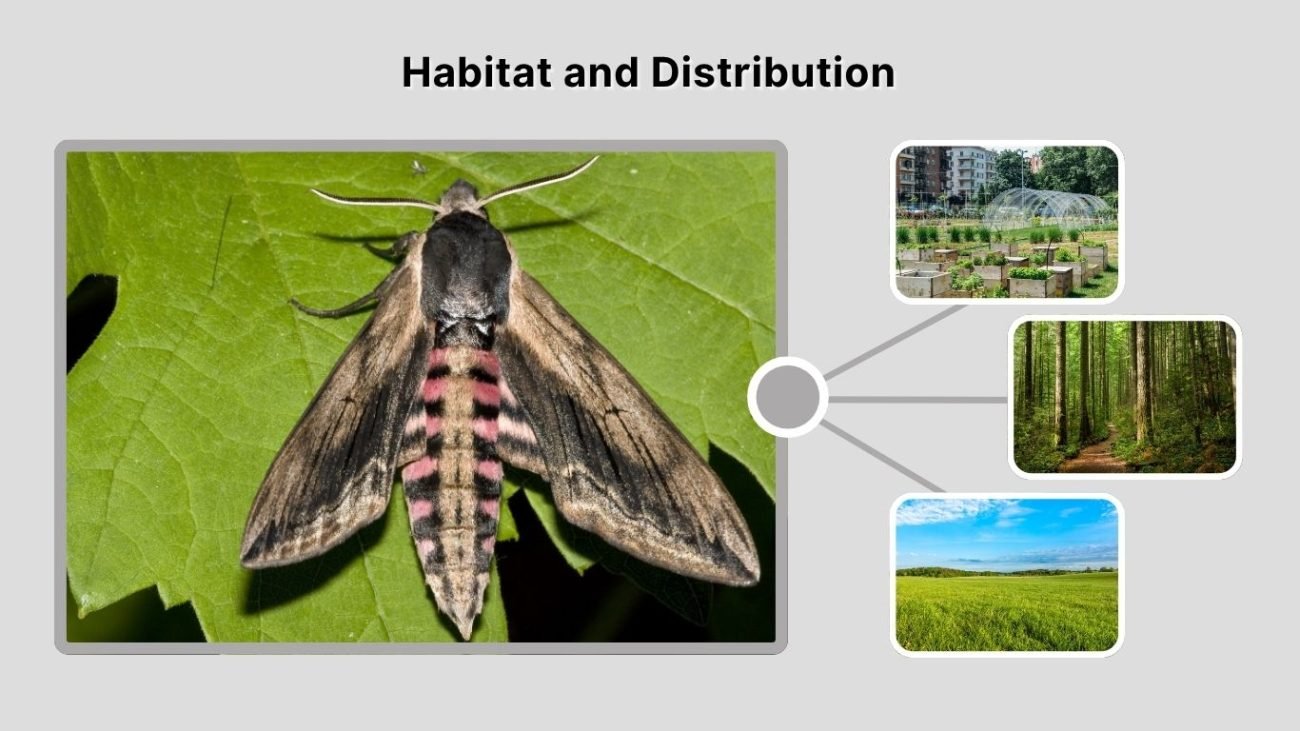
Sphinx hawk moths are found in a wide range of habitats around the world, making them one of the most widespread moth families.
They commonly live in:
- Gardens and urban areas
- Forests and woodlands
- Grasslands and meadows
These moths are highly adaptable and can survive in both tropical and temperate climates. Their presence is often linked to the availability of suitable host plants for their caterpillars.
What Do Sphinx Hawk Moths Eat?
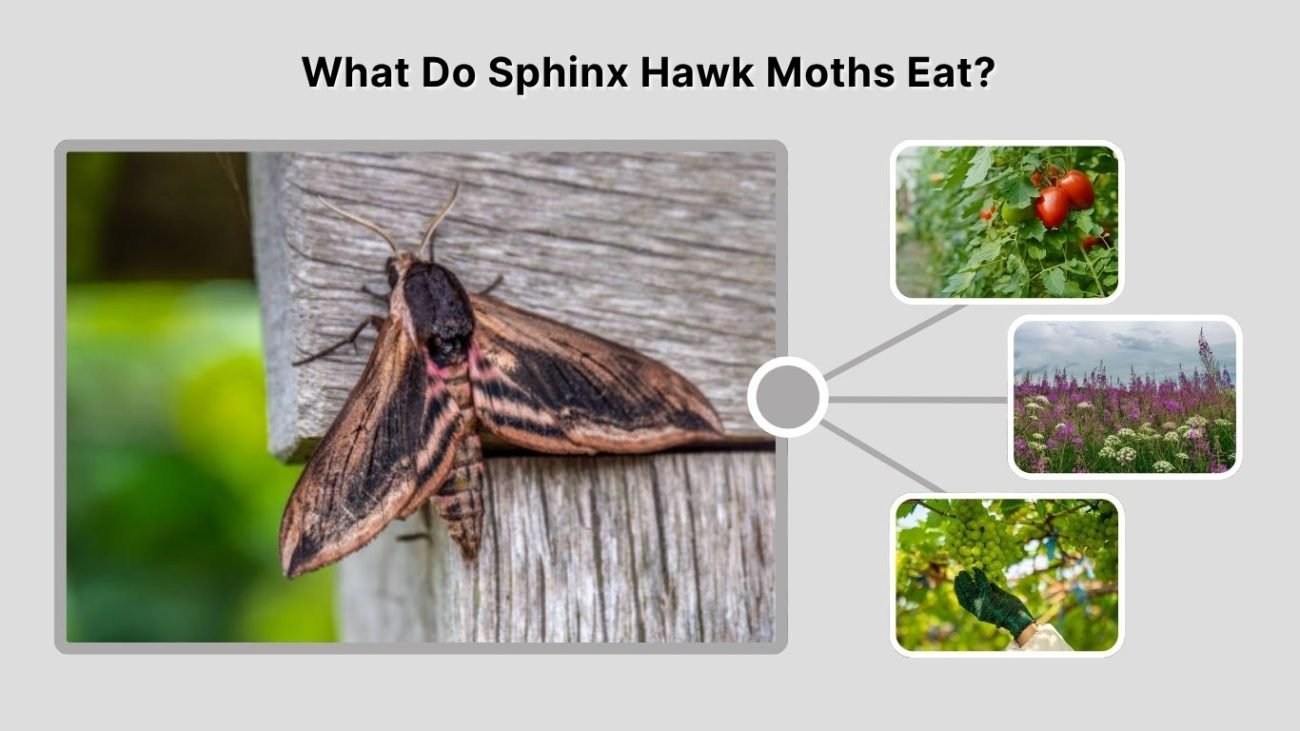
Caterpillar Diet
During the larval stage, sphinx moth caterpillars (hornworms) feed on a variety of plant leaves. Their diet depends on the species, but many prefer specific host plants.
Common food sources include:
- Tomato and potato plants
- Willowherb and bedstraw
- Grapevines and shrubs
These caterpillars eat large amounts of foliage to support their rapid growth, which is why some species are considered garden pests.
Adult Diet
As adults, sphinx hawk moths switch to a liquid diet and primarily feed on nectar.
They commonly visit:
- Night-blooming flowers
- Deep, tubular flowers
Using their long proboscis, they can reach nectar that other insects cannot. While feeding, they act as important pollinators, transferring pollen between plants.
Behavior and Interesting Facts
Sphinx hawk moths are known for several unique behaviors that make them stand out.
- Hovering flight: They can hover in mid-air like hummingbirds while feeding
- Nocturnal or crepuscular activity: Most are active at dusk or night
- Strong and fast fliers: Capable of covering long distances
- Attracted to light: Often seen near lamps or porch lights
- Excellent navigation: Some species migrate over large areas
These behaviors make them both efficient feeders and fascinating to observe.
Common Types of Sphinx Hawk Moths
There are many species of sphinx moths, each with unique features. Some of the most well-known include:
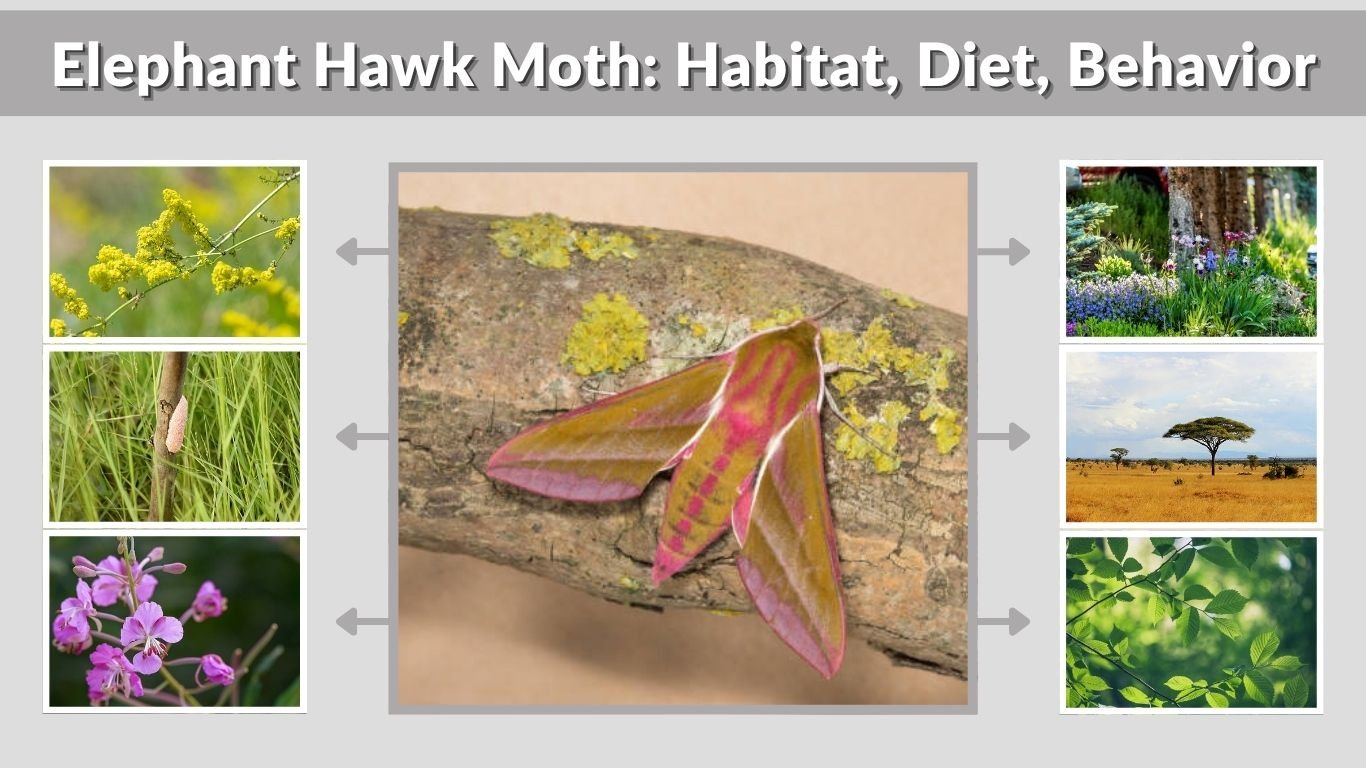
- Elephant Hawk Moth: Known for its pink and green coloration
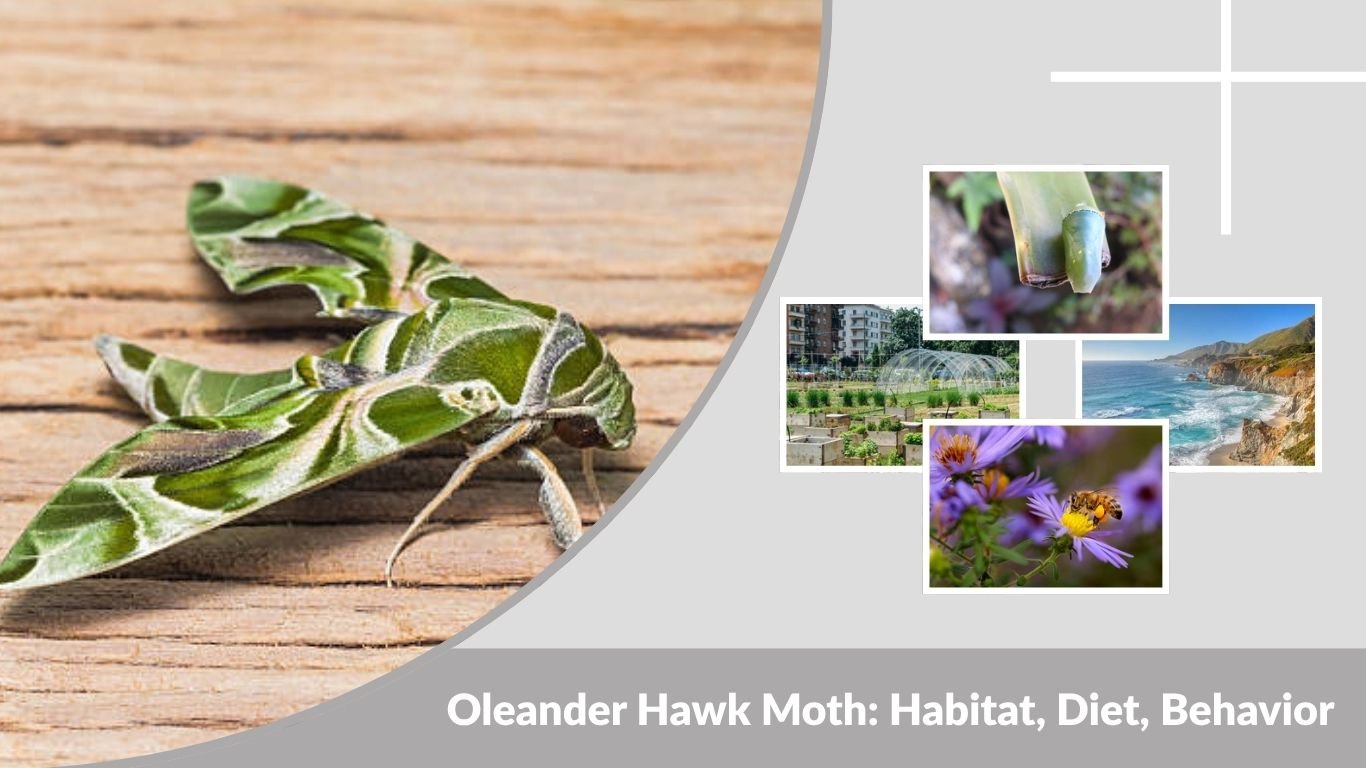
- Oleander Hawk Moth: Famous for its green camouflage
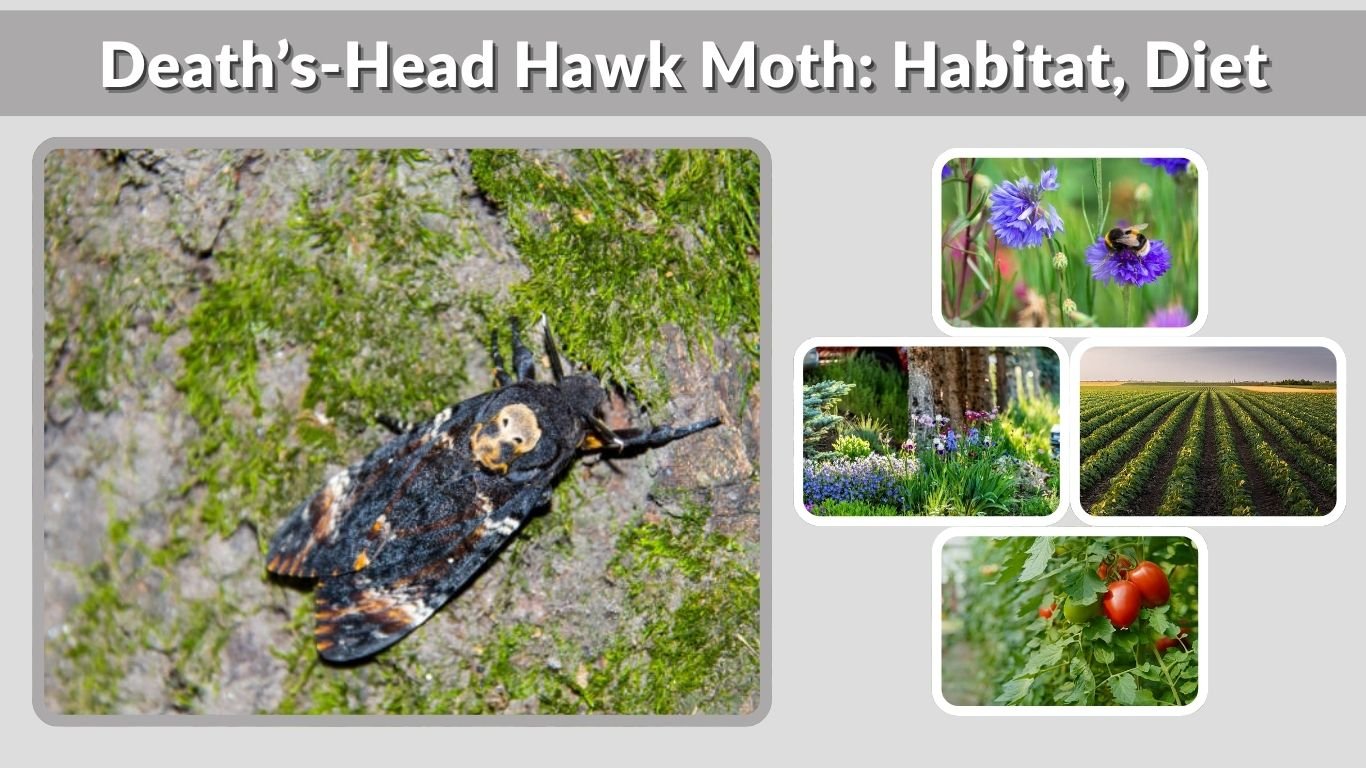
- Death’s-Head Hawk Moth: Recognized by the skull-like marking
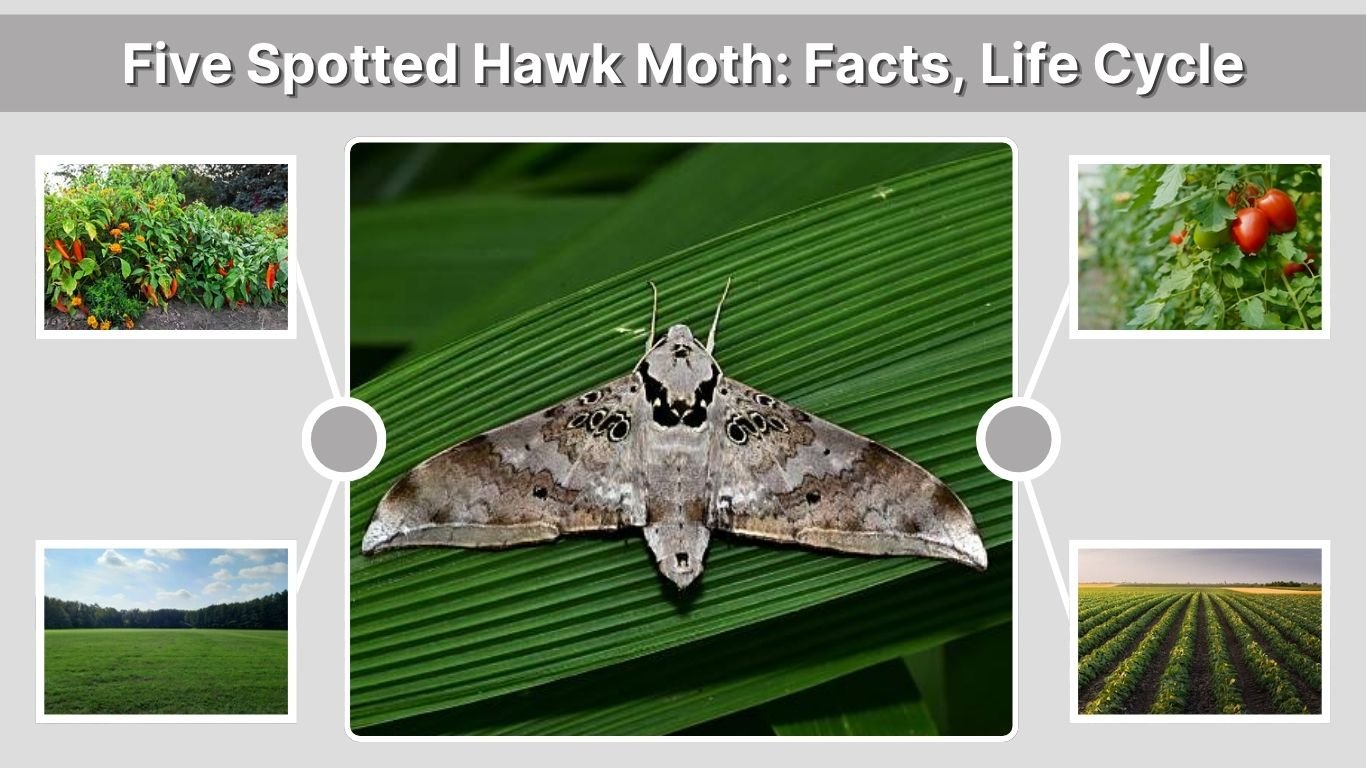
- Five Spotted Hawk Moth: The adult form of the tomato hornworm
Each species shares similar traits but differs in appearance, habitat, and behavior.
Are Sphinx Hawk Moths Harmful?
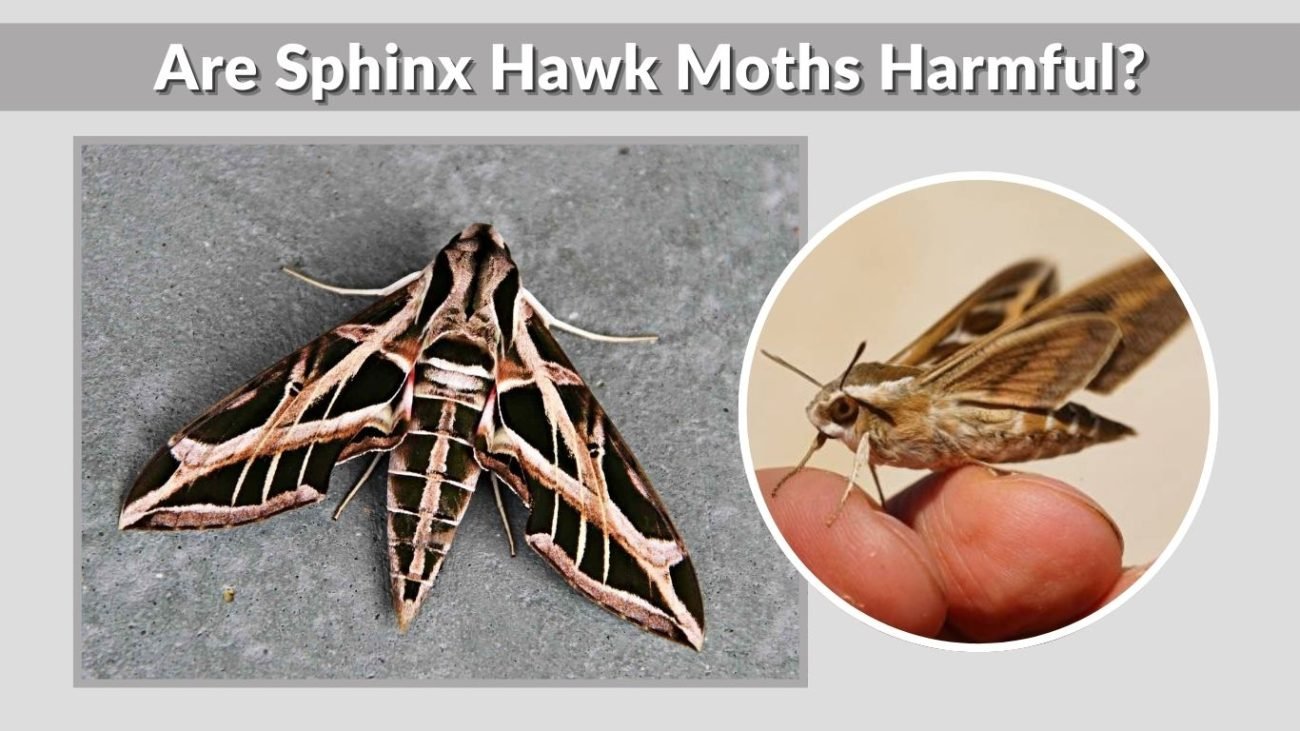
Sphinx hawk moths are generally not harmful to humans.
- They do not bite or sting
- They are safe to observe
However, their caterpillars can sometimes be harmful to plants:
- They may feed heavily on garden crops
- Some species are considered agricultural pests
Despite this, they are also beneficial as adult moths because they help with pollination.
How to Identify a Sphinx Hawk Moth
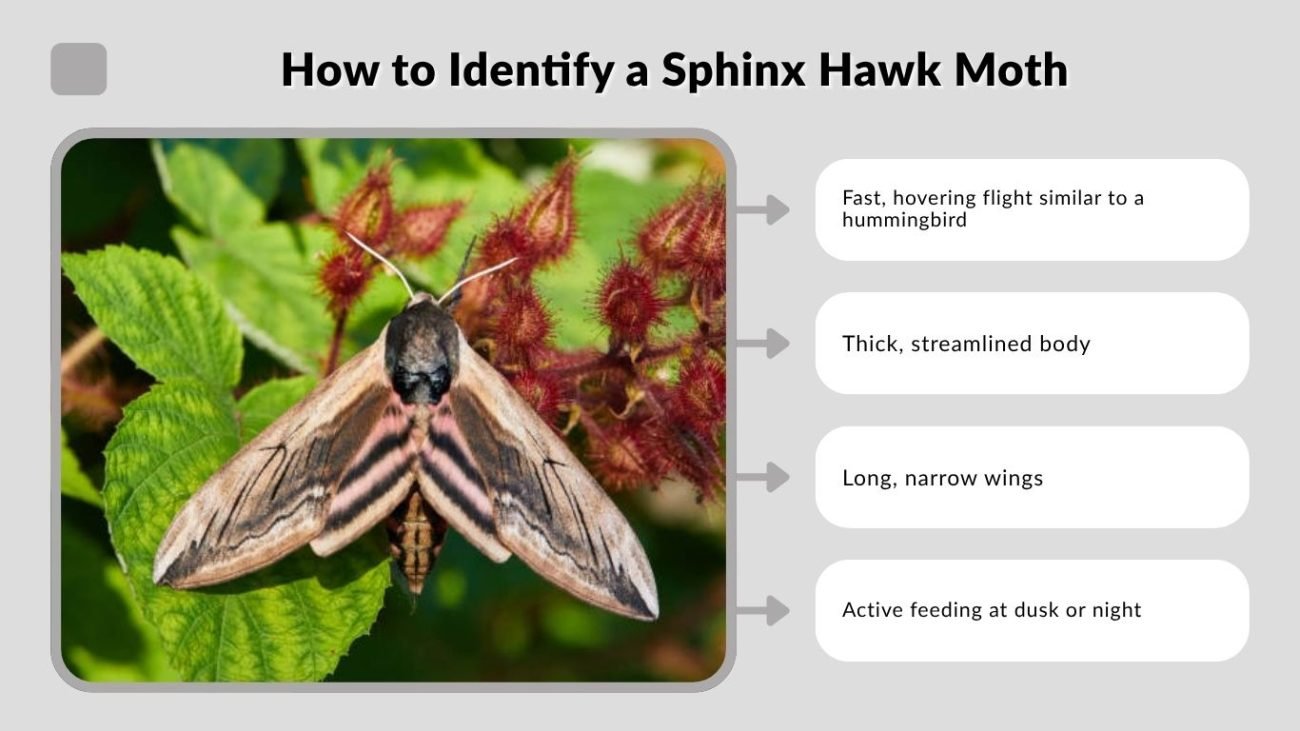
Identifying a sphinx hawk moth becomes easier when you know the key characteristics.
Look for:
- Fast, hovering flight similar to a hummingbird
- Thick, streamlined body
- Long, narrow wings
- Active feeding at dusk or night
These features help distinguish them from butterflies and other moth species.
FAQs
What is a sphinx hawk moth?
It is a type of moth from the Sphingidae family, known for its fast flight and hovering ability.
Are sphinx moths dangerous?
No, they are harmless to humans and do not pose any threat.
Why do sphinx moths hover?
They hover to feed on nectar from flowers, allowing them to reach deep into blooms.
What do sphinx moths eat?
Caterpillars eat plant leaves, while adults feed on nectar.
How long do sphinx hawk moths live?
The full life cycle lasts several months, but the adult moth usually lives only a few weeks.
Conclusion
Sphinx hawk moths are remarkable insects known for their speed, size, and unique hovering ability. Found across the world, they play an essential role in pollination while also showcasing one of nature’s most fascinating life cycles. Although their caterpillars can sometimes damage plants, the adult moths contribute positively to ecosystems. Understanding these insects helps us appreciate their beauty, behavior, and importance in the natural world.