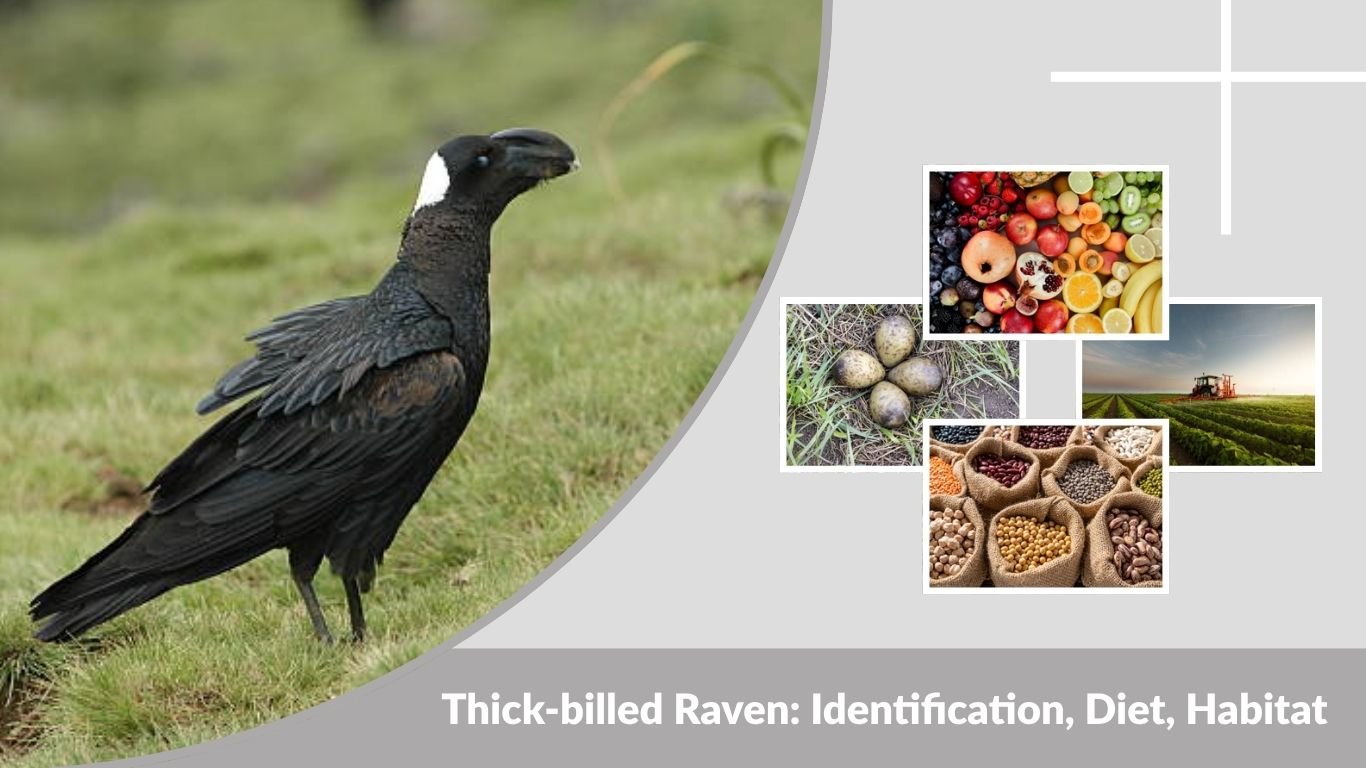
The Thick-billed Raven (Corvus crassirostris) is one of the most fascinating birds in the world, known for its impressive size and remarkable intelligence. Native to the Ethiopian Highlands, this species stands out as the largest passerine, or perching bird, on Earth. With its massive curved bill and striking black plumage, it captures the attention of birdwatchers and researchers alike. Beyond its appearance, the Thick-billed Raven plays an important ecological role and showcases behaviors that highlight the intelligence of corvids.
What is a Thick-billed Raven?
Scientific Classification
The Thick-billed Raven belongs to the corvid family, a group of birds widely recognized for their intelligence and adaptability. Its scientific classification places it in the genus Corvus, which includes crows, ravens, and related species. The full classification is as follows:
- Kingdom: Animalia
- Family: Corvidae
- Genus: Corvus
- Species: Corvus crassirostris
This species is unique within its genus due to its size and specialized features, especially its unusually large bill.
Why It Stands Out
What makes the Thick-billed Raven particularly special is its status as the largest passerine bird in the world. Unlike most songbirds, which are relatively small, this raven can reach lengths of up to 65 centimeters. It is also endemic to a limited region, primarily found in Ethiopia and parts of Eritrea. This restricted distribution, combined with its distinctive physical traits, makes it one of the most unique members of the corvid family.
Thick-billed Raven Physical Characteristics
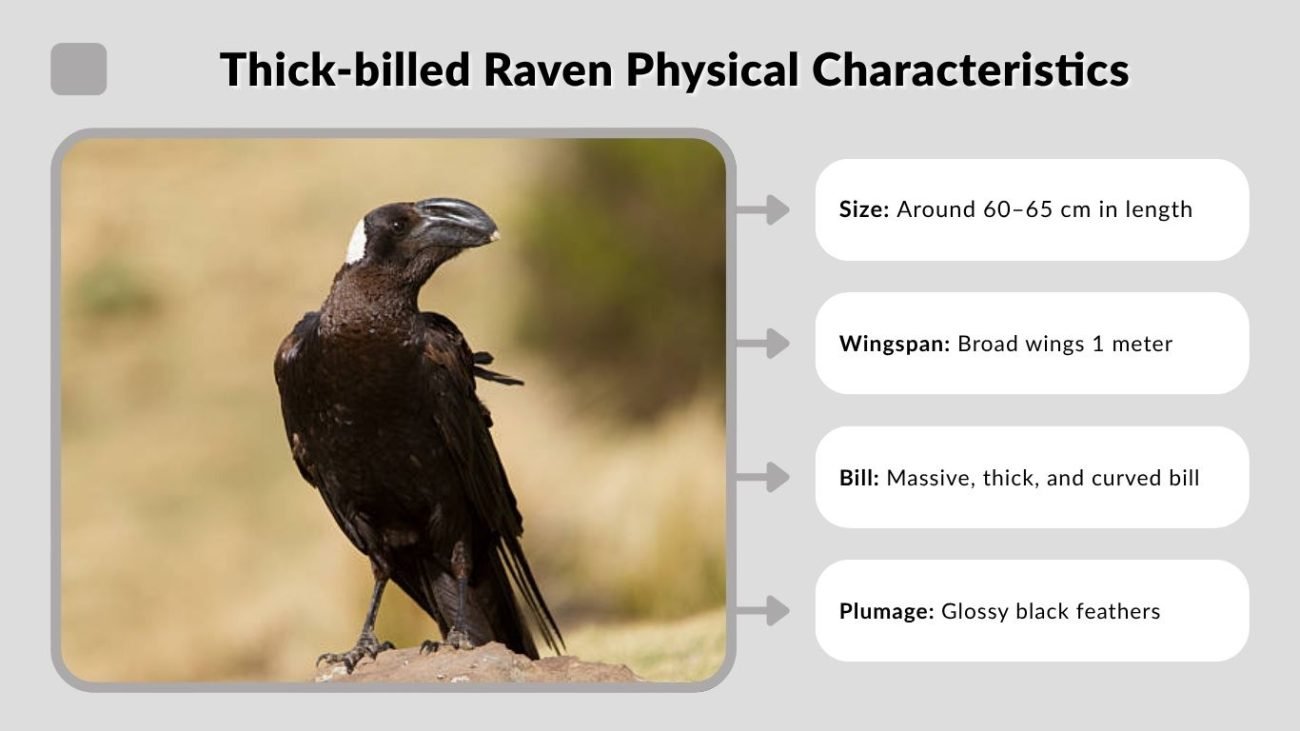
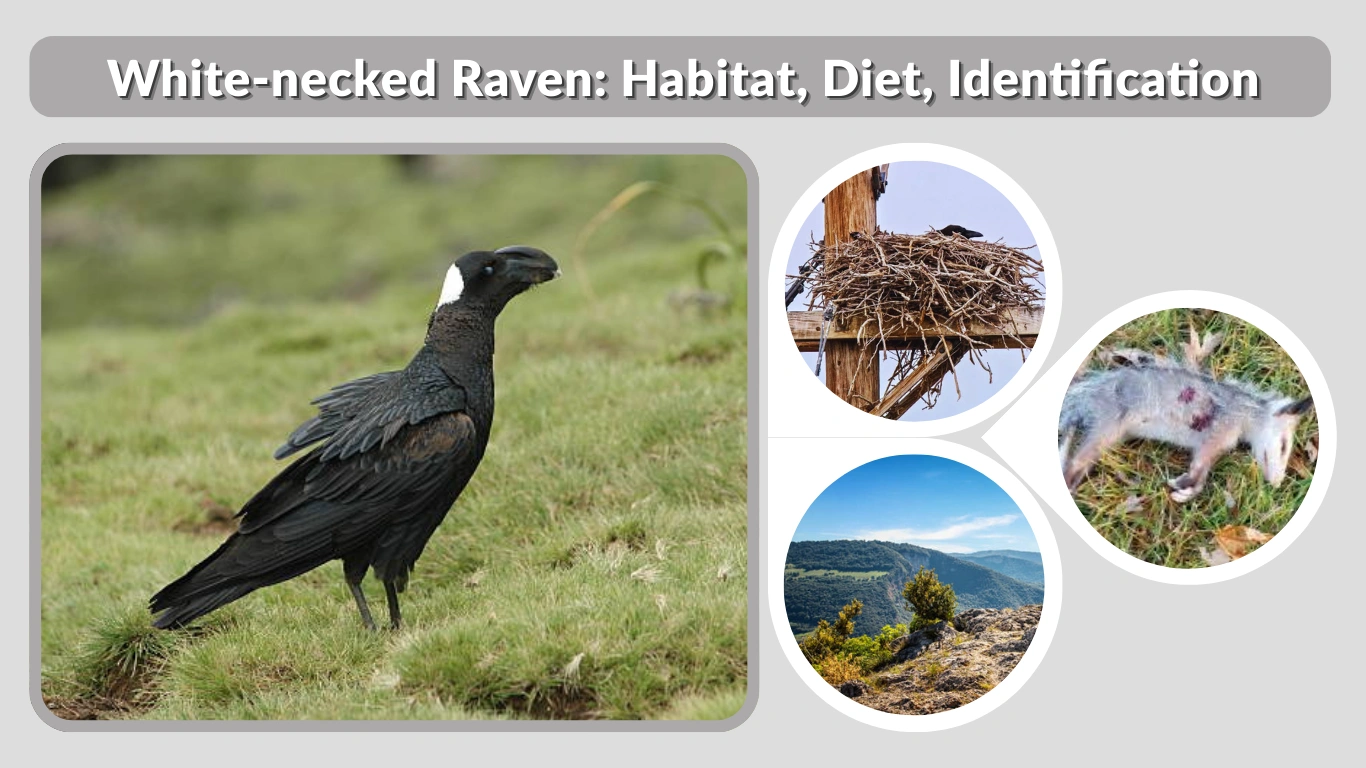
The Thick-billed Raven is an impressive and easily recognizable bird, known for its large size and powerful build. As the largest passerine species in the world, it combines strength with striking visual features. Its bold appearance, especially its oversized bill and glossy black feathers, makes it stand out clearly from other ravens and crows.
Key Physical Features
- Size:
Its large body measures around 60–65 cm in length, making it the biggest songbird. - Wingspan:
Broad wings that can exceed 1 meter, allowing strong and steady flight. - Bill:
Massive, thick, and curved bill—one of its most defining traits. - Plumage:
Glossy black feathers with a subtle blue or purple sheen in sunlight. - Facial Wattles:
Loose skin around the base of the bill, giving a unique facial appearance. - Throat Hackles:
Shaggy throat feathers that become more visible when calling or displaying. - Body Build:
Heavy and robust compared to other raven species.
Habitat and Distribution
Geographic Range
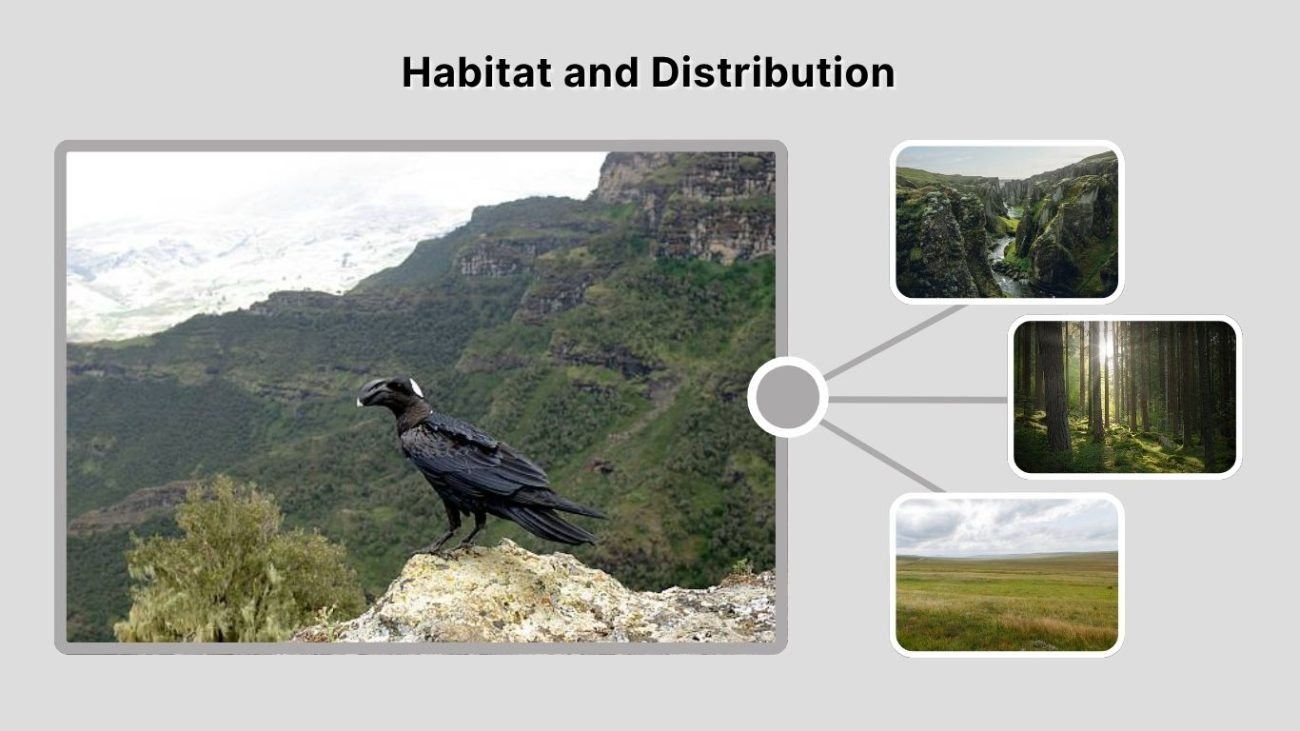
The Thick-billed Raven is endemic to northeastern Africa, with its primary range concentrated in Ethiopia. It is also found in some parts of Eritrea. Unlike many other raven species that have wide global distributions, this bird is limited to a relatively small geographic area, making it particularly important from a conservation perspective.
Preferred Habitat
This species thrives in a variety of habitats within its range, including mountainous regions, highland forests, cliffs, and open grasslands. It is especially common in areas with rugged terrain, where cliffs provide ideal nesting sites and open spaces offer opportunities for foraging.
Altitude Adaptation
One of the defining characteristics of the Thick-billed Raven is its ability to live at high altitudes. It is often found at elevations ranging from 1,500 to over 4,000 meters above sea level. Its strong body and thick plumage help it adapt to cooler temperatures and thinner air, allowing it to survive in environments where many other bird species cannot.
Behavior and Intelligence
Social Behavior
The Thick-billed Raven exhibits flexible social behavior. It can often be seen alone or in pairs, but it may also form small groups, particularly in areas where food is abundant. These birds are highly adaptable and can adjust their social structure depending on environmental conditions.
Communication
Like other members of the corvid family, the Thick-billed Raven is highly vocal. It produces a variety of calls, ranging from deep croaks to more complex sounds. These vocalizations are used for communication between individuals, helping them coordinate activities such as feeding or alerting others to potential threats.
Intelligence and Problem-Solving
Ravens are widely regarded as some of the most intelligent birds, and the Thick-billed Raven is no exception. It demonstrates advanced cognitive abilities, including problem-solving skills and strong memory. These traits allow it to locate food efficiently, adapt to changing environments, and even learn from experience.
Diet and Feeding Habits
Omnivorous Diet
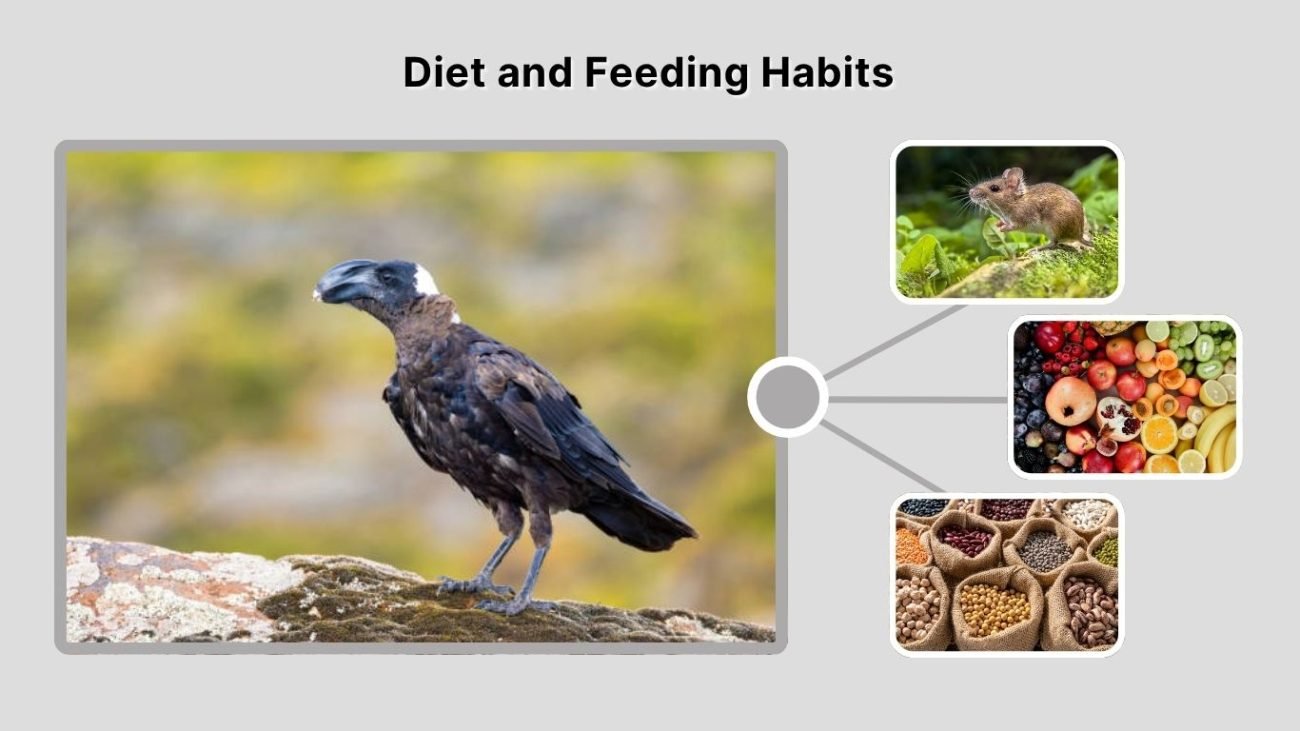
The Thick-billed Raven is an omnivorous bird with a highly varied diet. It feeds on insects, small animals, seeds, fruits, and carrion. This flexibility allows it to survive in different environments and seasons. Its powerful bill plays a key role in accessing a wide range of food sources, from cracking hard materials to tearing flesh.
Scavenging Role
Like many ravens, this species is an efficient scavenger. It often feeds on dead animals, helping to clean the environment and prevent the spread of disease. This ecological role makes it an important part of its habitat, as it contributes to maintaining a balanced ecosystem.
Interaction with Humans
The Thick-billed Raven is known to take advantage of human activity. It can often be seen near villages, farms, and roadsides where food is more easily available. It may feed on food scraps or waste, showing its adaptability and opportunistic nature. While this behavior helps it survive, it also highlights the growing interaction between wildlife and human settlements.
Breeding and Reproduction
Nesting Habits
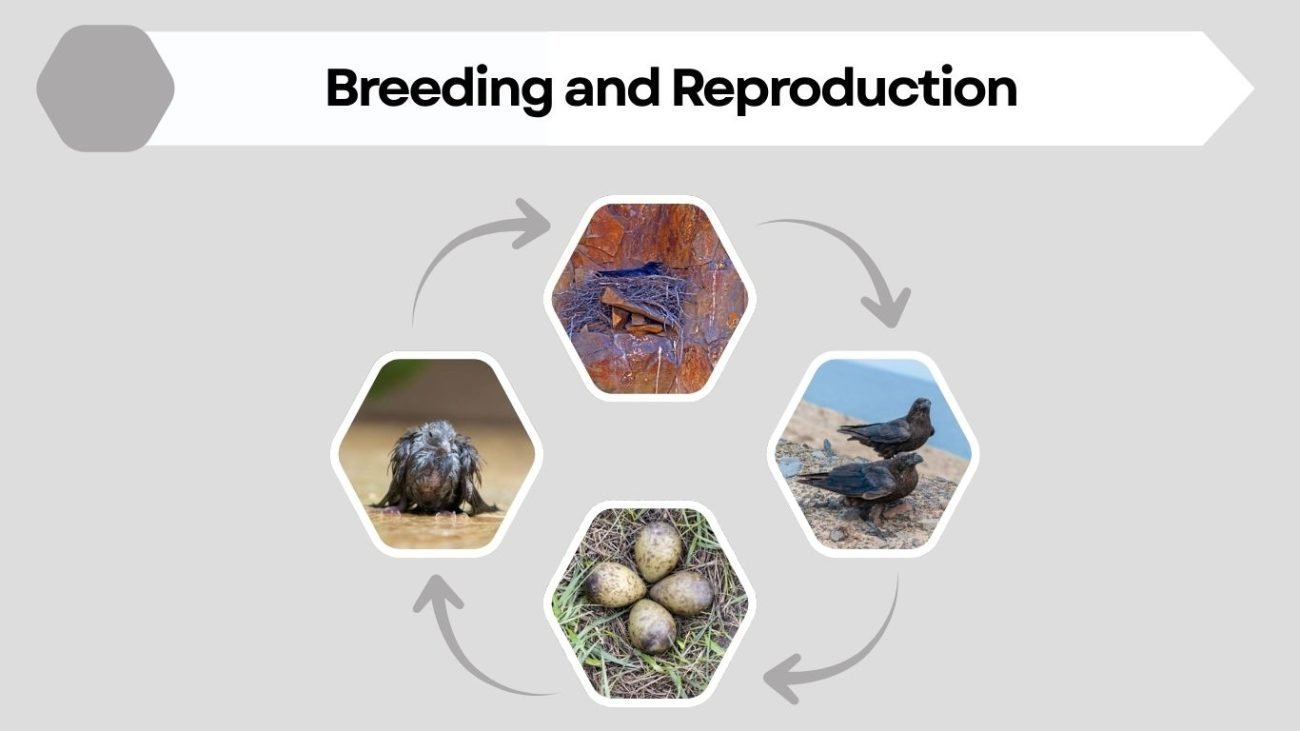
The Thick-billed Raven typically builds its nest in elevated locations such as cliffs, tall trees, or rocky ledges. These sites provide protection from predators and a safe environment for raising young. The nests are large and constructed using sticks, lined with softer materials like grass or fur.
Breeding Season
Breeding usually occurs during specific times of the year, often influenced by food availability and environmental conditions. In the Ethiopian Highlands, this generally aligns with periods when resources are more abundant, ensuring better survival chances for the chicks.
Eggs and Parental Care
The female usually lays a small clutch of eggs, which are incubated for several weeks. Both parents play an active role in caring for the young. They work together to feed, protect, and nurture the chicks until they are strong enough to leave the nest. This cooperative parenting is a common trait among intelligent bird species.
Conservation Status and Threats
IUCN Status
The Thick-billed Raven is currently classified as a species of Least Concern by the International Union for Conservation of Nature (IUCN). This means that its population is relatively stable at present.
Major Threats
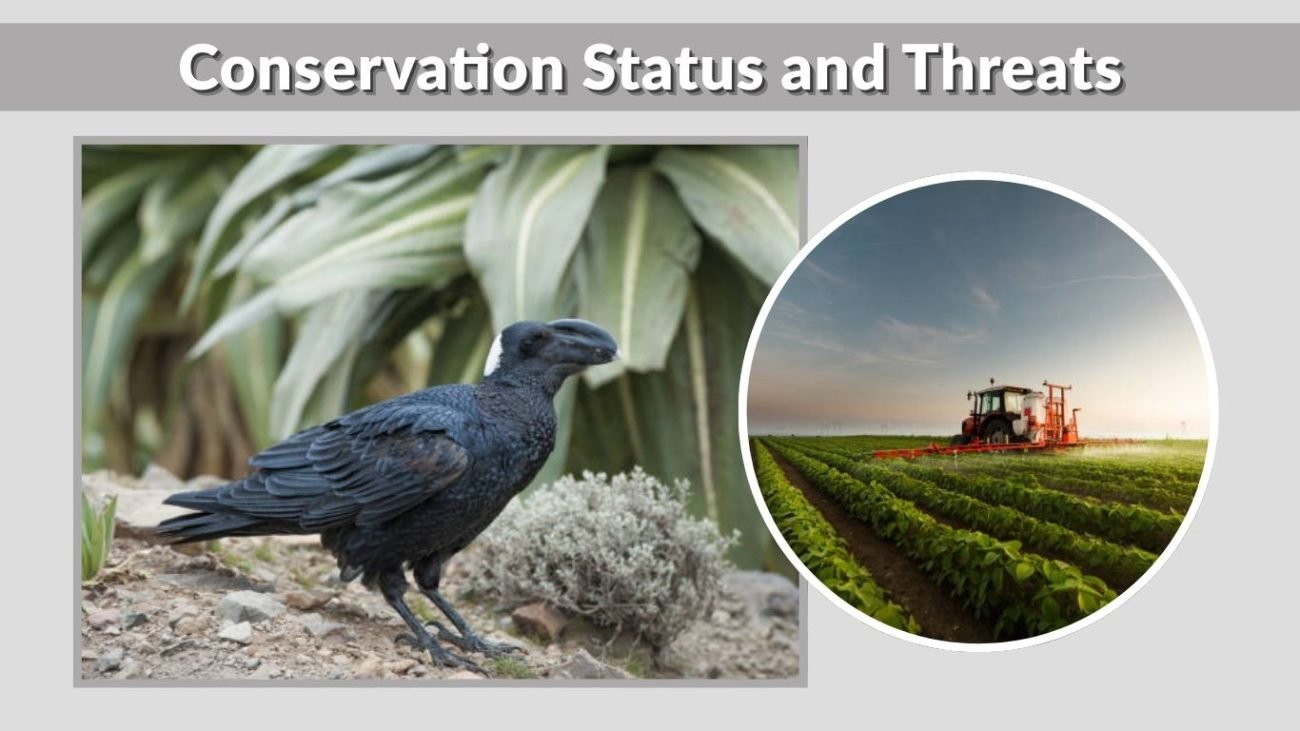
Despite its stable status, the species still faces potential threats. Habitat loss due to agriculture, urban expansion, and environmental changes can impact its living conditions. Increased human activity may also disturb nesting sites or alter food availability.
Conservation Efforts
Efforts to conserve this species focus on protecting its natural habitat and raising awareness about its ecological importance. Since it is endemic to a limited region, preserving the ecosystems of the Ethiopian Highlands is essential for its long-term survival.
Thick-billed Raven vs Other Ravens
Size Comparison
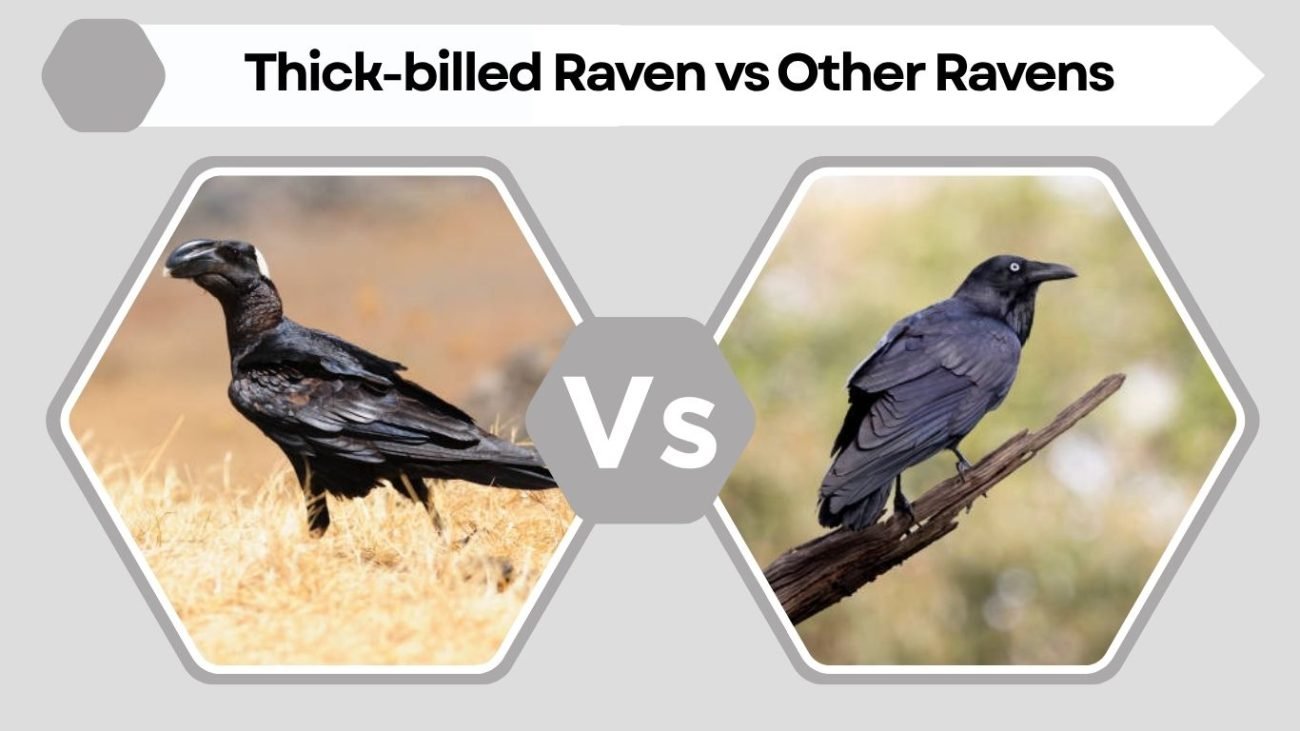
The Thick-billed Raven stands out as the largest member of the passerine group. Compared to the Common Raven and other relatives, it has a bulkier body and a more imposing appearance.
Bill Differences
Its most distinctive feature is its massive bill, which is far thicker and more curved than that of other ravens. This adaptation gives it a feeding advantage and sets it apart visually.
Behavioral Differences
While many ravens share similar intelligent behaviors, the Thick-billed Raven has adapted specifically to high-altitude environments. Its habits, diet, and nesting preferences reflect the unique conditions of its habitat.
Interesting Facts About the Thick-billed Raven
- It is the largest songbird in the world.
- Its bill is one of the most unusual among all corvids.
- It is highly intelligent and capable of problem-solving.
- The species is found only in a small region of Africa.
- It thrives in high-altitude environments where few birds can survive.
Conclusion
The Thick-billed Raven is a remarkable bird that combines size, intelligence, and adaptability. As the largest passerine species, it stands out not only for its physical features but also for its behavior and ecological importance. Found mainly in the Ethiopian Highlands, it plays a vital role as both a scavenger and a resilient survivor of challenging environments. Protecting its habitat ensures that this unique and fascinating species continues to thrive for generations to come.
FAQs
What is special about the Thick-billed Raven?
The Thick-billed Raven is the largest passerine (songbird) in the world. It is known for its massive curved bill, high intelligence, and unique adaptation to high-altitude environments in Ethiopia.
Where is the Thick-billed Raven found?
This species is mainly found in the Ethiopian Highlands and parts of Eritrea. It is endemic to this region, meaning it does not naturally occur anywhere else in the world.
What does the Thick-billed Raven eat?
The Thick-billed Raven is omnivorous. Its diet includes insects, small animals, seeds, fruits, and carrion. It is also known to scavenge near human settlements.
Is the Thick-billed Raven endangered?
No, the Thick-billed Raven is currently classified as “Least Concern” by the IUCN. However, habitat loss and human activities could pose future risks.
How is the Thick-billed Raven different from other ravens?
It differs mainly in size and bill shape. It is larger and has a much thicker, more curved bill than other ravens. It is also uniquely adapted to live in high-altitude regions.