

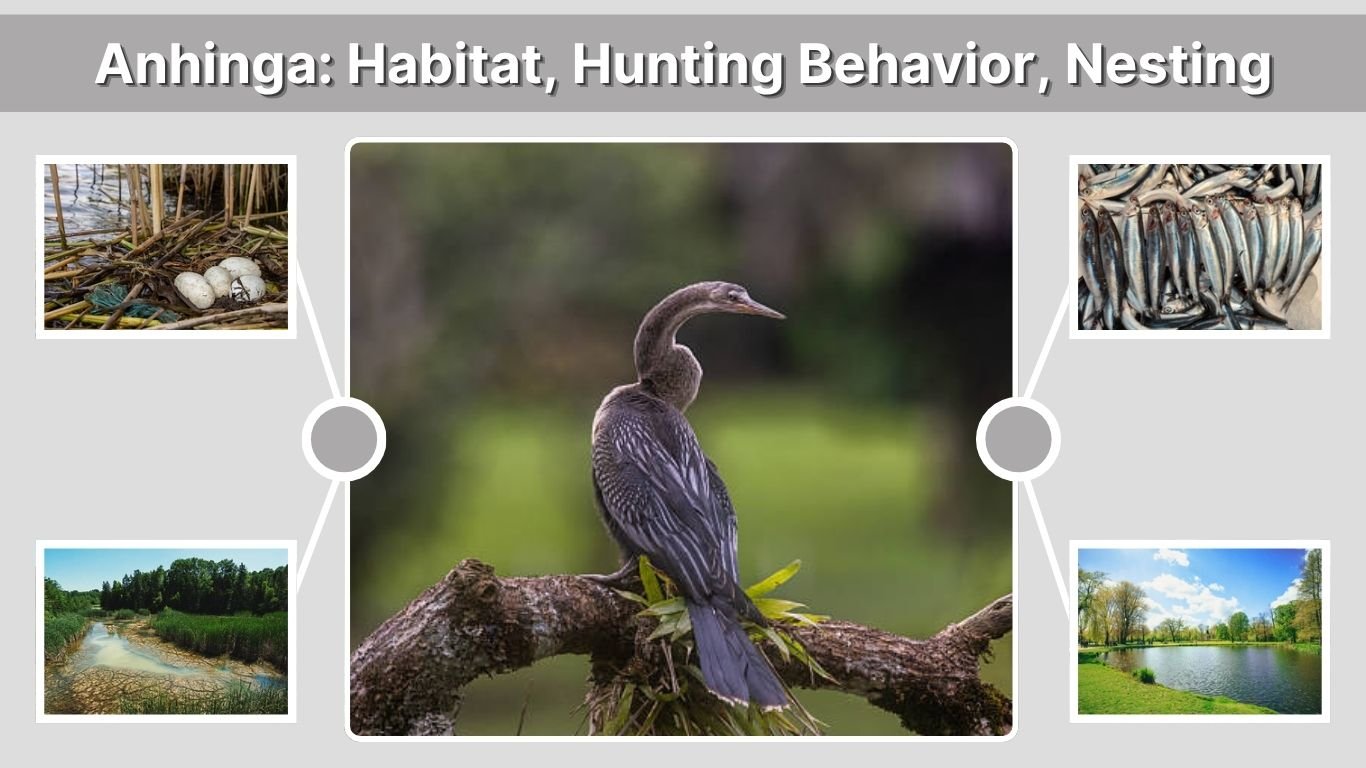
The anhinga is a unique water bird often called the “snake bird” due to its long neck that appears above water while swimming. Found in warm regions of the Americas, this fascinating bird is known for its exceptional fishing skills and unusual behavior. Unlike many aquatic birds, the anhinga lacks waterproof feathers, which allows it to dive easily underwater. Its distinctive appearance and hunting style make it one of the most intriguing birds in wetland ecosystems.
What is an Anhinga?
Scientific Classification
The anhinga (Anhinga anhinga) belongs to the Anhingidae family, a group of fish-eating birds closely related to cormorants. It is widely distributed across the southeastern United States, Central America, and South America.
This species is well adapted to aquatic environments and spends much of its time near freshwater bodies.
Physical Description
The anhinga is a medium to large water bird with a long, slender neck and a sharp, pointed bill. Its body is mostly dark, often appearing black or brown, while its wings display silvery-white streaks or patterns.
Adult anhingas typically measure about 85–97 cm in length, with a wingspan reaching up to 115–120 cm. One of its most distinctive features is how it swims—its body stays submerged underwater while only the neck remains visible, giving it a snake-like appearance.
Males are generally darker in color, while females may have lighter brown or buff-colored necks and heads.
Anhinga Habitat
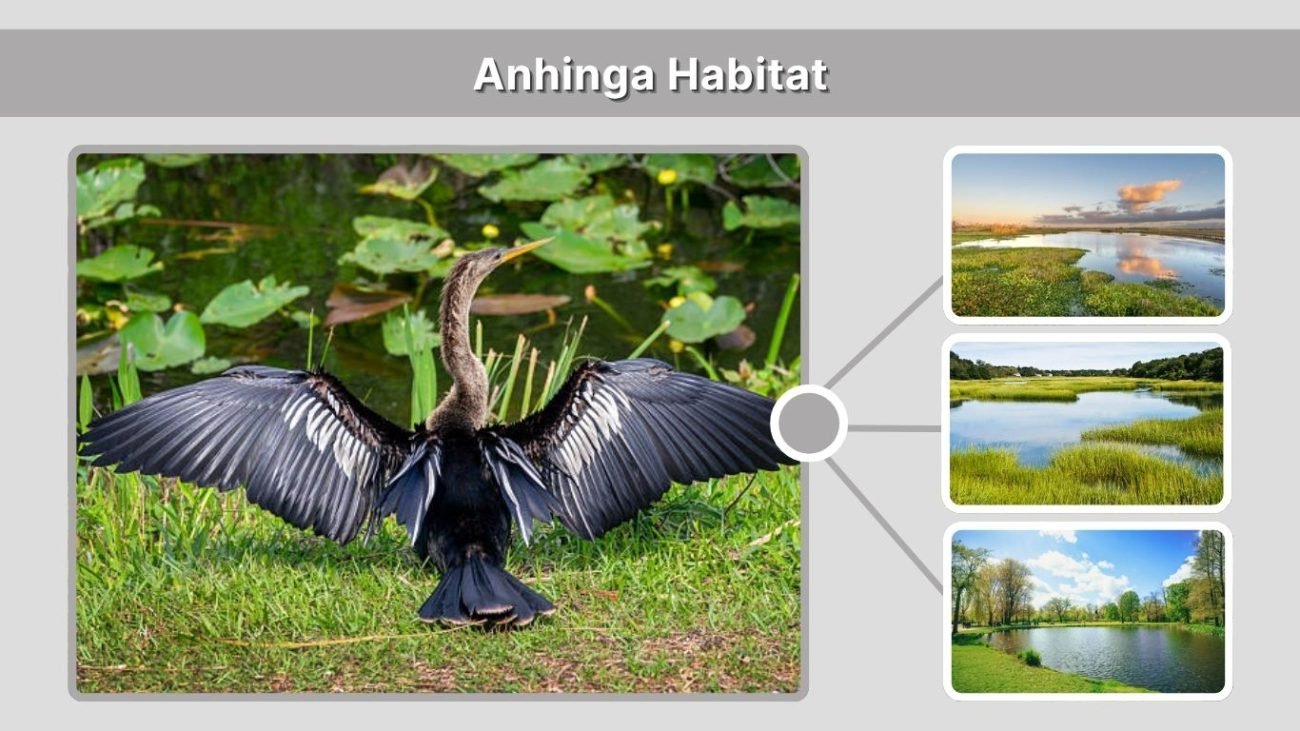
Where Do Anhingas Live?
Anhingas are primarily found in the southeastern United States, particularly in states like Florida, as well as throughout Central and South America. They prefer warm climates and are rarely seen in colder regions.
Their distribution is closely tied to the availability of freshwater environments.
Preferred Habitat Types
Anhingas thrive in freshwater habitats such as swamps, marshes, lakes, ponds, and slow-moving rivers. These environments provide abundant fish and suitable perching spots for drying their wings.
They are often seen perched on branches, logs, or rocks near water, where they can easily dive in search of prey.
Anhinga Diet
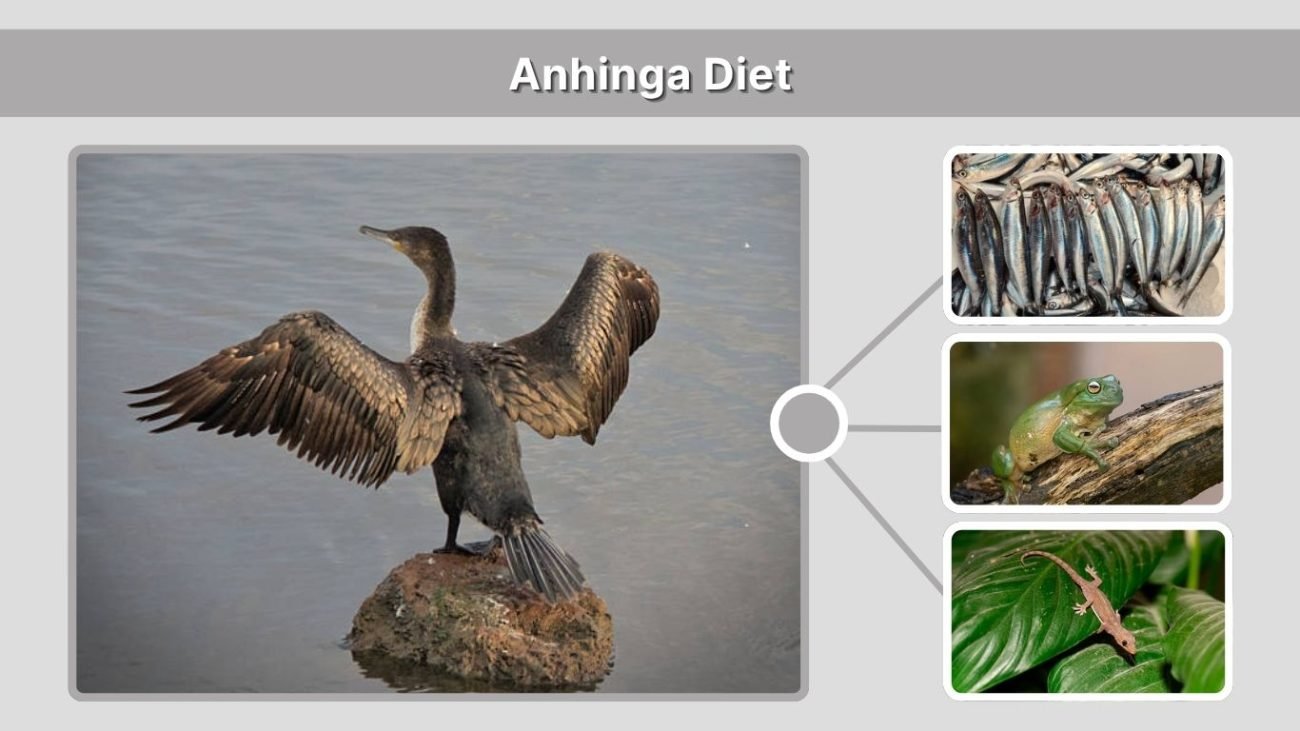
What Does Anhinga Eat?
The anhinga diet mainly consists of fish, which make up the majority of its food intake. It also eats amphibians, small reptiles, and occasionally aquatic insects.
This diet makes the anhinga an important predator in freshwater ecosystems, helping maintain balance in aquatic populations.
Feeding Adaptations
Anhingas have several unique adaptations that make them efficient hunters. Their long neck acts like a spring, allowing them to strike quickly at prey. Their sharp, spear-like bill is used to stab fish rather than grasp them.
Unlike ducks or other water birds, anhingas do not rely on webbed feet alone—they use their entire body to move swiftly underwater.
Anhinga Hunting Behavior
How Do Anhingas Hunt?
Anhingas are skilled underwater hunters. They dive beneath the surface and swim with powerful strokes, using their streamlined bodies to move silently through the water.
Once they spot a fish, they quickly thrust their neck forward and spear the prey with their sharp bill.
Unique Hunting Technique
One of the most fascinating aspects of anhinga hunting is how they handle their catch. After spearing a fish, the bird returns to the surface and tosses the fish into the air before swallowing it headfirst.
This technique ensures that the fish goes down smoothly and reduces the risk of injury from sharp fins or scales.
Anhinga Nest
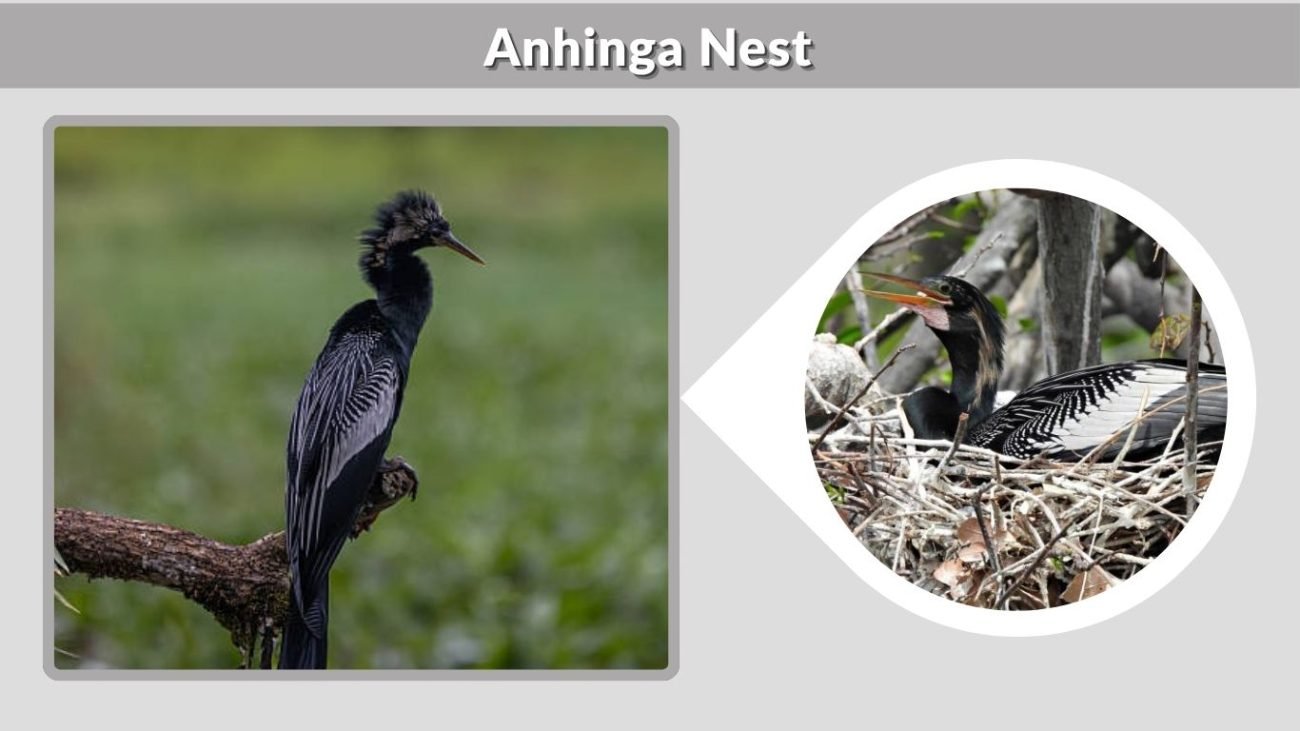
Nest Location
Anhingas typically build their nests in trees or shrubs located near or directly above water. These nesting sites are often chosen to reduce the risk of predators reaching the eggs or chicks.
They frequently nest in colonies, sometimes alongside other water birds such as herons or egrets, which provides additional protection through group vigilance.
Nest Structure
The nest is usually a platform made of sticks, twigs, and plant materials. Both male and female participate in building the nest, with the male often collecting materials and the female arranging them.
Nests are positioned on branches overhanging water, making it easier for adult birds to access and defend them.
Anhinga Reproduction and Eggs
Egg Appearance
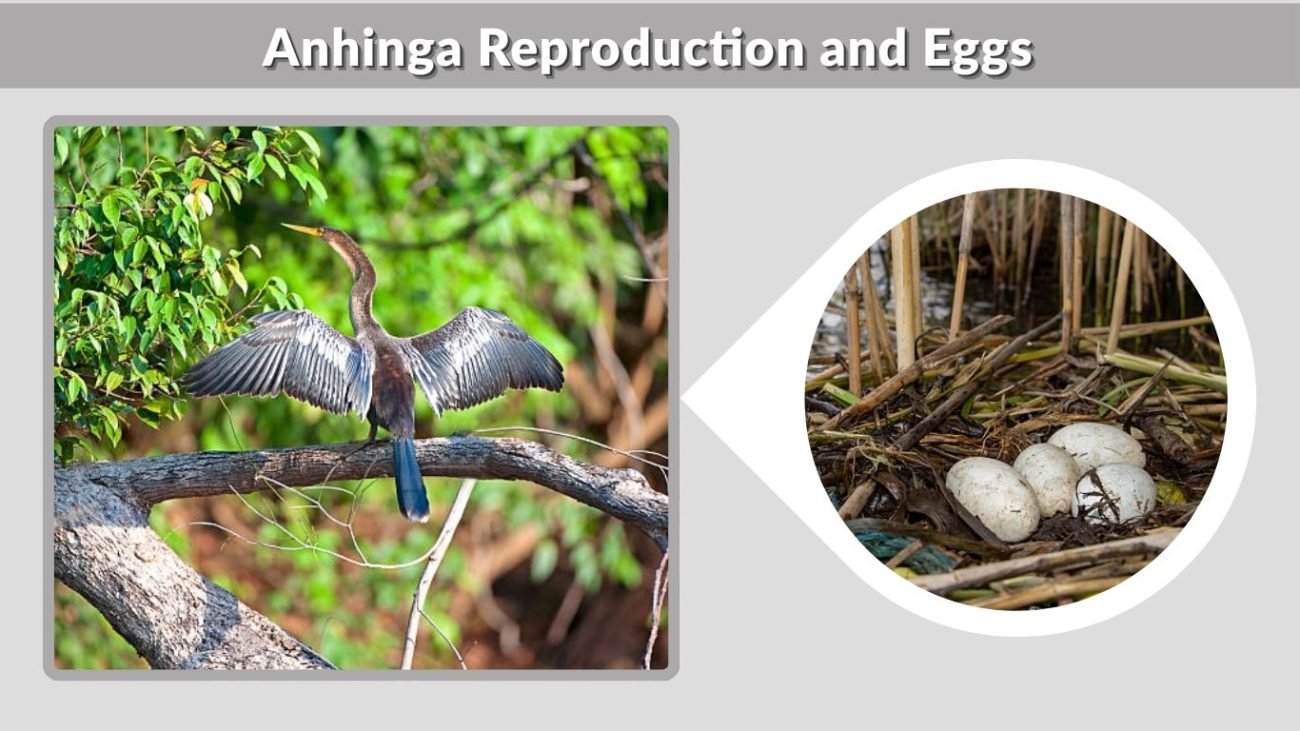
Anhinga eggs are typically pale blue or greenish in color, often covered with a chalky coating. This coating may become worn over time, revealing a smoother surface underneath.
Clutch Size
A typical clutch contains about 2 to 5 eggs. The number can vary depending on environmental conditions and food availability.
Incubation
Both parents share incubation duties, which usually last around 25 to 30 days. During this period, the eggs are carefully guarded and kept warm to ensure successful hatching.
Anhinga Life Cycle
Life Stages
The life cycle of the anhinga includes several stages:
- Egg
- Chick (nestling)
- Juvenile
- Adult
Each stage is important for growth and survival in the wild.
Chick Development
Newly hatched chicks are helpless and rely entirely on their parents for food and protection. Both parents feed the young by regurgitating partially digested fish.
As the chicks grow, they develop feathers and begin to explore the nest area. Within a few weeks, they become more active and start preparing for flight.
Lifespan
In the wild, anhingas typically live around 8 to 12 years, although some individuals may live longer under favorable conditions.
Behavior and Adaptations
Drying Wings Behavior
One of the most distinctive behaviors of the anhinga is spreading its wings wide to dry them after swimming. Unlike many water birds, anhingas lack waterproof feathers, which allows them to dive more easily but requires them to dry off frequently.
Swimming Style
When swimming, the anhinga’s body stays submerged underwater, with only its long neck visible above the surface. This snake-like appearance is the reason behind its nickname, “snake bird.”
This stealthy swimming style also helps the bird approach prey without being easily detected.
Flight Pattern
Anhingas are strong fliers and often soar in the sky with their wings outstretched. They may glide on air currents, similar to vultures, conserving energy while traveling between feeding and resting areas.
Threats and Conservation Status
Population Status
The anhinga is currently considered a species of “Least Concern,” with stable populations across much of its range. Its adaptability to various freshwater habitats contributes to its continued success.
Threats
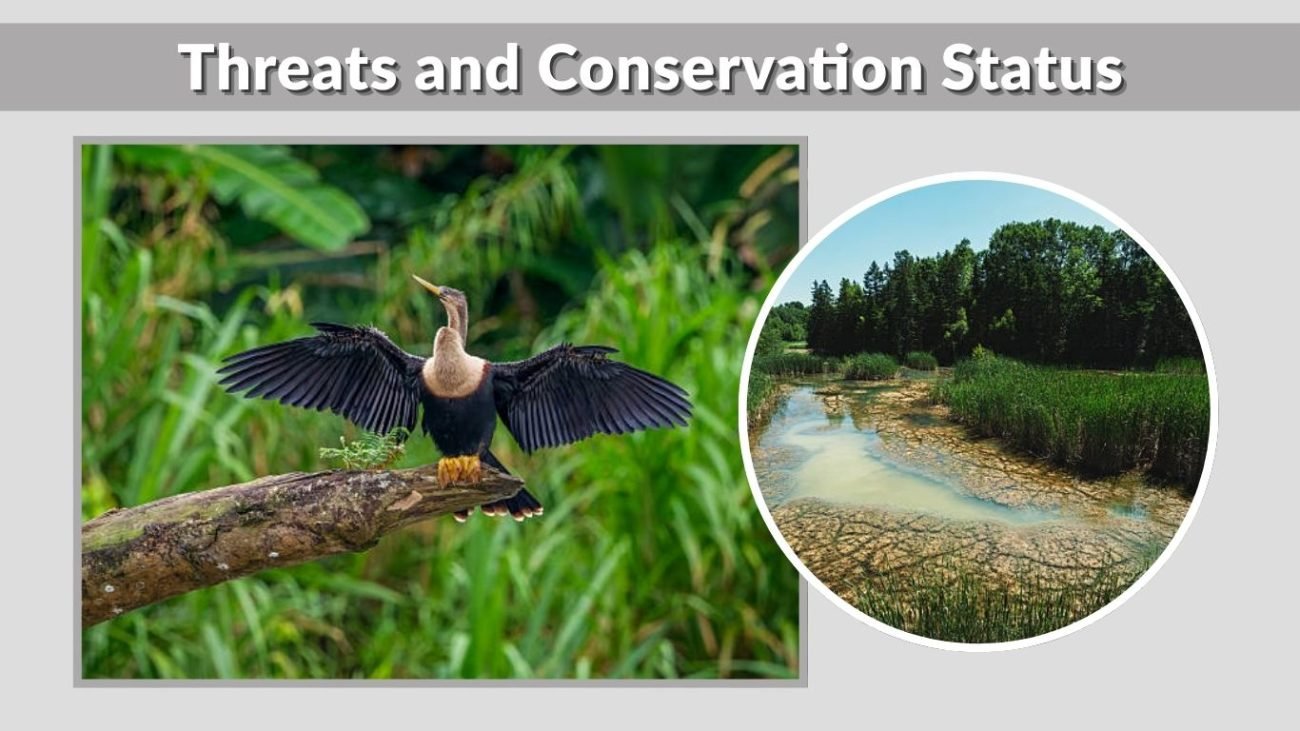
Despite its stable status, the anhinga faces several environmental challenges. Wetland destruction, water pollution, and human disturbance can impact its habitat and food sources.
Conservation efforts focused on protecting wetlands are essential for ensuring the long-term survival of this species.
Interesting Anhinga Bird Facts
- The anhinga is often called the “snake bird” due to its swimming posture.
- It uses its sharp bill to spear fish instead of grabbing them.
- Its feathers are not fully waterproof, allowing it to dive more easily.
- It must spread its wings to dry after swimming.
- It can remain underwater for extended periods while hunting.
FAQs
Why is the anhinga called a snake bird?
Because when it swims, only its long neck is visible above water, resembling a snake.
Can anhingas fly well?
Yes, they are strong fliers and often soar gracefully in the sky.
How do anhingas catch fish?
They dive underwater and spear fish using their sharp, pointed bills.
Are anhingas dangerous?
No, anhingas are not dangerous to humans and generally avoid close contact.
Conclusion
The anhinga is a remarkable water bird known for its unique hunting style, striking appearance, and fascinating behaviors. From its snake-like swimming to its skillful fishing techniques, it stands out as one of the most specialized birds in wetland ecosystems. Understanding the anhinga’s habitat, diet, and life cycle not only highlights its importance in nature but also emphasizes the need to protect the environments it depends on.