The hairy woodpecker is a widespread and easily recognizable bird found across North America. Known for its striking black-and-white plumage and strong, chisel-like bill, this woodpecker is often mistaken for the smaller downy woodpecker. However, it has several distinct features that set it apart. Found in forests, woodlands, and even suburban areas, the hairy woodpecker plays an important role in controlling insect populations and maintaining healthy ecosystems.
What is a Hairy Woodpecker?
Scientific Classification
The hairy woodpecker (Leuconotopicus villosus) belongs to the Picidae family, which includes all woodpecker species. It is widely distributed across North America, from Canada to parts of Central America. This adaptability allows it to thrive in a variety of environments.
Physical Description
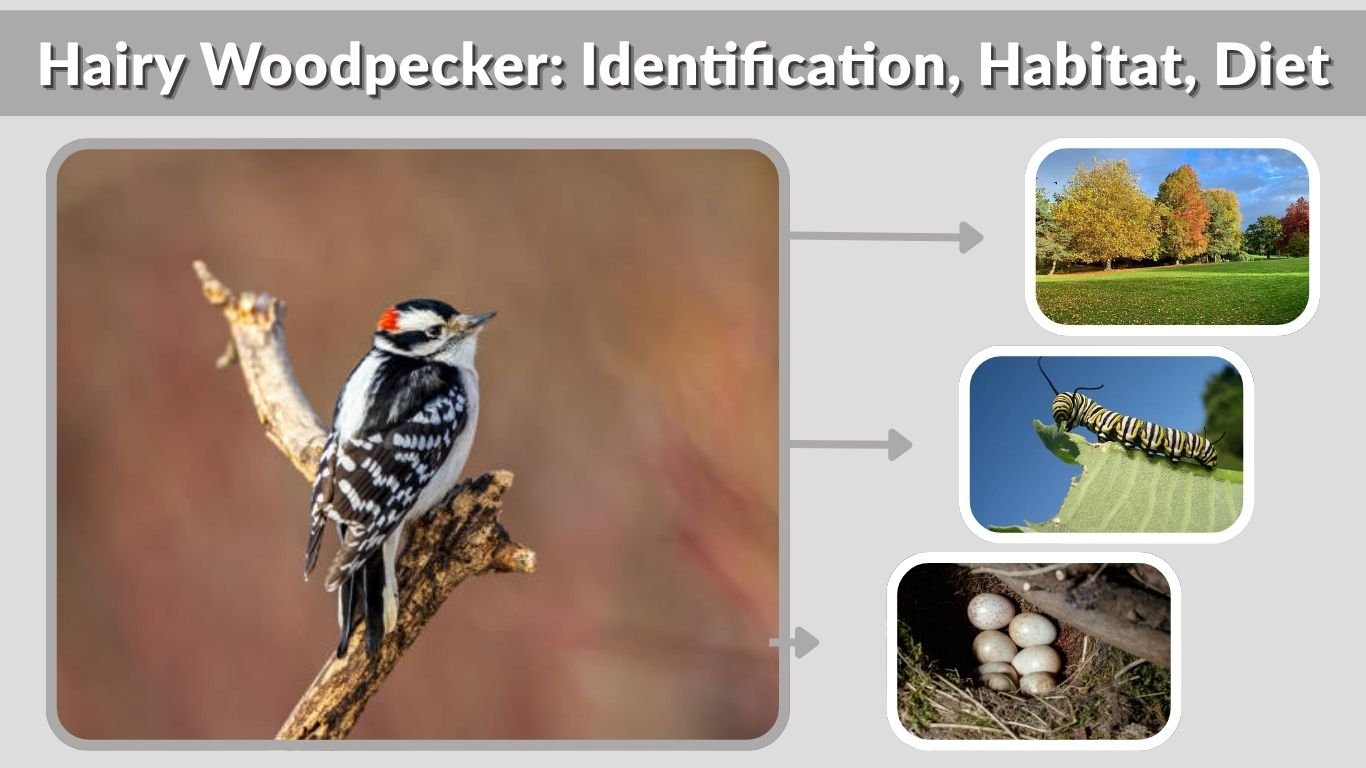
The hairy woodpecker has a bold black-and-white appearance that makes it easy to spot. Its back is mostly white, while its wings are black with white spots or bars. The head features distinct black-and-white stripes, giving it a sharp, patterned look.
Adult birds typically measure about 18–26 cm in length, with a wingspan of around 33–43 cm. One of its most defining features is its long, straight bill, which is nearly the same length as its head. This strong bill is perfectly adapted for drilling into wood to find insects.
Hairy Woodpecker Identification
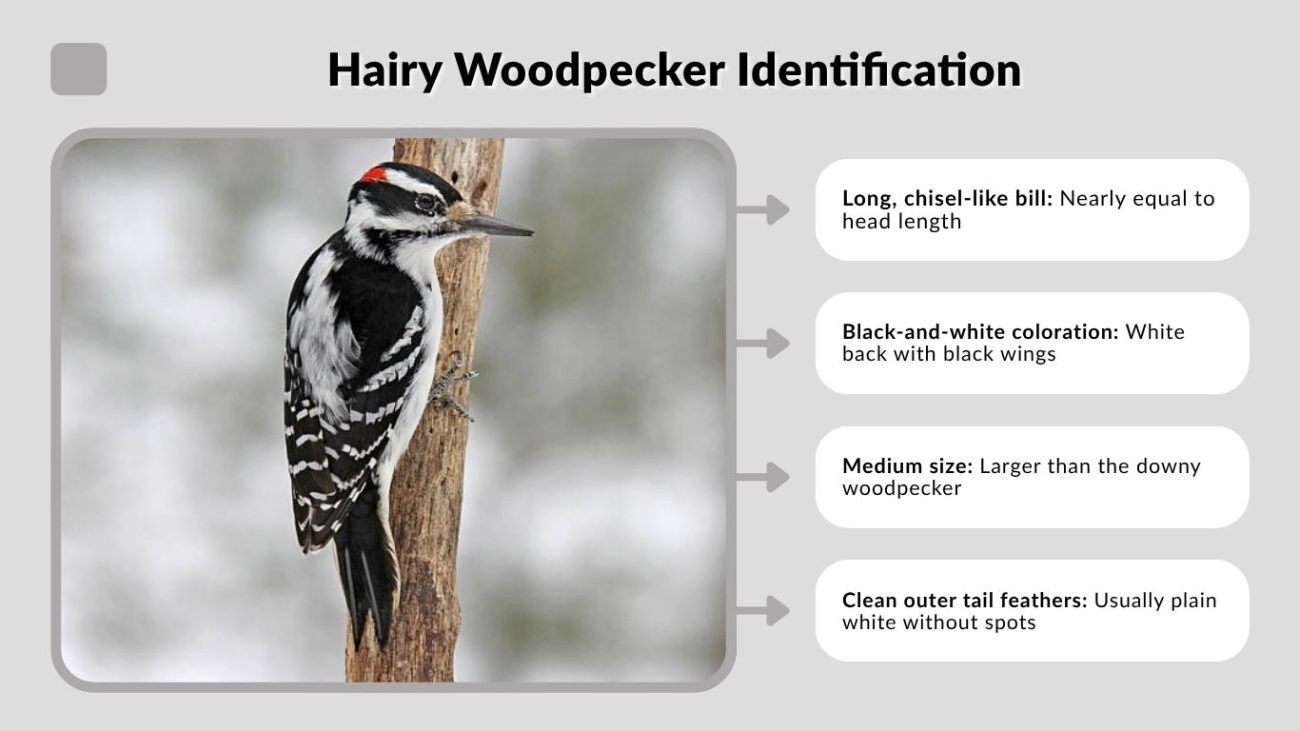
Key Identification Features
Identifying a hairy woodpecker becomes easier when you focus on a few key traits. Its size, bill length, and markings all help distinguish it from similar species.
- Long, chisel-like bill: Nearly equal to head length
- Black-and-white coloration: White back with black wings
- Medium size: Larger than the downy woodpecker
- Clean outer tail feathers: Usually plain white without spots
- Strong, deliberate pecking: More powerful than smaller woodpeckers
Hairy vs Downy Woodpecker
The hairy woodpecker is often confused with the downy woodpecker because they share similar markings. However, there are clear differences:
- Bill size: Hairy woodpecker has a much longer bill; downy has a short, stubby bill
- Body size: Hairy is noticeably larger
- Tail feathers: Hairy has clean white outer tail feathers; downy often has black spots
- Behavior: Hairy woodpeckers tend to be less active and more deliberate
Male vs Female Differences
Male and female hairy woodpeckers look very similar, but there is one key difference:
- Male: Has a small red patch on the back of the head
- Female: Lacks the red patch
This simple distinction helps birdwatchers quickly identify the bird’s sex in the wild.
Hairy Woodpecker Habitat
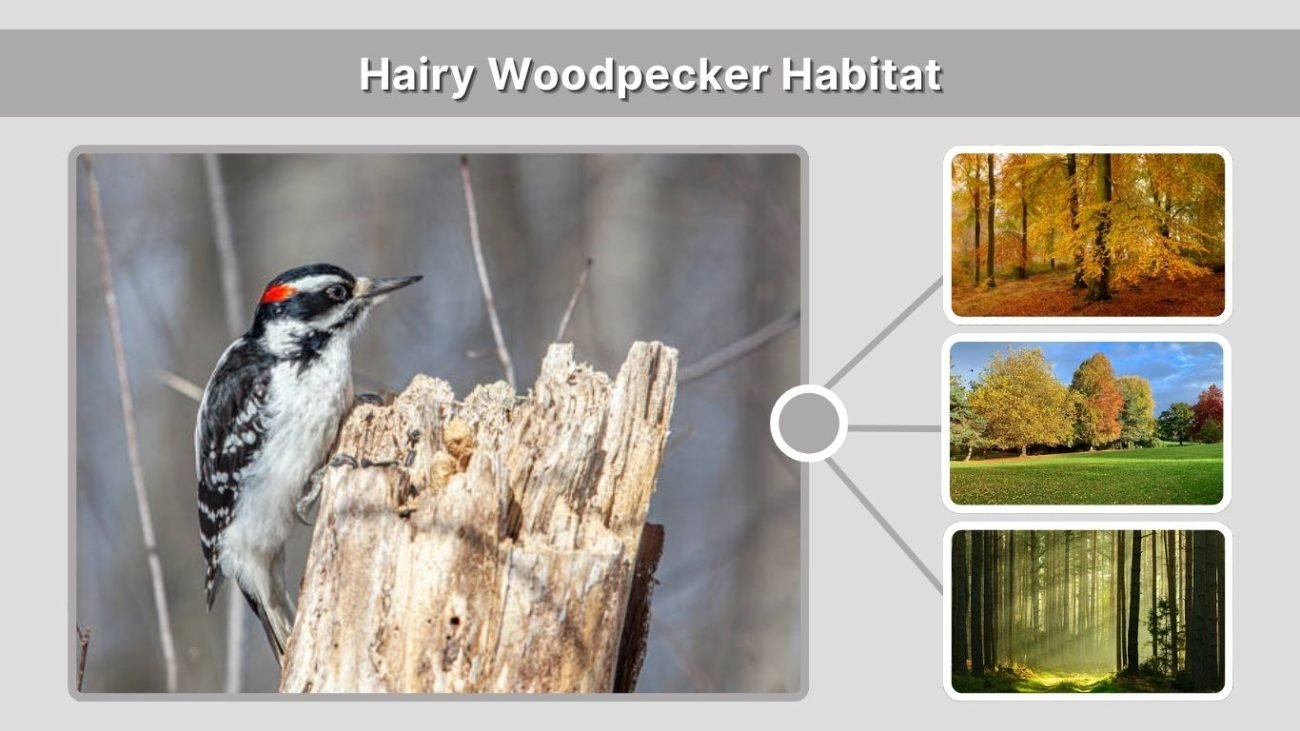
Where Do They Live?
Hairy woodpeckers are found throughout most of North America, including Canada, the United States, and parts of Mexico and Central America. Their wide range makes them one of the most common woodpecker species in many regions.
Preferred Habitat Types
These birds prefer forested environments, especially mature woodlands with large trees. They are commonly found in deciduous forests, mixed woodlands, and coniferous forests.
Hairy woodpeckers are also adaptable and can live in suburban areas, parks, and wooded backyards where trees are available for nesting and feeding.
Hairy Woodpecker Diet
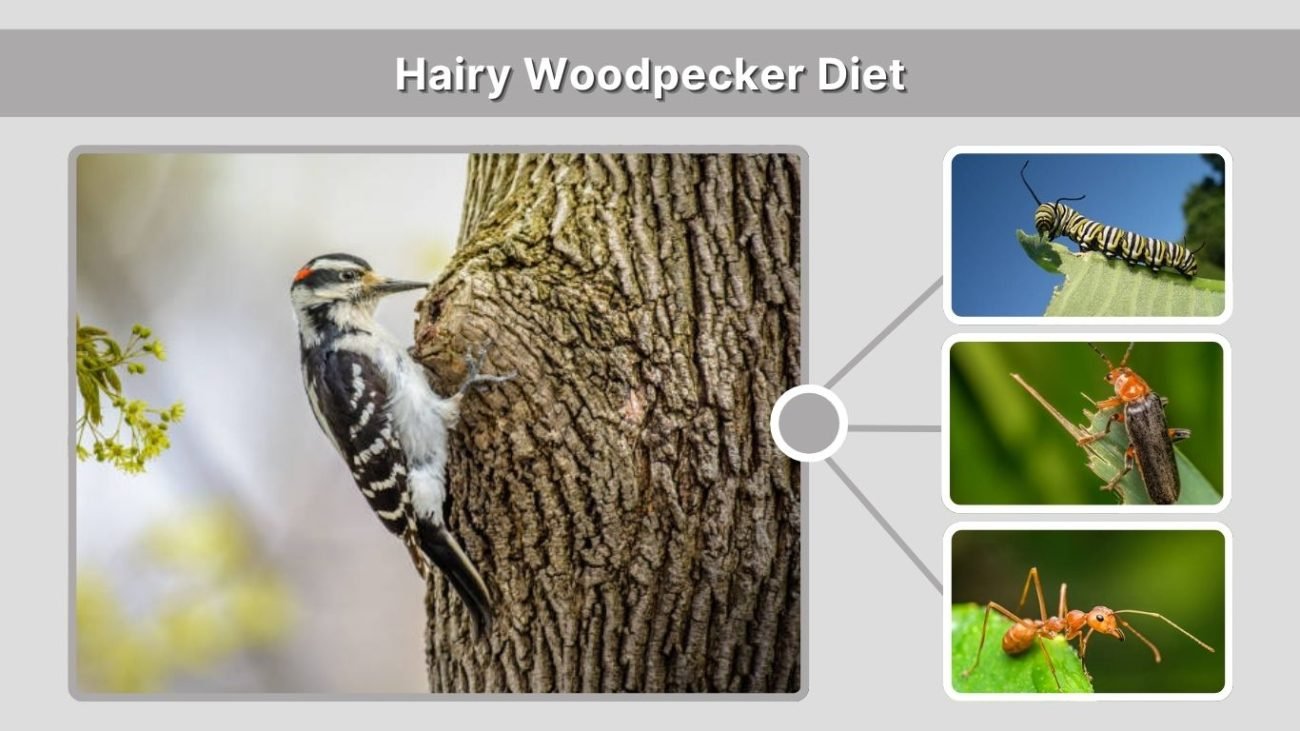
What Do They Eat?
The hairy woodpecker primarily feeds on insects and their larvae, making it an important natural pest controller. Common food sources include beetles, ants, caterpillars, and wood-boring insects.
In addition to insects, they may also eat seeds, berries, and occasionally tree sap, especially when insects are less available.
Foraging Behavior
Hairy woodpeckers are skilled foragers that use their strong bills to drill into tree bark and wood. They listen carefully for insect movement beneath the surface and then peck into the wood to extract their prey.
They often forage on tree trunks and large branches, moving methodically as they search for food. Their stiff tail feathers provide support, allowing them to cling vertically to tree surfaces with ease.
Hairy Woodpecker Nesting
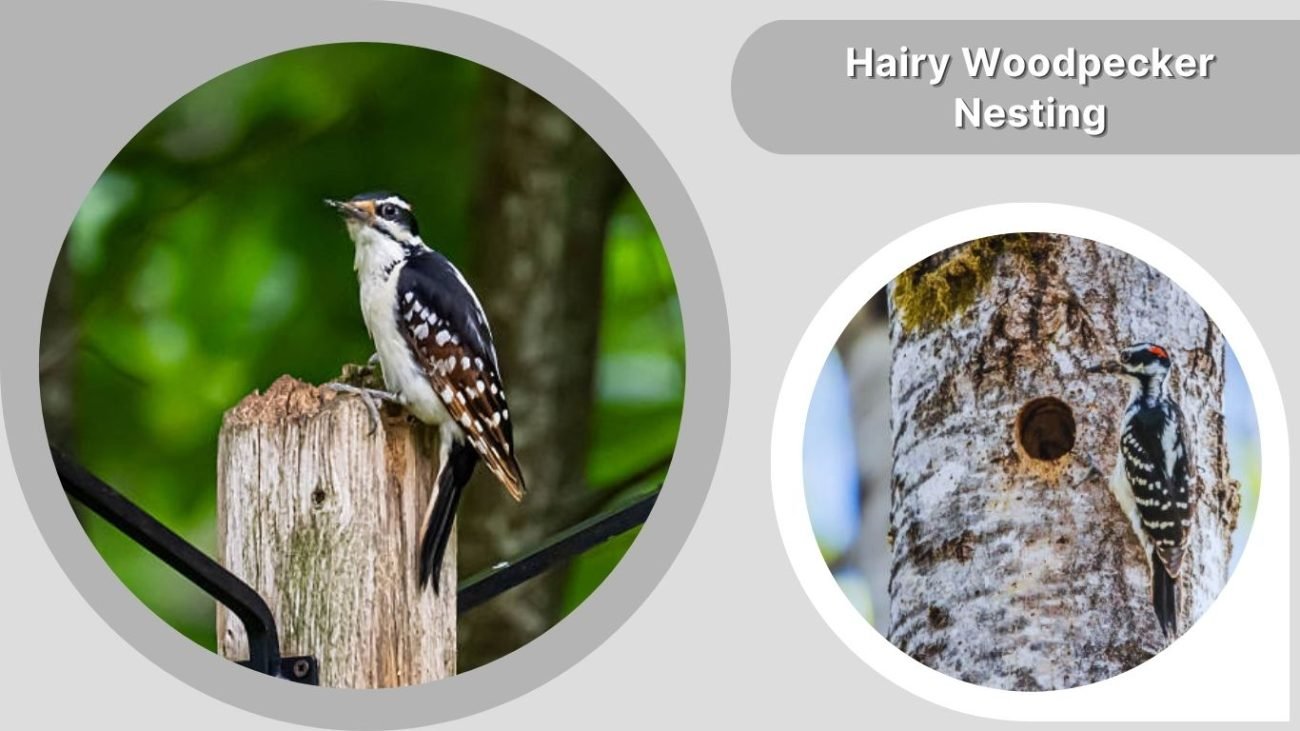
Nest Location
Hairy woodpeckers typically nest in tree cavities that they excavate themselves. These cavities are usually found in dead or decaying trees, which are softer and easier to drill into. They may also use large branches or tree trunks, often several meters above the ground to stay safe from predators.
Nest Construction
Both male and female hairy woodpeckers participate in excavating the nest cavity. Using their strong bills, they chip away at the wood over several days or even weeks. The inside of the cavity is left unlined, with wood chips often remaining at the bottom to provide a soft base for the eggs.
Hairy Woodpecker Eggs
Egg Appearance
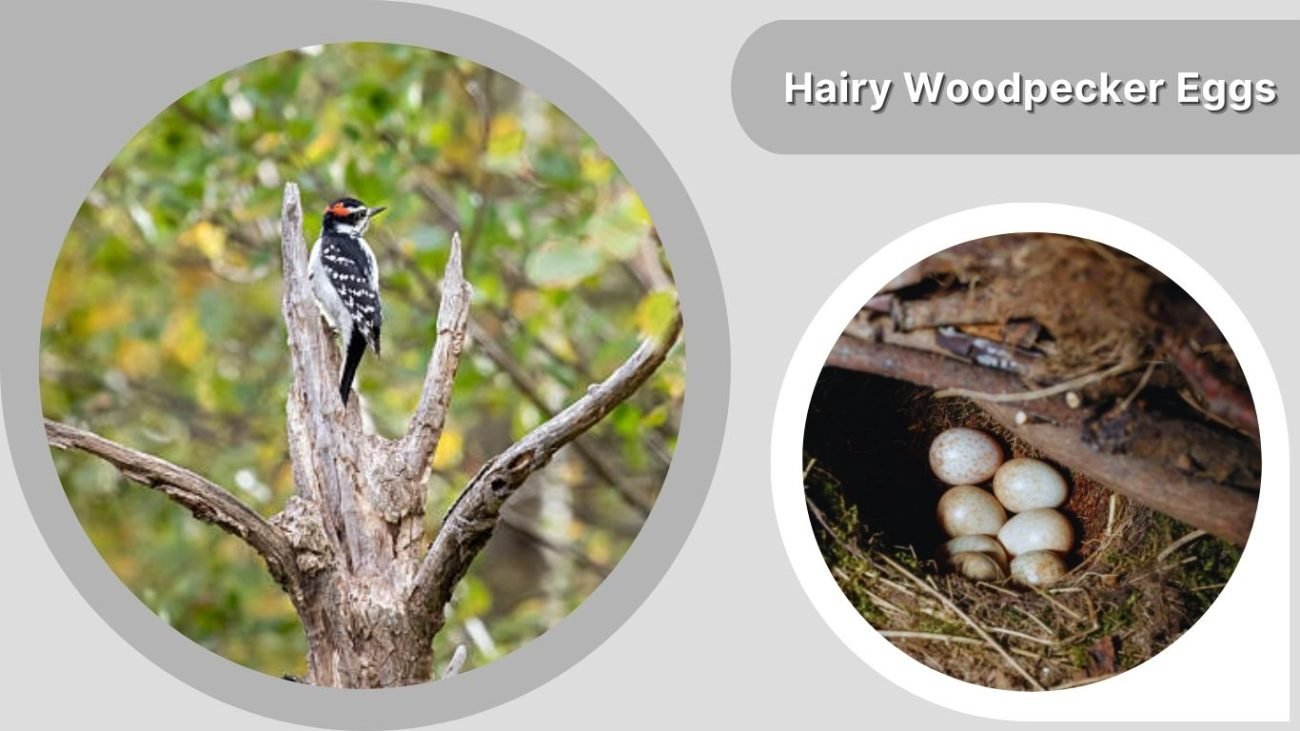
Hairy woodpecker eggs are plain white, which is typical for birds that nest in dark cavities. Since the eggs are not exposed to sunlight, there is no need for camouflage markings.
Clutch Size
A typical clutch contains about 3 to 6 eggs. The number may vary depending on environmental conditions and food availability.
Incubation
Both parents share the responsibility of incubating the eggs. The incubation period usually lasts around 11 to 14 days. During this time, the parents take turns keeping the eggs warm and protected.
Hairy Woodpecker Life Cycle
Life Stages
The life cycle of the hairy woodpecker follows several key stages:
- Egg
- Nestling
- Fledgling
- Adult
Each stage represents important growth and development milestones.
Growth and Development
After hatching, the chicks are blind and helpless, relying entirely on their parents for food and warmth. Both parents feed the young by regurgitating insects collected from trees.
The nestlings grow quickly and develop feathers within a few weeks. They typically leave the nest (fledge) after about 25 to 30 days, although they may continue to depend on their parents for a short period afterward.
Lifespan
Hairy woodpeckers can live several years in the wild, with an average lifespan of around 5 to 10 years. Survival depends on factors such as food availability, habitat quality, and predation.
Behavior and Adaptations
Drumming Behavior
One of the most distinctive behaviors of the hairy woodpecker is drumming. This rapid pecking on tree trunks or other surfaces serves as a form of communication. Birds use drumming to establish territory and attract mates.
Climbing Ability
Hairy woodpeckers are excellent climbers, thanks to their strong claws and stiff tail feathers. These adaptations allow them to cling to vertical tree surfaces while searching for food. Their movements are steady and deliberate as they explore bark and wood.
Vocalizations
In addition to drumming, hairy woodpeckers produce sharp, clear calls that help them communicate with one another. These vocal signals are often used to warn of danger or maintain contact between mates.
Threats and Conservation Status
Population Status
The hairy woodpecker is currently considered a species of “Least Concern,” with stable populations across much of its range. Its adaptability to different habitats has contributed to its success.
Threats
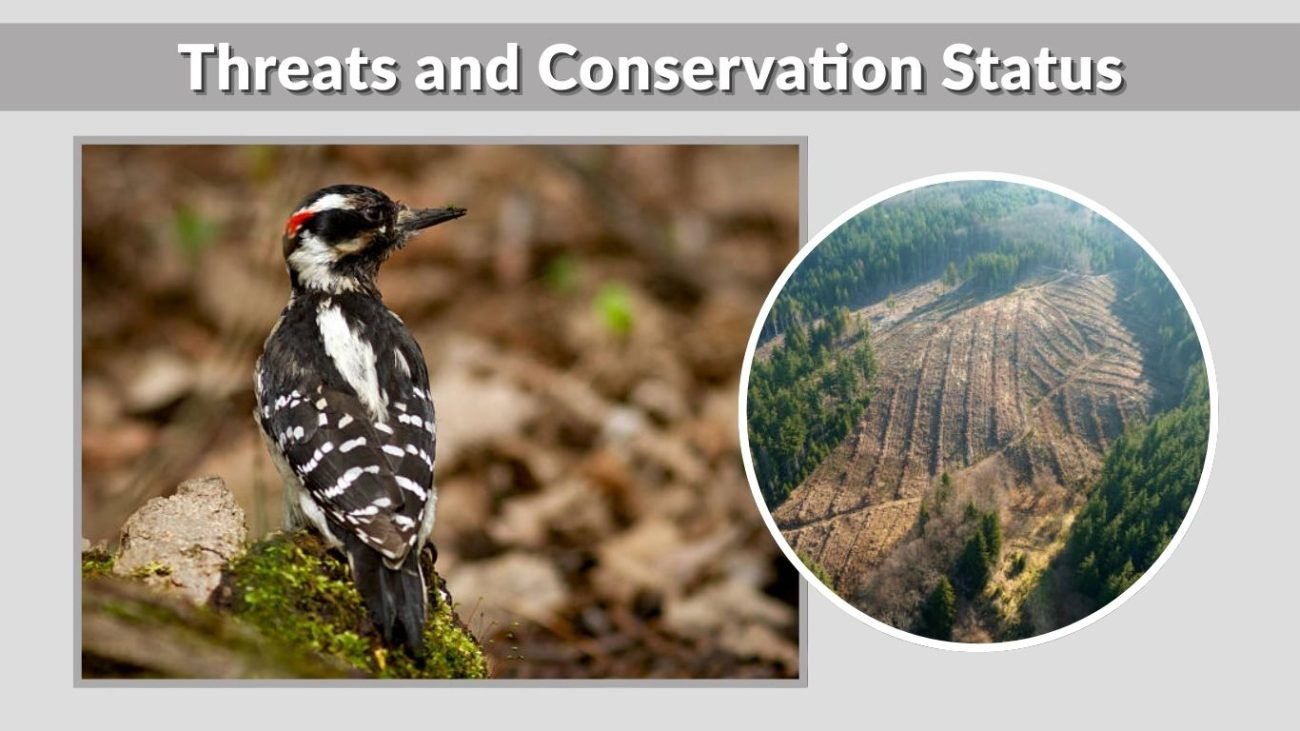
Despite its stable population, the hairy woodpecker faces some challenges. Habitat loss due to deforestation and urban expansion can reduce suitable nesting and feeding areas.
The removal of dead trees, which are important for nesting, also impacts their breeding opportunities. Conservation efforts that protect forest habitats and maintain natural ecosystems are essential for their continued survival.
Interesting Facts About Hairy Woodpecker
- It can drill deep into wood to reach hidden insects.
- It is often confused with the smaller downy woodpecker.
- Its stiff tail feathers act like a prop for support while climbing.
- It plays a vital role in controlling forest insect populations.
- Its drumming sound can be heard over long distances.
FAQs
How do you tell a hairy woodpecker from a downy woodpecker?
The easiest way is by looking at the bill—hairy woodpeckers have a much longer bill compared to the shorter bill of downy woodpeckers.
Are hairy woodpeckers rare?
No, they are fairly common across their range and are often seen in forests and wooded areas.
Do hairy woodpeckers visit feeders?
Yes, they may visit bird feeders, especially those offering suet or seeds.
Where do hairy woodpeckers nest?
They nest in tree cavities that they excavate themselves, usually in dead or decaying trees.
Conclusion
The hairy woodpecker is a fascinating and important bird known for its strong drilling ability, distinctive appearance, and ecological role. From forests to suburban areas, it continues to thrive thanks to its adaptability and resourcefulness. By understanding its behavior, habitat, and life cycle, we can better appreciate this remarkable species and support efforts to protect the environments it depends on.