


The Nashville warbler is a small, lively songbird known for its soft yellow underparts and distinctive white eye ring. Despite its name, it is more commonly found in northern forests and migrates across North America each year. This energetic bird is often seen flitting through shrubs and low trees while searching for food. In this article, we explore the Nashville warbler’s identification, habitat, migration, and diet to better understand this fascinating species.
Nashville Warbler Identification
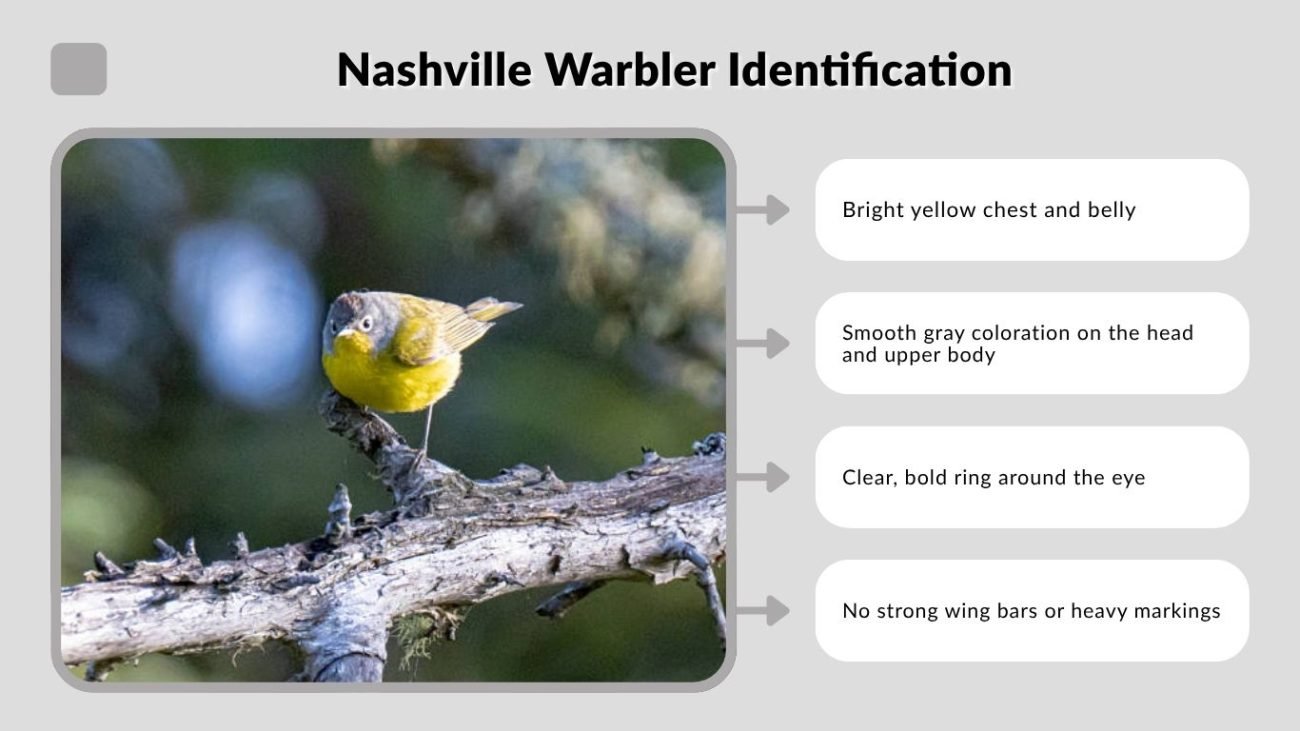
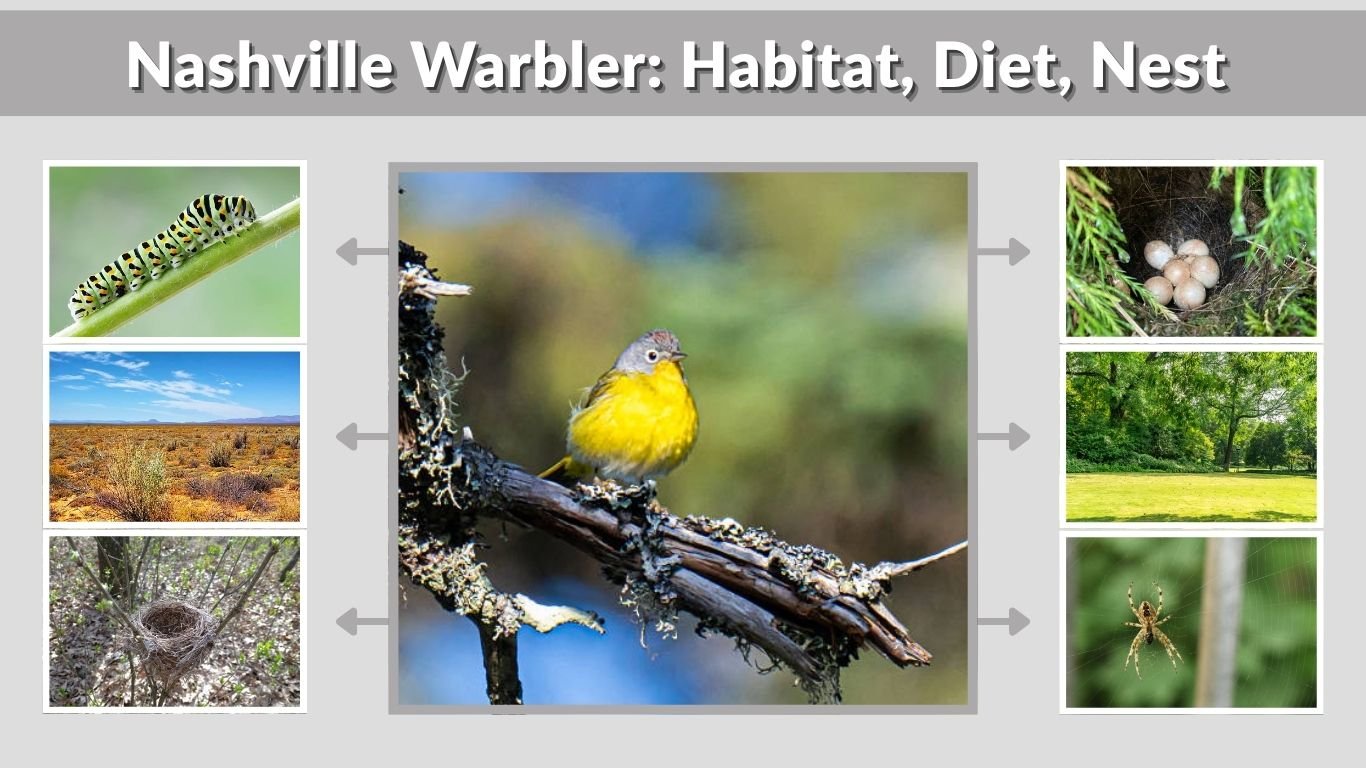
The Nashville warbler is a small and active songbird that can be identified by its clean, simple markings and lively behavior. Although it is not as brightly colored as some other warblers, its combination of yellow underparts, gray head, and bold eye ring makes it stand out once you know what to look for. It is often spotted moving quickly through shrubs and low trees.
Key Identification Features (Quick Overview)
- Yellow underparts: Bright yellow chest and belly
- Gray head: Smooth gray coloration on the head and upper body
- White eye ring: Clear, bold ring around the eye (key feature)
- Plain wings: No strong wing bars or heavy markings
- Hidden crown patch: Small chestnut patch (rarely visible)
- Small size: Typical of warblers, compact and lightweight
- Thin, pointed bill: Adapted for insect feeding
- Active movement: Constantly hopping through shrubs and branches
These features, along with its high-pitched song and energetic behavior, help birdwatchers accurately identify the Nashville warbler in the wild.
Nashville Warbler Habitat
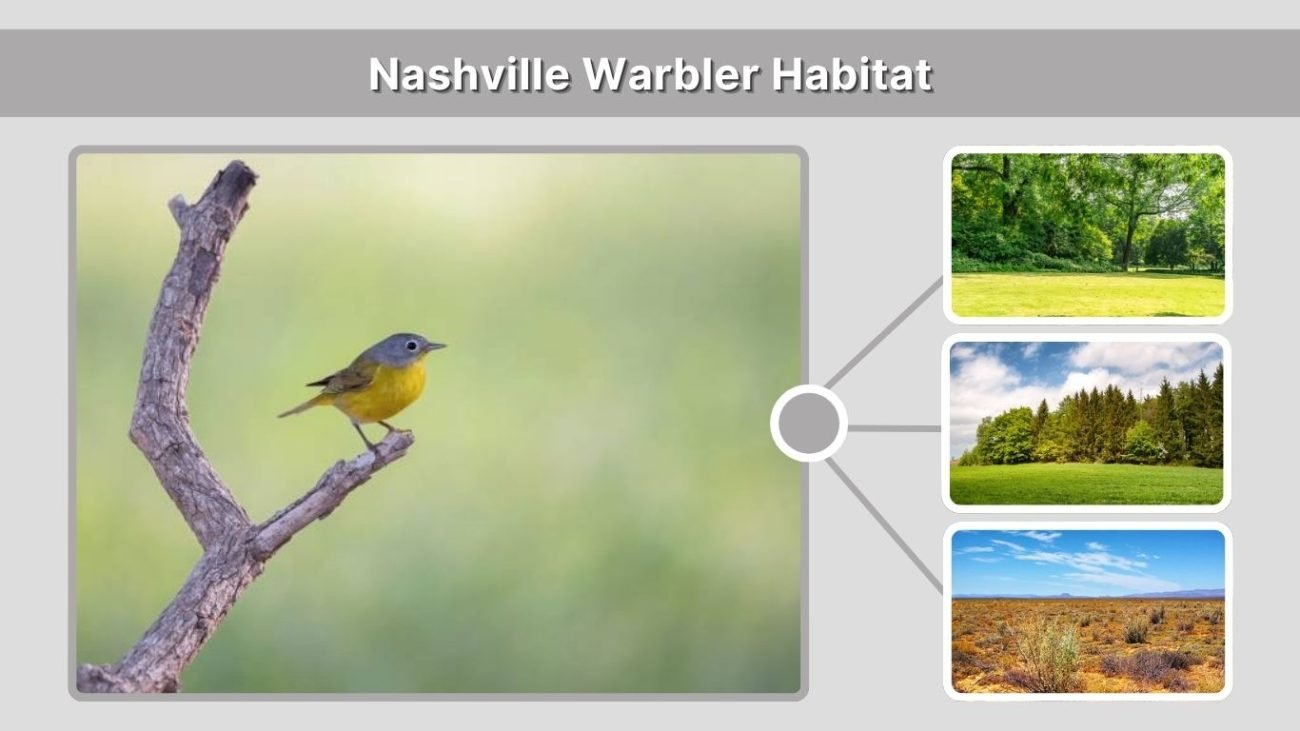
The Nashville warbler prefers habitats that provide both cover and access to food, especially during the breeding season.
Preferred Habitat
This species is commonly found in open woodlands, forest edges, and shrubby areas. It favors regenerating forests and areas with dense undergrowth, which offer protection and feeding opportunities.
Geographic Range
Nashville warblers are widely distributed across North America. They breed in northern regions, including parts of Canada and the northern United States, and migrate to Central America and southern areas during the winter.
Seasonal Habitat Changes
During the breeding season, they inhabit cooler northern forests. In winter, they move to warmer regions with more abundant food sources. During migration, they can be seen in a variety of habitats, including gardens and parks.
Nashville Warbler Migration
Migration is a key part of the Nashville warbler’s life cycle and plays a major role in its survival.
Migration Routes
Nashville warblers migrate between North America and Central America. They travel long distances between their breeding grounds in the north and their wintering areas in warmer climates.
Seasonal Timing
In spring, they migrate north to breed, usually arriving in late spring. In fall, they head south again to avoid colder temperatures and food shortages.
Migration Challenges
During migration, these small birds face many challenges, including long flights, changing weather conditions, and the need to find food along the way. Their ability to adapt and find suitable stopover habitats is essential for survival.
Nashville Warbler Diet
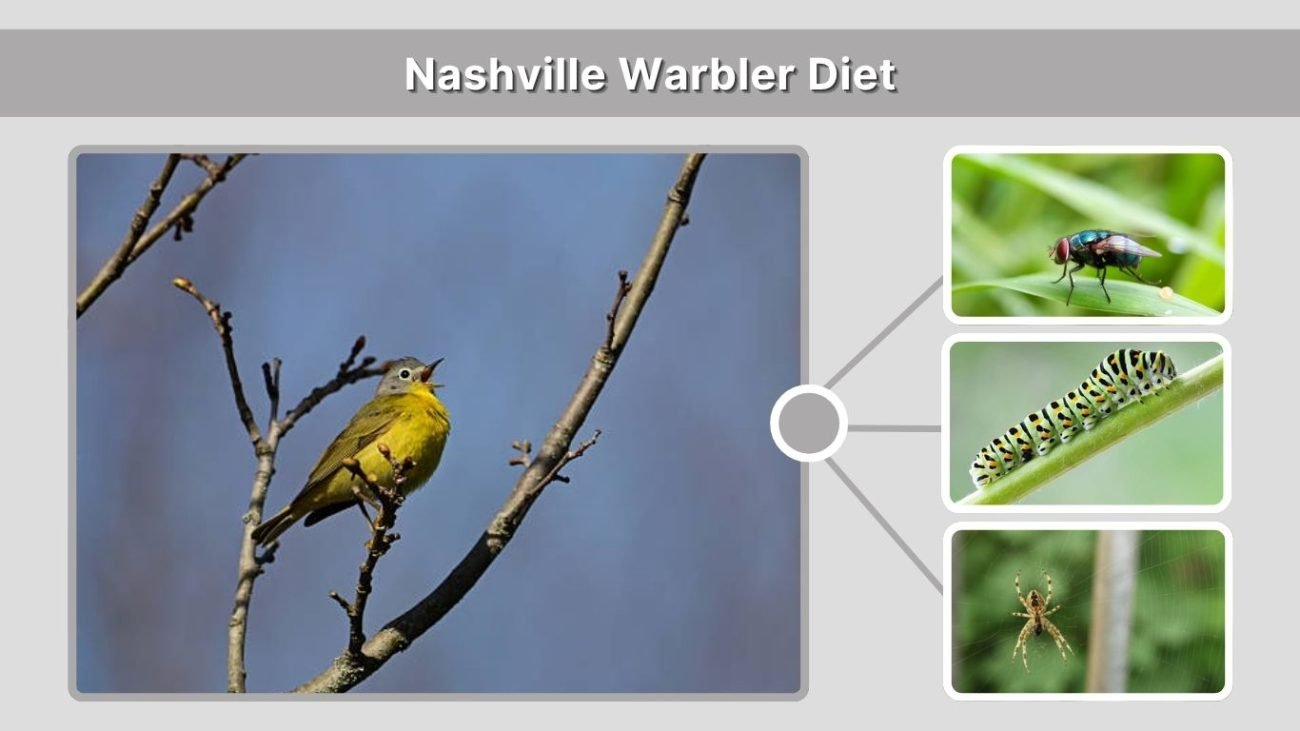
The diet of the Nashville warbler is mainly based on insects, which provide the energy needed for its active lifestyle.
Main Food Sources
Nashville warblers primarily eat insects such as caterpillars, beetles, flies, and spiders. These are especially important during the breeding season when they need extra nutrients.
Feeding Style
They forage by moving quickly through shrubs and low branches, picking insects from leaves and twigs. Their constant movement helps them locate food efficiently.
Seasonal Diet Changes
During migration and in winter, they may also consume small berries and fruits. This flexibility allows them to survive when insect availability is lower.
Nashville Warbler Nest
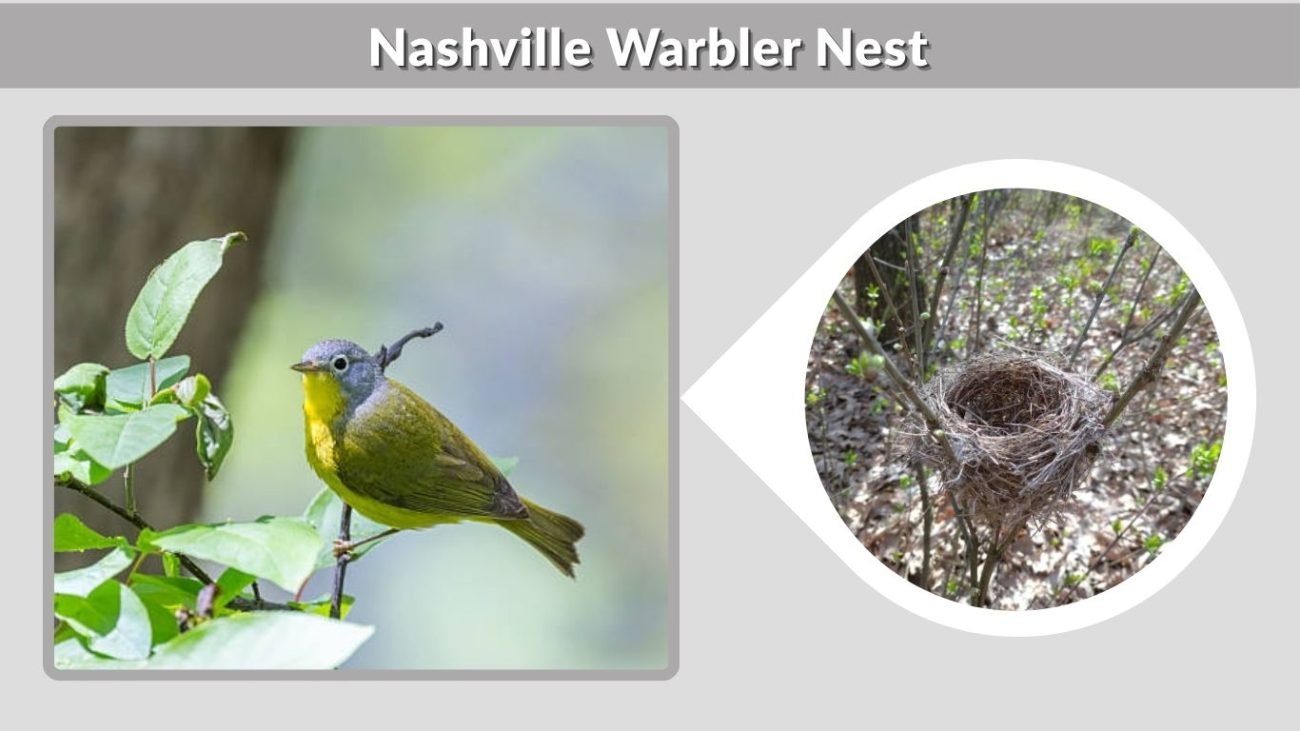
Nesting is a crucial stage in the Nashville warbler’s life, and it typically occurs in well-hidden locations to protect the young.
Nest Construction
The female builds a small, cup-shaped nest using materials such as grass, leaves, moss, and bark fibers. The inside is lined with softer materials like fine grass or hair to keep the eggs warm and secure.
Nest Location
Unlike many birds, Nashville warblers often build their nests on or near the ground. They choose concealed spots under shrubs, grass clumps, or low vegetation to avoid predators and harsh weather.
Nashville Warbler Eggs
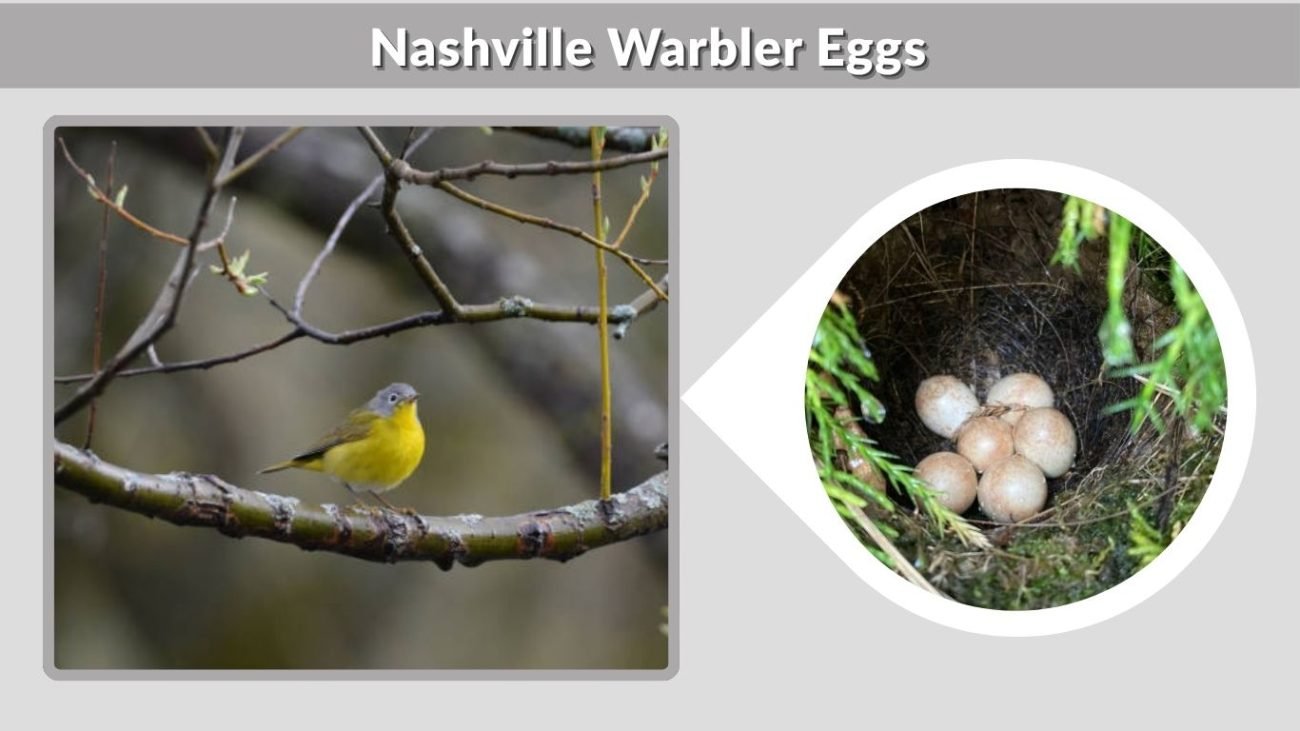
Once the nest is complete, the female lays eggs that will soon develop into chicks.
Egg Appearance
Nashville warbler eggs are typically white or creamy in color, often marked with small brown or reddish spots. These markings help the eggs blend into the nest.
Clutch Size
A typical clutch consists of about 3 to 5 eggs. The number may vary depending on environmental conditions and food availability.
Incubation and Care
The incubation period lasts around 11 to 13 days, with the female primarily responsible for keeping the eggs warm. After hatching, both parents help feed the chicks until they are ready to leave the nest.
Nashville Warbler Behavior
The Nashville warbler is known for its energetic and active nature.
Activity and Movement
These birds are constantly on the move, hopping between branches and shrubs while searching for food. Their quick and lively behavior makes them fun to observe.
Vocal Behavior
They are quite vocal, producing a series of high-pitched notes. Their song is often heard during the breeding season and helps establish territory.
Social Behavior
Nashville warblers are generally solitary during the breeding season but may be seen in mixed-species flocks during migration.
Nashville Warbler Lifespan
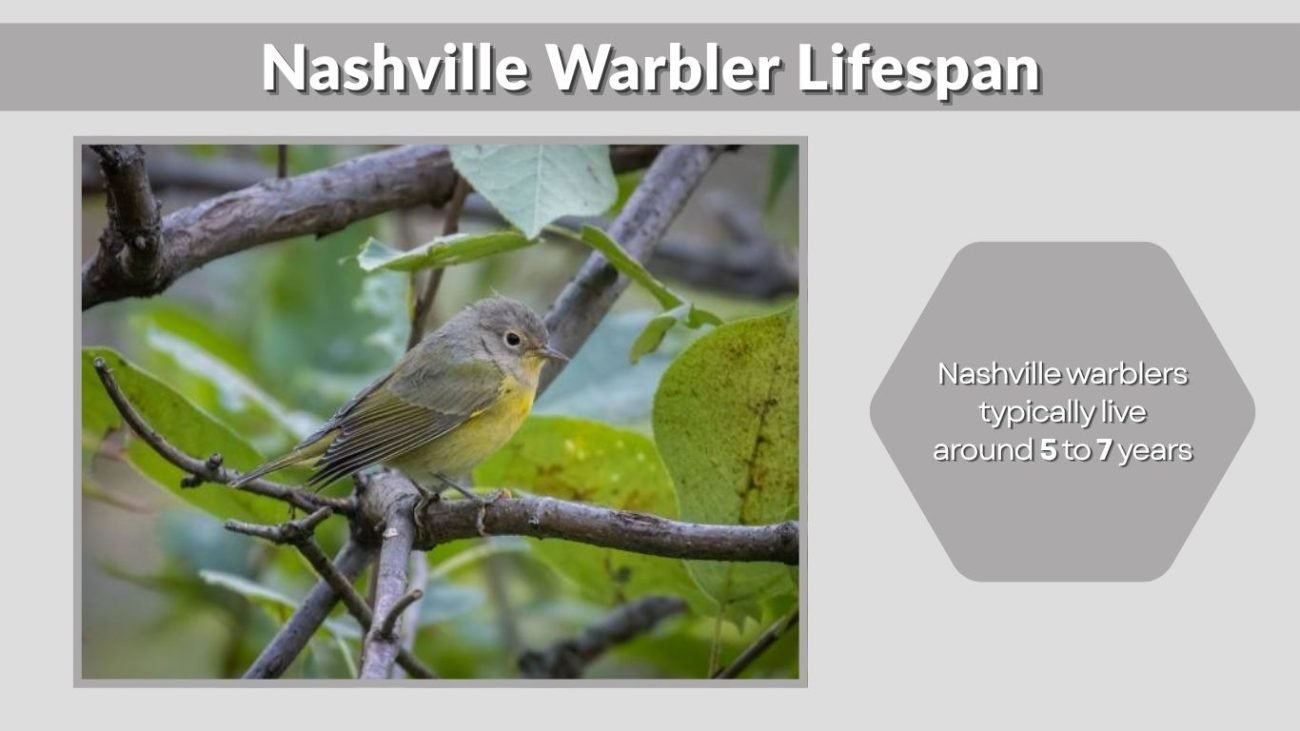
The lifespan of a Nashville warbler depends on various environmental and survival factors.
Average Lifespan
In the wild, Nashville warblers typically live around 5 to 7 years, although many do not survive their first year due to natural challenges.
Threats to Survival
They face threats from predators such as snakes, larger birds, and mammals. Habitat loss and climate changes can also impact their survival.
Nashville Warbler Facts
Nashville warblers have several interesting characteristics that make them unique.
- Named after Nashville, Tennessee, where they were first studied
- Have a hidden chestnut crown patch
- Commonly seen during migration seasons
- Prefer dense shrubs and forest edges
- Play a role in controlling insect populations
Conclusion
The Nashville warbler is a small but fascinating bird known for its subtle beauty and energetic behavior. From its distinctive eye ring and melodic song to its long migration journey, this species offers much to admire. Understanding its habitat, diet, and life cycle helps us appreciate its role in nature. Protecting its environment ensures that future generations can continue to enjoy this lively songbird.
FAQs
Where do Nashville warblers live?
They live in North America, breeding in northern regions and migrating to Central America for winter.
What do Nashville warblers eat?
They mainly eat insects like caterpillars, beetles, and spiders, along with some berries.
How can you identify a Nashville warbler?
Look for a yellow body, gray head, and a distinct white eye ring.
Do Nashville warblers migrate?
Yes, they migrate between North America and Central America each year.
Where do Nashville warblers build nests?
They build nests on or near the ground, usually hidden under shrubs or vegetation.