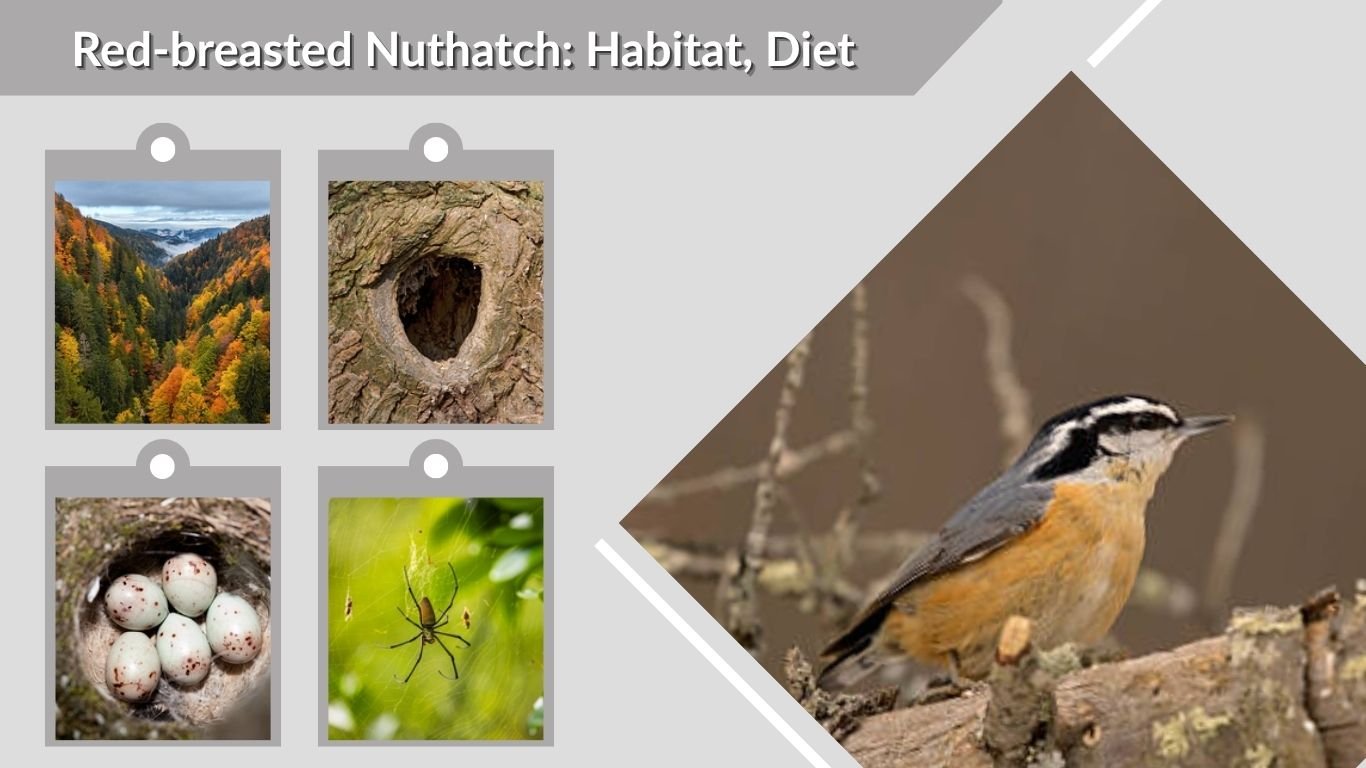
The red-breasted nuthatch is a small, energetic bird known for its distinctive nasal call and unique ability to climb down trees headfirst. Commonly found in coniferous forests across North America, this bird plays an important role in forest ecosystems by feeding on insects and dispersing seeds. Despite its tiny size, the red-breasted nuthatch displays fascinating behaviors, from food caching to unpredictable migration patterns. In this guide, you’ll explore its habitat, identification, diet, and nesting habits.
What Is a Red-breasted Nuthatch?
The red-breasted nuthatch (Sitta canadensis) is a small songbird belonging to the nuthatch family. It is widely recognized for its compact body, short tail, and strong bill, which helps it forage on tree bark.
Unlike many birds, nuthatches are known for their ability to move both up and down tree trunks, often descending headfirst while searching for food. This behavior allows them to access areas other birds cannot reach.
They are commonly found in coniferous forests, where they rely on pine trees for both food and nesting sites.
Red-breasted Nuthatch Identification
Physical Appearance
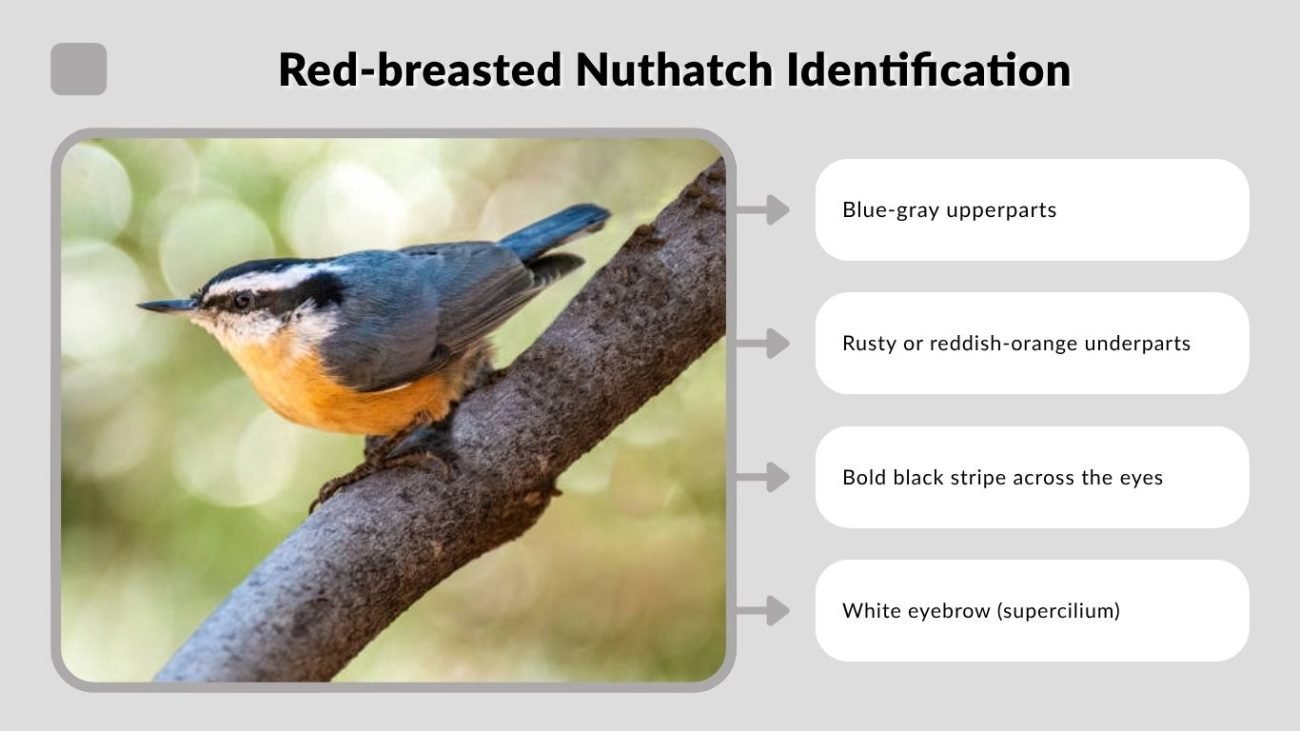
The red-breasted nuthatch has several distinctive features that make it easy to identify:
- Blue-gray upperparts
- Rusty or reddish-orange underparts
- Bold black stripe across the eyes
- White eyebrow (supercilium)
- Short tail and compact body
It measures about 10–12 cm (4–5 inches) in length, making it one of the smaller forest birds.
Male vs Female Differences
Males and females look very similar, but there are slight differences:
- Males often have darker and more vivid coloring
- Females may appear slightly paler
These differences can be subtle and are sometimes difficult to notice in the field.
Unique Behavior
One of the most fascinating traits of this bird is its ability to:
- Climb down tree trunks headfirst
- Move quickly along branches
- Explore bark crevices for insects
This behavior sets it apart from woodpeckers and other tree-dwelling birds.
Red-breasted Nuthatch Habitat: Where Do They Live?
Natural Habitat
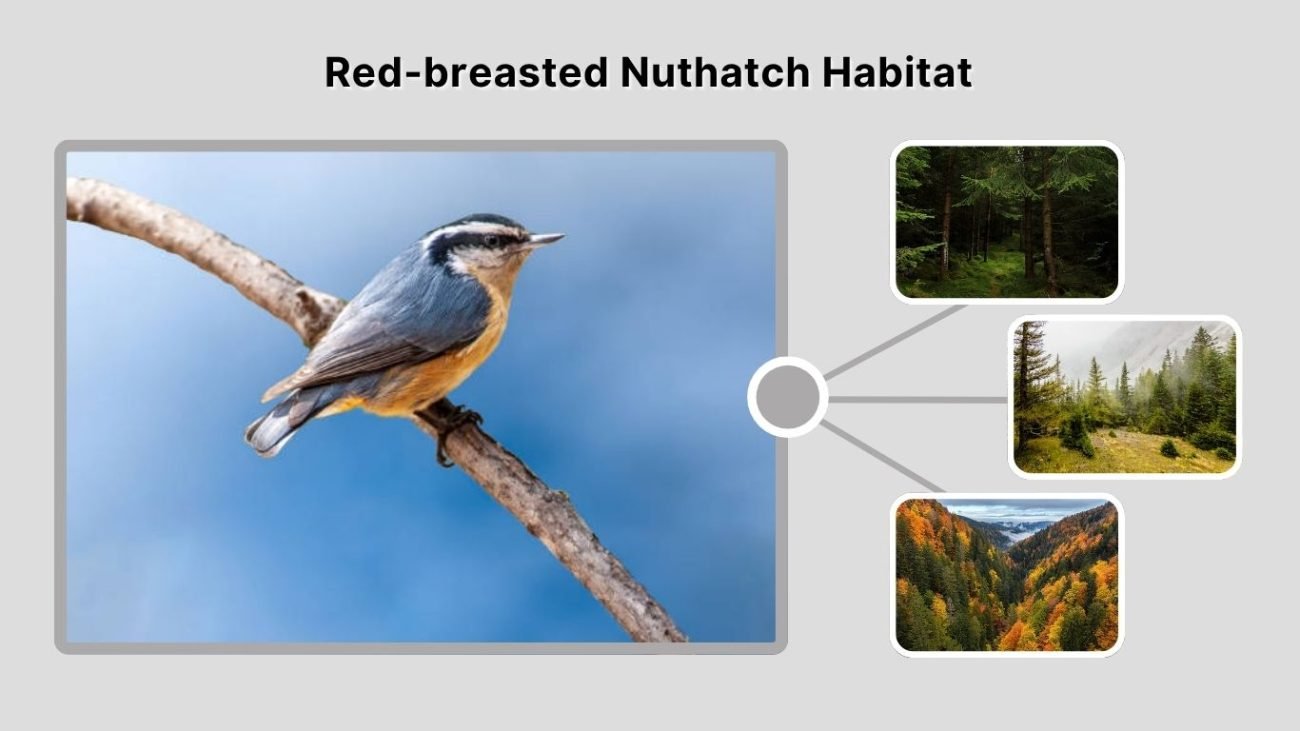
Red-breasted nuthatches prefer coniferous forests, especially areas dominated by:
- Pine trees
- Spruce and fir forests
- Mixed woodlands with evergreen trees
These environments provide both shelter and a steady food supply.
Geographic Range
They are widely distributed across:
- Canada
- Northern United States
- Mountainous regions in the western U.S.
During certain years, they may appear farther south than usual.
Seasonal Movement (Irruptive Migration)
Unlike regular migrants, red-breasted nuthatches exhibit irruptive migration:
- They move unpredictably based on food availability
- In years with low seed production, they travel farther south
- In years with abundant food, they may stay in the same region
This makes their presence in some areas vary greatly from year to year.
Red-breasted Nuthatch Diet: What Do They Eat?
Primary Food Sources
The diet of the red-breasted nuthatch changes with the seasons.
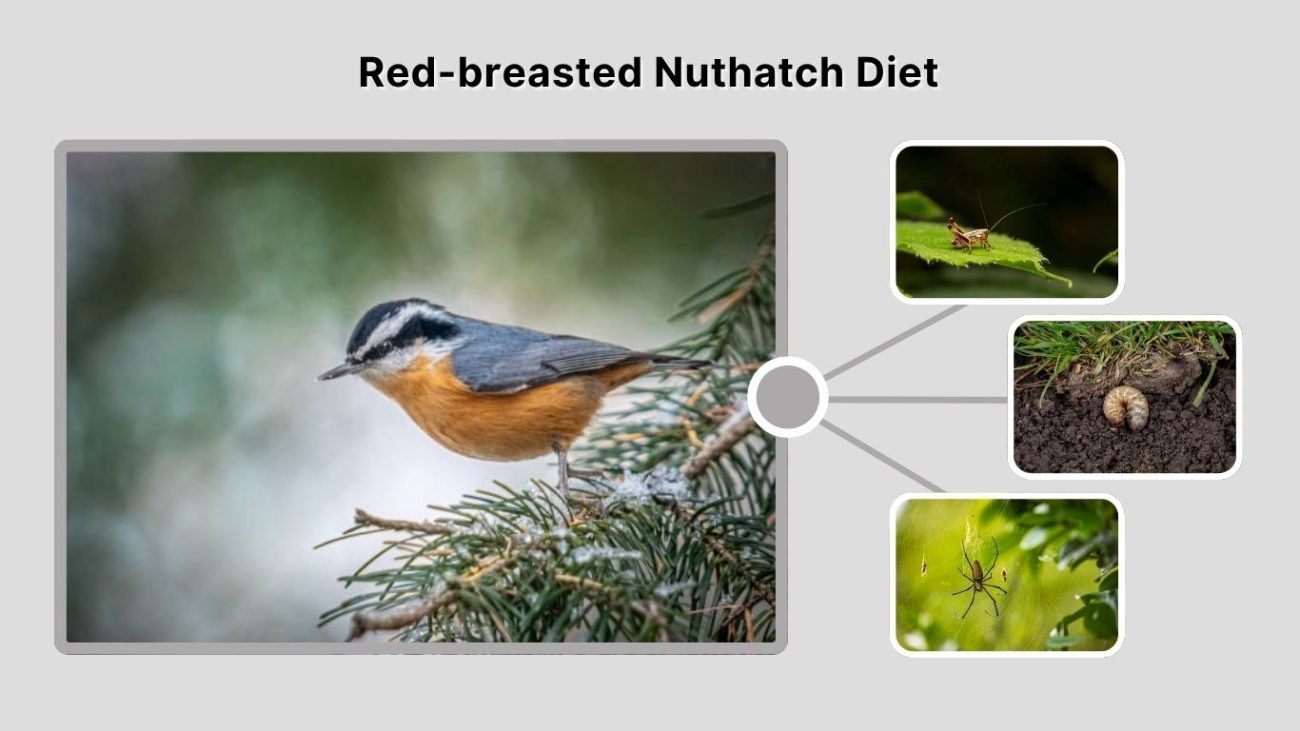
In warmer months, they mainly eat:
- Insects
- Beetles and larvae
- Spiders
During colder months, they rely more on:
- Pine seeds
- Conifer seeds
Feeding Behavior
Red-breasted nuthatches are active foragers. They:
- Search tree bark for hidden insects
- Wedge seeds into bark crevices
- Use their strong bills to crack open seeds
Their feeding behavior is highly efficient and adapted to forest environments.
Food Caching Habit
One unique behavior is their ability to store food for later use:
- They hide seeds in tree bark or cracks
- Return later when food is scarce
- This helps them survive harsh winter conditions
Red-breasted Nuthatch Nest: Location, Structure & Materials
Nesting Sites
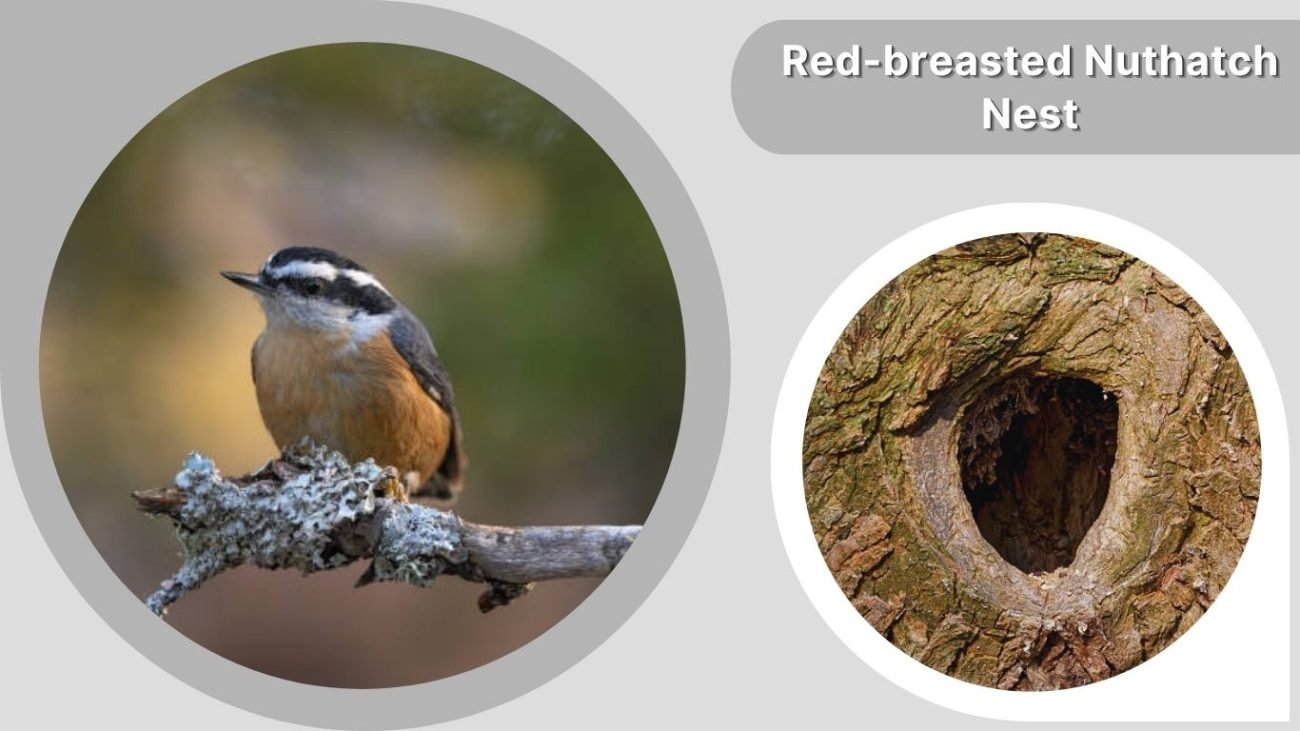
Red-breasted nuthatches are cavity nesters and typically choose:
- Natural tree holes
- Old woodpecker cavities
- Occasionally nest boxes
They prefer nesting sites in conifer trees, often at moderate heights.
Unique Nest Defense Behavior
One of their most interesting nesting behaviors is the use of tree resin:
- They smear sticky resin around the entrance hole
- This helps deter predators and insects
- They avoid getting stuck by carefully flying straight into the nest
This behavior is rare and unique among small birds.
Nest Construction
The nest itself is built using soft materials such as:
- Grass
- Bark fibers
- Fur and feathers
The interior is lined to keep eggs warm and protected.
Red-breasted Nuthatch Eggs: Appearance & Incubation
Egg Characteristics
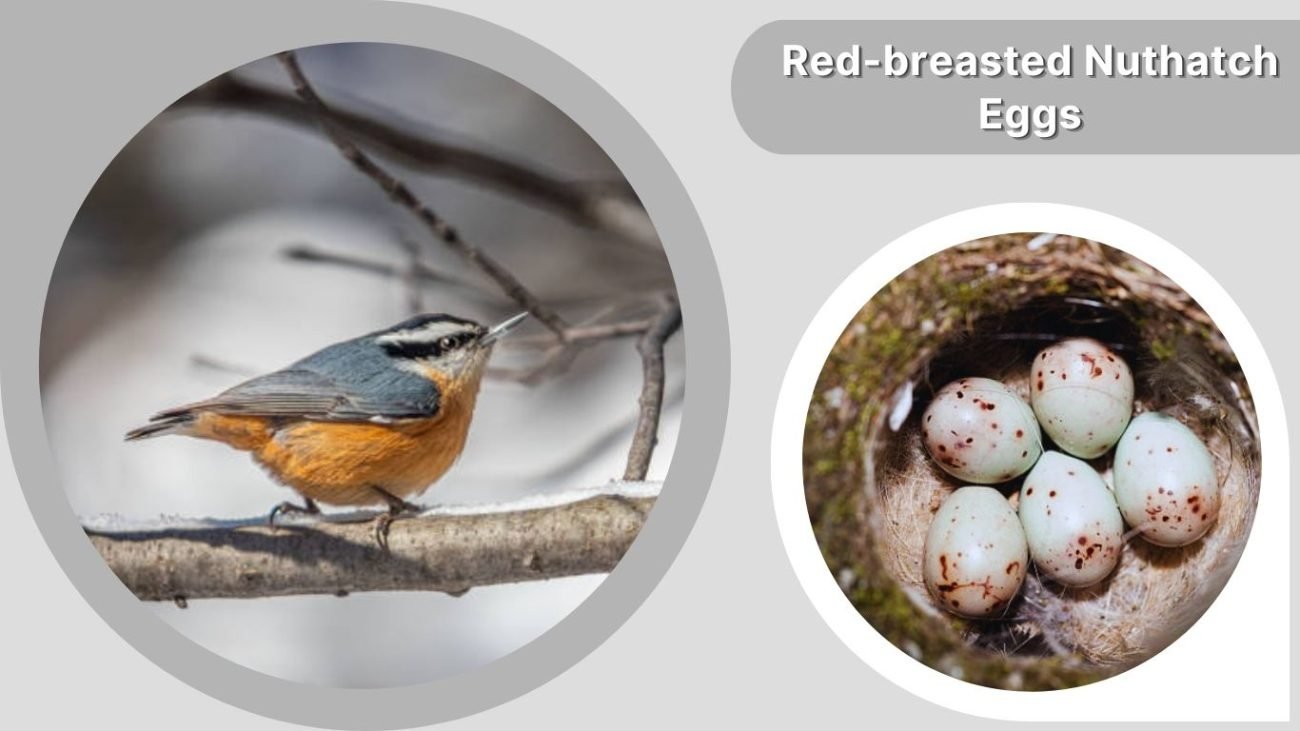
Red-breasted nuthatch eggs are small and well-camouflaged:
- Color: White or creamy with reddish-brown spots
- Shape: Smooth and slightly oval
These markings help the eggs blend into the nest environment.
Clutch Size
A typical clutch contains 5–8 eggs, depending on food availability and habitat conditions.
Incubation Process
- Incubation lasts about 12–13 days
- The female does most of the incubation
- The male provides food and guards the nest
After hatching, the chicks require constant care and feeding.
Red-breasted Nuthatch Life Cycle
Egg Stage
The life cycle begins when eggs are laid and incubated. Proper warmth and protection are essential for successful hatching.
Hatchling Stage
Newly hatched chicks are:
- Blind
- Featherless
- Completely dependent on parents
They rely entirely on a steady supply of insects for growth.
Nestling Stage
Within days:
- Feathers begin to grow
- Eyes open
- Movement increases
Both parents feed the chicks frequently and maintain nest cleanliness.
Fledgling Stage
After about 18–21 days, the young birds leave the nest:
- They can fly short distances
- Still depend on parents temporarily
- Begin learning to forage
Adult Stage
Soon after fledging:
- They become independent
- Develop full survival skills
- Reach breeding maturity by the next season
Red-breasted Nuthatch Lifespan: How Long Do They Live?
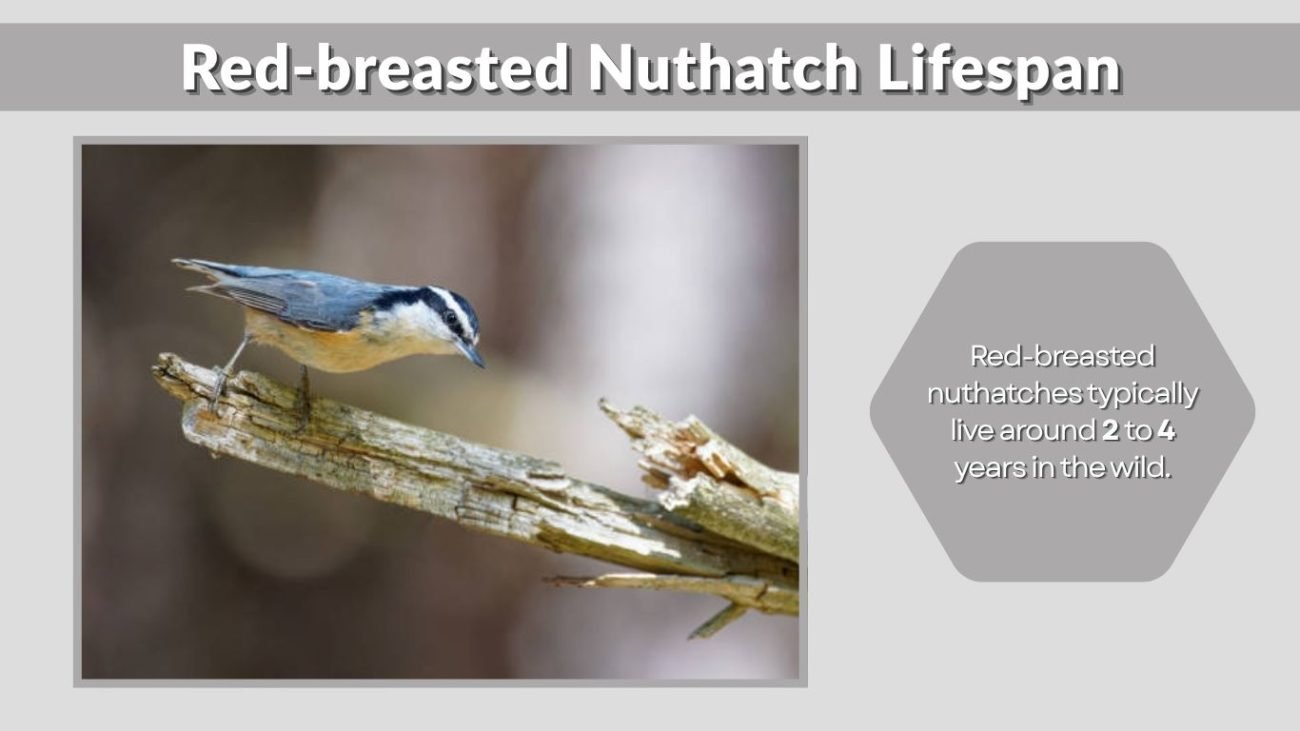
Red-breasted nuthatches typically live around 2 to 4 years in the wild, though some individuals may live longer under favorable conditions.
Factors Affecting Lifespan
- Predators: Hawks, snakes, and mammals
- Weather: Harsh winters and storms
- Food supply: Availability of seeds and insects
- Habitat changes: Forest loss or environmental stress
Birds that successfully survive their early years have a higher chance of reaching adulthood.
Red-breasted Nuthatch Facts: Behavior & Unique Traits
- Known for their distinctive nasal “yank-yank” call
- One of the few birds that can climb headfirst down trees
- Highly territorial during breeding season
- Stores food in multiple locations for later use
- Exhibits irruptive migration, moving based on food supply
Red-breasted vs White-breasted Nuthatch
Key Differences in Appearance
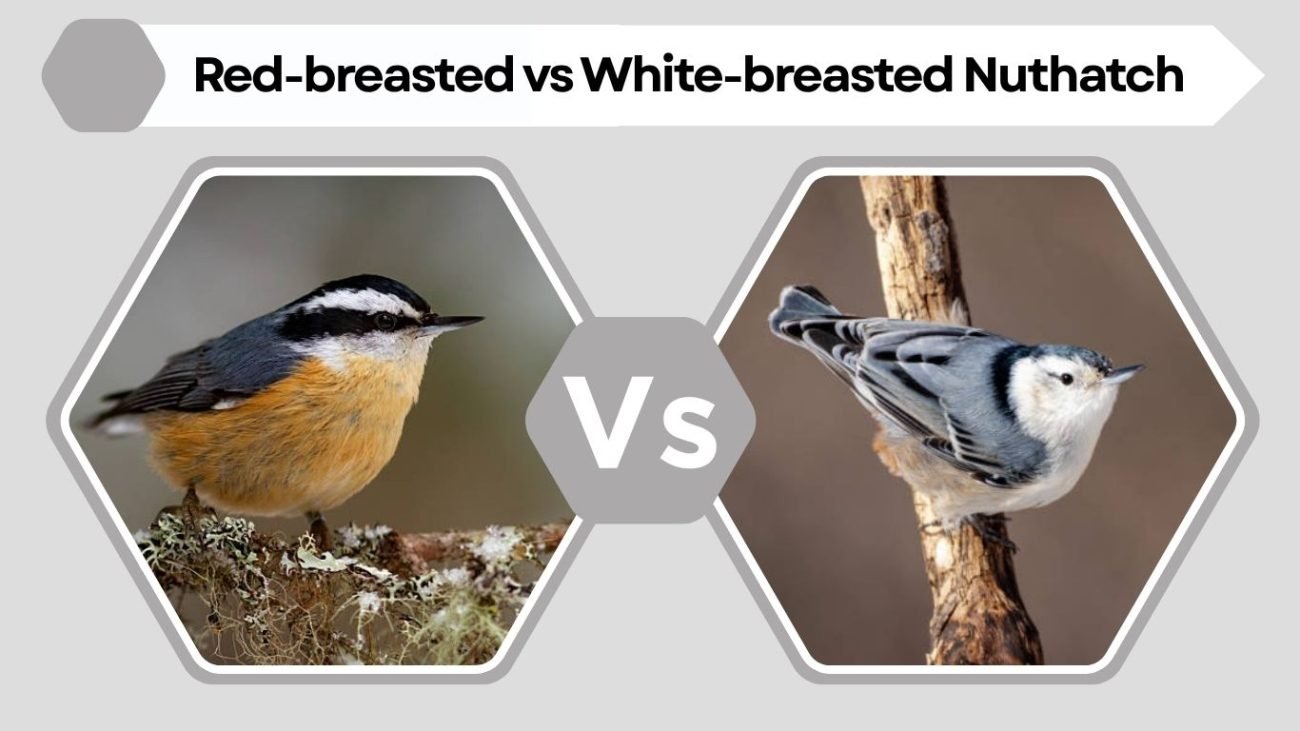
- Red-breasted Nuthatch: Smaller, reddish underparts, black eye stripe
- White-breasted Nuthatch: Larger, white underside, no strong eye stripe
Habitat Differences
- Red-breasted nuthatches prefer coniferous forests
- White-breasted nuthatches are more common in deciduous woodlands
Behavior Comparison
- Both climb trees, but red-breasted nuthatches are more migratory
- White-breasted nuthatches are more likely to stay year-round
FAQs
What is unique about the red-breasted nuthatch?
The red-breasted nuthatch is unique for its ability to climb down trees headfirst and its distinctive nasal “yank-yank” call. It also uses sticky tree resin around its nest entrance for protection.
Where do red-breasted nuthatches build their nests?
They build their nests in tree cavities, often using old woodpecker holes or natural openings in conifer trees.
Do red-breasted nuthatches migrate?
They don’t follow regular migration patterns. Instead, they show irruptive migration, moving unpredictably based on food availability.
What do red-breasted nuthatches eat in winter?
During winter, they mainly eat pine seeds and other conifer seeds, often relying on food they have stored earlier.
Are red-breasted nuthatches rare?
They are not considered rare, but their presence can vary greatly from year to year depending on food supply and migration patterns.
Conclusion
The red-breasted nuthatch is a remarkable small bird with unique behaviors and strong adaptations to forest life. From its ability to climb trees headfirst to its clever food storage habits and protective nesting strategies, this bird demonstrates resilience and intelligence. Understanding its habitat, diet, life cycle, and behavior helps us appreciate its role in maintaining healthy forest ecosystems.