The lazuli bunting is one of the most beautiful songbirds in North America, admired for its vibrant blue coloring and sweet, melodic song. Often found in open woodlands and shrubby areas, this small bird attracts birdwatchers and nature lovers alike. Despite its delicate appearance, the lazuli bunting is a resilient species with fascinating behaviors, including seasonal migration and adaptive feeding habits. In this guide, you’ll explore its identification, habitat, diet, and migration patterns.
What Is a Lazuli Bunting?
The lazuli bunting (Passerina amoena) is a small songbird belonging to the cardinal family. Its name comes from the gemstone lapis lazuli, reflecting the male’s bright blue coloration.
These birds are commonly found in western North America, especially during the breeding season. They are known for their cheerful songs, which are often compared to those of sparrows but are more musical and varied.
Lazuli buntings play an important ecological role by:
- Controlling insect populations
- Helping disperse seeds
Lazuli Bunting Identification
Physical Appearance
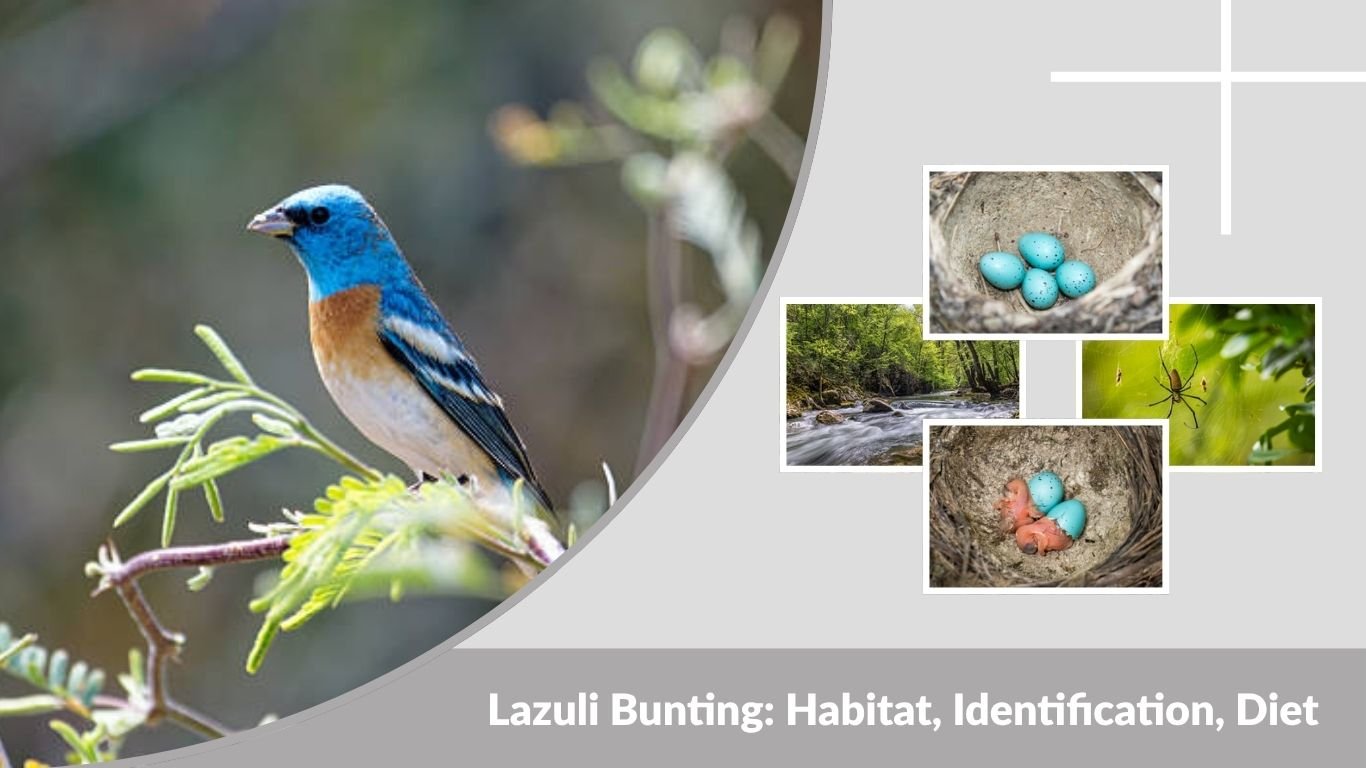
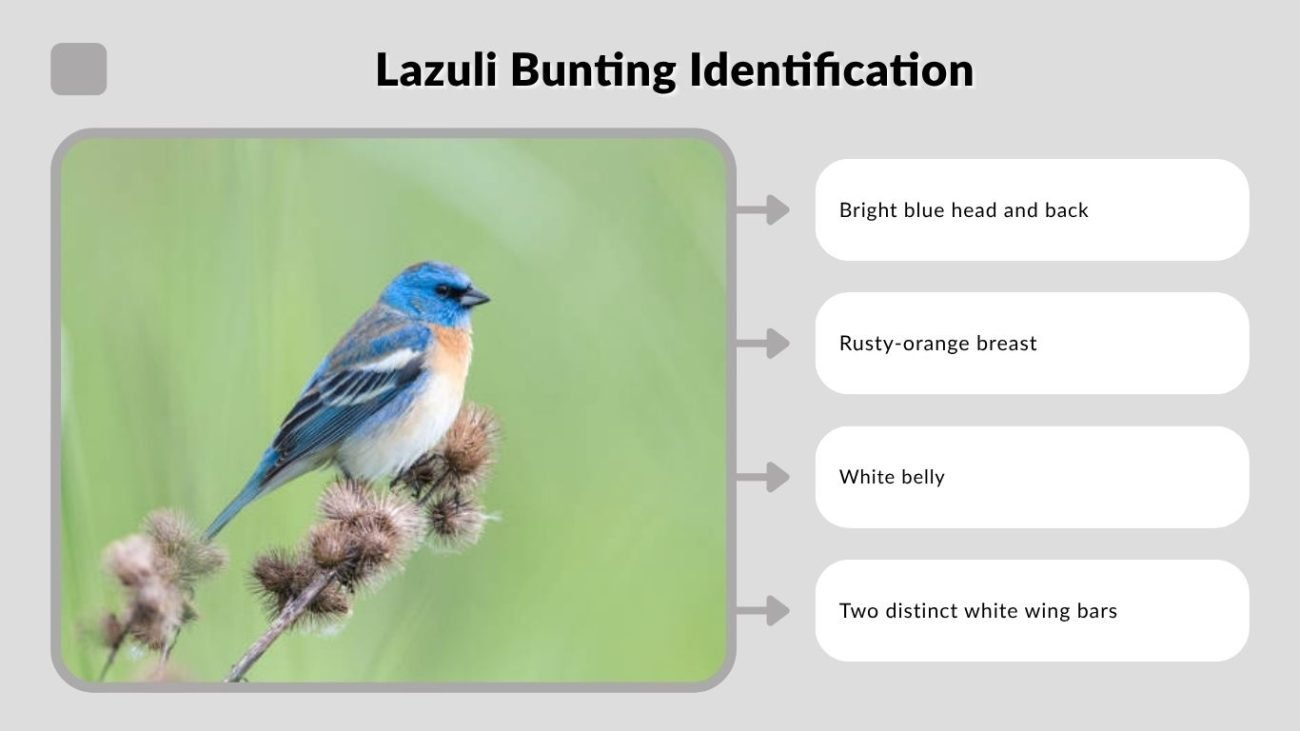
The lazuli bunting is easily recognizable, especially the male, due to its striking colors:
- Bright blue head and back
- Rusty-orange breast
- White belly
- Two distinct white wing bars
They are small birds, typically measuring about 13–15 cm (5–6 inches) in length, with a compact body and short, conical bill.
Male vs Female Differences
There is a clear difference between males and females:
- Male: Bright blue and orange with bold contrast
- Female: Soft brown with faint blue tinges, especially on wings and tail
- Juveniles: Similar to females but duller
These differences help with camouflage, especially for females during nesting.
Song and Vocalization
Lazuli buntings are known for their pleasant, warbling song:
- Often described as musical and fluid
- Used by males to attract mates
- Also helps establish territory
Their song is commonly heard during spring and early summer.
Lazuli Bunting Habitat: Where Do They Live?
Natural Habitat
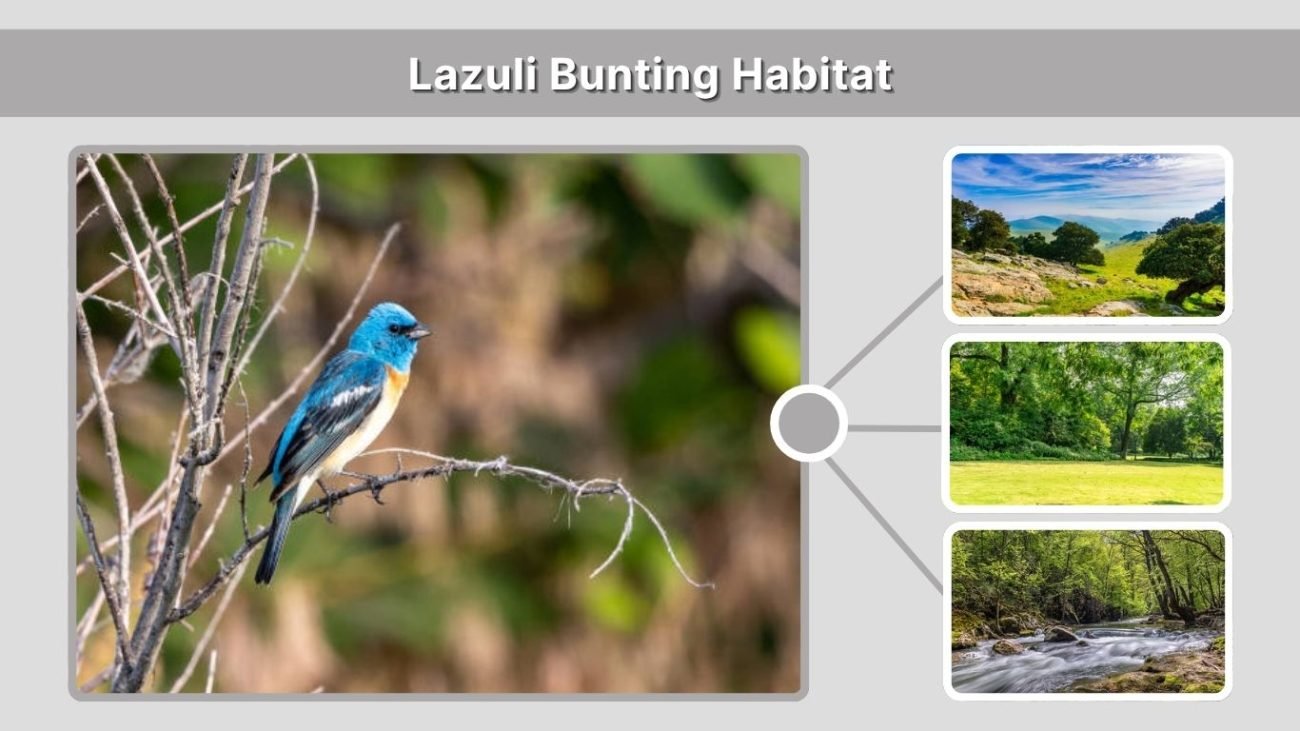
Lazuli buntings prefer open and semi-open environments such as:
- Brushy hillsides
- Open woodlands
- Shrubby fields
- River edges and streamside vegetation
These habitats provide both food and safe nesting areas.
Geographic Range
They are primarily found in:
- Western United States
- Southern Canada during breeding season
- Mountain and valley regions
Their range expands and shifts depending on the season.
Seasonal Habitat Changes
Lazuli buntings do not stay in one place year-round:
- Spring/Summer: Breed in North America
- Fall/Winter: Move to warmer regions
This seasonal movement ensures access to food and suitable climate conditions.
Lazuli Bunting Diet: What Do They Eat?
Primary Food Sources
The lazuli bunting has a varied diet that changes with the seasons.
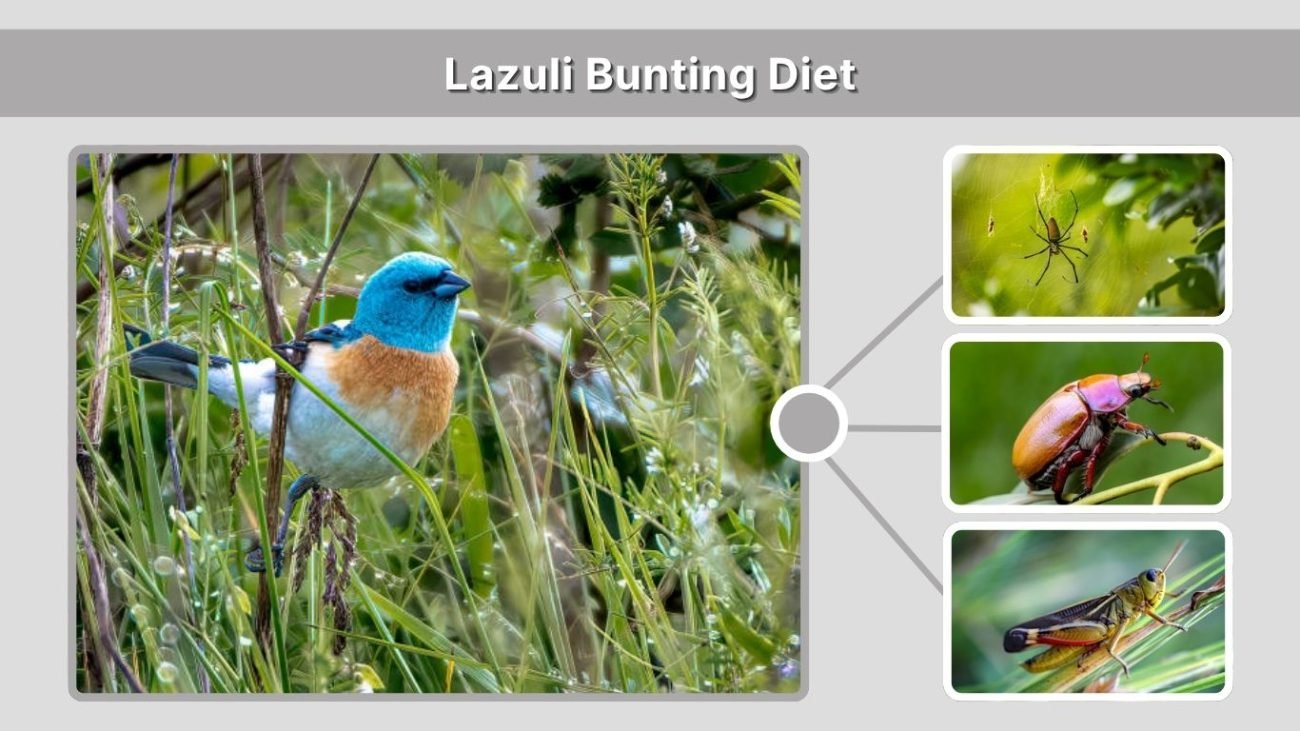
During the breeding season, they eat:
- Insects (beetles, caterpillars, grasshoppers)
- Spiders
In colder months or non-breeding periods, they rely more on:
- Seeds
- Grains
Feeding Behavior
Lazuli buntings forage in different ways:
- Picking food from shrubs and grasses
- Feeding on the ground
- Occasionally catching insects in short flights
Their feeding style is flexible, allowing them to adapt to changing environments.
Seasonal Diet Variation
Their diet shifts depending on availability:
- Summer: High-protein insects for breeding and chick development
- Winter: Seeds and plant material
This adaptability helps them survive across different habitats.
Lazuli Bunting Migration
Migration Routes
Lazuli buntings are migratory birds, traveling long distances each year. They:
- Breed in western North America
- Migrate south to Mexico and Central America for winter
These journeys can cover thousands of kilometers.
Migration Timing
Their migration follows a seasonal pattern:
- Spring: Return to breeding grounds (April–May)
- Fall: Depart for wintering areas (August–September)
Timing depends on weather and food availability.
Migration Behavior
Lazuli buntings typically:
- Travel alone or in small groups
- Use natural landmarks for navigation
- Face challenges like storms and predators
Despite these risks, migration is essential for their survival.
Lazuli Bunting Life Cycle & Breeding
Nesting Behavior
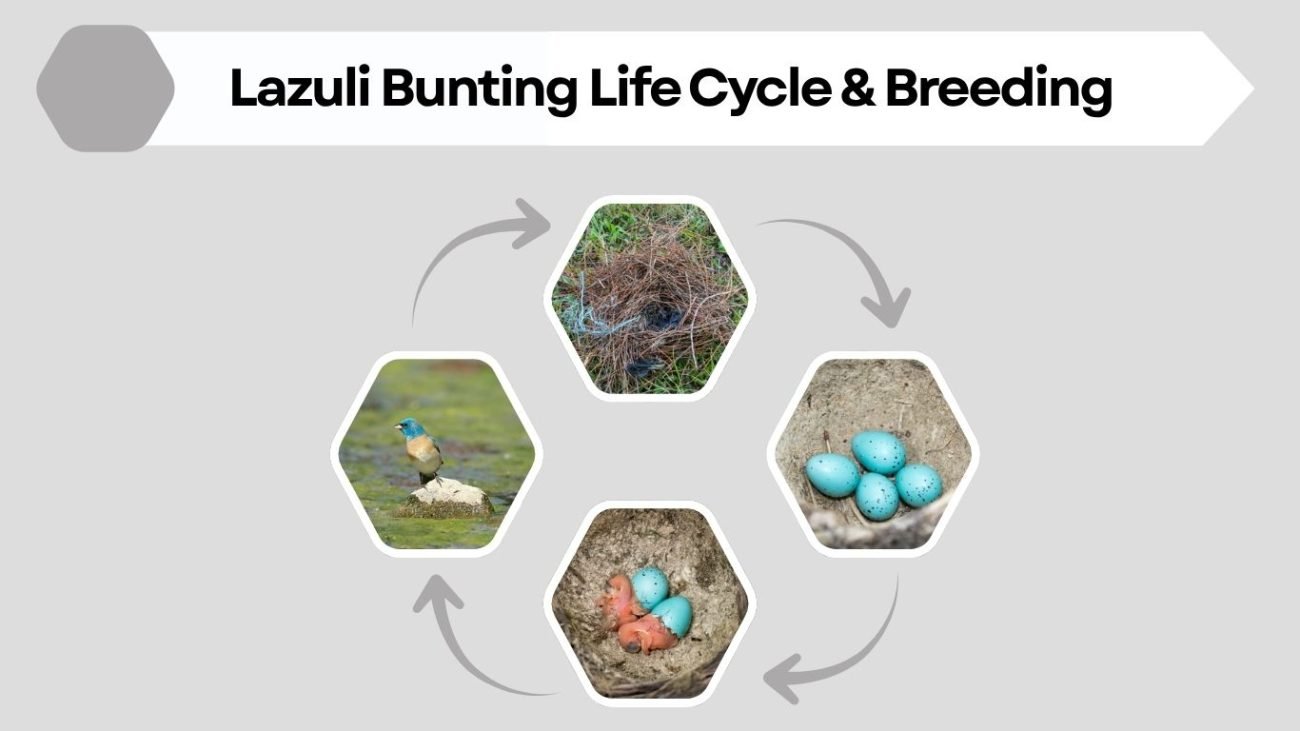
Lazuli buntings build their nests in shrubs or low trees, usually a few feet above the ground. The female selects the site and constructs the nest using:
- Grass
- Bark strips
- Plant fibers
The nest is small and cup-shaped, carefully hidden among leaves to protect it from predators.
Eggs and Incubation
- Egg color: Pale blue or bluish-white
- Clutch size: Typically 3–5 eggs
The female incubates the eggs for about 11–13 days, while the male may help by guarding the territory and occasionally bringing food.
Chick Development
After hatching:
- Chicks are blind and featherless
- Both parents feed them insects for rapid growth
Within about 10–14 days, the young birds leave the nest (fledging) but still depend on their parents for a short period before becoming independent.
Lazuli Bunting vs Western Bluebird
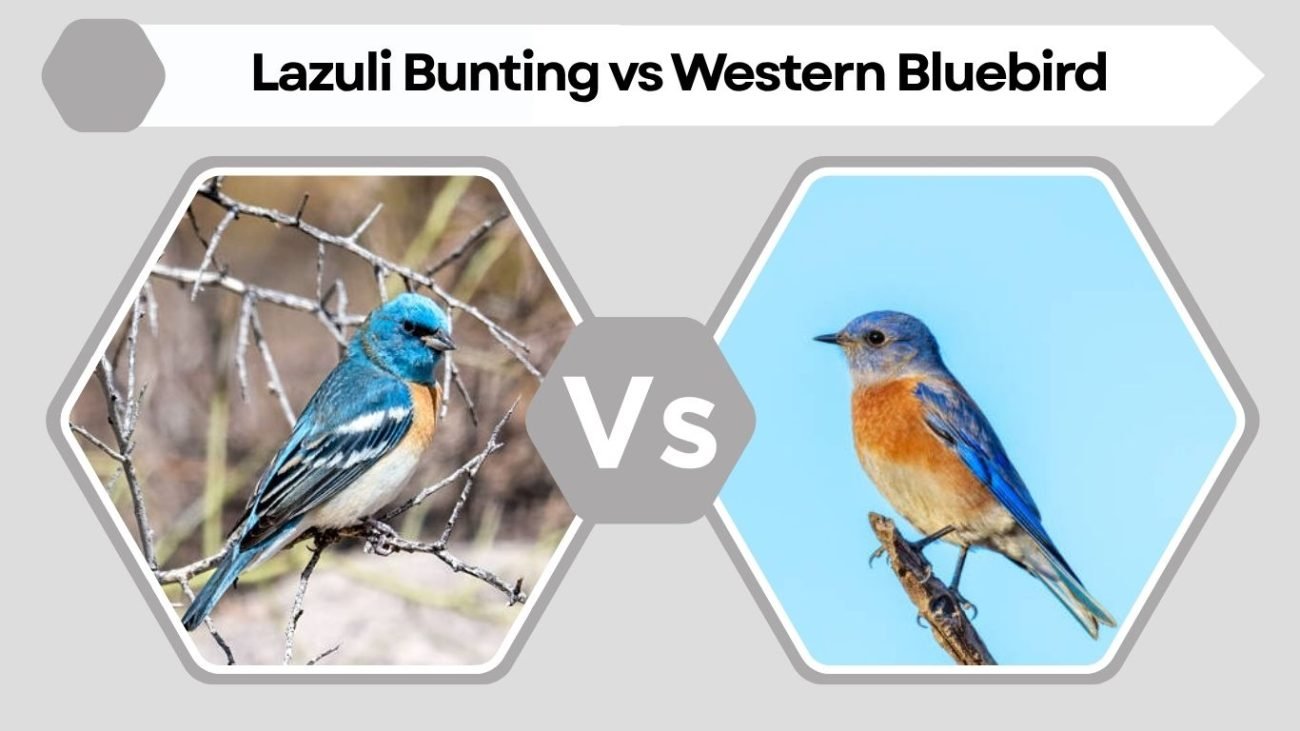
Key Differences in Appearance
- Lazuli Bunting: Bright blue head, orange breast, white belly
- Western Bluebird: Blue upperparts with a rusty chest and throat
Habitat Differences
- Lazuli buntings prefer shrubby areas and brushy habitats
- Western bluebirds are more common in open woodlands and nest box areas
Behavior Differences
- Lazuli buntings forage more in shrubs and on the ground
- Western bluebirds often perch and drop down to catch prey
- Their songs and calls are also different in tone and pattern
Interesting Lazuli Bunting Facts
- Named after the gemstone lapis lazuli due to its bright blue color
- Males use their vibrant colors to attract mates
- Known for their sweet, musical songs
- Play a role in seed dispersal and insect control
- Migrate long distances every year
FAQs
What is the best time to see lazuli buntings?
The best time to see lazuli buntings is during spring and early summer when they return to their breeding grounds and males are most active and colorful.
Where do lazuli buntings build their nests?
They build their nests in low shrubs or small trees, usually hidden among dense vegetation for protection.
What makes lazuli buntings different from other buntings?
Their bright blue head combined with an orange breast and white belly makes them one of the most colorful buntings in North America.
How far do lazuli buntings migrate?
They migrate thousands of kilometers each year, traveling from western North America to Mexico and Central America.
Are lazuli buntings friendly around humans?
They are generally shy birds but can be seen near human habitats if suitable food sources and natural vegetation are available.
Conclusion
The lazuli bunting is a stunning and fascinating bird that brings color and song to the landscapes of western North America. From its vibrant appearance and melodic voice to its seasonal migration and adaptable diet, this bird showcases the beauty and resilience of nature. Understanding its habitat, behavior, and life cycle not only enhances birdwatching experiences but also highlights the importance of conserving natural environments where these birds thrive.