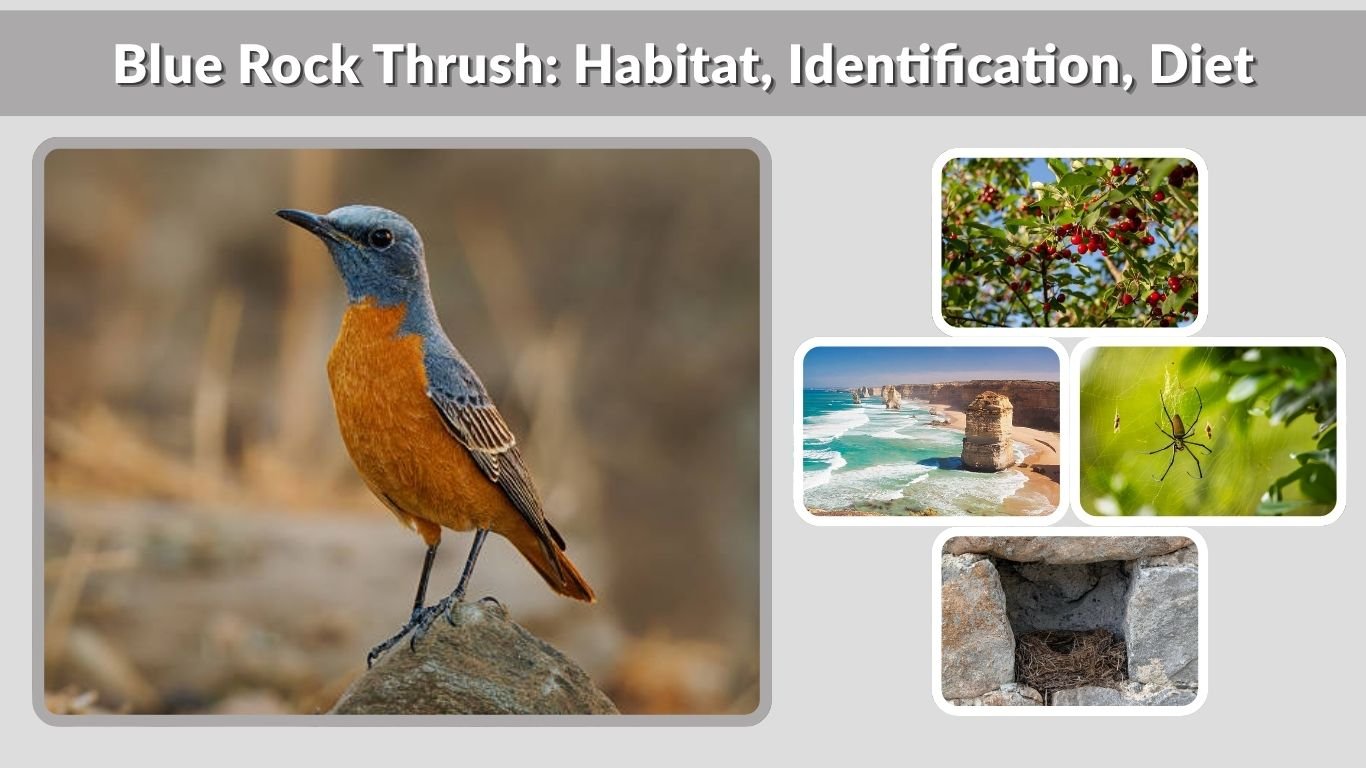
The Blue Rock Thrush is a striking bird known for its deep blue coloration and preference for rocky landscapes. Often seen perched on cliffs, hills, or even urban buildings, this species combines beauty with adaptability. Found across parts of Europe, Asia, and Africa, it is admired for its melodic song and solitary nature. In this guide, you’ll discover everything about the Blue Rock Thrush, including its identification, habitat, diet, and nesting habits.
What Is a Blue Rock Thrush?
The Blue Rock Thrush (Monticola solitarius) is a medium-sized bird belonging to the thrush family. As its name suggests, it is closely associated with rocky environments and elevated perches.
This bird is known for its:
- Strong, upright posture
- Preference for high vantage points
- Calm yet territorial behavior
It is often seen alone, which is reflected in its species name solitarius. Despite its solitary nature, it plays an important role in controlling insect populations and maintaining ecological balance.
Blue Rock Thrush Identification
Physical Appearance
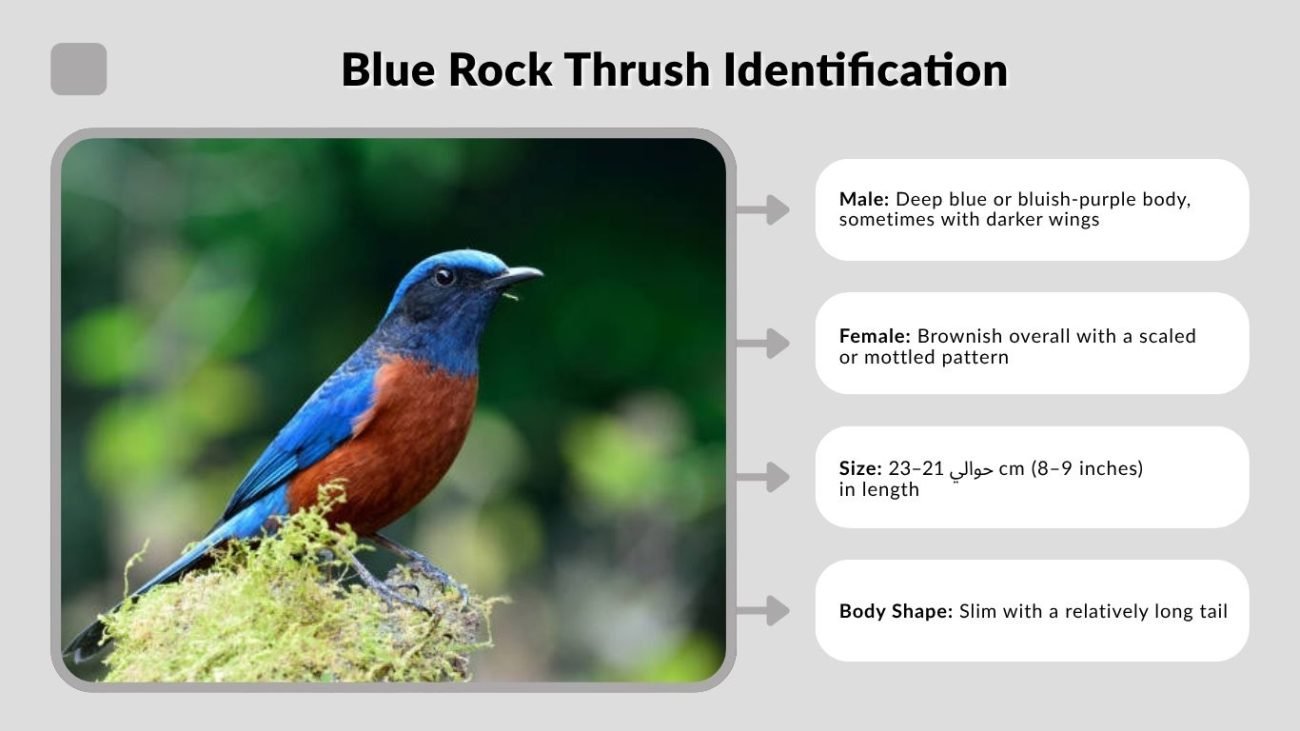
The Blue Rock Thrush shows noticeable differences between males and females.
- Male: Deep blue or bluish-purple body, sometimes with darker wings
- Female: Brownish overall with a scaled or mottled pattern
- Size: حوالي 21–23 cm (8–9 inches) in length
- Body Shape: Slim with a relatively long tail
The male’s vibrant blue color makes it easy to spot, especially when perched in open areas.
Male vs Female Differences
- Males are brightly colored and more noticeable
- Females have duller tones for camouflage
- Males are often more vocal during breeding season
These differences help females stay hidden while nesting, reducing the risk of predation.
Song and Vocalization
The Blue Rock Thrush is known for its melodic, flute-like song:
- Often sung from high perches
- Used to establish territory
- Most active during early morning and breeding season
Its song adds a pleasant soundscape to rocky and urban environments alike.
Blue Rock Thrush Habitat: Where Do They Live?
Natural Habitat
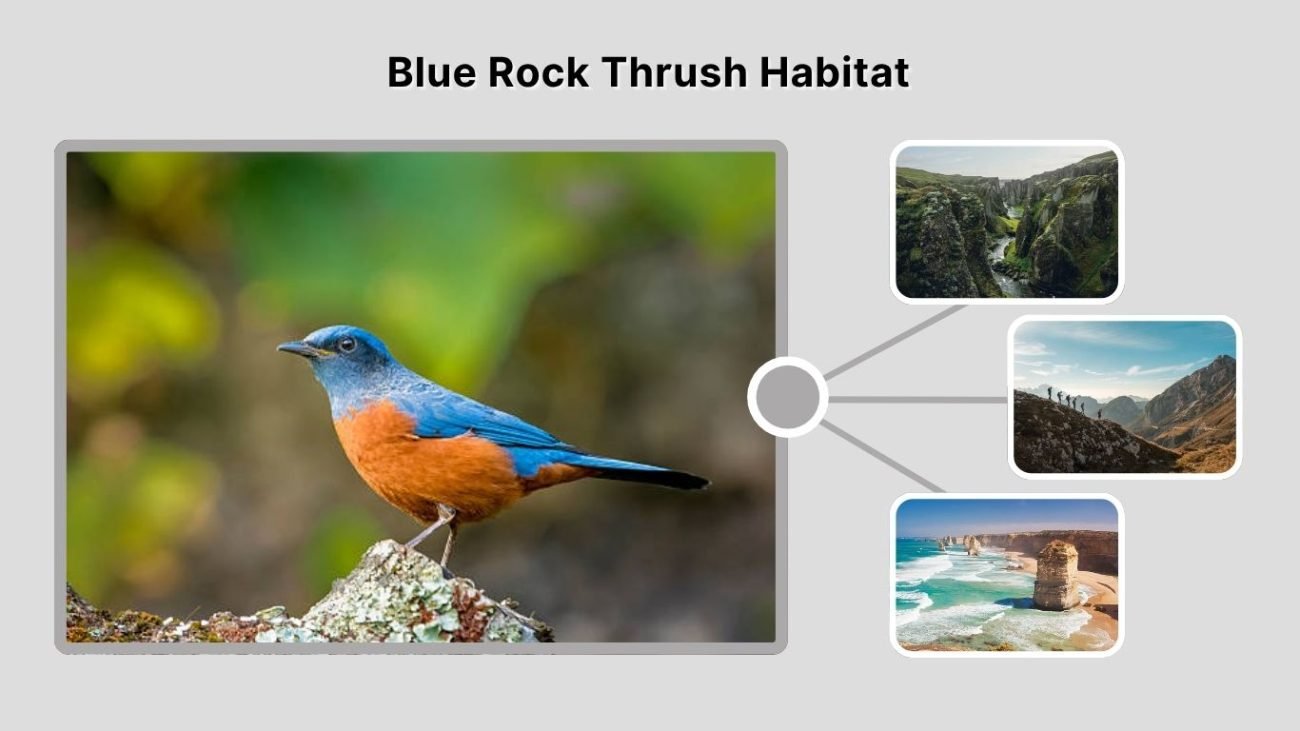
The Blue Rock Thrush prefers rugged and elevated landscapes, including:
- Rocky cliffs and hillsides
- Mountain slopes
- Coastal rock formations
These areas provide ideal perching spots and access to food sources.
Urban Habitat Adaptation
Interestingly, this species has adapted well to human environments. It can often be found in:
- Old buildings and ruins
- City walls and towers
- Bridges and tall structures
Urban areas mimic natural rocky habitats, allowing the bird to thrive even in populated regions.
Geographic Range
The Blue Rock Thrush has a wide distribution:
- Southern Europe
- Parts of Asia (including South and East Asia)
- Northern and sub-Saharan Africa
Some populations may move locally depending on climate and food availability, but they are generally considered partially migratory or resident birds.
Blue Rock Thrush Diet: What Do They Eat?
Primary Food Sources
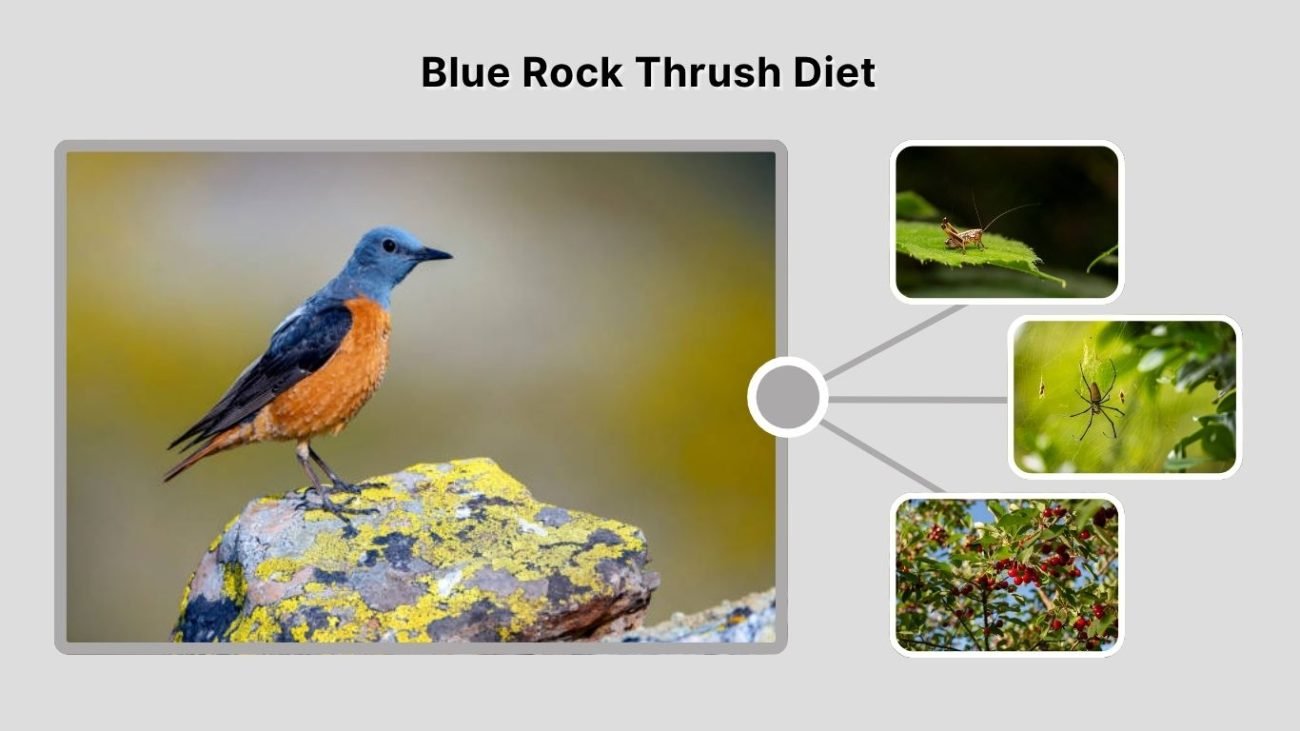
The Blue Rock Thrush has a varied and adaptable diet. It mainly feeds on:
- Insects (beetles, ants, grasshoppers)
- Spiders and other small invertebrates
- Occasionally small reptiles or amphibians
- Fruits and berries
This diverse diet helps it survive in different environments.
Feeding Behavior
The Blue Rock Thrush is an active hunter with a simple but effective strategy:
- Perches on a high point
- Scans the ground for prey
- Drops down quickly to catch it
It may also forage directly on the ground, especially in open or rocky areas.
Seasonal Diet Variation
- Warm months: Mostly insects and protein-rich food
- Colder months: More fruits and berries
This seasonal flexibility allows the bird to adapt to changing food availability.
Blue Rock Thrush Nesting & Reproduction
Nesting Locations
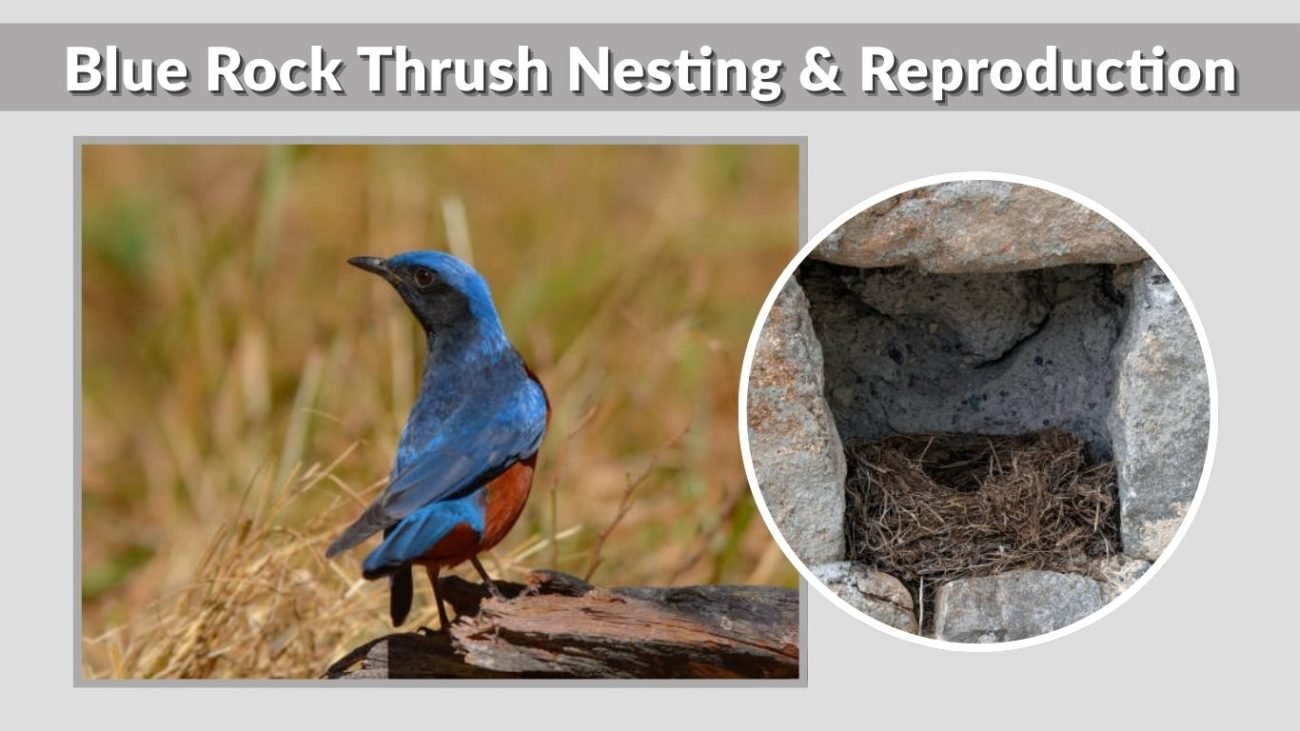
Blue Rock Thrushes prefer nesting in secure, hidden places such as:
- Rock crevices
- Cliff ledges
- Gaps in buildings or walls
These locations provide protection from predators and harsh weather.
Nest Construction
The nest is built using:
- Grass and plant fibers
- Small roots
- Feathers for lining
It forms a compact, cup-shaped structure that keeps eggs safe and insulated.
Eggs and Incubation
- Egg color: Pale blue or slightly greenish
- Clutch size: عادة 3–5 eggs
The female typically incubates the eggs for about 12–15 days, while the male may help by guarding the territory and providing food.
Blue Rock Thrush Life Cycle
Egg Stage
The life cycle of the Blue Rock Thrush begins when the female lays her eggs in a सुरक्षित, well-hidden nest. During the 12–15 day incubation period, the female keeps the eggs warm while the male helps protect the territory.
Hatchling Stage
After hatching, the chicks are:
- Blind
- Featherless
- Completely dependent on their parents
They require frequent feeding, mainly with soft insects, to support rapid growth.
Nestling Stage
Within a few days:
- Feathers begin to develop
- Eyes open
- Activity increases
Both parents take part in feeding and caring for the young birds, ensuring they grow quickly and safely.
Fledgling Stage
After about 15–20 days, the young birds leave the nest:
- They can fly short distances
- Still depend on parents for food
- Begin learning survival skills
Adult Stage
As they mature:
- They become fully independent
- Develop strong hunting and flying abilities
- Reach breeding maturity in the following season
Blue Rock Thrush Lifespan
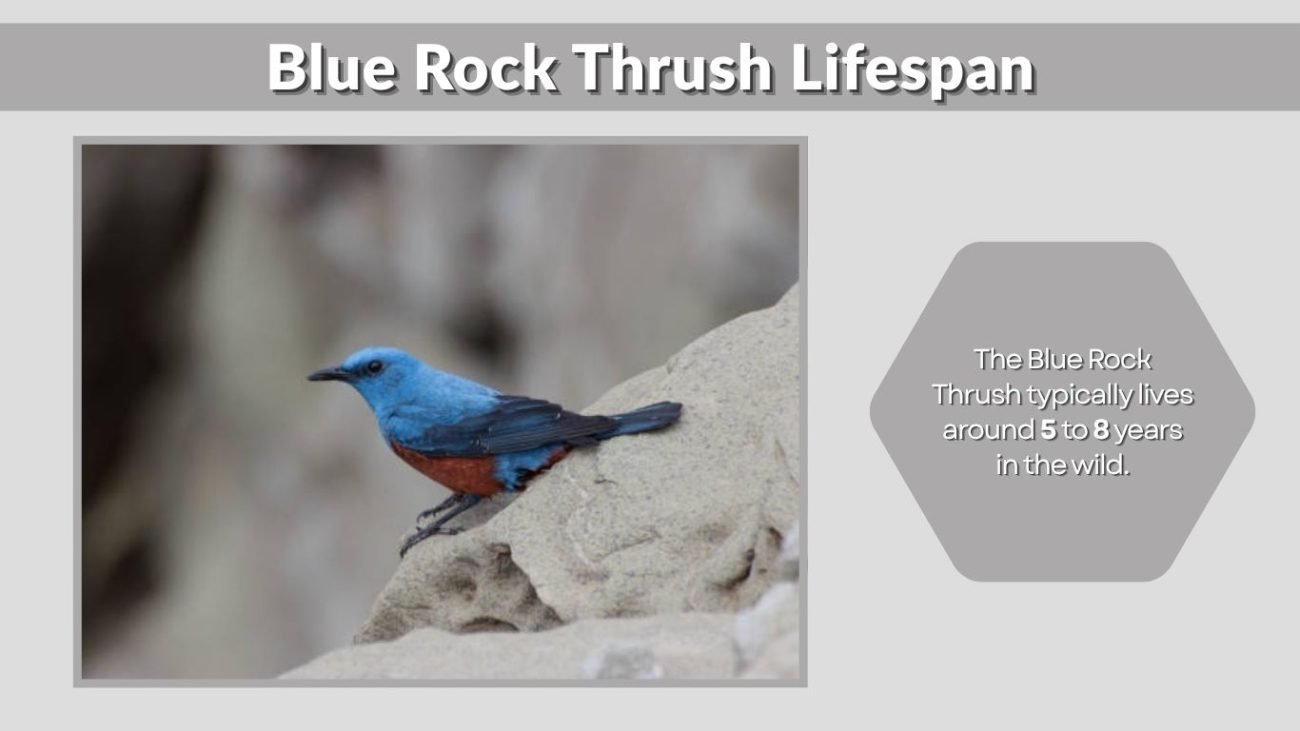
The Blue Rock Thrush typically lives around 5 to 8 years in the wild, though survival depends on environmental conditions.
Factors Affecting Lifespan
- Predators: Birds of prey and small mammals
- Weather: Extreme heat, cold, or storms
- Habitat changes: Urban development or habitat loss
- Food availability: Seasonal fluctuations
Birds that survive early life stages generally have a higher chance of living longer.
Behavior & Interesting Facts
The Blue Rock Thrush displays several unique behaviors:
- Usually solitary and territorial
- Often seen perched on high rocks or buildings
- Sings from elevated positions to mark territory
- Highly adaptable to both natural and urban environments
Additional Interesting Facts
- Males are more colorful to attract mates
- Their song is clear and flute-like
- They prefer high vantage points for hunting
- Despite their name, they can live comfortably in cities
Blue Rock Thrush vs Other Thrushes
Key Differences in Appearance
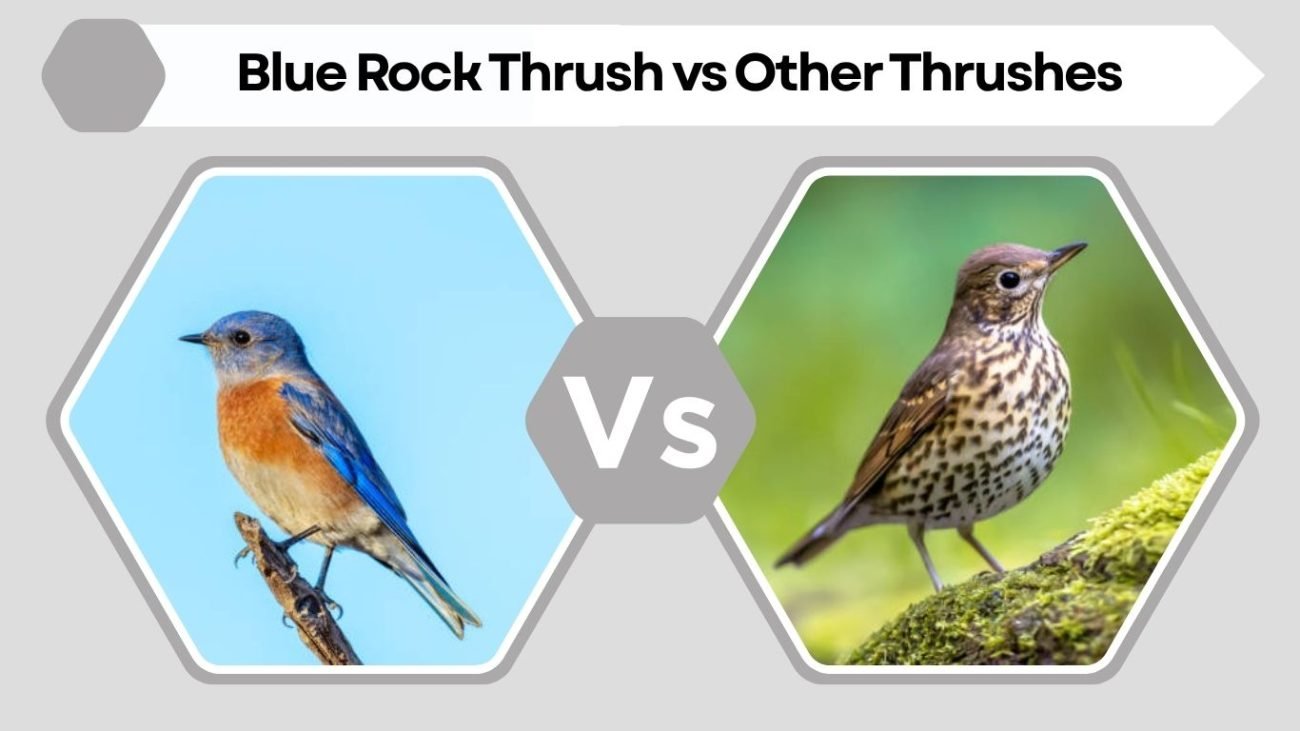
- Blue Rock Thrush: Deep blue (male) or brown scaled (female)
- Other thrushes: Often spotted or earth-toned
Habitat Differences
- Blue Rock Thrush prefers rocky or urban environments
- Other thrush species often live in forests and woodlands
Behavior Differences
- Blue Rock Thrush is more solitary
- Other thrushes may be more social
- Differences in feeding and nesting styles
FAQs
Where do Blue Rock Thrushes live?
They live in rocky habitats such as cliffs, hills, and mountains, as well as urban areas like buildings and ruins across Europe, Asia, and Africa.
What do Blue Rock Thrushes eat?
They mainly eat insects, spiders, and small invertebrates, along with fruits and berries depending on the season.
How can you identify a Blue Rock Thrush?
Males are deep blue, while females are brown with a scaled pattern. They are often seen perched on high rocks or structures.
Are Blue Rock Thrushes migratory?
Some populations are partially migratory, while others remain in the same area year-round depending on climate.
How long do Blue Rock Thrushes live?
They typically live between 5 and 8 years in the wild.
Conclusion
The Blue Rock Thrush is a remarkable bird that combines beauty, adaptability, and unique behavior. From its striking blue coloration and melodic song to its ability to thrive in both rocky landscapes and urban environments, this species stands out among thrushes. Understanding its habitat, diet, life cycle, and behavior not only deepens appreciation for this bird but also highlights the importance of preserving the environments it depends on.