The Gray Catbird (Dumetella carolinensis) is a unique and fascinating songbird commonly found across North America. Named for its distinctive cat-like “mew” call, this bird is a favorite among birdwatchers for both its vocal abilities and subtle beauty. Unlike many brightly colored birds, the Gray Catbird has a sleek, understated appearance—but what it lacks in color, it makes up for in personality and sound.
Belonging to the mimic thrush family, the Gray Catbird is closely related to species like the Northern Mockingbird and Brown Thrasher. It is especially known for its ability to mimic the songs of other birds and even environmental sounds. Often hidden in dense shrubs and thickets, this bird is more often heard than seen. In this guide, we’ll explore how to identify the Gray Catbird, where it lives, and what makes it such an interesting species.
Gray Catbird Physical Description and Identification
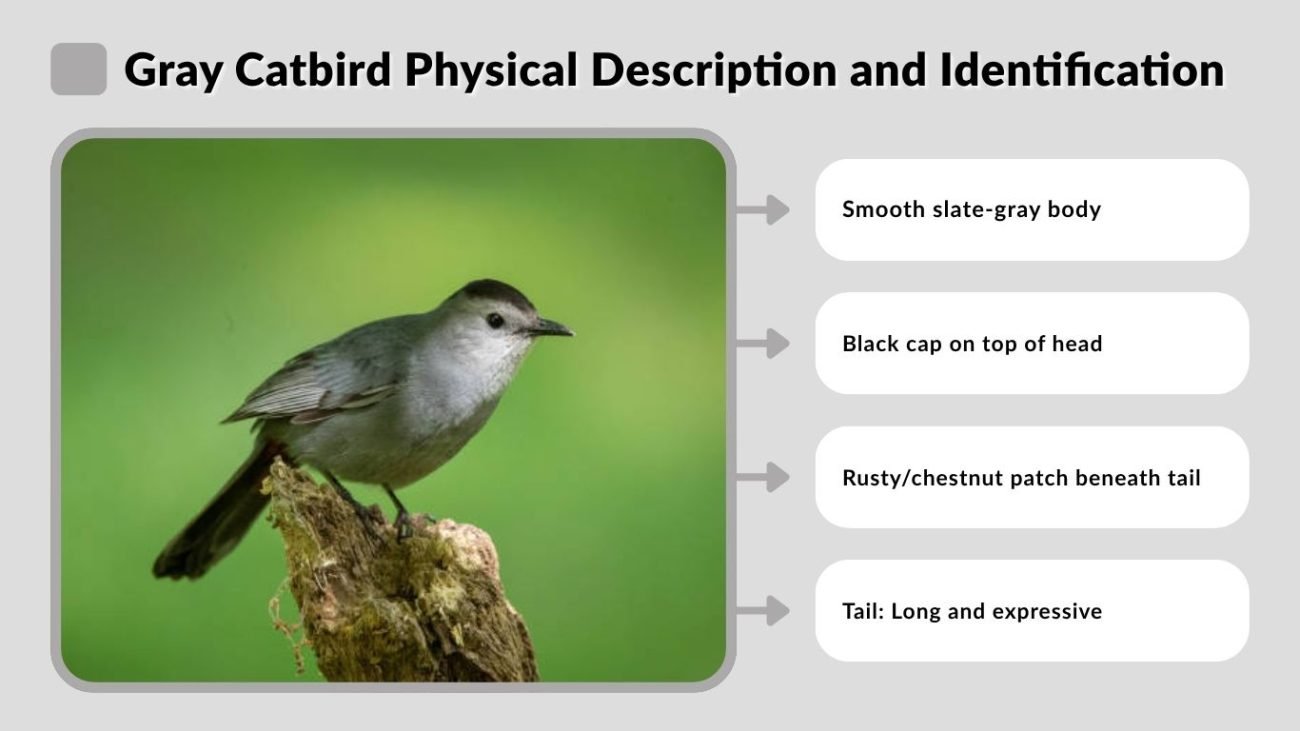
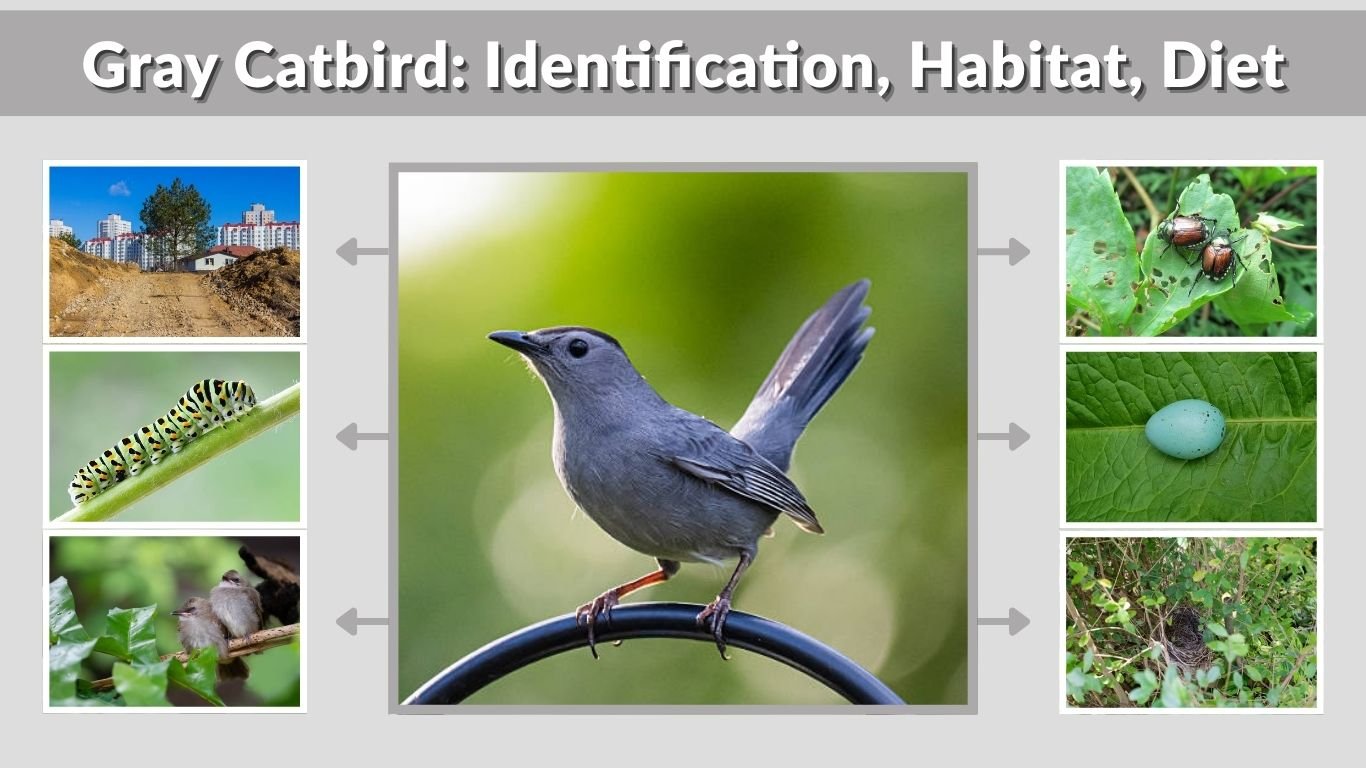
The Gray Catbird is a medium-sized songbird with a smooth, elegant appearance. Its uniform coloration and long tail give it a sleek look, while subtle markings provide helpful clues for identification. Though not as flashy as some other birds, it is quite distinctive once you know what to look for.
Size and Appearance
Gray Catbirds typically measure about 8.5 to 9.5 inches (21–24 cm) in length, with a wingspan of around 8.7 to 11.8 inches (22–30 cm). They have a slender body, long tail, and slightly curved bill. Their posture is often upright, and they frequently flick or lower their tail while moving through vegetation.
Color and Markings
As their name suggests, Gray Catbirds are mostly slate-gray in color. They have a darker black cap on their head, which contrasts subtly with the rest of the body. One of their most distinctive features is the rusty or chestnut patch under the tail, which is often hidden but visible when the bird moves or flies.
Key Identification Features (Quick List)
- Overall Color: Smooth slate-gray body
- Head: Black cap on top of head
- Undertail: Rusty/chestnut patch beneath tail
- Tail: Long and expressive
- Bill: Thin, slightly curved
- Call: Cat-like “mew” sound
- Behavior: Often stays hidden in dense shrubs
- Movement: Tail flicking and low, secretive movements
Gray Catbird Habitat and Range
Geographic Distribution
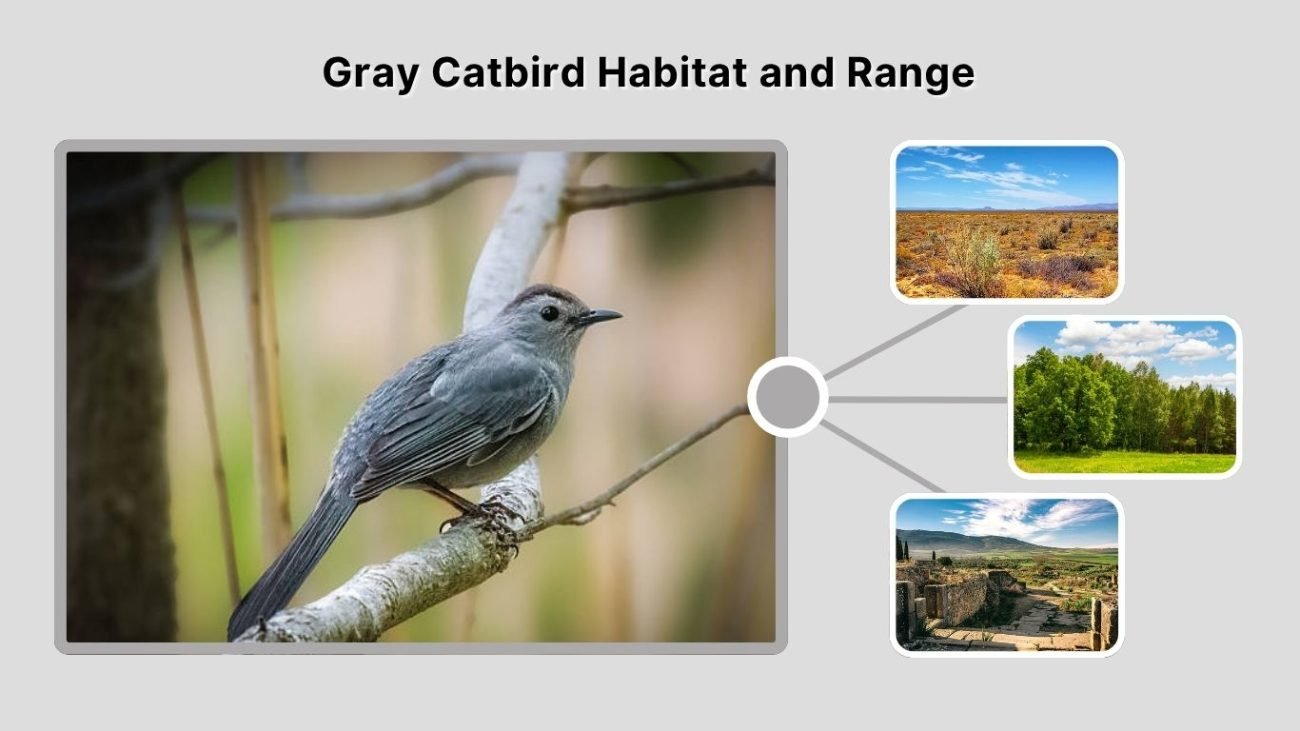
Gray Catbirds are widely distributed across North America. They breed throughout much of the United States and southern Canada during the warmer months. As migratory birds, they travel south for the winter, spending the colder season in the southeastern United States, Central America, and parts of the Caribbean.
Preferred Habitat
These birds prefer habitats with dense vegetation, which provide both food and protection. They are commonly found in shrubby areas, forest edges, thickets, and overgrown fields. Gray Catbirds are also well adapted to suburban environments and can often be seen in gardens, parks, and backyards with plenty of bushes and hedges.
Gray Catbird Behavior and Lifestyle
Secretive Nature
Gray Catbirds are known for their secretive behavior. They tend to stay hidden within thick vegetation, making them difficult to spot. However, their vocal nature often gives away their presence. Birdwatchers frequently hear them before they see them.
Territorial Behavior
During the breeding season, Gray Catbirds can become quite territorial. Males, in particular, will defend their nesting area aggressively against intruders. They may chase away other birds or even animals that come too close. This behavior helps protect their nests and ensures a safe environment for raising their young.
Daily Activity
Gray Catbirds are active during the day and spend much of their time foraging, singing, and moving through dense cover. They are energetic and curious, often hopping between branches or exploring low vegetation. Despite their activity, they maintain a low profile and rarely venture into open spaces for long periods.
Gray Catbird Diet and Feeding Habits
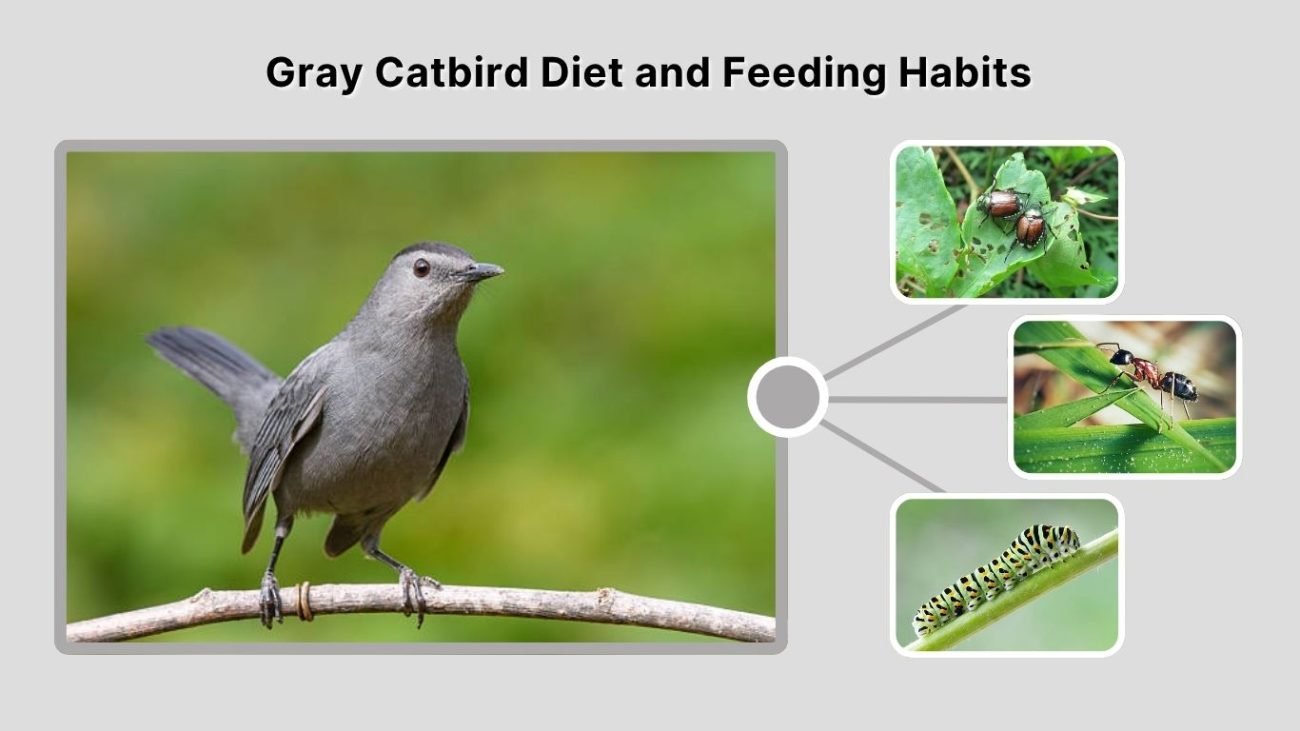
The Gray Catbird has a varied diet that changes with the seasons. It is an omnivorous bird, feeding on both plant material and small animals. During spring and summer, insects such as beetles, ants, caterpillars, and grasshoppers make up a large part of its diet. These provide the protein needed for breeding and feeding chicks.
In the fall and winter, Gray Catbirds shift toward eating more fruits and berries. They are particularly fond of berries from shrubs and trees, which makes them important for seed dispersal in their habitats. Their flexible diet allows them to thrive in a wide range of environments, including urban and suburban areas.
Gray Catbird Call and Song
Cat-Like Call
The Gray Catbird gets its name from its most recognizable vocalization—a cat-like “mew” sound. This short, nasal call is often used as an alarm or contact call and is usually the first clue to the bird’s presence. Even when hidden in thick shrubs, this distinctive sound makes it easier to locate.
Mimicry Ability
One of the most fascinating traits of the Gray Catbird is its ability to mimic other sounds. As a member of the mimic thrush family, it can imitate the songs of other birds, as well as environmental noises like mechanical sounds or even human-made tones. Unlike the Northern Mockingbird, which repeats phrases multiple times, the Gray Catbird usually sings a more varied and rambling sequence of notes.
Purpose of Song
Gray Catbirds use their songs primarily for communication. Males sing to attract mates and establish territory during the breeding season. Their complex and varied songs can signal strength and fitness, helping them compete with other males.
Gray Catbird Breeding and Nesting
Breeding Season
The breeding season for Gray Catbirds typically begins in late spring and continues through summer. During this time, males become more vocal and actively defend their territory while attempting to attract a mate.
Nesting Habits
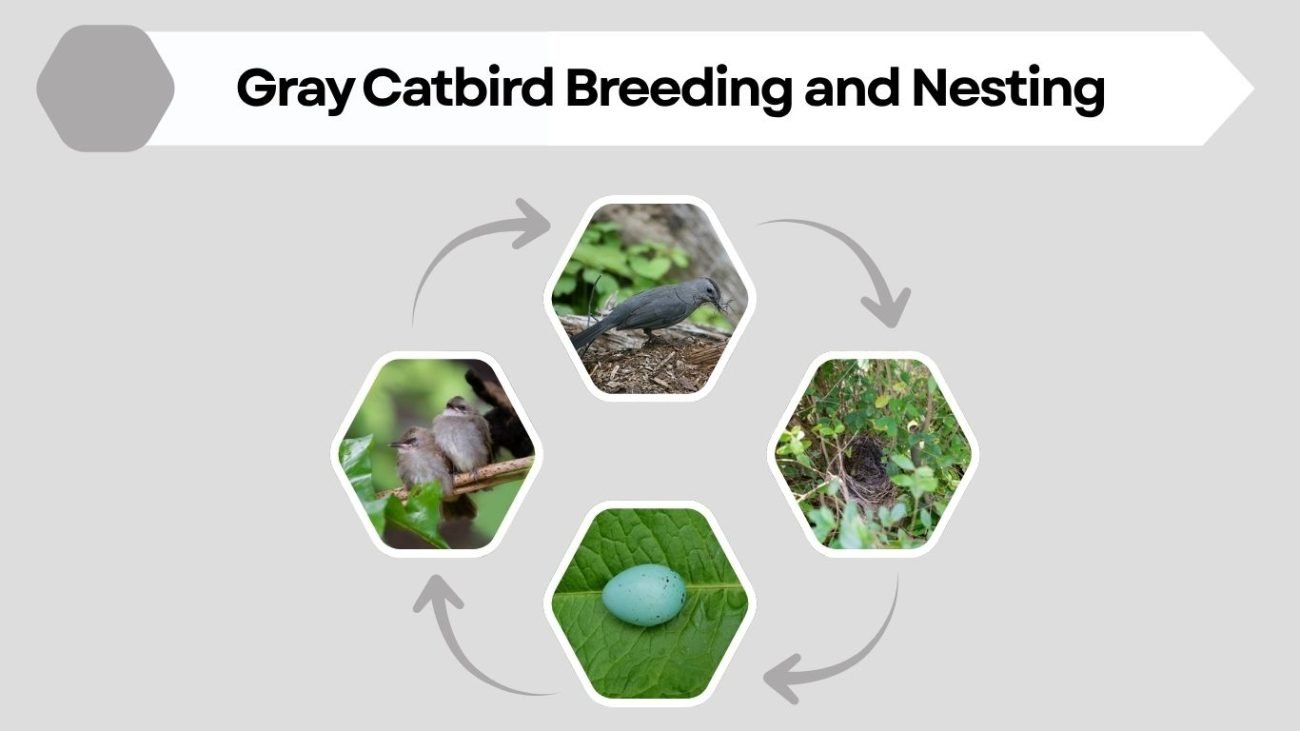
Gray Catbirds build their nests in dense shrubs or small trees, usually at a low height of about 3 to 10 feet above the ground. The nest is constructed from twigs, leaves, grasses, and other plant materials, forming a sturdy cup shape. Its placement within thick vegetation helps conceal it from predators.
Eggs and Chick Development
A typical clutch contains 2 to 5 eggs, which are usually a deep greenish-blue color. The female incubates the eggs for about 12 to 14 days. After hatching, both parents take part in feeding and caring for the chicks. The young birds grow quickly and leave the nest within about 10 to 12 days, although they may remain nearby and continue to be fed by their parents.
Gray Catbird Migration Patterns
Gray Catbirds are migratory birds, meaning they travel between breeding and wintering grounds each year. In the fall, they migrate south from their northern breeding areas to warmer regions, including the southeastern United States, Mexico, Central America, and the Caribbean.
Migration is influenced by factors such as temperature, food availability, and daylight hours. In spring, they return north to breed, often arriving in the same areas where they nested the previous year.
Gray Catbird vs Similar Birds
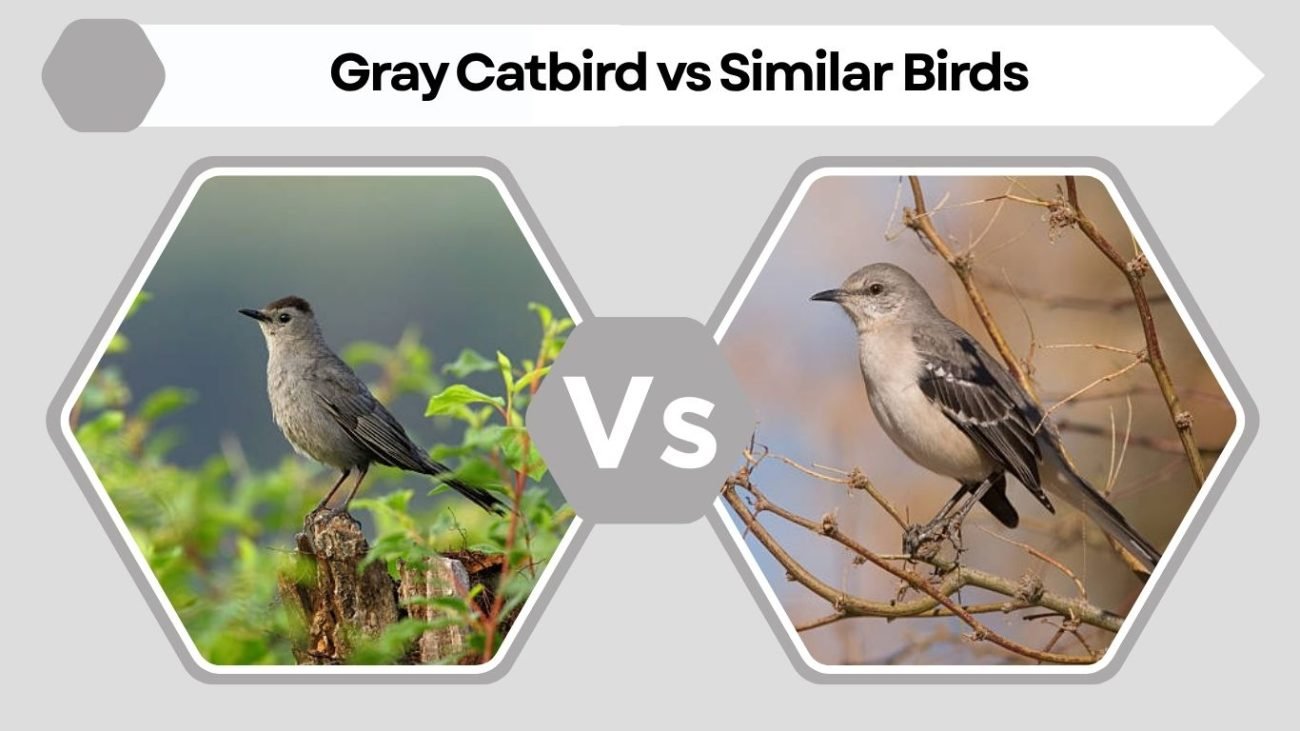
vs Northern Mockingbird
Although both belong to the mimic thrush family, Gray Catbirds and Northern Mockingbirds differ in appearance and behavior. Mockingbirds are lighter in color with white wing patches, while Gray Catbirds are uniformly gray with a black cap. Mockingbirds also tend to be more visible and sing from open perches, whereas catbirds prefer to stay hidden in dense vegetation.
vs Brown Thrasher
Brown Thrashers are larger and have a reddish-brown color with streaked underparts. They also have a longer, more curved bill. While both species mimic sounds, the Gray Catbird has a simpler, more subdued appearance and a distinctive “mew” call that sets it apart.
How to Attract Gray Catbirds
Attracting Gray Catbirds to your yard is relatively easy if you provide the right environment. These birds are especially drawn to areas with dense shrubs and berry-producing plants.
Planting native shrubs such as dogwood, elderberry, or holly can provide both food and shelter. Leaving parts of your yard slightly wild with thick vegetation will make it more appealing to them. Offering a clean water source, such as a birdbath, can also encourage visits.
Unlike some birds, Gray Catbirds are less likely to rely heavily on feeders, but they may occasionally visit if fruit or suet is available. Creating a natural, shrub-filled habitat is the most effective way to attract them.
Conservation Status
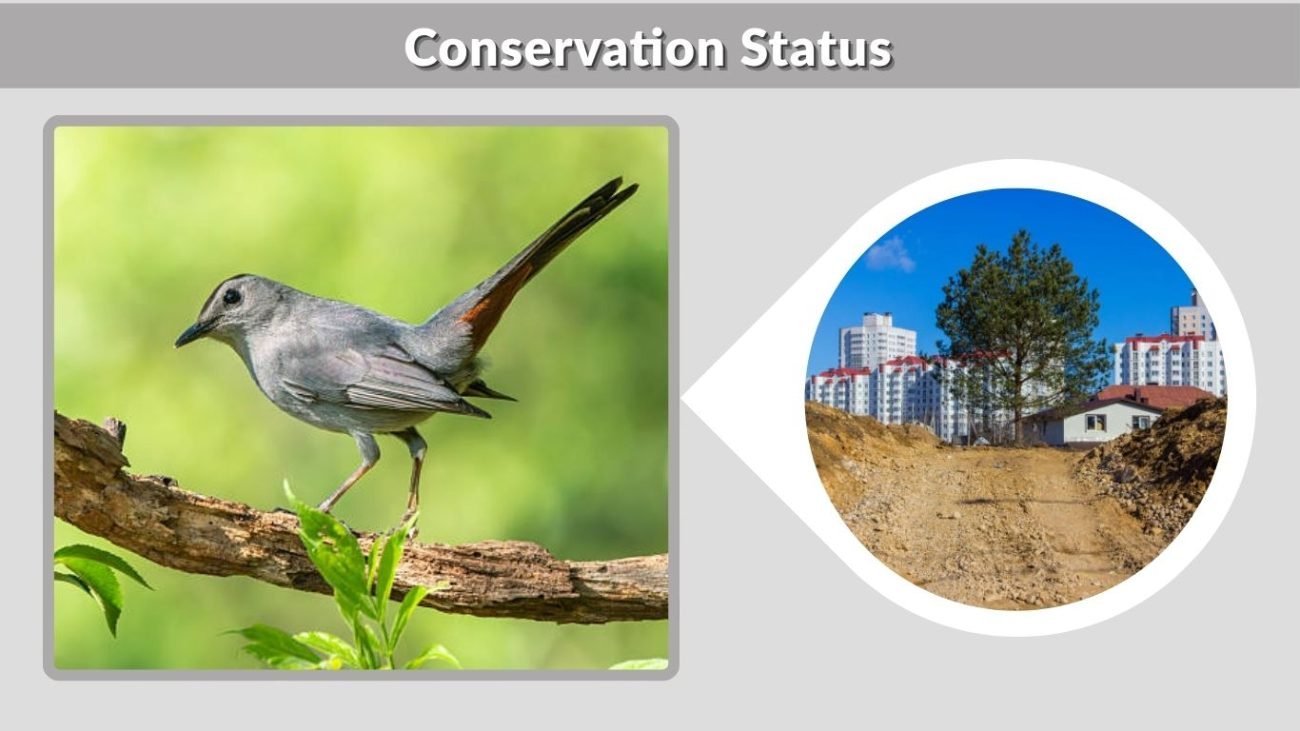
The Gray Catbird is currently considered a species of low conservation concern, with stable population levels across much of its range. Its adaptability to suburban and urban environments has helped it maintain healthy numbers.
However, habitat loss due to urban expansion and land development can still pose a threat. Preserving areas with dense vegetation and native plant species is important for supporting their populations and overall biodiversity.
Interesting Facts About Gray Catbirds
Gray Catbirds are named for their unique “mew” call, which closely resembles the sound of a cat. They are also known for their impressive memory, allowing them to mimic a wide variety of sounds throughout their lives.
Another interesting trait is their tendency to return to the same breeding areas each year. Despite their plain appearance, their vocal skills and curious behavior make them one of the most engaging birds to observe.
FAQs
What sound does a Gray Catbird make?
The Gray Catbird is famous for its cat-like “mew” call, along with a mix of whistles and mimicked sounds from other birds.
Can Gray Catbirds mimic other birds?
Yes, they are skilled mimics and can copy songs of other birds and even some environmental sounds.
Are Gray Catbirds friendly to humans?
They are generally shy but can become comfortable around humans if there is dense vegetation and a reliable food source nearby.
Do Gray Catbirds return to the same place every year?
Yes, many Gray Catbirds return to the same breeding areas each year, showing strong site loyalty.
What type of habitat do Gray Catbirds prefer?
They prefer dense shrubs, thickets, gardens, and forest edges where they can stay hidden and find food easily.
Conclusion
The Gray Catbird is a remarkable songbird that combines subtle beauty with impressive vocal abilities. Its unique call, mimicry skills, and adaptable nature make it a favorite among bird enthusiasts.
By understanding its habits and habitat needs, we can better appreciate and support this species in both natural and suburban environments. Whether you hear its “mew” call or catch a glimpse of it in the bushes, the Gray Catbird is always a rewarding bird to encounter.