The cedar waxwing (Bombycilla cedrorum) is one of North America’s most distinctive and elegant songbirds. Known for its sleek appearance, soft plumage, and social behavior, this bird stands out among other species not only for its beauty but also for its unique lifestyle. Unlike many birds that rely heavily on insects, the cedar waxwing has a diet largely centered around fruit, making it a key player in seed dispersal and ecosystem balance.
These birds are often seen in flocks, moving gracefully through trees and shrubs in search of berries. Their calm, cooperative nature and fascinating behaviors—such as passing food between one another—make them a favorite among birdwatchers. Whether spotted perched in a tree or flying in coordinated groups, cedar waxwings leave a lasting impression on anyone who observes them.
Cedar Waxwing Identification and Physical Characteristics
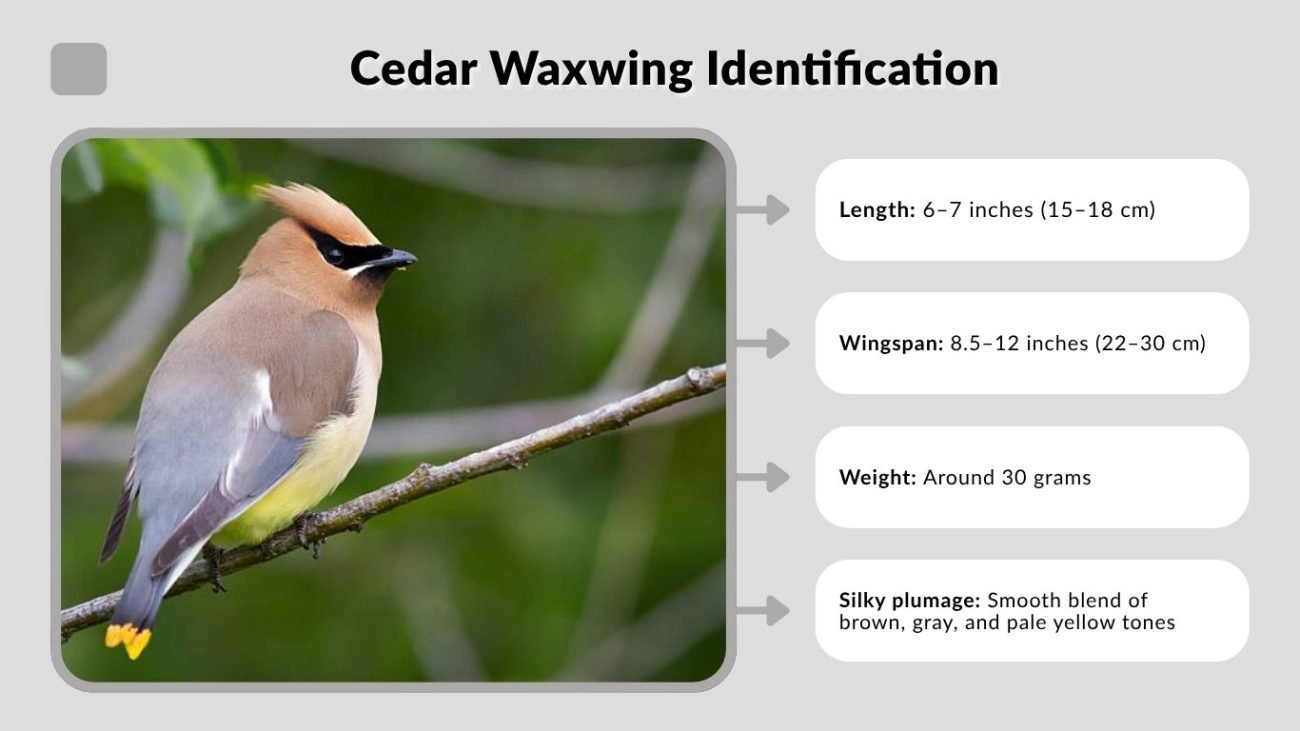
The cedar waxwing is a sleek, medium-sized songbird known for its smooth plumage and elegant appearance. Its overall look is soft and refined, with subtle color transitions rather than bold contrasts. Despite its simplicity, a few key features make it easy to identify once you know what to look for.
Key Identification Features
- Silky plumage: Smooth blend of brown, gray, and pale yellow tones
- Prominent crest: Swept-back crest on the head gives a streamlined look
- Black facial mask: Dark mask across the eyes, bordered by thin white lines
- Yellow tail tip: Bright yellow band at the end of the tail (sometimes orange)
- Red wax-like wing tips: Small red droplets on wing feathers in adults
- Compact body shape: Short neck, rounded body, and pointed wings
Size and Measurements
- Length: 6–7 inches (15–18 cm)
- Wingspan: 8.5–12 inches (22–30 cm)
- Weight: Around 30 grams
Male, Female, and Juvenile Differences
- Male vs female: Nearly identical; males may have slightly brighter markings
- Juveniles:
- Streaked chest
- Duller colors
- Lack of red wax tips on wings
These combined features—especially the crest, mask, and colorful accents—make the cedar waxwing one of the most recognizable and visually distinctive birds in its range.
Cedar Waxwing Habitat and Distribution
Geographic Range
Cedar waxwings are widely distributed across North America. They can be found throughout much of Canada and the United States, and their range extends into parts of Mexico and Central America during certain times of the year. Their widespread presence makes them one of the more commonly observed songbirds in many regions.
Preferred Habitats
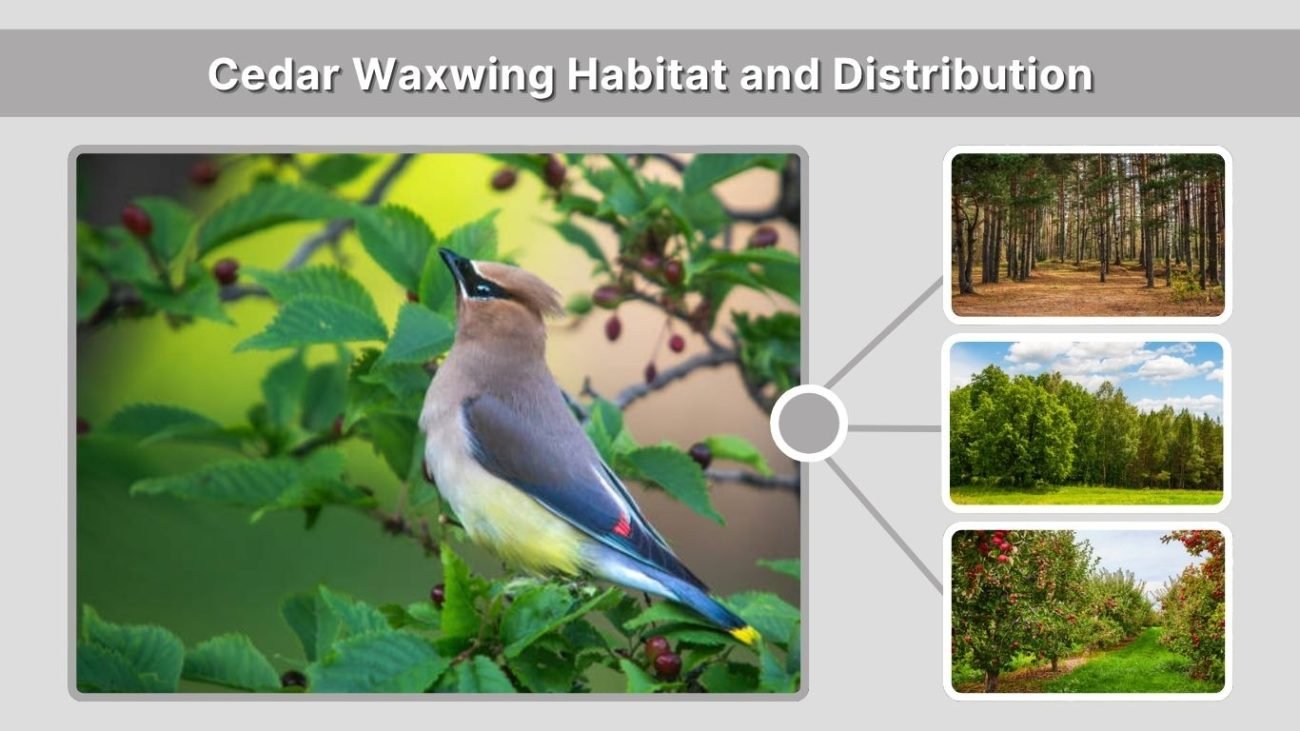
These birds are highly adaptable and can thrive in a variety of environments. They are commonly found in open woodlands, forest edges, orchards, and areas with abundant fruit-bearing trees and shrubs. Cedar waxwings are also frequent visitors to suburban neighborhoods and parks, especially where berry-producing plants are available.
Their strong preference for fruit-rich habitats means they are often seen in places where food is plentiful. Trees such as cedar, juniper, and dogwood are particularly attractive to them.
Migration Patterns
Unlike many migratory birds with fixed routes, cedar waxwings are somewhat nomadic. Their movements are largely determined by the availability of food rather than strict seasonal patterns. In the summer, they are more commonly found in northern regions, while in winter they may move southward in search of berries.
This flexible migration strategy allows them to adapt quickly to changing conditions, but it also means their presence in a specific area can vary from year to year.
Cedar Waxwing Diet and Feeding Behavior

Primary Diet
The cedar waxwing has one of the most fruit-focused diets of any North American bird. Berries and small fruits make up the majority of their food intake, especially during the fall and winter months. Common food sources include cedar berries, juniper berries, cherries, and blueberries.
Seasonal Diet Changes
Although fruit dominates their diet, cedar waxwings do consume insects, particularly during the breeding season. Insects provide essential protein needed for egg production and the growth of young chicks. During summer, they may catch insects in mid-air or pick them off leaves and branches.
As the seasons change and insects become less available, they shift almost entirely to fruit, sometimes eating large quantities in a single feeding session.
Unique Feeding Behavior
One of the most fascinating aspects of cedar waxwing behavior is their cooperative feeding style. These birds are highly social and often feed in groups, sometimes forming large flocks around fruiting trees. A particularly charming behavior observed during feeding is the passing of berries from one bird to another. This is especially common between mating pairs and is believed to strengthen social bonds.
Cedar waxwings are also known for their ability to consume large quantities of fruit in a short time. Because of their fruit-heavy diet, they have specialized digestive systems that allow them to process sugary foods efficiently. However, this can sometimes lead to unusual situations—such as birds becoming intoxicated after eating fermented berries.
Ecological Role
Cedar waxwings play an important role in their ecosystems as seed dispersers. By consuming fruits and later excreting the seeds in different locations, they help promote the growth of plants and trees. This natural process contributes to forest regeneration and the spread of berry-producing vegetation.
Cedar Waxwing Behavior and Social Life
Flocking Behavior
Cedar waxwings are among the most social of all songbirds. They are rarely seen alone and instead prefer to move in flocks that can range from a few individuals to several dozen birds. This social structure provides benefits such as increased protection from predators and more efficient foraging.
Their coordinated movements, both in flight and while feeding, give them a graceful and almost synchronized appearance.
Communication
These birds communicate using high-pitched, thin whistles that are often described as soft and delicate. Unlike many songbirds, cedar waxwings do not have complex songs. Instead, they rely on simple calls to maintain contact within the flock.
These calls are frequently heard while the birds are flying or perched, creating a constant background of gentle sound when a group is nearby.
Courtship Rituals
During the breeding season, cedar waxwings engage in unique courtship behaviors. One of the most notable is the repeated passing of a small object—usually a berry or flower—between potential mates. This ritual may continue several times before one bird finally eats the item.
This behavior is believed to strengthen pair bonds and plays a role in mate selection.
Cedar Waxwing Breeding and Reproduction
Breeding Season
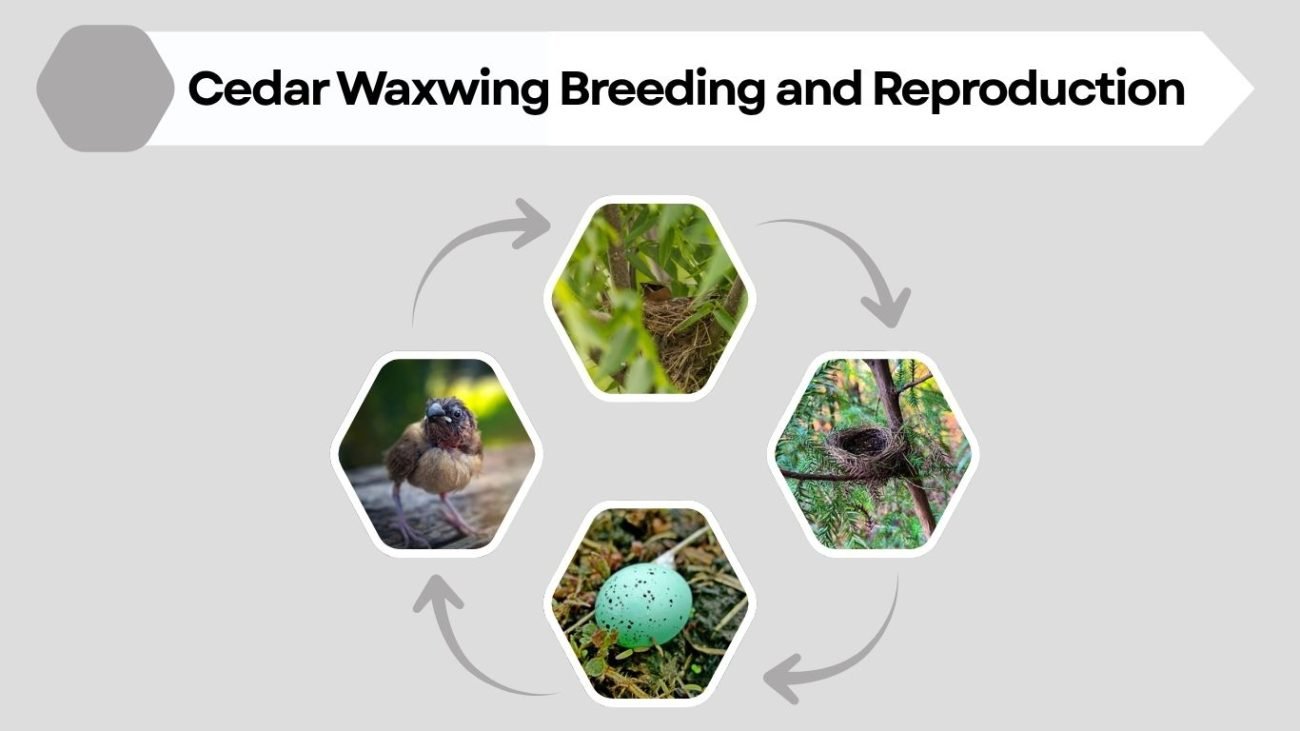
Cedar waxwings typically breed later than many other bird species, often beginning in late spring or early summer. This timing is closely linked to the availability of fruit, which provides a reliable food source for raising their young.
Nesting Habits
Nests are usually built in trees or large shrubs, often near water or in areas rich in food. The nest is constructed using twigs, grass, moss, and other soft materials, forming a small, cup-shaped structure.
Both male and female participate in building the nest, reflecting their cooperative nature.
Eggs and Incubation
A typical clutch consists of 2 to 6 eggs, which are usually pale blue or gray with small dark markings. The female is primarily responsible for incubating the eggs, which takes about 12 to 14 days.
During this time, the male often brings food to the female, ensuring she remains nourished.
Parental Care
After hatching, both parents take part in feeding the chicks. Initially, the young are fed a protein-rich diet of insects, which supports rapid growth. As they mature, fruit becomes a larger part of their diet.
The chicks develop quickly and are usually ready to leave the nest within two to three weeks.
Vocalizations and Sounds
Common Calls
Cedar waxwings are known for their high-pitched, almost whisper-like calls. These sounds are often described as thin whistles and can be difficult to locate due to their subtle nature.
Purpose of Vocalizations
Their calls serve mainly to maintain communication within the flock. Whether flying or feeding, these birds use vocal signals to stay connected with one another.
Identifying by Sound
For birdwatchers, recognizing the cedar waxwing by its call can be just as useful as spotting it visually. The soft, consistent whistling is often the first clue that a flock is nearby.
Lifespan, Predators, and Threats

Lifespan
Cedar waxwings typically live for several years in the wild, with some individuals reaching ages of 7 to 8 years under favorable conditions.
Natural Predators
Like many small birds, they face threats from predators such as hawks and owls. Domestic cats also pose a significant risk, especially in suburban areas.
Threats
In addition to predation, cedar waxwings are vulnerable to habitat loss and human-related hazards such as window collisions. Food shortages, particularly during harsh winters, can also impact their survival.
Conservation Status
Cedar waxwings are currently considered a species of low conservation concern, with stable and widespread populations across their range. Their adaptability to different habitats, including suburban environments, has helped them maintain healthy numbers.
However, preserving natural habitats and ensuring the availability of fruit-bearing plants remains important for their continued success.
Interesting Facts About Cedar Waxwings
Cedar waxwings are full of interesting and unusual traits. They are one of the few bird species that can survive on a diet composed largely of fruit. Their social nature and cooperative feeding habits make them unique among songbirds.
Another fascinating fact is their occasional intoxication from fermented berries, which can affect their coordination and behavior. Additionally, their name comes from both their fondness for cedar berries and the wax-like tips on their wings.
Cedar Waxwing vs. Bohemian Waxwing
Key Differences
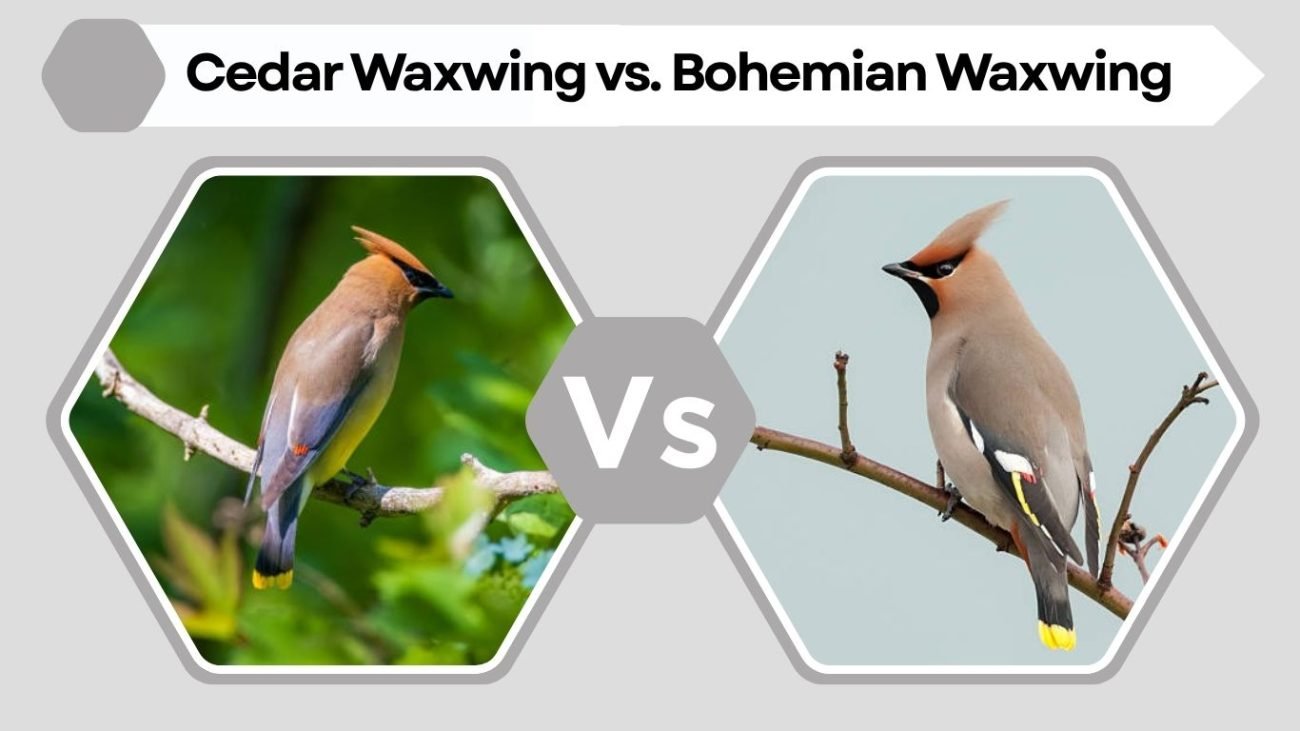
While cedar waxwings are common across much of North America, the Bohemian waxwing is typically found farther north and in colder regions. Bohemian waxwings are slightly larger and have more pronounced coloration, including gray tones and white and yellow markings on the wings.
Despite their similarities, these two species can usually be distinguished by their size, color patterns, and geographic location.
How to Attract Cedar Waxwings
Best Plants
To attract cedar waxwings to your yard, consider planting berry-producing trees and shrubs such as juniper, dogwood, serviceberry, and holly.
Backyard Tips
Providing a clean water source, such as a birdbath, can also help attract them. Avoiding pesticides ensures that both fruits and insects remain safe for birds to consume.
FAQs
What does a cedar waxwing look like?
Cedar waxwings have smooth brown and gray plumage, a prominent crest, a black mask across the eyes, yellow tail tips, and red wax-like markings on their wings.
What do cedar waxwings eat?
They primarily eat fruits and berries such as cedar, juniper, and cherries. During summer, they also consume insects for added protein.
Where can cedar waxwings be found?
They are found across North America in woodlands, orchards, and suburban areas, especially where fruit-bearing trees are abundant.
Are cedar waxwings migratory birds?
Yes, but they are somewhat nomadic. Their movements depend more on food availability than strict seasonal migration patterns.
Why are they called cedar waxwings?
Their name comes from their fondness for cedar berries and the red, wax-like tips on their wing feathers that resemble sealing wax.
Conclusion
The cedar waxwing is a truly remarkable bird, admired for its elegance, social behavior, and unique diet. From its silky plumage and striking markings to its cooperative feeding habits, it stands out as one of North America’s most fascinating songbirds.
By understanding their habits and supporting their natural habitats, we can continue to enjoy the presence of these beautiful birds for generations to come. Whether you are an experienced birdwatcher or a casual observer, spotting a flock of cedar waxwings is always a memorable experience.