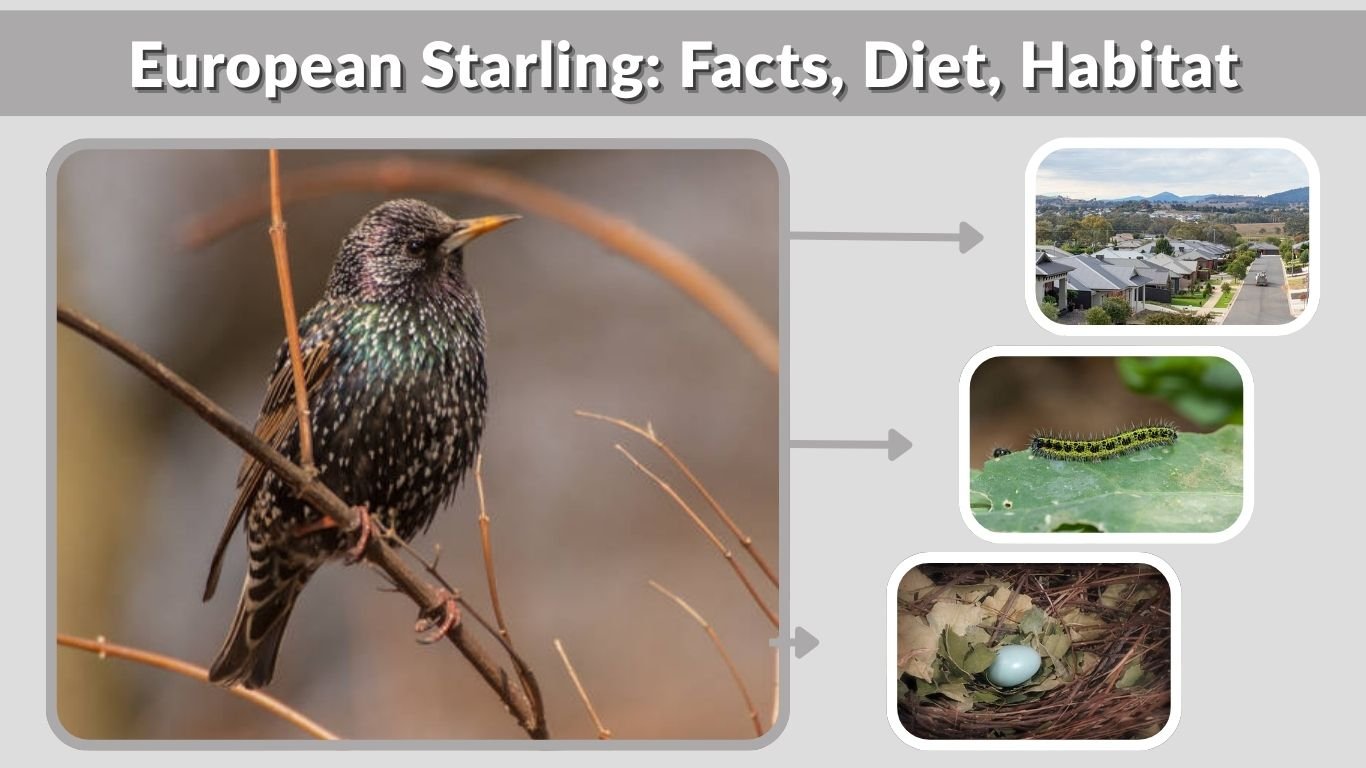
The European starling (Sturnus vulgaris) is one of the most widespread and adaptable bird species in the world. Native to Europe, Asia, and parts of North Africa, this bird has successfully established itself in many other regions, including North America, where it is now extremely common. Known for its glossy feathers, intelligence, and ability to mimic sounds, the European starling is both admired and criticized.
Despite its beauty and fascinating behavior, the species is often considered invasive in areas where it was introduced. Its rapid population growth and competition with native birds have made it a subject of ecological concern. However, its adaptability and unique traits—such as forming massive flocks called murmurations—continue to capture the interest of bird enthusiasts and scientists alike.
European Starling Identification and Physical Characteristics
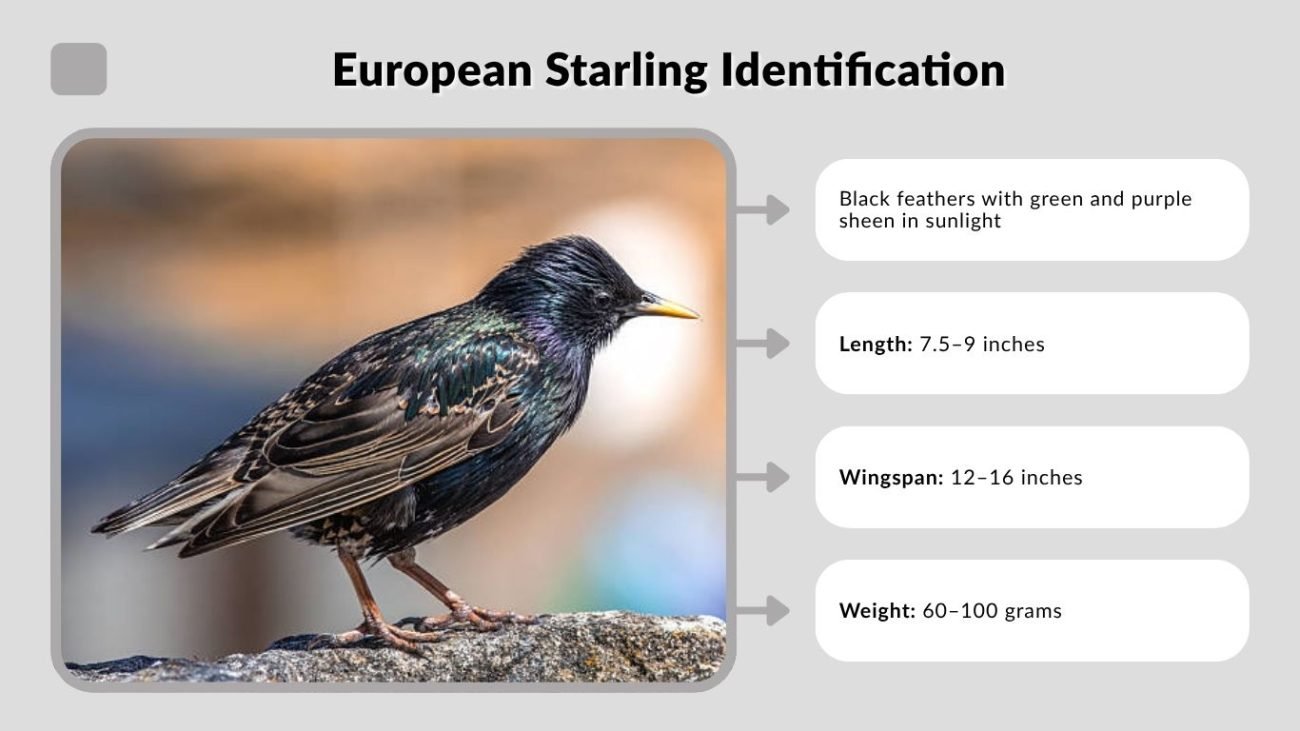
The European starling is a compact, medium-sized bird known for its glossy, iridescent plumage and strong, agile flight. Although it may appear plain black at a distance, a closer look reveals shimmering shades of green and purple. Its appearance changes slightly with the seasons, making it an interesting species to observe year-round.
Key Identification Features
- Iridescent plumage: Black feathers with green and purple sheen in sunlight
- Seasonal spotting: White speckles appear in winter plumage
- Short tail: Gives a compact and sturdy body shape
- Pointed wings: Adapted for fast, direct flight
- Sharp beak: Slender and pointed for probing food
Seasonal Changes
- Breeding season:
- Bright yellow beak
- Dark, glossy feathers (fewer spots)
- Non-breeding season:
- Dark beak
- Heavily speckled appearance
Size and Measurements
- Length: 7.5–9 inches (19–23 cm)
- Wingspan: 12–16 inches (30–40 cm)
- Weight: 60–100 grams
Male and Female Differences
- Male:
- Slightly glossier feathers
- Bluish base of the beak
- Female:
- Slightly duller plumage
- Pinkish base of the beak
These features—especially the iridescent feathers, seasonal spotting, and bright breeding beak—make the European starling relatively easy to identify once you know what to look for.
European Starling Habitat and Distribution
Native Range
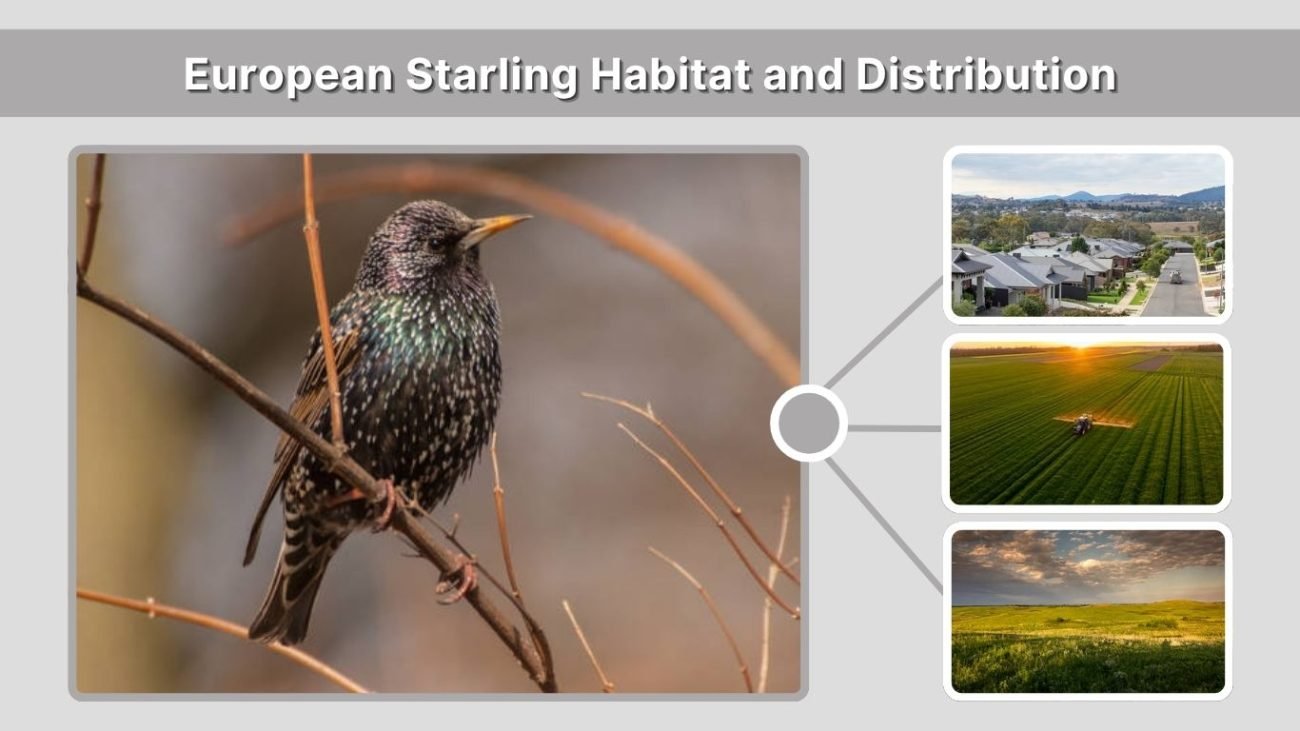
The European starling is originally native to Europe, western Asia, and parts of North Africa. In these regions, it occupies a wide range of environments, from rural farmland to urban centers.
Introduced Range
In the late 19th century, European starlings were introduced to North America. A small group released in New York quickly multiplied, and today the species can be found across most of the continent. They have also been introduced to Australia, New Zealand, and other regions.
Preferred Habitats
European starlings are highly adaptable and thrive in a variety of habitats. They are commonly found in cities, suburbs, farmland, grasslands, and open woodlands. Areas with short grass are especially attractive because they make it easier for the birds to find food.
Adaptability
One of the key reasons for the starling’s success is its ability to live alongside humans. It readily nests in buildings, street structures, and other man-made environments. This adaptability has allowed it to spread rapidly and maintain large populations in diverse settings.
European Starling Diet and Feeding Behavior
Primary Diet
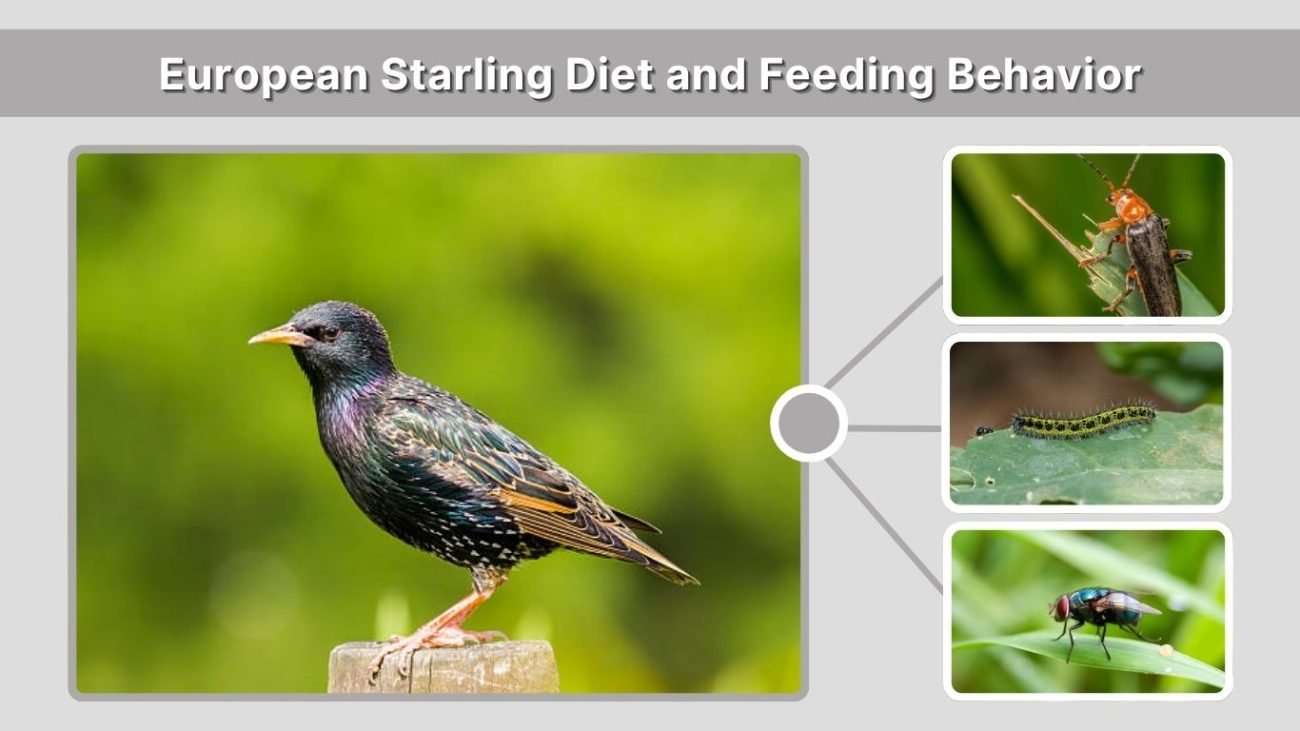
European starlings are omnivores, meaning they eat a wide variety of foods. Their diet includes insects, fruits, seeds, and grains. This flexibility allows them to survive in many different environments.
Seasonal Feeding Habits
Their diet changes depending on the season. During spring and summer, they primarily feed on insects such as beetles, caterpillars, and flies. These protein-rich foods are especially important during the breeding season when they need to feed their young.
In fall and winter, when insects are less abundant, starlings shift to a diet that includes fruits, berries, and grains. They are often seen feeding in agricultural fields during these months.
Foraging Behavior
European starlings are ground feeders and are frequently seen walking or hopping across lawns and fields while searching for food. They use their strong beaks to probe the soil and pull out insects.
They are also highly social feeders, often foraging in groups. This group behavior helps them locate food more efficiently and provides safety in numbers.
Impact on Agriculture
The feeding habits of European starlings can have both positive and negative effects. On one hand, they help control insect populations, which can benefit crops. On the other hand, large flocks can cause damage to fruit crops and stored grains, making them a concern for farmers.
European Starling Behavior and Social Structure
Flocking Behavior
European starlings are highly social birds, often seen in large flocks that can number in the hundreds or even thousands. One of their most spectacular behaviors is the formation of murmurations—massive, swirling flocks that move in synchronized patterns across the sky. These formations are not only visually stunning but also serve as a defense mechanism against predators.
The coordinated movement of a murmuration confuses predators such as hawks, making it difficult to target a single bird.
Communication
Starlings are very vocal birds and use a wide range of sounds to communicate. Their calls include whistles, chirps, clicks, and even mechanical-sounding noises. These sounds are often used to maintain contact within the flock or to signal danger.
Intelligence
European starlings are considered highly intelligent. They are capable of problem-solving, learning from experience, and adapting quickly to new environments. Their intelligence plays a major role in their survival and success in diverse habitats.
European Starling Breeding and Reproduction
Breeding Season
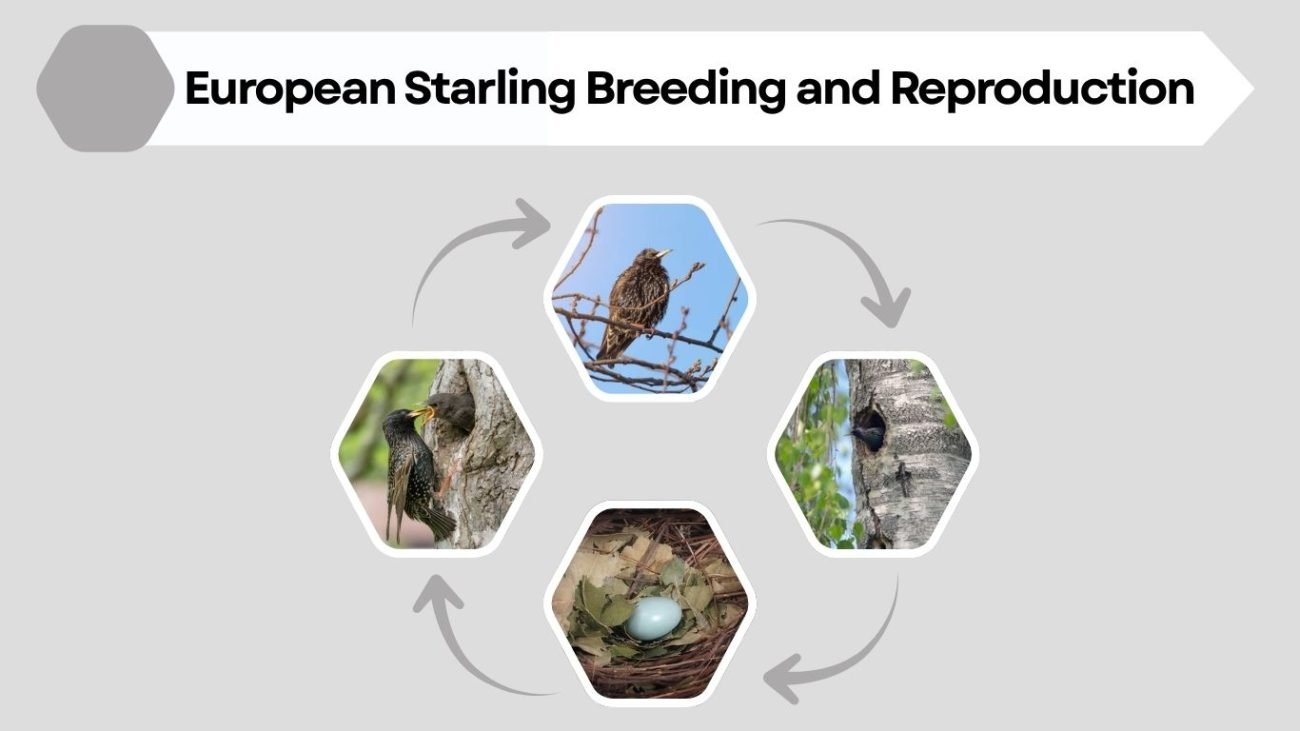
The breeding season for European starlings typically begins in early spring and continues into early summer. During this time, males actively compete for nesting sites and mates.
Nesting Habits
Starlings are cavity nesters, meaning they prefer to build their nests in holes or enclosed spaces. These can include tree cavities, building crevices, vents, and even nest boxes. Their ability to use man-made structures gives them an advantage over many native bird species.
Eggs and Incubation
A typical clutch consists of 4 to 6 pale blue eggs. The female incubates the eggs for about 12 to 14 days while the male helps by bringing food.
Parental Care
After hatching, both parents share the responsibility of feeding and protecting the chicks. The young birds grow quickly and usually leave the nest within three weeks.
Vocalizations and Sounds
Types of Calls
European starlings produce a variety of sounds, including whistles, rattles, and chirps. Their vocal range is quite diverse compared to many other birds.
Mimicry Ability
One of the most remarkable traits of the European starling is its ability to mimic sounds. They can imitate other bird species, mechanical noises, and even human-made sounds like car alarms or phone ringtones.
Purpose of Sounds
These vocalizations serve multiple purposes, including attracting mates, defending territory, and maintaining communication within flocks.
European Starling Lifespan, Predators, and Threats
Lifespan
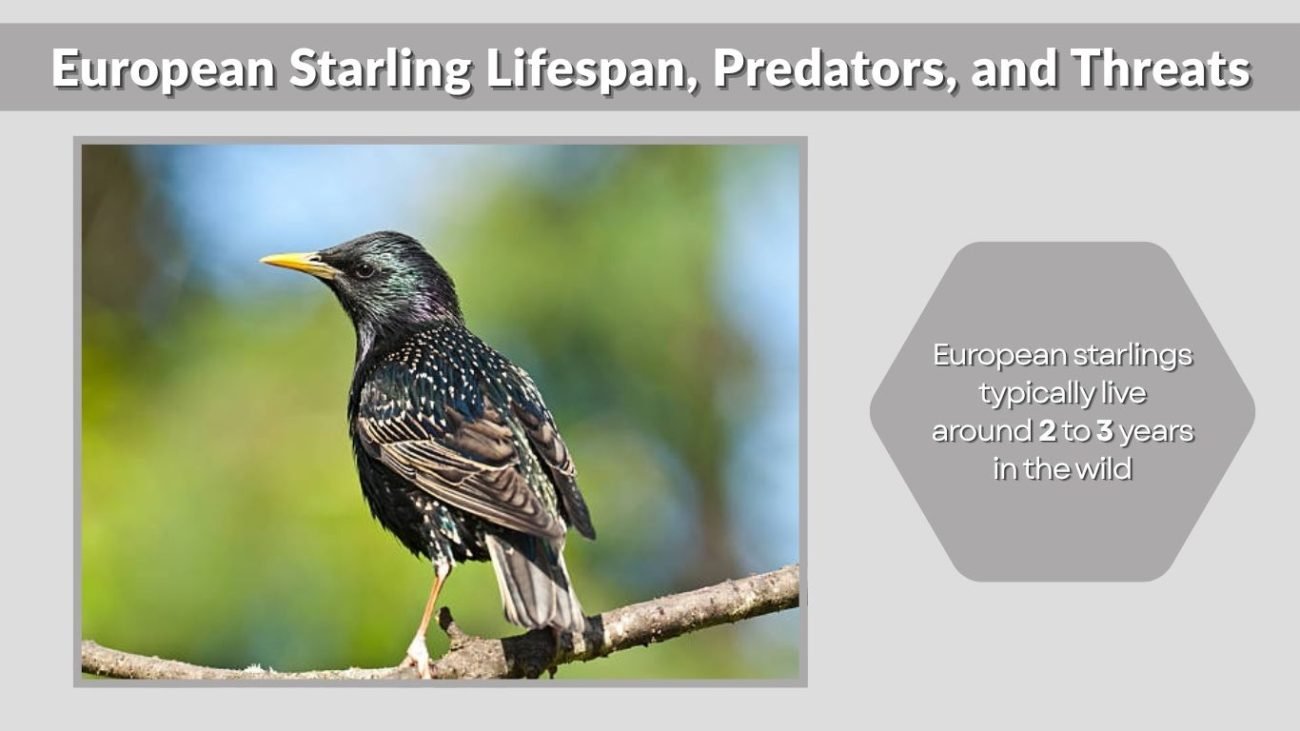
European starlings typically live around 2 to 3 years in the wild, although some individuals can live much longer under favorable conditions.
Natural Predators
They are preyed upon by birds of prey such as hawks and falcons. Ground predators and domestic cats also pose a threat, especially to young birds.
Threats
While starlings are abundant, they still face challenges such as harsh weather, food shortages, and human control measures aimed at reducing their populations in certain areas.
Invasive Species Status
Introduction History
European starlings were introduced to North America in the 1890s when a small group was released in New York City. The introduction was reportedly inspired by a desire to bring all birds mentioned in Shakespeare’s works to America.
Why They Are Invasive
Their rapid reproduction, aggressive behavior, and adaptability have allowed them to spread quickly. They often compete with native bird species for nesting sites and food resources.
Ecological Impact
European starlings can displace native cavity-nesting birds such as bluebirds and woodpeckers. Their large flocks can also impact ecosystems and agriculture, making them one of the most well-known invasive bird species.
Interesting Facts About European Starlings
European starlings are full of fascinating traits. Their murmurations are considered one of nature’s most beautiful aerial displays. They are also among the best mimics in the bird world, capable of copying a wide range of sounds.
Another interesting fact is that they are one of the most abundant bird species in North America, with millions of individuals spread across the continent.
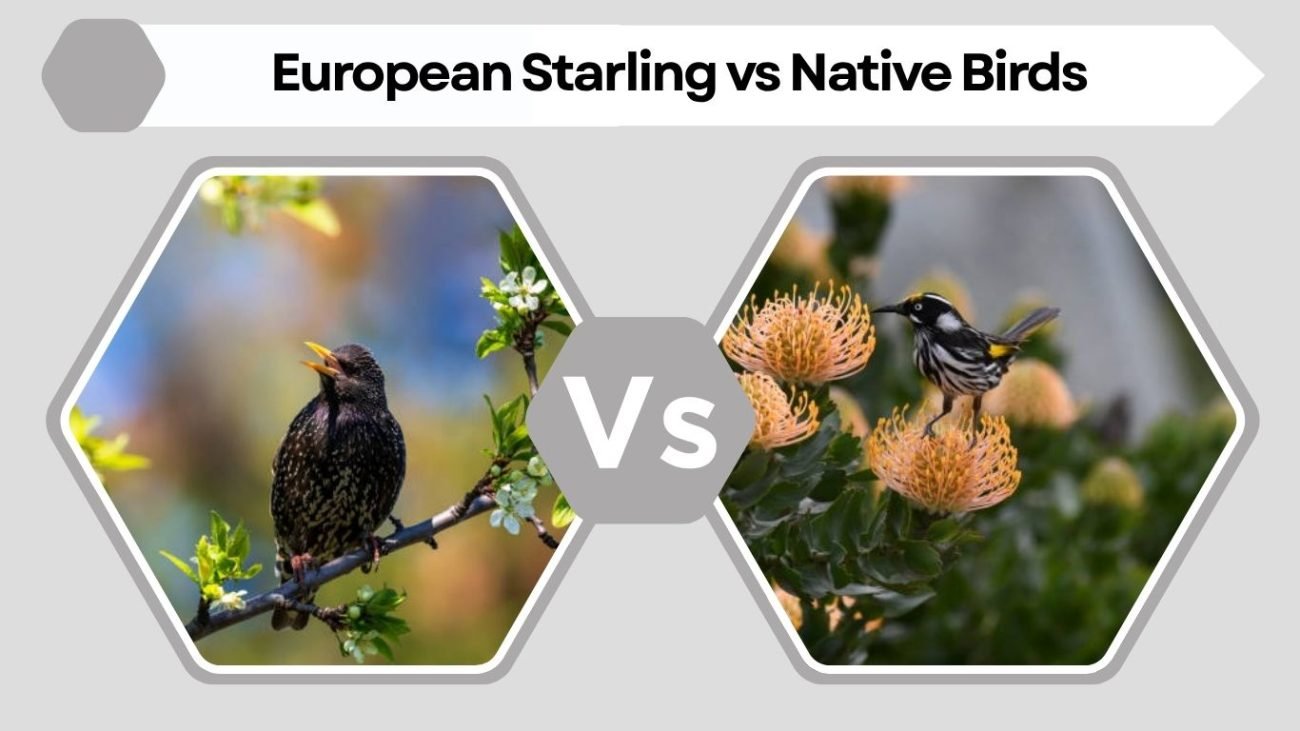
European Starling vs Native Birds
Key Differences
Compared to many native birds, European starlings are more aggressive and adaptable. They often take over nesting sites, forcing other species out. Their diet is also more flexible, allowing them to survive in a wider range of environments.
How to Manage or Attract European Starlings
Preventing Them
To discourage starlings, people often use birdhouse designs with smaller entrance holes that prevent them from entering. Other deterrents include noise devices and visual scare tactics.
Attracting Them
Although many people try to limit their presence, starlings can be attracted to food sources such as grains and fruits. They are especially common in urban and suburban settings.
FAQs
What is a European starling?
The European starling is a medium-sized, highly adaptable bird known for its glossy plumage, intelligence, and ability to mimic sounds.
Why are European starlings considered invasive?
They are considered invasive because they spread rapidly, compete with native species, and disrupt ecosystems in regions where they were introduced.
What do European starlings eat?
They eat a wide variety of foods, including insects, fruits, seeds, and grains, depending on the season.
Where do European starlings live?
They live in a wide range of habitats, including cities, farmland, grasslands, and open woodlands across many parts of the world.
Can European starlings mimic sounds?
Yes, they are excellent mimics and can imitate other birds, animals, and even mechanical noises.
Conclusion
The European starling is a remarkable bird that combines beauty, intelligence, and adaptability. While it is often viewed as an invasive species with negative impacts, it also offers fascinating insights into animal behavior and survival.
Understanding this species helps highlight the balance between ecological impact and natural wonder. Whether admired for its shimmering feathers or its mesmerizing murmurations, the European starling remains one of the most intriguing birds in the world.