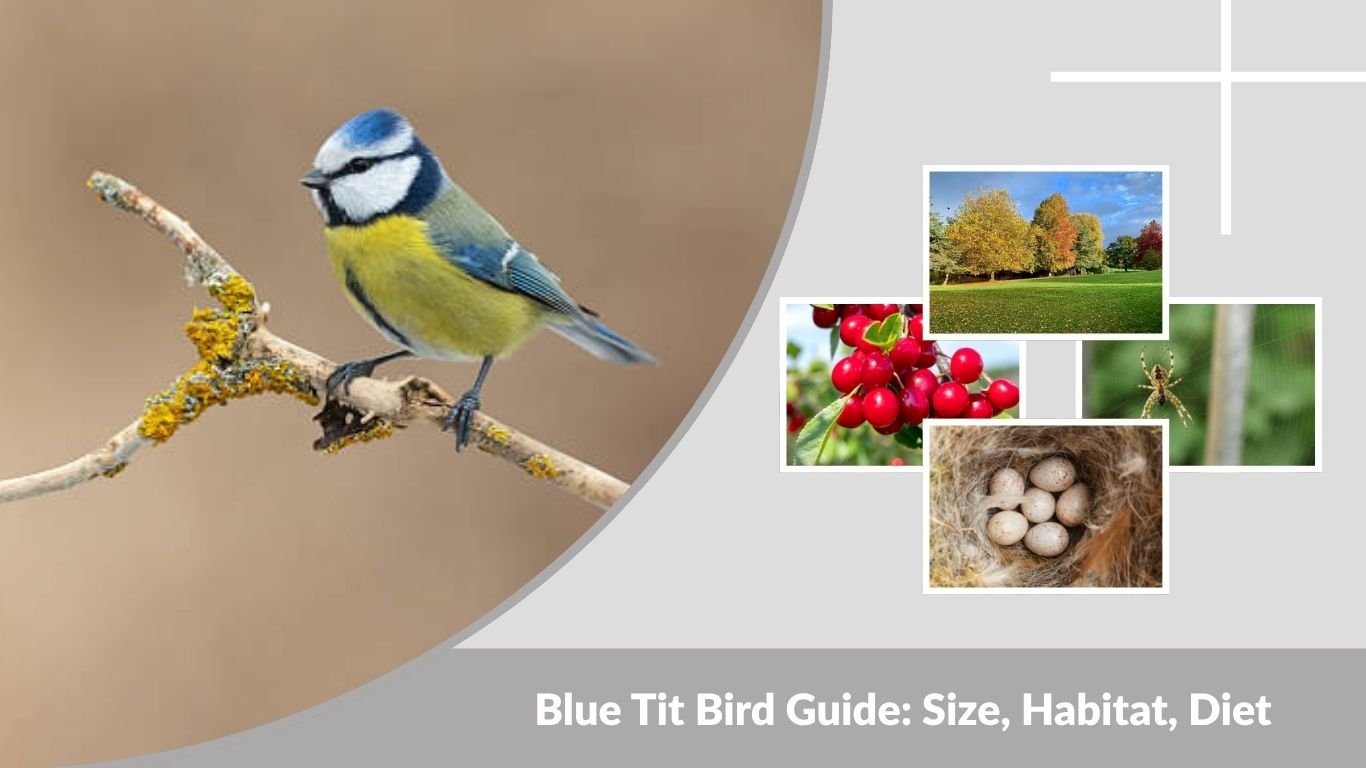
The Blue Tit is a small, colorful songbird widely found across Europe and parts of Asia. Known for its bright blue and yellow plumage, this lively bird is a favorite among gardeners and birdwatchers. Despite its tiny size, the Blue Tit is highly energetic, intelligent, and adaptable, often seen visiting feeders and nesting close to human habitats. Its charming behavior and striking appearance make it one of the most recognizable garden birds.
Blue Tit Size and Physical Identification
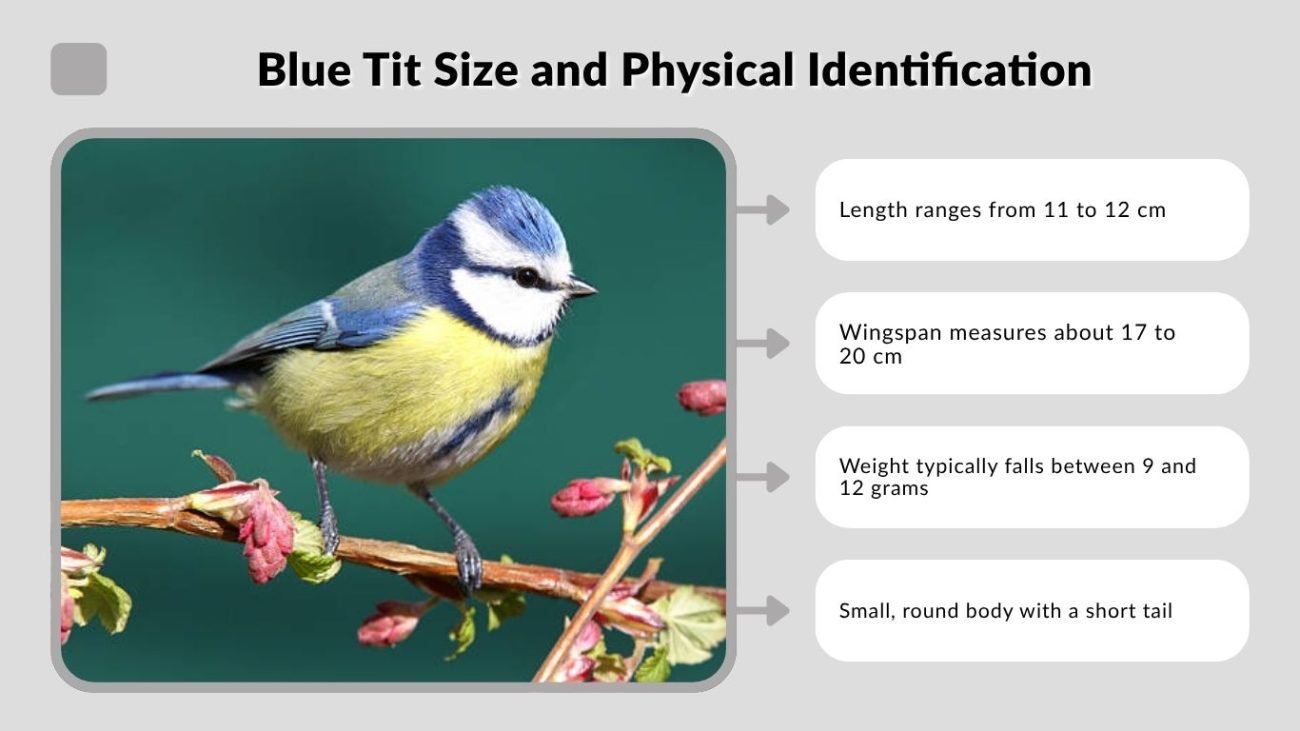
The Blue Tit (Cyanistes caeruleus) is a small but eye-catching bird belonging to the tit family. Its compact body and vibrant colors make it easy to recognize, even from a distance.
Size and Measurements
- Length ranges from 11 to 12 cm (4.3–4.7 inches)
- Wingspan measures about 17 to 20 cm
- Weight typically falls between 9 and 12 grams
- Small, round body with a short tail
Key Identification Features
- Bright blue crown and wings
- Yellow underparts with a soft greenish back
- White face with a distinct dark eye stripe
- Short, pointed bill
- Quick, agile movements
Male and female Blue Tits look very similar, although males may appear slightly brighter in color under good lighting.
Color and Appearance of the Blue Tit
The Blue Tit is one of the most colorful small birds in Europe. Its vivid plumage makes it stand out in gardens, woodlands, and parks.
The bird’s head features a striking blue crown, surrounded by a white face. A dark blue or black line runs across the eyes, giving it a masked appearance. Its wings and tail are a rich blue, contrasting beautifully with the bright yellow chest and belly.
The back is usually greenish, blending smoothly with natural surroundings like leaves and branches. This combination of blue, yellow, green, and white creates a vibrant yet balanced color pattern.
In sunlight, the Blue Tit’s colors appear even more vivid, making it easy to spot as it moves quickly through trees or shrubs. Its small size combined with its bold coloration gives it a distinctive presence despite being one of the tiniest birds in its habitat.
Habitat and Distribution
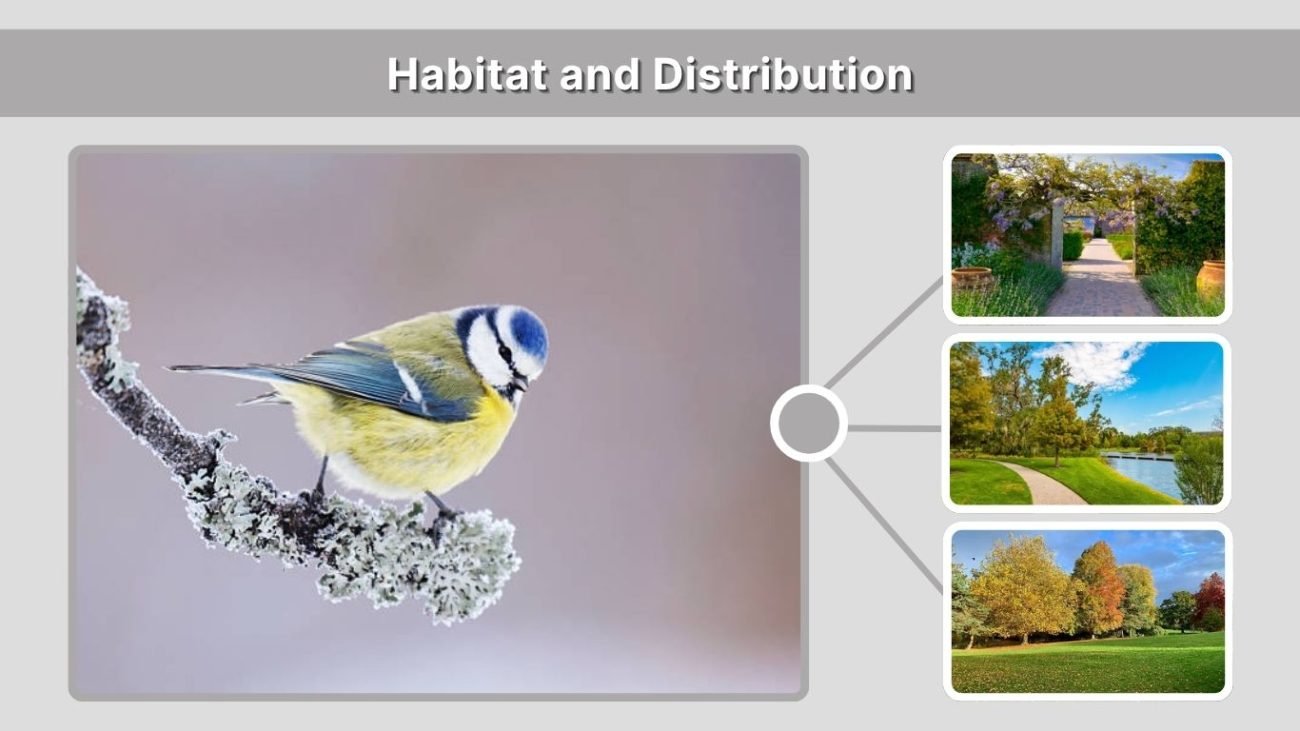
The Blue Tit has a wide distribution and is highly adaptable, which contributes to its large and stable population.
It is native to Europe and parts of western Asia, where it is commonly found in both rural and urban environments. It is especially widespread in the United Kingdom and across continental Europe.
Blue Tits prefer habitats with plenty of trees and shrubs. Deciduous and mixed woodlands are ideal, but they are also frequently seen in gardens, parks, orchards, and hedgerows. Their ability to live near humans makes them one of the most familiar birds in residential areas.
Unlike many bird species, Blue Tits do not migrate long distances. Most populations are resident, meaning they stay in the same area throughout the year. In some cases, they may move short distances during harsh weather in search of food.
Their adaptability allows them to thrive in a variety of conditions, from dense forests to busy suburban gardens.
Blue Tit Diet and Feeding Behavior
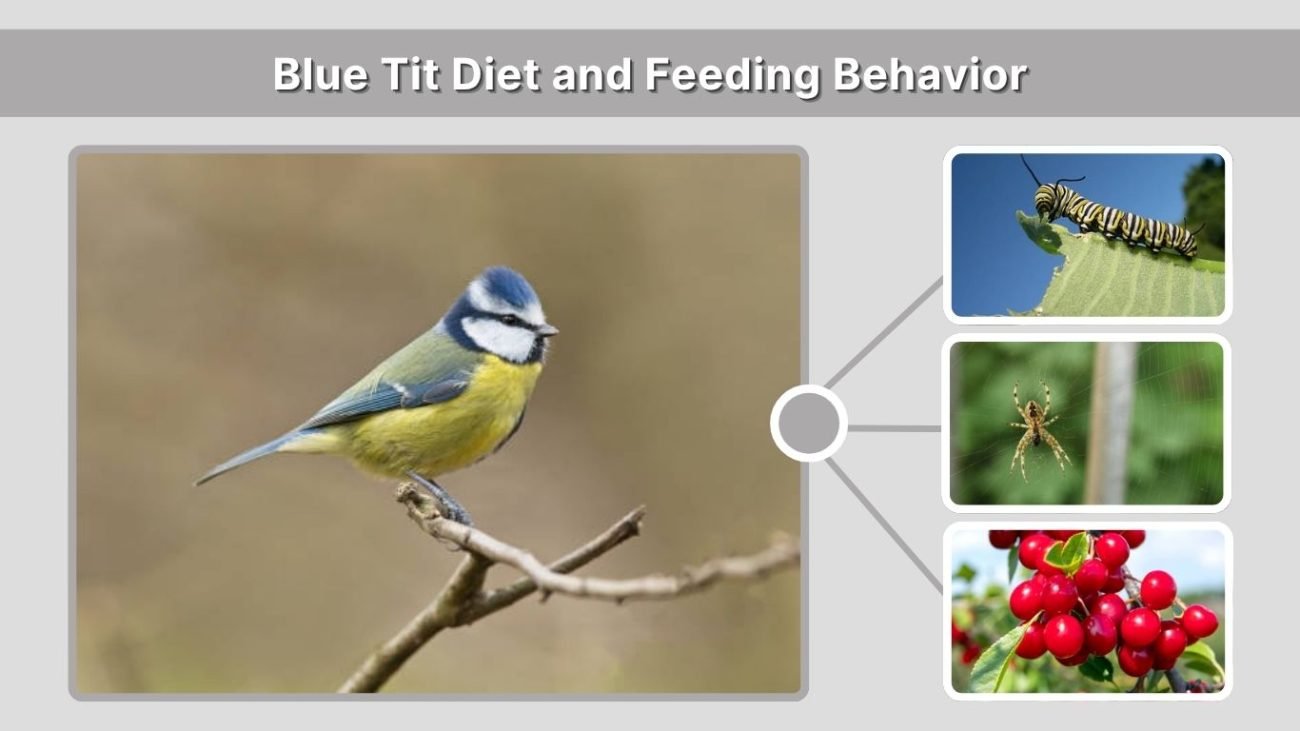
The Blue Tit is an omnivorous bird with a diet that changes depending on the season. Its feeding habits play a key role in both its survival and its ecological importance.
What Do Blue Tits Eat?
- Insects such as caterpillars, aphids, and spiders
- Seeds and nuts
- Fruits and berries
- Small invertebrates
Insects form the most important part of their diet, especially during the breeding season when they need high-protein food for their chicks.
Feeding Behavior and Adaptations
- Frequently visits bird feeders in gardens
- Known for hanging upside down while feeding
- Uses its sharp bill to pick insects from leaves and bark
- Stores small amounts of food for later use
The Blue Tit is highly agile when feeding. It can cling to thin branches and even feed upside down, allowing it to access food sources that many other birds cannot reach.
Behavior and Characteristics
The Blue Tit is known for its energetic and playful nature. It rarely stays still, constantly moving through branches in search of food.
This bird is social and often seen in small flocks, especially outside the breeding season. During spring, however, it becomes more territorial as it prepares to nest.
Blue Tits are also highly intelligent. One famous example of their problem-solving ability comes from the past, when they learned to open milk bottle tops left on doorsteps in the UK to drink the cream inside. This behavior spread rapidly among populations, showing their ability to learn and adapt.
Their flight is quick and slightly undulating, and they are often heard before they are seen due to their high-pitched calls. Despite their small size, they are bold and confident, often competing with larger birds at feeders.
Blue Tit Reproduction and Life Cycle
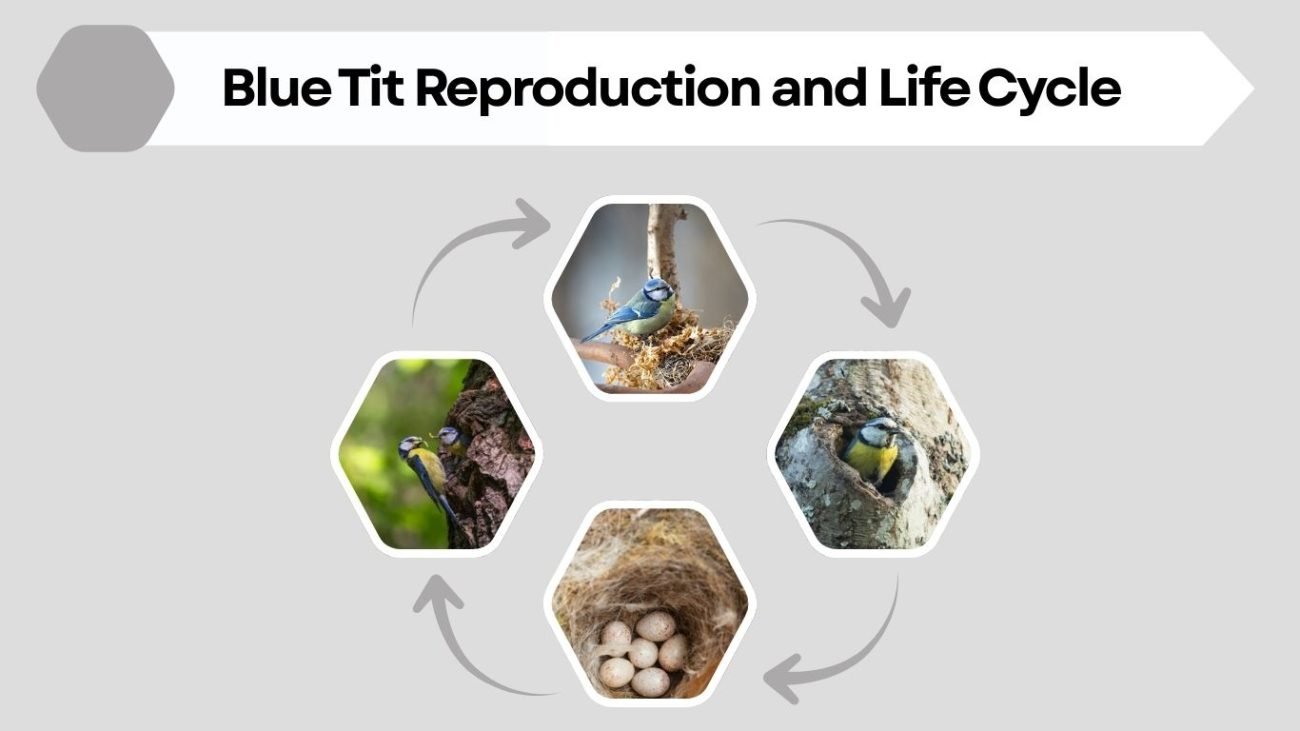
The Blue Tit has a well-defined breeding season that typically begins in spring. This timing ensures that food sources, especially insects, are abundant for feeding their young.
Breeding Season and Nesting
Blue Tits usually breed between April and June. They are cavity nesters, meaning they prefer to build nests in holes rather than open branches.
They commonly nest in:
- Tree cavities
- Nest boxes
- Wall crevices
The nest is carefully built using moss, grass, feathers, and animal fur. It is soft and well-insulated to protect eggs and chicks.
Eggs and Incubation
- Clutch size ranges from 7 to 13 eggs
- Eggs are white with reddish-brown speckles
- Incubation lasts about 12 to 16 days
- The female incubates while the male provides food
This teamwork ensures the eggs remain warm and safe.
Raising the Young
After hatching, both parents are actively involved in feeding the chicks. Caterpillars are the primary food source, as they are rich in protein.
Chicks grow rapidly and usually leave the nest after about 18 to 21 days. Even after fledging, parents may continue to feed them for a short period.
How to Identify a Blue Tit in the Wild
Identifying a Blue Tit is relatively easy due to its bright colors and active behavior. However, knowing a few key details can help distinguish it from similar species.
Visual Identification
The Blue Tit’s most recognizable features include its blue crown, yellow underparts, and white face with a dark eye stripe. Its small size and quick movements also help set it apart.
It often appears restless, constantly hopping between branches or hanging from feeders.
Vocalizations
Blue Tits are quite vocal and produce a variety of sounds.
- High-pitched “tsee-tsee” calls
- Rapid chirping sequences
- Soft trills and whistles
Their calls are sharp and frequent, making them easier to detect even when hidden in foliage.
Similar Species Comparison
Several birds may resemble the Blue Tit, but there are clear differences:
- Great Tit: Larger size, black head, and bold black stripe down the chest
- Coal Tit: Smaller, duller colors, and a distinct white patch on the back of the head
- Marsh Tit: Less colorful with a plain appearance
Ecological Role of the Blue Tit
The Blue Tit plays an important role in maintaining ecological balance, particularly in woodland and garden environments.
One of its key contributions is controlling insect populations. By feeding on caterpillars, aphids, and other small insects, it helps reduce pests that could otherwise damage plants and trees.
This makes the Blue Tit especially beneficial in gardens and agricultural areas, where natural pest control is valuable.
Additionally, by feeding on seeds and fruits, the Blue Tit contributes to seed dispersal. This helps promote plant growth and supports biodiversity.
Its presence in an ecosystem is often a sign of a healthy environment, as it depends on a stable supply of food and suitable nesting sites.
Conservation Status and Threats
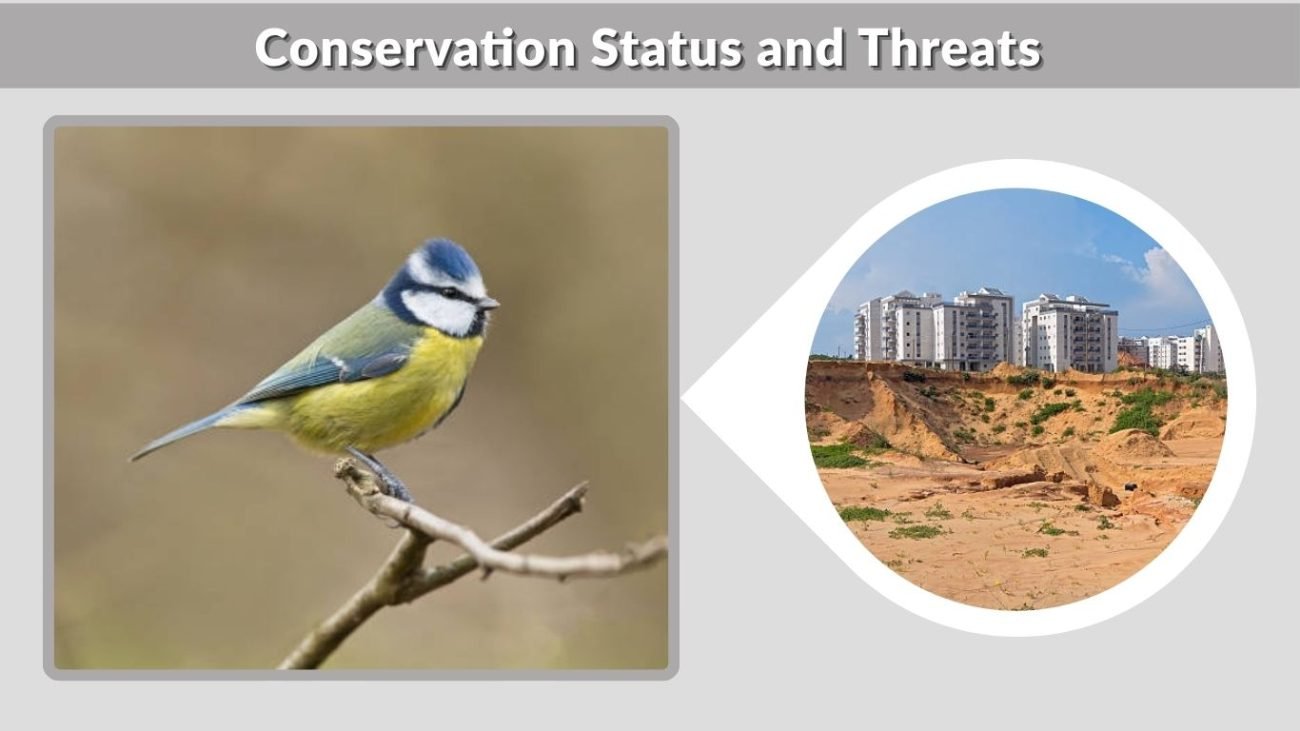
The Blue Tit is currently considered a species of low conservation concern due to its large population and wide distribution.
Current Status
It is classified as “Least Concern” by global conservation organizations. The species is common and widespread across its range.
Main Threats
Despite its stability, the Blue Tit still faces some challenges:
- Habitat loss due to urban development
- Reduction in insect populations
- Climate change affecting breeding timing
- Extreme weather conditions
Changes in climate can disrupt the availability of caterpillars, which are essential for feeding chicks during the breeding season.
Conservation Efforts
Efforts to support Blue Tit populations include:
- Installing nest boxes in gardens and parks
- Encouraging bird-friendly habitats
- Providing food through feeders during winter
- Protecting woodland environments
These simple actions help maintain stable populations and support biodiversity.
Interesting Facts About the Blue Tit
- Can hang upside down while feeding
- Known for opening milk bottle tops in the past
- Lays relatively large clutches for its size
- One of the most common garden birds in Europe
- Highly curious and intelligent
FAQs
1. Where do Blue Tits live?
Blue Tits are found across Europe and parts of western Asia. They live in woodlands, gardens, parks, and hedgerows. Their adaptability allows them to thrive in both natural and urban environments, making them one of the most commonly seen birds in residential areas.
2. What do Blue Tits eat in winter?
In winter, Blue Tits rely more on seeds, nuts, and food from bird feeders, as insects become scarce. They often visit gardens to feed on sunflower seeds, peanuts, and fat balls, which provide the energy needed to survive cold conditions.
3. Are Blue Tits friendly to humans?
Blue Tits are not exactly “friendly,” but they are comfortable around humans, especially in gardens. They frequently visit feeders and can become quite bold when food is available. However, they remain wild birds and prefer to keep a safe distance.
4. How long do Blue Tits live?
Blue Tits typically live around 2 to 3 years in the wild, although some individuals can live longer under favorable conditions. Their lifespan is often limited by predators, harsh weather, and food availability, especially during their first year.
5. Do Blue Tits migrate?
Most Blue Tits are non-migratory and stay in the same area throughout the year. However, some populations may move short distances during winter if food becomes scarce, but they do not undertake long migrations like many other bird species.