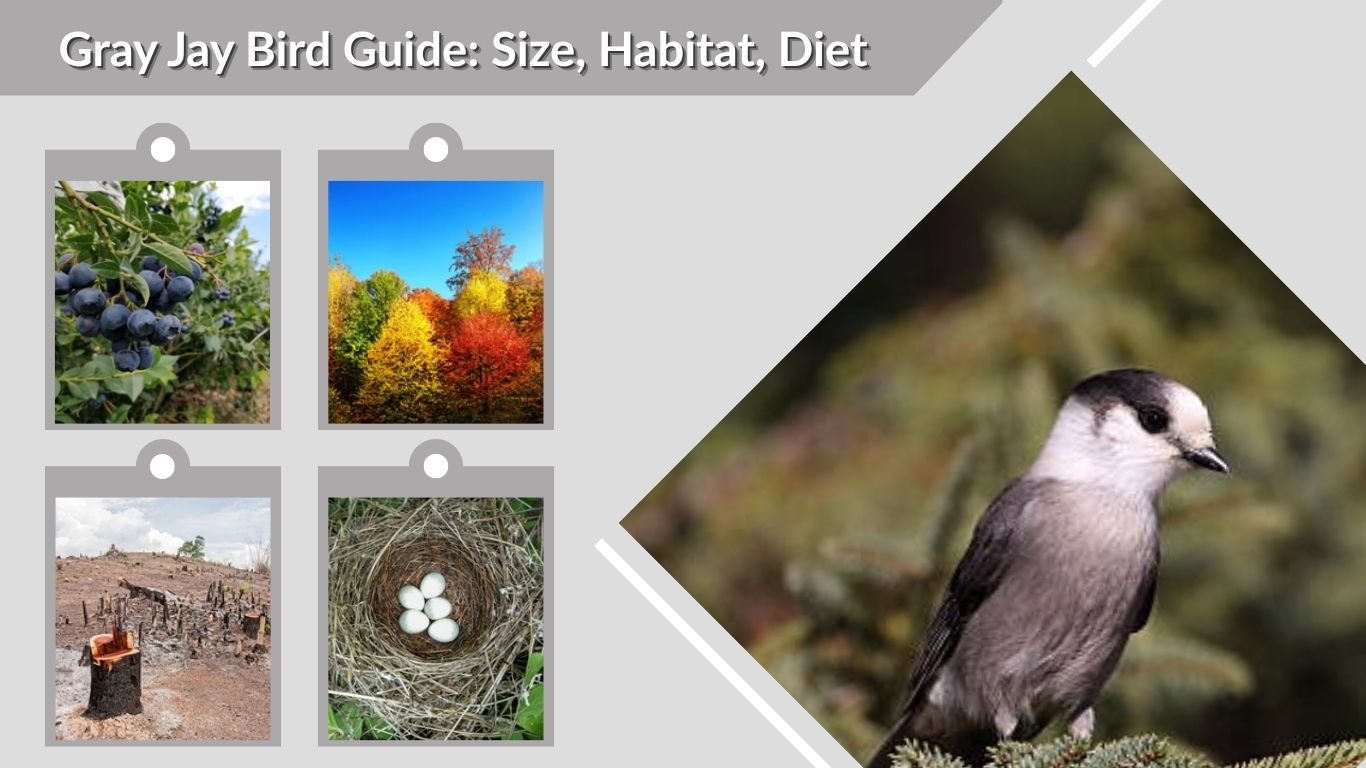
The Gray Jay, also known as the Canada Jay, is a resilient and intelligent bird native to the cold forests of North America. Famous for its friendly behavior and ability to survive harsh winters, this species thrives where many birds cannot. With its soft gray plumage and bold curiosity around humans, the Gray Jay—often called the “camp robber”—is both a fascinating and iconic bird for nature enthusiasts and birdwatchers alike.
Gray Jay Size and Physical Identification
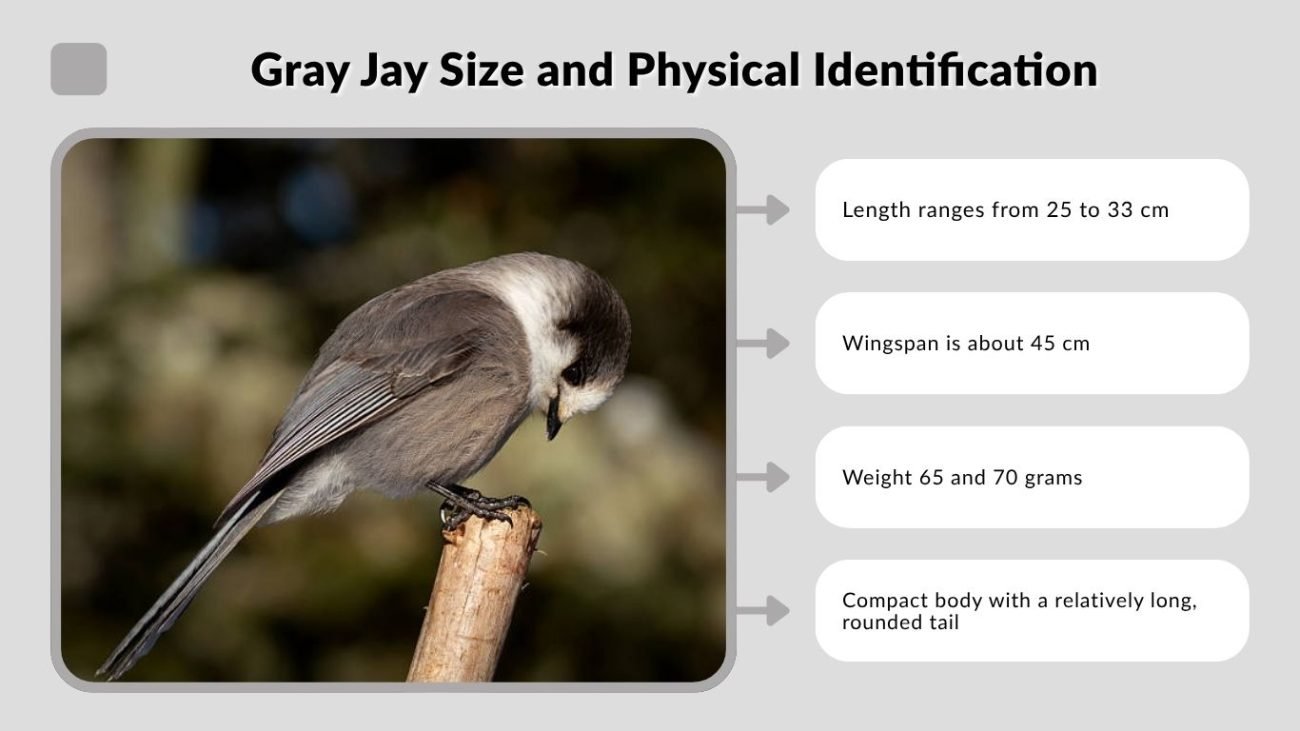
The Gray Jay (Perisoreus canadensis) is a medium-sized bird in the corvid family. It may not be as flashy as other jays, but its appearance is distinctive and well adapted to cold environments.
Size and Measurements
- Length ranges from 25 to 33 cm (10–13 inches)
- Wingspan is about 45 cm (18 inches)
- Weight typically falls between 65 and 70 grams
- Compact body with a relatively long, rounded tail
Key Identification Features
- Soft, fluffy feathers that provide insulation
- Rounded wings and smooth flight pattern
- No crest, unlike the Blue Jay
- Calm, slow movements in comparison to other corvids
- Often approaches humans without hesitation
Male and female Gray Jays look nearly identical, making visual sex identification difficult in the field.
Color and Appearance of the Gray Jay
The Gray Jay’s coloration is subtle but elegant, allowing it to blend seamlessly into its forest habitat. Its muted tones are especially useful for camouflage in snowy and wooded environments.
The bird’s overall plumage is a mix of light to medium gray. Its face and forehead are typically white or pale gray, creating a gentle contrast with the darker crown and nape, which are often charcoal or blackish. The wings and tail are slightly darker gray, while the underparts appear lighter and softer in tone.
Unlike brightly colored birds, the Gray Jay’s understated appearance reflects its survival strategy. Its thick and fluffy feathers not only provide warmth but also give it a rounded, almost puffed-up look—especially during winter months. This insulation is crucial for surviving freezing temperatures in boreal forests.
Habitat and Distribution
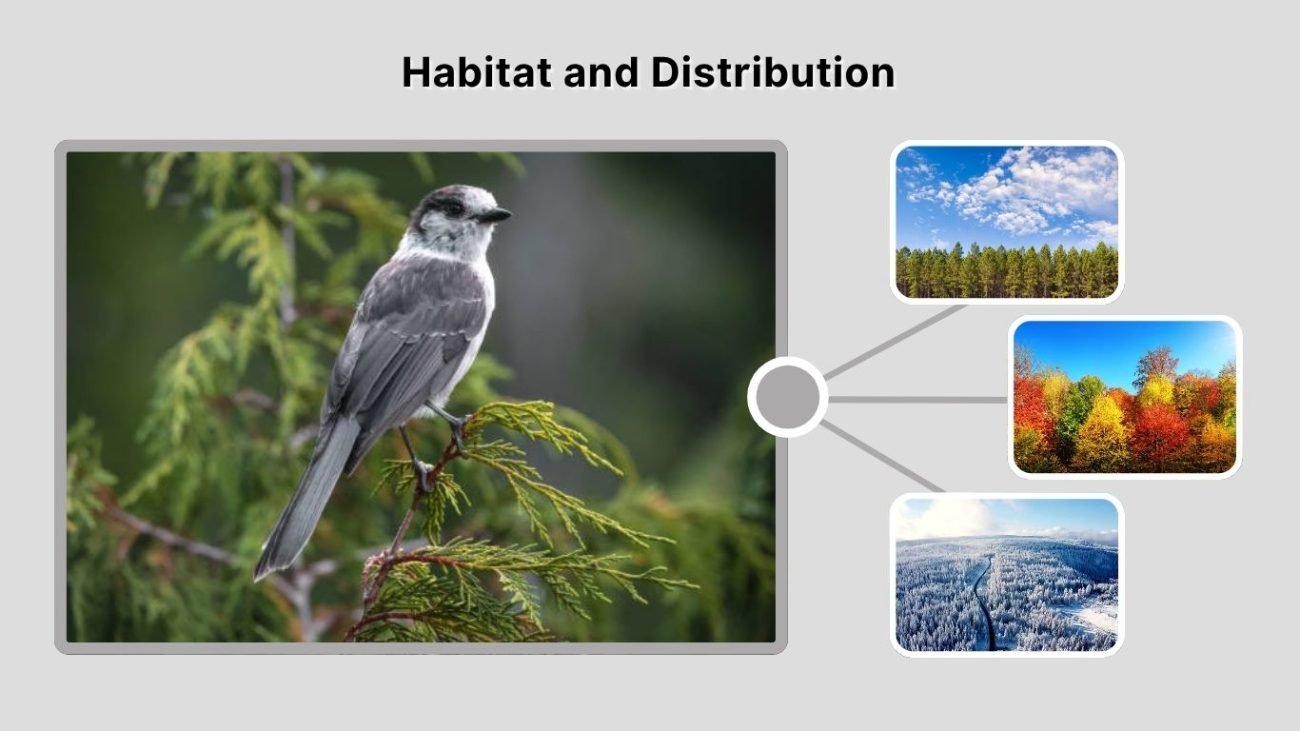
The Gray Jay is strongly associated with northern forests and cold climates. Its distribution spans a wide geographic range, but it is most commonly found in areas with dense tree cover and minimal human disturbance.
This species inhabits boreal forests across Canada and Alaska, extending into the northern United States. In more southern regions, it is often found at higher elevations, such as mountainous areas where temperatures remain cooler.
Gray Jays prefer coniferous forests dominated by spruce, fir, and pine trees. These environments provide both shelter and food resources throughout the year. Mixed forests are also suitable, as long as there is enough dense vegetation for nesting and protection.
One of the most notable traits of the Gray Jay is that it is non-migratory. Unlike many birds that travel south during winter, this species remains in its habitat year-round. It is highly adapted to subarctic conditions and continues to be active even during heavy snowfall and extreme cold.
Gray Jay Diet and Feeding Behavior
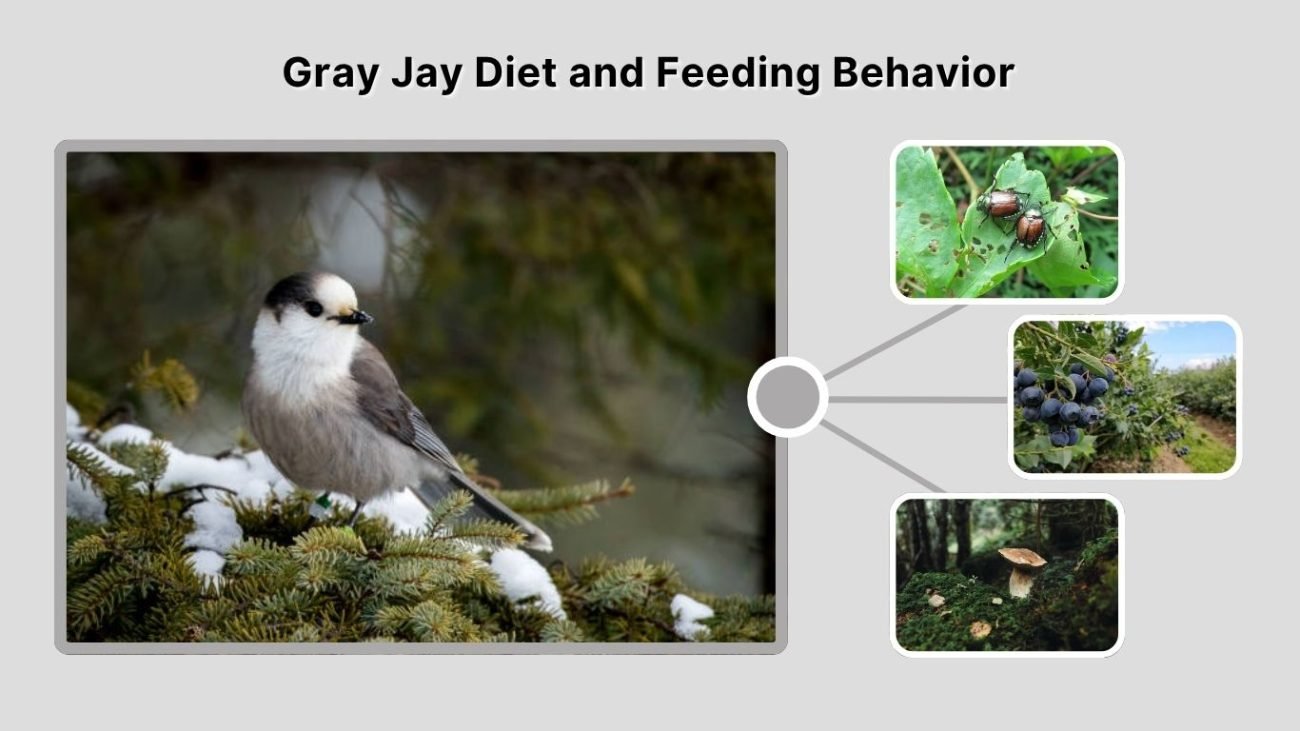
The Gray Jay is an omnivorous bird with a highly adaptable diet. Its feeding habits are key to its survival, particularly during long and harsh winters when food is scarce.
What Do Gray Jays Eat?
- Insects such as beetles and larvae
- Small mammals like rodents
- Bird eggs and nestlings
- Berries and fruits
- Seeds and nuts
- Fungi and carrion
This varied diet allows the Gray Jay to take advantage of whatever food sources are available throughout the year.
Food Caching and Survival Strategy
- Stores food in tree bark and crevices
- Uses sticky saliva to hold food in place
- Can cache thousands of food items
- Relies on memory to retrieve stored food during winter
Behavior and Adaptations
The Gray Jay is known for its intelligence and bold personality. As a member of the corvid family, it shares many traits with crows and ravens, including problem-solving skills and strong memory.
One of its most recognizable behaviors is its fearlessness around humans. Gray Jays are often seen approaching campers and hikers in search of food, which is why they are sometimes called “camp robbers.” This curiosity makes them easy to observe in the wild.
Their intelligence is particularly evident in their food caching behavior. They carefully store food throughout their territory and rely on their memory to retrieve it later. This ability is essential for surviving the winter months when fresh food is limited.
In addition to behavioral adaptations, the Gray Jay has several physical traits that help it endure cold climates. Its dense plumage provides insulation, while its relatively low metabolic rate helps conserve energy. Unlike migratory birds, it remains active throughout winter, relying on stored food and efficient energy use.
Gray Jay Reproduction and Life Cycle
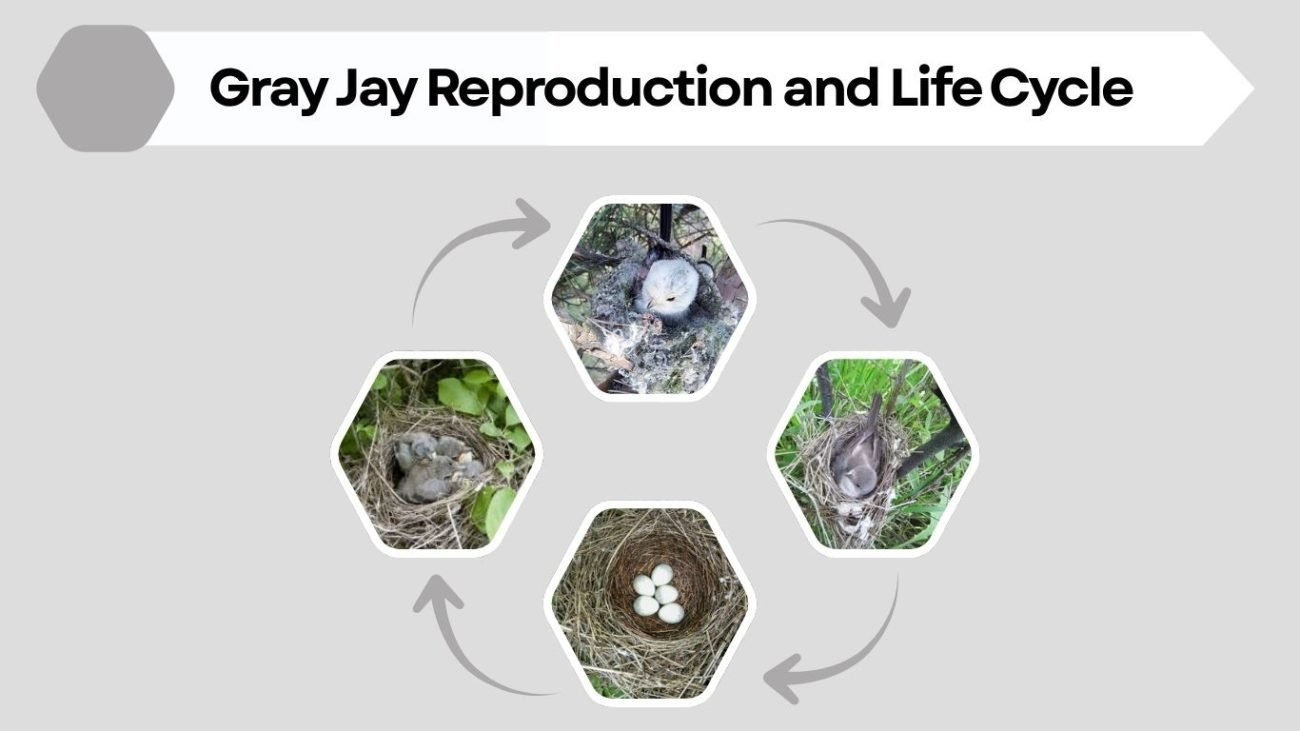
The Gray Jay has one of the most unusual breeding cycles among birds in North America. Unlike most species that nest in spring or summer, this bird begins its breeding season in late winter when temperatures are still extremely low.
Breeding Season and Nesting
Gray Jays typically start nesting as early as February or March. This early breeding allows their young to develop before the peak of insect availability in spring.
They build their nests in dense conifer trees, often well-hidden to avoid predators. The nest is carefully constructed using twigs, bark, moss, and feathers. It is heavily insulated, which helps protect eggs and chicks from freezing temperatures.
The location of the nest is usually close to the trunk of a tree, providing extra shelter from wind and snow.
Eggs and Incubation
- Clutch size ranges from 2 to 5 eggs
- Eggs are usually grayish or greenish with darker spots
- Incubation lasts about 18 to 19 days
- The female incubates the eggs while the male provides food
This division of labor ensures that the eggs remain warm while still maintaining a steady food supply.
Raising the Young
After hatching, both parents take part in feeding and caring for the chicks. The young birds grow quickly despite the cold conditions.
Chicks typically leave the nest after about three weeks. However, they may remain with their parents for some time, forming small family groups. In some cases, older offspring help care for younger siblings, which increases survival rates.
How to Identify a Gray Jay in the Wild
Identifying a Gray Jay can be relatively easy once you know what to look for. Its appearance, behavior, and sounds all provide useful clues.
Visual Identification
The Gray Jay’s soft gray body and white face are its most noticeable features. Unlike more colorful jays, it lacks bright blue feathers or bold patterns. Its fluffy look, especially in winter, makes it stand out among other forest birds.
Its flight is smooth and steady, with slow wingbeats. It often moves quietly through trees rather than making dramatic उड़ movements.
Vocalizations
Gray Jays are not as loud as other members of the jay family. Their calls are typically soft and subtle.
- Gentle whistles
- Quiet chirps
- Low, musical notes
These sounds are often used for communication between family members rather than for territorial displays.
Similar Species Comparison
The Gray Jay can sometimes be confused with other birds, but a few differences make identification easier.
- Blue Jay: Bright blue color, crest on head, louder calls
- Clark’s Nutcracker: Black, white, and gray pattern with a sharper beak
- Canada Jay vs other corvids: Smaller size and softer appearance
Ecological Role of the Gray Jay
The Gray Jay plays an important role in maintaining the balance of its ecosystem. As both a predator and a scavenger, it contributes to various ecological processes.
It helps control insect populations by feeding on larvae and other small invertebrates. By consuming berries and seeds, it also assists in seed dispersal, which supports forest regeneration.
Additionally, its food caching behavior can unintentionally aid plant growth. Some stored seeds are never retrieved, allowing them to germinate and grow into new plants.
As a scavenger, the Gray Jay helps clean up carrion, contributing to nutrient recycling in the forest. This makes it an important part of the natural food chain.
Cultural Significance and Symbolism
The Gray Jay holds a special place in North American culture, particularly among Indigenous communities.
In many Indigenous traditions, the bird is known as “Whiskey Jack,” a name derived from the Cree word Wisakedjak. This figure is often portrayed as a trickster spirit—clever, resourceful, and sometimes mischievous.
The Gray Jay is admired for its resilience and ability to survive harsh conditions. It is often seen as a symbol of endurance, adaptability, and intelligence.
In Canada, the Gray Jay has been widely recognized as a national symbol. Although not officially designated as the national bird, it has gained strong public support due to its widespread presence and cultural importance.
Conservation Status and Threats
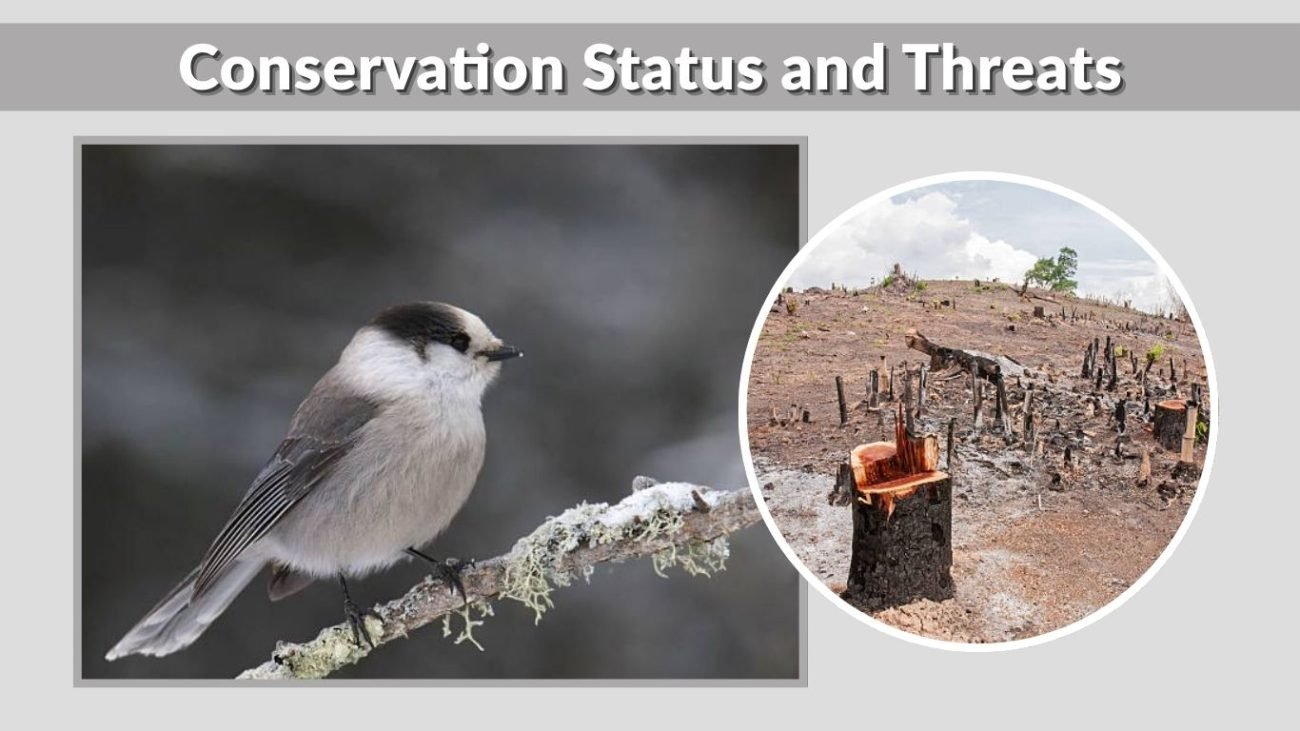
The Gray Jay is currently considered a species of low concern, with a stable overall population. However, it still faces certain environmental challenges.
Current Status
The species is listed as “Least Concern” by conservation organizations. It has a wide range and continues to thrive in many parts of its habitat.
Main Threats
Despite its stability, several factors may impact its future:
- Climate change affecting winter conditions
- Warmer temperatures causing stored food to spoil
- Habitat loss due to deforestation
- Changes in forest ecosystems
One of the most significant concerns is the effect of warming winters. Since the Gray Jay relies on cached food, higher temperatures can cause that food to decay, reducing survival rates.
Conservation Efforts
Efforts to protect the Gray Jay focus on preserving its natural habitat and monitoring population trends. Maintaining healthy boreal forests is essential for its long-term survival.
FAQs
1. Where can Gray Jays be found?
Gray Jays are commonly found in northern North America, especially across Canada and Alaska. They also live in parts of the northern United States and mountainous regions where the climate is cooler. Their preferred habitat includes boreal and coniferous forests.
2. Why is the Gray Jay called a “camp robber”?
The Gray Jay earned the nickname “camp robber” because of its bold behavior around humans. It often approaches campsites and hikers to steal food or accept handouts, showing little fear of people.
3. Do Gray Jays migrate during winter?
No, Gray Jays are non-migratory birds. They stay in their habitat year-round, even in extremely cold conditions. Their ability to store food and withstand freezing temperatures allows them to survive harsh winters.
4. What do Gray Jays eat in winter?
During winter, Gray Jays rely heavily on food they have cached earlier in the year. This includes insects, meat, berries, and other items stored in tree bark using sticky saliva. These food reserves are essential for survival when fresh food is scarce.
5. Is the Gray Jay Canada’s national bird?
The Gray Jay is widely considered Canada’s unofficial national bird. While it has not been officially declared, it gained strong public support in national voting campaigns and is recognized as an important cultural symbol.