The Black-capped Chickadee is a small, lively songbird widely found across North America. Known for its cheerful “chick-a-dee-dee-dee” call and friendly nature, it is a favorite among birdwatchers and backyard enthusiasts. Despite its tiny size, this bird is highly intelligent and well adapted to cold climates. Its bold behavior, curiosity, and ability to survive harsh winters make the Black-capped Chickadee one of the most fascinating birds in its range.
Black-capped Chickadee Size and Physical Identification
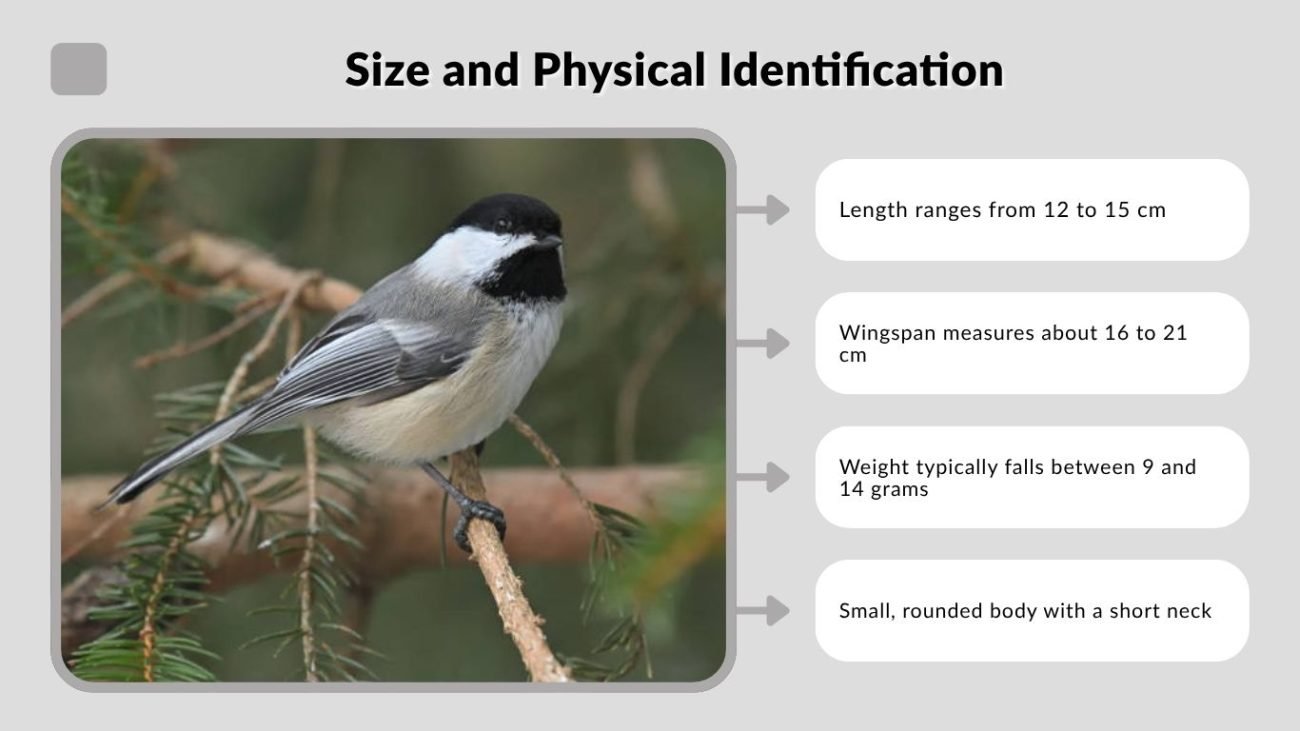
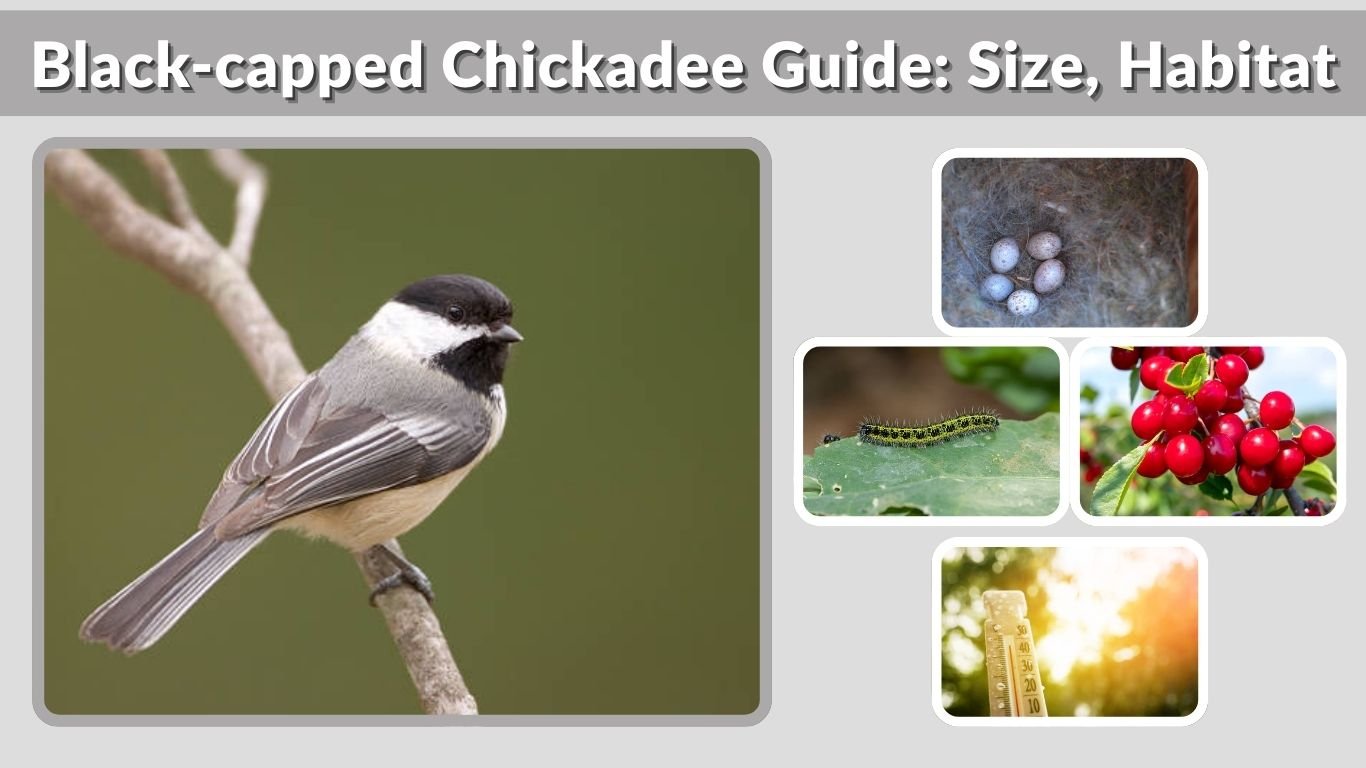
The Black-capped Chickadee (Poecile atricapillus) is a small bird with a distinctive appearance. Its compact body and contrasting colors make it easy to recognize.
Size and Measurements
- Length ranges from 12 to 15 cm (4.7–5.9 inches)
- Wingspan measures about 16 to 21 cm
- Weight typically falls between 9 and 14 grams
- Small, rounded body with a short neck
Key Identification Features
- Black cap and throat (bib)
- Bright white cheeks
- Gray back and wings
- Buff or pale gray underparts
- Short, pointed bill
Male and female Black-capped Chickadees look almost identical, making it difficult to tell them apart visually.
Color and Appearance
The Black-capped Chickadee has a clean and striking color pattern that makes it stand out despite its small size. Its most noticeable feature is the black cap on its head, which contrasts sharply with its white cheeks. The black bib under its beak adds to this bold facial pattern.
Its back and wings are soft gray, blending well with tree bark and branches. The underparts are lighter, often appearing buff or pale gray, giving the bird a gentle and balanced look.
The overall appearance is simple yet elegant, allowing for easy identification in both forests and backyard settings. Its rounded body and relatively large head give it a cute, approachable look that many bird lovers appreciate.
Habitat and Distribution
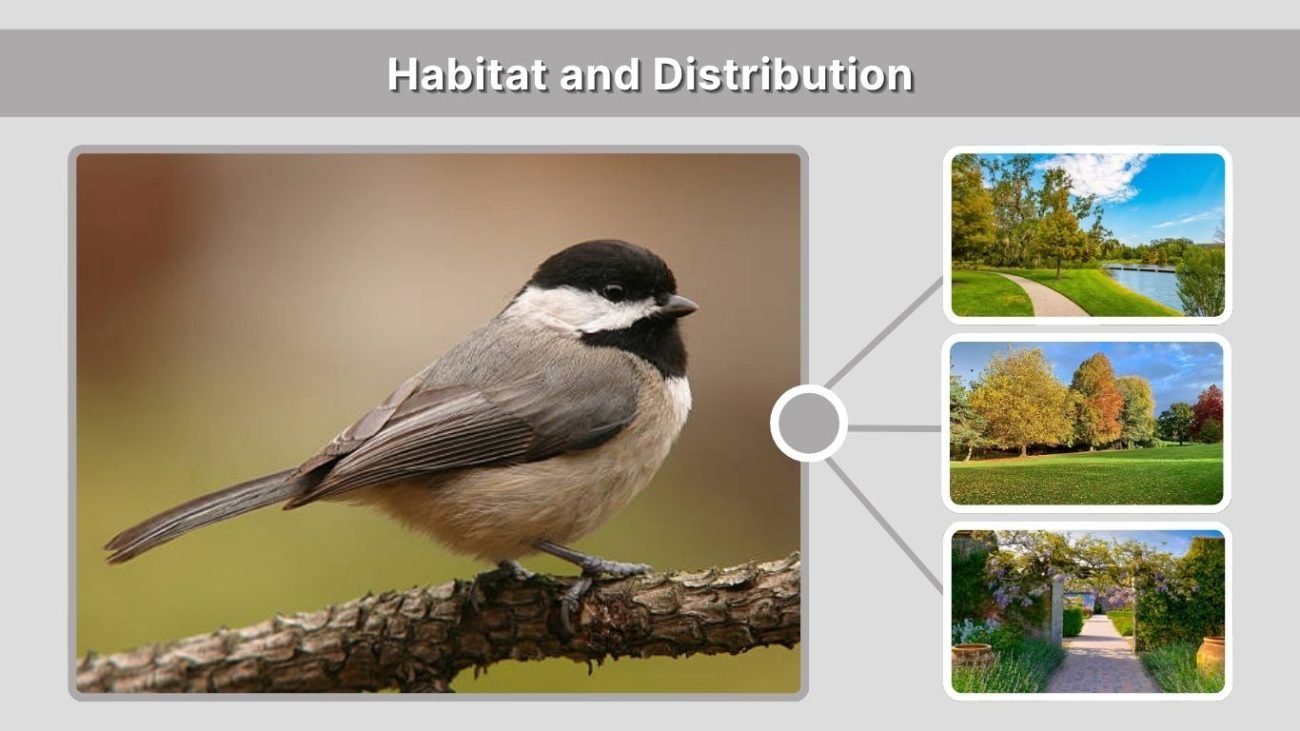
The Black-capped Chickadee is widely distributed across North America and is one of the most common birds in its range. It thrives in a variety of habitats and is highly adaptable to different environments.
This species is found throughout Canada and the northern United States. It prefers regions with cooler climates and is especially common in areas with abundant trees.
Black-capped Chickadees inhabit deciduous and mixed forests, where they find plenty of food and nesting sites. They are also commonly found in woodlands, forest edges, and shrubby areas.
One of the reasons for their popularity is their presence in urban and suburban environments. They frequently visit gardens, parks, and backyard feeders, making them easy to observe.
Unlike many bird species, the Black-capped Chickadee is non-migratory. It stays in the same area year-round, even during cold winters. Its ability to adapt to freezing temperatures is one of its most impressive traits.
Black-capped Chickadee Diet and Feeding Behavior
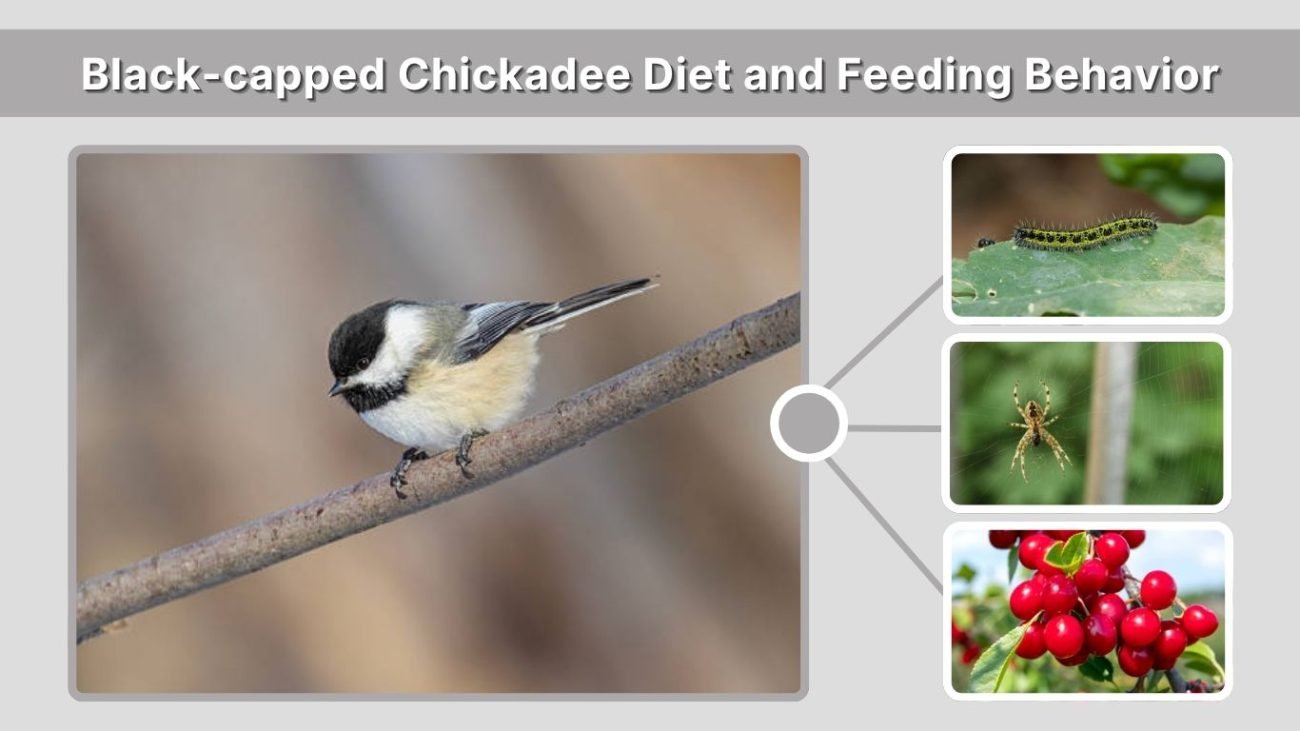
The Black-capped Chickadee has a varied diet that changes with the seasons. Its feeding habits are essential for survival, particularly during winter when food can be scarce.
What Do Black-capped Chickadees Eat?
- Insects such as caterpillars, spiders, and larvae
- Seeds and nuts
- Berries and small fruits
- Occasionally small invertebrates
Insects are especially important during the breeding season, as they provide the protein needed for growing chicks.
Feeding Behavior and Adaptations
- Often feeds while hanging upside down on branches
- Regular visitor to bird feeders
- Stores food in tree bark and crevices
- Uses memory to retrieve stored food later
The ability to store food is a key survival strategy. Chickadees hide food in many locations and can remember these spots for later use, helping them survive harsh winters.
Behavior and Characteristics
The Black-capped Chickadee is known for its energetic and curious personality. It is constantly moving, exploring branches and searching for food.
These birds are social and often travel in small flocks, especially during the non-breeding season. They may also form mixed-species flocks with other small birds, which helps improve their chances of finding food and avoiding predators.
One of the most interesting aspects of their behavior is their intelligence. Chickadees have excellent memory and problem-solving skills. They can remember hundreds of food cache locations and even adjust their behavior based on environmental conditions.
Their vocalizations are also a key part of their behavior. The famous “chick-a-dee-dee-dee” call is used for communication and can vary depending on the level of threat. More “dee” notes are often added when danger is near, acting as a warning to other birds.
In addition to this call, they produce a clear, whistling “fee-bee” song, which is commonly heard during the breeding season.
Their boldness around humans makes them a favorite among birdwatchers. In some cases, they may even take food directly from a person’s hand, showing their remarkable trust and curiosity.
Black-capped Chickadee Reproduction and Life Cycle
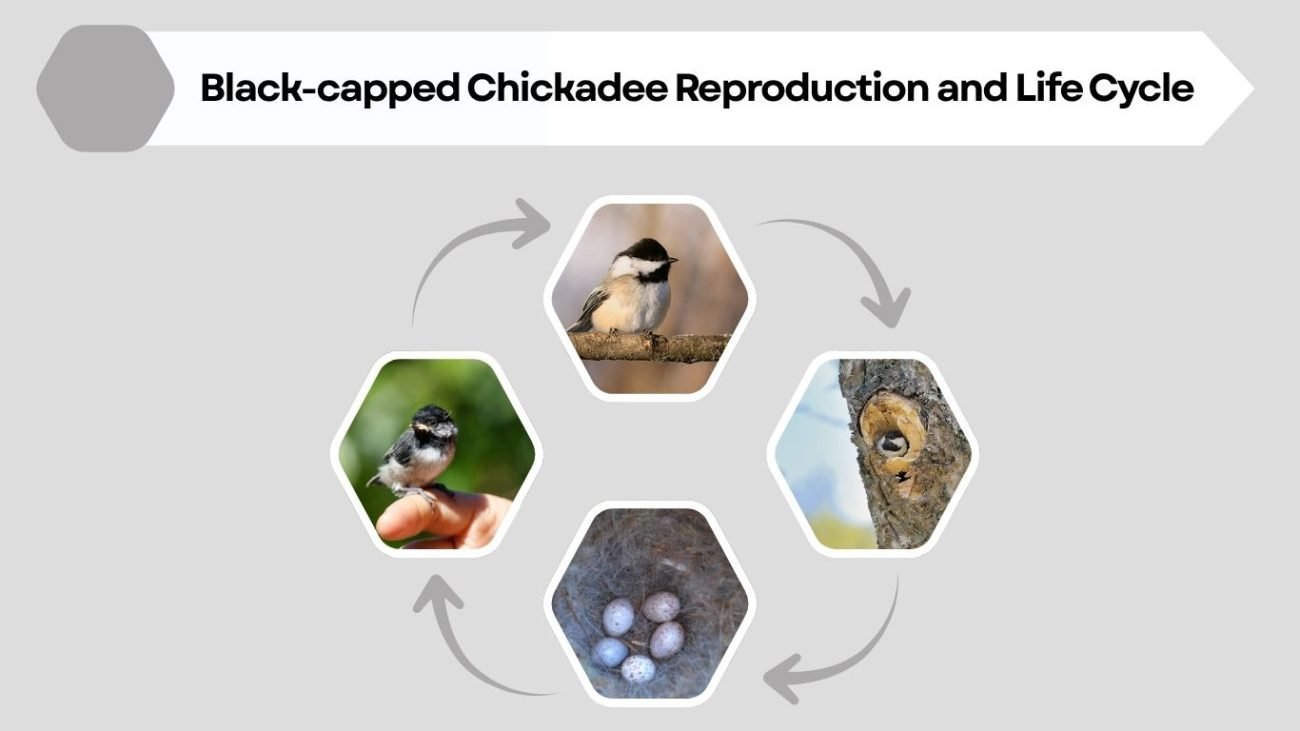
The Black-capped Chickadee follows a seasonal breeding cycle that begins in spring. This timing ensures that food, especially insects, is abundant for raising their young.
Breeding Season and Nesting
Breeding usually occurs between April and June. These birds are cavity nesters, meaning they prefer to build nests in holes rather than open branches.
They commonly use:
- Natural tree cavities
- Old woodpecker holes
- Nest boxes in gardens
The nest is built mainly by the female using soft materials such as moss, fur, feathers, and plant fibers. This soft lining helps keep the eggs warm and protected.
Eggs and Incubation
- Clutch size ranges from 6 to 8 eggs
- Eggs are white with small reddish-brown spots
- Incubation lasts about 12 to 13 days
- The female incubates while the male brings food
This cooperative behavior increases the chances of successful hatching.
Raising the Young
Once the eggs hatch, both parents take part in feeding the chicks. They primarily bring insects, which provide essential nutrients for growth.
The chicks develop quickly and usually leave the nest after about 16 days. Even after fledging, the parents may continue to feed and protect them for a short period.
How to Identify a Black-capped Chickadee in the Wild
The Black-capped Chickadee is one of the easiest birds to identify once you know its key features. Its appearance, calls, and behavior all provide helpful clues.
Visual Identification
The bird’s black cap and bib, combined with its bright white cheeks, make it highly distinctive. Its gray body and small, rounded shape also help differentiate it from other birds.
It often appears active and alert, frequently hopping between branches or clinging to tree bark while searching for food.
Vocal Identification
The Black-capped Chickadee is best known for its vocalizations.
- “Chick-a-dee-dee-dee” call
- Clear two-note “fee-bee” whistle
- Calls become more intense when predators are nearby
These sounds are not only easy to recognize but also serve as an important communication system among birds.
Similar Species Comparison
There are a few species that may look similar, but key differences help distinguish them:
- Carolina Chickadee: Very similar but found in southern regions and has slightly different calls
- Mountain Chickadee: Has a white eyebrow stripe above the eye
- Other small songbirds: Lack the bold black-and-white facial pattern
Ecological Role of the Black-capped Chickadee
The Black-capped Chickadee plays an important role in its ecosystem. Its feeding habits help maintain a balance in forest and garden environments.
By eating large numbers of insects, especially caterpillars and larvae, it helps control pest populations. This benefits both natural forests and agricultural areas.
In addition, the bird contributes to seed dispersal. Some of the seeds it stores are never retrieved, allowing them to grow into new plants.
Its presence is often an indicator of a healthy environment, as it depends on clean habitats with sufficient food and nesting sites.
Conservation Status and Threats
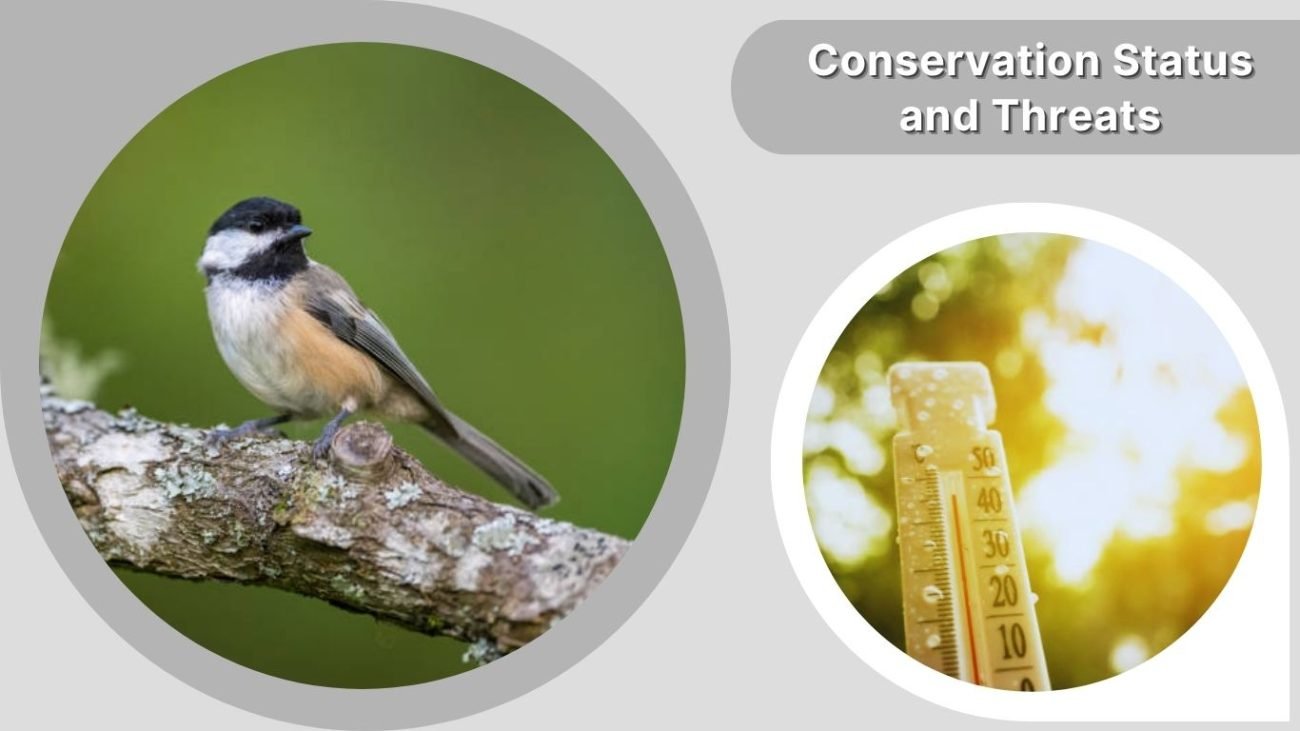
The Black-capped Chickadee is currently considered a species of low conservation concern. Its population is stable, and it remains widespread across its range.
Current Status
The species is classified as “Least Concern” by conservation organizations. It continues to thrive in many parts of North America.
Main Threats
Although stable, the species still faces some environmental challenges:
- Habitat loss due to urban expansion
- Climate change affecting food availability
- Competition for nesting cavities
- Predation by larger birds and mammals
Changes in climate may alter the timing of insect availability, which can impact breeding success.
Conservation Efforts
Several simple actions help support Black-capped Chickadee populations:
- Providing nest boxes in gardens and parks
- Preserving natural woodland habitats
- Maintaining bird feeders, especially in winter
- Protecting old trees that offer nesting cavities
These efforts help ensure the species continues to thrive.
Interesting Facts About the Black-capped Chickadee
- Can lower its body temperature at night to conserve energy
- Stores thousands of food items for winter survival
- Adjusts its call based on danger level
- Known for being one of the friendliest wild birds
- Can remember hundreds of food storage locations
FAQs
1. Where do Black-capped Chickadees live?
Black-capped Chickadees are found across Canada and the northern United States. They live in forests, woodlands, parks, and gardens. Their adaptability allows them to thrive in both natural and urban environments, making them common visitors to backyard feeders.
2. What do Black-capped Chickadees eat in winter?
In winter, they rely heavily on seeds, nuts, and stored food. They also visit bird feeders for sunflower seeds, suet, and peanuts. Their ability to cache food and remember its location helps them survive during periods when fresh food is scarce.
3. Do Black-capped Chickadees migrate?
No, Black-capped Chickadees are non-migratory birds. They stay in the same area year-round, even during harsh winters. Their physical and behavioral adaptations allow them to survive cold temperatures without needing to migrate.
4. Why do Chickadees say “chick-a-dee-dee-dee”?
The “chick-a-dee-dee-dee” call is used for communication and warning. The number of “dee” notes increases when a predator is nearby, helping alert other birds to potential danger and allowing them to respond accordingly.
5. How long do Black-capped Chickadees live?
Black-capped Chickadees typically live around 2 to 3 years in the wild, although some individuals may live longer under favorable conditions. Survival depends on factors such as food availability, weather, and predation risks.