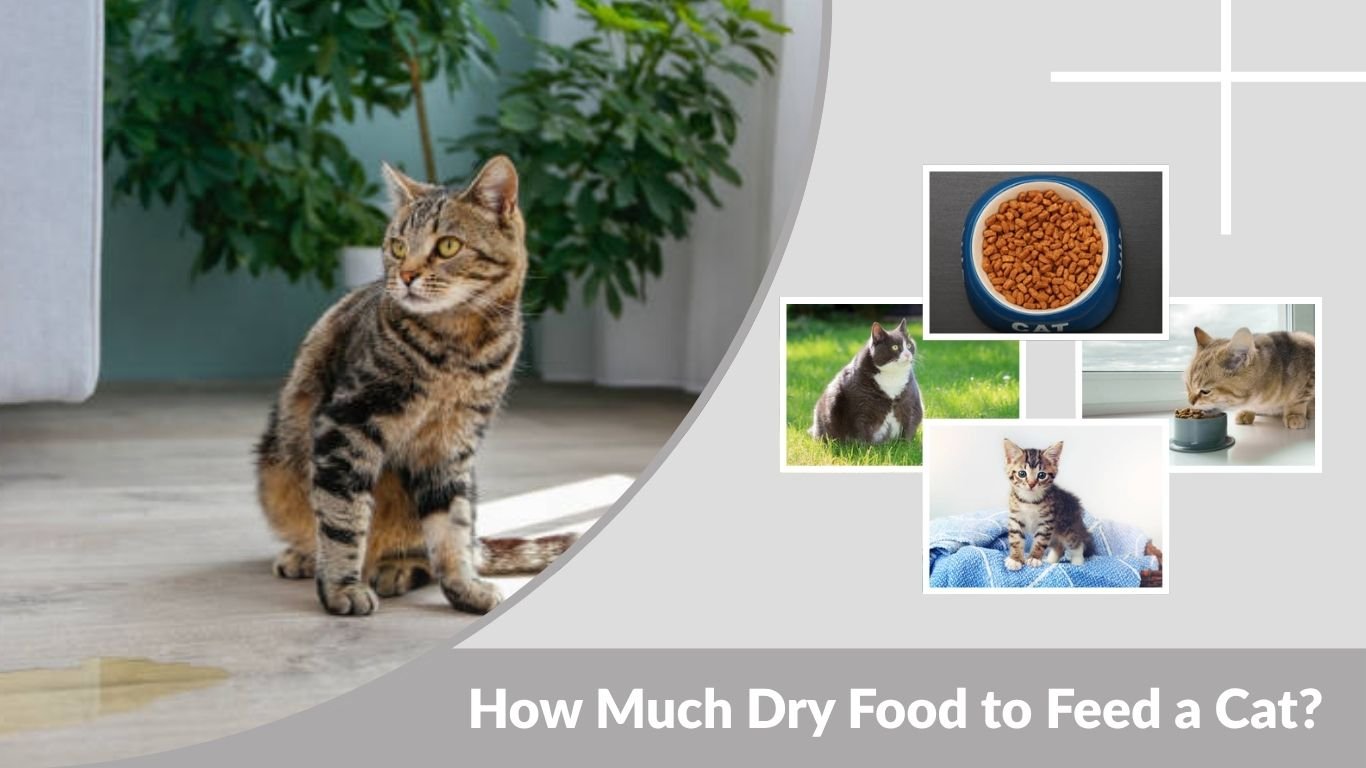
Feeding your cat the right amount of dry food is essential for maintaining a healthy weight, strong immunity, and long lifespan. Many cat owners struggle with portion sizes because feeding needs vary based on weight, age, and lifestyle. Overfeeding can lead to obesity, while underfeeding may cause nutritional deficiencies.
This guide explains exactly how much dry food to feed a cat per day, including portions based on weight, measurement in cups and grams, and practical feeding tips to help you get it right.
How Much Dry Food to Feed a Cat Per Day
The amount of dry food your cat needs daily depends on several factors, including body weight, activity level, and the calorie content of the food. On average, an adult cat requires about 20 calories per pound of body weight per day.
For most standard dry cat foods, this translates roughly to:
- ¼ to 1 cup of dry food per day
- Typically divided into two meals
Indoor cats usually need fewer calories because they are less active, while outdoor or highly active cats may require slightly more food. Always check the calorie information on the food packaging, as different brands vary significantly.
How Much Dry Food to Feed a Cat by Weight
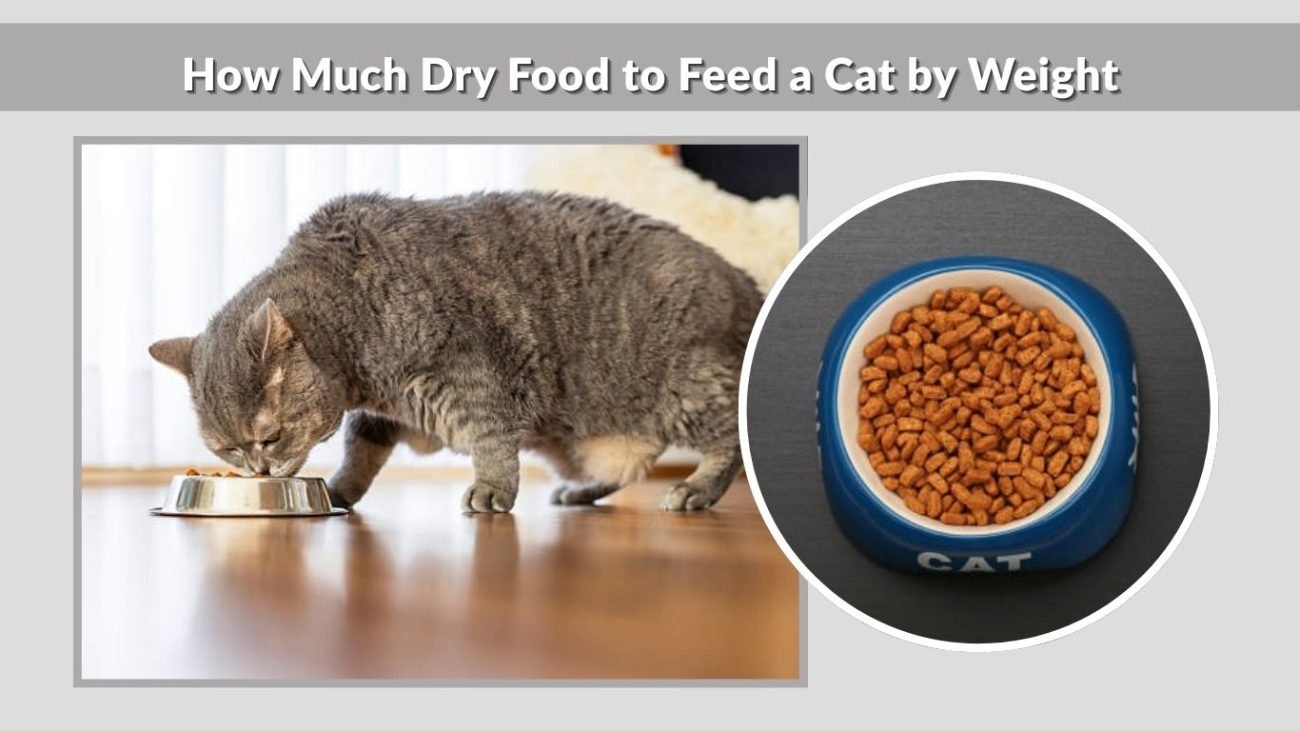
Feeding your cat based on weight is one of the most accurate ways to determine portion size. Below is a general guideline to help you estimate daily dry food intake:
- 5 lb cat: about ¼ cup per day
- 10 lb cat: about ⅓ to ½ cup per day
- 12 lb cat: about ½ cup per day
- 15 lb cat: about ½ to ¾ cup per day
- 20 lb cat: about ¾ cup per day (or less if overweight)
These values are averages and should be adjusted depending on your cat’s metabolism and the calorie density of the food. Some premium foods are more calorie-dense, meaning your cat may need smaller portions.
How Much Dry Food to Feed a 10 lb, 12 lb, 15 lb, and 20 lb Cat
10 Pound Cat
A 10 lb cat is considered average size. It typically needs around 200–250 calories per day, which equals approximately ⅓ to ½ cup of dry food, depending on the brand.
12 Pound Cat
A slightly larger cat may need a bit more energy. For a 12 lb cat, feeding about ½ cup of dry food daily is usually sufficient to maintain a healthy weight.
15 Pound Cat
For a 15 lb cat, portion size depends on whether the cat is naturally large or overweight. Generally, ½ to ¾ cup per day is appropriate, but portions should be reduced if weight gain is a concern.
20 Pound Cat
A 20 lb cat is often overweight rather than naturally large. Feeding should be carefully controlled, usually around ¾ cup or less per day, combined with a weight management plan if needed.
How Much Dry Food to Feed a Cat in Cups and Grams
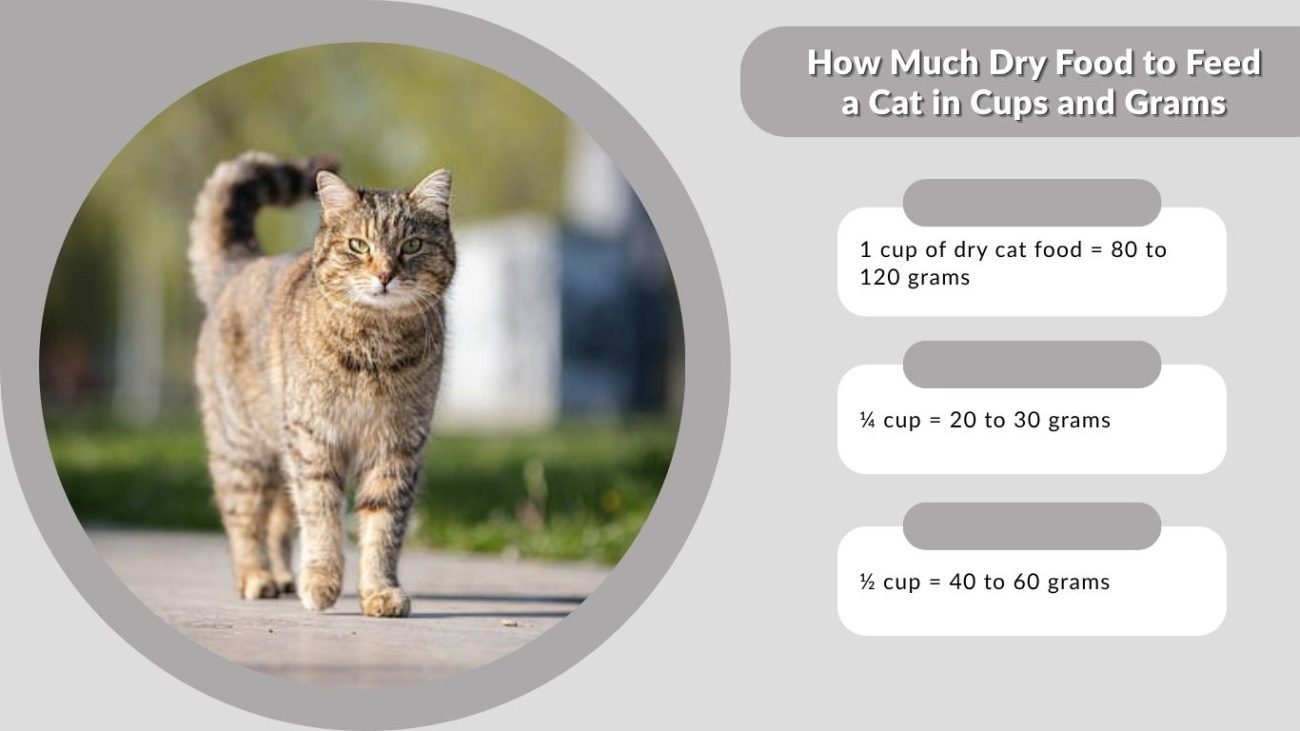
Measuring your cat’s food accurately is important to avoid overfeeding. Dry cat food is commonly measured in cups, but grams provide more precision.
On average:
- 1 cup of dry cat food = 80 to 120 grams (varies by brand)
- ¼ cup = 20 to 30 grams
- ½ cup = 40 to 60 grams
Because different brands have different kibble sizes and densities, using a kitchen scale is the most reliable way to measure portions. This ensures your cat gets consistent nutrition every day.
How Much Dry Food to Feed a Cat Per Meal
Instead of feeding your cat all at once, it’s best to divide the daily portion into smaller meals. Most adult cats do well with:
- 2 meals per day (morning and evening)
- Or 3–4 smaller meals for better digestion
Splitting meals helps prevent overeating, supports stable energy levels, and mimics a cat’s natural feeding behavior. It can also reduce begging and food-related anxiety.
Dry Cat Food Feeding Chart
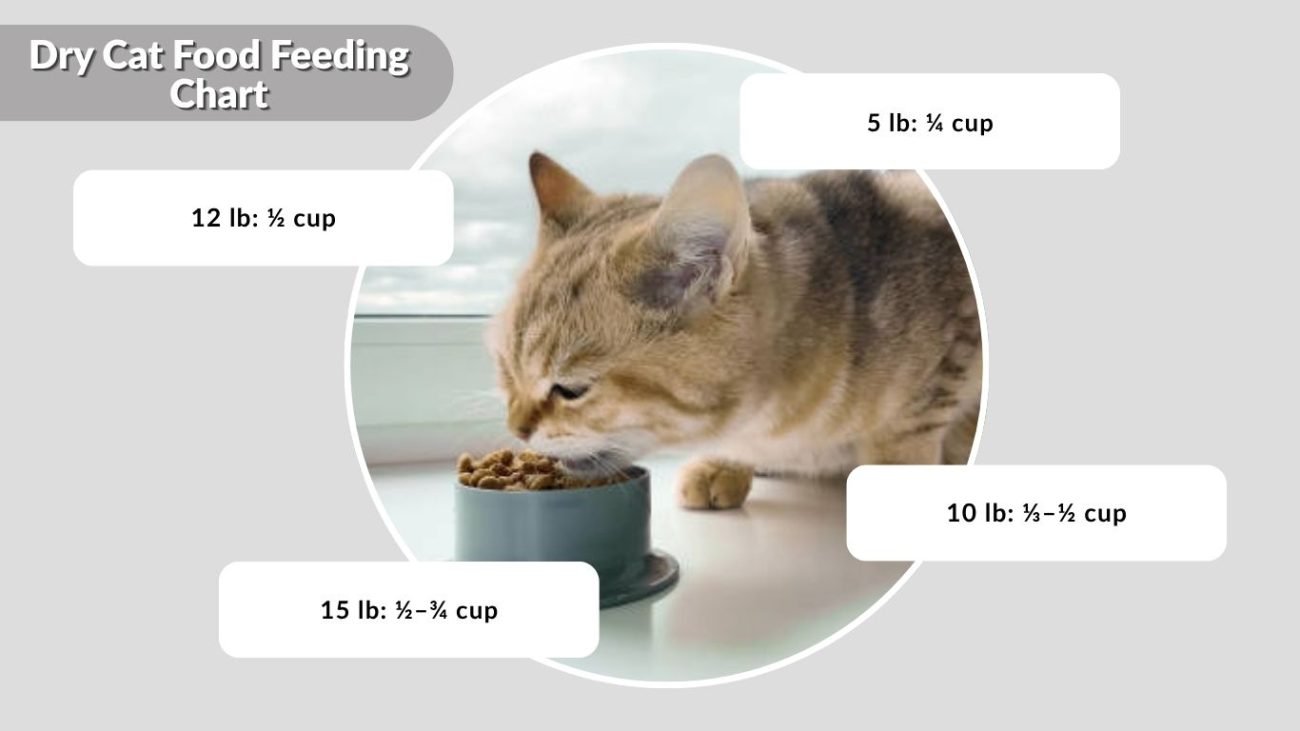
A quick reference chart can make feeding easier. Here’s a simple daily guideline based on weight:
- 5 lb: ¼ cup
- 10 lb: ⅓–½ cup
- 12 lb: ½ cup
- 15 lb: ½–¾ cup
- 20 lb: ¾ cup (adjust if overweight)
Keep in mind that this chart is a general guide. Always adjust portions based on your cat’s activity level, age, and body condition.
Dry Food Feeding Calculator (How to Estimate Portions)
If you want a more precise way to calculate your cat’s food, you can use a simple calorie-based method.
First, estimate your cat’s daily calorie needs:
- Calories needed = body weight (lb) × 20
Then:
- Check how many calories are in one cup of your cat’s food
- Divide your cat’s daily calorie needs by that number
- Adjust the portion size accordingly
For example, if your cat needs 200 calories and the food contains 400 calories per cup, your cat should eat about ½ cup per day.
Common Feeding Mistakes to Avoid
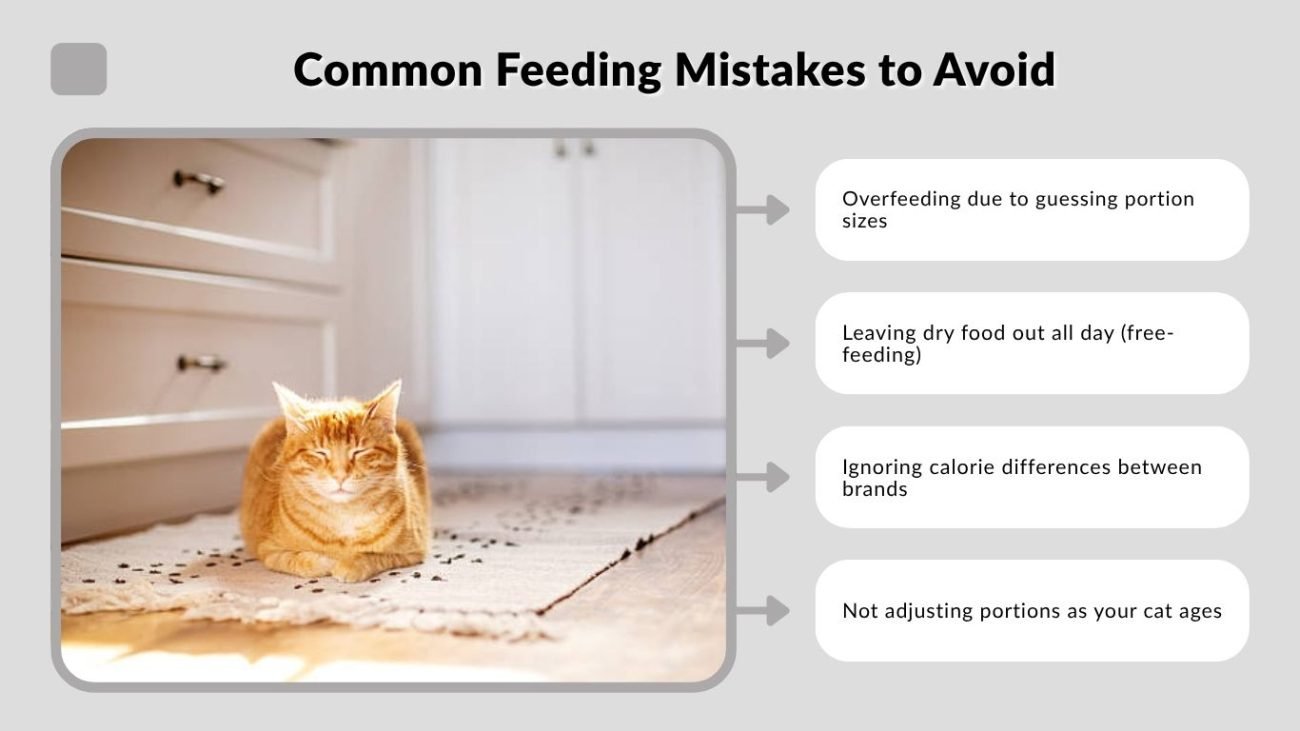
Even with guidelines, it’s easy to make mistakes when feeding your cat. Some of the most common issues include:
- Overfeeding due to guessing portion sizes
- Leaving dry food out all day (free-feeding)
- Ignoring calorie differences between brands
- Not adjusting portions as your cat ages
- Mixing foods without recalculating total calories
Avoiding these mistakes can help prevent obesity and ensure your cat stays healthy.
How Much Wet and Dry Food to Feed a Cat
Many cat owners prefer combining wet and dry food to balance convenience and nutrition. Mixed feeding can improve hydration while still providing the crunch and affordability of dry food.
A common approach is:
- Feed wet food in the morning
- Feed dry food in the evening
When combining both, you must reduce the dry food portion to avoid overfeeding. For example, if you normally feed ½ cup of dry food daily, you might reduce it to ¼ cup and add one serving of wet food.
How Much Dry and Wet Food to Feed a Cat (Ratio Guide)
Choosing the right ratio depends on your cat’s needs and lifestyle.
- 75% dry / 25% wet: Convenient and cost-effective
- 50% dry / 50% wet: Balanced nutrition and hydration
- 25% dry / 75% wet: Best for cats needing more moisture
Cats that don’t drink enough water benefit from a higher wet food ratio, while active cats may do fine with more dry food. Always adjust portions based on total daily calories, not just volume.
How Much Dry Food to Feed a Kitten
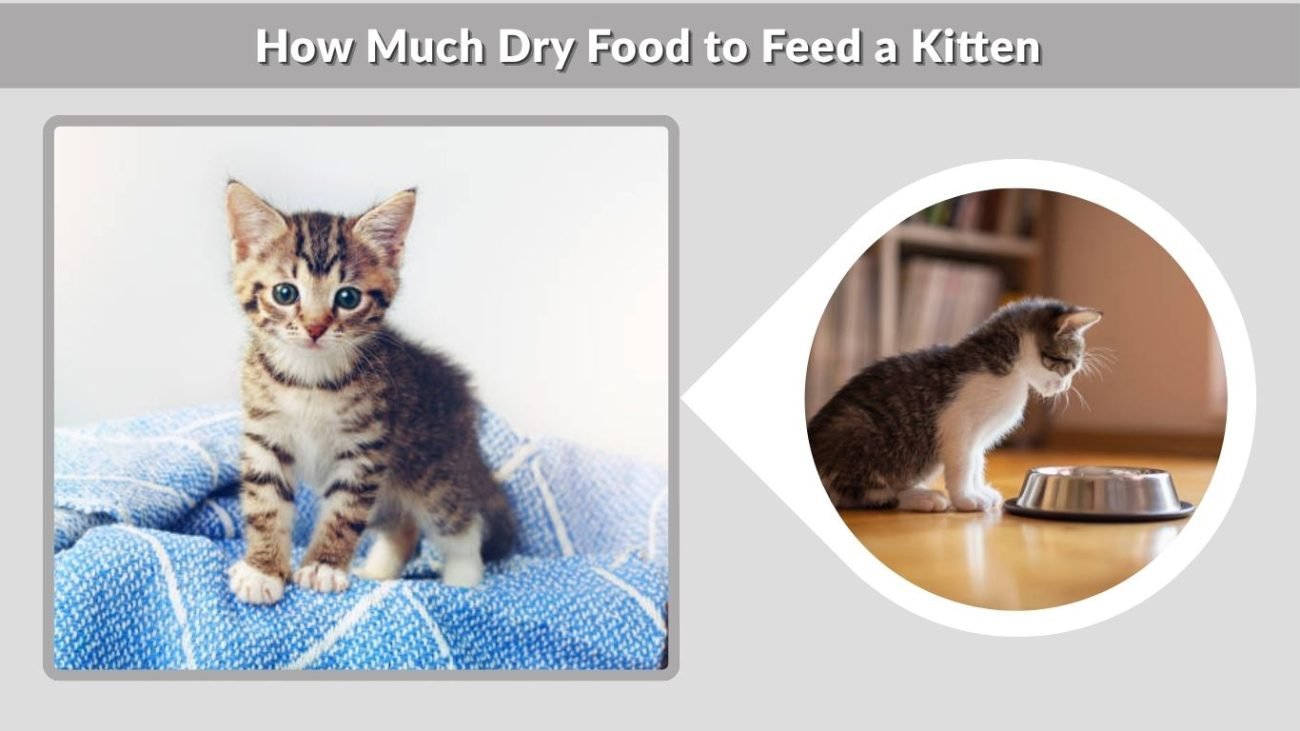
Kittens grow rapidly and need significantly more calories than adult cats. Their feeding routine is different and requires more frequent meals.
Key guidelines:
- 0–3 months: Free feeding or 4–5 small meals daily
- 3–6 months: 3–4 meals daily
- 6–12 months: Gradually reduce to 2–3 meals
Kittens typically eat 2 to 3 times more calories per pound than adult cats. Choose kitten-specific dry food, as it contains higher protein and essential nutrients for growth.
How Much Dry Food to Feed a Senior Cat
As cats age, their metabolism slows down, and their activity level often decreases. This means they usually need fewer calories but still require high-quality nutrition.
Feeding tips for senior cats:
- Reduce portion size slightly if weight gain occurs
- Choose nutrient-dense, easy-to-digest food
- Monitor appetite and weight regularly
Some senior cats may lose weight instead of gaining it, so adjustments should always be based on body condition rather than age alone.
How Much Dry Food to Feed an Overweight Cat
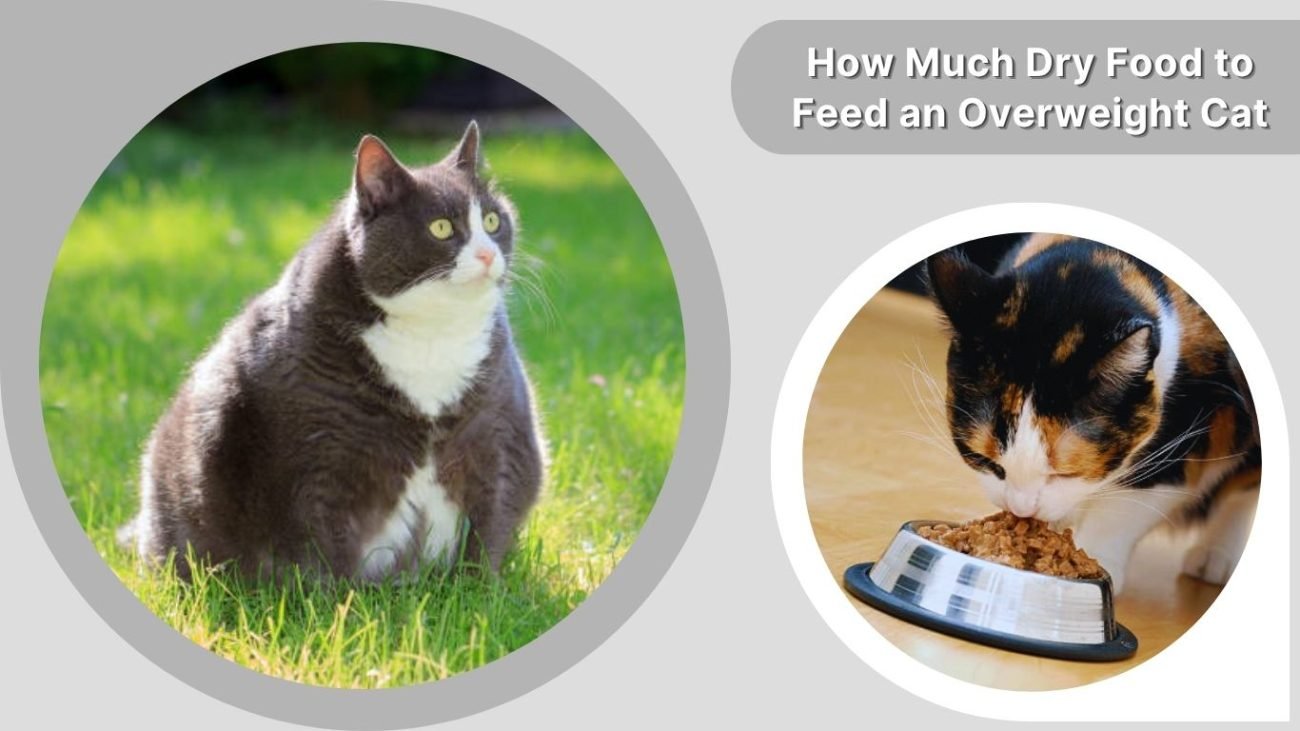
If your cat is overweight, portion control becomes critical. Simply reducing food too quickly can be harmful, so gradual changes are best.
Effective approach:
- Reduce daily intake by 10–20%
- Switch to high-protein, low-calorie food
- Avoid free-feeding
Regular monitoring is important. Weight loss should be slow and steady to prevent health issues.
Dry Food and Wet Food Combination Chart
This table helps you balance dry and wet food while keeping calories in check.
| Cat Weight | Dry Only (per day) | Mixed Feeding Option | Wet Food Addition |
| 5 lb | ¼ cup | ⅛ cup dry | + 1 small wet portion |
| 10 lb | ⅓–½ cup | ¼ cup dry | + 1 wet pouch/can |
| 12 lb | ½ cup | ¼–⅓ cup dry | + 1 wet portion |
| 15 lb | ½–¾ cup | ⅓ cup dry | + 1–2 wet portions |
| 20 lb | ¾ cup | ⅓–½ cup dry | + 1–2 wet portions |
Note: Always adjust based on calorie content listed on the food packaging.
Feeding Guide by Life Stage and Condition
This quick-reference table summarizes feeding adjustments based on your cat’s situation.
| Category | Feeding Approach | Key Notes |
| Adult Cat | ¼–1 cup daily | Based on weight and activity |
| Kitten | Higher portions | Needs 2–3× more calories |
| Senior Cat | Slightly reduced | Focus on nutrient density |
| Overweight Cat | Reduced portions | Gradual calorie control |
| Active Cat | Increased portions | Burns more calories |
Tips for Feeding Your Cat Properly
Feeding your cat correctly is not just about quantity—it’s also about consistency and monitoring.
- Stick to a regular feeding schedule
- Measure food using a cup or scale
- Provide fresh water at all times
- Monitor your cat’s weight monthly
- Adjust portions when needed
Small adjustments over time can make a big difference in your cat’s overall health.
FAQs
How much dry food should I feed my cat daily?
Most adult cats need between ¼ and 1 cup of dry food per day, depending on their weight and activity level. The exact amount also depends on the calorie content of the food, so always check the label and adjust accordingly.
Is 1 cup of dry food too much for a cat?
For many cats, 1 cup per day is too much unless they are very active or large. Feeding too much dry food can lead to weight gain, so it’s better to follow weight-based guidelines and monitor your cat’s body condition.
Can I feed my cat only dry food?
Yes, cats can survive on dry food alone, but they must have constant access to fresh water. Many experts recommend mixing wet food to improve hydration and support urinary health.
How often should I feed my cat dry food?
Most cats do well with two meals per day. Some cats benefit from smaller, more frequent meals, which can help with digestion and prevent overeating.
How do I know if I’m feeding my cat the right amount?
Check your cat’s weight and body shape regularly. If your cat is gaining weight, reduce portions slightly. If losing weight, increase food gradually while monitoring their overall health and energy levels.