The bank swallow (Riparia riparia), also known as the sand martin in Europe, is one of the smallest and most widespread swallow species in the world. These agile birds are known for their fast flight and unique nesting behavior in sandy banks. Often seen flying in groups near water, bank swallows play an important role in controlling insect populations. This guide covers their identification, habitat, diet, and behavior to help you better understand this fascinating bird.
What Is a Bank Swallow?
The bank swallow is a small migratory bird belonging to the swallow family. It is widely distributed across North America, Europe, and Asia, breeding in the northern regions and migrating south during winter. Unlike many birds, it nests in burrows dug into sandy or earthy banks, often forming large colonies. Its scientific name, Riparia riparia, reflects its strong association with riverbanks and similar habitats.
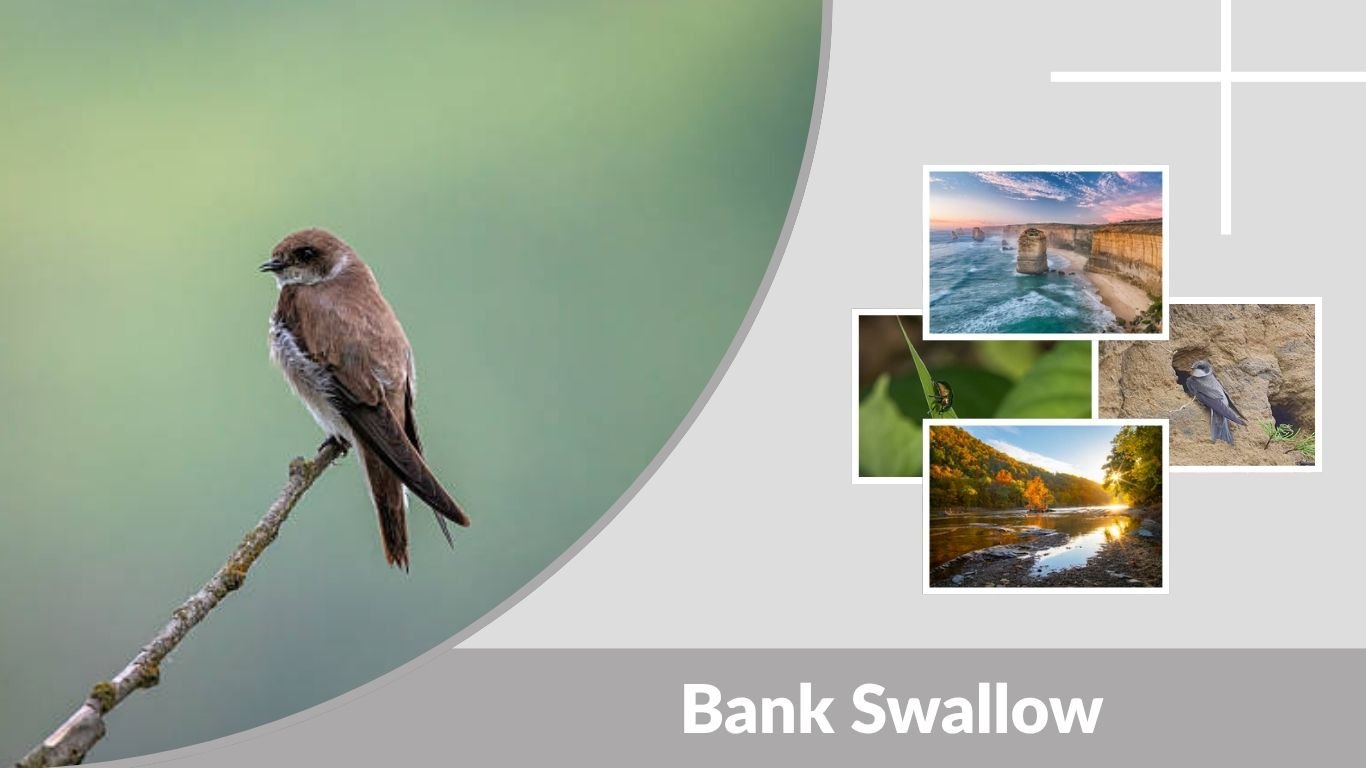
Identification Guide: How to Recognize a Bank Swallow
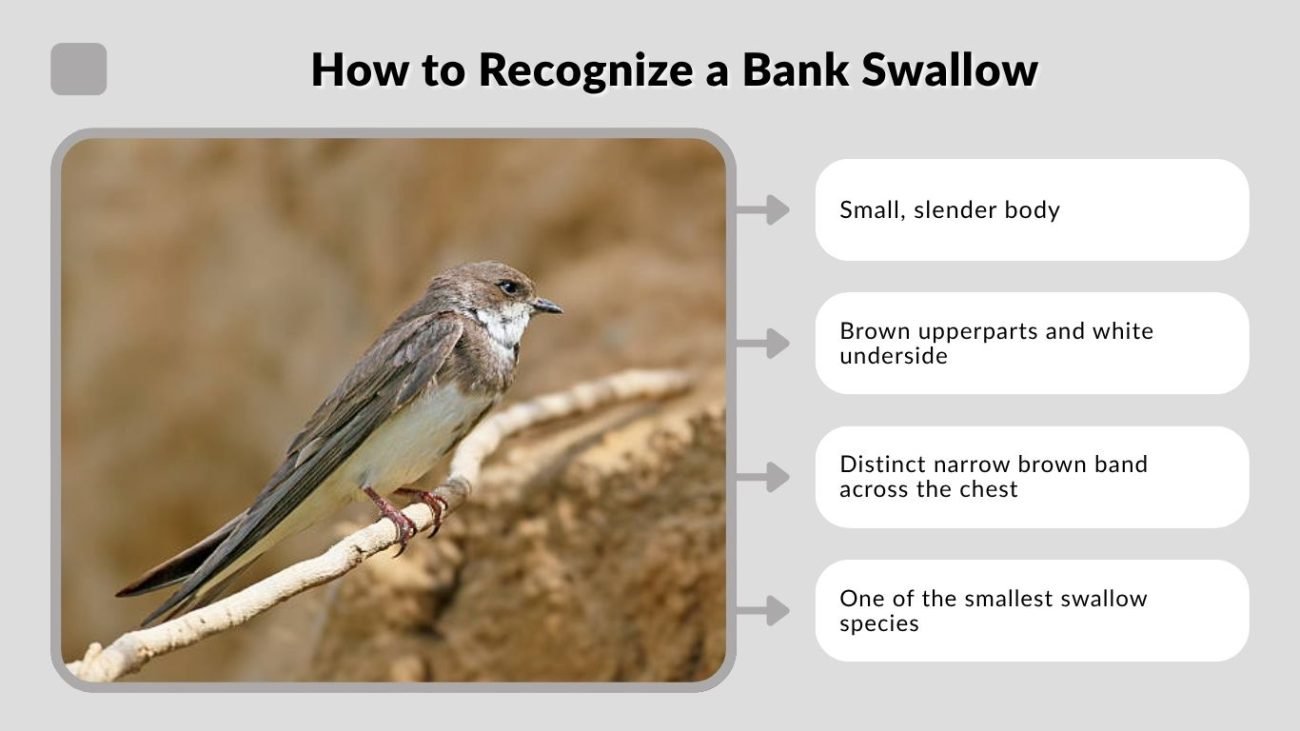
This section helps you identify a bank swallow in the wild by focusing on its size, markings, and flight behavior.
Physical Characteristics
- Small, slender body
- Brown upperparts and white underside
- Distinct narrow brown band across the chest
Size and Appearance
- One of the smallest swallow species
- Short, slightly forked tail
- Narrow wings suited for agile flight
Bank Swallow in Flight
- Fast and erratic flight pattern
- Shallow wingbeats
- Often seen flying low over water
Bank Swallow vs Other Swallows
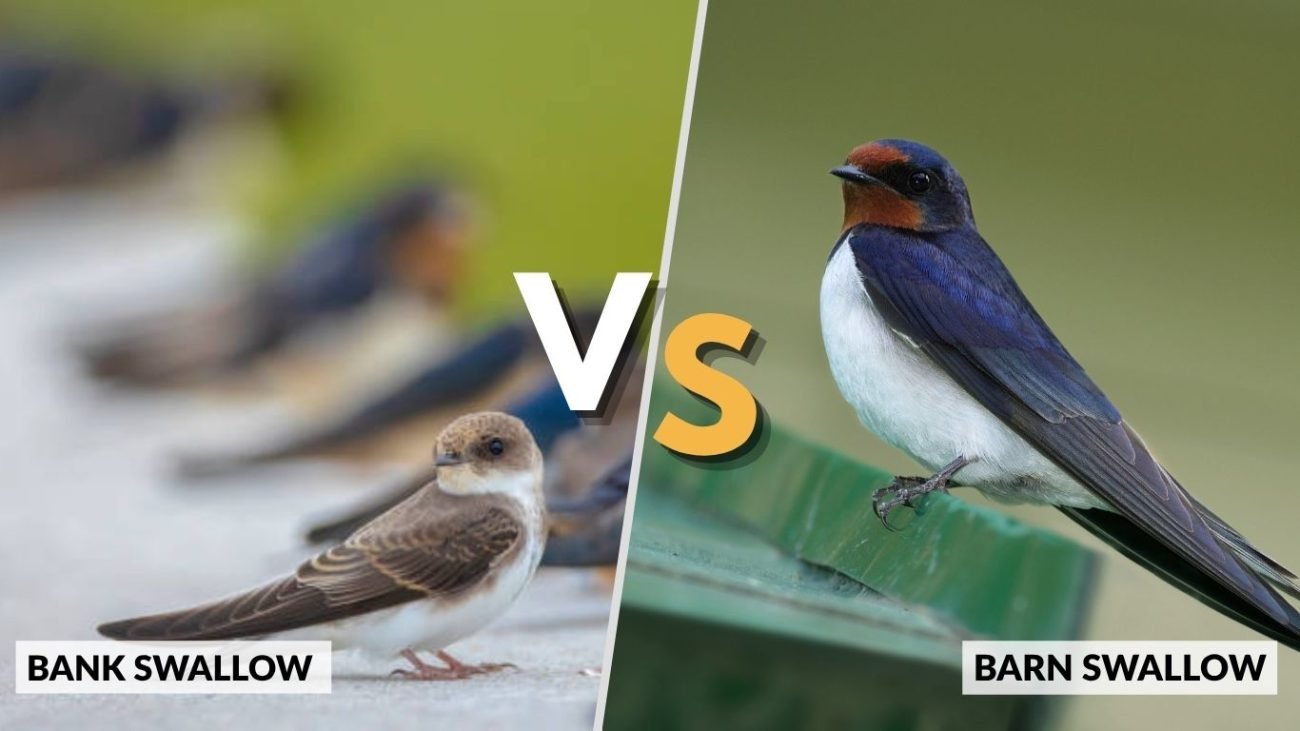
Many swallow species look similar, but a few key differences can help you tell them apart. Observing color patterns and tail shape is usually the easiest way to identify each species correctly.
Bank Swallow vs Barn Swallow
- Barn swallow has a deeply forked tail
- Reddish throat and glossy blue back
- Bank swallow has a chest band and plain brown back
Bank Swallow vs Tree Swallow
- Tree swallow has iridescent blue-green upperparts
- Cleaner white underside without chest band
- Bank swallow appears more muted in color
Bank Swallow vs Northern Rough-Winged Swallow
- Rough-winged swallow lacks a chest band
- More solitary behavior
- Bank swallow is more social and forms colonies
Bank Swallow Habitat
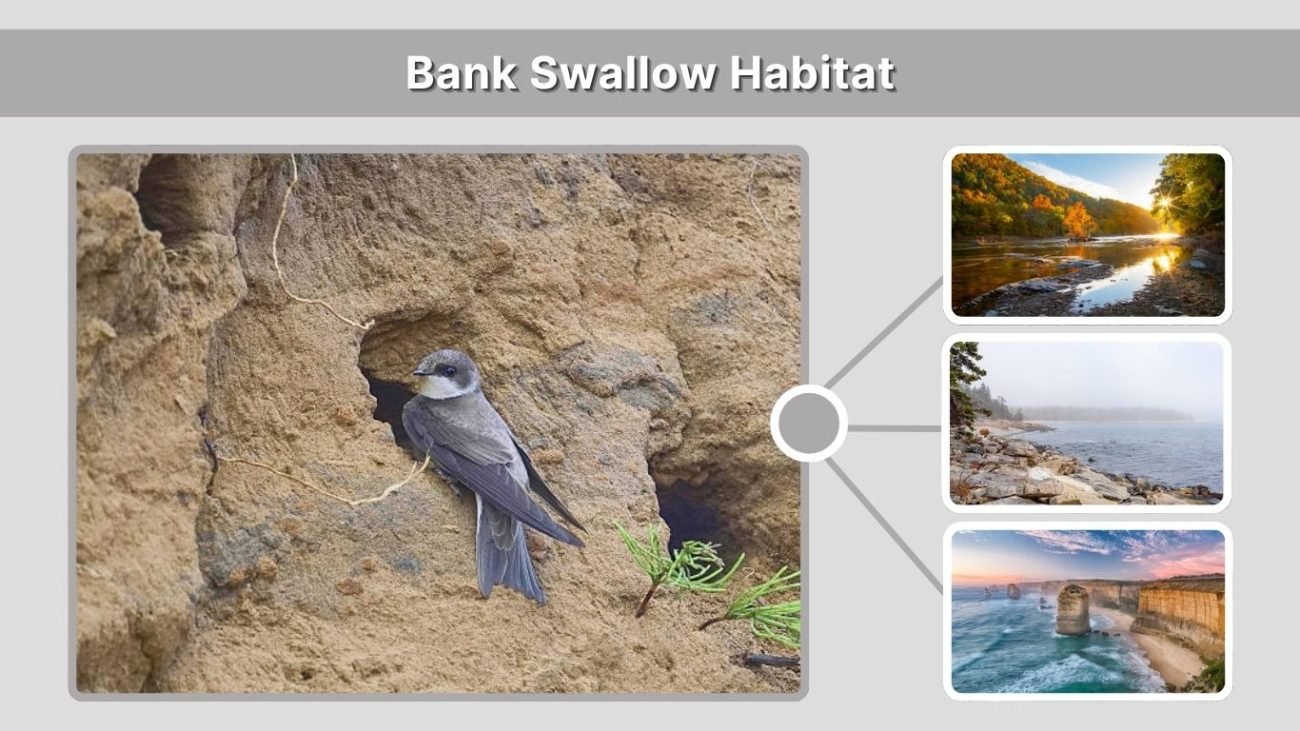
The bank swallow prefers open areas close to water, where it can easily find food and suitable nesting sites. Its habitat is closely tied to sandy or loose soil formations that allow it to dig nesting burrows. Rivers, lakeshores, and coastal cliffs are ideal environments, but it can also adapt to man-made sites like sand pits and gravel quarries.
Bank Swallow Nesting Behavior
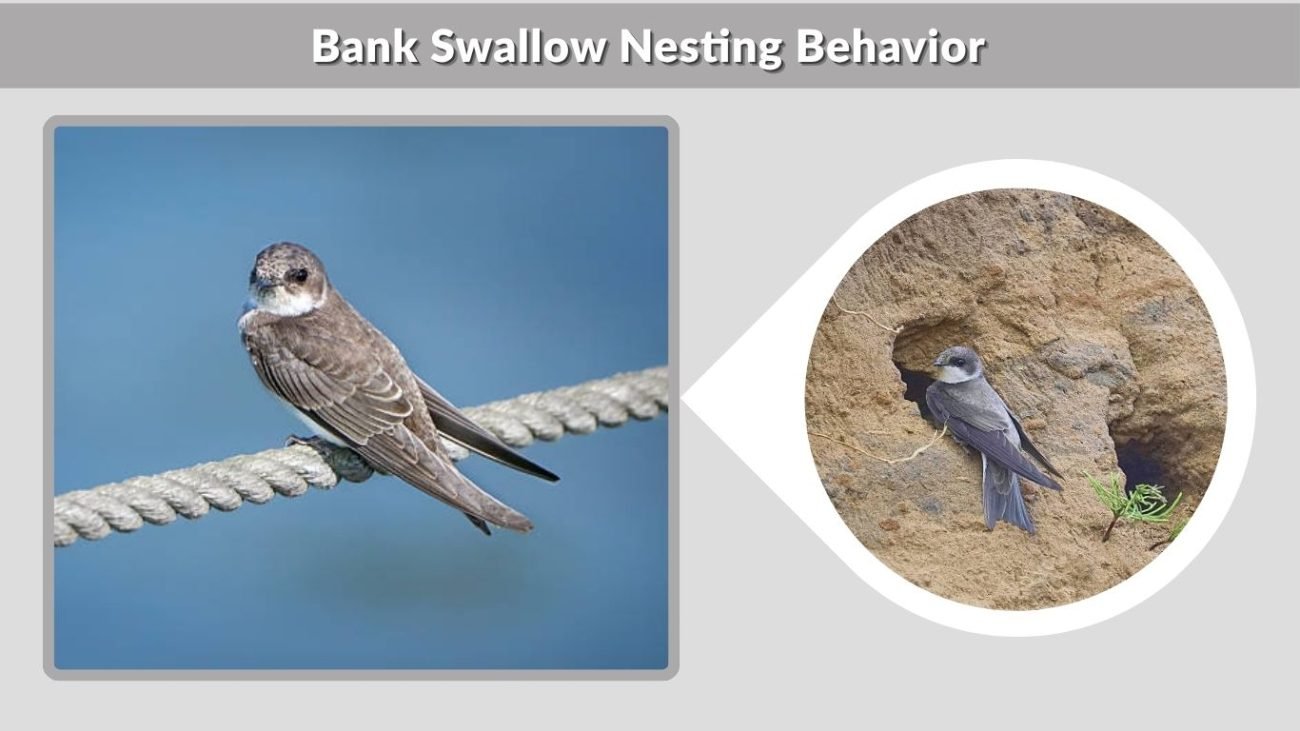
The nesting habits of the bank swallow are among the most unique features of this species. Unlike birds that build nests in trees, bank swallows dig tunnels into vertical surfaces, creating safe spaces for their eggs and chicks.
Nest Construction
- Burrows dug into sand or soil banks
- Tunnels can be several feet long
- Nest chamber lined with grass and feathers
Nesting Season
- Typically from spring to early summer
- Large colonies with dozens or hundreds of nests
- Both parents involved in nesting
Bank Swallow Diet
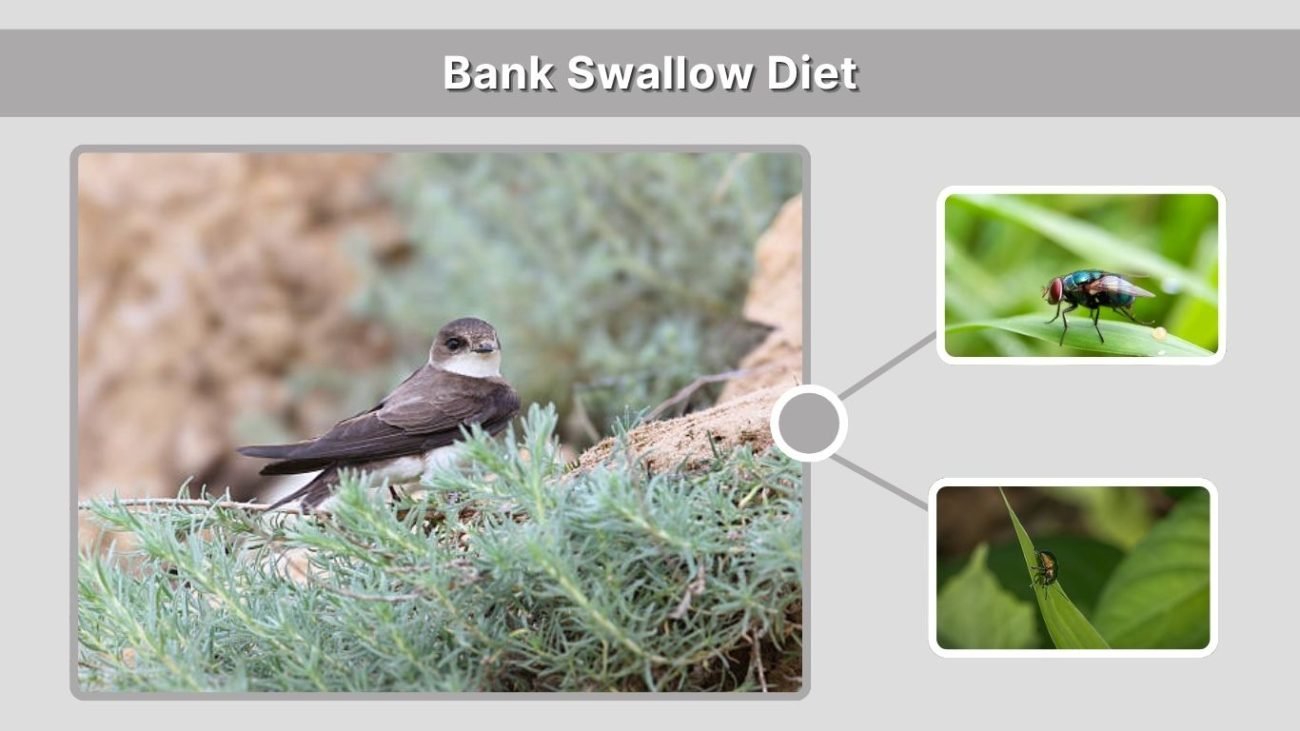
Understanding the diet of the bank swallow helps explain its constant activity and preference for open habitats near water.
Main Food Sources
- Flying insects such as flies and mosquitoes
- Small beetles and other airborne insects
- Occasional aquatic insects
Feeding Behavior
- Catches prey mid-air while flying
- Feeds in groups, especially near water
- Active during daylight hours
Bank Swallow Sounds and Calls
The bank swallow produces soft, high-pitched chirping and twittering sounds. These calls are not as loud or complex as those of some other birds but are important for communication within colonies. You will often hear these gentle sounds when groups are flying together or gathering near nesting sites.
Bank Swallow Range and Migration
The bank swallow is a long-distance migratory bird with a wide global distribution. It breeds across North America, Europe, and parts of Asia during the warmer months. As temperatures drop, it migrates south to regions in South America and Africa. These seasonal movements allow the species to follow food availability and suitable breeding conditions throughout the year.
Behavior and Social Structure
Bank swallows are highly social birds that are rarely seen alone. They form large colonies, especially during the breeding season, where hundreds of individuals may nest close together. This group living provides protection from predators and improves communication. Their constant movement and group feeding behavior make them a lively presence near water bodies.
Juvenile and Adult Bank Swallows
Young bank swallows closely resemble adults but tend to have duller coloring and less defined markings. After hatching, chicks grow quickly and are ready to leave the nest within a few weeks. Juveniles learn to fly and hunt insects soon after fledging, adapting rapidly to life in the air alongside adult birds.
Conservation Status
The bank swallow is not globally endangered, but populations have declined in some areas. Habitat loss is a major concern, especially due to changes in riverbanks and reduced availability of suitable nesting sites. Conservation efforts focus on protecting natural habitats and maintaining sandy banks where these birds can safely breed.
Interesting Facts About Bank Swallows
This section highlights some quick and fascinating details about this unique bird species.
Quick Facts
- One of the smallest swallow species
- Nests in underground burrows instead of trees
- Migrates thousands of miles each year
- Plays a key role in controlling insect populations
FAQs
What do bank swallows eat?
Bank swallows mainly feed on flying insects such as flies, mosquitoes, and small beetles. They catch their prey in mid-air while flying, which makes them effective at controlling insect populations, especially near water bodies.
Where do bank swallows build their nests?
Bank swallows build their nests in burrows dug into sandy or soft soil banks along rivers, lakes, and cliffs. These tunnels can be several feet long and are usually part of large nesting colonies.
What is the difference between a bank swallow and a barn swallow?
Bank swallows are smaller with a brown chest band and shorter tail, while barn swallows have a deeply forked tail and a reddish throat. Barn swallows are also more colorful compared to the plain brown and white bank swallow.
Are bank swallows migratory birds?
Yes, bank swallows are migratory. They breed in northern regions like North America and Europe and migrate to South America or Africa during the winter months in search of warmer climates and food.
What does a bank swallow sound like?
Bank swallows produce soft, high-pitched chirping and twittering sounds. These calls are mainly used for communication within colonies and are often heard when groups are flying or gathering near nesting sites.