The spotted dove is a familiar bird in many parts of the world, often seen perched on wires, walking calmly on the ground, or heard through its soft cooing call. Many people search for this bird to identify it, learn about its habits, or understand its behavior.
This guide covers everything you need to know about the spotted dove—from its appearance and habitat to its diet and unique characteristics. Whether you’re a birdwatcher or just curious about a dove you spotted near your home, this article will help you understand it better.
What Is a Spotted Dove?
The spotted dove (Spilopelia chinensis) is a medium-sized bird known for the distinctive spotted pattern on its neck. It belongs to the dove and pigeon family and is widely distributed across Asia, with populations introduced in other parts of the world.
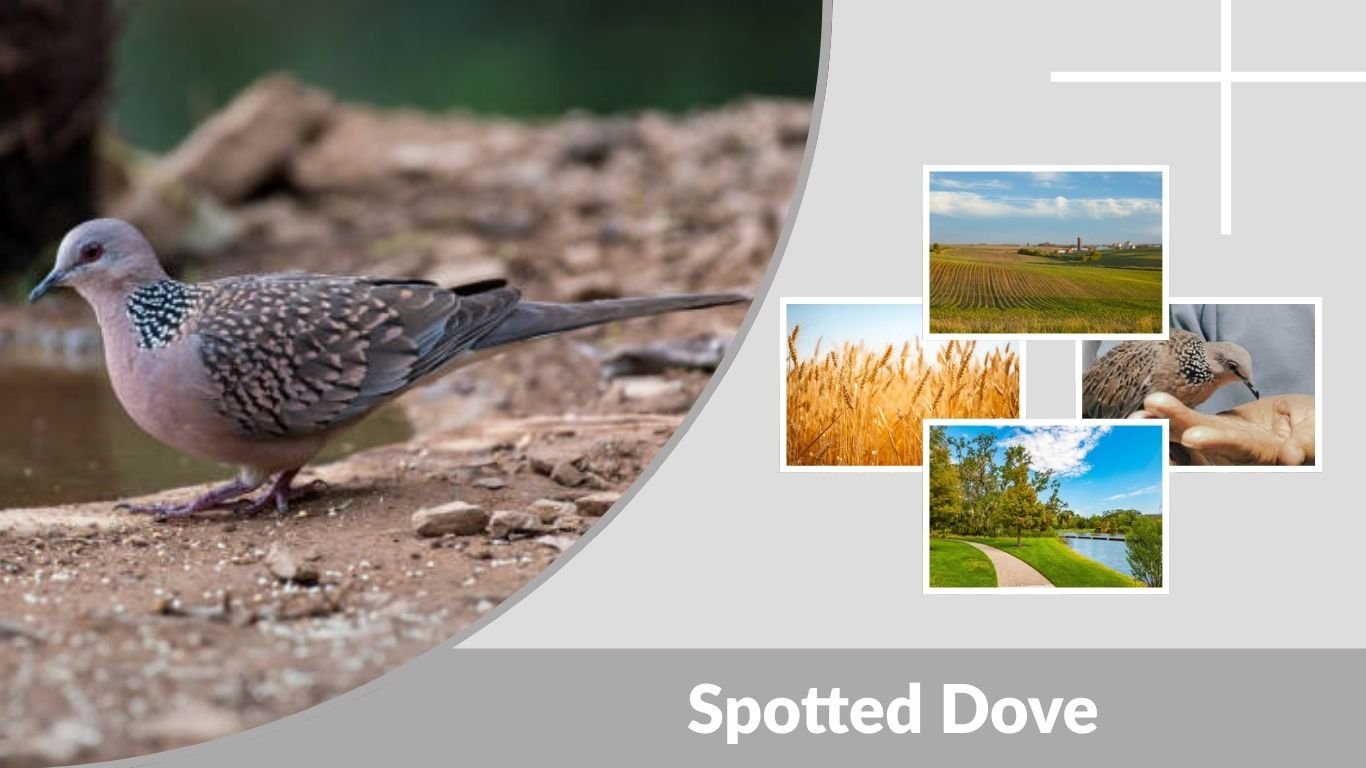
It gets its name from the black patch on the back of its neck, which is covered in small white spots. This feature makes it easy to distinguish from other similar birds.
Spotted doves are commonly found in both urban and rural environments. They are adaptable birds that thrive in gardens, parks, farmland, and even busy city areas. Their calm nature and gentle movements make them one of the most recognizable doves.
How to Identify a Spotted Dove
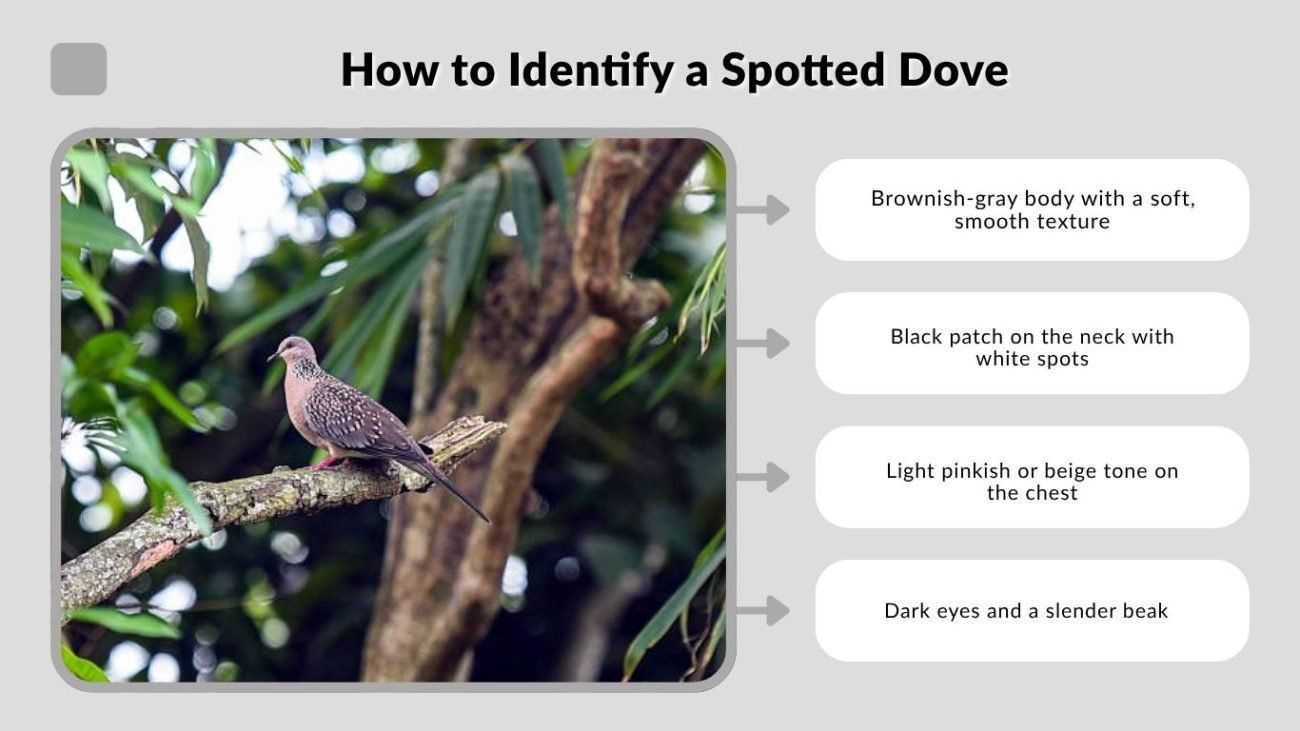
Identifying a spotted dove is relatively easy once you know what to look for. While they may appear similar to other doves at first glance, a few key features set them apart.
Appearance & Markings
The most noticeable feature of the spotted dove is the spotted collar on its neck.
- Brownish-gray body with a soft, smooth texture
- Black patch on the neck with white spots
- Light pinkish or beige tone on the chest
- Dark eyes and a slender beak
This spotted neck pattern is the clearest indicator that you are looking at a spotted dove.
Size and Shape
Spotted doves have a slim and elegant body structure.
- Medium-sized bird, larger than small doves but smaller than pigeons
- Long, slightly rounded tail
- Narrow wings that help in smooth, steady flight
Their posture is usually relaxed, and they often walk on the ground while searching for food.
Juvenile vs Adult
Young spotted doves look slightly different from adults.
- Juveniles lack the fully developed spotted neck pattern
- Their colors appear duller and less defined
- Spots become more visible as they mature
This can sometimes make it harder to identify younger birds correctly.
Male vs Female Spotted Dove
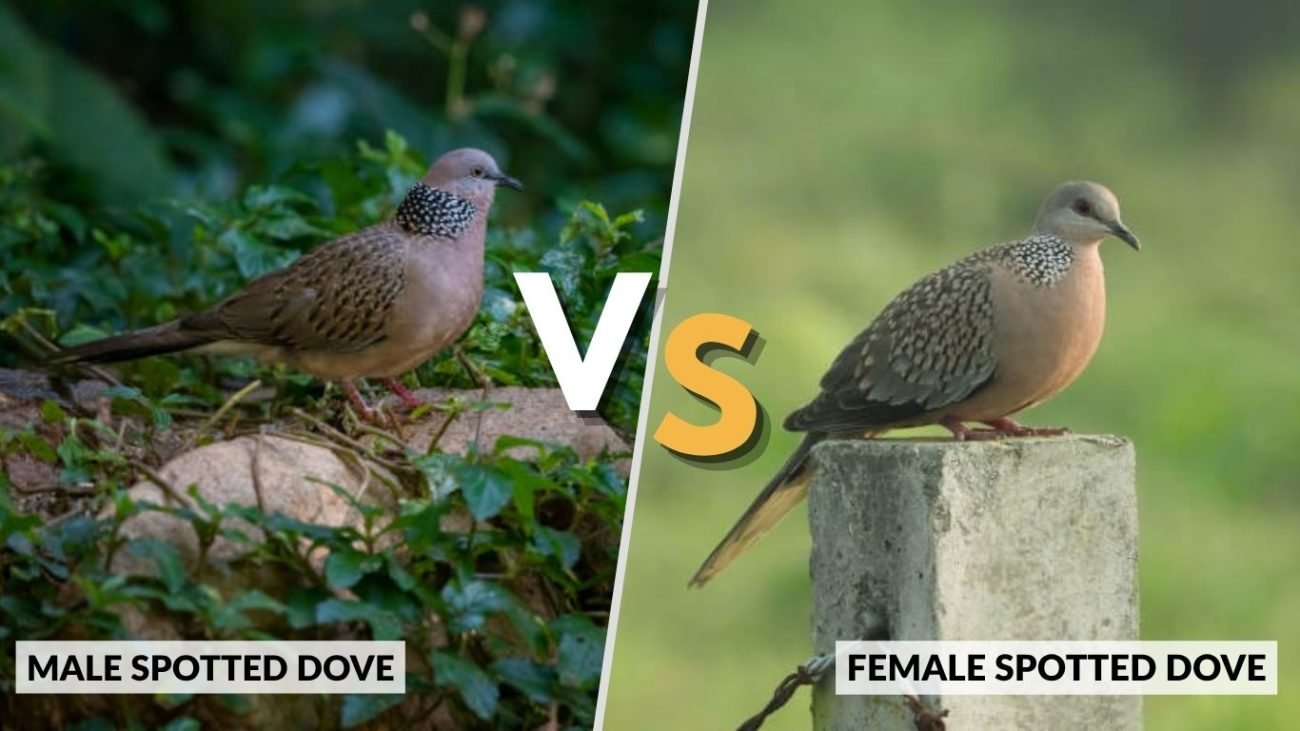
Many people wonder about the difference between male and female spotted doves. Unlike some bird species, the differences are very subtle.
In most cases, males and females look almost identical. Both share the same color patterns, body shape, and spotted neck marking. This makes visual identification difficult, even for experienced birdwatchers.
However, there are a few slight distinctions. Males may be slightly larger and sometimes more active, especially during the breeding season. They are also more likely to produce frequent cooing sounds as part of courtship behavior.
Females, on the other hand, tend to be quieter and may spend more time nesting once eggs are laid. Overall, behavior is often a better clue than physical appearance when trying to tell them apart.
Spotted Dove Habitat and Distribution
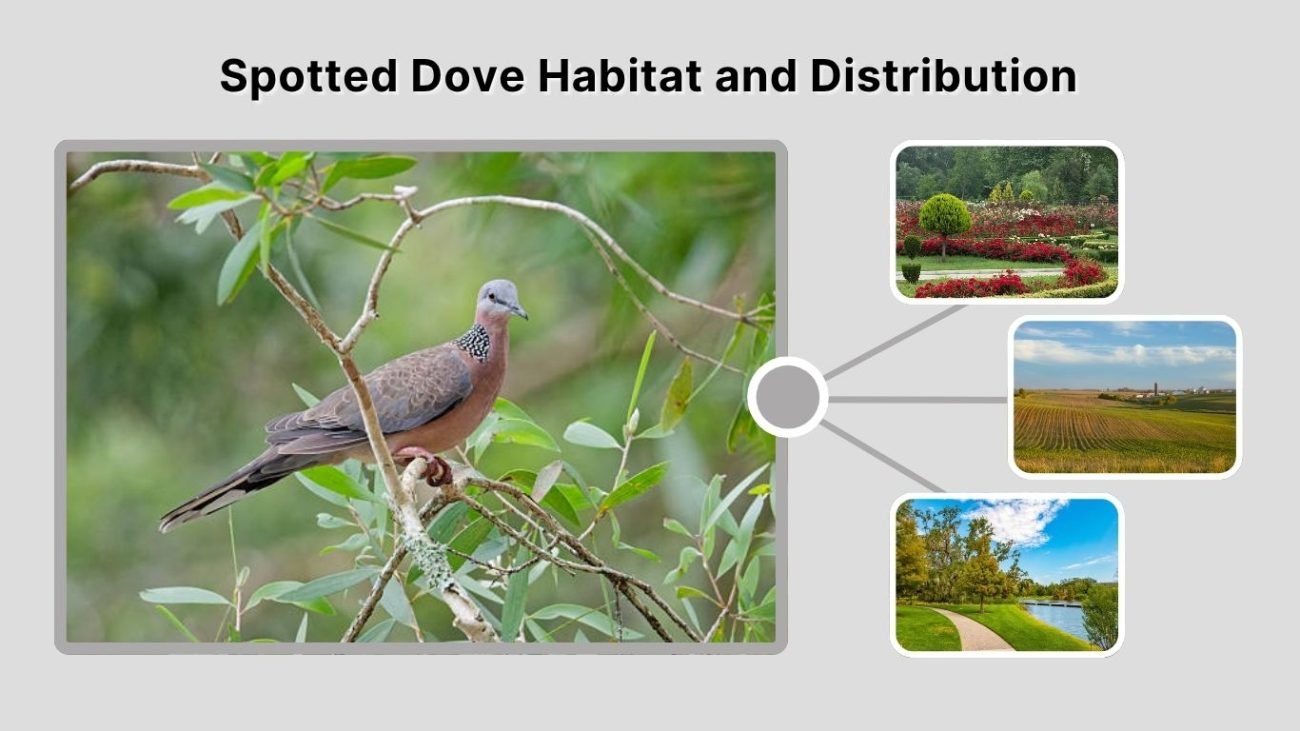
Spotted doves are highly adaptable birds and can live in a wide range of environments. Originally native to Asia, they have spread to several other regions over time.
They are commonly found in countries like India, China, and Southeast Asia. Over the years, they have also been introduced to places such as Australia, Hawaii, and parts of the United States, where they have successfully established populations.
These birds prefer open spaces with nearby trees or structures for resting and nesting. You’ll often see them in gardens, farmland, parks, and suburban neighborhoods. They are also comfortable around humans, which is why they are frequently spotted in cities.
Inside their habitat, spotted doves usually stay close to the ground, where they search for food. They also choose safe, elevated spots like tree branches or rooftops to rest and observe their surroundings.
Spotted Dove Behavior and Lifestyle
Spotted doves are known for their calm and gentle behavior. They are not aggressive birds and usually avoid conflict, making them easy to observe in natural settings.
They spend a large part of their day foraging on the ground, slowly walking and pecking at seeds. Their movement is steady and relaxed, unlike more energetic bird species. When disturbed, they take off quickly but return once they feel safe again.
These doves are generally seen alone or in pairs rather than large flocks. During the breeding season, pairs become more noticeable as they stay close together. Their flight is smooth and direct, with quick wingbeats followed by short glides.
Another key part of their behavior is their vocalization. Spotted doves produce a soft, rhythmic cooing sound that is often heard in the early morning or late afternoon. This call is used to communicate and attract mates.
Spotted Dove Call and Sound
The call of a spotted dove is one of its most recognizable features. It is a gentle, repetitive cooing sound that carries over quiet surroundings.
The typical call consists of a series of soft notes that repeat in a pattern. It is not loud or harsh, which makes it pleasant and easy to recognize. This sound is most commonly heard during calm times of the day, especially early mornings.
The purpose of this call is mainly communication. Males use it to attract females and establish their presence in a territory. It can also serve as a way for pairs to stay connected.
Because of its soothing tone, the spotted dove’s call is often associated with peaceful environments, adding to its charm as a common backyard bird.
Spotted Dove Diet and Feeding Habits
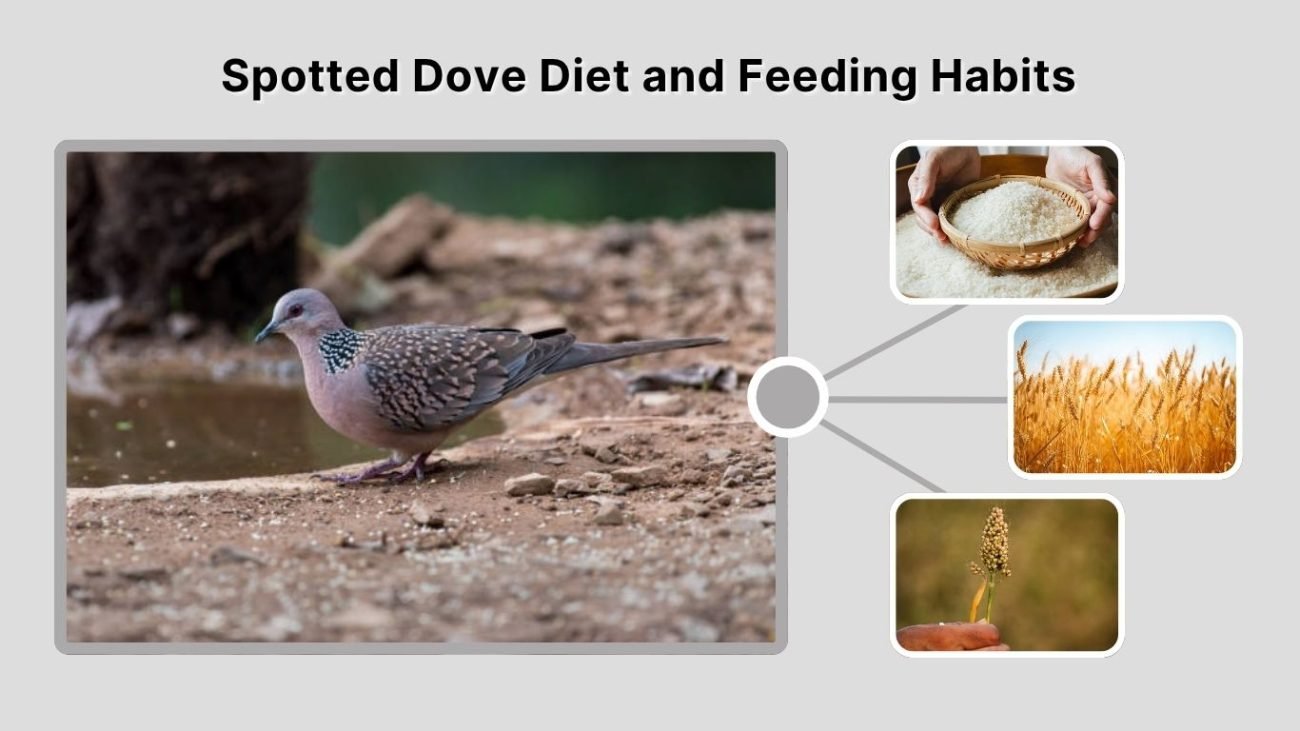
Spotted doves are primarily ground feeders, meaning they spend much of their time searching for food on the ground rather than in trees. Their diet is simple and consistent, which helps them adapt easily to different environments.
They mainly eat seeds and grains, which they pick up while walking slowly across open areas. Common food sources include grass seeds, rice, wheat, and other small grains. In urban areas, they may also feed on leftover food or bird feed provided in gardens.
Occasionally, they consume small insects, especially during breeding periods when extra protein is needed. However, insects are only a small part of their diet.
Their feeding behavior is calm and methodical. They move steadily, pecking at the ground, and often return to the same feeding spots daily. This predictable pattern is one reason they are easy to observe in the wild.
Breeding and Reproduction
Spotted doves have a simple but effective breeding cycle that allows them to reproduce successfully in many environments.
They usually build small, loose nests made from twigs and grass. These nests are often placed in trees, shrubs, or even on building ledges. The structure may look fragile, but it is sufficient for raising their young.
A typical breeding cycle includes:
- Egg laying: Usually 1–2 white eggs per clutch
- Incubation period: Around 13–15 days
- Parental care: Both parents take turns incubating and feeding the chicks
After hatching, the chicks grow quickly and leave the nest within a few weeks. In favorable conditions, spotted doves may breed multiple times a year.
Lifespan and Growth
The lifespan of a spotted dove depends on its environment and exposure to threats. In the wild, they generally live for several years, although exact lifespans can vary.
Young birds, known as fledglings, leave the nest shortly after developing basic flight skills. At this stage, they still rely on their parents for food and protection. As they mature, they gradually become independent and begin to establish their own territories.
Adult spotted doves are resilient and adaptable, which contributes to their survival in both natural and urban environments. Their ability to find food easily and avoid predators helps maintain stable populations.
Types and Similar Species
Spotted doves are often confused with other dove species due to their similar size and coloring. Understanding these differences can help with accurate identification.
The spotted dove is closely related to the spotted turtle dove, which shares many physical traits. Another commonly confused species is the Oriental turtle dove, which has a more uniform pattern and lacks the distinct spotted collar.
There is also the ringed turtle dove, which features a simple black ring on the neck instead of a spotted pattern. While these birds may look alike at a distance, the neck markings are the easiest way to tell them apart.
Recognizing these differences is important for birdwatchers and anyone trying to identify a dove correctly.
Emerald and Exotic Spotted Doves
Beyond the common spotted dove, there are several exotic dove species with striking colors and patterns that attract attention.
The emerald spotted wood dove is known for its vivid green wings and spotted appearance. It is much more colorful than the typical spotted dove and is usually found in forested areas.
Other variations include fruit doves and ground doves, which may display bright shades of pink, blue, or gold. These species are less common and often limited to specific regions.
Although they share the “spotted” description, these exotic doves differ significantly in habitat, behavior, and appearance from the standard spotted dove seen in urban areas.
Spotted Dove as Pets (Buying & Care)
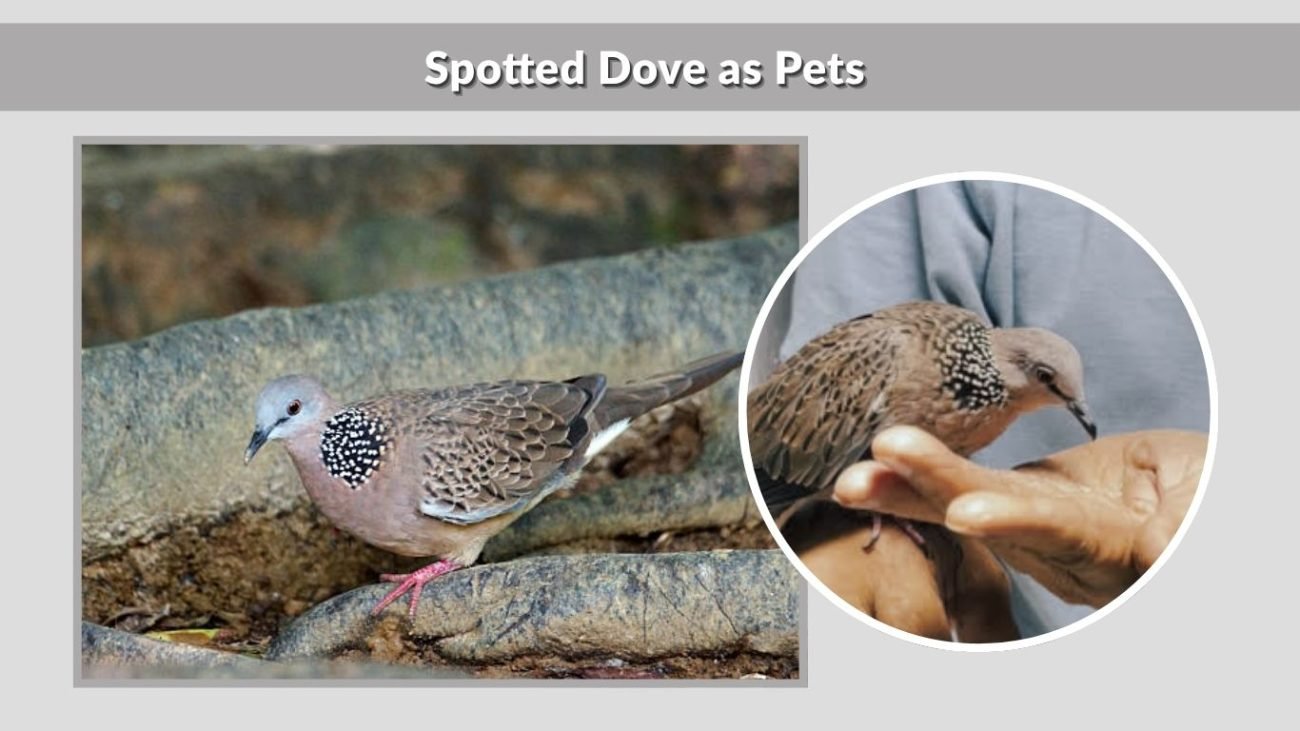
In some regions, spotted doves are kept as pets due to their calm nature and gentle behavior. However, keeping them requires proper knowledge and responsibility.
Before purchasing or keeping a spotted dove, it is important to check local laws, as wildlife regulations may restrict ownership. If allowed, they should be provided with a safe and spacious enclosure.
Their diet in captivity should include a mix of seeds and grains, similar to what they eat in the wild. Clean water and a quiet environment are also essential for their well-being.
Spotted doves are generally easy to care for, but they still need attention and proper conditions to stay healthy.
Spotted Dove Hunting and Spotting Tips
Spotted doves are often searched for in the context of hunting or observation. Knowing where and how to find them can improve your chances of spotting them in the wild.
They are most commonly found in open areas such as fields, farmland, and the edges of forests. Early morning and late afternoon are the best times to observe them, as they are more active during these periods.
When trying to spot them, look for slow movement on the ground or listen for their soft cooing call. Their calm behavior makes them easier to track compared to more active birds.
Patience is key. Staying still and observing quietly increases the chances of seeing them up close without disturbing them.
Interesting Facts About Spotted Doves
Spotted doves have several unique traits that make them interesting to observe and study.
- They are highly adaptable and can live in both rural and urban environments
- Their spotted neck pattern is unique among many common doves
- They are known for their soft and soothing cooing sound
These characteristics contribute to their popularity among birdwatchers and nature enthusiasts.
FAQs
What does a spotted dove look like?
A spotted dove has a brownish-gray body, a long tail, and a distinctive black patch with white spots on the back of its neck. This spotted collar is its most recognizable feature.
What do spotted doves eat?
Spotted doves mainly eat seeds and grains found on the ground. They may occasionally consume small insects, but plant-based food makes up the majority of their diet.
Do spotted doves mate for life?
Spotted doves often form strong pair bonds, especially during breeding seasons. While they may not always stay together for life, they typically remain paired for long periods.
Where are spotted doves commonly found?
They are native to Asia but are now found in many regions, including Australia, Hawaii, and parts of the United States. They thrive in both urban and rural environments.
What does a spotted dove sound like?
Their call is a soft, repetitive cooing sound. It is usually heard during quiet times of the day and is used for communication and attracting mates.