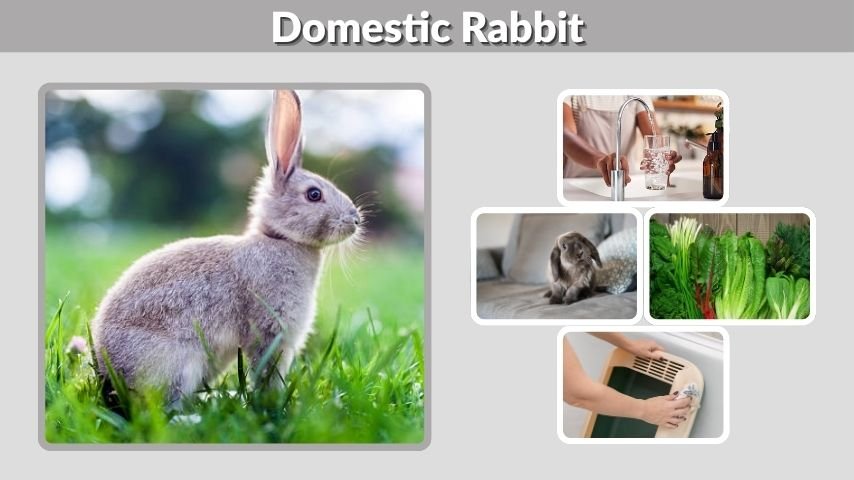
Domestic rabbits are gentle, social mammals that are often kept as pets, raised on farms, or bred for shows. They are known for their soft fur, long ears, strong hind legs, and quiet behavior. Although rabbits may look easy to care for, they need proper housing, a balanced diet, daily exercise, and regular attention. Domestic rabbits come in many breeds, sizes, colors, and coat types. Understanding their size, habitat, life cycle, diet, identification, and care needs helps owners keep them healthy, safe, and comfortable.
Domestic Rabbit Overview
Domestic rabbits are the domesticated form of the European rabbit. They have been bred for many purposes, including companionship, farming, wool production, and exhibitions. Today, many domestic rabbits live as family pets because they are quiet, clean, and intelligent animals.
Basic Facts About Domestic Rabbits
| Feature | Details |
| Common Name | Domestic Rabbit |
| Scientific Name | Oryctolagus cuniculus domesticus |
| Animal Type | Mammal |
| Diet | Herbivore |
| Average Lifespan | 8 to 12 years |
| Main Habitat | Homes, hutches, farms, and safe enclosures |
| Common Uses | Pets, show animals, wool, and small-scale farming |
What Makes Domestic Rabbits Unique?
Domestic rabbits are sensitive and social animals. They can recognize their owners, learn routines, and even use litter boxes when trained properly. Unlike dogs or cats, rabbits are prey animals, so they may become frightened by loud sounds, sudden movements, or rough handling. They need calm surroundings and gentle care.
Another unique feature is their teeth. A rabbit’s teeth grow continuously throughout life. Because of this, rabbits must chew hay and safe chew items every day to keep their teeth naturally worn down. Their digestive system also depends on fiber-rich foods, especially grass hay.
Domestic Rabbit Size
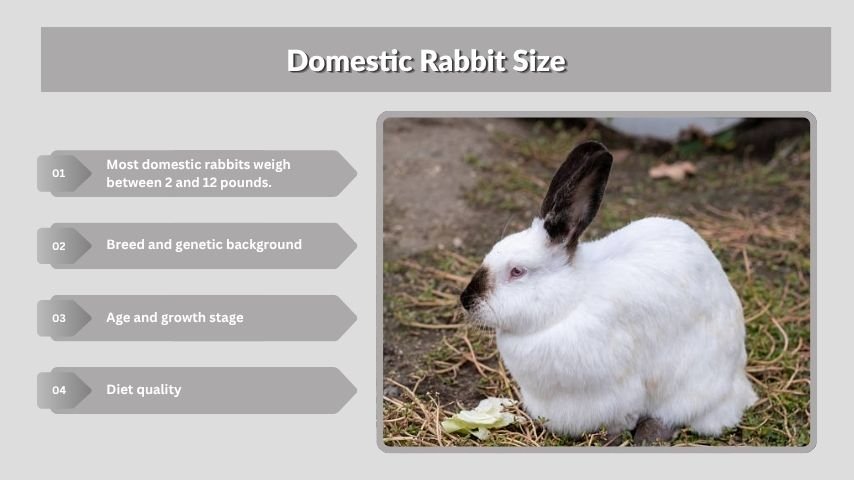
Domestic rabbits vary widely in size. Some breeds are tiny and weigh only a few pounds, while giant breeds can grow very large. A rabbit’s size affects how much space, food, and exercise it needs.
Average Size of Domestic Rabbits
Most domestic rabbits weigh between 2 and 12 pounds. Small breeds, such as Netherland Dwarfs, may weigh around 2 to 3 pounds. Medium breeds, such as Dutch rabbits and Mini Rex rabbits, often weigh between 4 and 8 pounds. Larger breeds, such as New Zealand rabbits, may weigh around 9 to 12 pounds.
Giant breeds are much heavier. Flemish Giants, for example, can weigh more than 15 pounds. These rabbits need larger living spaces and careful handling because of their size and weight.
Factors That Affect Rabbit Size
Several factors can affect how big a domestic rabbit becomes. Breed is the main factor, but nutrition, health, genetics, and age also play important roles. Young rabbits grow quickly during their first few months, so a healthy diet is important during early development.
Important size factors include:
- Breed and genetic background
- Age and growth stage
- Diet quality
- Exercise level
- Health condition
- Early care and nutrition
Why Rabbit Size Matters
Rabbit size matters because it helps owners choose the right enclosure, feeding amount, and care routine. Even small rabbits need enough room to hop, stretch, and stand on their back legs. Large rabbits need extra floor space and stronger housing materials. A rabbit should never be kept in a tiny cage all day.
Domestic Rabbit Habitat
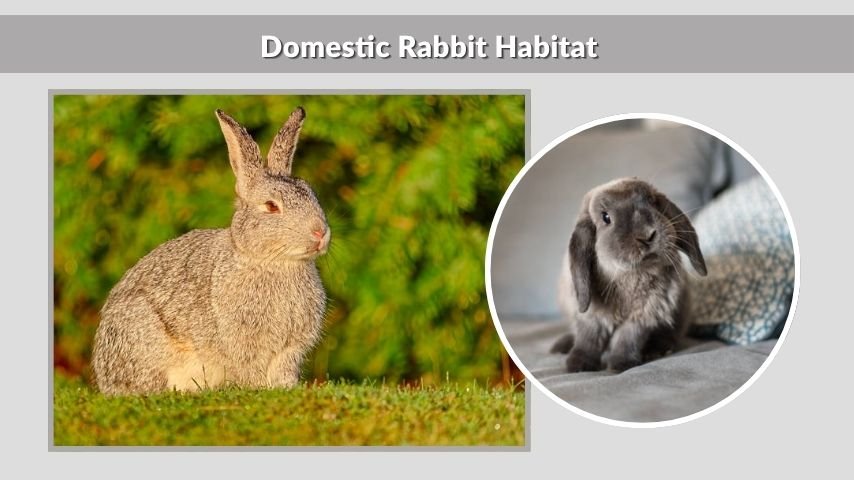
Domestic rabbits need a safe, clean, and comfortable habitat. Unlike wild rabbits, they depend on people for food, shelter, and protection. A good habitat protects them from predators, extreme weather, stress, and unsafe objects.
Indoor Habitat
Indoor housing is often the safest choice for pet rabbits. An indoor rabbit can live in a large pen, a rabbit-proofed room, or a spacious enclosure. The area should have soft flooring because wire floors can hurt a rabbit’s feet. It should also include a litter box, hay feeder, water bowl, hiding box, chew toys, and resting space.
Indoor rabbits should be kept away from electrical wires, toxic plants, strong chemicals, and loud noises. They also need daily time outside their enclosure to exercise and explore. A rabbit-proofed room or playpen allows them to move safely.
Outdoor Habitat
Some domestic rabbits live outdoors in hutches or secure runs. Outdoor housing must be strong, dry, and predator-proof. Rabbits can be attacked by dogs, cats, foxes, snakes, and birds of prey. A good outdoor enclosure should have shade, ventilation, waterproof roofing, and a secure sleeping area.
Outdoor rabbits need extra attention during hot, cold, or wet weather. Heat can be especially dangerous for rabbits. Their hutch should always have shade and fresh water. In cold weather, bedding should be dry and thick enough to keep them warm.
Essential Habitat Items
A proper rabbit habitat should include:
- A large enclosure or exercise pen
- Clean bedding or soft flooring
- A litter box with rabbit-safe litter
- Fresh hay available at all times
- A water bowl or bottle
- Safe chew toys
- A hiding box or tunnel
- Space for daily exercise
Domestic Rabbit Life Cycle
Domestic rabbits grow quickly and pass through several life stages. Each stage has different needs for food, housing, handling, and health care. Knowing these stages helps owners care for rabbits properly from birth to old age.
Newborn Rabbits
Baby rabbits are called kits. They are born blind, hairless, and completely dependent on their mother. Their eyes usually open when they are around 10 days old. During the first few weeks, they stay close to the nest and grow very fast.
Mother rabbits usually nurse their kits only once or twice a day. This is normal and does not always mean the babies are being neglected. Human handling should be limited during the first few days unless there is a real need.
Young Rabbits
Young rabbits become more active after their eyes open. They start exploring, nibbling solid foods, and learning to move around confidently. Around 3 to 4 weeks of age, they may begin eating hay and small amounts of pellets while still nursing.
At this stage, rabbits are curious but delicate. They should be handled gently and kept in a clean, safe space. Good nutrition during this period supports healthy growth, strong bones, proper digestion, and normal tooth development.
Adult Domestic Rabbits
Adult rabbits usually become more settled in their habits and personality. Most rabbits reach sexual maturity between 3 and 6 months of age, although the exact timing depends on breed and size. Smaller breeds often mature earlier than larger breeds. Once rabbits become adults, they need a steady routine, proper feeding, enough exercise, and regular health checks.
Adult rabbits are active animals, especially in the morning and evening. They enjoy hopping, exploring, chewing, digging, and resting in quiet places. A healthy adult rabbit should have bright eyes, clean ears, smooth fur, normal droppings, and a good appetite. Any sudden change in eating, drinking, behavior, or droppings can be a warning sign.
Senior Domestic Rabbits
Senior rabbits may slow down as they age. Many rabbits become seniors around 6 years old, though some remain active for much longer. Older rabbits may need softer bedding, easier access to food and water, and more frequent health monitoring. They may also become more sensitive to temperature changes and stress.
Common age-related issues include dental problems, arthritis, weight loss, and digestive trouble. Owners should watch senior rabbits carefully and make their living space easy to move around in. A calm environment, proper diet, and regular vet care can help older rabbits stay comfortable.
Domestic Rabbit Diet
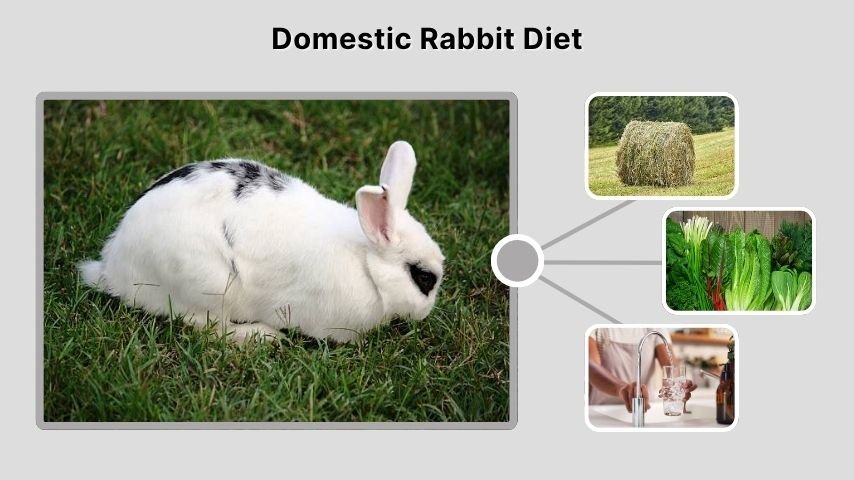
Domestic rabbits are herbivores, which means they eat plant-based foods. Their digestive system is designed for a high-fiber diet. The most important food for a rabbit is grass hay, which should be available at all times.
What Domestic Rabbits Eat
A healthy rabbit diet should be simple and fiber-rich. Hay helps keep the digestive system moving and also wears down the teeth naturally. Fresh water should always be available, either in a heavy bowl or a clean water bottle.
Domestic rabbits commonly eat:
- Unlimited grass hay, such as timothy, orchard, or meadow hay
- Fresh leafy greens, such as romaine lettuce, cilantro, parsley, and basil
- A small amount of quality rabbit pellets
- Clean drinking water every day
- Small amounts of safe vegetables as treats
- Occasional fruit treats in very limited amounts
Foods Domestic Rabbits Should Avoid
Not all plant foods are safe for rabbits. Some human foods can upset their stomach or cause serious health problems. Rabbits should not be fed sugary, salty, fatty, or processed foods.
Foods to avoid include:
- Chocolate, candy, and sweets
- Bread, crackers, pasta, and cookies
- Meat, eggs, and dairy products
- Iceberg lettuce
- Onion, garlic, and avocado
- Sugary cereals or processed snacks
- Toxic garden plants or unknown weeds
Why Hay Is So Important
Hay is the foundation of a rabbit’s diet. It provides fiber, supports digestion, and helps prevent dental problems. Since rabbit teeth grow continuously, chewing hay helps wear the teeth down naturally. Without enough hay, rabbits may develop overgrown teeth, poor digestion, or reduced appetite.
Domestic Rabbit Identification
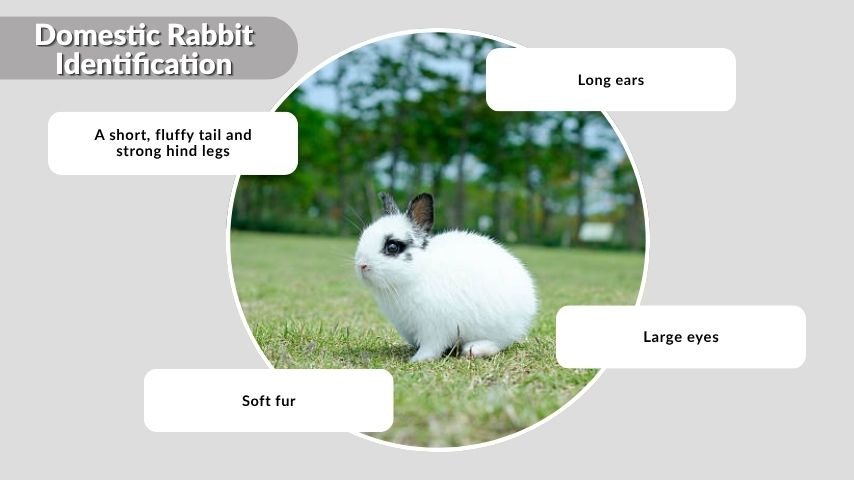
Domestic rabbits can be identified by their body shape, ear type, coat color, fur texture, and breed features. Because there are many rabbit breeds, their appearance can vary widely.
Common Physical Features
Most domestic rabbits have long ears, large eyes, soft fur, a short fluffy tail, and strong hind legs. Their back legs help them hop quickly and jump when needed. Their front paws are smaller and are used for digging, grooming, and balance.
Rabbits also have sensitive whiskers and a strong sense of smell. Their eyes are positioned on the sides of the head, giving them a wide field of vision. This helps them notice movement around them, which is important for a prey animal.
Coat Colors and Ear Types
Domestic rabbits come in many coat colors, including white, black, brown, gray, cream, orange, and mixed patterns. Some have solid coats, while others have spots, markings, or shaded fur. Coat texture can also differ by breed. Some rabbits have short smooth fur, while others have long woolly coats.
Ear shape is another useful identification feature. Some rabbits have upright ears, while lop breeds have ears that hang down beside the head. Large breeds may have long, broad ears, while dwarf breeds often have shorter ears.
Domestic Rabbit Behavior
Domestic rabbits are social, intelligent, and curious animals. They can build strong bonds with people, especially when treated gently and consistently. However, because they are prey animals, they may become nervous if picked up suddenly or handled roughly.
Common Rabbit Behaviors
Rabbits use body language to show how they feel. A happy rabbit may jump and twist in the air, which is called a binky. A scared or alert rabbit may thump its back feet on the ground. Chewing and digging are also normal behaviors.
Common rabbit behaviors include:
- Binkying when excited or happy
- Thumping when scared or alert
- Chewing to wear down teeth
- Digging as a natural instinct
- Grooming themselves often
- Lying stretched out when relaxed
- Nudging people or objects with the nose
Signs of Stress or Illness
Rabbits often hide illness because they are prey animals. This means owners must pay close attention to small changes. A rabbit that suddenly stops eating needs quick attention.
Warning signs include loss of appetite, no droppings, diarrhea, drooling, heavy breathing, head tilt, unusual aggression, constant hiding, or weakness. If these signs appear, the rabbit should be checked by a rabbit-savvy veterinarian as soon as possible.
Domestic Rabbit Care
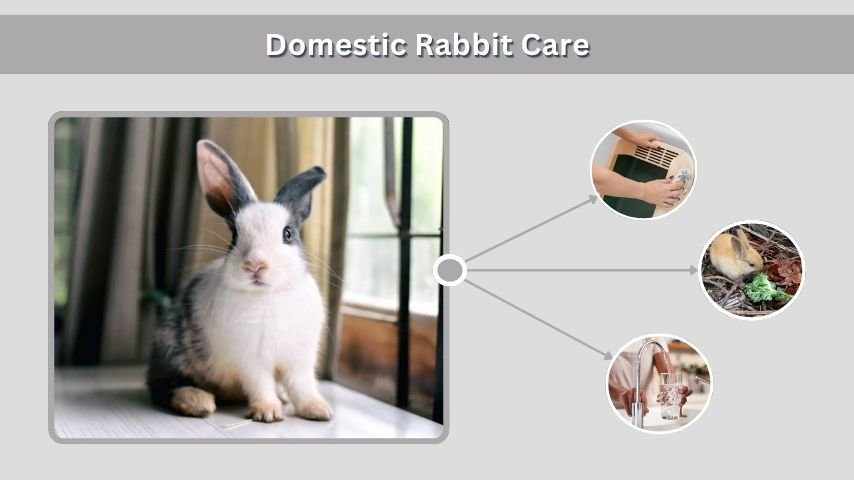
Domestic rabbits need daily care to stay healthy and comfortable. They are not low-maintenance pets, even though they are quiet. They need proper food, clean housing, safe exercise, grooming, and regular health care.
Daily Care Needs
A rabbit’s daily care routine should focus on food, cleanliness, and observation. Owners should check whether the rabbit is eating normally and producing healthy droppings. Changes in appetite or droppings can signal a health problem.
Daily care tasks include:
- Provide fresh hay and clean water
- Offer safe leafy greens
- Clean the litter box or dirty bedding
- Check appetite and droppings
- Give exercise time outside the enclosure
- Remove unsafe chew items
- Spend time interacting gently
Grooming and Handling
Rabbits groom themselves, but they still need help from owners. Short-haired rabbits may need brushing once or twice a week. Long-haired rabbits need more frequent grooming to prevent mats and loose fur buildup. During shedding season, brushing is especially important.
Rabbits should be handled carefully. Their back and hind legs are strong but fragile if they struggle. When lifting a rabbit, support both the chest and hindquarters. Many rabbits prefer sitting beside people rather than being carried.
Veterinary Care
Rabbits should visit a veterinarian who understands rabbit health. Regular checkups can help detect dental problems, weight changes, parasites, and other issues early. Spaying or neutering is often recommended because it helps prevent unwanted breeding and may reduce some health risks.
Domestic Rabbit as a Pet
Domestic rabbits can make loving pets for the right owners. They are quiet, clean, and full of personality. However, they need more care than many people expect. A rabbit should not be bought only because it looks cute or small.
Are Domestic Rabbits Good Pets?
Yes, domestic rabbits can be excellent pets for calm and responsible owners. They can be affectionate, playful, and trainable. Many rabbits enjoy being petted and spending time near their owners. However, they need patience and gentle handling.
Best Owners for Domestic Rabbits
Rabbits are best for people who can provide space, time, and daily care. They are not ideal for families who want a pet that can be carried around all the time. Children should always be supervised when handling rabbits.
Good rabbit owners should be ready to provide proper food, safe housing, exercise, cleaning, grooming, and veterinary care. With the right care, domestic rabbits can live long, healthy, and happy lives.
FAQs
How long do domestic rabbits live?
Domestic rabbits usually live around 8 to 12 years with proper care. Some may live longer if they have a healthy diet, safe housing, regular exercise, and good veterinary support. Lifespan can vary depending on breed, genetics, and overall health.
What is the best food for a domestic rabbit?
The best food for a domestic rabbit is unlimited grass hay. Hay should be the main part of the diet because it supports digestion and dental health. Rabbits can also eat fresh leafy greens, small amounts of pellets, and clean water daily.
Can domestic rabbits live indoors?
Yes, domestic rabbits can live indoors and often do very well inside the home. Indoor housing protects them from predators, extreme weather, and many outdoor dangers. They still need a large enclosure, rabbit-proofed exercise space, and daily care.
Do domestic rabbits need a cage?
Domestic rabbits need a safe enclosure, but they should not stay in a small cage all day. A large pen, rabbit-proofed room, or spacious enclosure is better. Rabbits need room to hop, stretch, play, and exercise every day.
Are domestic rabbits easy to care for?
Domestic rabbits are not difficult to care for, but they need daily attention. They require fresh hay, water, cleaning, exercise, grooming, and health monitoring. They are best for owners who understand their needs and can provide consistent care.