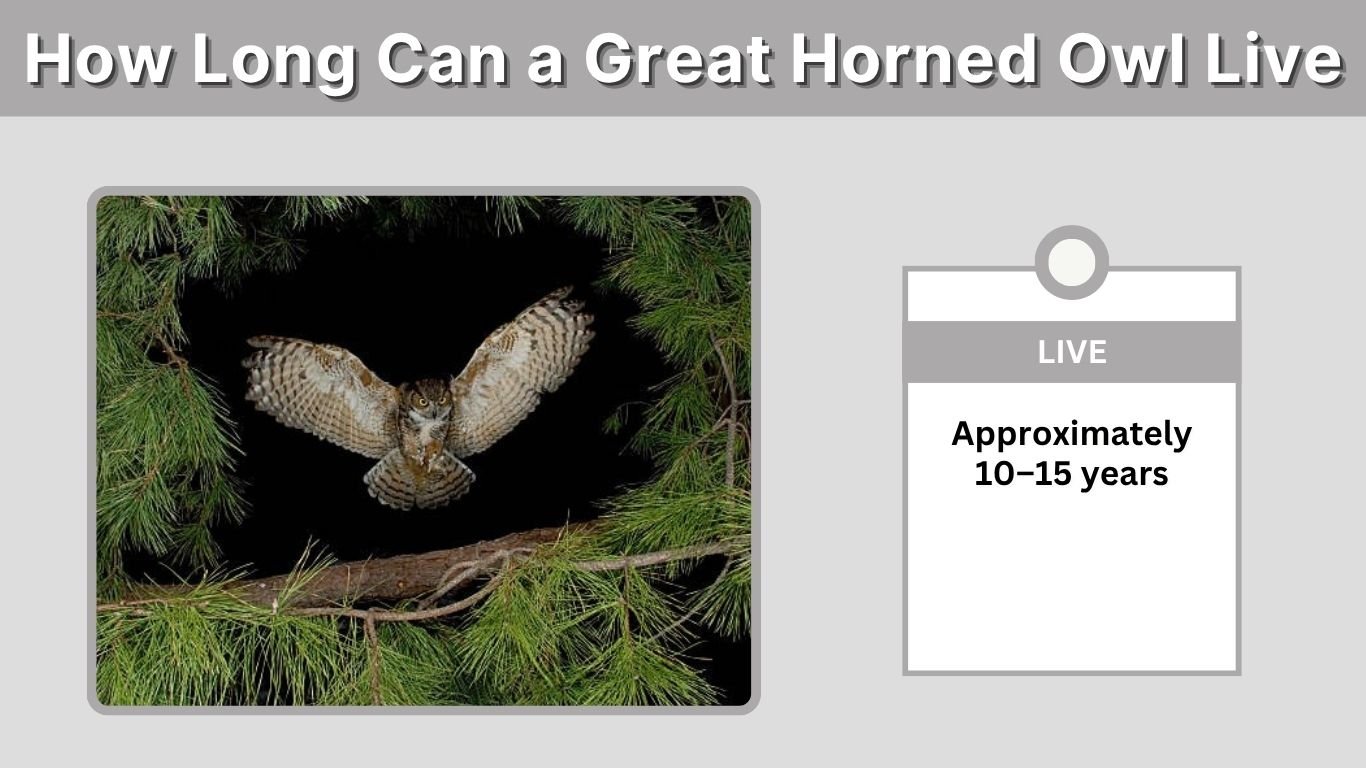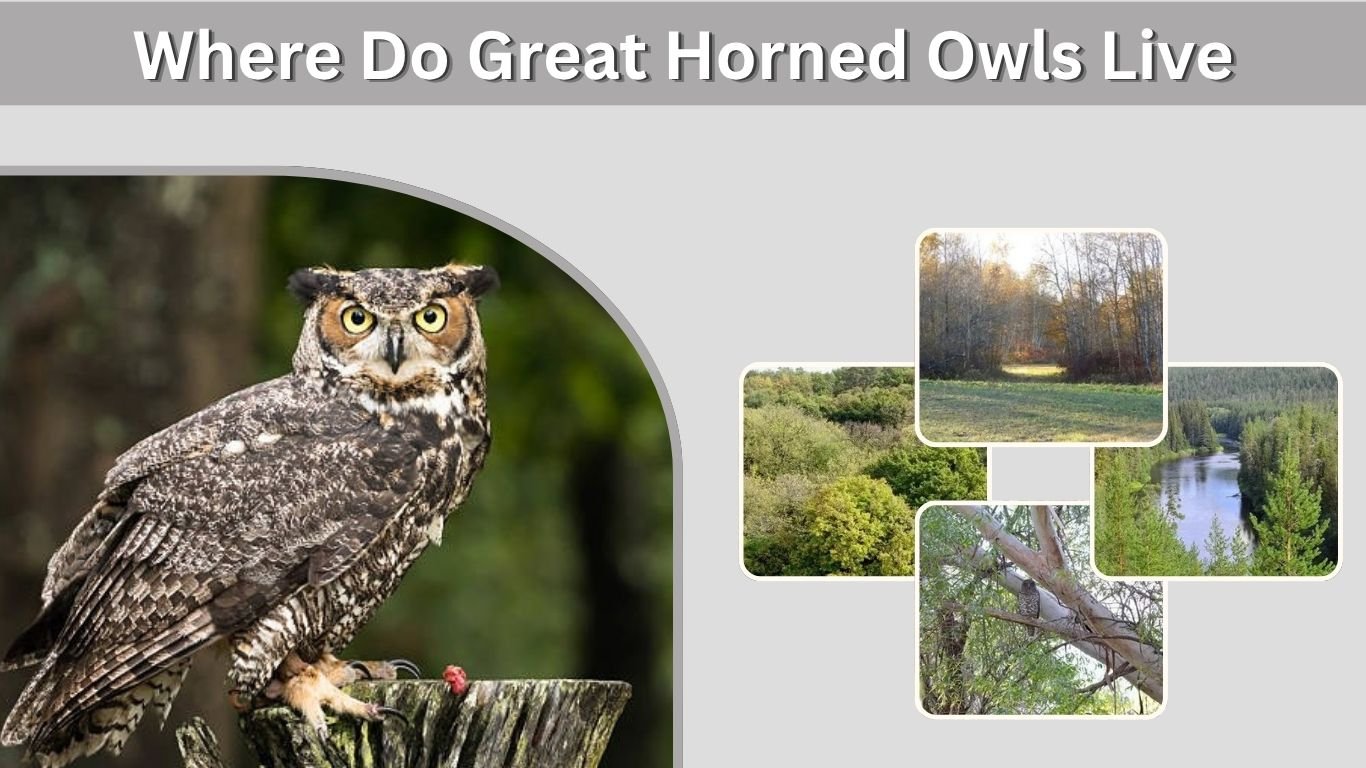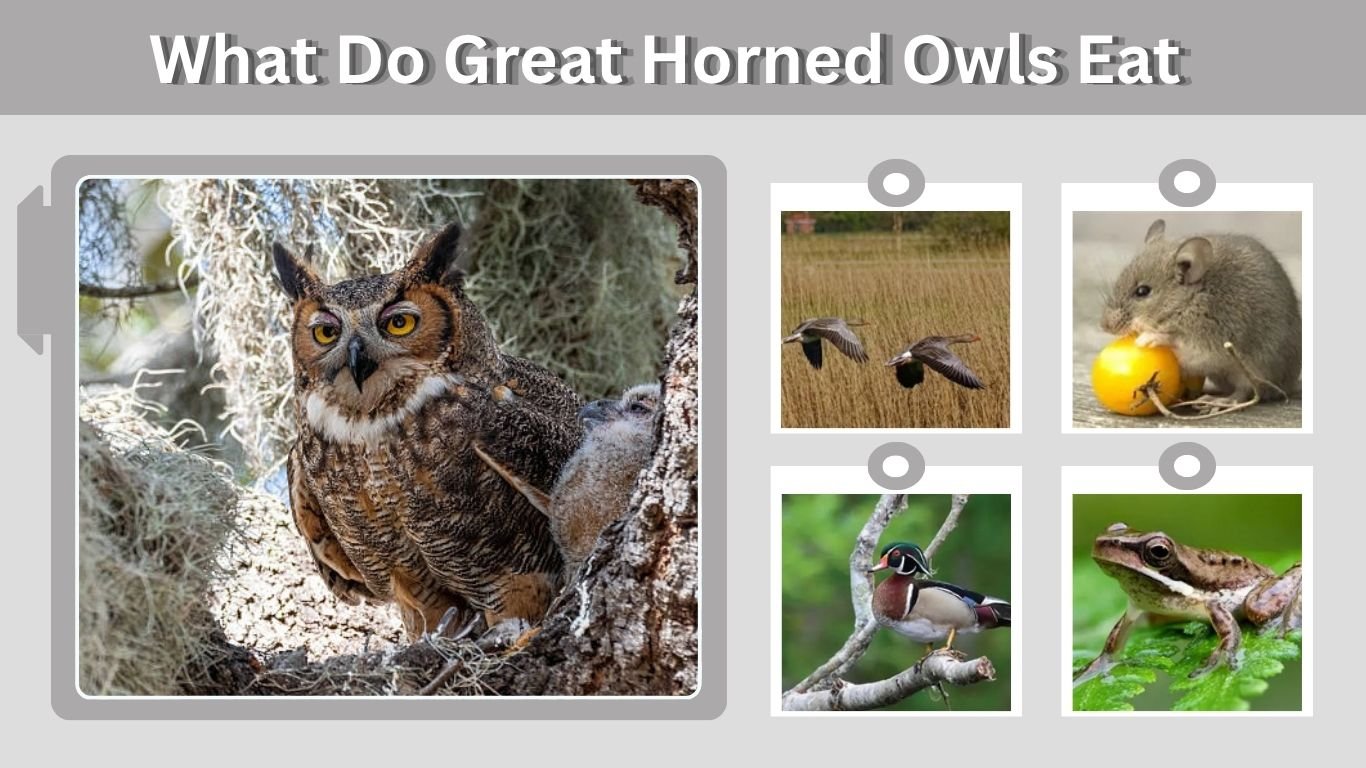
Great horned owls are powerful carnivorous birds that eat an exceptionally varied diet. Mammals and birds provide most of their food, but they can also capture reptiles, amphibians, insects, fish, and other small animals. Their exact diet changes according to location, season, prey availability, and habitat. With strong talons, sharp hearing, excellent low-light vision, and nearly silent flight, these adaptable owls can catch everything from tiny mice and scorpions to rabbits, skunks, ducks, and other birds of prey.
What Do Great Horned Owls Eat?
Great horned owls primarily eat mammals and birds. Rabbits, hares, mice, rats, voles, squirrels, and other rodents are especially important. However, these opportunistic predators generally hunt whatever suitable prey is abundant and easy to capture within their territory.
| Food | Examples |
| Rabbits and hares | Cottontails and snowshoe hares |
| Mice and voles | Deer mice, field mice, and meadow voles |
| Rats | Cotton rats, woodrats, and urban rats |
| Squirrels and gophers | Tree squirrels, ground squirrels, and pocket gophers |
| Skunks | Primarily young or smaller skunks |
| Waterbirds | Ducks, coots, rails, and geese |
| Other birds | Pigeons, crows, songbirds, hawks, and owls |
| Reptiles and amphibians | Snakes, lizards, frogs, and salamanders |
| Insects and scorpions | Beetles, grasshoppers, and scorpions |
| Fish and carrion | Small fish and dead animals |
10 Foods Great Horned Owls Eat
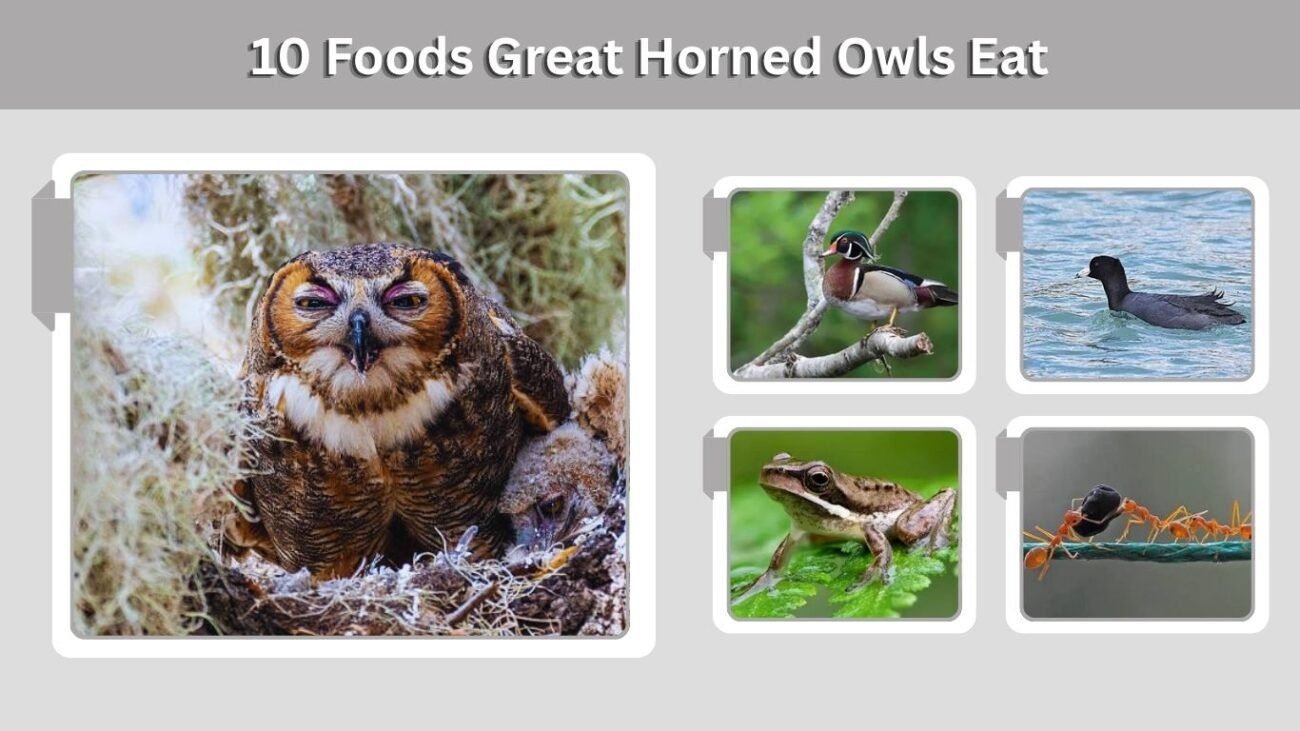
Great horned owls are opportunistic predators that eat many different animals depending on their habitat and available prey. Mammals and birds form the largest part of their diet, but they may also consume reptiles, amphibians, insects, fish, and carrion. Their powerful talons, silent flight, sharp hearing, and excellent night vision allow them to hunt successfully in forests, grasslands, wetlands, deserts, and suburban areas.
1. Rabbits and Hares
Rabbits and hares are among the most important foods for great horned owls. Depending on their location, the owls may capture cottontails, jackrabbits, or snowshoe hares. They usually watch from a high perch before flying down and striking the animal with their talons.
A large rabbit may be too heavy to carry far, so the owl may feed at the capture site or tear it into smaller portions. Rabbits can provide enough food for the adult owl, its mate, or growing nestlings.
2. Mice and Voles
Mice and voles are common prey because they are abundant, active at night, and small enough to swallow whole. Great horned owls can locate these rodents by listening for movement beneath grass, leaves, or light ground cover.
These owls help regulate rodent populations in agricultural fields, grasslands, woodland edges, and suburban areas. After swallowing a small rodent, an owl later regurgitates an oval pellet containing indigestible fur, teeth, and bones.
3. Rats
Great horned owls commonly hunt rats, including woodrats and other medium-sized species. Rats are valuable prey because they provide more energy than tiny mice and can be plentiful around farms, barns, woodland habitats, and urban edges.
An owl may remain motionless on a branch or utility pole while listening for a rat below. It then descends quickly and uses its powerful feet to capture and crush the prey.
4. Squirrels and Gophers
Tree squirrels, ground squirrels, chipmunks, prairie dogs, and pocket gophers may all become prey. Although many squirrels are active during daylight, great horned owls can catch them around dawn, dusk, or while they rest in nests.
Gophers and other burrowing rodents are most vulnerable when moving above ground. Their availability makes them particularly important in open grasslands, agricultural areas, deserts, and western North American habitats.
5. Skunks
Great horned owls are among the few predators that regularly capture skunks. Owls have a relatively weak sense of smell, so the skunk’s defensive spray may not discourage them as effectively as it discourages many mammalian predators.
An owl can attack from above and immobilize a small or medium-sized skunk with its talons. The encounter may leave the owl smelling strongly of skunk spray, but this does not necessarily prevent it from feeding.
6. Ducks and Other Waterbirds
Great horned owls hunt ducks, American coots, rails, grebes, mergansers, and other waterbirds living around lakes, ponds, rivers, and marshes. They may capture resting birds at night when reduced visibility makes escape more difficult.
These owls are strong enough to kill relatively large birds. In some areas, they may even capture geese, although smaller waterbirds and young birds are usually more manageable prey.
7. Songbirds, Crows, Hawks, and Other Owls
The great horned owl is an opportunistic bird hunter. Its prey can include pigeons, doves, starlings, crows, ravens, and various songbirds. It may raid nests or capture adult birds while they are roosting.
Great horned owls can also prey on hawks, falcons, and smaller owl species. They may approach quietly at night and attack a bird that would be alert and difficult to capture during the day.
8. Snakes, Lizards, and Frogs
Reptiles and amphibians supplement the owl’s diet, especially in warm regions where these animals remain active for much of the year. Great horned owls may capture snakes, lizards, frogs, and salamanders near wetlands, rocky areas, forests, and deserts.
These foods generally make up a smaller portion of the diet than mammals and birds. However, they become useful alternatives when rodents or rabbits are temporarily less available.
9. Insects and Scorpions
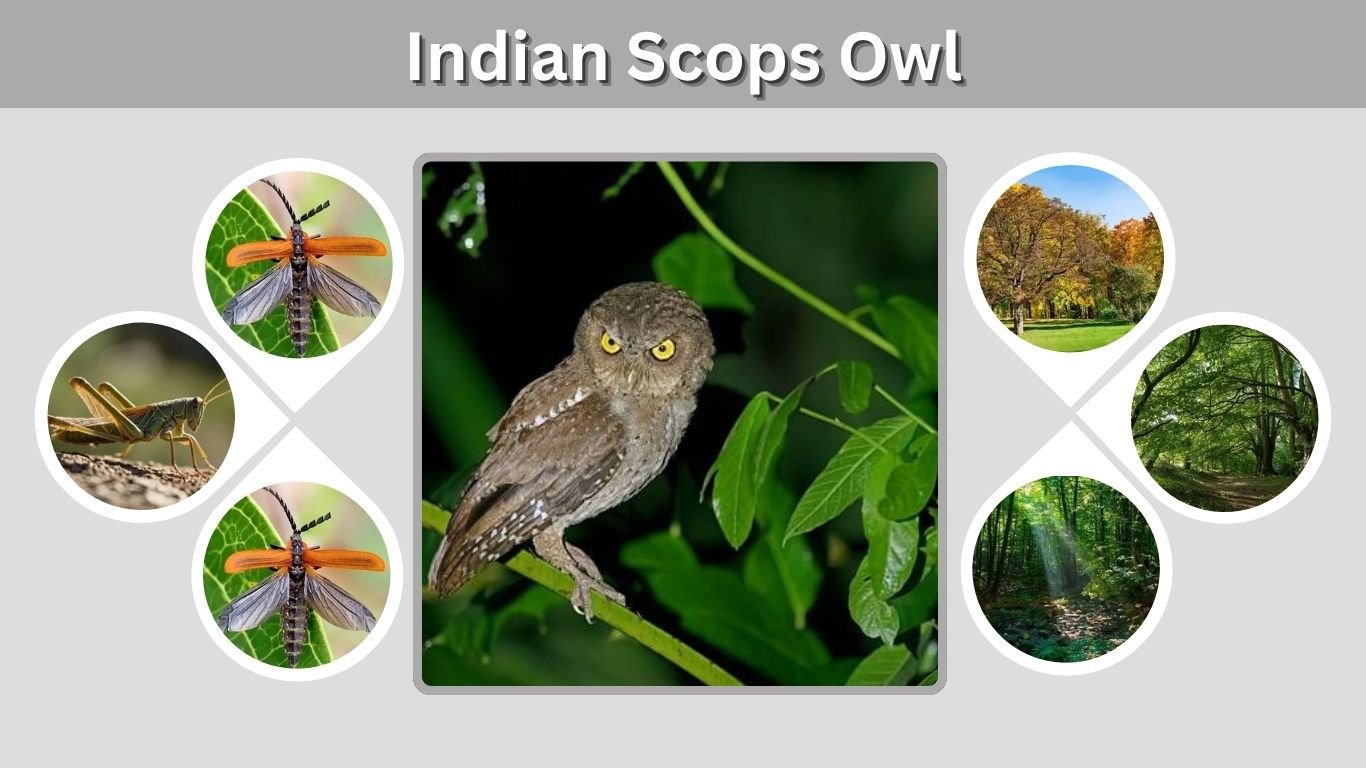
Great horned owls occasionally eat grasshoppers, beetles, large insects, spiders, and scorpions. These small foods are more important to younger owls or birds living in regions where large arthropods are plentiful.
An adult owl requires substantial food, so insects alone are unlikely to satisfy its nutritional needs. They usually supplement larger prey rather than forming the main diet.
10. Fish and Carrion
Fish are not a major part of the great horned owl’s diet, but the owl may capture small fish near shallow water when an opportunity arises. It may also consume crayfish and other aquatic animals in suitable habitats.
Great horned owls sometimes eat carrion when live prey is scarce. However, feeding on animals killed with lead ammunition can expose owls to dangerous lead fragments, which may cause poisoning.
How Do Great Horned Owls Hunt?
Great horned owls hunt mainly at night, although they may also search for prey around dawn and dusk. They commonly wait on trees, poles, cliffs, or other elevated perches and listen for movement below. Once they locate a target, they glide toward it with minimal wing noise and strike with their talons.
Their forward-facing eyes provide effective depth perception, while their facial feathers help direct sounds toward their ears. This combination allows them to detect and capture prey in darkness, dense vegetation, and other challenging conditions.
Do Great Horned Owls Eat Cats and Small Dogs?
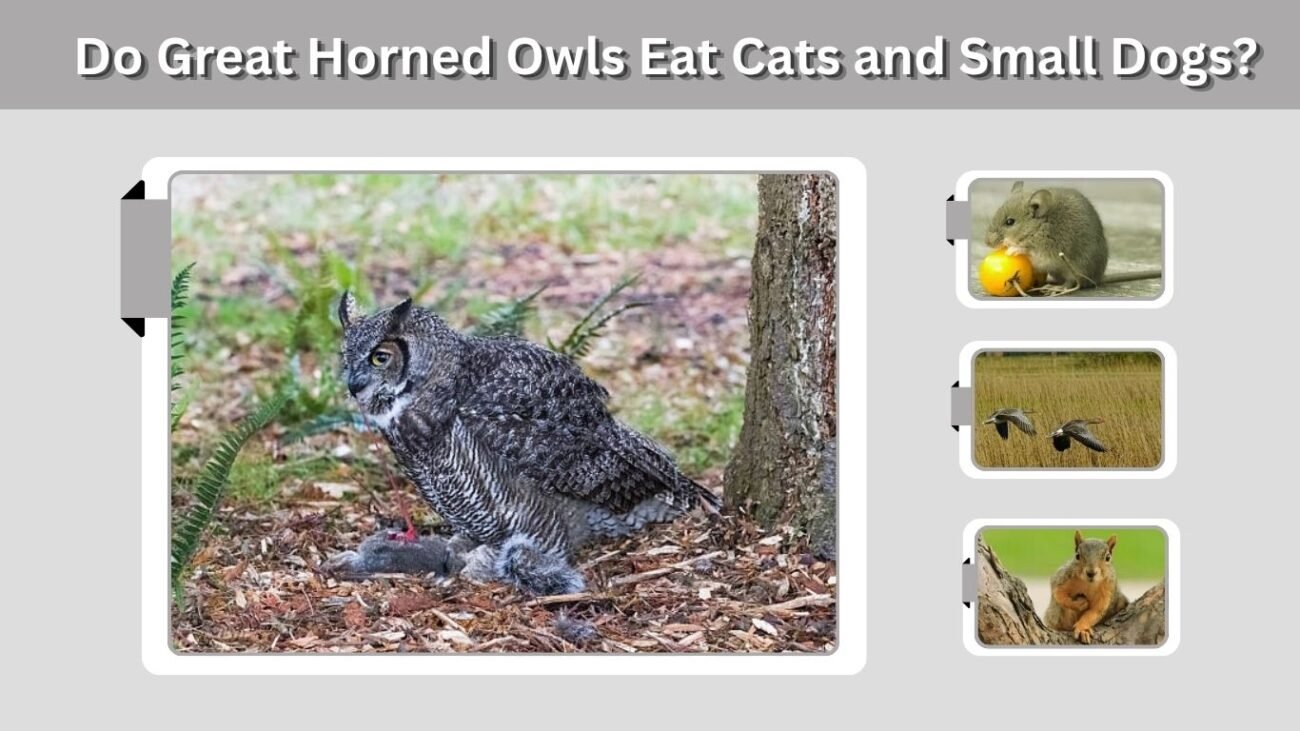
Great horned owls are physically capable of capturing small domestic animals, and cats are included among their documented prey. However, rodents, rabbits, and wild birds are generally more typical foods. Owners can reduce risk by supervising very small pets outdoors, particularly after dark and near known owl territories.
How Much Does a Great Horned Owl Eat?
The amount eaten varies with the owl’s body size, activity, season, weather, prey size, and whether it is feeding nestlings. An owl may swallow a mouse whole but consume a rabbit or larger bird over multiple feeding sessions. It may also cache leftover prey in a tree or near its nest for later use. Its adaptable diet allows it to survive in forests, deserts, wetlands, agricultural regions, and suburban environments.
FAQs
1. What is a great horned owl’s favorite food?
Great horned owls do not have one single favorite food, but rabbits, hares, mice, voles, rats, and squirrels are among their most common prey. Their diet changes depending on location, season, habitat, and which animals are easiest to catch.
2. Do great horned owls eat snakes?
Yes, great horned owls eat snakes when they are available. They may capture both small and medium-sized snakes using their strong talons. However, snakes usually make up a smaller part of their diet than mammals such as rabbits, mice, and rats.
3. Do great horned owls eat other owls?
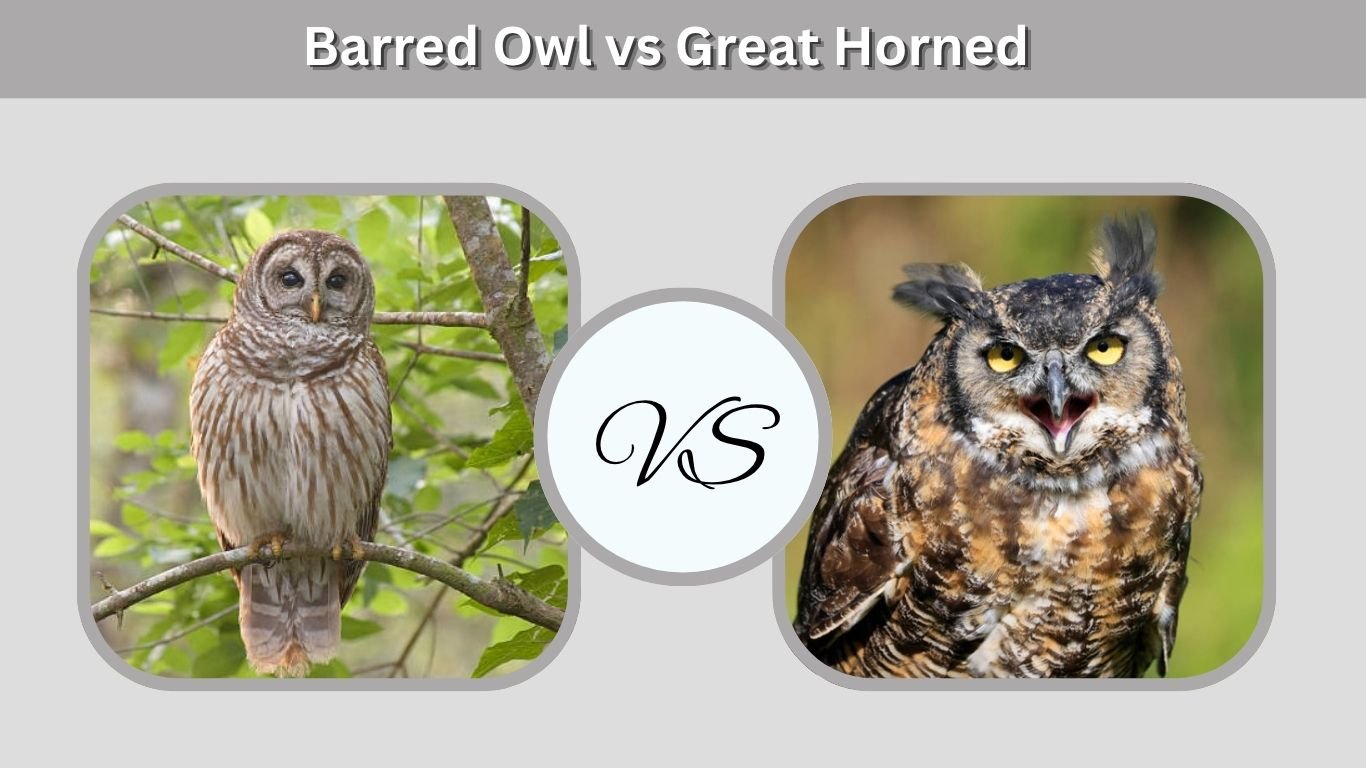
Great horned owls may prey on smaller owl species, including screech owls and barred owls. They can also attack hawks, falcons, and other birds of prey. Their silent nighttime flight allows them to approach resting birds with little warning.
4. Do great horned owls eat every day?
Great horned owls generally hunt regularly, but they may not catch prey every day. After capturing a large rabbit, bird, or other animal, an owl may eat from it for several feeding sessions and store leftover food for later.
5. What animals prey on great horned owls?
Adult great horned owls have few natural predators because of their size, strength, and aggressive behavior. However, eggs and young owlets may be threatened by crows, ravens, raccoons, snakes, and other large birds of prey when nests are left unguarded.