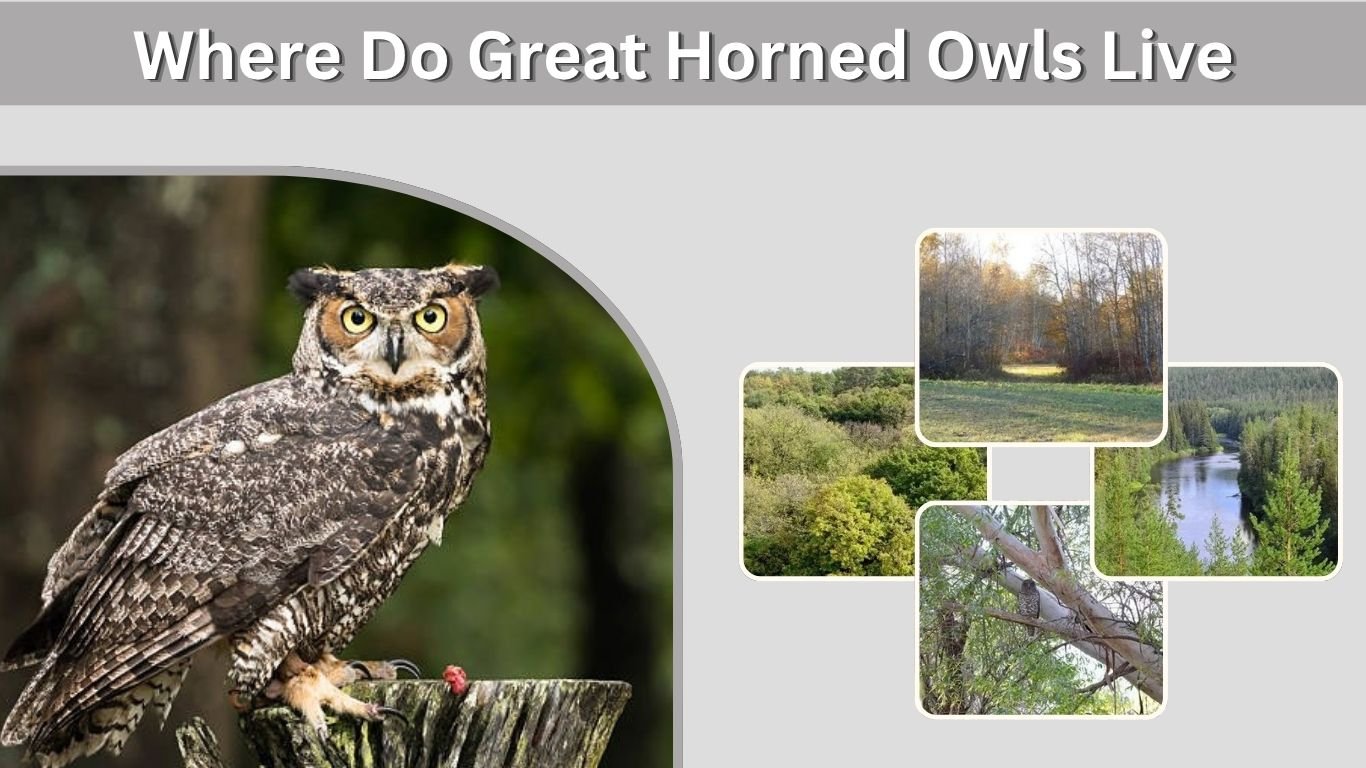
Great horned owls live across most of the Americas, occupying one of the widest habitat ranges of any owl. They can survive in forests, deserts, wetlands, grasslands, mountains, farmland, parks, and suburban neighborhoods. These adaptable birds usually need trees, cliffs, dense brush, or human-made structures for nesting and daytime shelter, along with open areas where they can hunt. Great horned owls are generally permanent residents rather than long-distance migrants. Their ability to use different nesting sites and hunt many kinds of prey allows them to thrive from cold northern forests to warm tropical landscapes.
Where Do Great Horned Owls Live?
Great horned owls live throughout most of North America and extend through Central America into much of South America. They occur from Alaska and northern Canada to regions near the southern end of the continent. Their distribution includes the United States, Mexico, and many countries farther south.
| Region | Where They Are Found |
| North America | Alaska, Canada, the United States, and Mexico |
| Central America | Woodlands, agricultural areas, and semi-open habitats |
| South America | Forest edges, shrublands, grasslands, and open country |
| Urban areas | Wooded parks, cemeteries, golf courses, and suburbs |
| Dry regions | Deserts, rocky slopes, canyons, and scrubland |
Great horned owls are present across nearly every U.S. state. They live in Florida, Texas, Arizona, Georgia, Illinois, Indiana, Ohio, Oregon, California, and many other states. They are also found in northern regions, including Alaska, provided suitable nesting cover and prey are available.
Great Horned Owl Habitat
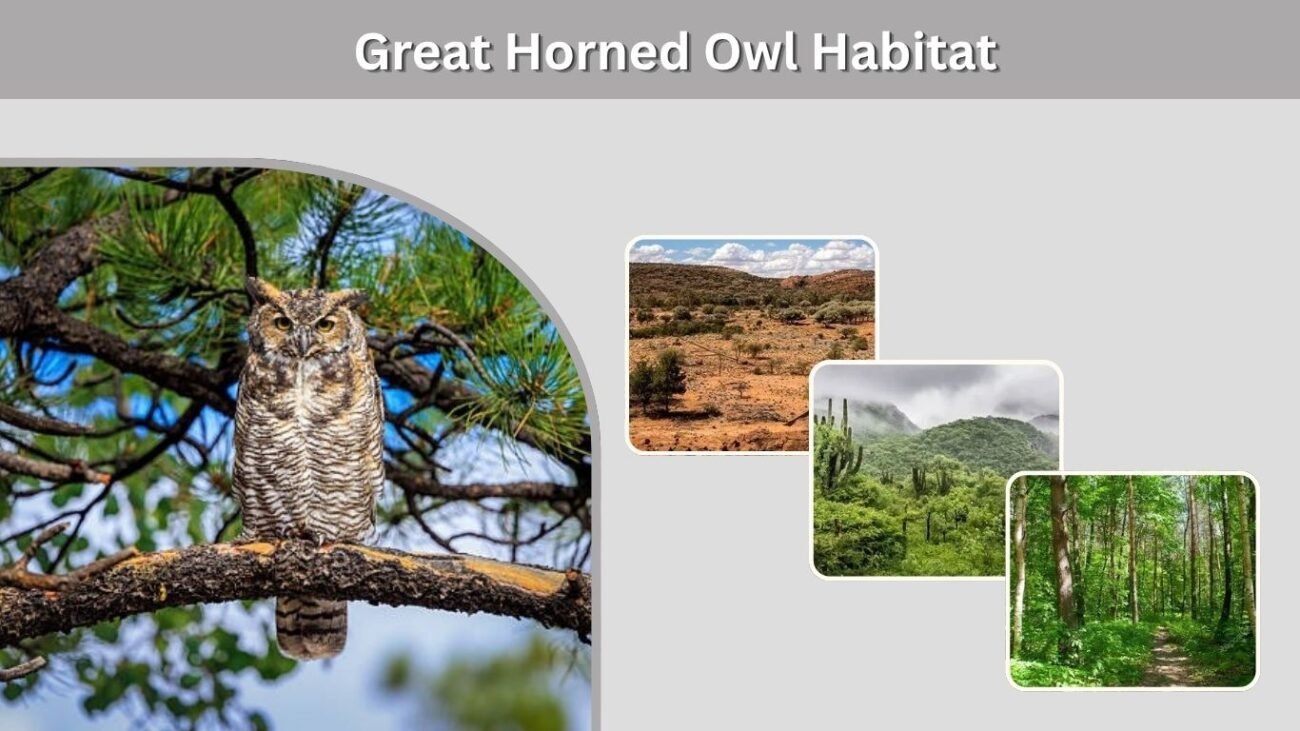
Great horned owls are habitat generalists, meaning they can live in many different environments. Their territories usually combine sheltered places for resting and nesting with more open spaces for hunting. Forest edges are especially useful because they provide both tree cover and access to visible prey.
Forests and Woodlands
Great horned owls live in deciduous, coniferous, and mixed forests. They are often associated with secondary-growth woodlands, wooded swamps, orchards, and forest edges. In certain regions, they also use mature or old-growth forest stands.
During the day, an owl may rest close to a tree trunk where its mottled feathers blend with the bark. At night, it may hunt along clearings, roads, fields, wetlands, or woodland edges.
Deserts and Scrublands
Great horned owls can live in dry deserts, including parts of the American Southwest. They may roost and nest in junipers, cottonwoods, desert palms, rocky cliffs, canyons, or dense patches of scrub.
Although these regions may have fewer large trees, the owls adapt by using ledges, cavities, abandoned nests, and artificial structures. They hunt rabbits, rodents, reptiles, and other animals living in arid environments.
Wetlands and Swamps
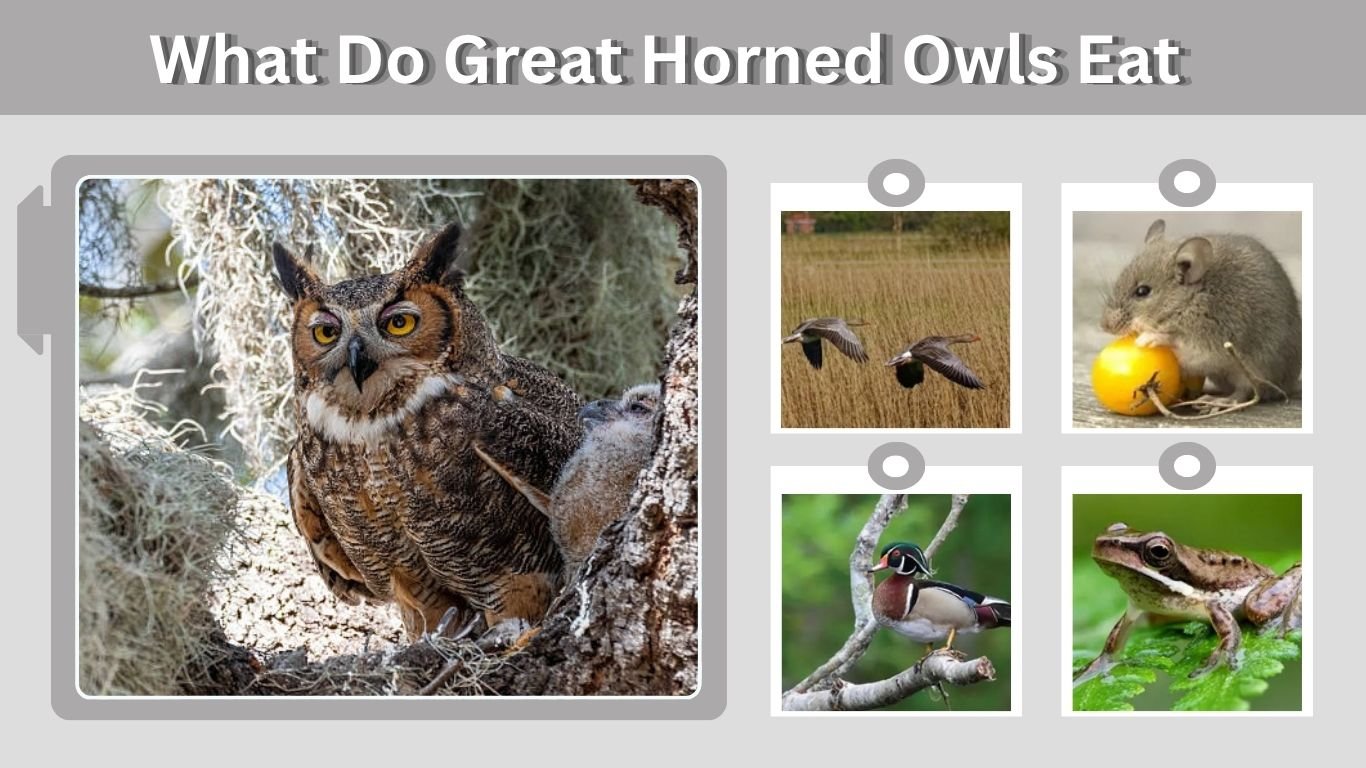
Wetlands, marshes, streamsides, wooded swamps, and lake edges provide excellent habitat. These environments offer trees for resting and nesting as well as plentiful prey, including rodents, rabbits, ducks, coots, frogs, snakes, and other wetland animals.
Great horned owls do not need to live directly beside water, but wetlands can form an important part of their hunting territory.
Grasslands and Farmland
Great horned owls often live near grasslands, pastures, croplands, orchards, and agricultural fields. Completely treeless grassland is less suitable for breeding, but fields bordered by trees, brush, cliffs, barns, or utility structures can provide ideal conditions.
The owl can watch from a high perch and then fly down to capture rats, mice, voles, rabbits, and other animals moving across open ground.
Cities and Suburban Areas
Great horned owls can live surprisingly close to people. They occur in wooded parks, cemeteries, golf courses, school grounds, large gardens, greenbelts, and suburban neighborhoods.
Tall trees provide roosting and nesting places, while open lawns and fields support rodents, rabbits, squirrels, and birds. Their camouflage and nighttime activity mean they may remain unnoticed even when living near homes.
What Biomes Do Great Horned Owls Live In?
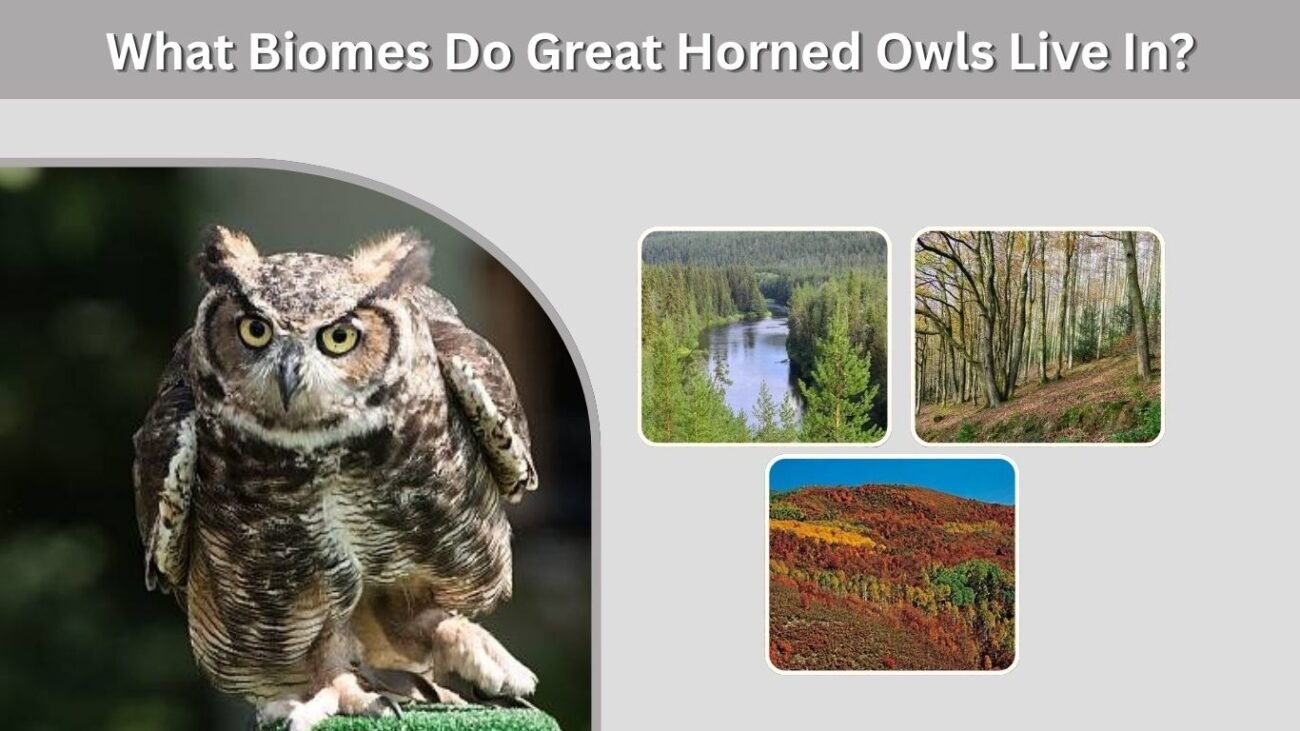
Great horned owls occupy numerous biomes because they tolerate different climates and landscapes. However, they generally need some form of elevated or sheltered cover for resting and nesting.
The primary biomes include:
- Temperate deciduous forests
- Coniferous and boreal forests
- Mixed woodlands
- Deserts and dry shrublands
- Savannas and grasslands
- Freshwater wetlands
- Mountain environments
- Agricultural landscapes
- Urban and suburban ecosystems
They may occur near the northern tree line but usually avoid breeding in completely open tundra or uninterrupted grassland where trees and heavy brush are absent.
Where Do Great Horned Owls Nest?
Great horned owls rarely construct nests themselves. They commonly take over old nests built by hawks, crows, ravens, herons, or squirrels. They may also nest inside large tree cavities, broken tree trunks, cliff ledges, caves, abandoned buildings, barns, or artificial nesting platforms.
The nesting location varies according to the habitat. Forest owls often use abandoned stick nests or tree cavities, while desert populations may select cliffs, rock ledges, or scattered trees. Urban pairs sometimes nest in parks, cemeteries, golf courses, or large trees beside buildings.
A nest is mainly a breeding site rather than the owl’s permanent home. Outside the nesting period, adults spend much of the day roosting on sheltered branches, in dense vegetation, or near tree trunks.
What Kind of Trees Do Great Horned Owls Live In?
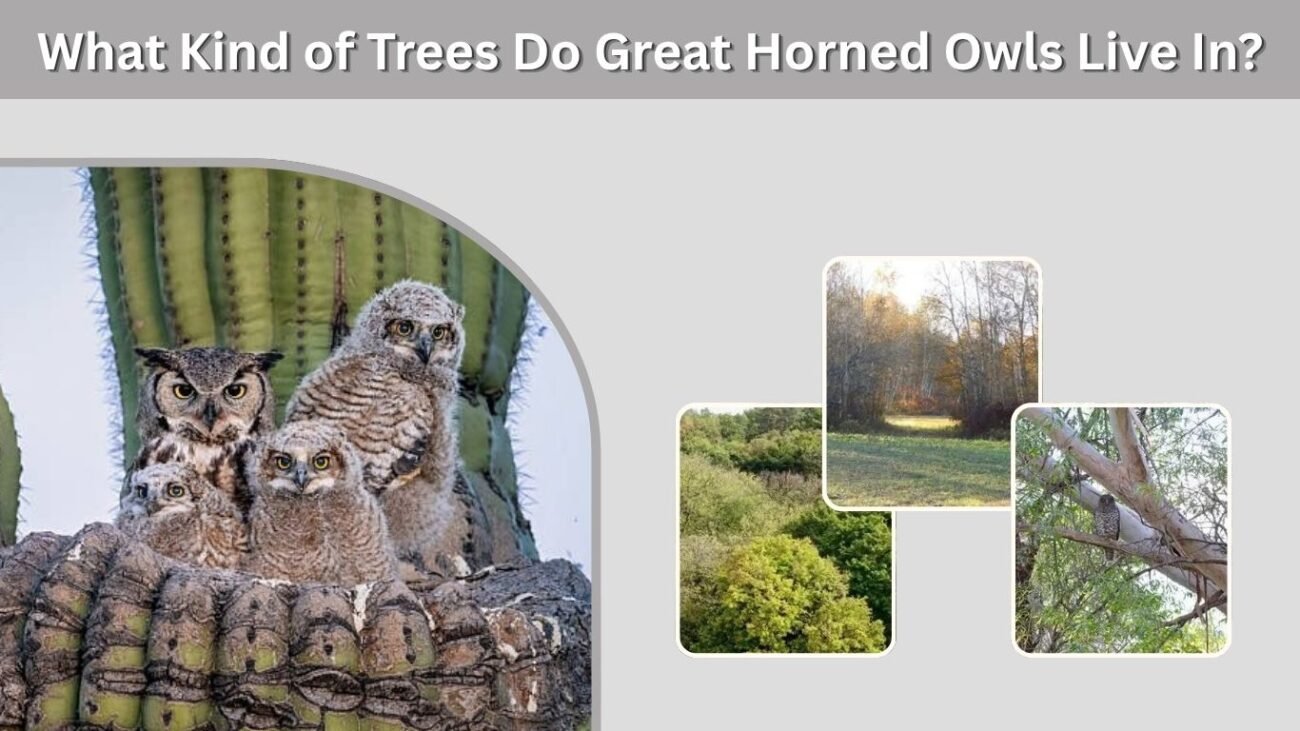
Great horned owls are not restricted to one tree species. They may use pine, spruce, fir, oak, cottonwood, eucalyptus, juniper, and many other large trees available within their region.
The structure and location of the tree matter more than its species. A suitable tree may offer:
- A large abandoned nest
- A spacious natural cavity
- Thick branches capable of supporting the owl
- Dense foliage for daytime shelter
- Nearby fields or clearings for hunting
They may also use dead trees and broken snags when these offer cavities or protected resting sites.
Do Great Horned Owls Live Alone or in Groups?
Great horned owls do not normally live in groups. Adults are territorial and generally live alone or as a breeding pair. A male and female may remain within the same territory and communicate through deep hooting calls, particularly during courtship and nesting.
Parents live with their young temporarily and continue feeding fledglings after they leave the nest. The young eventually disperse to establish territories of their own.
Most great horned owls remain within the same general region throughout the year. They are not typical long-distance migrants, although young birds and nonbreeding individuals may travel while searching for suitable territory.
How Long Do Great Horned Owls Live?
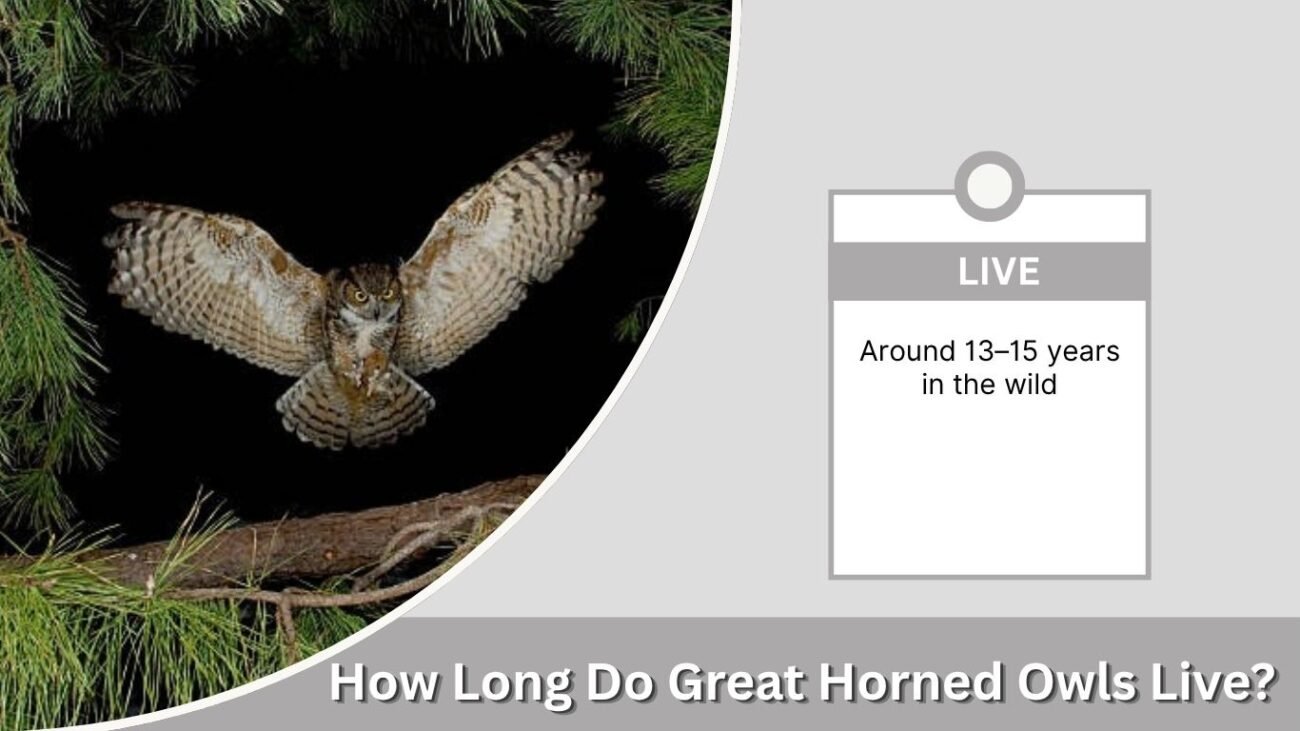
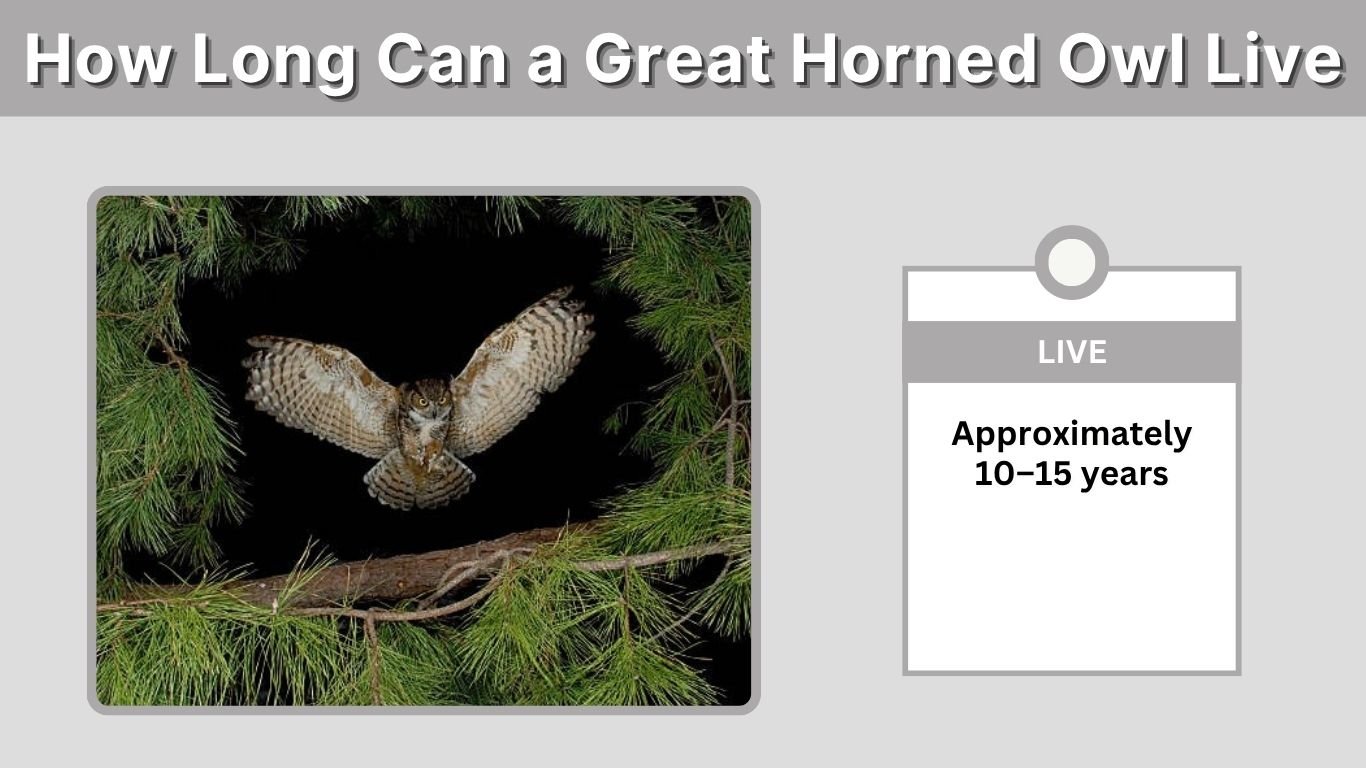
Great horned owls commonly live around 13–15 years in the wild, although many individuals die earlier because of injuries, starvation, vehicle collisions, power lines, disease, or human activity. Exceptional wild individuals can survive much longer. The oldest recorded great horned owl was at least 28 years old.
Owls under professional care may live longer because they receive regular food, veterinary treatment, and protection from predators and environmental hazards. Lifespan varies according to health, habitat quality, food availability, and exposure to human-related dangers.
Where Can You Find a Great Horned Owl?
The best places to look are woodland edges, parks, farm fields, wetlands, and neighborhoods with large mature trees. Search for a bulky owl sitting close to a trunk around dawn or dusk.
Listening is often easier than seeing one. Great horned owls produce deep, widely carrying hoots, particularly during the breeding season. Other signs include large pellets beneath a roost, white droppings around trees, and noisy groups of crows gathering to mob a hidden owl.
FAQs
1. Do great horned owls live in every U.S. state?
Great horned owls are found throughout nearly all of the United States, including Alaska. They live in forests, deserts, wetlands, farmland, mountains, parks, and suburban areas. Their wide distribution is possible because they adapt easily to different climates, nesting sites, and prey.
2. Do great horned owls live in deserts?
Yes, great horned owls live in deserts and dry shrublands. They may roost or nest in cottonwoods, junipers, desert palms, cliffs, rock ledges, and abandoned nests. They hunt rabbits, rodents, reptiles, and other animals that are common in arid environments.
3. Do great horned owls live in nests all year?
No, great horned owls mainly use nests for breeding, laying eggs, and raising young. Outside the nesting season, adults usually roost on sheltered branches, near tree trunks, inside dense vegetation, or on cliffs. They may remain in the same territory throughout the year.
4. How long do great horned owls live in captivity?
Great horned owls under professional human care may live for more than 20 years because they receive regular food, medical treatment, and protection from common dangers. Their exact lifespan depends on health, living conditions, diet, and the quality of their long-term care.
5. Do great horned owls migrate during winter?
Most great horned owls do not migrate long distances. Adults generally remain within or near the same territory throughout the year, even during winter. Young owls may travel farther after leaving their parents while searching for food, mates, and suitable territories of their own.