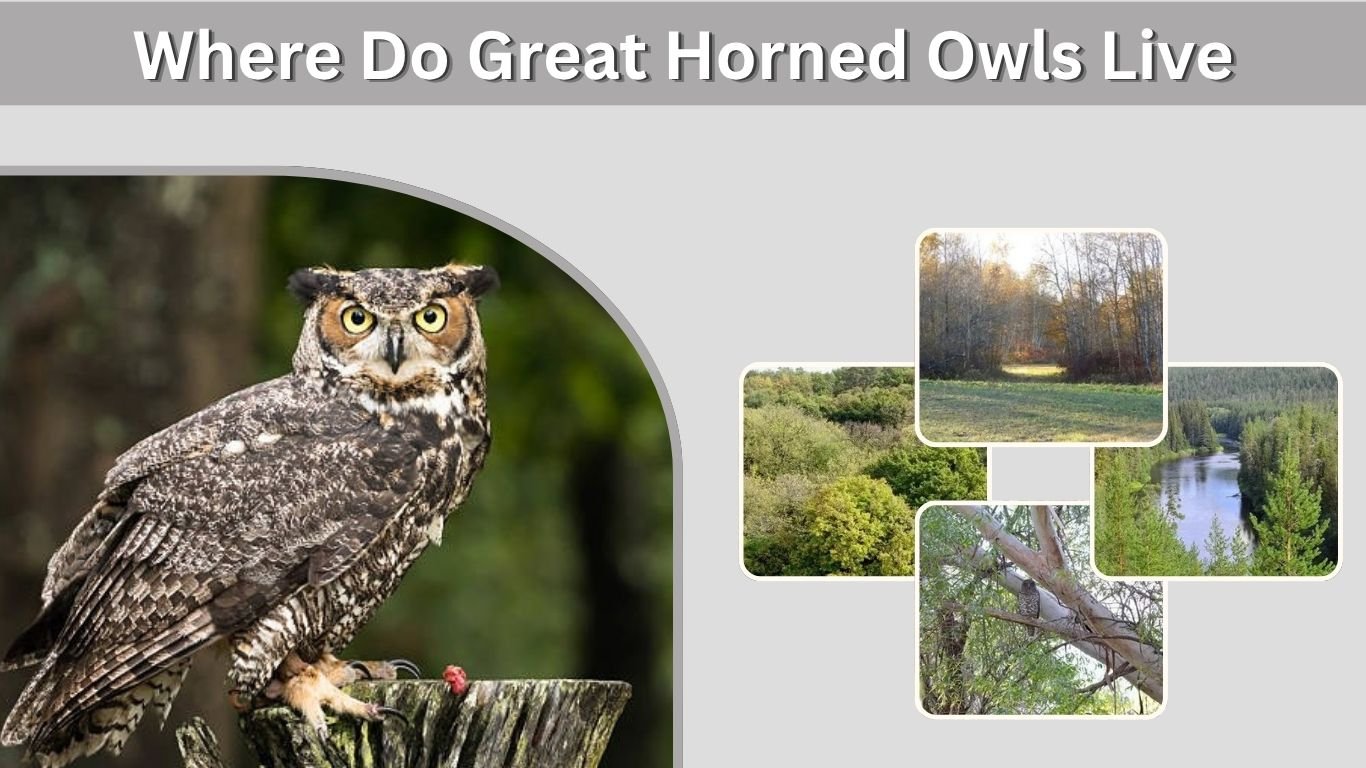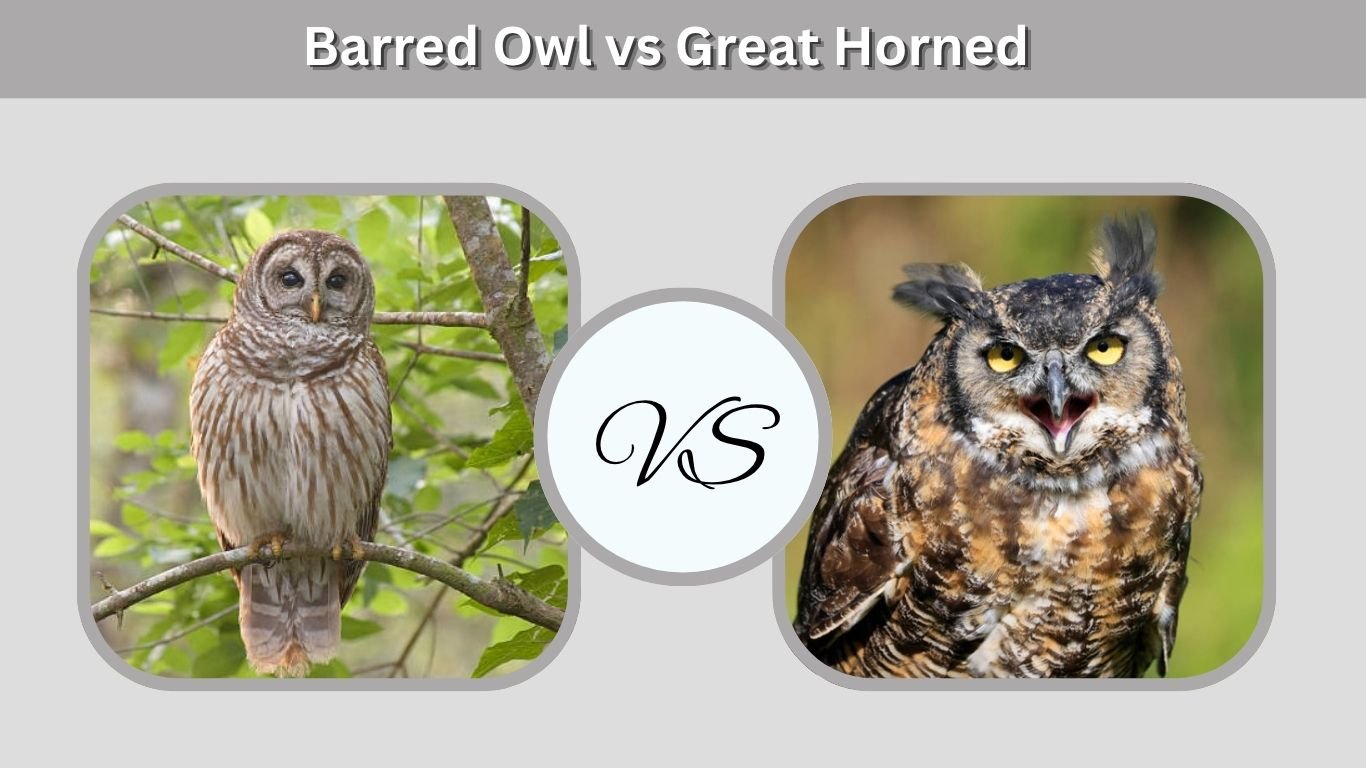
The great horned owl is one of the largest, strongest, and most adaptable owls in the Americas. Recognizable by its prominent feather tufts, yellow eyes, and deep hooting call, this nocturnal hunter can capture surprisingly large prey. It also has an impressive lifespan, excellent nighttime senses, and enough strength to threaten very small pets. However, claims about an owl carrying away large dogs, adult humans, or other heavy animals are generally exaggerated.
Great Horned Owl Quick Facts
Great horned owls vary in size according to sex, subspecies, habitat, and geographic location. Females are normally heavier than males.
| Feature | Typical measurement |
| Scientific name | Bubo virginianus |
| Body length | 18.1–24.8 inches |
| Wingspan | 39.8–57.1 inches |
| Weight | 2–5.5 pounds |
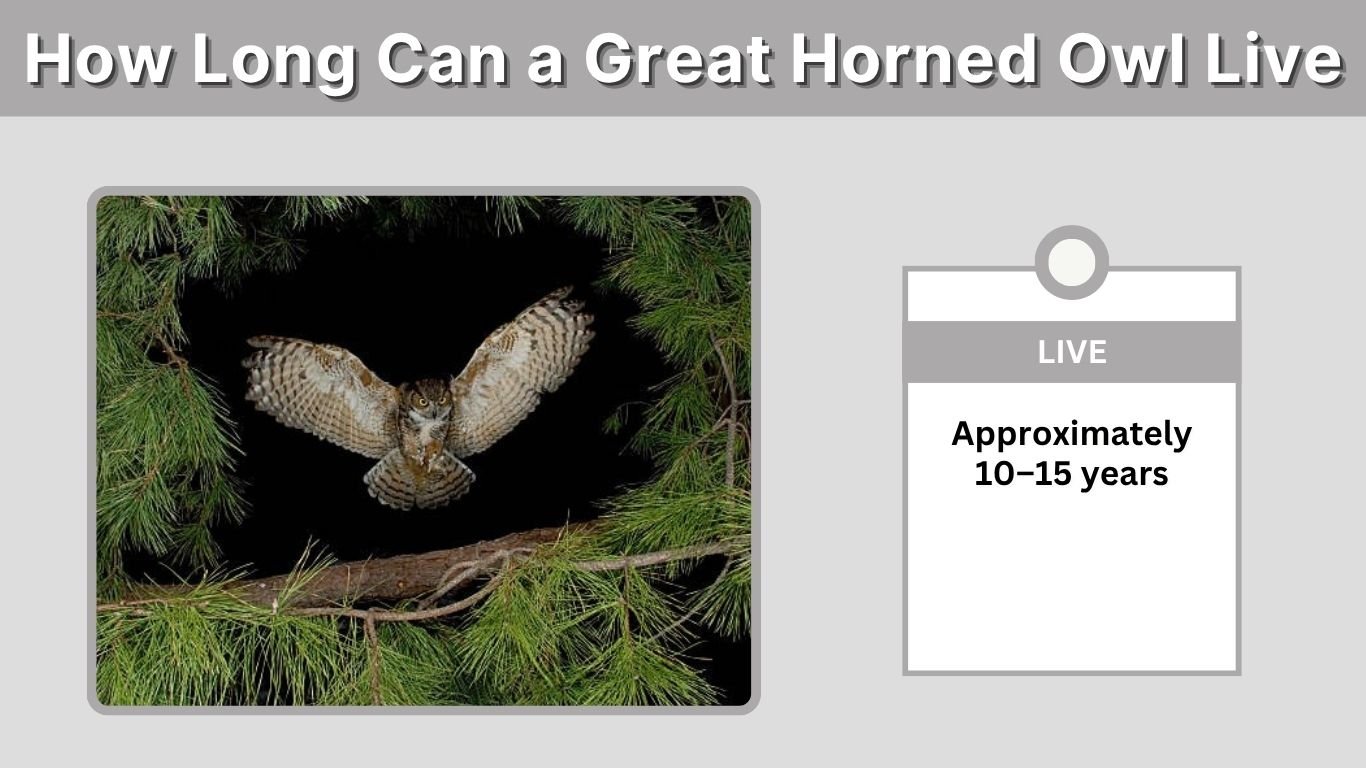
| Typical wild lifespan | Approximately 10–15 years |
| Wild longevity record | 28 years and 10 months |
| Captive lifespan | Often 20 years or longer |
| Head rotation | Up to approximately 270 degrees |
| Range | North, Central, and South America |
Cornell reports a length of 18.1–24.8 inches, a wingspan reaching 57.1 inches, and a maximum reported weight of about 5.5 pounds.
How Long Can a Great Horned Owl Live?
A great horned owl that survives its vulnerable first years can remain in the same general territory for many breeding seasons. Its lifespan is influenced by food availability, disease, habitat quality, human activity, and injuries.
Lifespan in the Wild
Many great horned owls live around 10–15 years in the wild, although some survive considerably longer. Young owls face the greatest risks from starvation, collisions, electrocution, territorial conflicts, and inexperienced hunting.
The North American Bird Banding Program currently lists a great horned owl that reached at least 28 years and 10 months, making it an exceptionally long-lived wild individual.
Lifespan in Captivity
Great horned owls under professional human care may live for 20 years or longer because they receive dependable food, veterinary treatment, and protection from vehicles, predators, and severe weather. Longevity varies considerably, so not every captive owl reaches an advanced age.
How Big Can a Great Horned Owl Get?
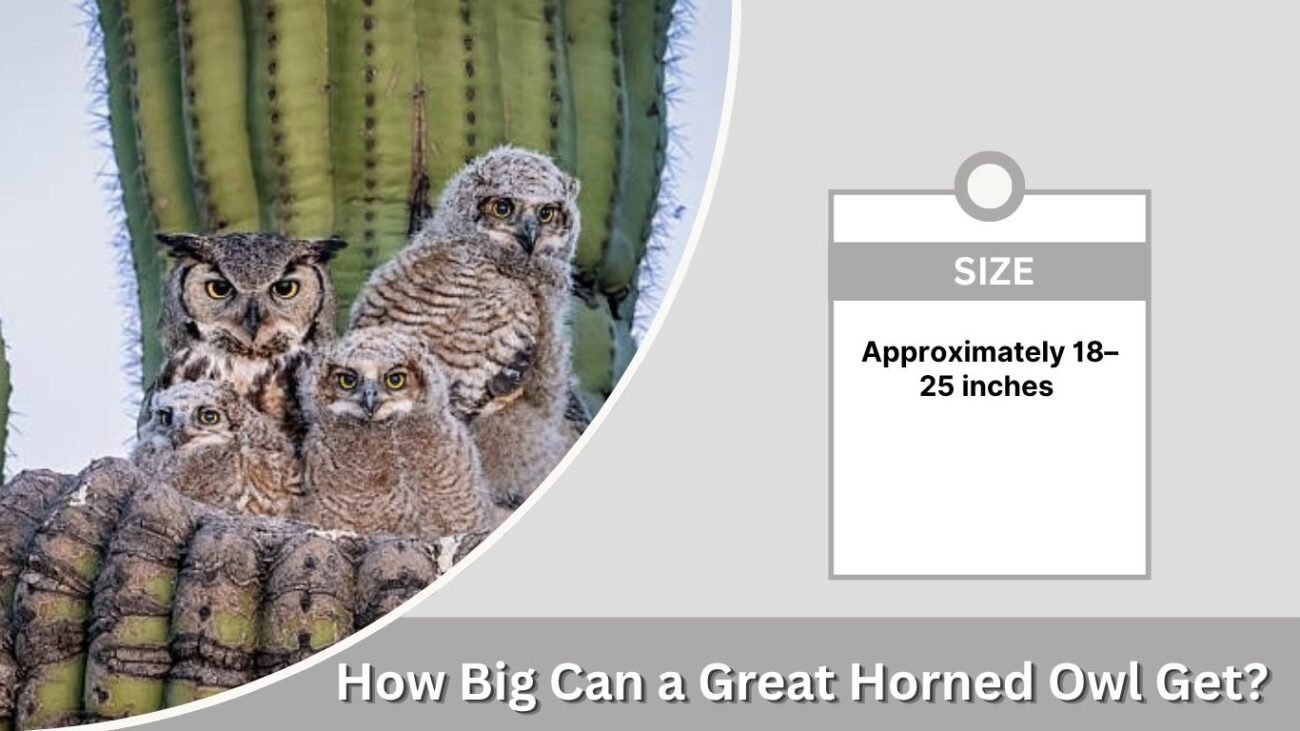
An adult great horned owl can stand approximately 18–25 inches tall. Its broad wings may stretch nearly five feet from tip to tip, creating the appearance of a much larger animal when it flies overhead.
Females are typically larger and heavier than males. A large female may weigh close to 5.5 pounds, while many males weigh around 2–3.5 pounds. Despite their bulky appearance, much of an owl’s visible size comes from thick feathers rather than body mass.
How Much Weight Can a Great Horned Owl Carry?
Great horned owls can kill animals heavier than themselves, but killing, dragging, and flying away with prey are different abilities.
A strong owl may briefly lift or move several pounds. One government wildlife resource notes that a three-pound owl may be capable of carrying prey weighing approximately eight or nine pounds. However, carrying such a heavy animal over a long distance would be difficult. Most prey transported to a perch or nest is significantly smaller.
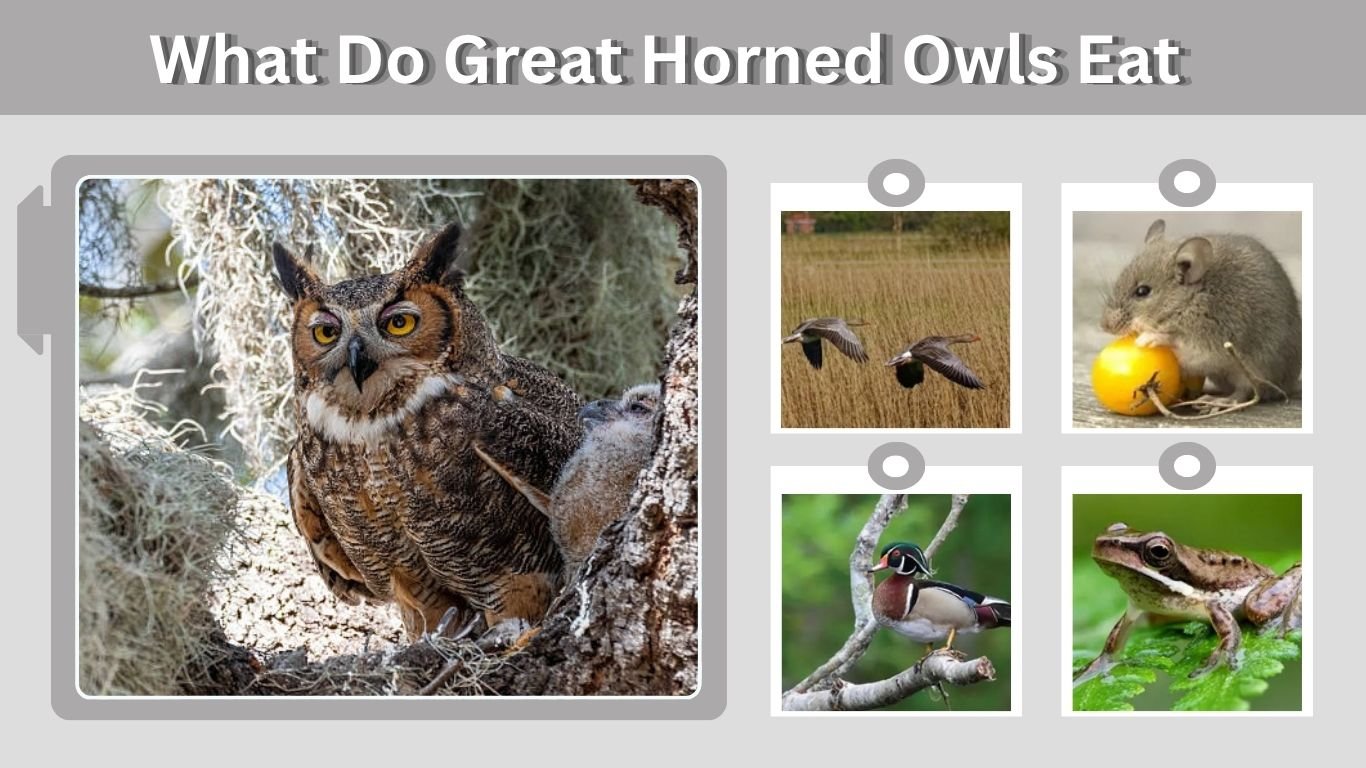
Great horned owls commonly eat:
- Mice, rats and voles
- Rabbits and squirrels
- Skunks and opossums
- Snakes, frogs and large insects
- Ducks, crows and smaller owls
- Hawks and other medium-sized birds
Their prey can range from tiny scorpions to hares, geese, skunks, and other raptors.
Can a Great Horned Owl Kill or Carry a Cat?
A great horned owl is physically capable of attacking and killing a kitten or small cat. It may also target an unattended cat that weighs only a few pounds, particularly around dawn, dusk, or nighttime.
However, an average adult house cat often weighs eight pounds or more. Although an owl might injure or kill a cat of that size, carrying the entire animal away would usually be extremely difficult. The owl might instead feed where the attack occurred or remove smaller portions.
Cats should be kept indoors at night, especially where large owls are regularly seen or heard.
Can a Great Horned Owl Eat a Small Dog?
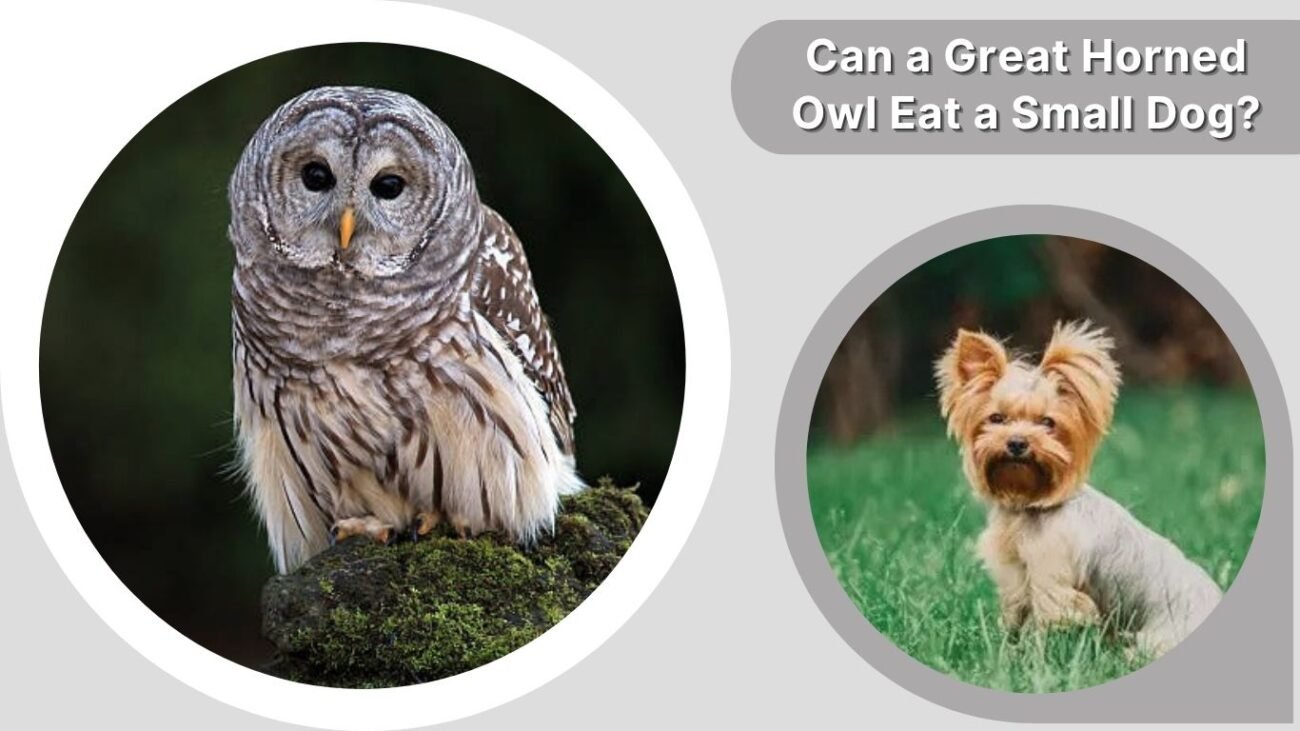
Very small dogs and puppies can potentially be attacked by great horned owls. Toy breeds weighing only a few pounds face the greatest risk when left outdoors unattended.
A great horned owl is unlikely to carry away a medium or large dog. Nevertheless, its talons can cause serious puncture wounds, particularly around the head, neck, and back. Pet owners should supervise small dogs outside after dark and use a covered enclosure when owl activity is frequent.
Can a Great Horned Owl Kill an Eagle?
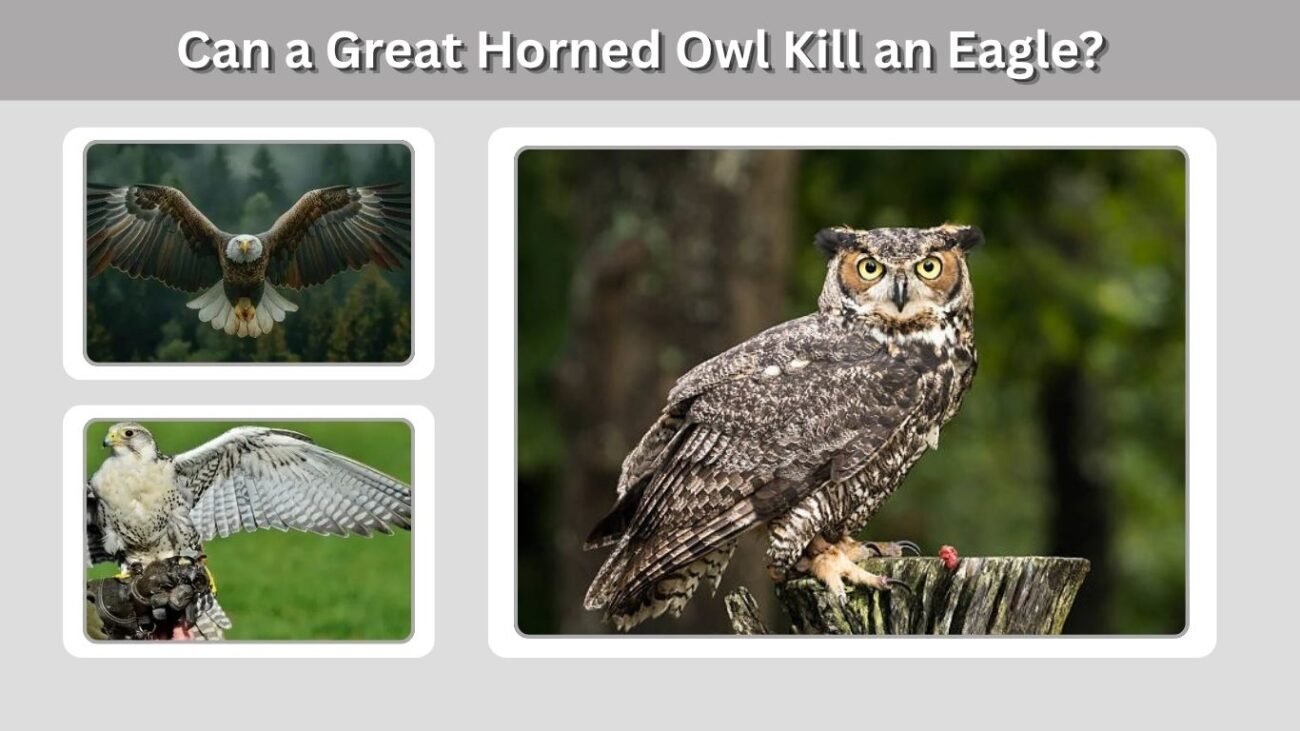
Great horned owls sometimes prey on smaller raptors and may kill young eagles, hawks, falcons, or owls in their nests. They also take over abandoned nests originally built by hawks, eagles, ravens, or crows.
An attack on a healthy adult bald eagle would be unusual and extremely dangerous for both birds. Great horned owls are formidable, but adult eagles are considerably heavier and have powerful talons of their own. Cornell documents the owl’s broad diet as including other raptors, but adult eagles are not normal prey.
Can a Great Horned Owl Kill a Human?
A great horned owl could seriously injure a person, but it is not realistically capable of killing a healthy adult human under normal circumstances. Defensive attacks may occur near nests, fledglings, or feeding areas.
Its talons can produce deep cuts and puncture wounds, particularly to the scalp and face. Anyone confronted by an aggressive owl should protect the head, leave the area, and avoid approaching the nest.
How Fast Can a Great Horned Owl Fly?
Great horned owls are built more for quiet, controlled ambushes than prolonged high-speed pursuit. Their broad wings and specially shaped feathers allow them to approach prey with very little sound.
Estimates commonly place their faster flight at approximately 30–40 mph, although speed changes with wind, terrain, and whether the owl is gliding, chasing prey, or diving. Owls can also fly unusually slowly while searching for animals below. Their soft-edged flight feathers reduce noise and help conceal an approaching attack.
How Well Can Great Horned Owls See and Hear?
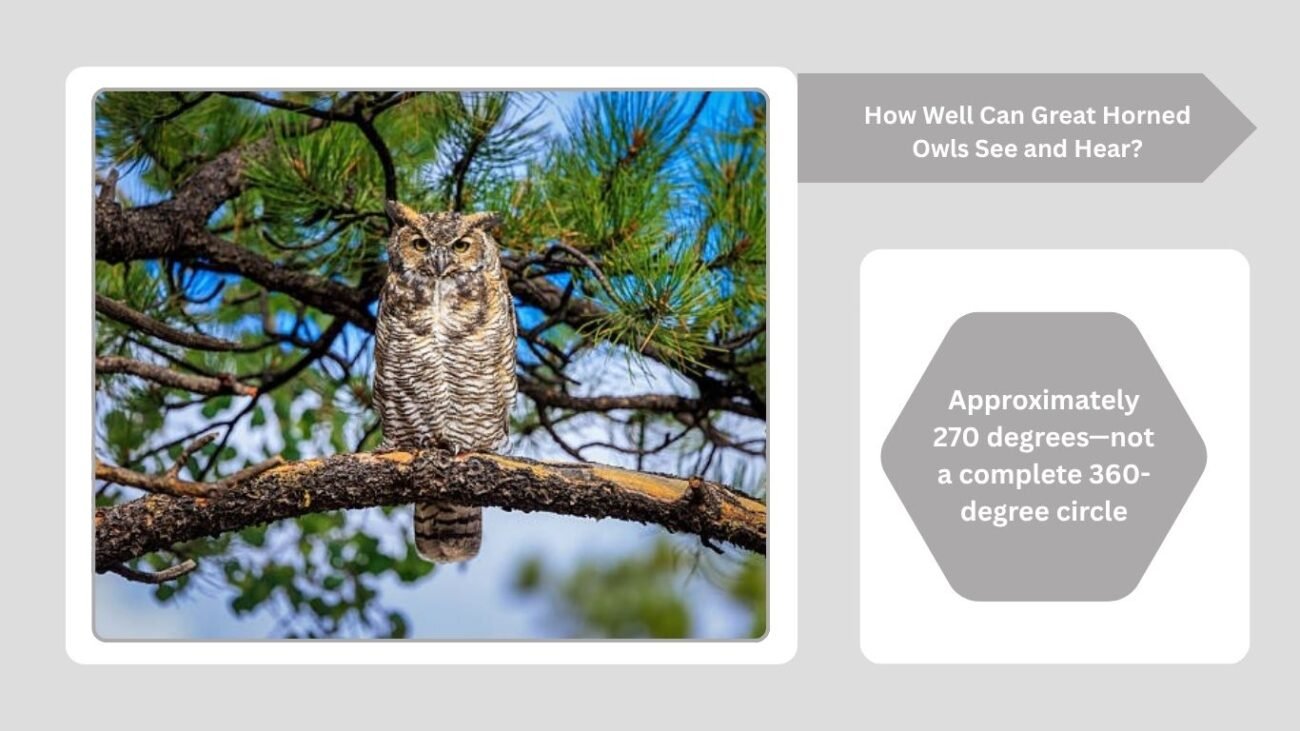
Great horned owls have excellent low-light vision, but they cannot see in complete darkness. Their forward-facing eyes provide strong depth perception for judging the distance to prey.
Because an owl’s tube-shaped eyes cannot move freely inside their sockets, it must turn its head to change its viewing direction. Owls can rotate their heads approximately 270 degrees—not a complete 360-degree circle. Their specialized blood vessels help maintain circulation during this movement.
Their hearing is equally important. The facial disk directs sound toward the ears, allowing the owl to detect and locate small animals moving through grass, leaves, or darkness.
Can Great Horned Owls Swim?
Great horned owls can paddle through water using movements resembling a breaststroke, but they swim only in emergencies. An owl may enter the water after falling, escaping another bird, or missing prey.
Wet feathers become heavy, and an owl generally cannot take off directly from deep water. It must reach land, climb out, and dry its feathers before flying normally.
Can You Own or Shoot a Great Horned Owl?
In the United States, great horned owls are protected under the Migratory Bird Treaty Act. Killing, capturing, selling, transporting, or possessing one—including its feathers, eggs, or body parts—generally requires federal authorization. Therefore, a person cannot legally keep one as an ordinary pet or shoot one simply because it enters a yard.
Canadian rules are administered partly through provincial wildlife laws. For example, Alberta specifically prohibits harassing or killing owls and other birds of prey. Anyone dealing with an injured or troublesome owl should contact wildlife authorities or a licensed rehabilitator rather than attempting to capture it.
FAQs
Where can great horned owls be found?
They occur throughout much of North America, Central America, and South America. They inhabit forests, deserts, wetlands, farmland, city parks, suburban neighborhoods, and wooded areas in Canada.
How many babies can a great horned owl have?
A female usually lays one to four eggs, although two eggs are common. The young begin leaving the nest before they can fly confidently and generally become capable of stronger flight at approximately nine or ten weeks old.
Can great horned owls smell?
Their sense of smell is generally much weaker than their sight and hearing. This allows them to hunt strong-smelling animals such as skunks without being discouraged as easily as many mammalian predators.
Can a great horned owl turn its head completely around?
No. It can rotate its head approximately 270 degrees, which is three-quarters of a complete circle. It cannot turn its head through a full 360 degrees.
Can great horned owls be white?
Some individuals can appear unusually pale, particularly in northern regions, but a completely white great horned owl is rare. Most have mottled brown, gray, black, reddish, and cream-colored feathers that provide excellent camouflage.