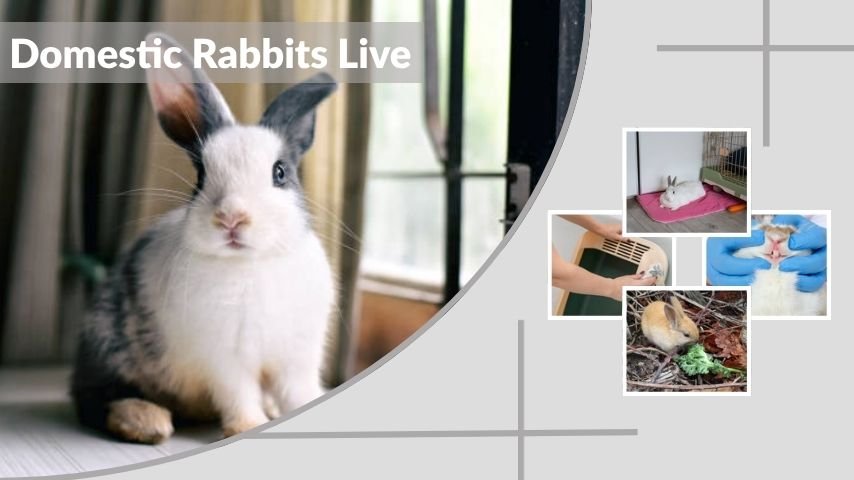
Domestic rabbits usually live much longer than many new owners expect. With proper care, many pet rabbits can live for 8 to 12 years, and some may live even longer. Their lifespan depends on breed, genetics, diet, housing, exercise, stress level, and veterinary care. A rabbit kept in a safe indoor space with a healthy diet and regular attention often has a better chance of living a long life. Understanding rabbit lifespan helps owners prepare for the long-term responsibility of caring for these gentle animals.
How Long Do Domestic Rabbits Live?
Domestic rabbits are long-term pets. They are not animals that should be bought without planning, because they may need care for more than a decade. Their lifespan can vary, but good care can make a major difference.
Average Lifespan of Domestic Rabbits
Most domestic rabbits live around 8 to 12 years when they receive proper care. Some rabbits may live only 5 to 7 years because of illness, poor diet, unsafe housing, or weak genetics. Others may live beyond 12 years if they are healthy, well-fed, protected, and regularly checked by a rabbit-savvy veterinarian.
Pet rabbits usually live longer than wild rabbits because they do not have to face predators, food shortages, harsh weather, or constant stress. However, they still need daily care to stay healthy.
Indoor vs Outdoor Rabbit Lifespan
Indoor rabbits often live longer than outdoor rabbits. This is because indoor rabbits are usually safer from predators, parasites, extreme temperatures, and sudden weather changes. Owners can also notice health problems faster when rabbits live inside the home.
Outdoor rabbits can still live healthy lives, but they need very secure housing. Their enclosure should protect them from dogs, cats, foxes, snakes, birds of prey, heat, cold, rain, and damp bedding. Without strong protection, outdoor rabbits may face more health and safety risks.
Lifespan Compared to Wild Rabbits
Wild rabbits usually have much shorter lives than domestic rabbits. They face predators, disease, injury, hunger, and environmental danger. Many wild rabbits do not survive for many years. Domestic rabbits have a better chance of living longer because humans provide food, shelter, safety, and medical care.
Domestic Rabbit Lifespan by Breed
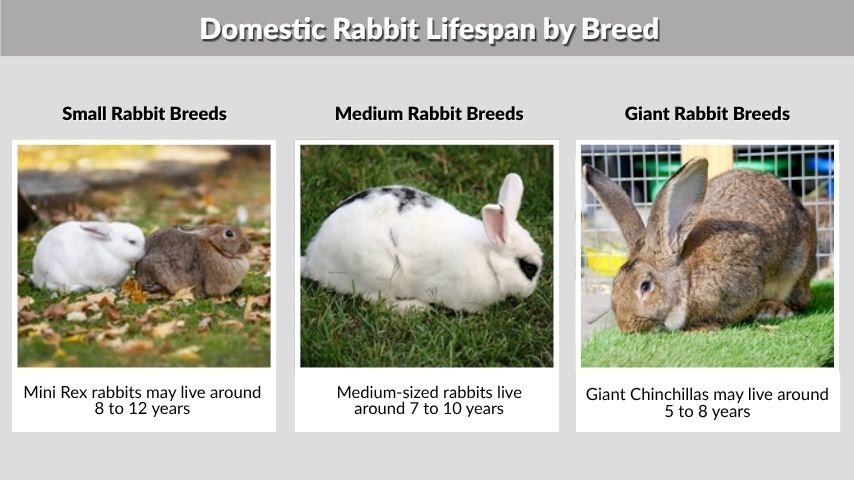
Breed can affect how long a rabbit lives. Size, genetics, and breed-related health risks all play a role. However, care quality is often just as important as breed.
Small Rabbit Breeds
Small rabbit breeds often live longer than giant breeds. Breeds such as Netherland Dwarfs, Polish rabbits, Holland Lops, and Mini Rex rabbits may live around 8 to 12 years or more with good care. These rabbits still need space, exercise, and a proper diet even though they are small.
Medium Rabbit Breeds
Medium-sized rabbits, such as Dutch, Rex, Havana, and Californian rabbits, often live around 7 to 10 years. Many medium breeds are active, social, and strong when cared for properly. Their lifespan depends on diet, exercise, genetics, and regular health monitoring.
Large and Giant Rabbit Breeds
Large and giant breeds may have slightly shorter average lifespans. Breeds such as Flemish Giants, French Lops, and Giant Chinchillas may live around 5 to 8 years, although some can live longer with excellent care. Larger rabbits may be more likely to develop joint problems, sore feet, or weight-related issues.
Domestic Rabbit Lifespan Table
| Rabbit Type | Common Examples | Average Lifespan |
| Small breeds | Netherland Dwarf, Polish, Mini Rex | 8 to 12+ years |
| Medium breeds | Dutch, Rex, Havana, Californian | 7 to 10 years |
| Large breeds | New Zealand, English Lop | 6 to 9 years |
| Giant breeds | Flemish Giant, French Lop | 5 to 8 years |
Main Factors That Affect Domestic Rabbit Lifespan
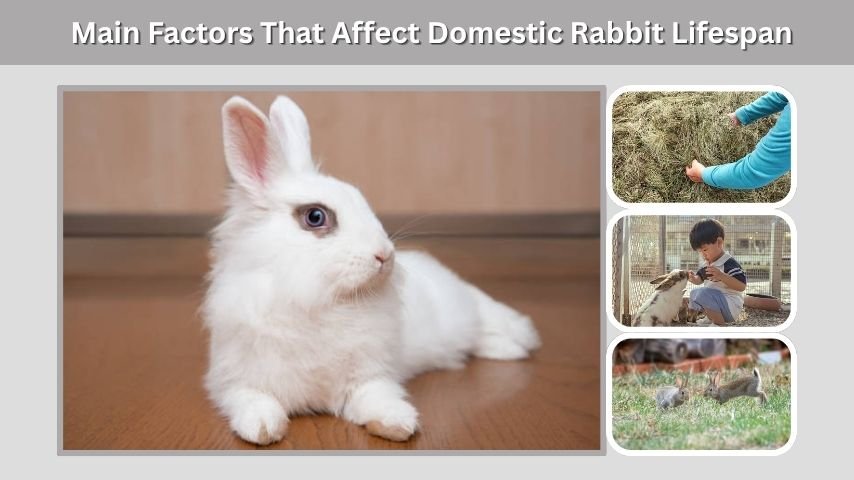
A rabbit’s lifespan depends on several daily care factors. Some things, such as genetics, cannot be fully controlled. However, owners can greatly improve a rabbit’s health by providing proper food, housing, exercise, and medical care.
Diet and Nutrition
Diet is one of the most important factors in rabbit lifespan. Rabbits need a high-fiber diet to keep their digestive system working properly. Grass hay should be available at all times because it supports digestion and helps wear down their teeth.
A poor diet can lead to obesity, dental disease, digestive slowdown, and other serious problems. Too many pellets, sugary treats, or starchy foods can shorten a rabbit’s life.
Housing and Environment
Rabbits need clean, spacious, and safe housing. A small cage is not enough for a healthy rabbit. They need room to hop, stretch, stand, rest, and explore. A stressful or dirty environment can increase the risk of disease and injury.
The living area should be dry, well-ventilated, and protected from extreme heat or cold. Indoor rabbits should be kept away from electrical wires, toxic plants, chemicals, and unsafe objects.
Exercise and Activity
Daily exercise helps rabbits stay strong and healthy. Rabbits that do not move enough may become overweight or bored. Lack of movement can also affect digestion and muscle strength.
Rabbits need time outside their enclosure every day in a rabbit-safe area. They enjoy hopping, running, exploring, chewing, and playing with tunnels or boxes.
Genetics and Breed Health
Some rabbits are naturally healthier than others because of genetics. A rabbit from a strong, healthy breeding line may have fewer inherited problems. Other rabbits may be more likely to develop dental issues, heart problems, joint disease, or digestive sensitivity.
Even with good genetics, rabbits still need proper care. A healthy breed can still become sick if it has poor food, dirty housing, or no exercise.
Common Health Problems That Can Shorten Rabbit Lifespan
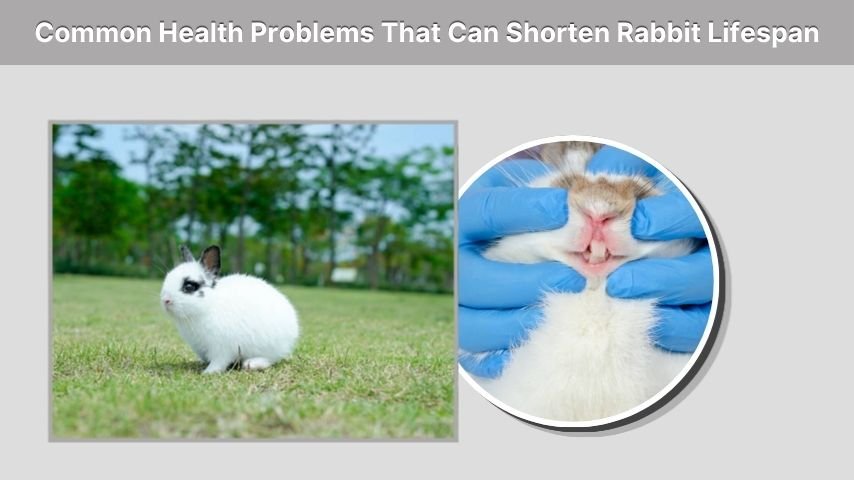
Rabbits often hide illness because they are prey animals. This means owners must watch carefully for small changes in eating, droppings, movement, or behavior. Early treatment can save a rabbit’s life.
Dental Problems
Rabbit teeth grow continuously throughout life. If the teeth do not wear down properly, they can become overgrown or misaligned. This may cause pain, drooling, weight loss, and difficulty eating.
Hay is very important because chewing it helps keep the teeth naturally worn down. Rabbits with dental problems may need veterinary treatment.
Digestive Issues
Digestive problems can become serious very quickly in rabbits. A rabbit that stops eating or stops producing droppings may have a dangerous condition that needs urgent care. Rabbits need fiber-rich foods to keep the gut moving.
Warning signs include:
- Not eating hay or food
- Very small or missing droppings
- A swollen or painful belly
- Sitting hunched in discomfort
- Low energy or weakness
- Diarrhea or soft stool
Obesity
Obesity can shorten a rabbit’s life. Rabbits may become overweight if they eat too many pellets, treats, or sugary foods. Lack of exercise also contributes to weight gain.
Extra weight can affect the heart, joints, liver, and grooming ability. Overweight rabbits may also have trouble cleaning themselves, which can lead to skin problems.
Respiratory Infections
Respiratory infections may cause sneezing, nasal discharge, watery eyes, or noisy breathing. Dirty bedding, poor ventilation, and stress can increase the risk of breathing problems.
A rabbit with breathing difficulty should be checked by a veterinarian. Respiratory issues can become serious if ignored.
How to Help Domestic Rabbits Live Longer
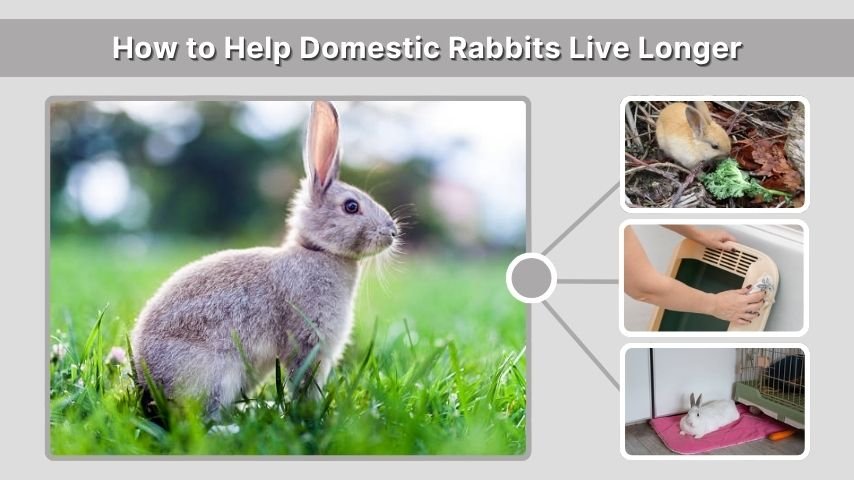
Good daily care is the best way to support a rabbit’s long-term health. Rabbits need a steady routine, safe surroundings, and proper nutrition.
Provide a Healthy Diet
A healthy diet supports digestion, dental health, and body condition. Rabbits should not be fed like cats, dogs, or humans.
To support a longer life:
- Offer unlimited grass hay every day
- Provide fresh, clean water at all times
- Feed safe leafy greens regularly
- Give only a small amount of pellets
- Avoid sugary, salty, and processed foods
- Use fruit only as a rare treat
- Do not feed unknown plants or weeds
Keep Housing Safe and Clean
A clean habitat helps prevent illness, parasites, odor, and stress. Rabbits should live in a space where they feel secure and comfortable.
Helpful housing tips include:
- Use a large enclosure or rabbit-proofed room
- Clean the litter box often
- Remove wet bedding quickly
- Keep the space dry and ventilated
- Provide hiding areas for comfort
- Protect outdoor rabbits from predators
- Avoid extreme heat and cold
Give Daily Exercise and Enrichment
Rabbits need both physical and mental activity. A bored rabbit may become stressed or destructive. Exercise also helps keep their weight and digestion healthy.
Good enrichment ideas include:
- Tunnels and cardboard boxes
- Safe chew toys
- Digging boxes
- Supervised playtime
- Hiding houses
- Food puzzles
- Time with trusted people or bonded rabbits
Signs of a Healthy Domestic Rabbit
A healthy rabbit is alert, active, and interested in food. Owners should check their rabbit every day because early signs of illness can be subtle.
Normal Eating and Drinking
Healthy rabbits eat hay throughout the day and drink water regularly. They should show interest in food and treats. A sudden loss of appetite is serious and should not be ignored.
Healthy Droppings
Rabbit droppings are an important sign of health. Normal droppings are round, dry, and fairly consistent in size. Very small, watery, soft, or missing droppings may suggest a health problem.
Bright Eyes and Clean Fur
A healthy rabbit usually has bright eyes, a clean nose, smooth fur, and good grooming habits. Dull eyes, dirty fur, bald patches, or discharge from the nose or eyes may be warning signs.
Active and Curious Behavior
Healthy rabbits are curious about their surroundings. They may hop, explore, stretch out, groom themselves, or respond to familiar people. A rabbit that suddenly hides, refuses to move, or acts weak may need medical attention.
Signs Your Rabbit May Be Aging
Senior rabbits can still enjoy life, but they may need extra comfort and closer monitoring. Aging is normal, but sudden changes should be taken seriously.
Lower Activity Level
Older rabbits may rest more and move more slowly. They may not jump as high or run as often as they did when younger. However, sudden weakness or refusal to move may be a sign of pain or illness.
Weight Changes
Senior rabbits may lose or gain weight. Weight loss can happen because of dental pain, illness, or reduced appetite. Weight gain may occur if the rabbit becomes less active but continues eating too much.
Regular weight checks can help owners notice changes early.
Dental and Joint Problems
Older rabbits may develop dental disease, arthritis, sore feet, or stiffness. They may need softer bedding, lower litter boxes, and easy access to food and water. A veterinarian can help manage pain and age-related health problems.
Senior Rabbit Care Tips
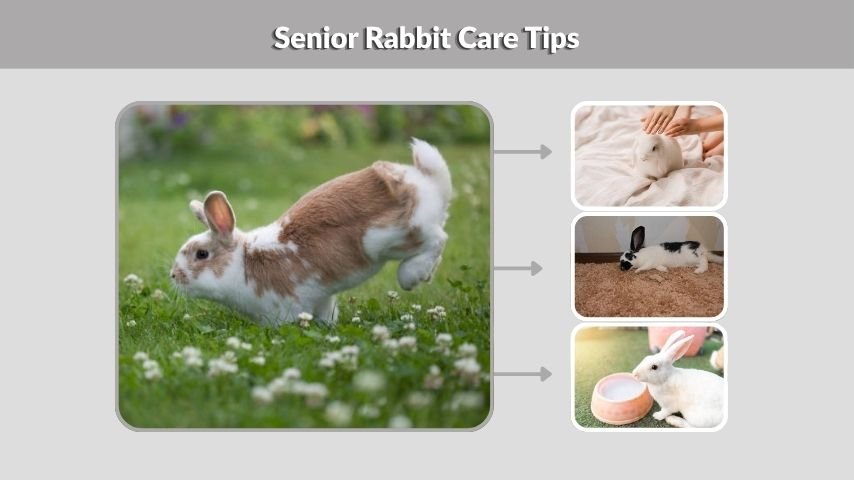
Older rabbits need gentle care and a comfortable living space. Small changes in the home can make life easier for them.
Make the Living Space Comfortable
Senior rabbits may have trouble jumping or walking on slippery floors. Their living area should be easy to move around in.
Comfort tips include:
- Use soft bedding or mats
- Keep food and water close
- Provide low-entry litter boxes
- Avoid slippery flooring
- Keep the area warm and dry
- Reduce loud noise and stress
- Make hiding places easy to enter
Monitor Health More Closely
Senior rabbits should be watched carefully because health problems can appear more often with age.
Owners should:
- Check appetite every day
- Watch droppings closely
- Notice changes in movement
- Track body weight
- Look for signs of pain
- Schedule regular vet visits
- Keep grooming gentle and consistent
Domestic Rabbit Lifespan Myths
Many people misunderstand how long rabbits live and what they need. These myths can lead to poor care and shorter lifespans.
Myth: Rabbits Only Live a Few Years
Some people think rabbits are short-term pets, but domestic rabbits can live 8 to 12 years or more. This makes them a long-term responsibility. Owners should be prepared for years of feeding, cleaning, exercise, and medical care.
Myth: Outdoor Rabbits Do Not Need Much Care
Outdoor rabbits still need daily attention. They require fresh food, clean water, dry bedding, secure housing, exercise, and health checks. Outdoor rabbits may actually need more protection because they face more environmental risks.
Myth: Pellets Should Be the Main Food
Pellets should not be the main food for most adult rabbits. Hay should make up the largest part of the diet. Pellets can be useful in small amounts, but too many pellets can lead to obesity and poor digestion.
FAQs
How long do domestic rabbits live as pets?
Domestic rabbits usually live around 8 to 12 years as pets. Some may live longer with excellent care, while others may have shorter lives because of illness, poor diet, unsafe housing, or genetics. A healthy routine can greatly improve their lifespan.
Do indoor rabbits live longer than outdoor rabbits?
Indoor rabbits often live longer because they are safer from predators, extreme weather, parasites, and accidents. Owners can also notice health problems more quickly when rabbits live indoors. Outdoor rabbits can live well too, but they need very secure housing and daily monitoring.
What rabbit breed lives the longest?
Small and medium rabbit breeds often live longer than giant breeds. Netherland Dwarfs, Mini Rex, Dutch rabbits, and similar breeds may live around 8 to 12 years or more. However, lifespan depends on genetics, diet, housing, exercise, and veterinary care.
What can shorten a rabbit’s lifespan?
A rabbit’s lifespan may be shortened by poor diet, lack of hay, obesity, dirty housing, stress, untreated illness, dental problems, unsafe outdoor conditions, and lack of exercise. Rabbits need daily care and quick treatment when health problems appear.
How can I help my rabbit live longer?
You can help your rabbit live longer by feeding unlimited grass hay, providing clean water, offering safe greens, keeping the housing clean, giving daily exercise, and visiting a rabbit-savvy veterinarian. A safe, calm, and active lifestyle supports better long-term health.