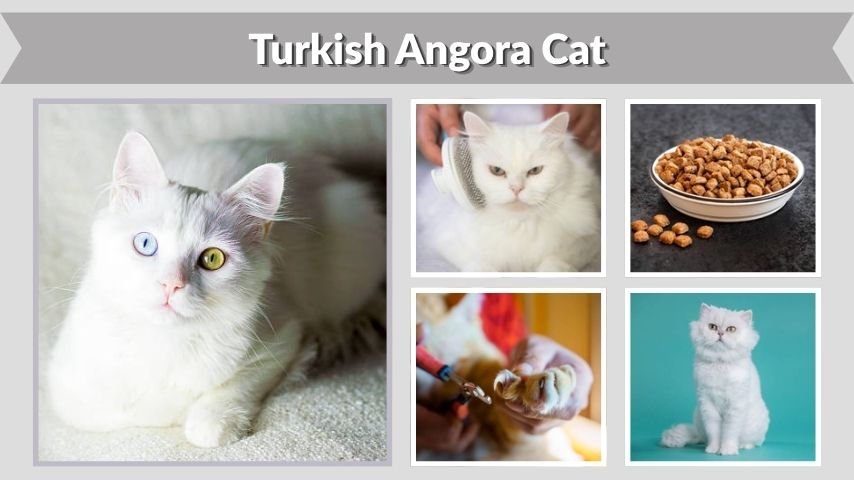
The Turkish Angora cat is an elegant, intelligent, and playful breed known for its silky coat, graceful body, and lively personality. Many people think only of the white Turkish Angora cat, but this breed can appear in many colors, including black, grey, orange, calico, tuxedo, and tortoiseshell. Turkish Angoras are affectionate, curious, and often strongly attached to their families. This guide covers Turkish Angora personality, colors, lifespan, price, kittens, breeders, adoption, food, grooming, and breed comparisons.
What Is a Turkish Angora Cat?
The Turkish Angora is a natural cat breed associated with Turkey, especially Ankara, which was historically known as Angora. This breed is admired for its fine-boned body, silky long coat, plumed tail, and active nature. Turkish Angoras are not just beautiful cats; they are also clever, social, and full of personality.
Turkish Angora Meaning and Definition
The term Turkish Angora refers to a cat breed that developed naturally in Turkey. “Angora” comes from the old name for Ankara, the city strongly linked with the breed. Today, the Turkish Angora is known worldwide as a graceful longhaired cat with a lively and affectionate temperament.
Turkish Angora Cat Origin City
The Turkish Angora cat is closely connected with Ankara, Turkey. The breed’s name reflects that historical connection. These cats became famous for their silky coats and elegant movement. Although white Turkish Angoras are especially iconic, the breed includes many accepted colors and patterns.
Turkish Angora Characteristics
A Turkish Angora usually has a slim body, long legs, wedge-shaped head, large ears, almond-shaped eyes, and a full tail. Its coat is silky rather than heavy or woolly. The overall impression should be graceful, alert, and athletic, not round or bulky.
Turkish Angora Personality and Temperament
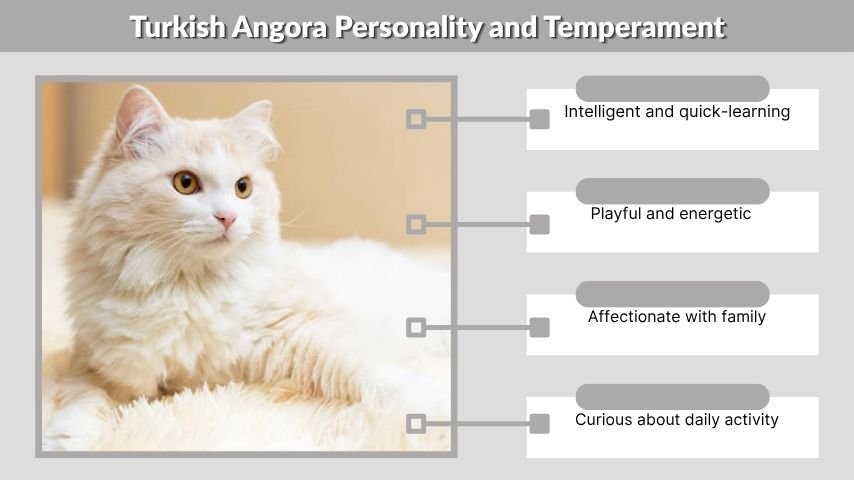
The Turkish Angora personality is active, affectionate, curious, and intelligent. This breed often enjoys being involved in daily household life and may follow its favorite person from room to room. Turkish Angoras can be loving and social, but they may also show an independent streak. They need attention, play, and mental stimulation to stay happy.
Turkish Angora Personality Traits
Common Turkish Angora personality traits include:
- Intelligent and quick-learning
- Playful and energetic
- Affectionate with family
- Curious about daily activity
- Social but sometimes independent
- Agile and athletic
- Confident and expressive
- Often loyal to one favorite person
Are Turkish Angoras Good Family Pets?
Turkish Angoras can be good family pets when they are treated gently and given enough attention. They often enjoy interactive homes and may do well with respectful children. They can also live with other pets when introductions are slow and careful. Their playful energy makes them entertaining companions.
Do Turkish Angoras Like Attention?
Many Turkish Angoras enjoy attention and may actively seek it from their owners. They may sit nearby, follow people around, or join family activities. However, they are not always lap cats. Some prefer affection on their own terms while still staying close to their favorite people.
Turkish Angora Appearance, Size, and Coat
The Turkish Angora has a refined appearance with a silky coat, slim body, and elegant movement. It is usually small to medium in size but can look larger because of its flowing coat and plumed tail. Unlike heavier longhaired breeds, the Turkish Angora should look athletic, light, and graceful rather than thick or stocky.
Turkish Angora Size
Turkish Angoras are usually small to medium-sized cats with a lean but strong body. Males may be slightly larger than females, but both should look balanced and athletic. Their fine bones and long legs give them a graceful appearance. They should not look heavy, round, or overly muscular.
Turkish Angora Breed Facts
| Feature | Typical Details |
| Origin | Ankara, Turkey |
| Coat | Silky long or semi-long coat |
| Body type | Slim, graceful, athletic |
| Personality | Playful, smart, affectionate |
| Common colors | White, black, grey, orange, calico |
| Lifespan | Often into the teens |
| Grooming | Moderate brushing needed |
| Best for | Active, interactive homes |
Long Hair Turkish Angora
The Turkish Angora is best known for its long or semi-long silky coat. The coat is fine and flowing instead of dense and woolly. Because of this texture, it may be easier to maintain than some heavier longhaired breeds. Regular brushing still helps prevent tangles and loose hair.
Turkish Angora Short Hair
A purebred Turkish Angora is generally known as a longhaired or semi-longhaired breed. Searches for “Turkish Angora short hair” may refer to kittens whose coats have not fully developed, mixed-breed cats, or confusion with another breed. Coat length alone should not be used to confirm breed identity.
Turkish Angora Colors and Patterns
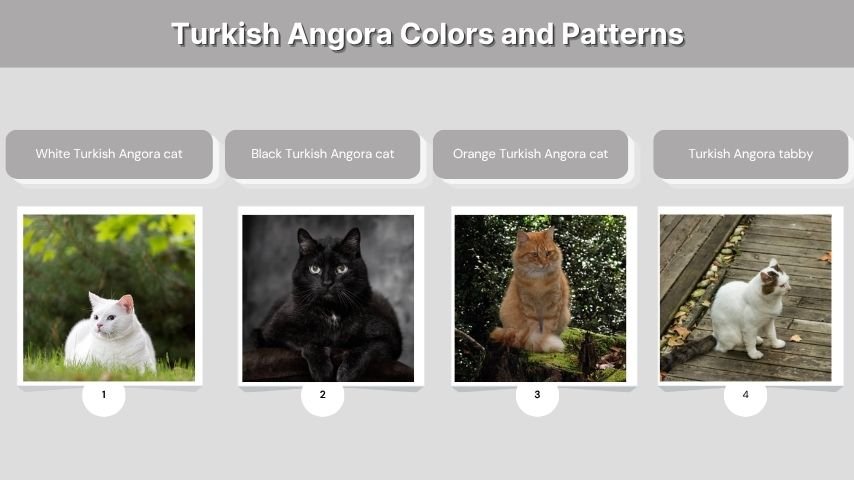
Many people picture a white Turkish Angora cat, but the breed comes in several colors and patterns. Color alone does not prove that a cat is a Turkish Angora. A white, black, grey, calico, or tuxedo longhaired cat may resemble the breed, but pedigree records are the best proof of purebred status.
Common Turkish Angora Colors
Turkish Angora colors and patterns may include:
- White Turkish Angora cat
- Black Turkish Angora cat
- Grey or gray Turkish Angora cat
- Orange Turkish Angora cat
- Calico Turkish Angora
- Tortoiseshell Turkish Angora
- Turkish Angora tabby
- Turkish Angora tuxedo
- Bicolor Turkish Angora
- Blue Turkish Angora
White Turkish Angora Cat
The white Turkish Angora cat is the most famous image of the breed. White cats may have blue, amber, green, or odd-colored eyes. However, not every white longhaired cat is a Turkish Angora. Breed identity depends on body type, coat texture, ancestry, and registration.
Black Turkish Angora Cat
A black Turkish Angora cat can look striking because the dark coat highlights the breed’s silky texture and elegant body. Black Turkish Angoras should have the same graceful build and active personality as other colors. A black coat does not make the cat less typical if it comes from correct breed lines.
Grey, Orange, Calico, and Tuxedo Turkish Angora
Grey, orange, calico, tortoiseshell, tabby, tuxedo, and bicolor Turkish Angoras can all attract attention. However, many domestic longhair cats have these same patterns. If a cat has no pedigree papers, it may be better described as a Turkish Angora mix or domestic longhair.
How to Identify a Turkish Angora Cat
Identifying a Turkish Angora cat requires more than looking at coat color. The breed has a graceful body, silky coat, plumed tail, alert expression, and lively behavior. Still, appearance alone is not enough to prove purebred status. Many domestic longhair cats can resemble Turkish Angoras without having confirmed breed ancestry.
Physical Signs of a Turkish Angora
A Turkish Angora often has a slim body, long legs, fine bones, large ears, almond-shaped eyes, and a soft flowing tail. The coat should feel silky and light rather than thick or cottony. The cat should look alert, elegant, and naturally athletic.
Behavior Clues
Turkish Angoras are often intelligent, playful, confident, and social. They may enjoy climbing, exploring, learning routines, and interacting with people. These behavior clues can support identification, but they cannot prove breed ancestry because many mixed cats can have similar personalities.
Pedigree and Breed Records
The most reliable way to identify a purebred Turkish Angora is through breeder records, registration papers, or documented ancestry. Without records, even a cat that looks very similar may be a domestic longhair or a Turkish Angora mix.
Turkish Angora Lifespan and Health
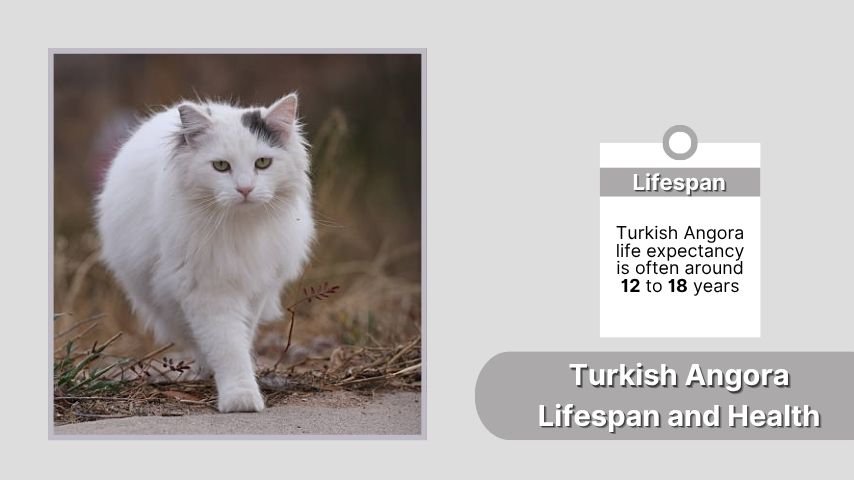
Turkish Angoras are generally active cats that can live long lives with proper care. Their lifespan depends on genetics, diet, weight control, dental care, indoor safety, and regular veterinary visits. Like any breed, they may have certain health concerns, so responsible breeding and preventive care are important for long-term wellbeing.
Turkish Angora Life Expectancy
Turkish Angora life expectancy is often around 12 to 18 years, and some cats may live longer. Good nutrition, exercise, regular checkups, dental care, and a safe home environment all support a longer life. Indoor cats usually avoid many outdoor risks such as traffic, disease, and injury.
Common Health Concerns
Some Turkish Angoras may face health concerns such as dental disease, heart problems, obesity, or inherited conditions. White cats with blue eyes may also have a higher chance of deafness. Not every white Turkish Angora is deaf, but responsible breeders should be honest about hearing and health testing.
Keeping a Turkish Angora Healthy
Helpful care habits include:
- Feed balanced cat food
- Keep the cat at a healthy weight
- Schedule regular vet checkups
- Provide dental care
- Brush the coat regularly
- Keep the cat indoors or supervised
- Encourage daily play
- Watch for behavior or appetite changes
Turkish Angora Food and Daily Care
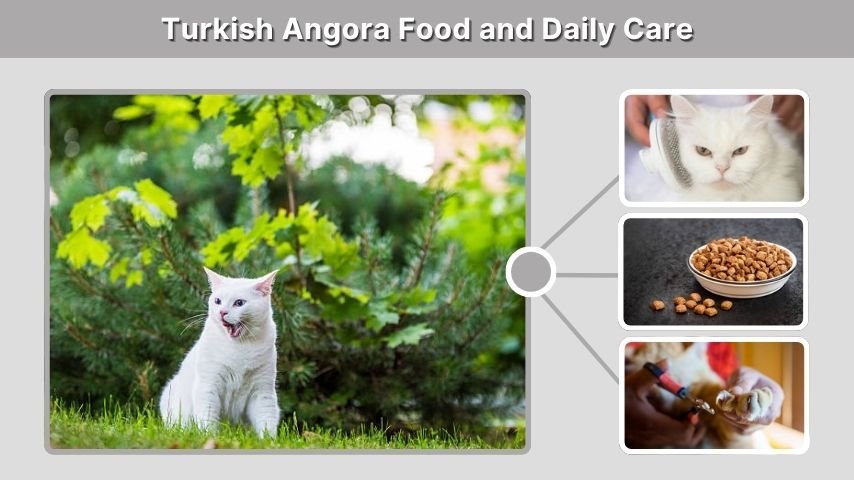
Turkish Angoras need high-quality food, fresh water, grooming, playtime, and regular health care. Because they are active and intelligent, they also need enrichment, not just basic feeding. Their silky coat may be easier to manage than some longhair coats, but brushing still helps reduce tangles, shedding, and hairballs.
Best Food for a Turkish Angora Cat
A Turkish Angora should eat balanced cat food with quality animal protein. Choose food based on age, activity level, weight, and health needs. Kittens need kitten-formula food, adults need maintenance diets, and seniors may need adjusted nutrition. Fresh water should always be available.
Grooming Needs
The Turkish Angora’s silky coat usually needs brushing once or twice a week. More brushing may be needed during seasonal shedding. Owners should also trim nails, check ears, clean around the eyes if needed, and support dental health. Regular grooming also helps owners notice skin or coat problems early.
Exercise and Enrichment
Turkish Angoras are active cats that enjoy climbing, chasing, and exploring. Cat trees, puzzle feeders, feather toys, tunnels, and daily play sessions can help prevent boredom. Because this breed is smart, it may enjoy learning games, routines, and interactive activities with its owner.
Turkish Angora Price and Cost
Turkish Angora price can vary depending on breeder reputation, location, pedigree, color, age, demand, and health testing. Kittens from responsible breeders usually cost more than rescue cats or mixed-breed cats. Buyers should also plan for ongoing costs such as food, litter, grooming supplies, veterinary care, and emergency expenses.
How Much Is a Turkish Angora Cat?
A Turkish Angora cat from a reputable breeder may cost around $800 to $2,500 or more, depending on location and quality. Show-quality kittens or cats from strong bloodlines may cost more. Adoption is usually cheaper, but purebred Turkish Angoras may be uncommon in shelters.
Turkish Angora Kitten Price
Turkish Angora kitten price is often higher than the price of an adult cat. Kittens with registration papers, health checks, vaccinations, and early socialization may cost more. Be careful with very cheap online listings because rare or desirable breeds are sometimes used in pet scams.
Ongoing Ownership Costs
Regular ownership costs may include:
- Cat food
- Litter and litter boxes
- Veterinary checkups
- Vaccinations
- Spay or neuter surgery
- Toys and scratching posts
- Grooming tools
- Dental care
- Emergency vet bills
- Pet insurance
Turkish Angora Kittens, Breeders, and Adoption
Finding Turkish Angora kittens for sale may take research because true Turkish Angoras are not available everywhere. Buyers should choose breeders who prioritize health, temperament, and records. Adoption may also be possible, especially for Turkish Angora mix cats or domestic longhair cats with similar looks and personalities.
Turkish Angora Breeders
Responsible Turkish Angora breeders should provide health records, registration details, information about the parents, and clear care advice. They should raise kittens in clean conditions and socialize them early. A good breeder answers questions honestly and does not pressure buyers into fast payment.
Turkish Angora Kittens for Sale
When searching for Turkish Angora kittens for sale, avoid sellers who offer unclear photos, no records, unusually low prices, or urgent payment demands. A trustworthy breeder should explain the kitten’s background, health status, vaccination schedule, and return policy before you commit.
Turkish Angora Adoption
Turkish Angora adoption may be possible through shelters, rescues, or breed-specific groups, but purebred cats can be rare. Many longhaired cats in shelters may look similar without being purebred. Adoption is a good option if you are open to a mix or domestic longhair.
Turkish Angora vs Turkish Van and Persian Cat
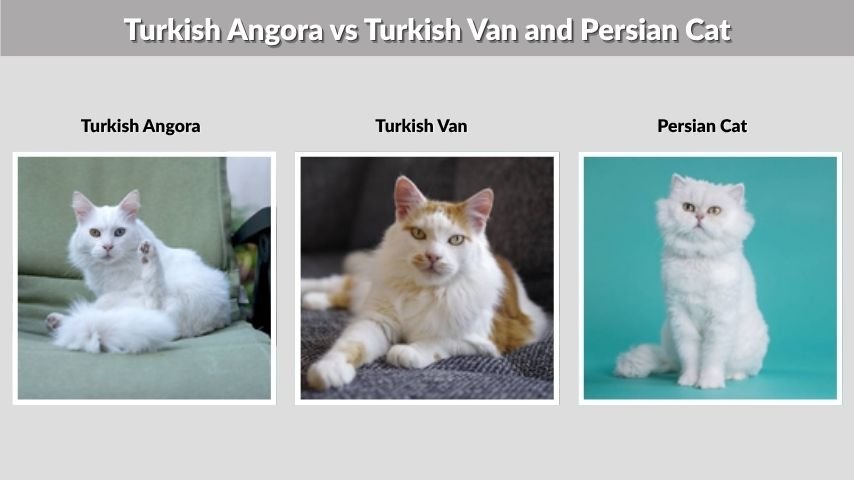
Many people compare the Turkish Angora with the Turkish Van and Persian because all can be beautiful longhaired cats. However, these breeds are different in body type, coat texture, personality, and origin. Understanding the differences helps buyers avoid confusion and choose a cat that truly matches their lifestyle and care expectations.
Turkish Angora vs Turkish Van
The Turkish Van is usually larger and heavier than the Turkish Angora. It is often associated with a mostly white body and colored markings on the head and tail. The Turkish Angora is generally lighter, finer-boned, more delicate-looking, and often more agile in appearance.
Turkish Angora and Persian Cat
Persian cats usually have rounder bodies, flatter faces, heavier coats, and calmer temperaments. Turkish Angoras are typically more athletic, fine-boned, and active. The Persian often needs more grooming because of its dense coat, while the Turkish Angora’s coat is silkier and usually easier to manage.
Turkish Angora Maine Coon Mix
A Turkish Angora Maine Coon mix may have a long coat, large body, or playful personality, but ancestry is difficult to confirm without records. Many domestic longhair cats are labeled as breed mixes based only on appearance. Pedigree papers or reliable background information are more trustworthy.
Is a Turkish Angora Cat Right for You?
A Turkish Angora may be right for you if you want a graceful, playful, intelligent, and affectionate cat. This breed enjoys interaction, climbing, exploring, and being part of family life. It may not suit people who want a very lazy, silent, or maintenance-free pet. Turkish Angoras need attention, grooming, and enrichment.
Best Owners for Turkish Angoras
Turkish Angoras are best for owners who enjoy active and social cats. They can suit families, singles, and apartment homes if they receive enough play and attention. They often enjoy climbing spaces, toys, and daily interaction with people.
Who Should Avoid This Breed?
This breed may not suit owners who want a very quiet or low-energy cat. It may also be a poor fit for people who do not want to brush the coat, provide enrichment, or research breeders carefully. Turkish Angoras are beautiful, but they still need responsible care.
FAQs
What is a Turkish Angora cat?
A Turkish Angora cat is a natural breed associated with Ankara, Turkey. It is known for its silky long coat, graceful body, plumed tail, active personality, and affectionate nature.
How much does a Turkish Angora cat cost?
A Turkish Angora cat may cost around $800 to $2,500 or more from a reputable breeder. Price depends on location, pedigree, age, color, demand, and health testing.
Are all Turkish Angora cats white?
No, Turkish Angora cats are not only white. White is the most famous color, but the breed can also appear in black, grey, orange, calico, tortoiseshell, tabby, tuxedo, bicolor, and other patterns.
How long do Turkish Angora cats live?
Turkish Angoras often live around 12 to 18 years with proper care. Diet, exercise, indoor safety, regular vet visits, dental care, and healthy weight management can support a longer life.
What is the difference between Turkish Angora and Turkish Van?
The Turkish Van is usually larger and heavier, often with a mostly white body and colored head and tail markings. The Turkish Angora is usually lighter, finer-boned, more elegant, and more active.