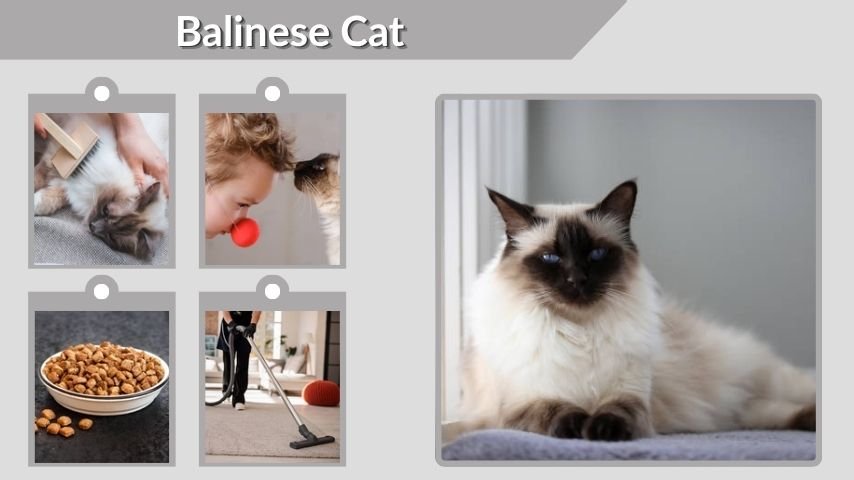
The Balinese cat is an elegant, affectionate, and intelligent breed loved for its silky coat, blue eyes, and social personality. Often called the long-haired Siamese, this cat combines beauty with a playful, people-focused nature. Many owners choose Balinese cats because they are loyal, vocal, and interactive companions. This guide explains the Balinese cat’s personality, colors, lifespan, hypoallergenic reputation, grooming needs, price, adoption options, and how it compares with Siamese and Ragdoll cats.
What Is a Balinese Cat?
The Balinese cat is a graceful, medium-sized breed closely related to the Siamese. It has a long, slim body, fine bones, a silky semi-long coat, and a feather-like tail. Although the name sounds connected to Bali, the breed developed from long-haired kittens born in Siamese lines. Today, it is admired for both elegance and companionship.
Balinese Cat Breed Origin
The Balinese cat originated when long-haired kittens appeared naturally in Siamese breeding lines. Breeders later developed these cats into a separate breed while keeping the Siamese body shape, pointed coat pattern, and bright blue eyes. The name “Balinese” was chosen because the cat’s graceful movement reminded breeders of Balinese dancers.
Balinese Cat Characteristics
A Balinese cat usually has a wedge-shaped head, large ears, almond-shaped blue eyes, long legs, and a slim but muscular body. Its coat is silky rather than thick or woolly. The tail is one of its most attractive features because it has long, flowing hair that forms a soft plume.
Balinese Cat Personality and Temperament
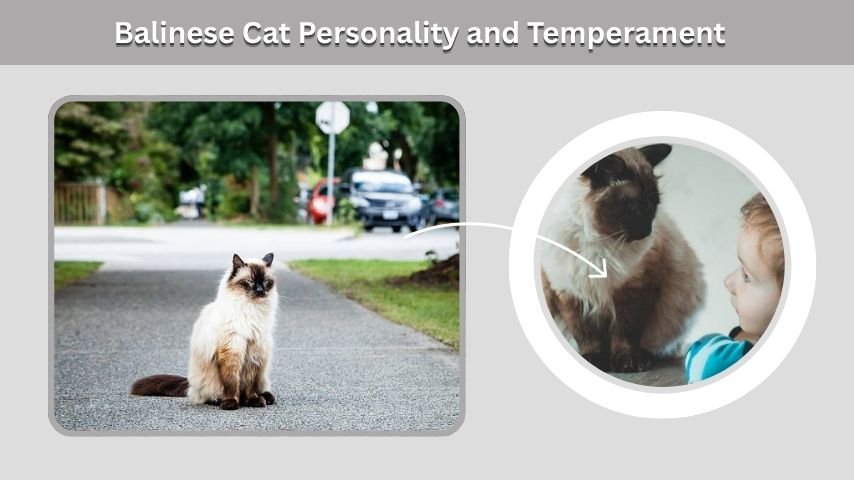
Balinese cats are known for being affectionate, intelligent, curious, and vocal. They are not usually quiet background pets. Instead, they enjoy being involved in daily life and often follow their owners from room to room. This breed is best for people who want a close companion, not a distant or highly independent cat.
Balinese Cat Personality Traits
Common Balinese cat personality traits include:
- Affectionate and people-loving
- Talkative and expressive
- Playful and energetic
- Intelligent and easy to train
- Curious about household activity
- Loyal to family members
- Social with children and other pets
Are Balinese Cats Good Family Pets?
Balinese cats can make excellent family pets when they receive enough attention and playtime. They usually enjoy interactive homes where someone is available to talk, play, or cuddle. Because they are social cats, they may become lonely if left alone for long periods every day.
Do Balinese Cats Like Attention?
Yes, Balinese cats usually love attention. Many enjoy sitting near their owners, sleeping close by, and joining daily routines. They may “talk” to their people using soft or loud vocal sounds. This makes them a good match for owners who enjoy an expressive and emotionally connected pet.
Balinese Cat Appearance, Colors, and Coat
The Balinese cat has a refined appearance that looks similar to the Siamese but with a longer coat. Its body color is usually lighter, while the face, ears, legs, and tail have darker points. These point colors are one of the breed’s most searched features, especially seal, blue, lilac, and chocolate point Balinese cats.
Common Balinese Cat Colors
Popular Balinese cat colors include:
- Seal point Balinese cat
- Blue point Balinese cat
- Lilac point Balinese cat
- Chocolate point Balinese cat
- Flame point Balinese cat
- Lynx point Balinese cat
- Cream point Balinese cat
- Tortie point Balinese cat
Seal Point Balinese Cat
A seal point Balinese cat has dark brown or nearly black points on the ears, face, paws, and tail. The body is usually cream or fawn. This is one of the most classic looks because it closely resembles the traditional Siamese color pattern.
Lilac Point and Blue Point Balinese Cat
A lilac point Balinese cat has pale gray-pink points with a soft, light body shade. A blue point Balinese cat has cooler gray-blue points and a bluish-white body tone. Both are popular among people who prefer a softer, lighter appearance.
Black or White Balinese Cat
A true Balinese cat is usually pointed, meaning the body is lighter and the extremities are darker. A solid black Balinese cat or pure white Balinese cat may not match traditional breed standards. However, some mixed cats may have a similar body type and coat length.
Balinese Cat Size, Lifespan, and Quick Facts
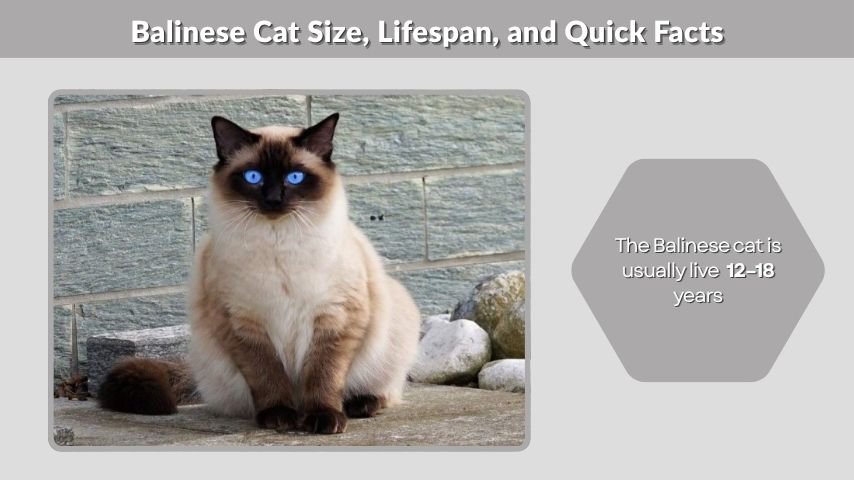
The Balinese cat is usually medium-sized, athletic, and lighter than many fluffy long-haired breeds. Its slim body can make it look delicate, but it is often active and muscular. With good care, a balanced diet, regular veterinary visits, and safe indoor living, Balinese cats can live long and healthy lives.
Balinese Cat Quick Facts
| Feature | Details |
| Breed type | Long-haired Siamese-related breed |
| Coat | Silky, semi-long, single coat |
| Eye color | Blue |
| Personality | Social, vocal, intelligent, affectionate |
| Shedding | Low to moderate |
| Lifespan | Often 12–18 years |
| Best for | Active homes, families, affectionate owners |
| Grooming level | Easy to moderate |
How Long Do Balinese Cats Live?
Balinese cats commonly live around 12 to 18 years, and some may live longer with excellent care. Their lifespan depends on genetics, diet, weight control, dental care, activity level, and regular veterinary checkups. Indoor Balinese cats often have safer and longer lives than cats allowed to roam freely outside.
Common Health Concerns
Balinese cats are generally healthy, but they may share some inherited risks with Siamese-related breeds. Possible concerns include dental disease, respiratory issues, eye problems, heart conditions, and liver or kidney issues. A reputable breeder should provide health information about the kitten’s parents and avoid breeding cats with known serious genetic problems.
Are Balinese Cats Hypoallergenic?

Balinese cats are often described as hypoallergenic, but no cat is completely allergy-free. Some allergy sufferers may tolerate Balinese cats better than other breeds, possibly because of their coat type and grooming patterns. However, cat allergies are usually caused by proteins in saliva, skin, and dander, not only by visible shedding.
Are Balinese Cats Good for Allergy Sufferers?
Balinese cats may be a better option for some mild allergy sufferers, but reactions vary from person to person. Before buying or adopting, spend time around Balinese cats to see how your body responds. Allergy-friendly does not mean allergy-proof, so testing your reaction is very important.
How to Reduce Cat Allergies at Home
Helpful steps may include:
- Brush your cat regularly
- Use a HEPA air purifier
- Wash bedding often
- Vacuum carpets and furniture
- Keep the cat out of your bedroom
- Wash your hands after petting
- Talk to a doctor about allergy control
Balinese Cat for Allergy Sufferers
If you are searching for a Balinese cat for allergies, choose carefully. Visit the breeder or rescue before making a decision. Avoid trusting sellers who promise that their kittens are 100% hypoallergenic. A responsible breeder should be honest and encourage you to check your allergy response first.
Do Balinese Cats Shed?
Balinese cats do shed, but many owners find their shedding easier to manage than heavier-coated long-haired breeds. Their coat is silky and usually lacks a dense undercoat, so it is less likely to mat badly. Still, regular grooming keeps the coat healthy, reduces loose hair, and helps control dander around the home.
Balinese Cat Shedding Level
The Balinese cat shedding level is usually low to moderate. Seasonal shedding may increase during certain times of the year. Even though this breed is sometimes promoted as low-shedding, owners should still expect some hair on clothing, bedding, and furniture.
Balinese Cat Grooming Needs
Basic grooming needs include:
- Brush once or twice weekly
- Check ears for dirt or wax
- Trim nails regularly
- Brush teeth when possible
- Wipe eyes gently if needed
- Watch for tangles near the tail
- Keep litter boxes clean
Balinese Cat Long Hair Care
The Balinese coat is long but not usually thick like a Persian coat. That means it does not need daily brushing in most cases. A weekly brushing routine is usually enough for many cats, although older cats or cats with health problems may need extra help.
Balinese Cat Diet and Daily Care

A Balinese cat needs a balanced diet, regular play, mental stimulation, and consistent health care. Because this breed is active and intelligent, food alone is not enough to keep it happy. Owners should provide climbing areas, toys, scratching posts, and daily interaction to support both physical and emotional health.
Best Diet for a Balinese Cat
A healthy Balinese cat diet should include high-quality cat food with animal protein as the main ingredient. Wet food can help with hydration, while dry food may be convenient when measured properly. Kittens, adults, and senior cats need different nutrition, so choose food based on life stage.
Exercise and Enrichment
Balinese cats enjoy climbing, chasing, learning, and exploring. They often like puzzle feeders, feather toys, cat trees, tunnels, and interactive games. Because they are intelligent, they may become bored without stimulation. Some Balinese cats can even learn tricks, fetch, or walk on a harness.
Indoor Living
Indoor living is usually safest for Balinese cats. It protects them from traffic, predators, disease, theft, and injuries. If you want your cat to enjoy outdoor time, use a secure catio, leash training, or supervised garden visits. This gives enrichment without unnecessary risk.
Balinese Cat Price and Cost
The price of a Balinese cat can vary widely depending on location, breeder reputation, pedigree, color, age, and health testing. A kitten from a reputable breeder usually costs more than a rescue cat, but the higher price may include vaccinations, registration papers, early socialization, and responsible breeding practices.
How Much Does a Balinese Cat Cost?
A Balinese cat from a reputable breeder may cost around $1,000 to $2,500 or more, depending on quality and demand. Show-quality kittens or rare lines may cost more. Adoption from a rescue or shelter is usually much cheaper, but Balinese cats may be harder to find.
What Affects Balinese Cat Price?
Several factors can affect the price of a Balinese cat:
- Breeder reputation
- Health testing
- Pedigree and bloodline
- Kitten age
- Coat color or point pattern
- Registration status
- Location and travel costs
- Demand and availability
Ongoing Ownership Costs
The purchase price is only the beginning. Owners should also budget for food, litter, toys, scratching posts, grooming tools, vaccines, checkups, dental care, parasite prevention, and emergency vet costs. Pet insurance may also be useful, especially for unexpected illness or injury.
Buying or Adopting a Balinese Cat
Whether you want to buy a Balinese cat or adopt one, the most important goal is finding a healthy, well-socialized cat from a trustworthy source. Avoid rushing because rare breeds can attract scams. A responsible seller or rescue should answer questions, provide records, and care about where the cat will live.
Balinese Cat Breeders
When looking for Balinese cat breeders, choose someone who focuses on health and temperament rather than quick sales. A good breeder should be open about the kitten’s parents, socialization, vaccines, health checks, and living conditions. They should never pressure you to pay immediately without proper information.
Balinese Cat for Sale Near Me
Searching “Balinese cat for sale near me” may show local results, but location should not be your only concern. A nearby kitten is not always the best kitten. It is better to travel for a responsible breeder than buy from a careless seller or kitten scam.
Balinese Cat Adoption and Rescue
Balinese cat adoption may be possible through breed rescues, Siamese rescues, shelters, and online adoption platforms. Purebred Balinese rescue cats may be rare, but Balinese mixes or long-haired Siamese-type cats may appear. Adoption is often more affordable and gives a cat a second chance.
Balinese Cat vs Siamese Cat
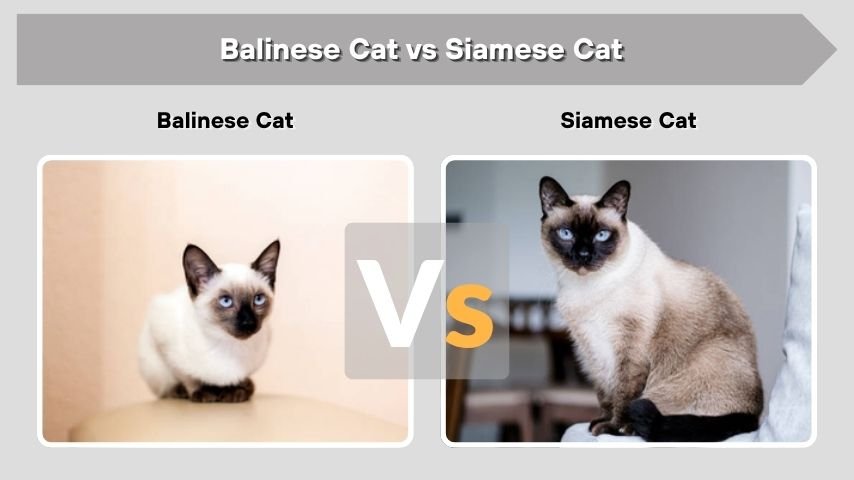
The Balinese cat and Siamese cat are closely related, so they share many traits. Both are intelligent, social, vocal, and people-oriented. The biggest difference is coat length. The Balinese has a longer silky coat and plume tail, while the Siamese has a short, sleek coat that needs less grooming.
Similarities Between Balinese and Siamese Cats
Both breeds usually have blue eyes, pointed coloring, slim bodies, large ears, and talkative personalities. They enjoy attention and may form strong bonds with their owners. They are also active cats that need play, stimulation, and companionship.
Siamese vs Balinese Cat Differences
The Siamese cat has a short coat, while the Balinese has a semi-long coat. Balinese cats may need slightly more grooming, although they are still easier to maintain than many long-haired breeds. Some owners feel Balinese cats are a little softer in appearance because of their flowing coat.
Balinese Cat vs Ragdoll
A Ragdoll is usually larger, heavier, and calmer than a Balinese cat. Balinese cats are often more vocal, active, and curious. Ragdolls may suit people who want a relaxed lap cat, while Balinese cats may suit owners who want a playful, talkative, and interactive companion.
Is a Balinese Cat Right for You?
A Balinese cat can be a wonderful pet for the right owner, but it is not ideal for everyone. This breed needs attention, play, affection, and mental activity. If you want a quiet, independent cat that spends most of the day alone, the Balinese may not be the best choice.
Best Owners for Balinese Cats
The best owners for Balinese cats are people who enjoy affectionate, social, and vocal pets. This breed is a strong match for families, remote workers, active singles, and cat lovers who want daily interaction. Balinese cats also do well in homes where they have another friendly pet for companionship.
Who Should Avoid This Breed?
You may want to avoid this breed if you dislike vocal cats, travel often, or cannot provide daily attention. A bored Balinese cat may become stressed, clingy, or destructive. This breed needs emotional connection as much as food, water, and basic care.
FAQs
Are Balinese cats hypoallergenic?
Balinese cats are often called hypoallergenic, but no cat is completely allergy-free. Some people with mild allergies may tolerate them better than other breeds, while others may still react. Spend time around the breed before buying or adopting.
How much does a Balinese cat cost?
A Balinese cat from a reputable breeder may cost around $1,000 to $2,500 or more. Adoption is usually cheaper, but purebred Balinese cats can be difficult to find in shelters or rescues.
Do Balinese cats shed?
Yes, Balinese cats shed, but their shedding is usually low to moderate. Their silky coat is easier to manage than many thick long-haired coats. Weekly brushing can help reduce loose hair and dander.
What is the difference between a Balinese cat and a Siamese cat?
The main difference is coat length. Siamese cats have short coats, while Balinese cats have silky semi-long coats and plume tails. Both breeds are social, vocal, intelligent, and affectionate.
How long do Balinese cats live?
Balinese cats often live 12 to 18 years with proper care. A healthy diet, indoor safety, regular vet visits, dental care, and daily activity can help support a longer and healthier life.