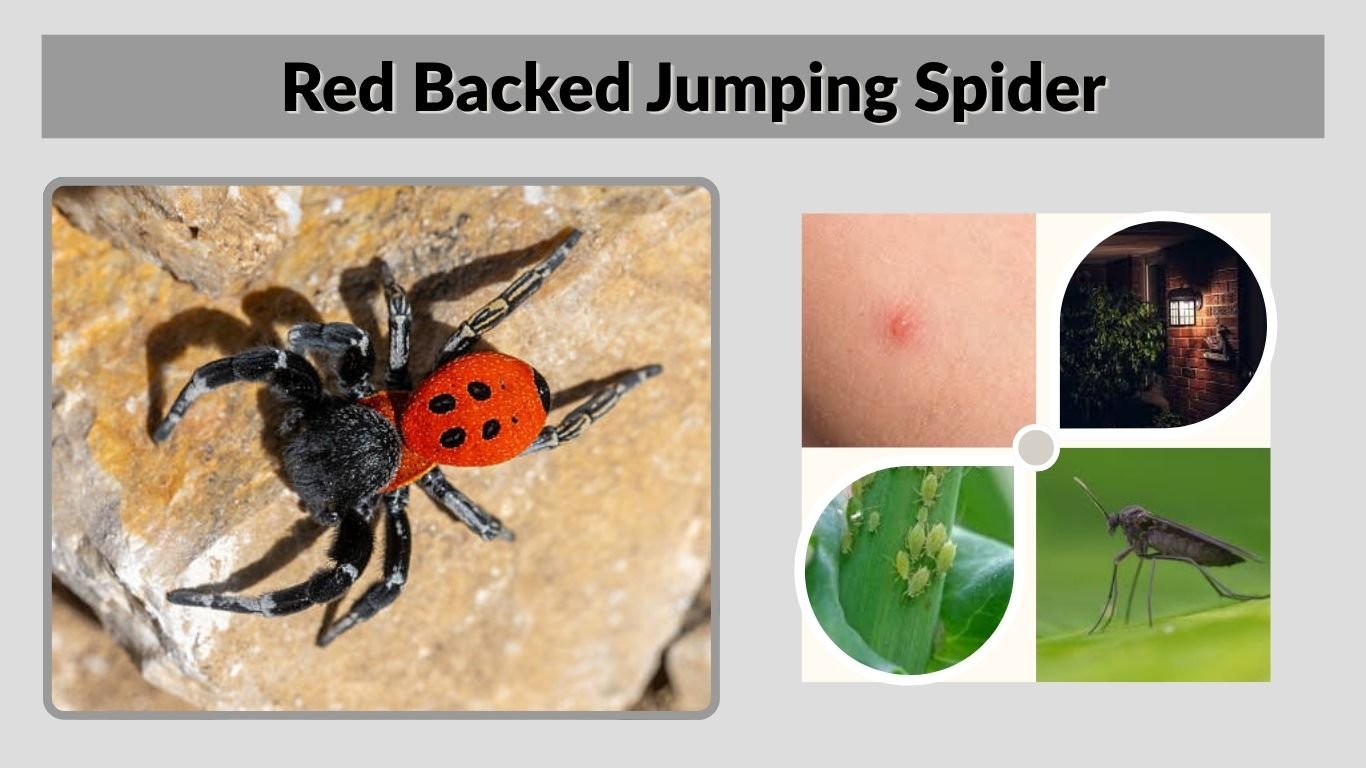
A red backed jumping spider is a small, colorful spider often noticed because of its bright red abdomen, dark body, and quick jumping movements. Many people first spot one on a wall, fence, garden plant, porch, or outdoor furniture and wonder if it is dangerous. Despite its bold appearance, this spider is usually not harmful to humans and is often beneficial because it hunts small insects.
What Is a Red Backed Jumping Spider?
A red backed jumping spider is commonly associated with Phidippus johnsoni, a species of jumping spider found in western parts of North America. It is also known as the Johnson jumping spider. Like other jumping spiders, it belongs to the family Salticidae, a group known for excellent eyesight, active hunting, and short, controlled jumps.
Unlike web-building spiders that wait for prey to become trapped, red backed jumping spiders move around and hunt during the day. They use their large front-facing eyes to track insects, slowly approach them, and then jump to capture them. Their behavior can make them seem alert, curious, or even bold, but they are not aggressive toward people.
How to Identify a Red Backed Jumping Spider
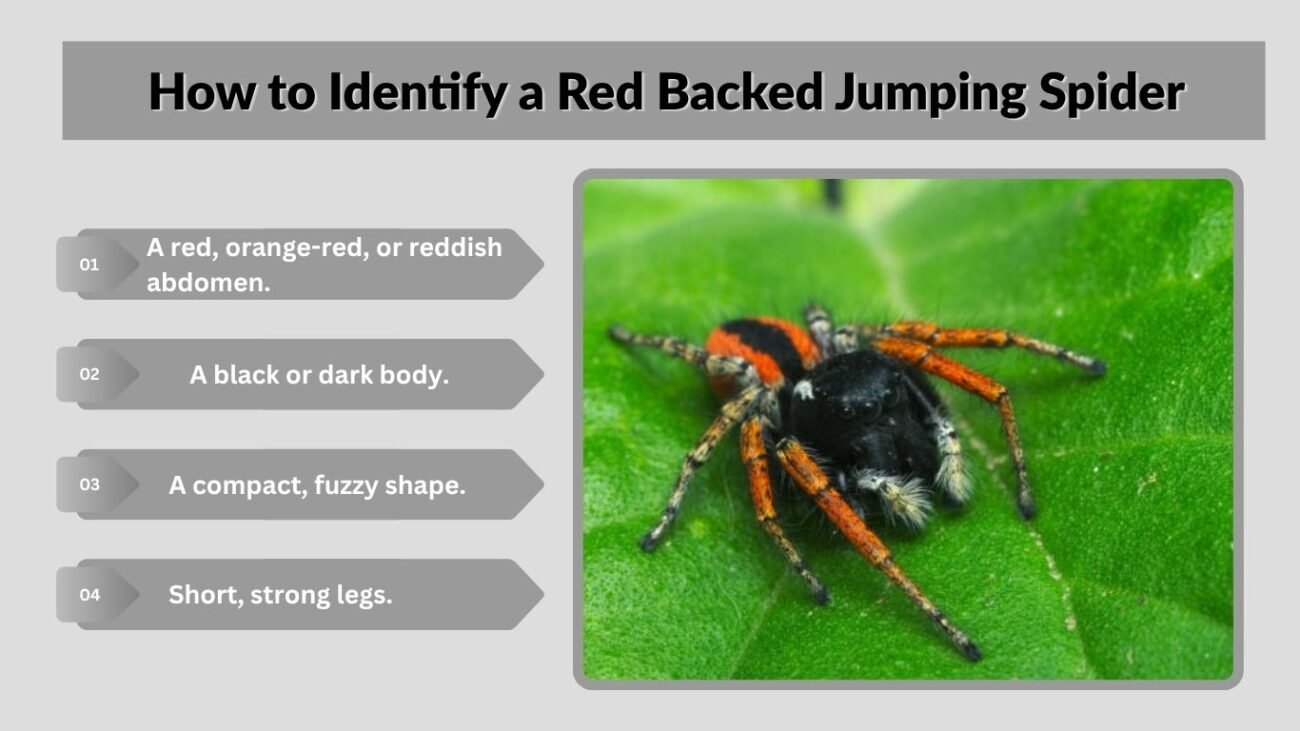
The red backed jumping spider is best known for its strong color contrast. The abdomen is usually red or orange-red, while the rest of the body is mostly black or dark brown. This color pattern makes it one of the easier jumping spiders to recognize.
Common Appearance
A red backed jumping spider may have:
- A red, orange-red, or reddish abdomen
- A black or dark body
- A compact, fuzzy shape
- Short, strong legs
- Large front-facing eyes
- Quick stop-and-go movement
- Short jumping behavior
- Small silk retreats in protected areas
Some individuals may appear brighter red than others. Lighting, age, sex, and location can all affect how the spider looks. A spider seen in bright sunlight may look much more vivid than one seen indoors or in shade.
Red Back vs Red Dot
Some people describe this spider as having a red back, while others describe it as a black jumping spider with a red dot or red spot. These descriptions can refer to different spiders.
A true red backed jumping spider often has a mostly red abdomen. A black jumping spider with a small red or orange dot may be a juvenile bold jumping spider or another species with reddish markings. The red color is helpful for identification, but it should not be the only feature used.
Red Backed Jumping Spider Size
Red backed jumping spiders are small spiders, but their bright coloring makes them stand out. Their compact bodies and strong legs can make them look sturdy for their size. Females are often slightly larger and rounder than males, especially when mature.
Juvenile spiders are much smaller and may have less developed coloring. As they grow, they molt several times, and their markings may become clearer. A young red backed jumping spider may not look exactly like an adult.
Male vs Female Red Backed Jumping Spider
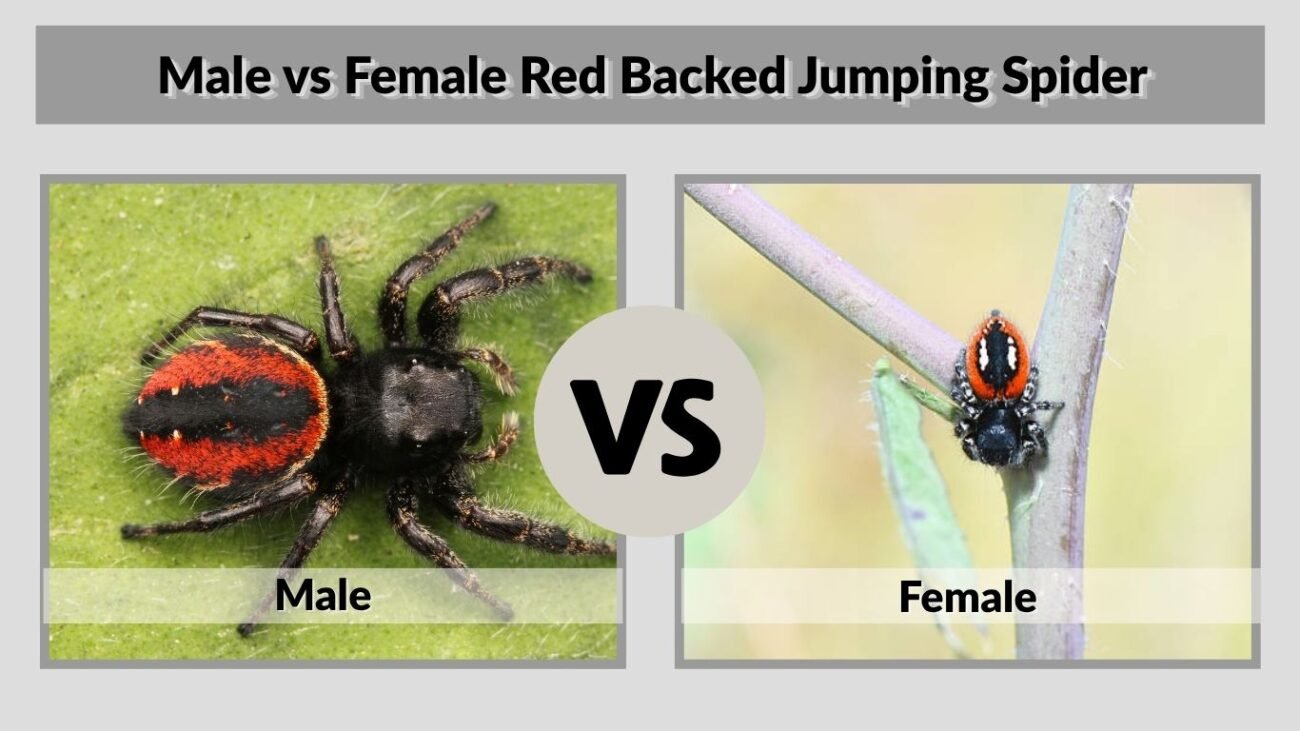
Male and female red backed jumping spiders can look similar at first, but there are some differences. These differences are useful for identification, especially for people who keep jumping spiders as pets.
Male Red Backed Jumping Spider
A male red backed jumping spider is often slimmer and more active. Males may wander more frequently while searching for females. Their red abdomen can look bright and clean, and their darker body gives them a sharp black-and-red appearance.
Males may also perform courtship movements. This can include careful stepping, leg waving, or body movements near a female. These movements are part of mating behavior, not aggression toward humans.
Female Red Backed Jumping Spider
A female red backed jumping spider is usually rounder and heavier-bodied. Her abdomen may look larger, especially if she has recently eaten or is carrying eggs. In some females, the abdomen may show a dark stripe or darker central area along the red back.
Females often create silk retreats for resting, molting, and laying egg sacs. A female that stays hidden in a silk shelter may be preparing to molt or protect eggs.
Is a Red Backed Jumping Spider Dangerous?
A red backed jumping spider is not considered dangerous to humans. Like most spiders, it has venom, but that venom is used to subdue small prey such as flies, gnats, and other insects. It is not considered medically significant for most people.
The name can cause confusion because some people may think of the Australian redback spider, which is a different and more medically important spider. The red backed jumping spider is not the same as the Australian redback spider. A jumping spider has a compact body, large front eyes, and active jumping behavior, while widow-type spiders have a different body shape and web-building habits.
Is the Red Backed Jumping Spider Poisonous?
The red backed jumping spider is not poisonous in the usual sense. The more accurate word is venomous because it can inject venom through a bite. However, being venomous does not automatically mean a spider is dangerous to humans.
Most jumping spiders have venom for hunting tiny prey. Their venom is not designed for large animals or people. In most cases, a bite from a jumping spider causes only minor local irritation.
Red Backed Jumping Spider Bite
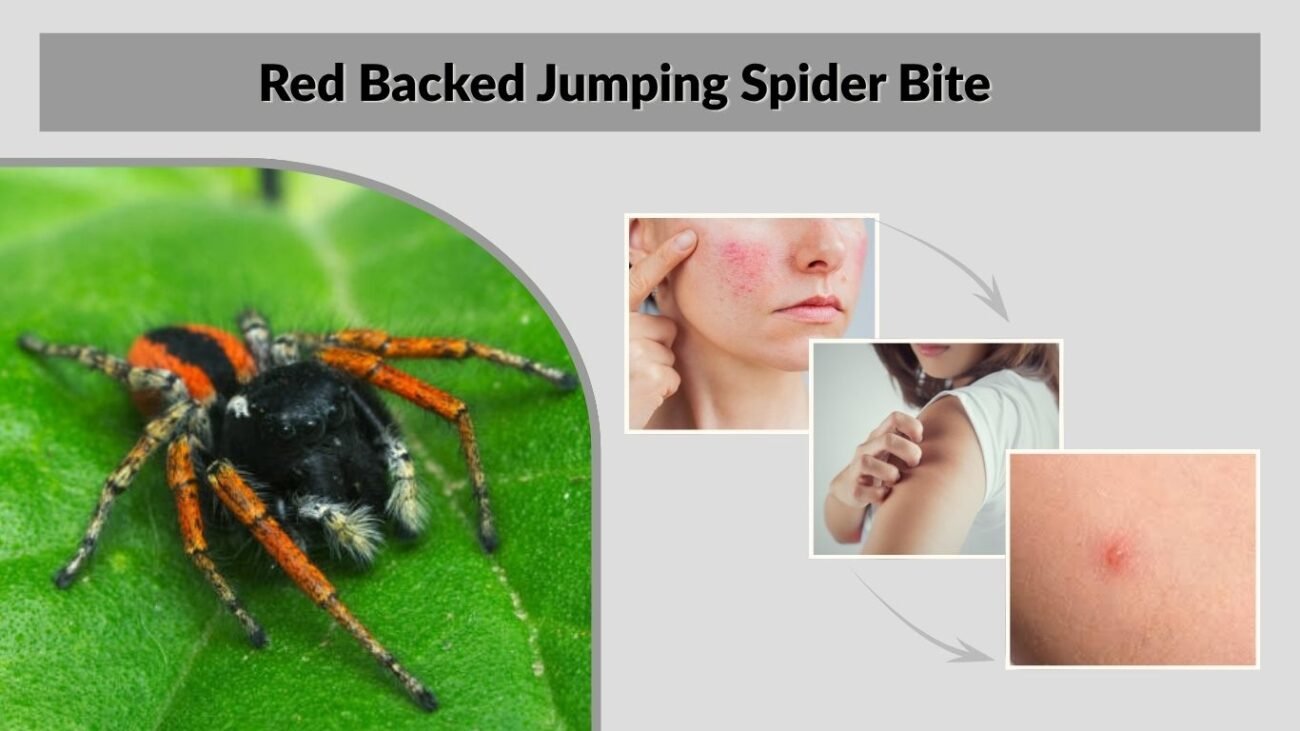
A red backed jumping spider can bite, but bites are uncommon. These spiders usually avoid people and prefer to jump away or hide when disturbed. A bite is most likely if the spider is trapped against the skin, squeezed, or handled roughly.
Possible Bite Symptoms
A mild bite may cause:
- Slight pain or stinging
- Redness
- Mild swelling
- Itching
- Tenderness
- A small raised bump
These symptoms are usually similar to a minor insect bite. Many skin irritations are also mistaken for spider bites, especially when no spider was seen biting.
What to Do After a Bite
If you think a red backed jumping spider bit you, wash the area with soap and water. Apply a cold compress to reduce swelling and avoid scratching the skin. Most mild reactions improve with basic care.
Seek medical advice if symptoms become worse, spread, or do not improve. Get urgent help if there are signs of a serious reaction, such as trouble breathing, dizziness, swelling of the face or throat, fever, or severe pain.
Where Red Backed Jumping Spiders Live
Red backed jumping spiders are most often associated with western North America. They may be found in dry, sunny areas where small insects are available. Their active hunting style means they are often seen moving across open surfaces during the day.
Common Outdoor Locations
You may find red backed jumping spiders around:
- Garden plants
- Fences
- Rocks
- Tree bark
- Deck rails
- Porch posts
- Dry shrubs
- Exterior walls
- Wood piles
- Outdoor furniture
They often use sheltered spaces for resting. A small silk retreat may be made under bark, rocks, wood, or protected corners.
Around Homes and Gardens
A red backed jumping spider near the home is usually not a problem. It may be hunting small insects around plants, lights, walls, or outdoor structures. These spiders can be useful in gardens because they eat pests and do not damage plants.
If one comes indoors, it is usually by accident. It may have followed prey or entered through a gap around a door, window, or screen.
Red Backed Jumping Spider in California
California is one of the areas where red backed jumping spiders are commonly noticed. Their red-and-black coloring can stand out against fences, stucco walls, garden plants, and dry outdoor landscapes.
A red jumping spider in California may be a red backed jumping spider, but exact identification depends on the spider’s markings and body shape. Other spiders can also have red or orange coloration, so it is best to compare several features rather than relying only on color.
Red Backed Jumping Spider in Texas
Texas has many jumping spider species, including some with red, orange, black, and white markings. A red jumping spider in Texas may not always be the same species as the western red backed jumping spider.
If you see a red and black jumping spider in Texas, look for the key jumping spider traits: compact body, large front-facing eyes, daytime activity, and short jumping movements. Clear photos from above and from the front can help with identification.
What Do Red Backed Jumping Spiders Eat?
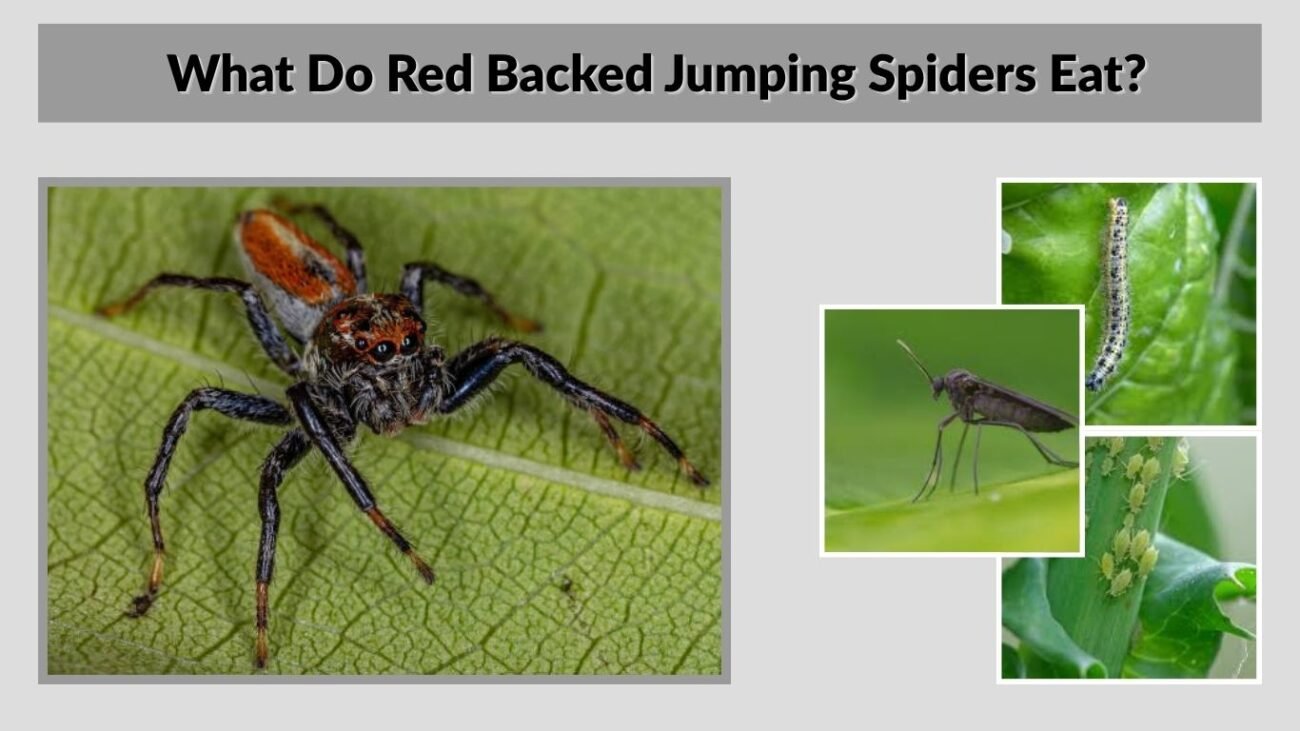
Red backed jumping spiders are active predators. They hunt by sight and rely on quick movement rather than sticky webs. Their diet mainly includes small insects and other tiny arthropods.
Common Food Sources
They may eat:
- Small flies
- Gnats
- Mosquitoes
- Small moths
- Aphids
- Tiny caterpillars
- Small crickets
- Other small spiders
- Soft-bodied garden insects
Because they feed on small pests, they can be helpful around gardens and outdoor spaces. They do not eat wood, fabric, stored food, or household materials.
Do Red Backed Jumping Spiders Make Webs?
Red backed jumping spiders produce silk, but they do not build large webs to catch prey. Instead, they use silk for practical purposes.
They may use silk to:
- Create a resting retreat
- Protect themselves while molting
- Make an egg sac
- Anchor a safety line before jumping
- Hide from predators or bad weather
A small silk retreat is normal and does not mean the spider is creating an infestation.
Red Backed Jumping Spider Eggs and Life Cycle
The life cycle begins when a female lays eggs inside a protected silk sac. She may stay near the egg sac to guard it. After the eggs hatch, tiny spiderlings remain close for a short time before dispersing and hunting very small prey.
As spiderlings grow, they molt several times. During molting, the spider sheds its old outer covering and forms a new one. This is a vulnerable stage. A spider may hide, refuse food, and stay still before and after molting.
Adult males often live shorter lives than females. Females may spend more time in retreats, especially when producing eggs.
Can You Keep a Red Backed Jumping Spider as a Pet?
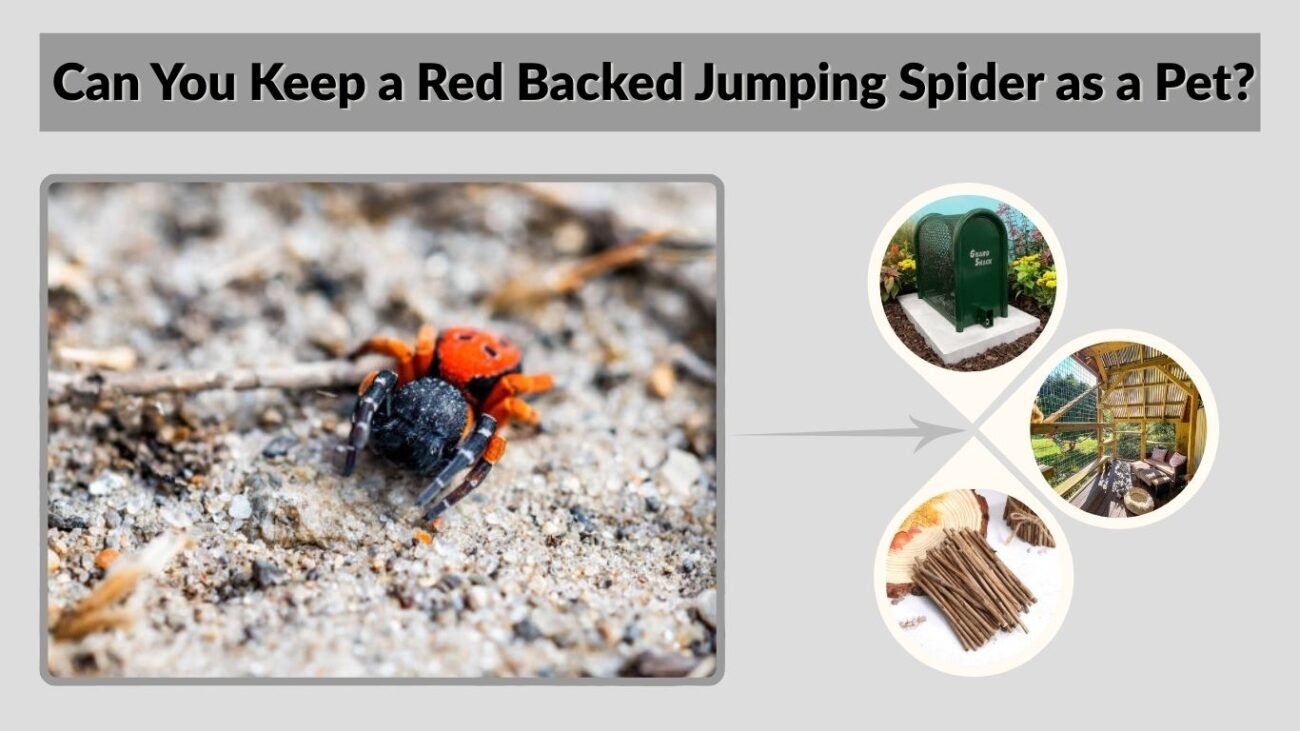
Some people keep red backed jumping spiders as pets because they are colorful, active, and interesting to watch. However, they are delicate animals and need proper care. They are best suited for people who want to observe them rather than handle them frequently.
Basic Care Needs
A pet red backed jumping spider needs:
- A small, secure enclosure
- Good ventilation
- Vertical climbing space
- Bark, twigs, or artificial plants
- A hiding area near the top
- Light misting for water droplets
- Properly sized live prey
- Safe temperatures
- A calm place away from stress
Do not leave large or aggressive prey in the enclosure for too long. Crickets and other feeder insects can injure a spider, especially during molting.
Red Backed Jumping Spider for Sale
Some red backed jumping spiders may be sold by hobby breeders or online sellers. Before buying one, make sure you understand its care needs. A spider should not be purchased only because it looks bright or unusual.
Before buying, check:
- The exact species name
- Whether it is captive-bred or wild-caught
- Its approximate age
- Whether it is male or female
- Feeding history
- Shipping conditions
- Seller reputation
- Local rules or restrictions
Captive-bred spiders are usually a better choice for beginners because they are more likely to be healthy, younger, and accustomed to enclosure life.
Red Backed Jumping Spider vs Other Red Spiders
Not every red spider that jumps is a red backed jumping spider. Some may be other jumping spider species with red, orange, or reddish markings. Others may not be jumping spiders at all.
Similar Spiders
A red or black-and-red spider may be:
- A red backed jumping spider
- A juvenile bold jumping spider
- A red cardinal jumping spider
- A red velvet-like spider
- Another small red jumping spider
- A different spider mistaken for a jumper
To identify it more accurately, look at the eye pattern, body shape, movement, and location.
What to Do If You Find One
If you find a red backed jumping spider outside, it is usually best to leave it alone. It is part of the local ecosystem and helps control insects. If it is indoors, you can gently move it outside.
Safe Removal Method
To relocate it:
- Place a cup or jar over the spider
- Slide a piece of paper underneath
- Carry it outside carefully
- Release it near plants, rocks, or a sheltered area
- Avoid squeezing or handling it directly
This method protects both you and the spider.
How to Prevent Them Indoors
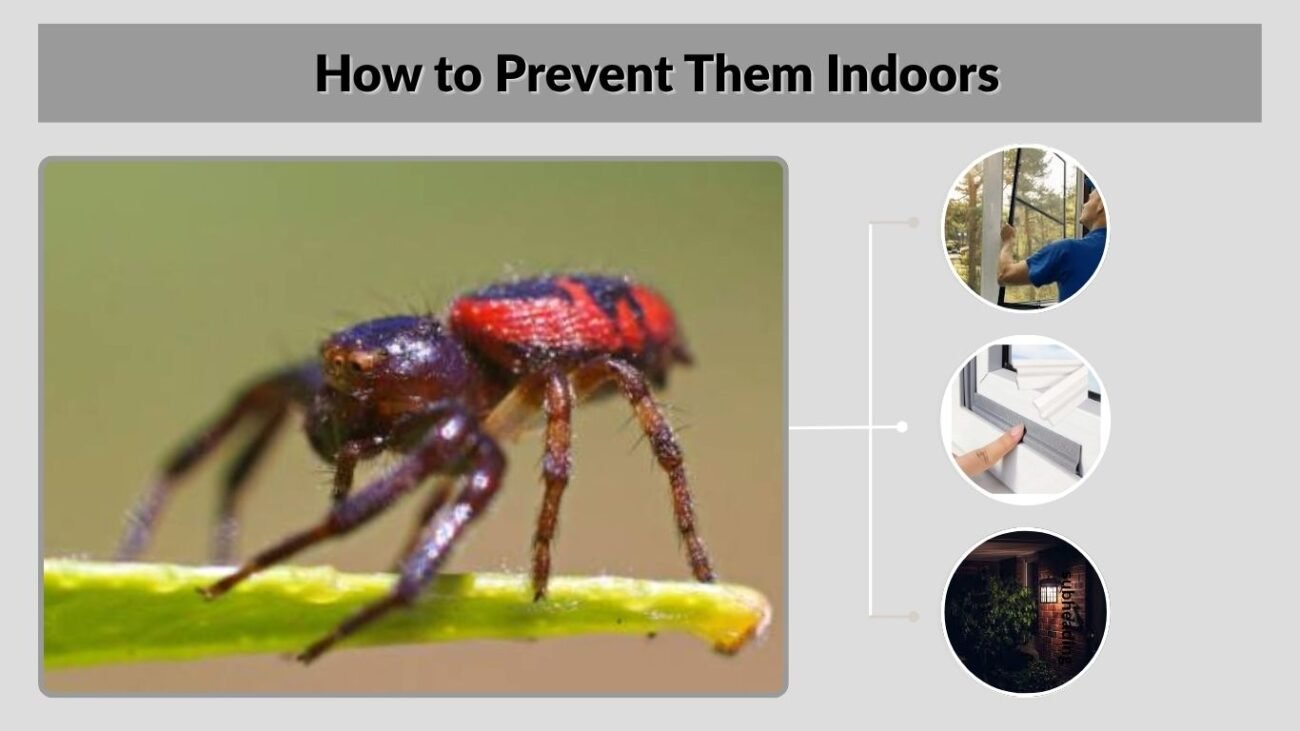
Red backed jumping spiders do not usually infest homes, but they may wander inside. Prevention focuses on sealing entry points and reducing insects.
Helpful steps include:
- Repairing window screens
- Sealing gaps around doors and windows
- Reducing small flies and gnats indoors
- Keeping porch lights off when not needed
- Vacuuming windowsills and corners
- Moving dense vegetation away from walls
- Checking plants before bringing them inside
Occasional sightings usually do not require chemical pest control.
FAQs
Are red backed jumping spiders poisonous?
Red backed jumping spiders are not considered poisonous or dangerous to humans. They are technically venomous because they use venom to catch small prey, but bites are rare and usually mild. Most will avoid people and jump away when disturbed.
Do red backed jumping spiders bite?
Yes, they can bite, but it is uncommon. Bites usually happen when the spider is trapped, squeezed, or handled roughly. Symptoms are normally mild and may include redness, slight swelling, itching, or tenderness.
Is a red backed jumping spider the same as a redback spider?
No. A red backed jumping spider is not the same as the Australian redback spider. The red backed jumping spider is a small active hunter with large eyes and jumping behavior. The Australian redback is a different spider and can be medically significant.
Where are red backed jumping spiders found?
Red backed jumping spiders are most often associated with western North America. They are commonly noticed in dry, sunny outdoor areas, gardens, fences, rocks, shrubs, and around homes. Similar red jumping spiders may also be found in other regions.
Can red backed jumping spiders be kept as pets?
Yes, some people keep them as pets, but they need proper care. They require a secure ventilated enclosure, climbing space, small live prey, and careful misting. They are delicate and should be observed more than handled.