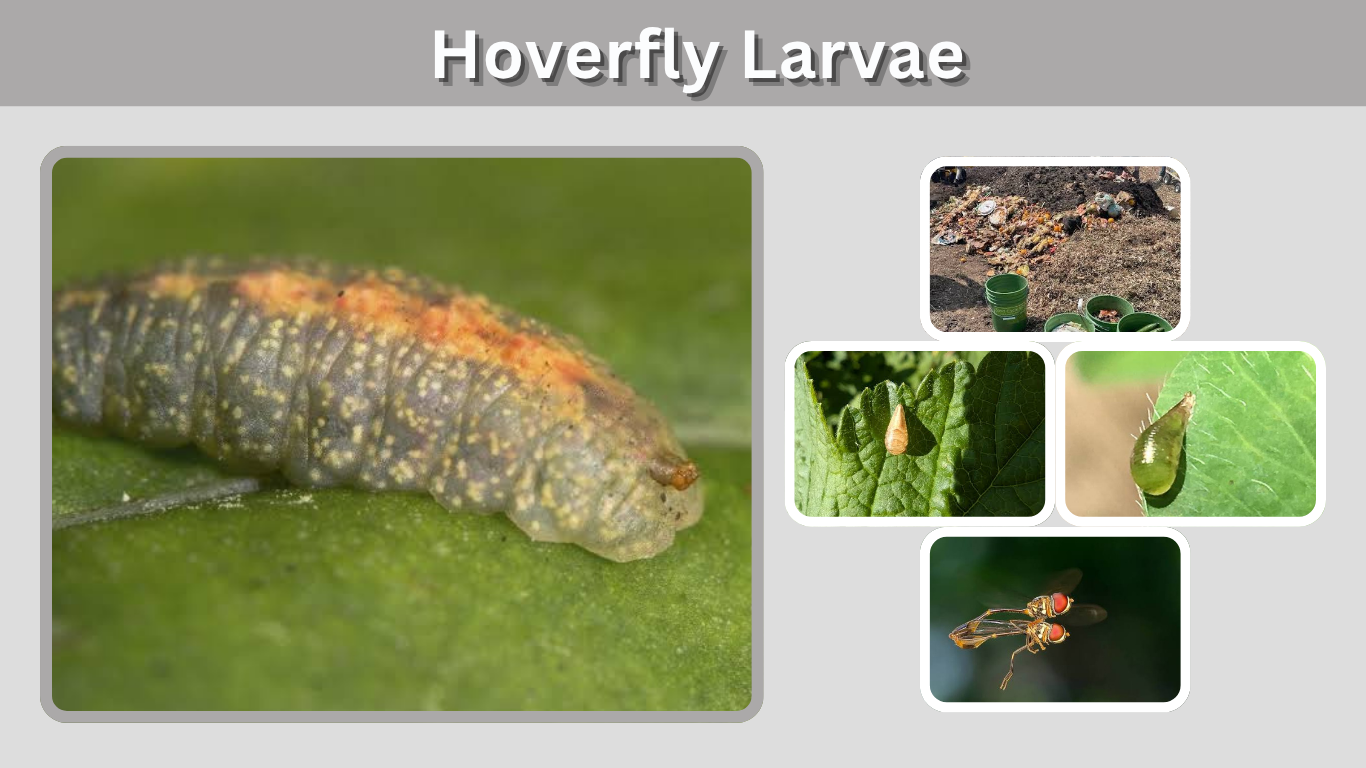
Hoverfly larvae are the immature stage of hoverflies, a large group of beneficial flies often seen around flowers and gardens. Depending on the species, the larvae may live on plants, in decaying organic matter, or even in water. Many species are valuable predators of aphids, while aquatic forms may look like unusual maggots with long breathing tubes. Learning how to identify hoverfly larvae, what they eat, where they live, and how they develop can help gardeners recognize these useful insects.
What Do Hoverfly Larvae Look Like?
Hoverfly larvae vary greatly because the family contains many species with different lifestyles. Predatory larvae found on plants are usually soft-bodied, legless, and somewhat slug-like. Aquatic species may look completely different and can possess long breathing structures. Their coloration may be green, cream, brown, gray, or nearly transparent depending on species and age.
Hoverfly Larvae Identification
Common identification features include:
- Soft, elongated, legless body
- Tapered or slightly pointed front end
- No obvious hard head capsule
- Green, cream, brown, gray, or translucent coloration
- Slow crawling movement on leaves or stems
- Body markings that may provide camouflage
- Lack of obvious legs like caterpillars
- Some aquatic species have a long tail-like breathing tube
Predatory hoverfly larvae are often found close to colonies of aphids because these insects provide an important food source.
Green Hoverfly Larvae
Green hoverfly larvae can be difficult to notice because their body color blends with leaves and stems. Some are translucent green, while others may have pale stripes or darker markings.
They are frequently found moving slowly among aphid colonies. Their camouflage helps them approach prey while also reducing their visibility to birds and other predators.
Marmalade Hoverfly Larvae
The marmalade hoverfly is a familiar hoverfly in many areas, and its larvae are predators of aphids. They are usually found on vegetation where aphids are abundant.
These larvae do not resemble adult hoverflies. Instead, they have elongated, legless bodies and move gradually across plant surfaces while searching for small soft-bodied insects.
What Do Hoverfly Larvae Eat?
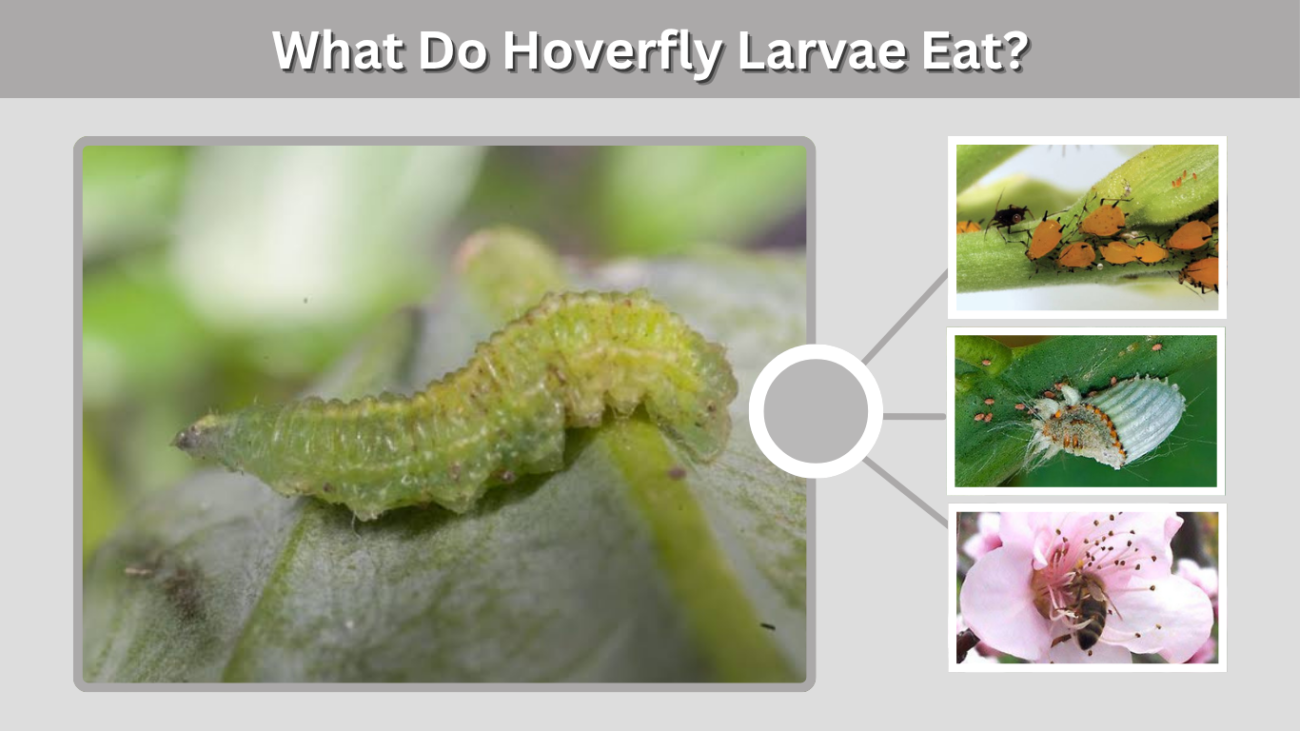
The diet of hoverfly larvae depends strongly on the species. Some are active predators and are especially useful in gardens, while others feed on decaying material or microorganisms. This diversity allows hoverfly larvae to occupy many habitats, from leaves covered with aphids to ponds, drains, tree cavities, and decomposing vegetation.
Common Hoverfly Larvae Foods
Depending on the species, hoverfly larvae may feed on:
- Aphids
- Scale insects
- Small soft-bodied insect larvae
- Mealybugs
- Other tiny plant pests
- Decaying plant material
- Microorganisms
- Organic material in water or mud
Predatory species are particularly valuable because they naturally reduce populations of plant-feeding pests.
Hoverfly Larvae Eating Aphids
Many gardeners welcome hoverfly larvae because some species consume large numbers of aphids. The larva moves through an aphid colony searching for prey and captures an aphid with its mouthparts.
Because the larvae often hunt at night or remain well camouflaged during the day, people may not immediately notice how many pests they are removing from plants.
What Do Aquatic Hoverfly Larvae Eat?
Aquatic hoverfly larvae usually have a very different diet from aphid-eating species. Many consume microorganisms and decomposing organic material in stagnant or nutrient-rich water.
These larvae contribute to decomposition by feeding in environments containing mud, rotting vegetation, and other organic matter.
Hoverfly Larvae in Water
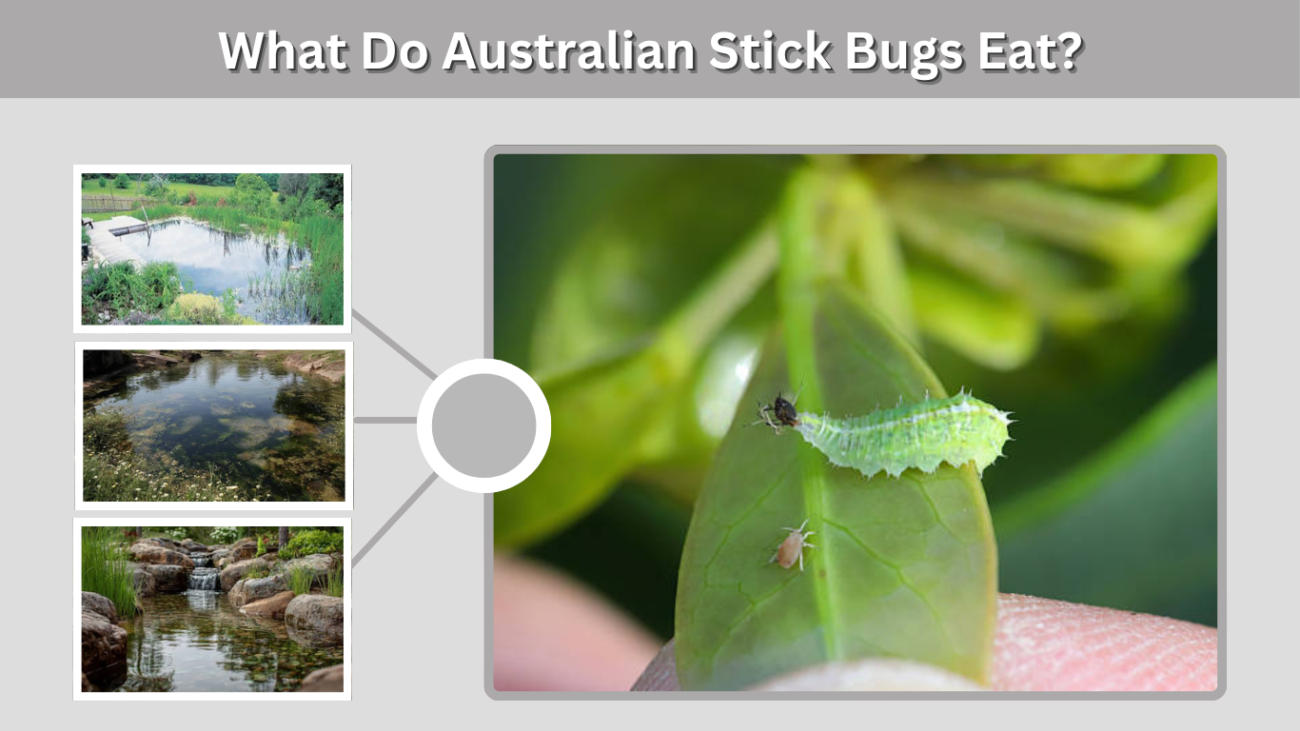
Some hoverfly species spend their larval stage in ponds, stagnant pools, wet organic material, drains, or other aquatic environments. These larvae are adapted to living in places where oxygen levels may be relatively low. One of the best-known aquatic forms is the rat-tailed maggot, which uses an extendable breathing tube to reach the water’s surface.
Rat-Tailed Hoverfly Larvae
Rat-tailed maggots are larvae of certain hoverflies. Their most noticeable characteristic is a long, thin tube extending from the rear of the body.
Important characteristics include:
- Thick, maggot-like body
- Long telescoping breathing tube
- Usually found in stagnant or organic-rich water
- Able to breathe air from the surface
- Often grayish, brownish, or cream-colored
- Feed primarily on microorganisms and organic matter
The long structure may look like a tail, but it functions mainly as a breathing tube.
Hoverfly Larvae in Ponds
Aquatic hoverfly larvae can occur around ponds, especially where there is decomposing vegetation or muddy organic material. Their presence does not necessarily indicate a serious problem.
Natural ponds often contain many different insect larvae. Hoverfly larvae form part of this aquatic community and may contribute to the breakdown of organic material.
Hoverfly Larvae vs Mosquito Larvae
Hoverfly and mosquito larvae can both occur in water, but their appearance differs.
- Hoverfly larvae: Often thicker and more maggot-like.
- Rat-tailed hoverflies: Have a very long breathing tube.
- Mosquito larvae: Usually have slender, segmented bodies.
- Movement: Mosquito larvae often wriggle rapidly when disturbed.
- Size: Some hoverfly larvae can become noticeably larger than mosquito larvae.
Examining overall body shape is usually more reliable than judging them by habitat alone.
Hoverfly Larvae Stages
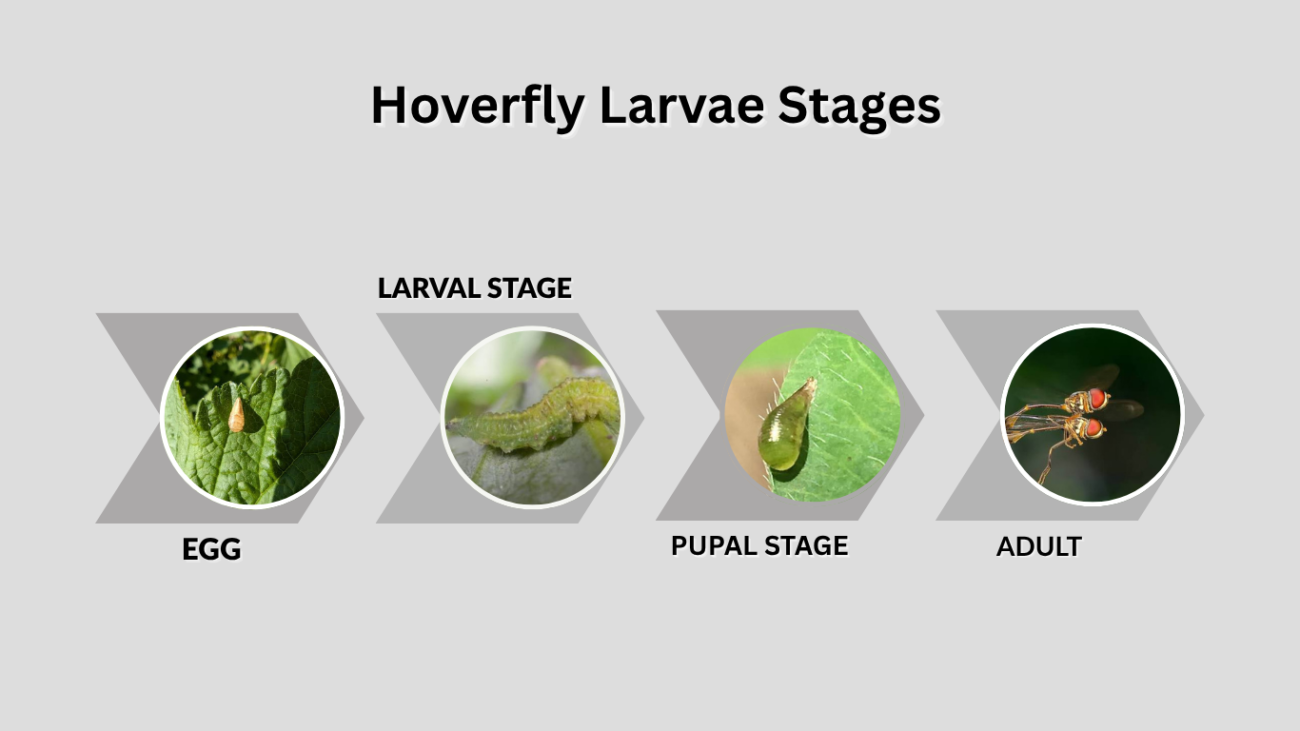
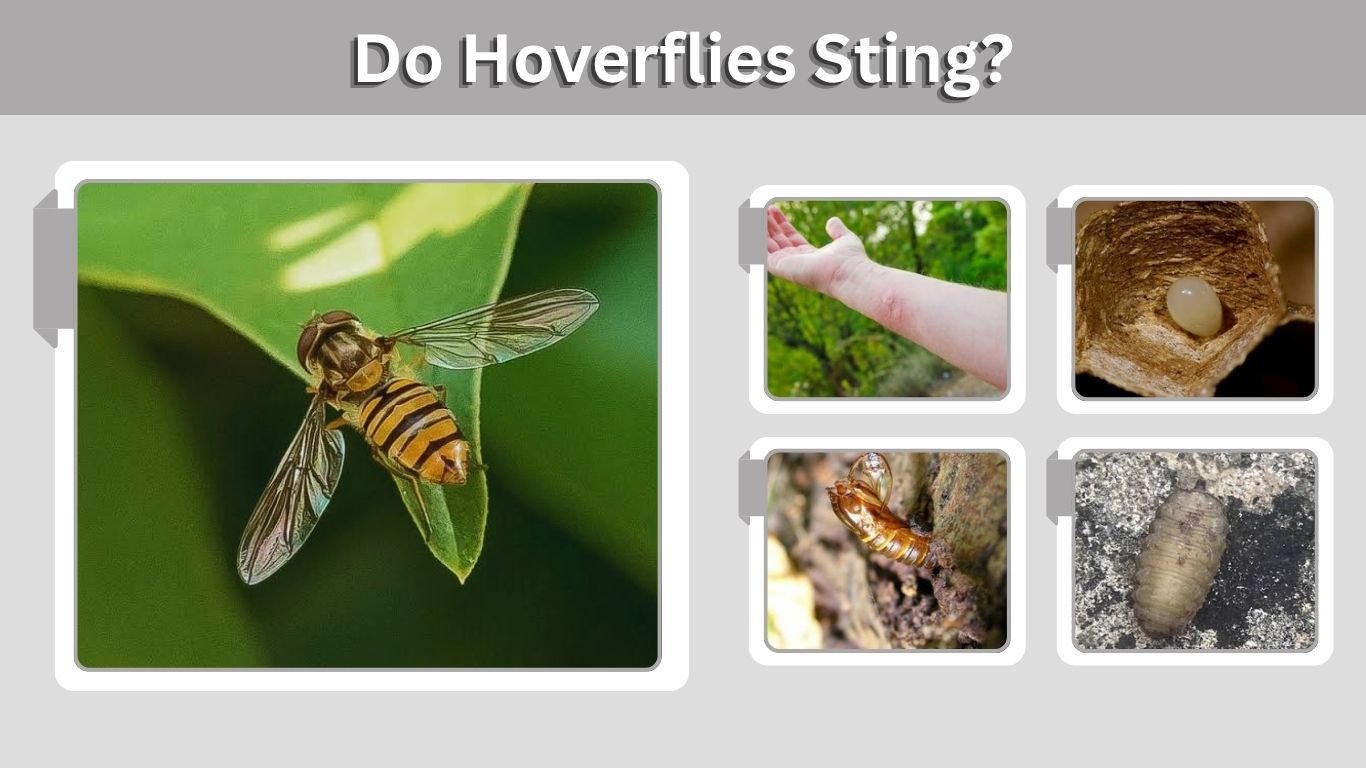
Hoverflies undergo complete metamorphosis, so larvae represent only one stage of development. After hatching from eggs, the larvae feed and grow before transforming into pupae. Their appearance and behavior can change as they mature. Development speed depends on species, food availability, weather, and temperature.
Hoverfly Development Stages
The basic life cycle includes:
- Egg: The female deposits eggs near suitable larval food.
- Larva: The young larva begins feeding and grows through several developmental periods.
- Pupa: The mature larva stops feeding and enters the pupal stage.
- Adult: The adult hoverfly emerges, feeds on nectar and pollen, and eventually reproduces.
How Long Do Hoverfly Larvae Stay Larvae?
There is no single developmental period for every hoverfly species. Temperature, food supply, and species all influence how quickly larvae mature.
Predatory larvae may develop rapidly when aphids are abundant. Development can slow during cooler weather or when food becomes limited. Some species also have seasonal adaptations that allow them to survive unfavorable conditions.
Hoverfly Larvae in the House or Garden
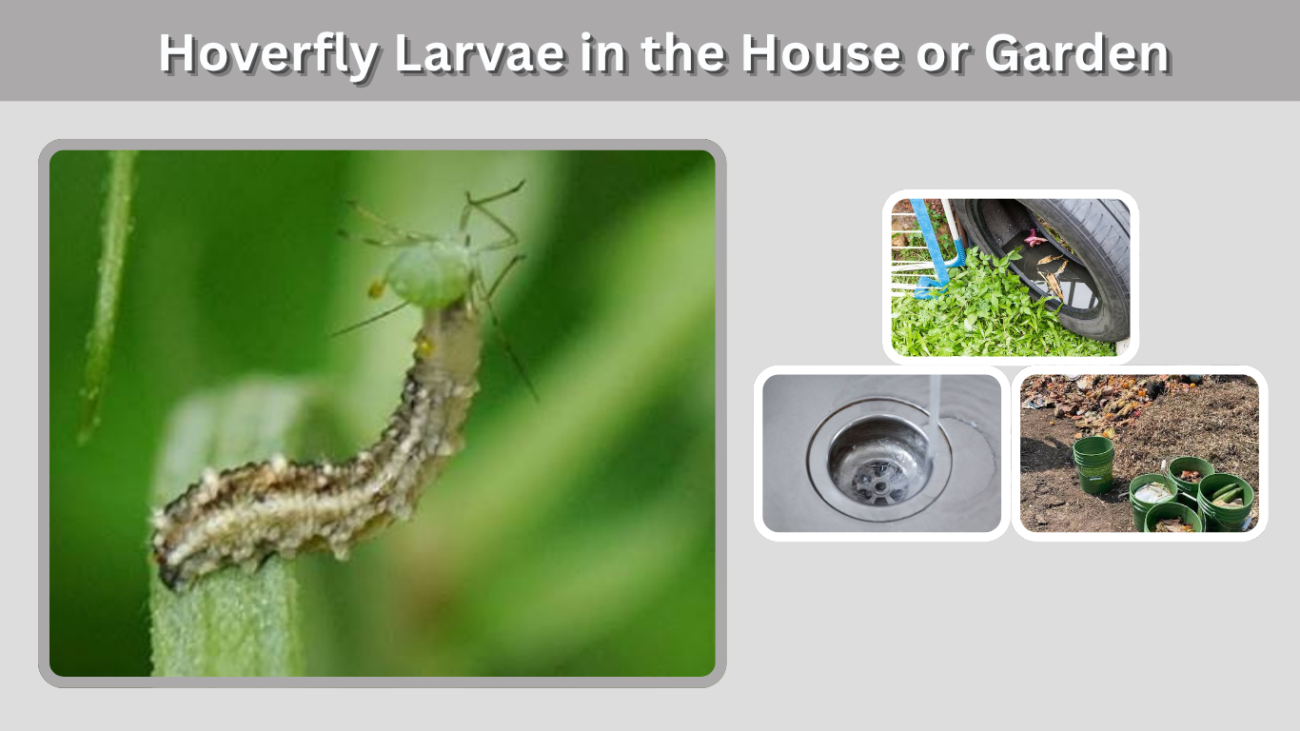
Finding hoverfly larvae outdoors is usually beneficial rather than concerning. Predatory species can help control aphids naturally, while aquatic species are part of normal decomposition processes. Indoors, however, larvae may occasionally appear if suitable damp organic material, standing water, or other breeding conditions are present.
Hoverfly Larvae in the Garden
Hoverfly larvae found on plants should normally be left alone. They may be helping control pest insects without pesticides.
Plants with aphid colonies are especially likely to attract adult hoverflies seeking places to lay their eggs. After hatching, the larvae begin feeding close to these pest populations.
How to Get Rid of Hoverfly Larvae
If larvae are appearing indoors or in an unwanted location:
- Remove stagnant water.
- Clean drains and wet organic buildup.
- Dispose of decaying vegetation.
- Repair leaking pipes or drainage problems.
- Keep containers from collecting rainwater.
- Clean areas containing decomposing organic matter.
- Avoid killing larvae found naturally on garden plants.
Removing the breeding habitat is usually more effective than applying insecticides.
Can You Buy Hoverfly Larvae?
Hoverflies are useful biological-control insects, so gardeners sometimes look for hoverfly larvae for sale. However, availability varies considerably depending on location and supplier. In biological control, hoverflies may sometimes be supplied as eggs, larvae, pupae, or other developmental stages rather than as adult insects.
Why Gardeners Use Hoverfly Larvae
Predatory hoverfly larvae can be useful because they target aphids and some other soft-bodied pests without requiring broad-spectrum pesticide applications. They may be particularly valuable in gardens, greenhouses, and growing areas where encouraging beneficial insects is part of an integrated pest-management approach.
FAQs
1. What do hoverfly larvae look like?
Many hoverfly larvae are soft, legless, elongated insects that resemble small slugs or maggots. Their color may be green, cream, brown, or translucent. Aquatic species can look different, especially rat-tailed maggots, which have a long breathing tube extending from the rear.
2. What do hoverfly larvae eat?
Predatory hoverfly larvae commonly eat aphids and other small soft-bodied insects. Other species consume decaying vegetation, microorganisms, or organic material. Their diet depends on the hoverfly species and the habitat in which the larvae develop.
3. Are hoverfly larvae good for plants?
Yes, many hoverfly larvae are highly beneficial to plants. Aphid-eating species act as natural pest controllers and can reduce infestations without chemical insecticides. For this reason, larvae discovered near aphid colonies should generally be protected rather than removed.
4. Why are hoverfly larvae found in water?
Some hoverflies naturally develop in aquatic or semi-aquatic habitats. Their larvae may feed on microorganisms and decaying organic matter. Rat-tailed hoverfly larvae are especially adapted to oxygen-poor water because their long breathing tube allows them to obtain air from the surface.
5. Should I get rid of hoverfly larvae?
Usually not. Hoverfly larvae found on garden plants are often beneficial predators. Removal may be appropriate when aquatic larvae repeatedly appear indoors or in contaminated standing water. In those situations, cleaning the area and eliminating stagnant water or decaying material usually solves the problem.