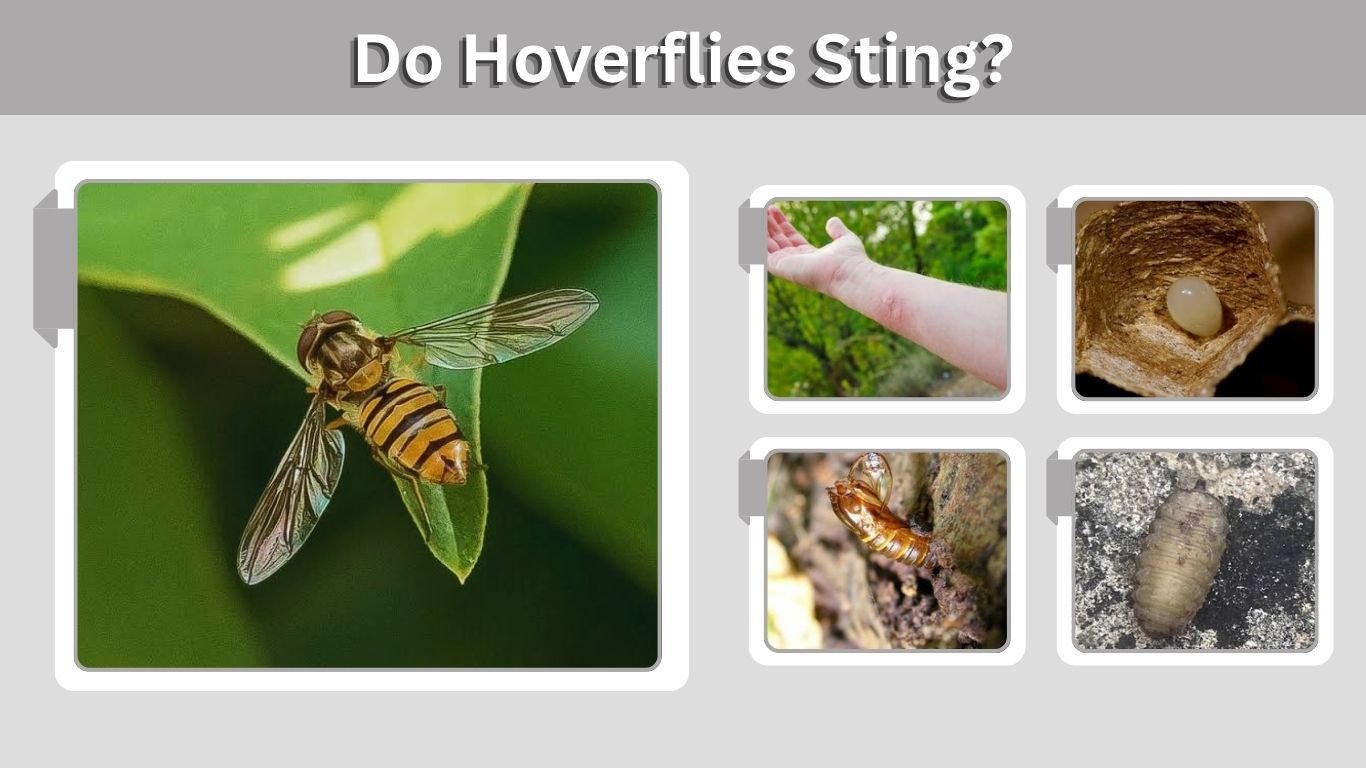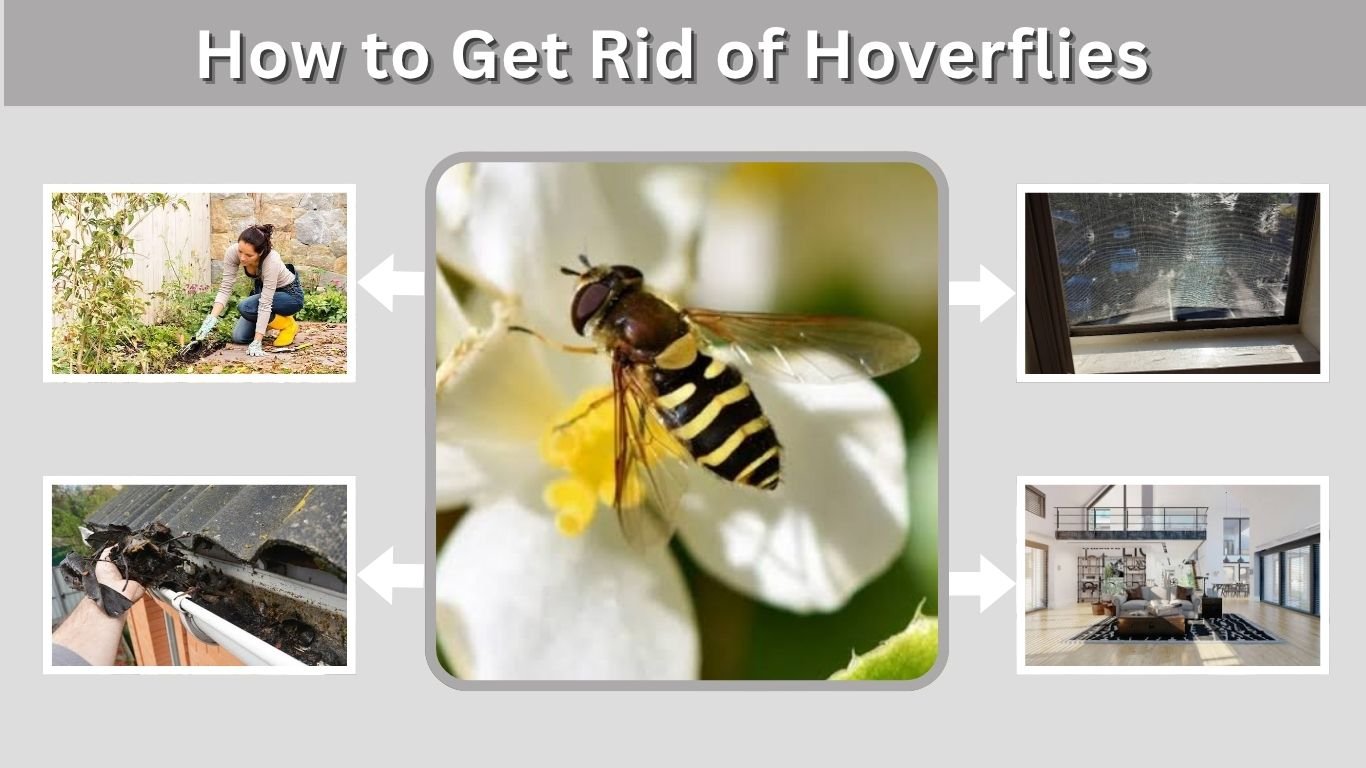
Hoverflies are harmless pollinating insects that often gather around flowers, patios, conservatories, and sunny windows. Although they resemble bees or wasps, hoverflies cannot sting and usually cause no damage. Still, large numbers around doors, food areas, or indoor spaces can become annoying. The best way to get rid of hoverflies is to remove what attracts them, block indoor entry, and use gentle deterrents rather than broad insecticides. These methods can reduce unwanted hoverfly activity while protecting other beneficial insects in your garden.
How to Get Rid of Hoverflies Fast
Hoverflies are usually attracted by flowers, moisture, aphids, sweet substances, and suitable breeding habitats. Therefore, simply killing a few adults rarely solves the problem. The quickest approach is to remove immediate attractants and make the affected area less inviting while allowing beneficial hoverflies elsewhere in the garden to remain undisturbed.
1. Remove Food and Sweet Residues
Hoverflies may investigate sugary or strongly scented materials around patios and outdoor eating areas.
Reduce attraction by:
- Cleaning spilled juice and soda
- Covering fruit and desserts outdoors
- Emptying drink containers promptly
- Keeping trash cans tightly closed
- Washing recycling containers
- Cleaning sticky tables and counters
- Removing overripe fallen fruit
These simple steps can noticeably reduce hoverflies gathering around eating spaces.
2. Use Fans Around Outdoor Seating
Hoverflies are excellent fliers, but strong, continuous airflow can make it difficult for them to remain hovering around a specific location.
A portable fan positioned near a table, doorway, or patio seating area can create an immediate temporary deterrent.
This method is particularly useful during outdoor meals because it does not involve insecticides and stops working as soon as the fan is switched off.
How to Get Rid of Hoverflies Outside
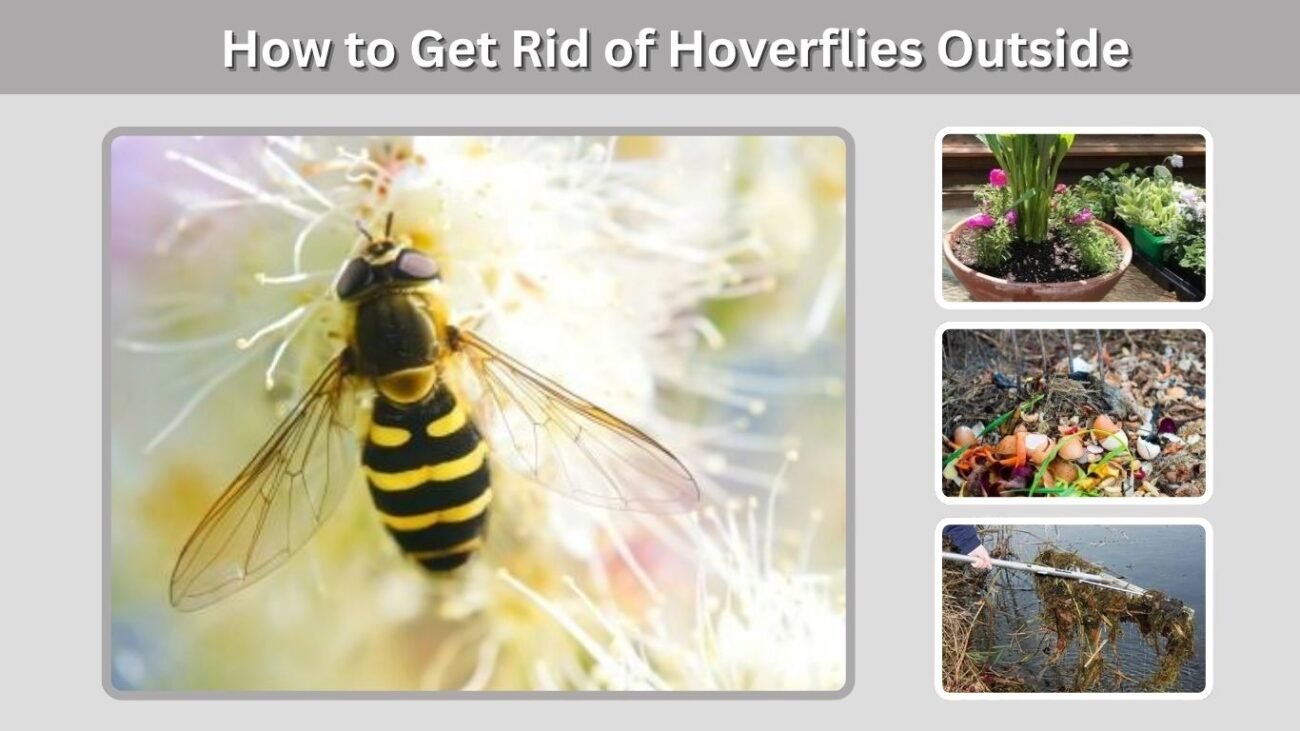
Hoverflies outdoors are usually present because the environment provides flowers, nectar, pollen, aphids, or breeding sites. Since they are valuable pollinators and some larvae eat garden pests, complete outdoor elimination is rarely desirable. Instead, concentrate on reducing their numbers around patios, doors, pools, or other places where they interfere with people.
3. Move Flowering Plants Away From Seating Areas
Adult hoverflies regularly visit flowering plants for nectar and pollen. A patio surrounded by heavily blooming plants can naturally attract many of them.
Instead of removing flowers completely, relocate pots several feet away from frequently used areas.
Flowers can remain elsewhere in the yard where hoverflies continue providing pollination benefits without constantly hovering around chairs, tables, windows, or entrances.
4. Clean Up Decaying Organic Material
Some hoverfly species develop in wet, decaying organic material rather than on garden plants.
Keep outdoor areas cleaner by removing:
- Rotting leaves
- Decaying vegetation
- Fallen fruit
- Excessive organic sludge
- Stagnant dirty water
- Overly wet compost around living areas
- Accumulated plant debris
Not all hoverfly larvae use these habitats, but improving sanitation may reduce species attracted to decomposing organic matter.
How to Get Rid of Hoverflies in the House
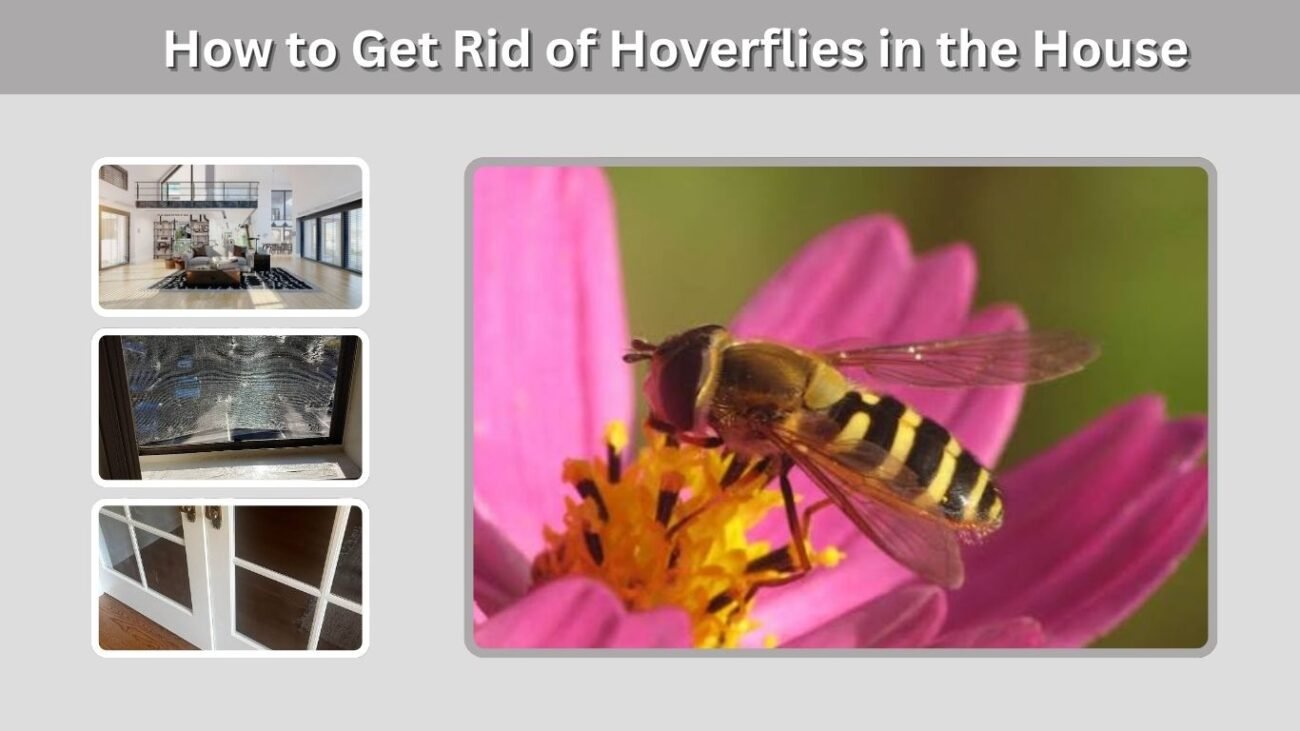
Hoverflies occasionally enter houses through open doors, damaged screens, or windows. They do not normally establish household infestations, and most indoor individuals simply become trapped while following light or searching for an exit. Physical removal and exclusion are generally more practical than applying insecticide indoors.
5. Open a Window and Reduce Indoor Lights
Hoverflies are often drawn toward bright windows.
If one is flying inside, turn off nearby artificial lights and open a window or exterior door. Pull curtains away so the brightest visible opening leads outdoors.
The hoverfly will often find its own way out.
You can also gently capture an individual with a cup and piece of paper and release it outside.
6. Seal Windows and Screens
If hoverflies repeatedly enter your house or conservatory, look for gaps rather than treating the insects themselves.
Check for:
- Torn window screens
- Gaps around window frames
- Poorly fitted doors
- Open ventilation areas
- Damaged screen doors
- Gaps around conservatory panels
Repairing these openings also helps prevent mosquitoes, flies, wasps, and other insects from entering.
How to Get Rid of Hoverflies Naturally
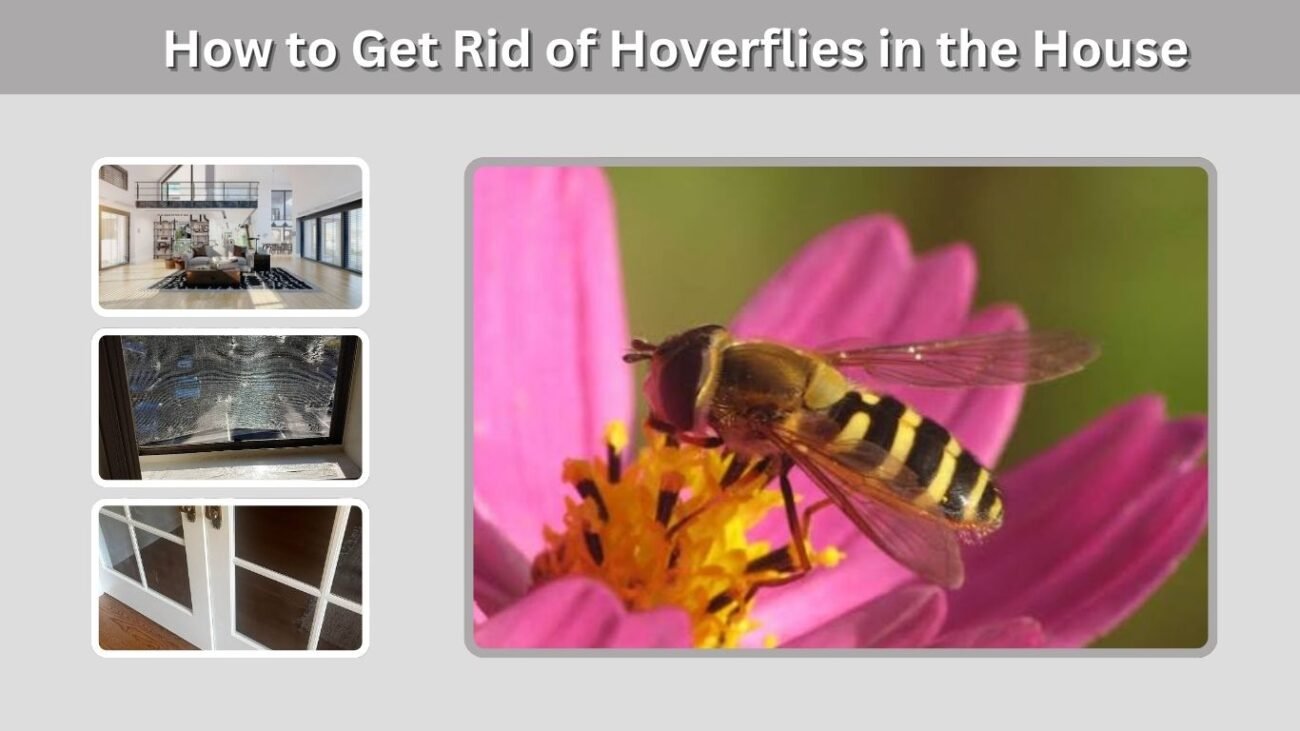
Natural control is particularly appropriate for hoverflies because they rarely pose any health or structural threat. Strong pesticide treatments can unintentionally kill bees, butterflies, ladybugs, and other beneficial insects. Small environmental changes are usually enough to redirect hoverflies away from the places where they are unwanted.
7. Reduce Standing and Polluted Water
Certain hoverfly larvae develop in wet environments, including stagnant or organically rich water.
Inspect your property for water collecting in:
- Buckets
- Blocked gutters
- Plant saucers
- Old containers
- Birdbaths that are not maintained
- Drainage channels
- Water-filled garden items
Empty unnecessary standing water and regularly clean water features that you want to keep.
Healthy ponds do not necessarily need to be removed simply because hoverflies are present.
8. Control Aphids on Plants
Many common hoverfly larvae are predators of aphids. Adult females may deliberately visit aphid-infested plants to lay eggs nearby.
If one particular plant is attracting unusually large numbers, examine it for aphids.
A small aphid population may actually be reduced naturally by hoverfly larvae. For larger infestations, spraying aphids off plants with water or using an appropriate targeted treatment can reduce the food source attracting egg-laying hoverflies.
How to Get Rid of Hoverflies in the Garden
Hoverflies in a garden are normally beneficial rather than problematic. Adults pollinate flowers, while larvae of many species consume aphids and other small pests. If they are numerous, it is often better to redirect their activity away from paths and seating areas instead of trying to eliminate them from the entire garden.
Should You Kill Hoverflies?
Usually, no. Hoverflies do not possess stingers and are not aggressive toward humans.
Their resemblance to bees and wasps often causes unnecessary concern. If an insect is hovering directly in front of you, it is generally investigating its surroundings rather than preparing to attack.
Killing hoverflies can also reduce natural pollination and pest control.
Moving attractive flowers farther from high-traffic areas is a better long-term solution.
Hoverflies Around People
Some hoverflies may hover close to people, sometimes remaining at face or head height for several seconds.
This behavior can seem threatening, but hoverflies cannot sting.
Avoid swatting repeatedly because they usually move away on their own. Walking away, using a fan, or changing your position is typically enough when a hoverfly becomes persistent.
Do Hoverflies Build Nests?
Hoverflies do not build bee-like nests or wasp nests. Their reproductive habits vary substantially among species. Females lay eggs in habitats suitable for their larvae, such as plants containing aphids, decaying vegetation, wet organic material, or aquatic environments.
Hoverfly Nest in the Ground
If you see many bee-like insects repeatedly entering holes in the ground, they may not be hoverflies at all.
Ground-nesting bees, mining bees, wasps, and other insects are frequently mistaken for hoverflies.
Hoverflies may visit low vegetation or fly close to the soil, but they do not construct organized underground colonies like many bees and wasps.
Correctly identifying the insect before applying treatment is therefore important.
What About Hoverfly Larvae?
Hoverfly larvae vary considerably.
Some resemble small legless maggots and crawl across plants hunting aphids. Others develop in wet organic material, tree cavities, compost-like environments, or water.
If larvae are found around decaying material, cleaning or removing the breeding material may stop the problem naturally.
Predatory larvae found among aphids are best left alone because they can provide useful biological pest control.
Preventing Hoverflies From Returning
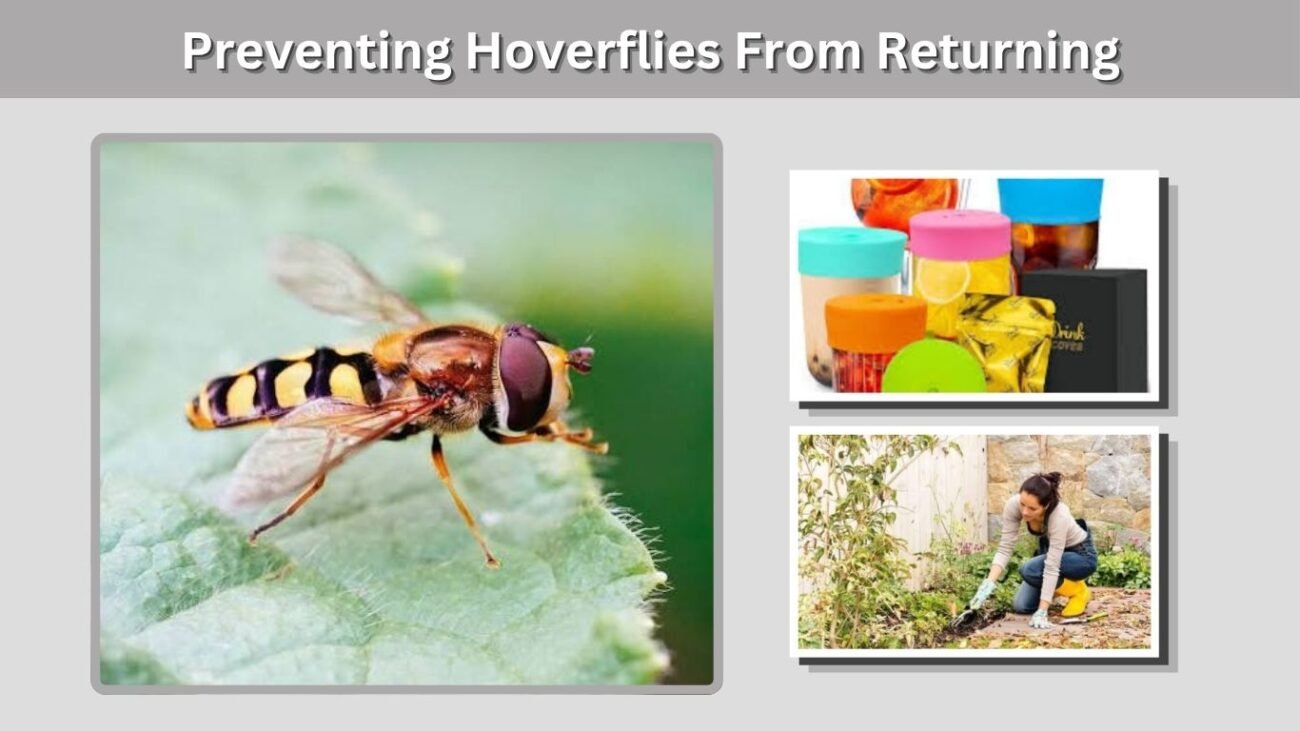
Long-term prevention depends on understanding why hoverflies repeatedly appear in one location. Flowering plants, aphid colonies, sweet food, indoor lighting, and suitable larval habitats can all contribute. Small environmental adjustments are generally more successful than repeatedly spraying adult insects.
Simple Hoverfly Prevention Tips
To reduce recurring problems:
- Keep food and sweet drinks covered.
- Clean spills promptly.
- Move flowering pots away from doors.
- Maintain window and door screens.
- Repair gaps around conservatories.
- Remove decaying plant debris.
- Keep gutters flowing properly.
- Empty unnecessary standing water.
- Monitor plants for aphids.
- Use fans around outdoor seating when needed.
These measures reduce nuisance activity without removing hoverflies from the wider environment.
FAQs
1. What is the fastest way to get rid of hoverflies?
Remove whatever is attracting them and use airflow to discourage hovering. Clean sweet spills, cover food, move flowering pots away from seating areas, and use an outdoor fan. Indoors, open a bright window or door so trapped hoverflies can quickly escape.
2. How do I get rid of hoverflies inside my house?
Open a window or exterior door and turn off unnecessary indoor lights so the insect moves toward the outdoor light. Individual hoverflies can also be captured with a cup and released. Repair torn screens and gaps if they repeatedly enter the building.
3. Do hoverflies have nests that need removing?
No. Hoverflies do not construct social nests like honey bees or wasps. Different species lay eggs in suitable larval habitats, including aphid-infested plants, wet organic material, or aquatic environments. Bee-like insects repeatedly entering underground holes may actually be ground-nesting bees or wasps.
4. Are hoverflies dangerous?
Hoverflies are generally harmless to humans. They may resemble yellow-and-black bees or wasps, but they do not have functional stingers and do not normally bite people. Adults mostly visit flowers for nectar and pollen, while larvae of many species eat aphids and other garden pests.
5. Should I remove hoverflies from my garden?
Usually, you should leave them alone. Hoverflies are important pollinators, and many species have larvae that naturally control aphids. If they are becoming annoying around patios or doors, relocate flowering plants and remove nearby attractants instead of eliminating hoverflies from the entire garden.