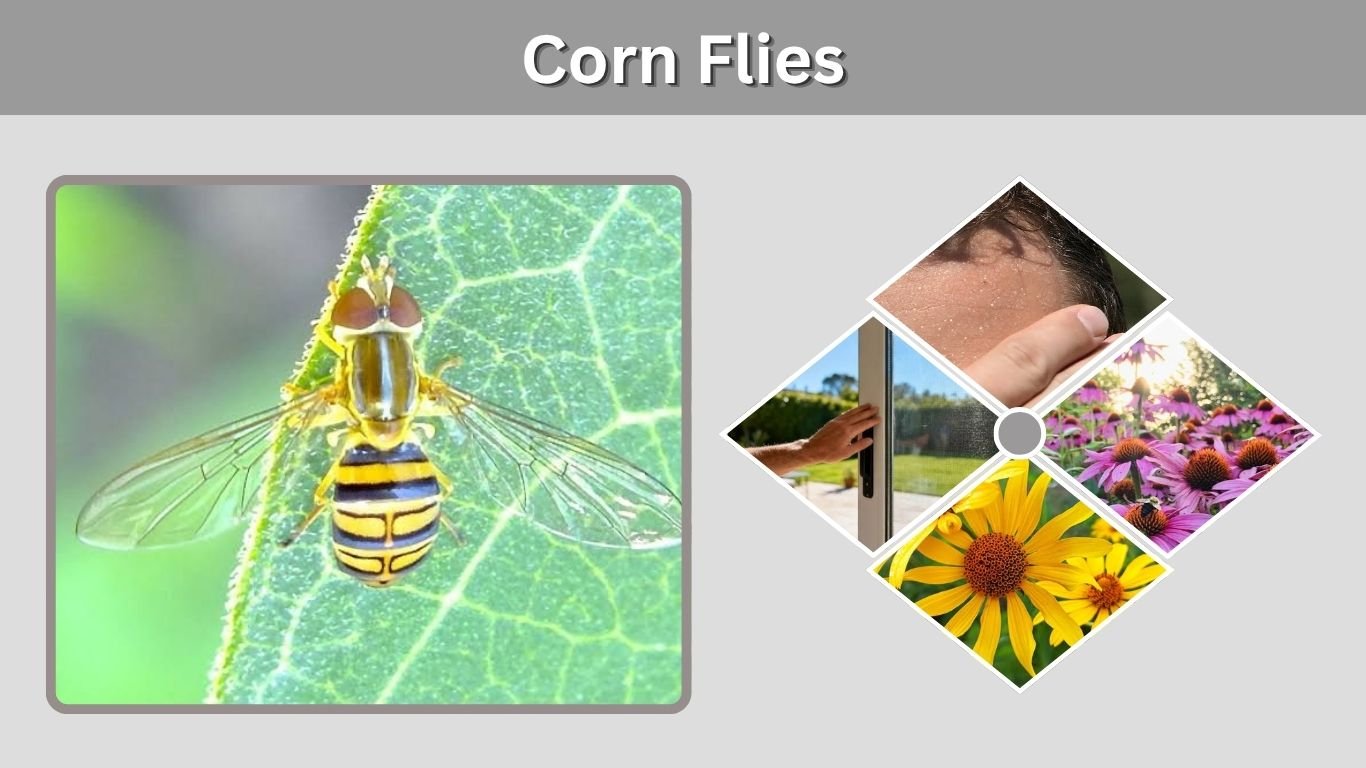
Corn flies are small, bee-like insects that often become noticeable around cornfields, gardens, and people during warm weather. The name “corn fly” is commonly used for certain hover flies or syrphid flies, especially species associated with corn. They may hover around your face or land on sweaty skin, which leads many people to confuse them with sweat bees. Fortunately, corn flies do not sting or bite. In fact, many are beneficial pollinators, and some larvae help control crop pests.
What Are Corn Flies?
“Corn fly” is a common rather than a precise scientific name. In much of the Midwestern United States, it is used for small hover flies in the family Syrphidae, particularly members of the genus Toxomerus. One notable species is the maize calligrapher, Toxomerus politus, which has a close association with corn.
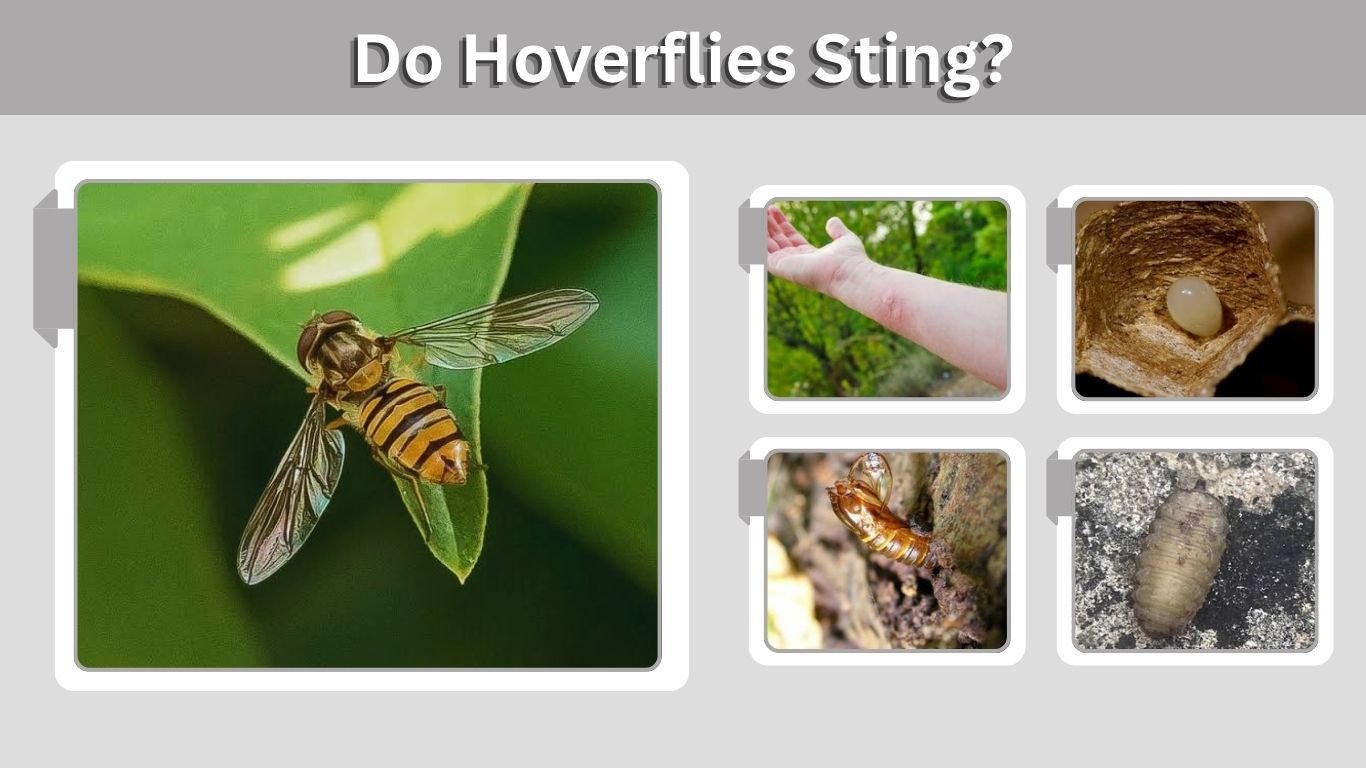
Adults resemble tiny bees because of their black-and-yellow markings. They frequently hover almost motionless before suddenly darting in another direction.
What Does a Corn Fly Look Like?
Typical corn fly characteristics include:
- Small, slender body
- Yellow and black abdominal markings
- One functional pair of wings
- Large fly-like compound eyes
- Short antennae
- Rapid, darting flight
- Ability to hover in one place
- Bee- or wasp-like appearance
Their coloration acts as protective mimicry, making predators more likely to mistake them for insects capable of stinging.
Why Are They Called Corn Flies?
Corn flies often become abundant around cornfields during tasseling. Corn produces huge quantities of pollen, providing an important food source for some Toxomerus larvae and adults.
Larvae may occur around pollen collected in leaf axils and other parts of corn plants. This association explains common names such as corn fly, corn tassel fly, and maize calligrapher fly.
Corn Fly vs. Sweat Bee
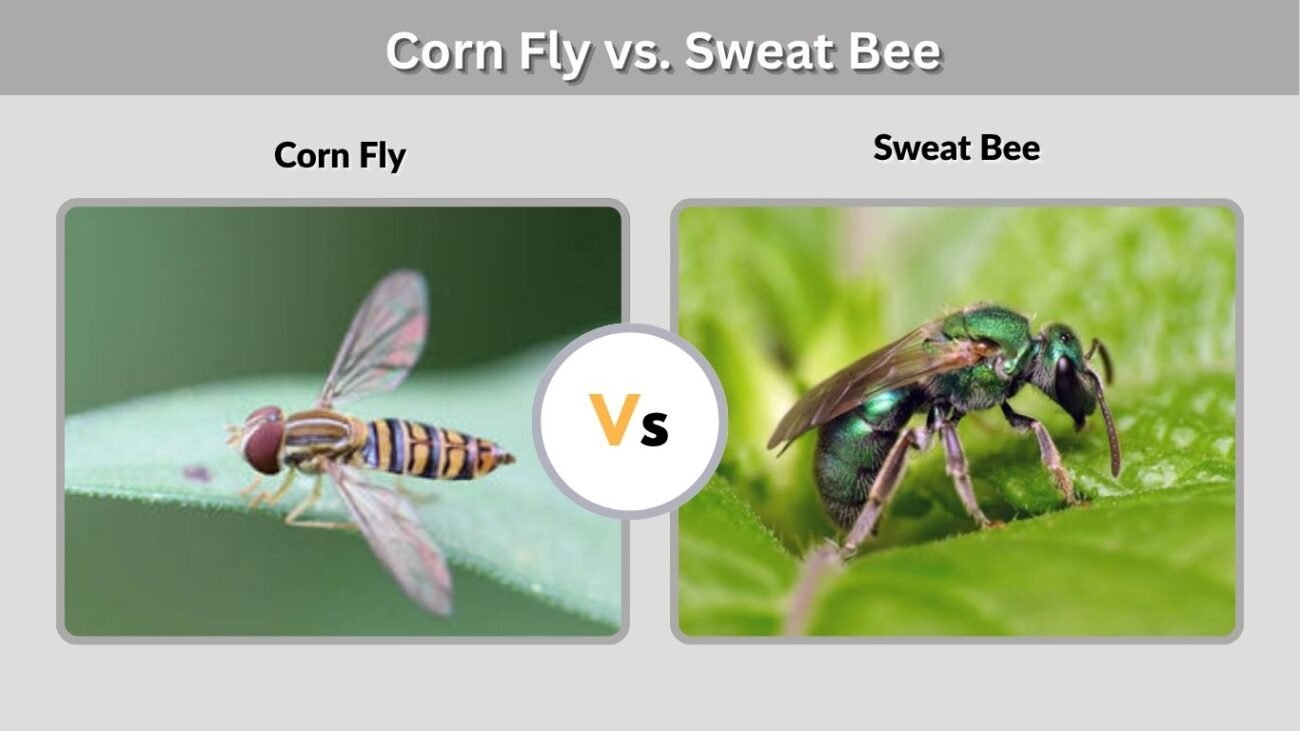
Corn flies and sweat bees are frequently confused because both are small, can have bee-like coloring, and may approach sweaty people. However, they belong to completely different insect groups.
Corn flies are true flies, while sweat bees are actual bees.
Main Differences
| Feature | Corn Fly | Sweat Bee |
| Insect type | Fly | Bee |
| Wings | 2 functional wings | 4 wings |
| Sting | No | Females can sting |
| Bite | No | Not normally considered biting insects |
| Flight | Often hovers and darts | More typical bee flight |
| Attraction to sweat | Yes | Yes |
| Main foods | Pollen and nectar; larvae vary | Nectar and pollen |
| Risk to people | Essentially harmless | Usually mild, but can sting |
Purdue University notes that hover flies commonly mistaken for sweat bees are unable to sting, whereas sweat bees possess stingers.
Are Sweat Bees and Corn Flies the Same?
No. Calling a corn fly a “sweat bee” is a common identification mistake.
A useful clue is hovering behavior. Corn flies can remain suspended almost perfectly in the air and then dart rapidly sideways. Sweat bees generally do not demonstrate the same characteristic hovering behavior.
Another clue is wing number: flies have one functional pair, while bees have two pairs.
Do Corn Flies Bite or Sting?
Despite their bee-like appearance, corn flies are harmless to humans. Hover flies do not possess the stinging apparatus found in bees and wasps, and the corn-associated species commonly encountered around people do not bite.
Their persistent behavior can nevertheless make them seem aggressive.
Do Corn Flies Bite?
No. Corn flies are not blood-feeding insects, and they do not have mouthparts designed to bite people.
If one lands on your arm, neck, or face, it may appear to be examining your skin. It is often seeking moisture or dissolved salts rather than attempting to bite.
Do Corn Flies Sting?
Corn flies cannot sting.
Their yellow-and-black pattern is simply a visual defense. Looking similar to bees and wasps can discourage birds and other predators from trying to eat them.
For people, the appearance is more intimidating than the insect itself.
Why Do Corn Flies Land on You?
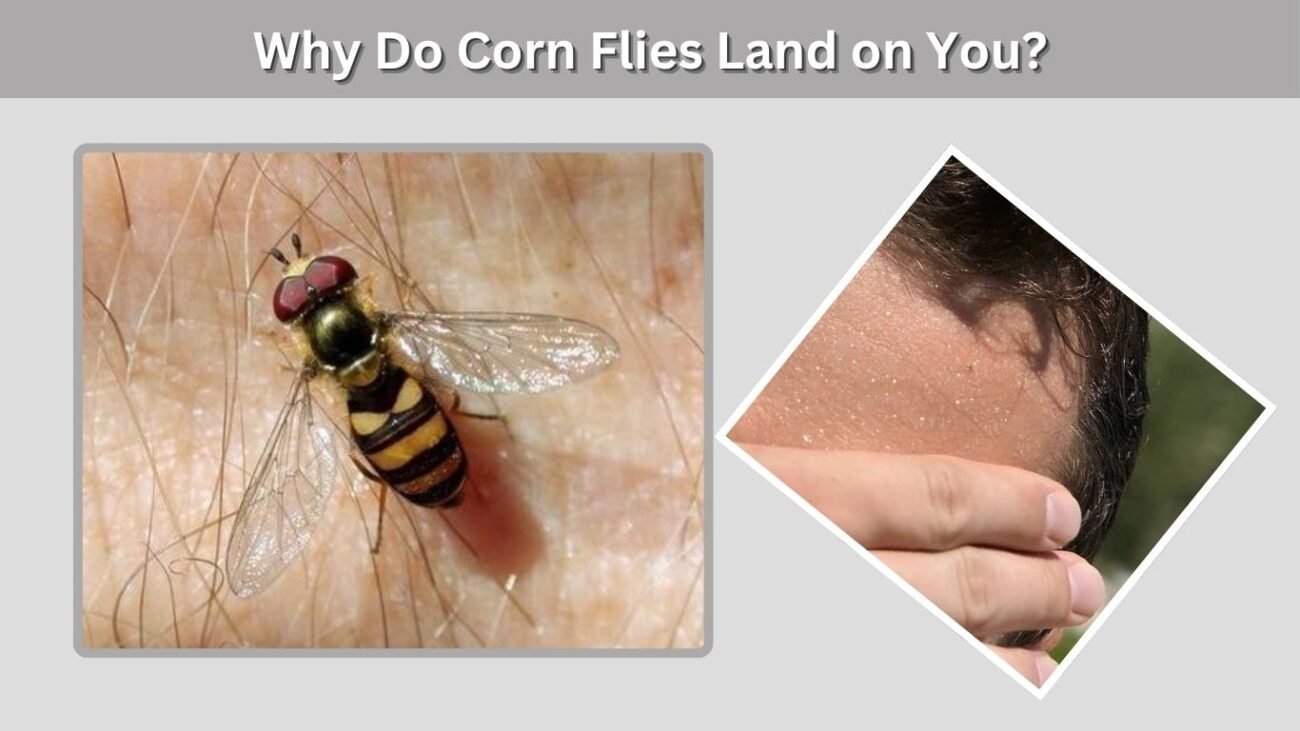
One of the most annoying behaviors associated with corn flies is repeatedly landing on people. This is especially noticeable during hot weather when people are perspiring.
Hover flies may be attracted to moisture and salts in human sweat, explaining why large populations can become persistent around exposed skin.
What Attracts Corn Flies?
Several things can increase corn fly activity:
- Human perspiration
- Moisture
- Salts from sweat
- Flowering plants
- Corn pollen
- Large areas of tasseling corn
- Sources of nectar and pollen
A person working outdoors beside a cornfield during warm weather can therefore receive considerable attention from these insects.
Why Are Corn Flies So Bad This Year?
Corn fly abundance can vary considerably from one season to another.
Large populations may appear when weather conditions favor survival and when abundant corn pollen, flowers, or insect prey provide good feeding opportunities. Their activity can become especially noticeable when corn reaches the tasseling and pollen-producing stage.
A sudden abundance does not necessarily mean the flies are damaging the crop.
Corn Fly Larvae
Corn fly larvae look nothing like the yellow-and-black adults. They are maggot-like, legless, and may appear pale, greenish, yellowish, or partly translucent.
Finding these small larvae on corn occasionally causes concern because growers may assume they are feeding on the plant.
Do Corn Fly Larvae Damage Corn?
The hover fly larvae commonly reported on corn are generally not considered corn pests. Research and extension observations have found larvae associated with pollen accumulations, while larvae of many syrphid species are predators of aphids and other small insects.
Some hover fly larvae may feed on:
- Corn pollen
- Aphids
- Whiteflies
- Other soft-bodied insects
- Organic material, depending on species
Therefore, finding syrphid larvae on corn usually does not justify insecticide treatment.
Are Corn Flies Beneficial?
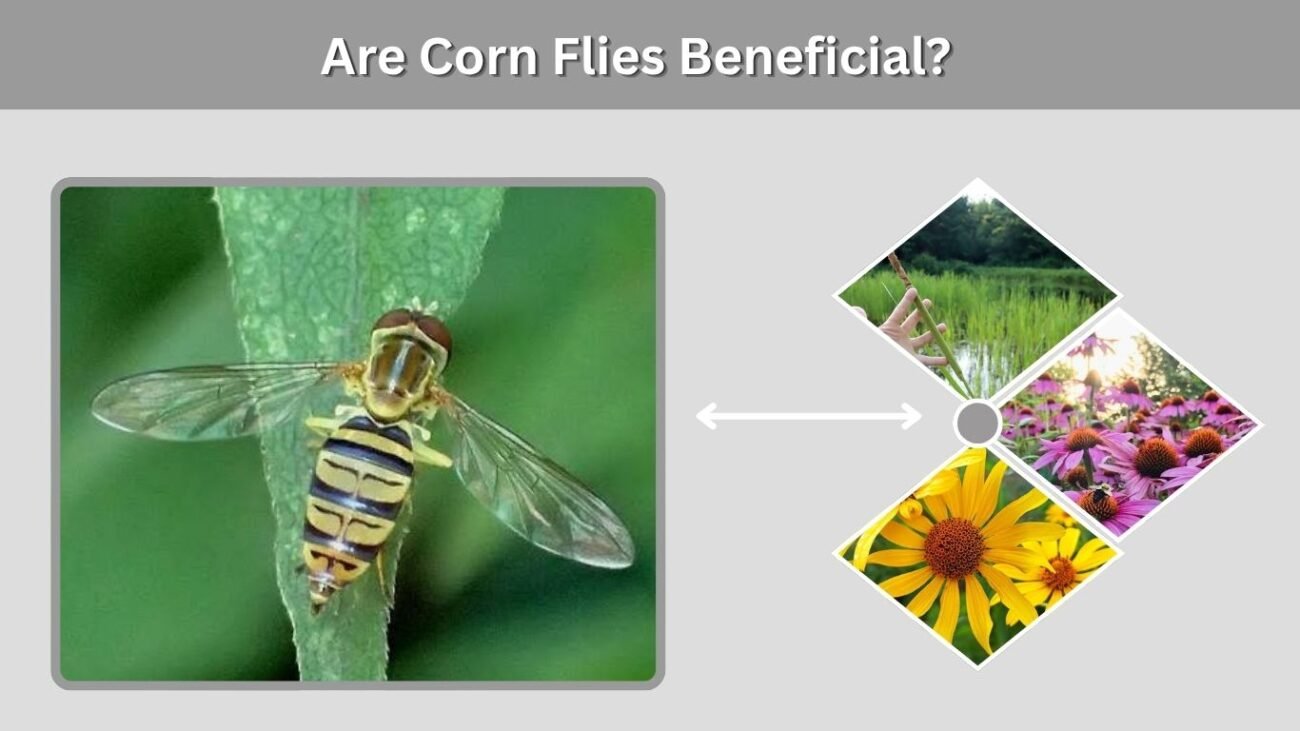
Although they can be annoying when they swarm around people, corn flies play useful ecological roles.
Adult hover flies visit flowers for nectar and pollen and contribute to pollination. Many members of the Syrphidae family also have predatory larvae that consume agricultural and garden pests.
Benefits of Corn Flies
Corn flies and related hover flies can provide several benefits:
- Pollinate flowers
- Feed on abundant pollen
- Support natural ecosystems
- Provide food for other wildlife
- Help suppress aphids in species with predatory larvae
- Reduce the need for unnecessary pest treatments
For these reasons, controlling them simply because they look like bees is usually unnecessary.
How to Get Rid of Corn Flies
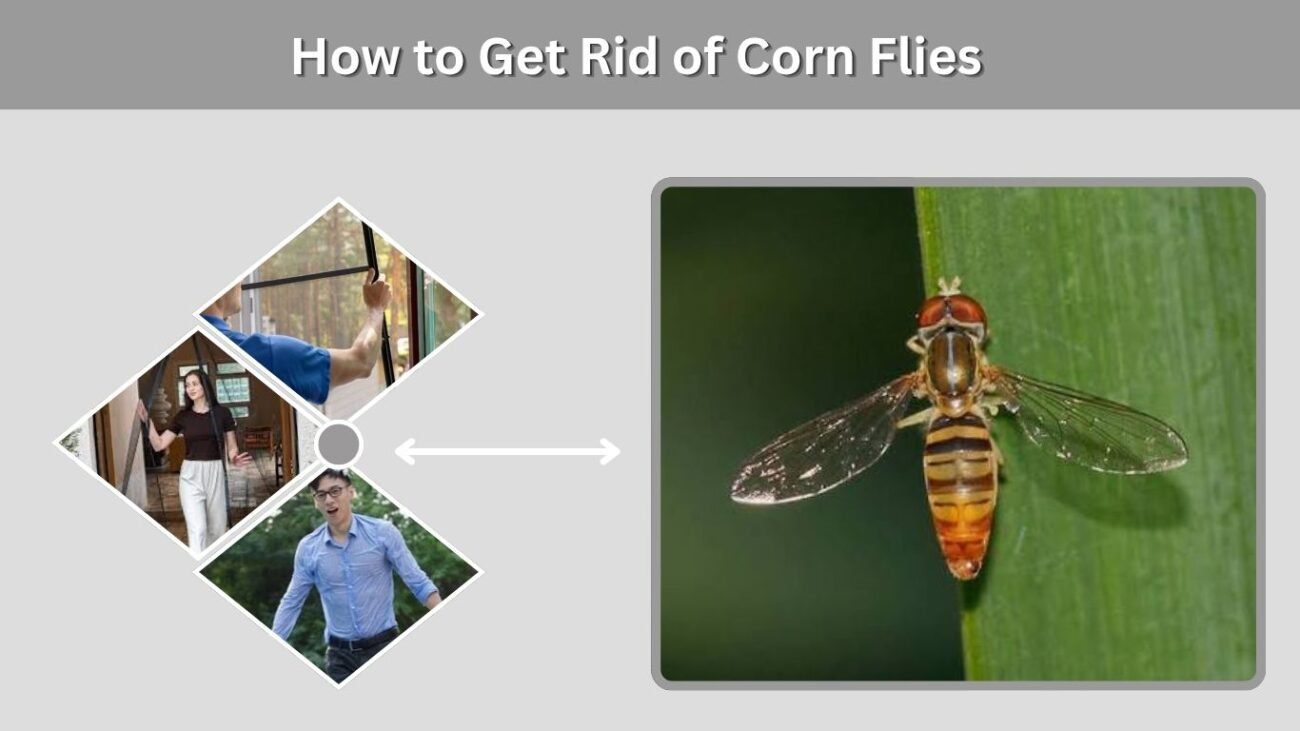
Corn flies generally do not need to be killed. They do not sting, bite, or normally damage corn, so the best approach is usually reducing contact rather than applying insecticides.
Their populations are also often temporary and decline as environmental conditions and available food change.
How to Keep Corn Flies Away From You
If corn flies constantly hover around you:
- Wipe or rinse away heavy perspiration.
- Change sweat-soaked clothing after outdoor work.
- Keep doors and window screens in good condition.
- Avoid leaving doors open near heavy outdoor activity.
- Move away from flowering or heavily tasseling vegetation when flies are concentrated there.
- Use physical barriers when working around unusually large populations.
Because these insects are generally beneficial, broad-spectrum pesticide treatments are rarely a good first choice.
Corn Fly Traps and Repellents
Standard fly traps may have limited value because corn flies are primarily outdoor insects attracted to pollen, flowers, and other natural resources rather than garbage.
Eliminating large outdoor populations is also usually unnecessary. If they are gathering around a building, exclusion with intact screens and closed doors is often more practical than trying to trap every individual.
Corn Fly vs. Corn Silk Fly
A corn fly should not automatically be confused with a corn silk fly.
The term corn fly commonly refers to harmless hover flies around cornfields, while corn silk flies are different flies associated with corn ears and can be agricultural pests.
Correct identification is therefore important before deciding whether treatment is necessary. A bee-like insect hovering around tassels or people may be a beneficial syrphid rather than a crop-damaging pest.
FAQs
How long do corn flies live?
Lifespan varies by species and environmental conditions. Corn fly populations may seem short-lived because their numbers rise and fall with seasonal pollen, flowers, prey availability, and weather.
When do corn flies go away?
Their numbers generally decrease when the conditions responsible for a population increase change, such as the end of heavy corn pollen production or changes in weather and available food.
Can corn flies hurt you?
No. The hover flies commonly called corn flies do not bite or sting people. Their bee-like appearance makes them seem more dangerous than they actually are.
Why do corn flies hover around my face?
They may be investigating moisture and salts associated with perspiration. Their natural hovering and darting flight can make this behavior especially noticeable.
Should I kill corn flies?
Usually not. Corn flies are generally harmless, and hover flies can contribute to pollination and natural pest control. Unless they are creating an unusual indoor nuisance, leaving them alone is typically the better option.