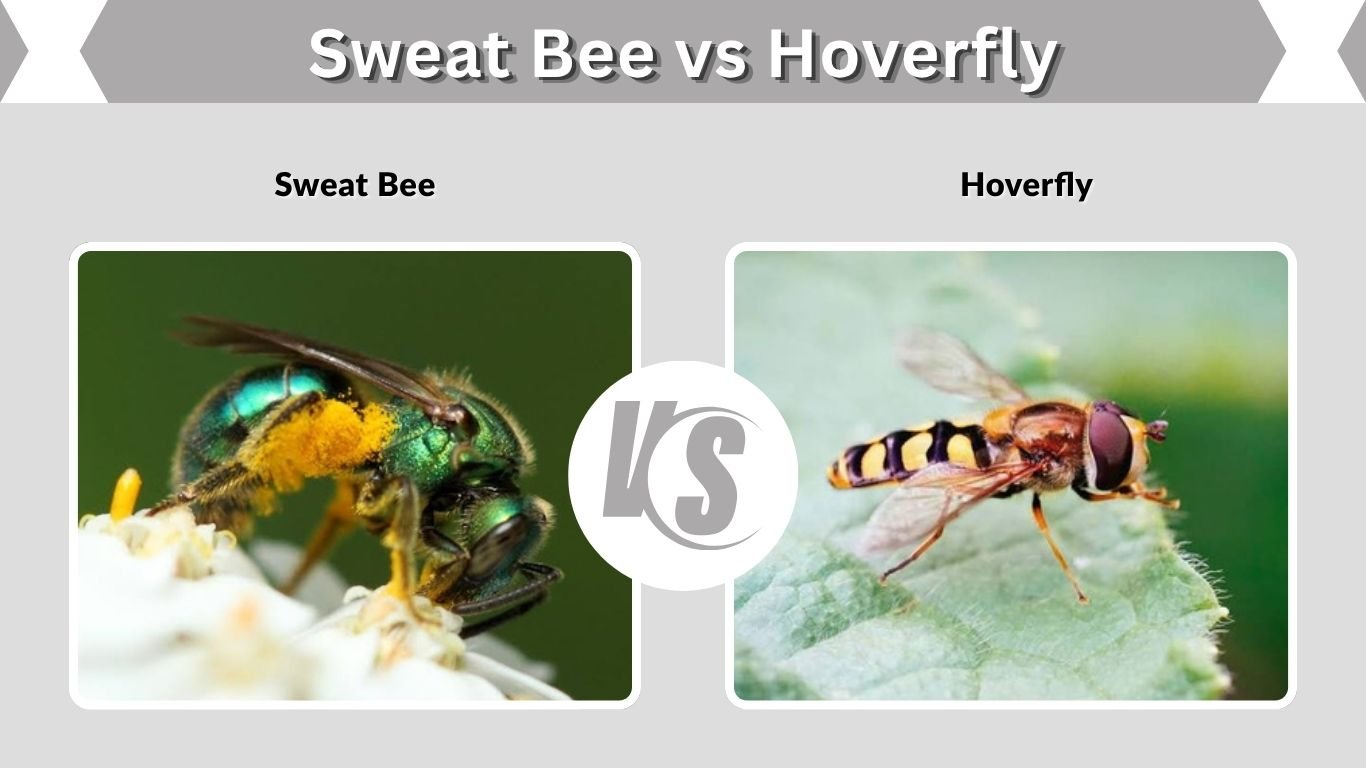
Sweat bees and hoverflies are small flying insects that can look surprisingly similar when they visit flowers or hover around people. Both are important pollinators, but they belong to completely different insect groups. Sweat bees are true bees that collect pollen and can sting, while hoverflies are harmless flies that often mimic bees for protection. Differences in wings, eyes, antennae, body shape, flight, and behavior make identification easier. This guide compares sweat bees vs hoverflies and explains how to tell them apart quickly.
Sweat Bee vs Hoverfly: Quick Comparison
At first glance, both insects may appear bee-like because many hoverflies have yellow, black, brown, or metallic markings. A closer look reveals several reliable differences. Sweat bees belong to the bee family Halictidae, while hoverflies belong to the fly family Syrphidae. Their wings and facial features provide some of the easiest identification clues.
| Feature | Sweat Bee | Hoverfly |
| Insect group | Bee | Fly |
| Wings | Two pairs | One pair |
| Antennae | Relatively long | Usually short |
| Eyes | Smaller, separated | Often very large |
| Body | Often hairy | Usually smoother |
| Pollen carrying | Females commonly carry pollen | Do not have bee pollen baskets |
| Flight | Typical bee-like flight | Can hover almost motionless |
| Sting | Females can sting | Cannot sting |
| Bite | Not normally considered biting insects | Cannot bite people |
| Pollinator | Yes | Yes |
The Biggest Difference
The easiest technical difference is the number of wings. Sweat bees have four wings, meaning two pairs, while hoverflies have only two functional wings.
This distinction can be difficult to see when an insect is moving quickly, so body structure and behavior are often easier for everyday identification.
Hoverflies also tend to have much larger eyes and shorter antennae. Sweat bees generally look more obviously bee-like when viewed closely.
What Does a Sweat Bee Look Like?
Sweat bees are a diverse group of small to medium-sized bees. Many species are dark brown or black, while others have beautiful metallic green, blue, or bronze bodies. Some species have pale bands across their abdomens. Their relatively small size sometimes causes people to mistake them for flies.
Sweat Bee Identification
Look for these characteristics:
- Two pairs of wings
- Medium to long antennae
- Hairy body or legs
- Bee-like body structure
- Black, brown, green, blue, or metallic coloration
- Females may carry visible pollen
- Usually smaller than a honey bee
- Legs designed for walking and collecting pollen
- Less ability to hover perfectly in place
Sweat bees are often only several millimeters long, although size varies considerably among species.
Why Are They Called Sweat Bees?
Sweat bees get their common name because some species are attracted to human perspiration.
Sweat contains salts and minerals that these bees may seek, particularly during warm weather. A sweat bee might land on an exposed arm or leg and begin licking moisture from the skin.
This behavior does not mean the bee is attacking you. It is simply collecting minerals.
However, attempting to swat or squeeze the bee against your skin can increase the chance of being stung.
What Does a Hoverfly Look Like?
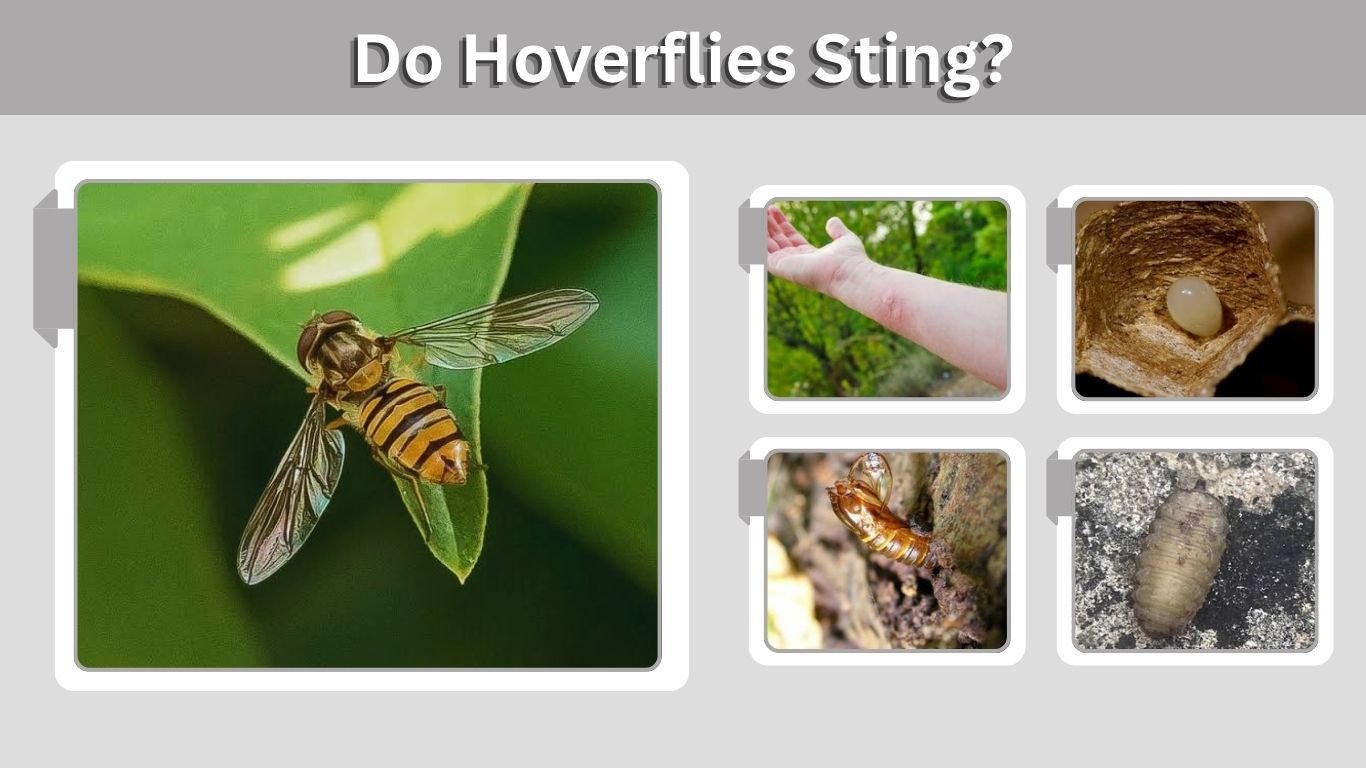
Hoverflies are true flies, but many species imitate bees or wasps through their coloration. This form of mimicry can discourage predators that associate yellow-and-black insects with painful stings. Despite their appearance, hoverflies do not have stingers and are generally harmless to people.
Hoverfly Identification
Common hoverfly characteristics include:
- One pair of functional wings
- Very large compound eyes
- Short antennae
- Smooth or lightly hairy bodies
- Yellow, orange, black, or brown markings
- Extremely agile flight
- Ability to hover in one spot
- Rapid sideways movement
- Frequent visits to flowers
- No stinger
Some species are so convincing that even experienced gardeners may initially mistake them for bees.
Why Do Hoverflies Look Like Bees?
Bee mimicry provides hoverflies with protection.
Birds and other predators may hesitate to attack an insect that resembles something capable of stinging. The hoverfly benefits from the warning appearance even though it cannot deliver a sting itself.
This strategy is known as Batesian mimicry, where a harmless species resembles a better-defended one.
Hoverflies do not behave aggressively toward humans despite their bee-like markings.
Sweat Bee vs Hoverfly Identification
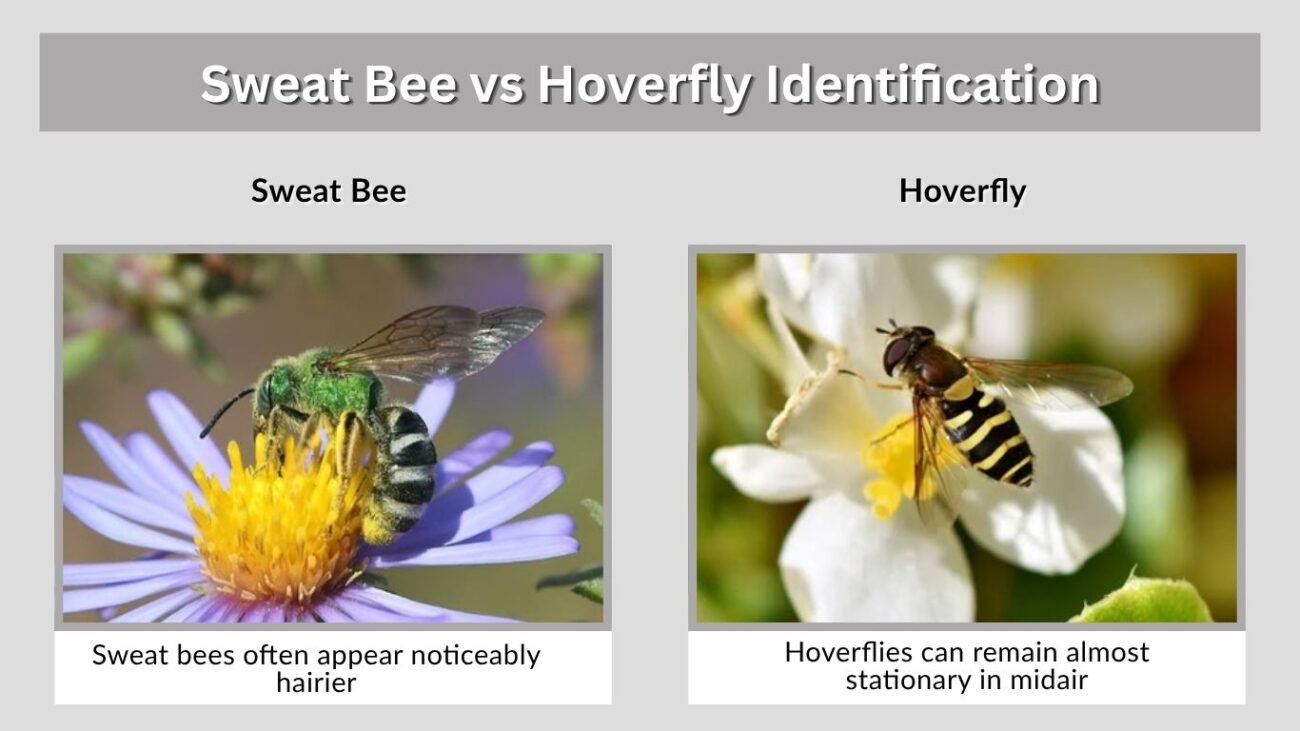
When both insects are feeding on flowers, identification can be challenging. Rather than relying on color alone, examine several characteristics together. Wings, antennae, eyes, body hair, and flight style generally provide more reliable clues than yellow or black markings.
Key Differences to Look For
Use these features:
- Wings: Sweat bees have four; hoverflies have two.
- Eyes: Hoverfly eyes are usually much larger.
- Antennae: Sweat bees generally have longer antennae.
- Body hair: Sweat bees often appear noticeably hairier.
- Pollen: Female sweat bees may carry pollen on their legs.
- Hovering: Hoverflies can remain almost stationary in midair.
- Movement: Hoverflies often dart sideways extremely quickly.
- Body shape: Sweat bees tend to have a more typical bee shape.
Observing two or three of these characteristics usually provides a more confident identification.
Metallic Sweat Bee vs Hoverfly
Metallic sweat bees are especially distinctive. Many have bright emerald-green, blue-green, or bronze heads and thoraxes.
Some hoverflies also display metallic colors, but they retain typical fly characteristics such as short antennae and large eyes.
If the insect has a bright metallic body combined with longer antennae and visibly hairy legs, it is more likely to be a sweat bee.
Sweat Bee vs Hoverfly Behavior
Behavior can be one of the easiest ways to distinguish these insects without catching them. Both regularly visit flowers for food, yet their movements differ considerably. Hoverflies are famous for their precise aerial control, while sweat bees move more like typical bees as they travel between blossoms.
How Sweat Bees Behave
Sweat bees commonly:
- Visit flowers for pollen and nectar
- Land directly on blossoms
- Crawl over flower surfaces
- Carry pollen on their bodies
- Nest in soil or other suitable locations
- Occasionally land on sweaty human skin
- Fly from flower to flower rather than hovering continuously
Many sweat bees are solitary, although some species have varying degrees of social behavior.
How Hoverflies Behave
Hoverflies commonly:
- Hover almost motionless in the air
- Dart rapidly forward and backward
- Visit flowers for nectar and pollen
- Rest on leaves or flowers
- Approach people without attacking
- Mimic the movement and appearance of bees
- Move quickly away when disturbed
Watching an insect remain suspended in one spot before suddenly moving sideways is a strong clue that it is a hoverfly.
Sweat Bee vs Hoverfly Bite or Sting
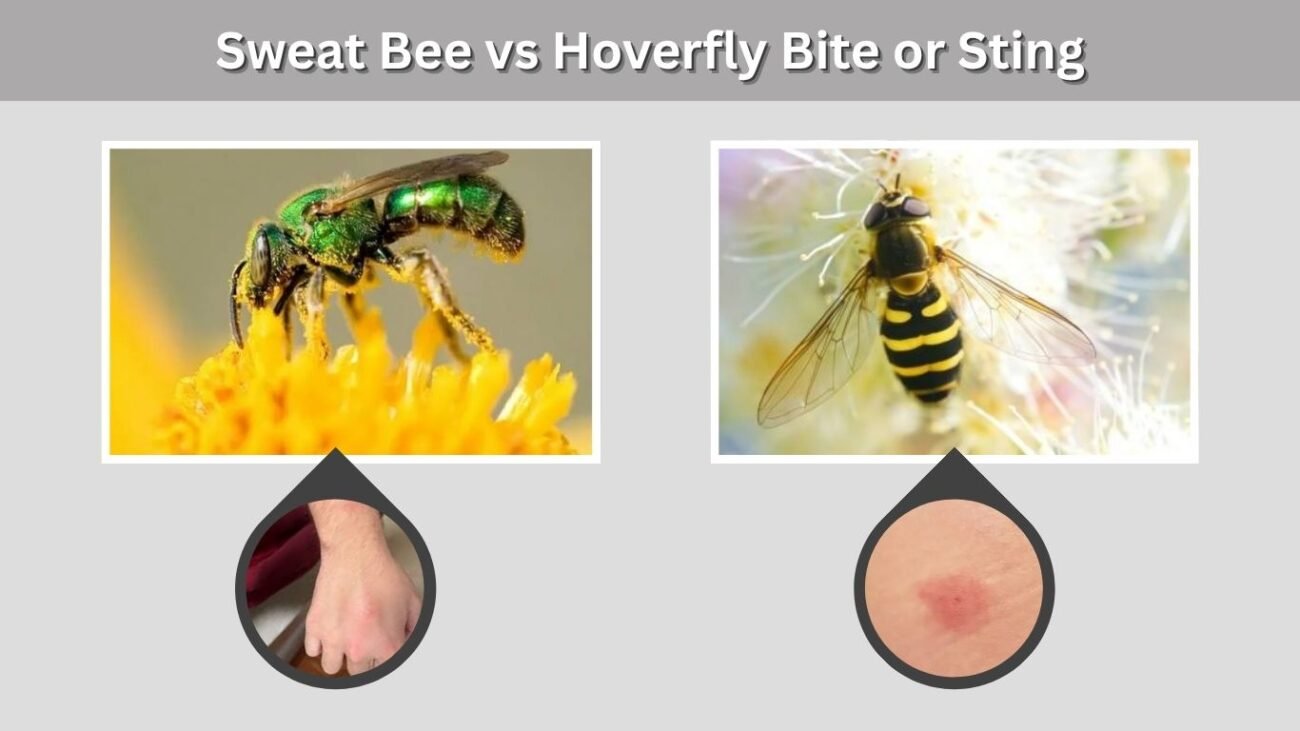
One important difference concerns their ability to defend themselves. Female sweat bees have stingers, although they generally use them only when threatened or trapped. Hoverflies lack stingers entirely and are considered harmless to humans.
Can Sweat Bees Sting?
Female sweat bees can sting. A sting is most likely when the bee is:
- Trapped against your skin
- Squeezed accidentally
- Swatted while feeding on sweat
- Handled directly
- Disturbed around its nesting area
Their sting is generally considered relatively mild compared with that of some larger bees and wasps, although individual reactions vary.
Leaving a sweat bee alone usually allows it to fly away without incident.
Do Hoverflies Bite or Sting?
Hoverflies cannot sting because they lack a stinger.
They also do not have mouthparts designed to bite human skin. Adult hoverflies mainly feed on nectar and pollen or similar plant-derived foods.
A hoverfly may land on you or hover close to your face, but this does not indicate aggression. It is usually investigating its surroundings or attracted by moisture, scent, or nearby flowers.
Are Sweat Bees and Hoverflies Beneficial?
Both insects provide significant ecological benefits. Although people sometimes become nervous when they see small bee-like insects around flowers, neither should automatically be treated as a pest. Sweat bees and hoverflies contribute to pollination, and some hoverfly larvae provide the additional benefit of controlling garden pests.
Benefits in the Garden
Sweat bees and hoverflies can help by:
- Pollinating flowers
- Pollinating fruit and vegetable crops
- Supporting wild plant reproduction
- Increasing insect biodiversity
- Providing food for other wildlife
- Reducing certain garden pests
Many hoverfly larvae prey heavily on aphids and other soft-bodied insects.
Because of these benefits, avoiding unnecessary broad-spectrum pesticide applications can help maintain useful populations of both insects.
Hoverfly Larvae vs Sweat Bee Young
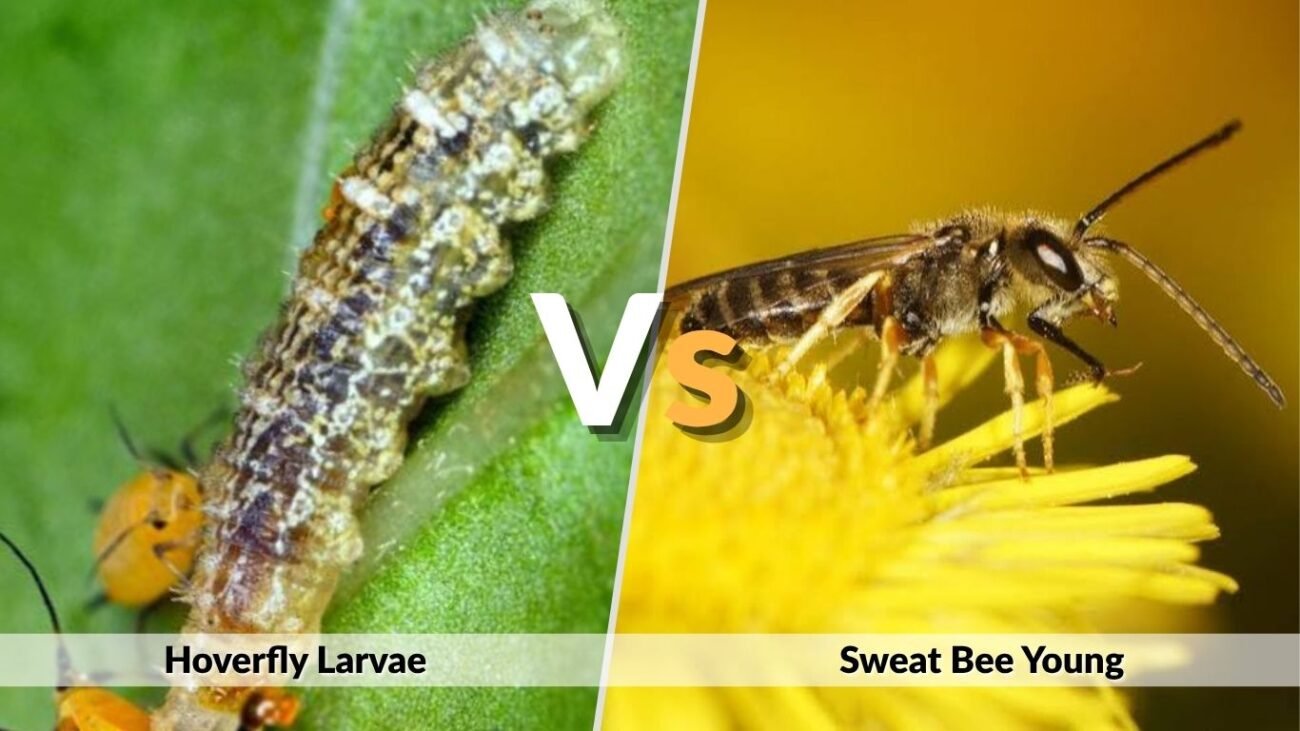
Their immature stages are completely different. Sweat bees develop through bee larvae inside protected nests, while hoverfly larvae vary greatly depending on species. Some live among aphid colonies, while others occur in decaying material or aquatic habitats.
Sweat Bee Development
Female sweat bees usually construct nests in soil or other suitable cavities. They create individual brood cells and supply them with pollen and nectar.
An egg is placed with this food supply, allowing the developing larva to feed without actively hunting.
After completing its larval and pupal stages, the adult bee emerges.
Hoverfly Development
Many common garden hoverfly larvae resemble small legless maggots and lack the bee-like appearance of adults.
Predatory species crawl around vegetation hunting aphids. A single larva may consume numerous aphids during development.
Other hoverfly species have larvae adapted to very different environments, so appearance and diet vary significantly across the family.
FAQs
1. What is the easiest way to tell a sweat bee from a hoverfly?
Check the antennae, eyes, and flight. Hoverflies usually have short antennae, very large eyes, and the ability to remain almost motionless in the air. Sweat bees have longer antennae, four wings, hairier bodies, and a more typical bee-like flight pattern.
2. Can a hoverfly sting like a sweat bee?
No. Hoverflies cannot sting because they do not possess stingers. Their yellow-and-black patterns simply mimic stinging insects. Female sweat bees have functional stingers and can sting if handled, squeezed, or trapped against the skin, although they are generally not aggressive toward humans.
3. Why do sweat bees land on people?
Some sweat bees are attracted to salts and minerals contained in human perspiration. They may land on sweaty arms, legs, or other exposed skin to obtain these minerals. They are not trying to attack, and allowing them to leave naturally reduces the chance of a sting.
4. Are hoverflies good for the garden?
Yes. Adult hoverflies are important pollinators that regularly visit flowers for nectar and pollen. Larvae of many species are also beneficial predators that consume aphids and other soft-bodied plant pests. For this reason, hoverflies are generally insects gardeners should encourage rather than eliminate.
5. Which is more dangerous, a sweat bee or hoverfly?
Neither is considered highly dangerous to most people. Hoverflies cannot sting or bite humans. Female sweat bees can sting, but usually only when disturbed or trapped. People with known severe allergies to insect stings should still take appropriate precautions around any stinging bee species.