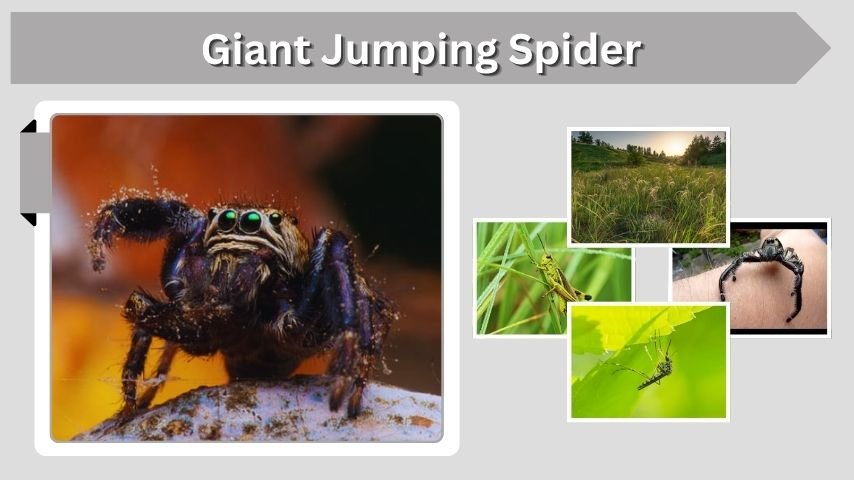
The giant jumping spider is one of the most impressive members of the jumping spider family. Often associated with the species Hyllus giganteus, this spider is known for its large size, powerful legs, excellent eyesight, and alert hunting behavior. Like other jumping spiders, it does not rely on a web to trap prey. Instead, it watches, stalks, and leaps with accuracy. Its bold appearance can look intimidating, but the giant jumping spider is generally shy, beneficial, and fascinating to observe.
What Is a Giant Jumping Spider?
The name “giant jumping spider” is commonly used for large jumping spiders in the genus Hyllus, especially Hyllus giganteus. This species belongs to the Salticidae family, the largest family of spiders. Jumping spiders are famous for their big front-facing eyes, sharp vision, and active daytime hunting.
The giant jumping spider is larger than many familiar jumping spiders, which makes it stand out. Its size, fuzzy body, and confident movements often attract attention from spider keepers and nature lovers. Although it may look dramatic, it behaves much like other jumping spiders: curious, cautious, and quick to escape when disturbed.
Giant Jumping Spider Facts
The giant jumping spider has several traits that make it different from common small household spiders. It is not a web trapper, it is not aggressive toward people, and it plays an important role in controlling insects.
| Feature | Details |
|---|---|
| Common Name | Giant Jumping Spider |
| Common Scientific Name | Hyllus giganteus |
| Family | Salticidae |
| Main Traits | Large size, strong legs, excellent vision |
| Hunting Style | Active stalking and jumping |
| Diet | Flies, moths, crickets, roaches, small insects |
| Human Danger | Low, not considered dangerous |
| Pet Popularity | Moderate among jumping spider keepers |
What Does a Giant Jumping Spider Look Like?
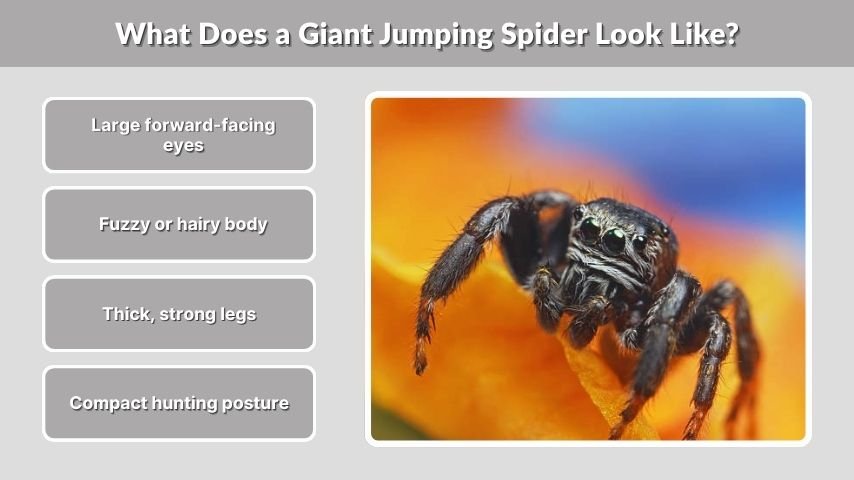
The giant jumping spider has the classic jumping spider look, but in a larger and often more powerful-looking body. It usually has a compact shape, hairy legs, strong front legs, and large eyes that face forward.
Body Shape and Features
A giant jumping spider usually has a broad cephalothorax, which is the front body section where the eyes and legs are attached. The abdomen is often rounded or oval. Its legs are strong and built for climbing, gripping, and jumping.
Common features include:
- Large forward-facing eyes
- Fuzzy or hairy body
- Thick, strong legs
- Compact hunting posture
- Short, sudden movements
- Powerful jumps
- Alert reaction to movement
Because of its eyes, the spider may appear to be watching you. This is not imagination. Jumping spiders rely heavily on vision and often turn toward objects, prey, or movement in their environment.
Colors and Patterns
The color of a giant jumping spider can vary depending on species, age, sex, and lighting. Many large Hyllus jumping spiders show a mix of dark, pale, gray, brown, tan, or whitish hairs. Some may have contrasting bands or markings on the legs and abdomen.
Males and females may look different. Females are usually larger and heavier-bodied, while males may appear slimmer and more active. In some species, males also have more noticeable front legs or facial markings.
Giant Jumping Spider Size
Size is the main reason this spider gets attention. While many jumping spiders are tiny, the giant jumping spider is noticeably larger. Its body length can be much bigger than common species such as the zebra jumping spider or tan jumping spider.
Females are often larger than males. A mature female may look especially bulky because her abdomen can become rounded after feeding or when she is carrying eggs. Males may look flatter, slimmer, and more restless once mature.
Why Size Matters
A larger body helps the spider overpower bigger prey. It can take on insects that smaller jumping spiders might avoid. However, its larger size also means it needs safer climbing space if kept in captivity. A fall from a high, hard surface can injure a heavy-bodied spider, especially an older female.
Habitat of the Giant Jumping Spider
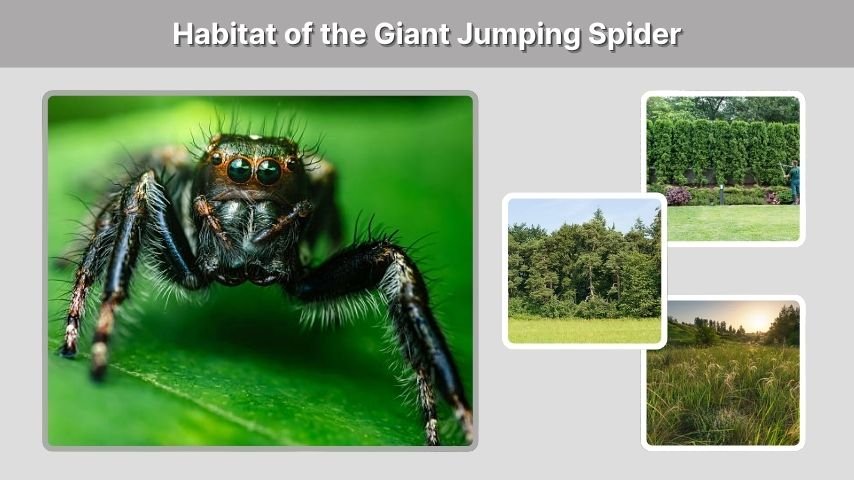
Giant jumping spiders are usually found in warm regions where insects are abundant. They often live on plants, tree trunks, walls, fences, and human-made structures. Like most jumping spiders, they prefer areas where they can climb, hide, and watch for prey.
Common Natural Habitats
A giant jumping spider may live in:
- Forest edges
- Shrubs and bushes
- Tree trunks
- Tall grasses
- Garden plants
- House walls
- Fences and wooden structures
- Tropical and subtropical areas
They are active hunters and often move during the day. Because they depend on sight, bright conditions help them locate insects and avoid predators.
Behavior and Hunting Style
The giant jumping spider does not build a large web to catch food. Instead, it hunts like a tiny predator. It uses its eyes to scan the environment, spots prey, slowly approaches, and leaps when the distance is right.
How It Hunts
The hunting process is careful and controlled. A giant jumping spider may freeze when it notices prey, then move forward in short steps. Before jumping, it often attaches a silk safety line. This dragline helps prevent injury if the spider misses or falls.
Its hunting steps usually include:
- Watching prey with its front eyes
- Turning the body toward the target
- Moving closer slowly
- Attaching a silk safety line
- Jumping quickly
- Grabbing the prey with its front legs
- Delivering venom to subdue the insect
This hunting style makes jumping spiders exciting to watch. They appear to think before they move, and their accuracy is one of their most impressive traits.
Does It Use Webs?
Yes, but not for catching prey. Giant jumping spiders use silk for safety lines, sleeping shelters, molting retreats, and egg sacs. At night, they may rest inside a small silk shelter built under leaves, in plant folds, or in protected corners.
What Do Giant Jumping Spiders Eat?
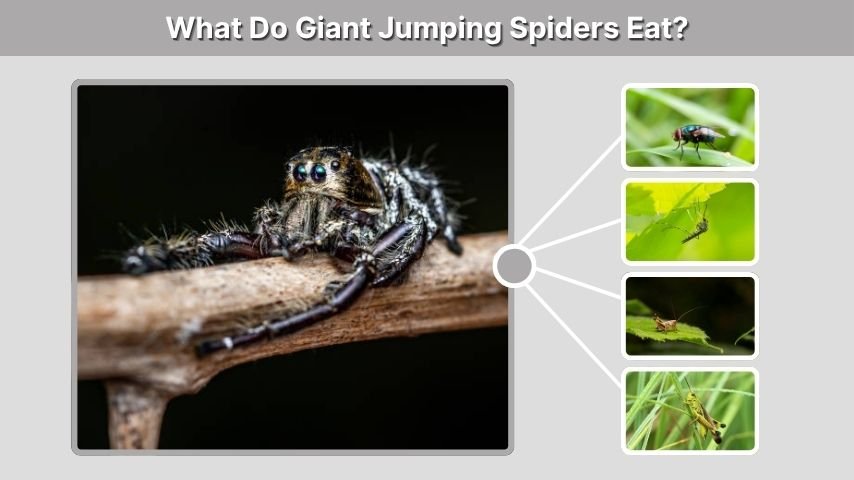
The giant jumping spider is carnivorous and eats insects and other small arthropods. In the wild, it helps reduce pest populations by feeding on flies, moths, mosquitoes, roaches, and similar insects.
Common Food Sources
Its diet may include:
- Flies
- Small moths
- Crickets
- Roaches
- Grasshoppers
- Beetles
- Mosquitoes
- Other small spiders or arthropods
Larger individuals can handle bigger prey than small jumping spiders, but they still avoid prey that is too dangerous. A large cricket, wasp, or aggressive insect can harm the spider.
Giant Jumping Spider Bite
Many people worry about spider bites, especially when a spider is large. However, the giant jumping spider is not considered dangerous to humans. It has venom, but that venom is mainly used to subdue insect prey.
Can It Bite Humans?
Yes, a giant jumping spider can bite if it is trapped, squeezed, or handled roughly. However, bites are uncommon because jumping spiders usually prefer to run or jump away.
If a bite occurs, it may cause mild local pain, redness, or swelling. Most reactions are minor. Anyone who experiences severe swelling, breathing trouble, dizziness, or a strong allergic reaction should seek medical help.
Is It Aggressive?
No. Giant jumping spiders are not aggressive toward humans. They may appear bold because they turn to look at movement, but this is usually curiosity or threat assessment, not aggression. If frightened, they usually retreat, hide, or jump away.
Giant Jumping Spider as a Pet
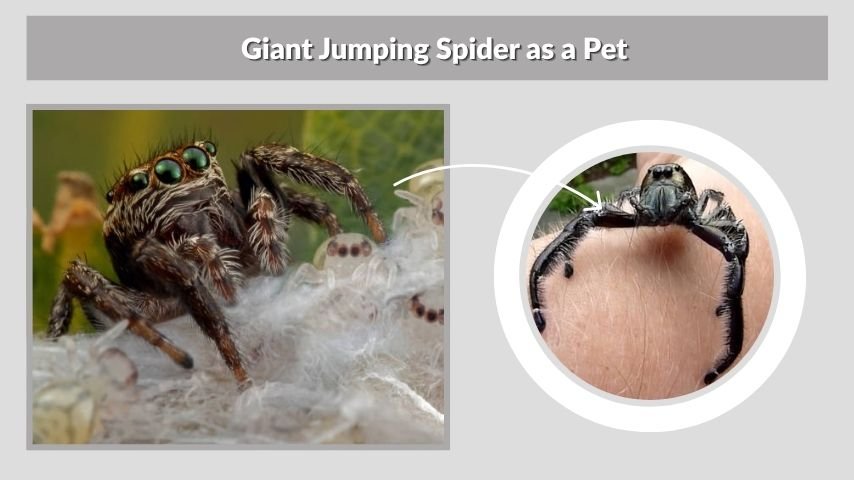
Some spider enthusiasts keep giant jumping spiders as pets. Their size and active behavior make them interesting display animals. However, they may not be as beginner-friendly as smaller, commonly captive-bred species such as regal jumping spiders or bold jumping spiders.
Enclosure Setup
A giant jumping spider needs an enclosure that allows climbing but also reduces fall risk. The enclosure should be secure, ventilated, and decorated with surfaces the spider can grip.
A good setup may include:
- Vertical climbing space
- Cross ventilation
- Cork bark or branches
- Artificial or live plants
- A secure lid
- Hiding areas near the top
- Soft landing material
- Small water droplets from light misting
Avoid a very tall empty enclosure with a hard bottom. Heavy-bodied spiders can be injured by falls. Also avoid overly wet conditions, as damp setups can cause mold and stress.
Feeding in Captivity
In captivity, a giant jumping spider can be fed appropriately sized insects. Good feeders may include small roaches, flies, moths, and crickets. The prey should not be too large or aggressive.
Remove uneaten prey after a short time. Crickets should never be left inside during molting because they can bite or injure a vulnerable spider.
Molting and Growth
Like all spiders, giant jumping spiders grow by molting. Molting means shedding the old exoskeleton and forming a new one. Young spiders molt more often because they are still growing.
Signs Before Molting
Before a molt, the spider may become less active and refuse food. It may stay inside its silk retreat for several days. This is normal and should not be interrupted.
Signs of molting include:
- Refusing food
- Hiding more often
- Building a thicker silk retreat
- Moving less
- Duller color
- Avoiding prey
Do not disturb the spider during this period. After molting, wait until it becomes active again before offering food.
Male vs Female Giant Jumping Spider
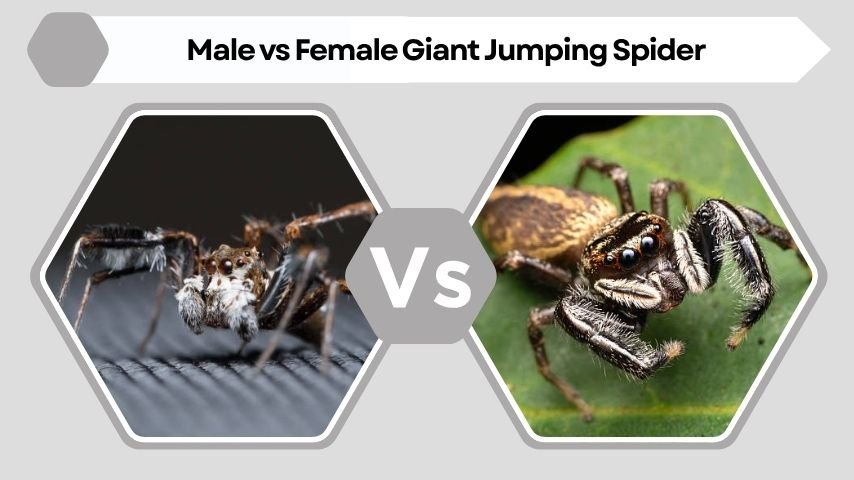
Male and female giant jumping spiders can differ in size, shape, and behavior. Females are usually larger and have fuller abdomens. Males may be smaller, slimmer, and more active, especially when searching for mates.
Females may live longer than males in many jumping spider species. They may also create egg sacs after mating. A wild-caught female may already be gravid, so keepers should be prepared for possible spiderlings.
Are Giant Jumping Spiders Beneficial?
Yes. Giant jumping spiders are beneficial predators. They help control insect populations and do not damage plants, clothing, furniture, or food. They do not create messy web systems around homes and gardens.
In nature, they also serve as prey for birds, lizards, wasps, and larger spiders. This makes them part of a balanced ecosystem.
How to Safely Relocate One
If you find a giant jumping spider inside your home, there is usually no need to kill it. It is harmless and useful. You can relocate it gently.
Use a cup and paper method. Place the cup over the spider, slide a piece of paper underneath, and release it outside near plants, trees, or a sheltered wall. Avoid grabbing it with your fingers, as this can injure the spider or cause it to bite in defense.
FAQs
Are giant jumping spiders dangerous?
Giant jumping spiders are not considered dangerous to humans. They have venom for catching insects, but their venom is not medically significant for most people. They usually avoid people and bite only if trapped or handled roughly.
How big is a giant jumping spider?
The giant jumping spider is larger than many common jumping spiders. Females are usually bigger and heavier-bodied than males. Exact size depends on species, age, sex, and environment, but it is noticeably larger than many household jumping spiders.
What do giant jumping spiders eat?
They eat small insects and arthropods such as flies, moths, crickets, roaches, beetles, and mosquitoes. In captivity, they should be fed prey that is appropriately sized and not too aggressive.
Can you keep a giant jumping spider as a pet?
Yes, experienced keepers may keep giant jumping spiders as pets. They need a secure, ventilated enclosure with climbing surfaces, hiding areas, and suitable feeder insects. They should be handled carefully because falls can injure them.
Do giant jumping spiders make webs?
They produce silk, but they do not build large webs to trap prey. Instead, they use silk for safety lines, sleeping retreats, molting shelters, and egg sacs. They catch prey by stalking and jumping.