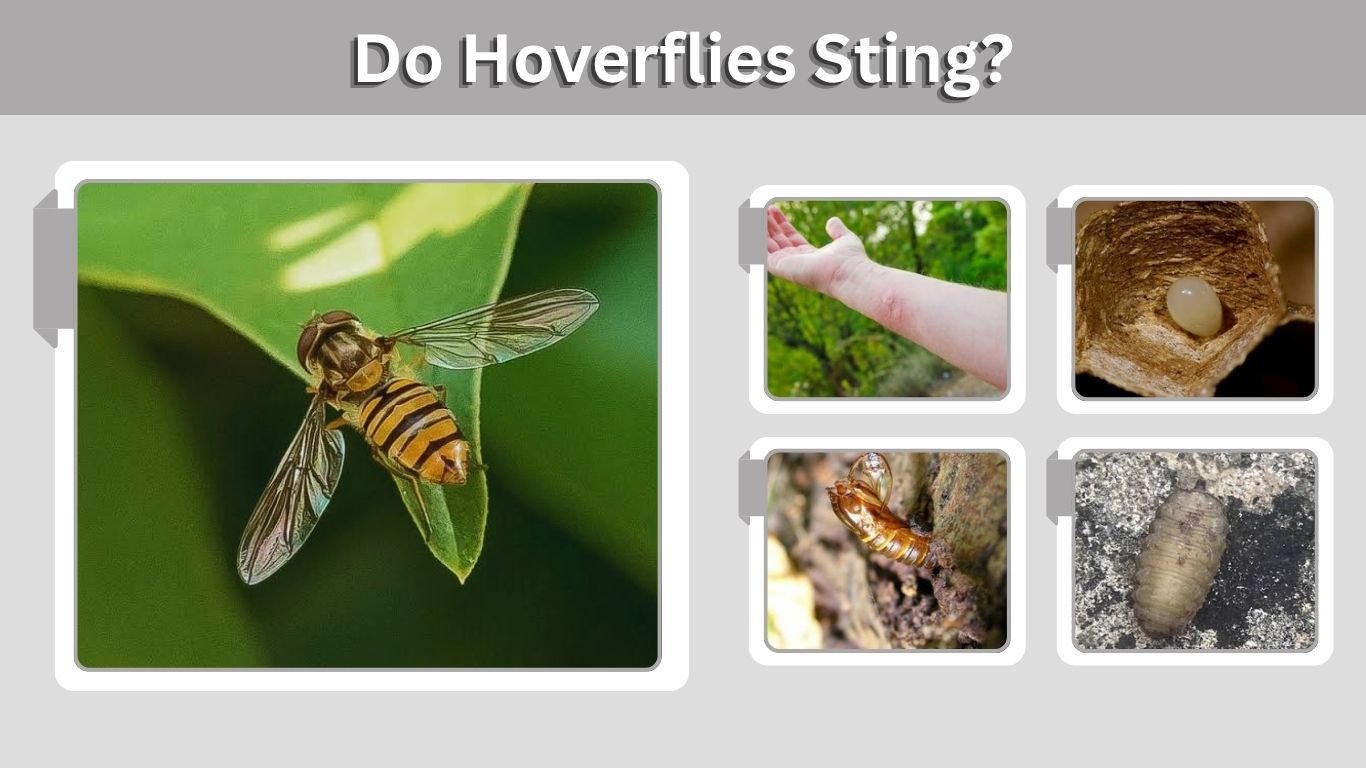
Hoverflies often look remarkably similar to bees, yellow jackets, or small wasps, which naturally makes people wonder, do hoverflies sting? Despite their convincing yellow-and-black patterns, hoverflies are harmless flies that do not possess a stinger. They use mimicry to discourage predators while feeding mainly on nectar and pollen. Some species may land on people or hover nearby, but they are not trying to attack. Understanding their anatomy and behavior makes it much easier to distinguish hoverflies from genuinely stinging insects.
Do Hoverflies Sting Humans?
Hoverflies belong to the family Syrphidae and are true flies rather than bees or wasps. Their resemblance to stinging insects is primarily a defensive strategy known as mimicry. Although some hoverflies look almost identical to yellow jackets or hornets, they lack the structures required to deliver a sting and are generally safe around people.
Can Hoverflies Sting You?
No, hoverflies cannot sting humans. Important facts include:
- Hoverflies do not have a stinger.
- They do not possess venom glands.
- They cannot inject venom into skin.
- They do not defend nests like wasps.
- They generally avoid confrontation.
- They are not aggressive toward people.
A hoverfly may hover close to your body or briefly land on your skin, but this behavior should not be mistaken for an attempted attack.
Why Do People Think Hoverflies Sting?
Their appearance is the main reason for the confusion. Many hoverflies have bright yellow, orange, and black bands similar to those found on bees and wasps.
Predators may hesitate to attack an insect that appears capable of stinging. Hoverflies benefit from this resemblance even though they lack the actual defensive weapon.
Do Hoverflies Bite or Sting?
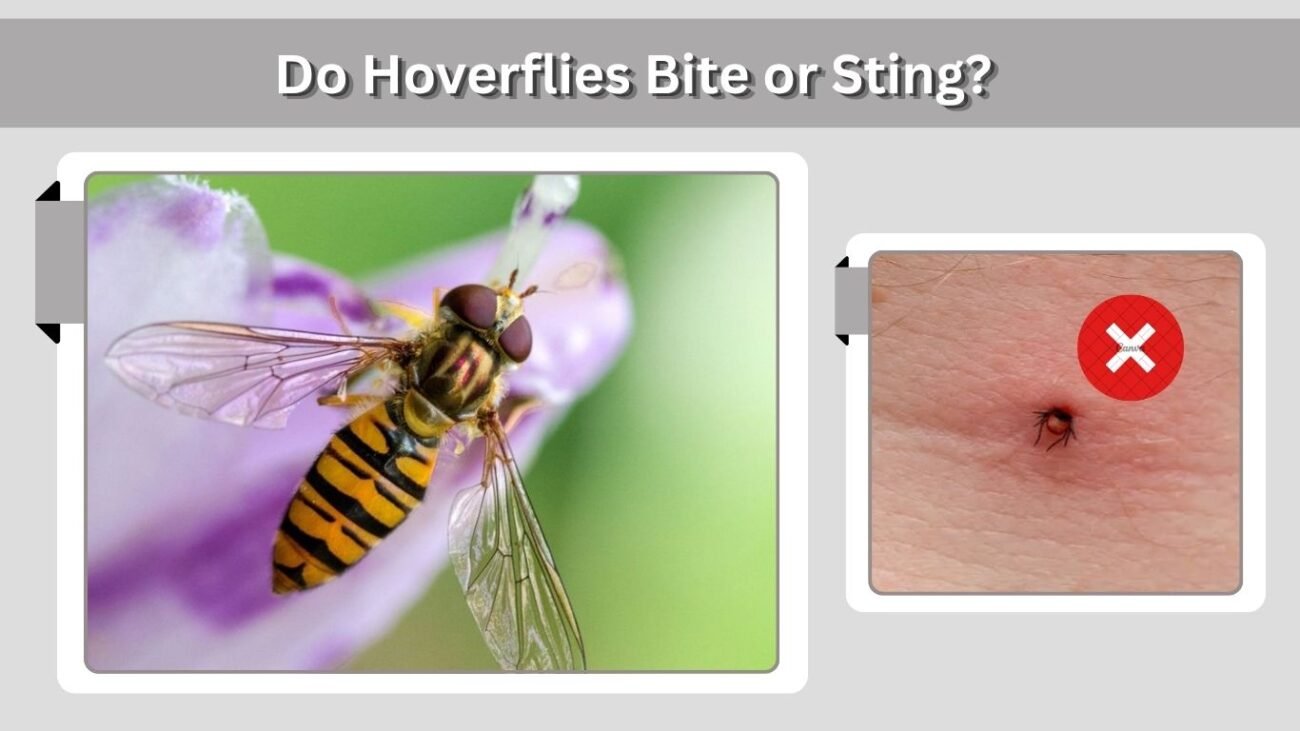
Hoverflies neither sting nor normally bite humans. Adult hoverflies have mouthparts designed primarily for consuming nectar, pollen, and other liquid food sources. They are not blood-feeding flies and do not seek people or pets as hosts. Their peaceful feeding habits make them valuable insects around flowers, gardens, farms, and natural habitats.
Can Hoverflies Bite People?
Hoverflies are not considered biting insects. They do not have biting mouthparts designed to pierce human skin.
Unlike mosquitoes, horse flies, or biting midges, adult hoverflies do not require blood meals. Their diet typically consists of nectar and pollen.
What If a Hoverfly Lands on You?
If a hoverfly lands on you:
- Remain calm.
- Avoid swatting it aggressively.
- Allow it to fly away naturally.
- Gently brush it away if necessary.
- Do not squeeze or crush the insect.
- Check its physical features if identification is uncertain.
Hoverflies may investigate sweat or moisture on human skin, but they still cannot sting.
Why Do Hoverflies Look Like Wasps and Bees?
The resemblance between hoverflies and stinging insects is an example of Batesian mimicry. A harmless species gains protection by resembling an animal that predators already associate with danger. Yellow-and-black coloration, buzzing flight, and similar body patterns can make some hoverflies exceptionally convincing at first glance.
Hoverfly vs. Wasp
A hoverfly generally has:
- One functional pair of wings
- Very large compound eyes
- Short antennae
- No stinger
- No narrow wasp waist
- Excellent hovering ability
Wasps typically have two pairs of wings, longer antennae, and a noticeably narrower waist between the thorax and abdomen.
Female wasps may also possess functional stingers.
Hoverfly vs. Bee
Bees are generally hairier than hoverflies and often have longer antennae. Many bees also carry pollen on specialized hairs on their bodies or legs.
Hoverflies usually have smoother bodies, much larger eyes, and one pair of functional wings. Some species are hairy enough to resemble bumblebees closely, so multiple features should be considered.
Do Yellow Jacket Hoverflies Sting?
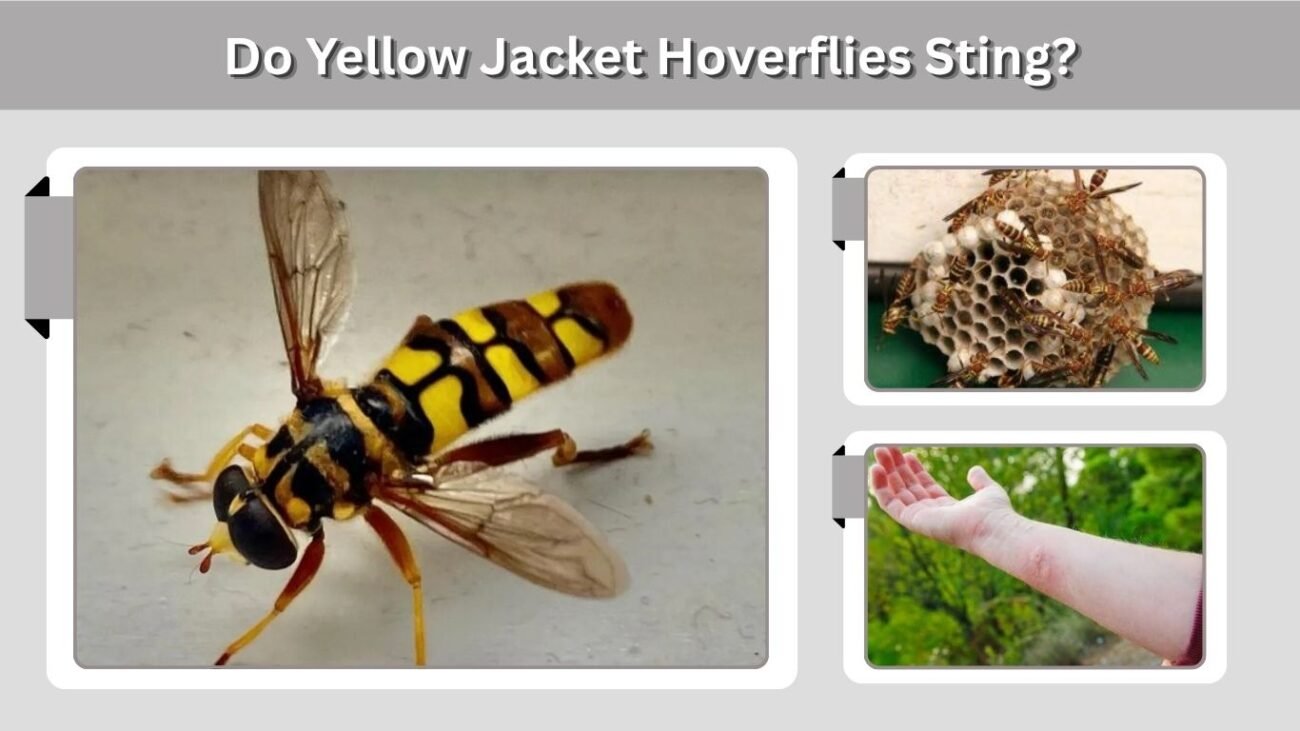
Several hoverfly species imitate yellow jackets, and their coloration can be extremely convincing. Their fast movements and buzzing sound may add to the illusion. However, a yellow jacket mimic remains a fly and cannot sting simply because its markings resemble those of a wasp.
Yellow Jacket Hoverfly Sting
A yellow jacket hoverfly does not have:
- A functional stinger
- Venom
- A social wasp colony
- Defensive nest behavior
- Blood-feeding habits
- Aggressive hunting behavior toward people
If a yellow-and-black insect repeatedly tries to sting or aggressively protects a nesting area, it is more likely to be a real yellow jacket than a hoverfly.
How to Tell Them Apart
Watch the way the insect flies. Hoverflies can remain nearly motionless in midair and then suddenly dart sideways.
Yellow jackets tend to fly more continuously. Their long antennae and narrow waist also provide useful identification clues when the insect lands.
Do Hornet Mimic Hoverflies Sting?
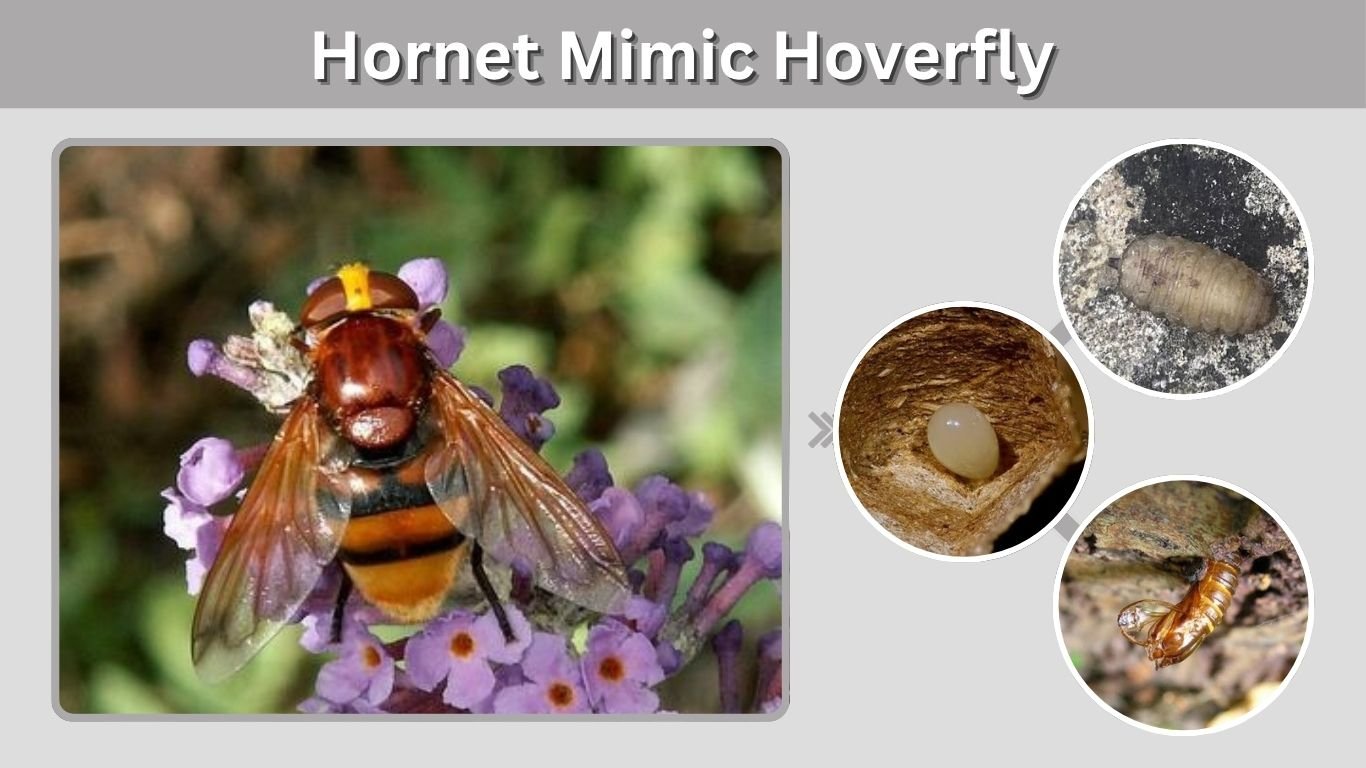
Large species such as the hornet mimic hoverfly can be especially intimidating because they combine substantial size with hornet-like coloration. Despite their appearance, they are still true flies and lack a stinger. They rely on their resemblance to hornets rather than venom to discourage predators.
Hornet Mimic Hoverfly Sting
Hornet mimic hoverflies:
- Cannot sting humans
- Do not have venom
- Do not attack people
- Do not build defensive social nests
- Usually feed on nectar and pollen
- Often visit flowering plants
One well-known species, Volucella zonaria, is a large hornet-mimicking hoverfly commonly encountered around flowers in parts of Europe.
Lesser Hornet Hoverfly
Other large hoverflies may also resemble hornets or wasps. The same general rule applies: appearance alone does not indicate whether an insect can sting.
Look for large fly-like eyes, short antennae, one functional pair of wings, and distinctive hovering behavior.
Do Marmalade Hoverflies Sting?
The marmalade hoverfly is a common garden species with orange and black markings that may cause people to mistake it for a small wasp. It frequently visits flowers and may hover around people who are standing near flowering vegetation.
Marmalade Hoverfly Sting Risk
Marmalade hoverflies do not sting or bite humans. Adults are flower-feeding insects and are considered useful pollinators.
Their small size and distinctive hovering behavior usually make them relatively easy to distinguish from more defensive wasps once you observe them closely.
Are Hoverflies Dangerous?
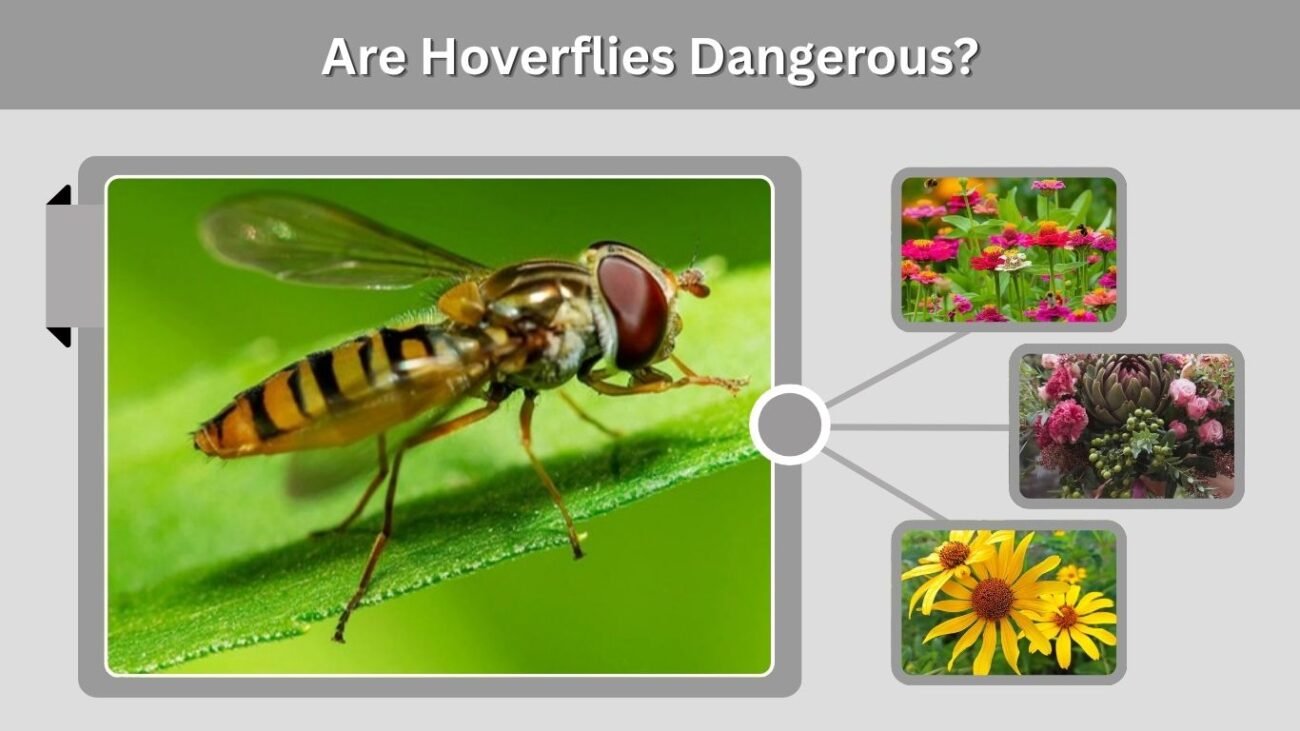
Hoverflies are generally harmless to humans, children, and pets. They do not have venom, do not sting, and are not known for biting people. Rather than eliminating them, gardeners usually benefit from having hoverflies around because adults pollinate flowers and larvae of many species feed on garden pests.
Benefits of Hoverflies
Hoverflies can benefit gardens by:
- Pollinating flowers
- Visiting fruit and vegetable blossoms
- Supporting local biodiversity
- Providing food for wildlife
- Helping control aphids
- Feeding on other small plant pests in the larval stage
Aphid-eating hoverfly larvae can be particularly useful in gardens where chemical pest control is limited.
Should You Remove Hoverflies?
Usually, no. A hoverfly visiting flowers is beneficial and poses almost no threat.
If one enters your home, open a nearby door or window and allow it to leave. There is generally no need to spray or kill the insect.
What Does a Real Insect Sting Look Like?
If you experience obvious pain, swelling, or a puncture after interacting with a yellow-and-black insect, the culprit may not have been a hoverfly. Bees, wasps, hornets, and yellow jackets can all deliver genuine stings.
Signs the Insect May Not Be a Hoverfly
Look for:
- A visible stinger or sting event
- Immediate sharp pain
- Rapid swelling
- Long antennae
- A narrow wasp-like waist
- Two pairs of wings
- Defensive behavior near a nest
Severe allergic reactions following an insect sting require prompt medical attention, particularly if breathing difficulty, widespread swelling, dizziness, or other serious symptoms develop.
Why Do Hoverflies Hover Around People?
Hoverflies sometimes approach people because they are curious about movement, colors, moisture, or nearby flowers. Some may also be attracted to salty moisture on skin. Their ability to hover almost motionless can make their presence seem more intentional than it actually is.
What Should You Do?
When a hoverfly approaches:
- Stay calm.
- Avoid swatting at it.
- Move away slowly if desired.
- Allow the insect to leave on its own.
- Remember that it cannot sting.
- Observe its hovering flight for identification.
In most cases, the insect will lose interest quickly and move toward nearby flowers.
FAQs
1. Do hoverflies sting?
No. Hoverflies do not have stingers and cannot inject venom. Their resemblance to bees and wasps is primarily a defensive form of mimicry.
2. Can a hoverfly sting you?
No. Even large hoverflies and species that resemble yellow jackets or hornets cannot sting humans.
3. Do hoverflies bite or sting?
Hoverflies generally do neither. Adult hoverflies feed primarily on nectar and pollen and are not adapted for biting human skin.
4. Do hornet mimic hoverflies sting?
No. Hornet mimic hoverflies may look intimidating, but they are flies without functional stingers or venom.
5. Are hoverflies dangerous to humans?
Hoverflies are considered harmless to humans. They are beneficial pollinators, and larvae of many species also help control aphids and other small garden pests.