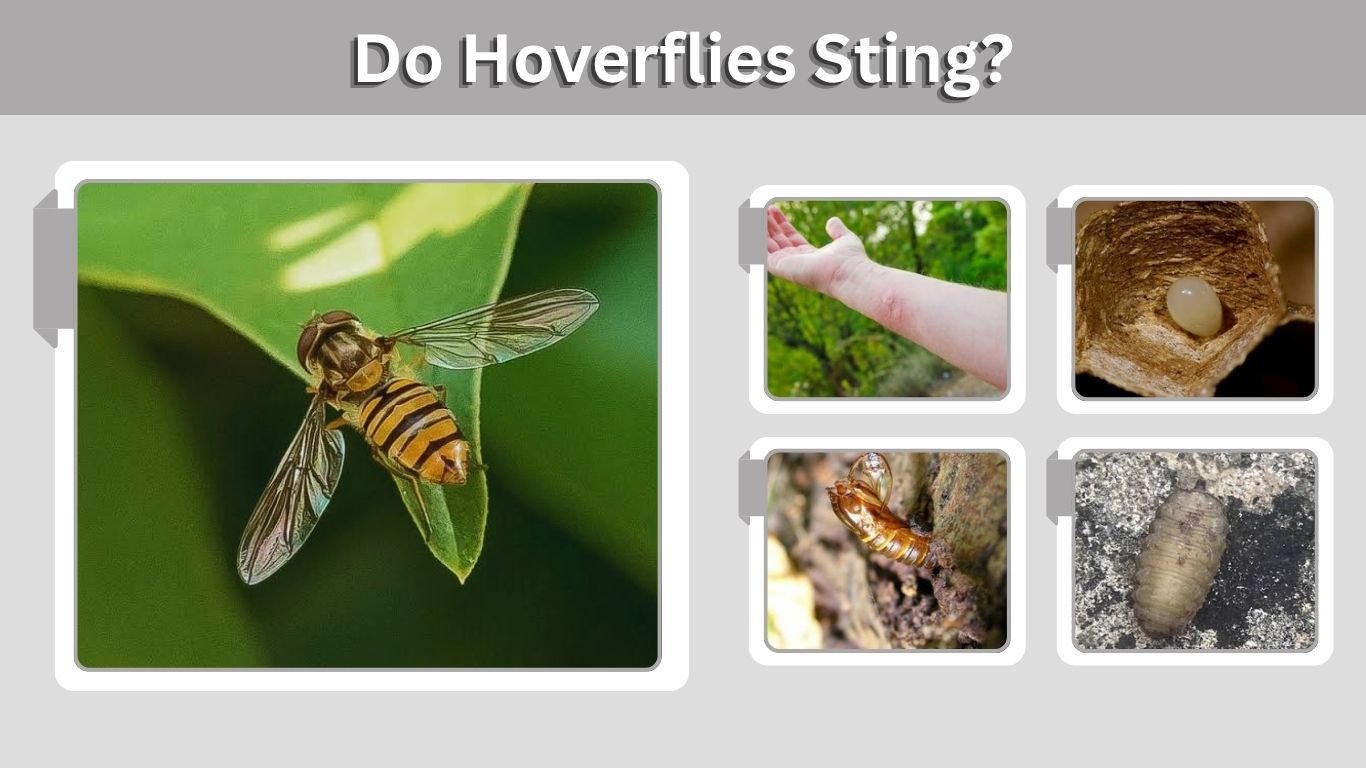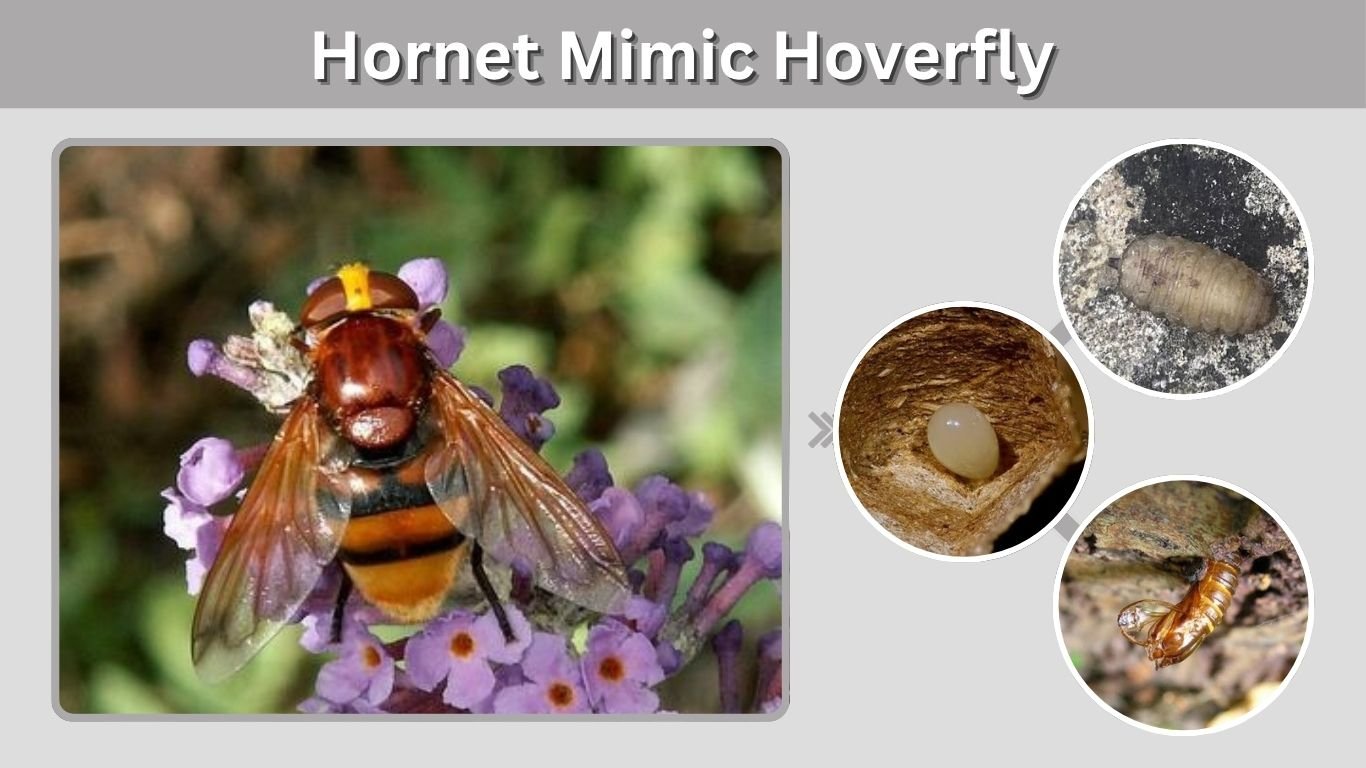
The hornet mimic hoverfly is a large, striking fly famous for resembling a hornet while being completely different in behavior. Commonly associated with Volucella zonaria, this impressive hoverfly uses yellow, orange, and brown markings to discourage predators. Despite its intimidating appearance, it has no functional sting and is generally harmless to people. Learning its size, identification features, habitat, distribution, diet, and differences from true hornets makes it much easier to recognize this beneficial pollinator in gardens and natural areas.
What Is a Hornet Mimic Hoverfly?
The hornet mimic hoverfly is one of the largest and most distinctive hoverflies found in parts of Europe. Its coloration resembles that of a hornet, providing protection through mimicry. Rather than hunting other insects or defending a colony, adults spend much of their time visiting flowers, where they feed and help transfer pollen between plants.
Hornet Mimic Hoverfly Identification
Look for these characteristics:
- Large, robust fly-like body
- Yellow, orange, brown, and reddish markings
- One functional pair of wings
- Very large compound eyes
- Shorter antennae than a hornet
- Broad yellow-orange abdominal bands
- Smooth body without a narrow wasp waist
- Strong hovering flight
- Frequent visits to flowers
Although its appearance can initially cause alarm, closer inspection usually reveals typical hoverfly characteristics.
Scientific Name
The hornet mimic hoverfly is commonly identified as Volucella zonaria. It belongs to the family Syrphidae, which contains thousands of hoverfly species.
The genus Volucella includes several large hoverflies that imitate bees or wasps. Their resemblance is an example of defensive mimicry rather than evidence that they possess a hornet’s weapons.
Hornet Mimic Hoverfly Size and Appearance
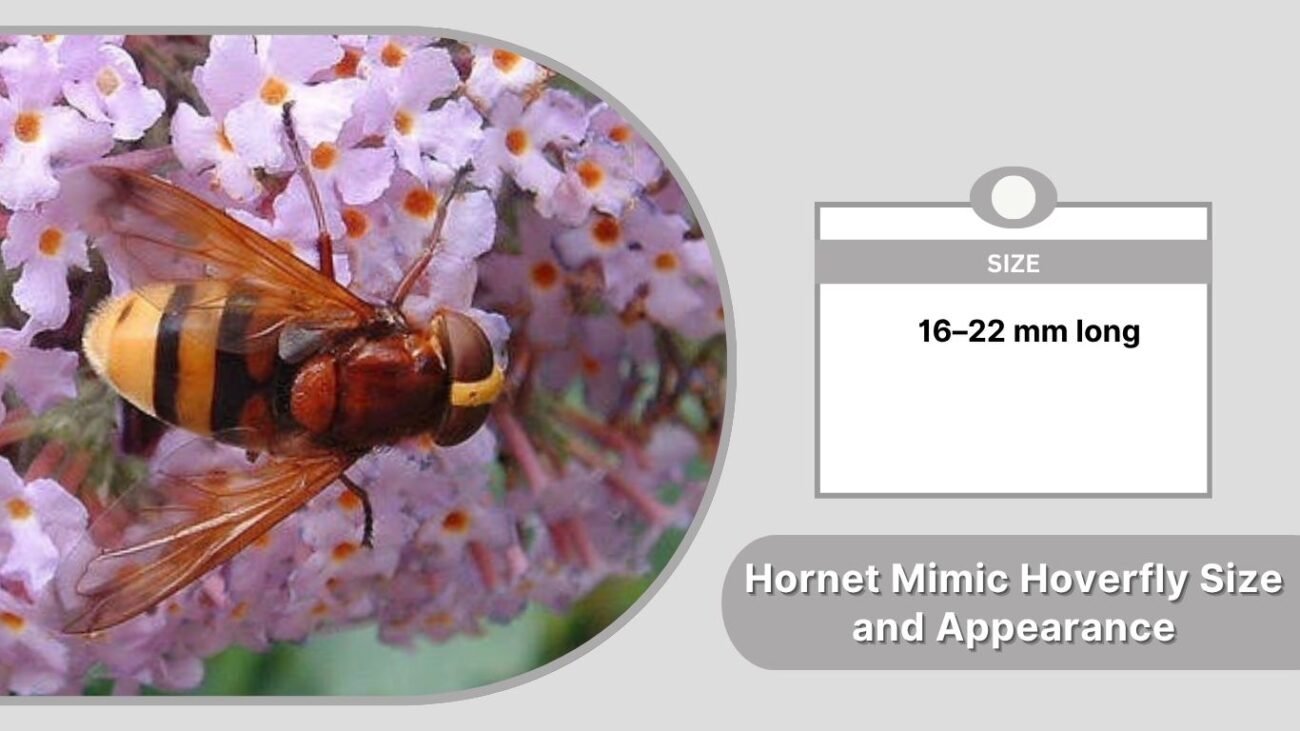
One reason people mistake this species for a hornet is its impressive size. It is significantly larger and heavier-bodied than many common garden hoverflies. Its combination of size, color, and loud flight can make an individual passing nearby appear threatening even though it lacks the defensive equipment of a true hornet.
How Big Is a Hornet Mimic Hoverfly?
Adults are typically around 16–22 mm long, although individual size can vary. Females are often among the more impressive individuals.
Useful appearance clues include:
- Body approaching or exceeding 2 cm in larger individuals
- Broad abdomen
- Large reddish-brown eyes
- Yellow or orange abdominal bands
- Reddish-brown thorax
- Transparent wings
Its substantial body explains why terms such as “giant hornet hoverfly” are sometimes used informally.
Lesser Hornet Hoverfly
The lesser hornet hoverfly is another large hoverfly that can be confused with Volucella zonaria. These similar insects demonstrate how widespread wasp and hornet mimicry is among hoverflies.
Color patterns, body proportions, markings, and geographic location can all help when distinguishing one large Volucella species from another.
Does a Hornet Mimic Hoverfly Sting?
Despite looking remarkably similar to a stinging insect, the hornet mimic hoverfly cannot sting. Hoverflies are flies, not wasps, and they do not possess a hornet’s venomous stinger. Their resemblance is primarily a visual defense that makes birds and other predators hesitate before attacking them.
Do Hornet Hoverflies Sting?
No. A hornet mimic hoverfly:
- Does not have a functional stinger
- Does not inject venom
- Does not aggressively defend a nest
- Does not attack people
- Does not hunt humans or pets
- Usually flies away when disturbed
A hoverfly may approach a person because it is investigating flowers, colors, moisture, or its surroundings, but this should not be interpreted as an attack.
Can a Hornet Mimic Hoverfly Bite?
Hornet mimic hoverflies are not considered biting insects. Their adult mouthparts are adapted primarily for feeding on nectar and pollen rather than piercing human skin.
If a large hornet-like insect repeatedly attempts to sting or aggressively defends a nesting site, it is more likely to be a true wasp or hornet than a hoverfly.
Hornet vs. Hoverfly
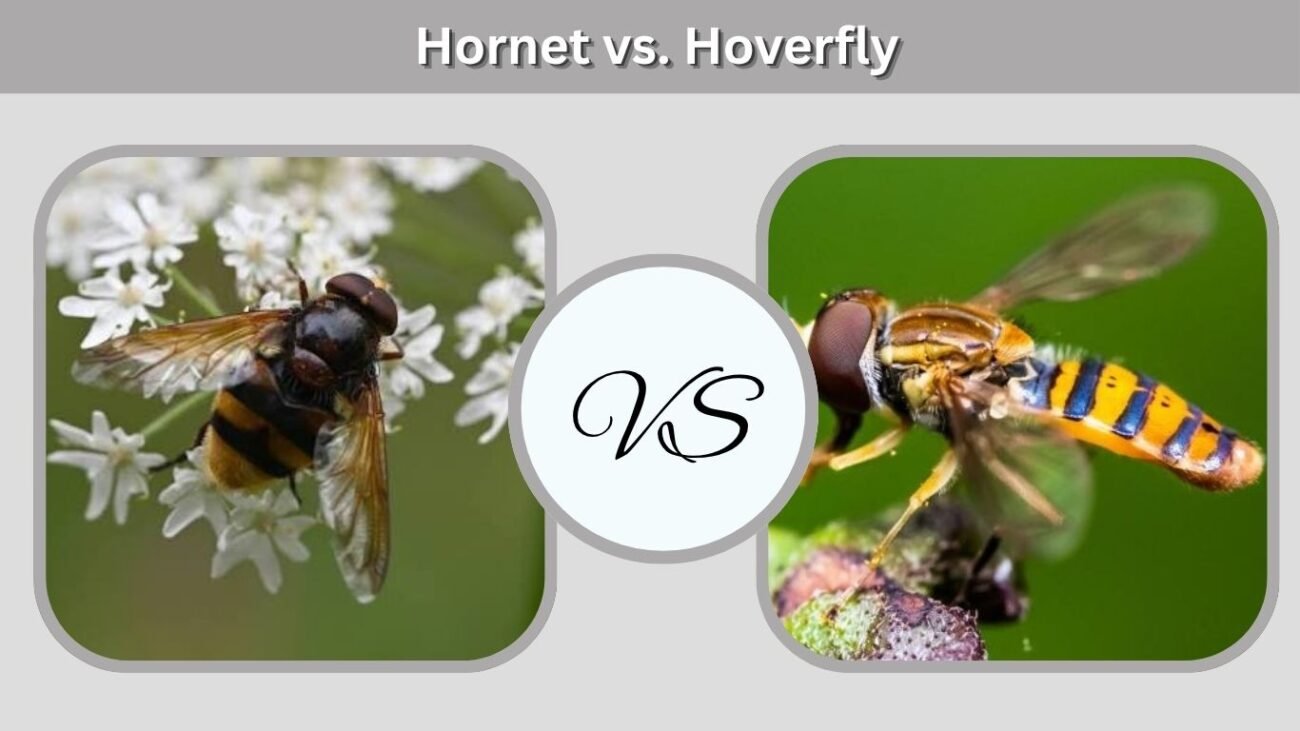
Distinguishing a hornet or hoverfly becomes much easier when you look beyond coloration. Mimicry can make the abdominal pattern surprisingly convincing, but the insects belong to different orders and have several clear anatomical differences.
Hornet Mimic Hoverfly
A hoverfly typically has:
- One visible pair of functional wings
- Large fly-like compound eyes
- Short antennae
- No narrow wasp waist
- Ability to hover almost motionless
- No sting
- Flower-feeding adult behavior
Hoverflies can also move rapidly sideways or forward before suddenly stopping in midair.
True Hornet
A true hornet generally has two pairs of wings, although they can overlap and appear like one pair at first glance. Hornets also possess longer antennae and a more obvious constriction between the thorax and abdomen.
Female hornets have a functional sting and may defend their nest when threatened.
Hornet vs. Hoverfly Behavior
Behavior is often one of the fastest identification clues. Hoverflies frequently hover over flowers before darting away, whereas hornets typically fly in a more continuous manner.
A hoverfly resting on a blossom and feeding calmly is usually more interested in nectar than nearby people.
Hornet Mimic Hoverfly Habitat and Distribution
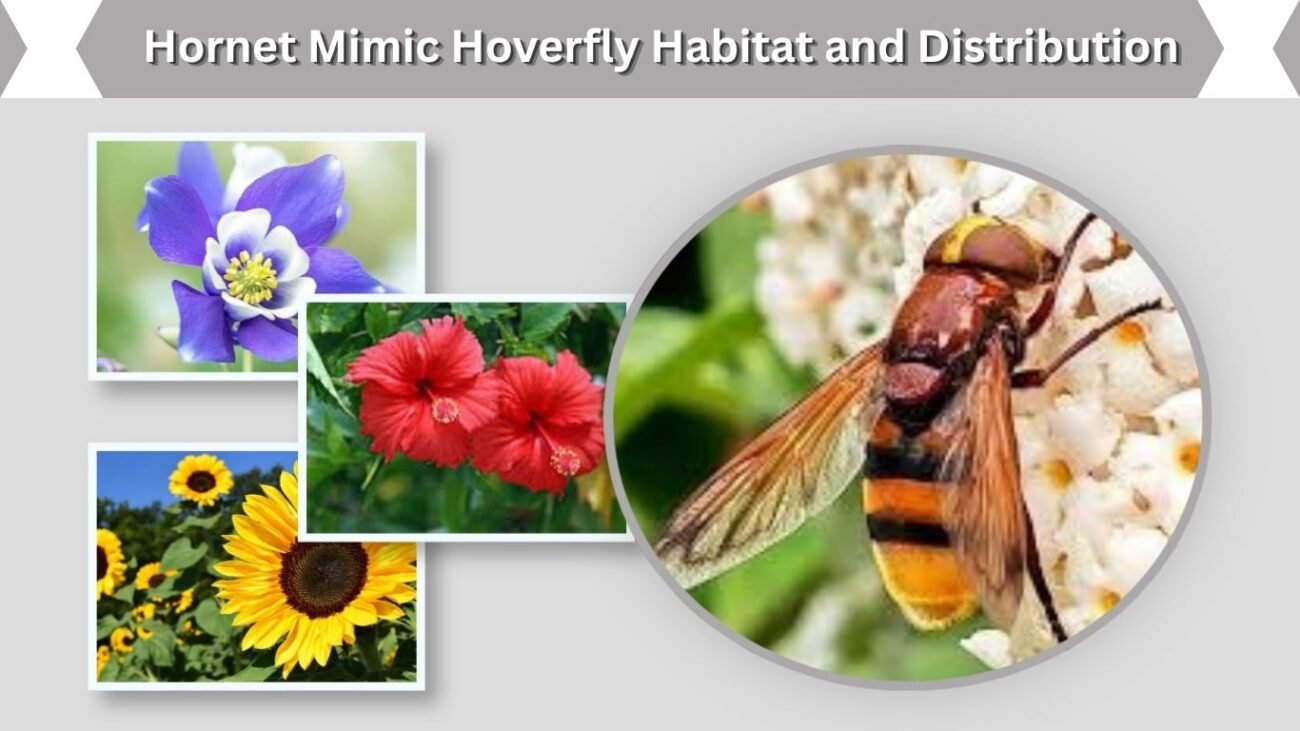
Hornet mimic hoverflies are closely associated with places that provide abundant flowers and suitable conditions for larval development. Adults can occur in parks, gardens, woodland edges, meadows, and urban areas. Their ability to use human-modified landscapes means they may be noticed even in heavily populated towns and cities.
Hornet Mimic Hoverfly in the UK
Volucella zonaria has become increasingly familiar to observers in parts of the UK, particularly in southern areas. Adults are commonly noticed during warmer months when flowering plants provide abundant food.
Gardeners may find them visiting plants with accessible nectar and pollen.
Distribution
The species is associated with Europe and surrounding regions, with its observed range varying according to climate and habitat suitability.
Warm weather can encourage activity and movement, while gardens containing abundant flowers provide valuable feeding sites for adults.
What Do Hornet Mimic Hoverflies Eat?
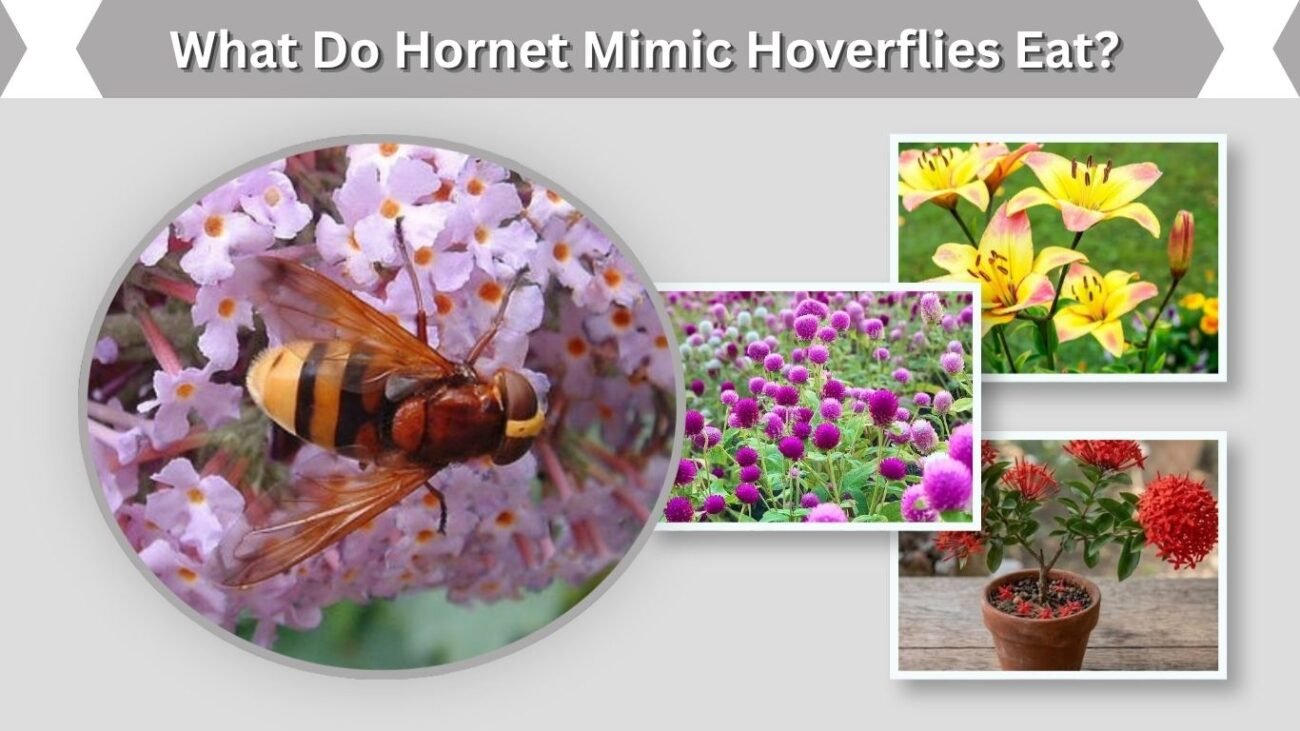
Adult hornet mimic hoverflies are flower visitors rather than meat-eating predators. They obtain energy from nectar and nutrients from pollen. Their repeated movement between blossoms makes them useful pollinating insects, particularly during warm weather when adults are highly active.
Adult Diet
Adults commonly feed on:
- Flower nectar
- Pollen
- Sugary plant resources
- Nectar from garden flowers
- Flowering shrubs
- Wildflower nectar
They may spend considerable time moving between flower heads.
Do Hornet Hoverflies Eat Meat?
Adult hornet mimic hoverflies do not normally hunt animals or tear apart meat like some wasps may do. Their diet centers mainly on flowers.
Their larvae have a very different lifestyle and may develop in association with social wasp nests, where they consume organic debris and waste rather than behaving like adult hornets.
Hornet Mimic Hoverfly Life Cycle
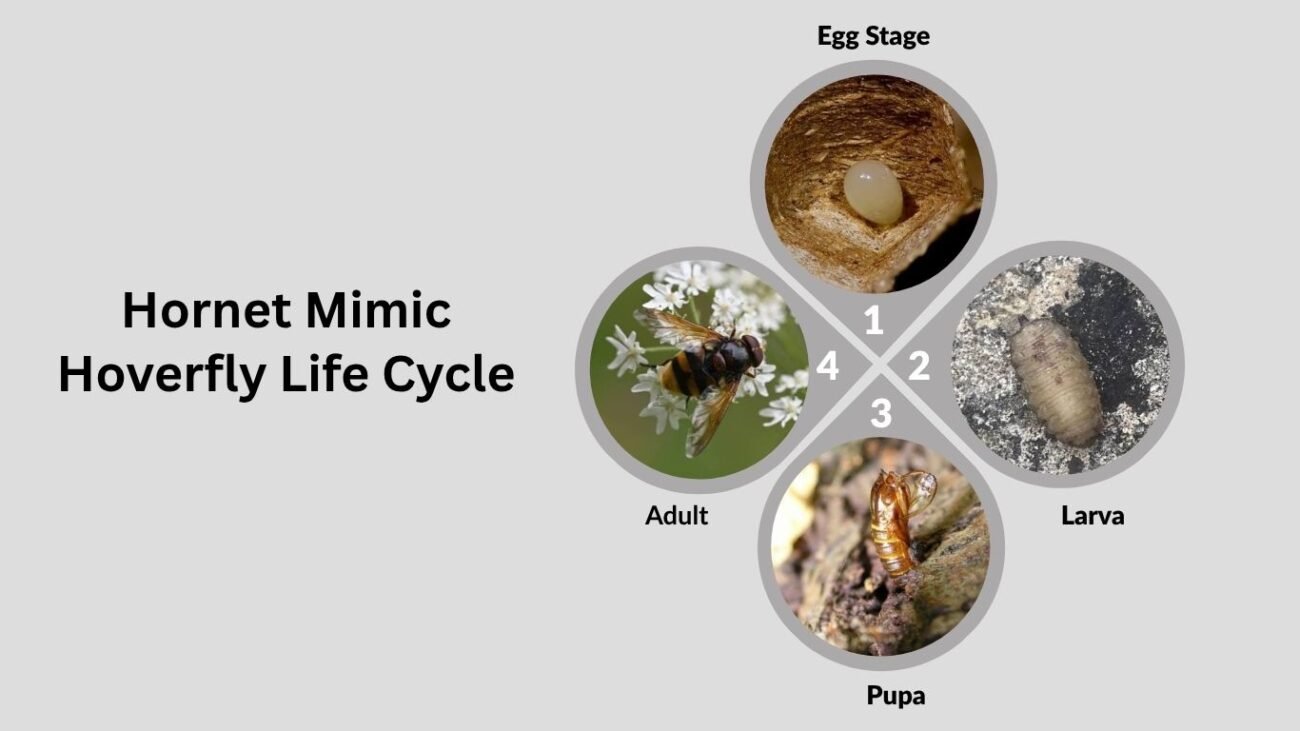
Like other flies, hornet mimic hoverflies undergo complete metamorphosis through egg, larva, pupa, and adult stages. Their larval biology is particularly interesting because some Volucella species develop in or around the nests of social wasps.
From Egg to Adult
The life cycle includes:
- Egg: Females deposit eggs near suitable larval habitat.
- Larva: Larvae develop while feeding on organic material.
- Pupa: Mature larvae transform inside a protective pupal stage.
- Adult: Winged hoverflies emerge and begin visiting flowers.
Adult activity is strongly associated with favorable temperatures and flower availability.
Do Hornet Hoverflies Have Nests?
Hornet mimic hoverflies do not build their own social nests. Adults live independently rather than forming colonies with workers and queens.
Their association with wasp nests during larval development sometimes causes confusion, but a hoverfly seen entering or approaching such an area does not mean it has constructed the nest.
Are Hornet Mimic Hoverflies Beneficial?
Hornet mimic hoverflies are generally beneficial insects. Their intimidating appearance is mostly defensive, while their adult feeding behavior contributes to pollination. They should usually be left alone when encountered in gardens.
Benefits in the Garden
Hornet mimic hoverflies can:
- Visit many flowering plants
- Transfer pollen between flowers
- Support garden biodiversity
- Provide food for wildlife
- Contribute to natural ecosystems
- Add diversity to pollinator communities
There is usually no reason to remove one simply because it resembles a hornet.
What to Do If You Find One
Avoid swatting the insect based solely on its appearance. Observe its flight behavior and physical characteristics from a comfortable distance.
If it has large fly-like eyes, short antennae, one pair of wings, and repeatedly hovers near flowers, you are likely looking at a harmless hoverfly rather than a defensive hornet.
FAQs
1. Can a hornet mimic hoverfly sting?
No. Hornet mimic hoverflies do not possess a functional stinger and cannot sting like hornets or wasps.
2. How big is a hornet mimic hoverfly?
Adults are commonly about 16–22 mm long, making them among the larger hoverflies and large enough to be mistaken for hornets.
3. What is the scientific name of the hornet mimic hoverfly?
The species commonly called the hornet mimic hoverfly is Volucella zonaria, a member of the hoverfly family Syrphidae.
4. How can you tell a hoverfly from a hornet?
Hoverflies have one functional pair of wings, very large eyes, short antennae, no narrow wasp waist, and an ability to hover almost motionless. Hornets have two pairs of wings and females possess stingers.
5. Are hornet mimic hoverflies dangerous?
No. They are generally harmless to humans and pets. Adults primarily feed on nectar and pollen and can contribute to pollination in gardens and natural habitats.