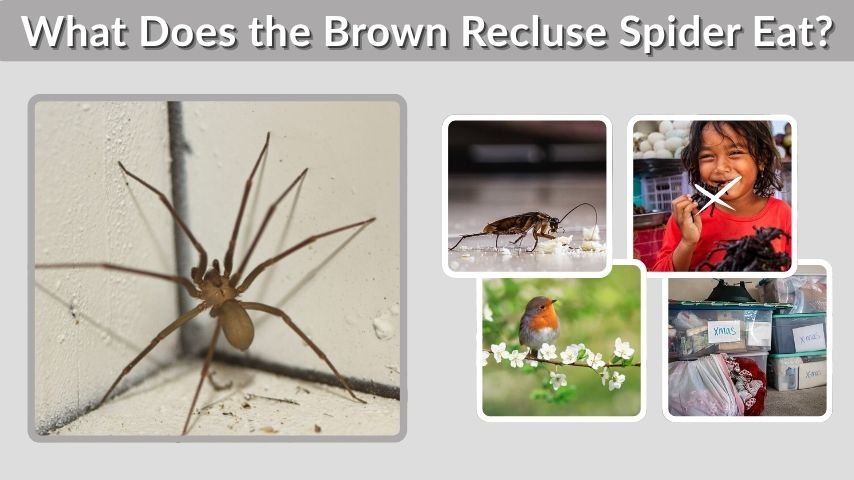
Brown recluse spiders eat small insects, other arthropods, and sometimes other spiders. Unlike many web-building spiders, they do not depend on a sticky web to trap every meal. They are secretive hunters that often move around at night looking for prey. They may also scavenge recently dead insects, which helps them survive in quiet indoor spaces such as basements, closets, garages, attics, and storage boxes.
What Brown Recluse Spiders Usually Eat
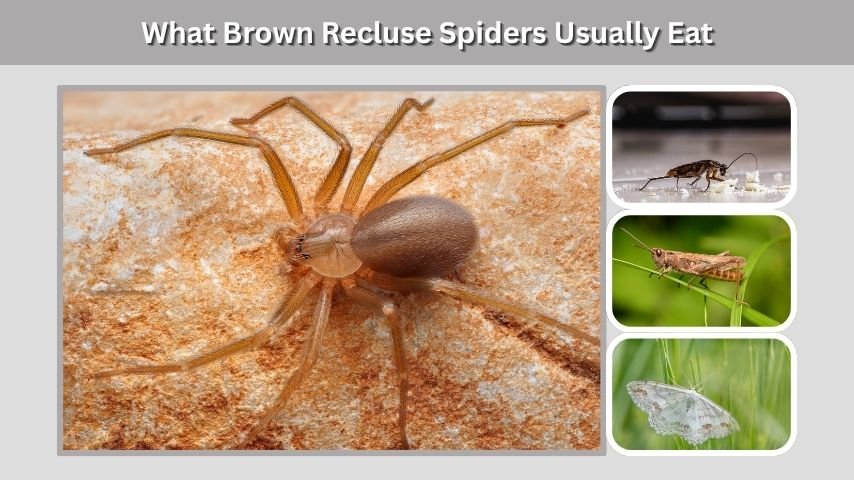
Brown recluse spiders are carnivores. Their diet mainly includes small insects and other tiny animals with jointed legs. They are not interested in human food, crumbs, fabric, wood, or household materials. If they are found indoors, they are usually there because the space gives them shelter and access to small prey.
Common foods for brown recluse spiders include:
- Cockroaches
- Crickets
- Silverfish
- Firebrats
- Flies
- Moths
- Ants
- Small beetles
- Earwigs
- Other spiders
- Soft-bodied insects
- Recently dead insects
Their diet can change based on what is available. In a basement, they may eat silverfish, crickets, and small roaches. In a garage or shed, they may feed on beetles, moths, and other spiders. In storage areas, they may survive on dead insects that collect near boxes, corners, or windows.
Do Brown Recluse Spiders Eat Dead Insects?
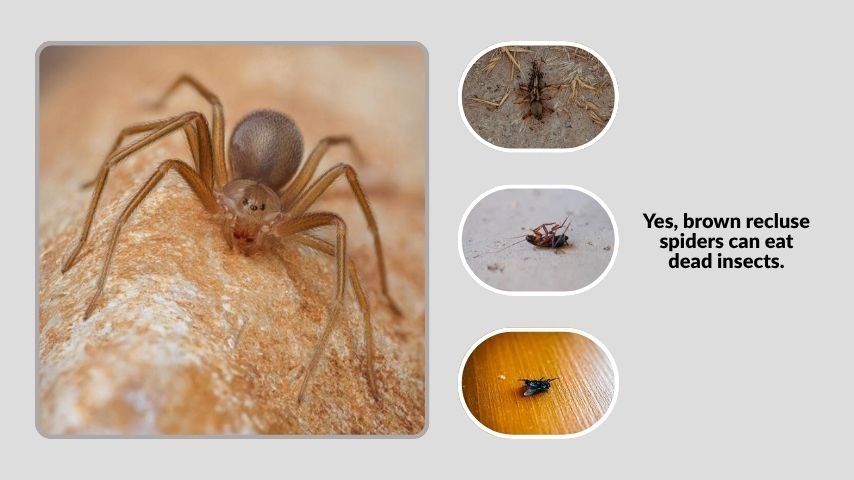
Yes, brown recluse spiders can eat dead insects. This is one reason they can survive in quiet areas where live prey may not be abundant every day. They are opportunistic feeders, meaning they eat what they can find.
Many spiders prefer live prey, but brown recluse spiders are known for scavenging when needed. If a dead cricket, roach, fly, or moth is still fresh enough, the spider may feed on it. This scavenging habit helps explain why brown recluse spiders can survive for long periods in storage rooms, closets, and other low-activity spaces.
Why Scavenging Helps Them Survive
Scavenging gives brown recluse spiders several advantages:
- They do not need to chase every meal.
- They can survive in hidden places with limited prey.
- They can feed on insects killed by traps or natural causes.
- They can remain in undisturbed indoor spaces longer.
This does not mean dead insects “create” brown recluse infestations, but leaving dead bugs, clutter, and undisturbed hiding spots can make an area more suitable for them.
How Does a Brown Recluse Spider Eat?
A brown recluse spider does not chew food like a human or a dog. Instead, it uses venom and digestive fluids to break down prey externally. After biting prey, the spider’s venom helps immobilize it. Then the spider releases digestive enzymes that soften and liquefy the prey’s tissues. The spider sucks up the liquid meal.
This feeding method is common among many spiders. Since spiders cannot eat large solid pieces, they need to turn prey into a form they can drink.
Brown Recluse Hunting Style
Brown recluse spiders are mostly active at night. During the day, they hide in dark, dry, quiet places. At night, they may leave their hiding spots to search for food. They are not aggressive hunters in the way some larger spiders are, but they are effective at catching small insects.
They may use silk for shelter, egg sacs, and retreat areas, but they are not classic orb-weavers. You will not usually see them sitting in a neat circular web waiting for prey. Their hunting style is more secretive and ground-based.
Where They Find Food Indoors
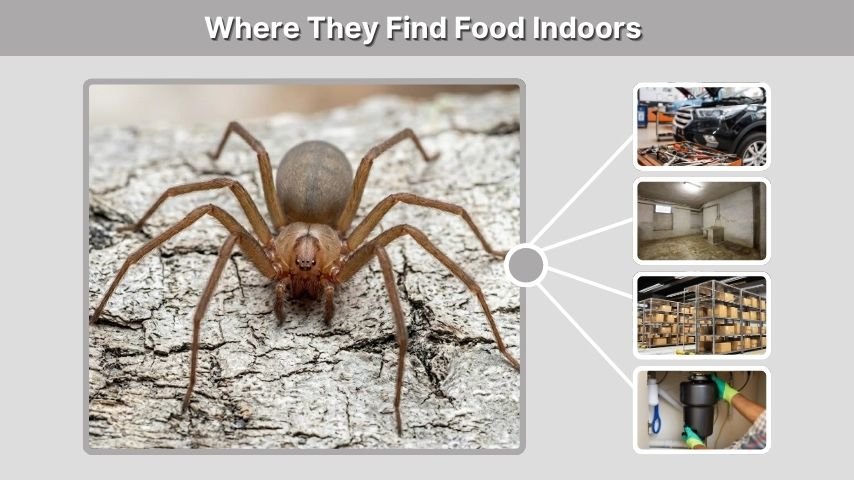
Brown recluse spiders often live where insects are already present. If a home has roaches, crickets, silverfish, flies, or other small pests, brown recluse spiders may find enough food to stay.
Common Feeding Areas
They may find prey in:
- Basements
- Garages
- Closets
- Attics
- Crawl spaces
- Storage rooms
- Behind furniture
- Around cardboard boxes
- Near windows
- Under appliances
- In sheds or workshops
These areas are attractive because they are dark, dry, and rarely disturbed. They also provide cracks, gaps, boxes, and clutter where both spiders and insects can hide.
Do Brown Recluse Spiders Eat Other Spiders?
Yes, brown recluse spiders may eat other spiders when the opportunity appears. They can also sometimes be eaten by other spiders. Spider-on-spider predation is common in nature, especially when one spider is larger, stronger, or able to ambush the other.
A brown recluse may feed on smaller spiders, weak spiders, or spiders caught in a vulnerable position. However, other spiders may also hunt brown recluses.
What Eats a Brown Recluse Spider?
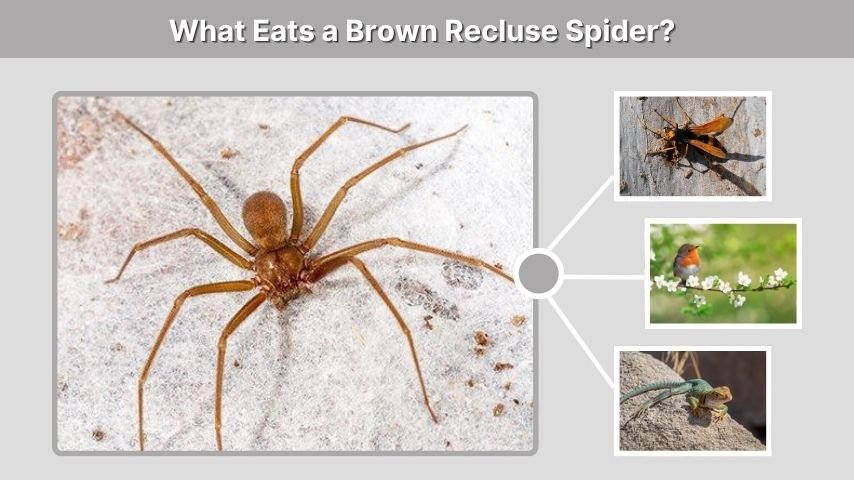
Brown recluse spiders are predators, but they are also prey. Many animals may eat them if they can catch them. Natural predators help reduce spider populations outdoors and sometimes indoors, but they should not be relied on as the only form of pest control.
Animals that may eat brown recluse spiders include:
- Wolf spiders
- Jumping spiders
- Other large spiders
- House centipedes
- Praying mantises
- Spider wasps
- Birds
- Lizards
- Frogs
- Some small mammals
The exact predator depends on the location. In homes, house centipedes and other spiders may sometimes prey on brown recluses. Outdoors, birds, lizards, wasps, and larger arthropods may eat them.
Do Wolf Spiders Eat Brown Recluse Spiders?
Wolf spiders may eat brown recluse spiders if they get the chance. Wolf spiders are active hunters, and they feed on insects and other small arthropods. If a wolf spider encounters a smaller or vulnerable brown recluse, it may attack and eat it.
However, keeping wolf spiders in the house is not a reliable brown recluse control method. Wolf spiders may reduce some pests, but they will not remove an infestation by themselves. Also, many people confuse wolf spiders with brown recluse spiders because both can be brown and fast-moving.
Wolf Spider vs Brown Recluse
Wolf spiders are usually larger, hairier, and more robust. They have eight eyes arranged in a noticeable pattern. Brown recluse spiders are usually smoother-looking, less hairy, and have six eyes arranged in pairs. Brown recluse spiders may also have a violin-shaped marking on the top of the body, but this marking can be hard to see and is not always enough for identification.
Can Dogs Eat Brown Recluse Spiders?
A dog might accidentally eat a brown recluse spider, especially if the dog snaps at crawling insects or spiders. In many cases, eating the spider may not cause serious problems because stomach acid can break down the spider and its venom. Venom is usually most dangerous when injected through a bite, not swallowed.
However, a dog can still be at risk if the spider bites the mouth, tongue, lips, throat, or skin before being swallowed. A bite can cause swelling, pain, redness, tissue damage, or other symptoms. If your dog ate a spider and then shows swelling, drooling, vomiting, weakness, pain, or trouble breathing, contact a veterinarian.
What to Do If a Dog Eats One
If you think your dog ate a brown recluse spider:
- Check the mouth, lips, and face for swelling.
- Watch for drooling, vomiting, or weakness.
- Look for signs of pain or limping.
- Call a veterinarian if symptoms appear.
- Do not give human medicine unless a vet says to.
The main concern is usually a bite before swallowing, not the act of eating the spider itself.
What Happens If a Cat Eats a Brown Recluse Spider?
Cats may also catch and eat spiders. Like dogs, cats may not become seriously ill just from swallowing a spider. The bigger concern is whether the spider bit the cat before being eaten. A bite may cause pain, swelling, skin damage, tiredness, fever, or a wound that worsens over time.
Cats can hide pain well, so monitor them closely. If your cat paws at the mouth, drools, stops eating, develops swelling, becomes lethargic, or has a suspicious skin sore, contact a veterinarian.
Can Cats Safely Eat Brown Recluse Spiders?
It is not a good idea to let cats eat brown recluse spiders. Even if swallowing one does not always cause illness, the risk of being bitten is real. It is safer to remove spiders from the home and reduce hiding places.
Can People Eat a Brown Recluse Spider?
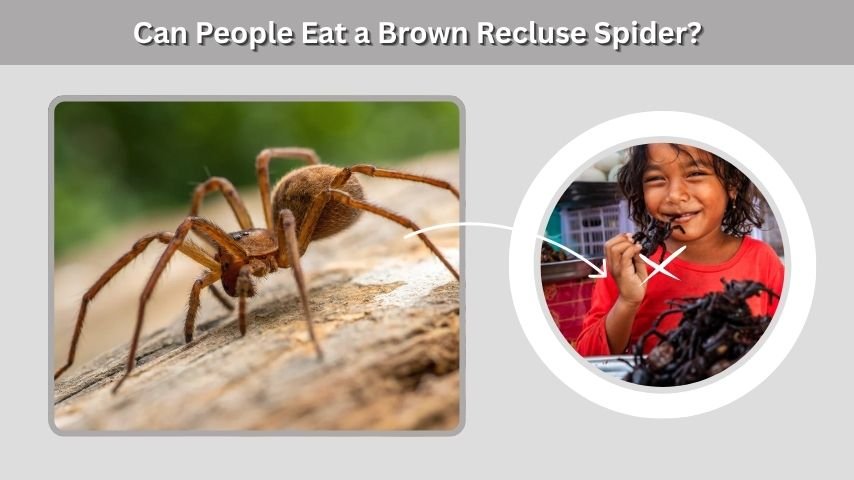
A person should not eat a brown recluse spider. While venom is generally more dangerous when injected than swallowed, eating a venomous spider is unsafe and unnecessary. There is also a risk of mouth or throat contact, allergic reaction, contamination, choking, or being bitten before swallowing.
Children may accidentally put insects or spiders in their mouths. If a child may have eaten a brown recluse spider or has been bitten, contact poison control or a medical professional for advice.
Does Brown Recluse Food Affect Infestations?
Yes, food availability can affect whether brown recluse spiders remain in a home. If there are many insects indoors, spiders have a steady food source. Reducing insects can make the home less attractive to spiders.
Brown recluse control is not only about killing spiders. It also involves removing the conditions that help them survive.
How to Reduce Their Food Supply
To reduce insects and make your home less inviting:
- Clean up dead insects.
- Vacuum corners, closets, and storage areas.
- Store food in sealed containers.
- Fix moisture problems that attract insects.
- Reduce clutter where insects and spiders hide.
- Seal cracks around doors, windows, and baseboards.
- Use sticky traps to monitor activity.
- Keep cardboard boxes off the floor when possible.
Cardboard storage is especially attractive because it provides hiding spaces. Plastic bins with tight lids are usually better for long-term storage.
Do Brown Recluse Spiders Eat Household Items?
No, brown recluse spiders do not eat wood, clothing, paper, furniture, bedding, or cardboard. They may hide in those materials, but they are not feeding on them. If you find damage to fabrics, paper, or food packages, another pest may be responsible.
For example, clothes moths, carpet beetles, mice, silverfish, or cockroaches may damage household items. Brown recluse spiders may be nearby because those pests are available as food.
Why Knowing Their Diet Matters
Understanding what brown recluse spiders eat can help with prevention. If you remove their food source and hiding places, they are less likely to stay. A home with fewer insects, less clutter, and regular cleaning gives brown recluse spiders fewer reasons to remain.
Their diet also shows that they are not hunting people. Brown recluse spiders bite humans mainly when trapped or disturbed. They are looking for insects, not people or pets.
How to Keep Brown Recluse Spiders Away
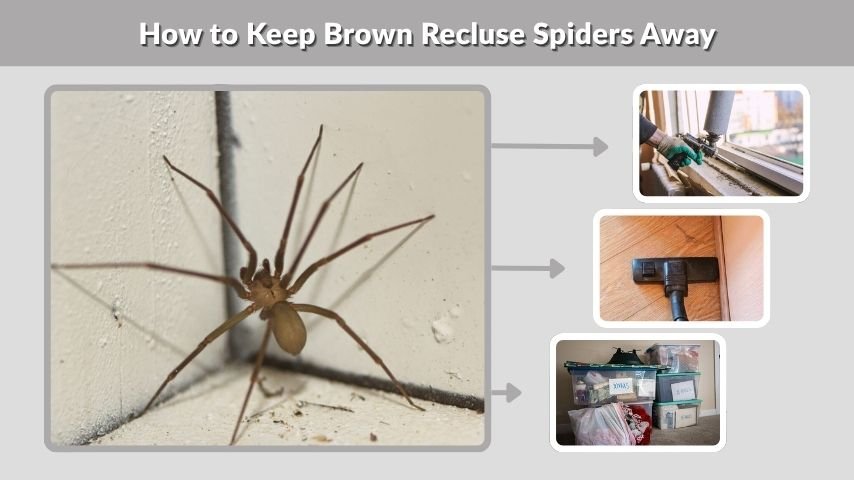
The best prevention plan targets both spiders and their prey. You do not need to rely on predators like wolf spiders or house centipedes to solve the problem.
Prevention Tips
Use these steps:
- Shake out shoes, gloves, and stored clothing.
- Keep beds away from walls if spiders are common.
- Avoid leaving clothes on the floor.
- Vacuum under furniture and along baseboards.
- Remove dead insects from windowsills and corners.
- Reduce clutter in closets, garages, and basements.
- Seal entry gaps around doors and windows.
- Store seasonal items in sealed plastic containers.
- Use sticky traps in low-traffic areas.
- Contact pest control if you find many brown recluses.
If you live in an area where brown recluse spiders are common, prevention is especially important in storage spaces and sleeping areas.
FAQs
What does a brown recluse spider eat most often?
A brown recluse spider most often eats small insects and arthropods. Its diet may include roaches, crickets, silverfish, flies, moths, ants, beetles, and other spiders. It may also scavenge recently dead insects, which helps it survive in quiet indoor areas.
What eats brown recluse spiders?
Brown recluse spiders may be eaten by wolf spiders, jumping spiders, house centipedes, praying mantises, spider wasps, birds, lizards, frogs, and other predators. They are hunters, but they are not at the top of the food chain.
Will a wolf spider eat a brown recluse?
A wolf spider may eat a brown recluse if it encounters one and can overpower it. Wolf spiders are active hunters and may prey on other spiders. However, wolf spiders should not be used as a household pest control plan.
What happens if a dog eats a brown recluse spider?
A dog may not become sick simply from swallowing the spider, but the dog could be bitten before eating it. Watch for swelling, drooling, vomiting, weakness, pain, or unusual behavior. Contact a veterinarian if symptoms appear.
What happens if a cat eats a brown recluse spider?
A cat may swallow a spider without serious effects, but a bite before swallowing can be dangerous. Watch for drooling, swelling, tiredness, loss of appetite, pain, or a skin wound. Call a veterinarian if your cat shows symptoms.