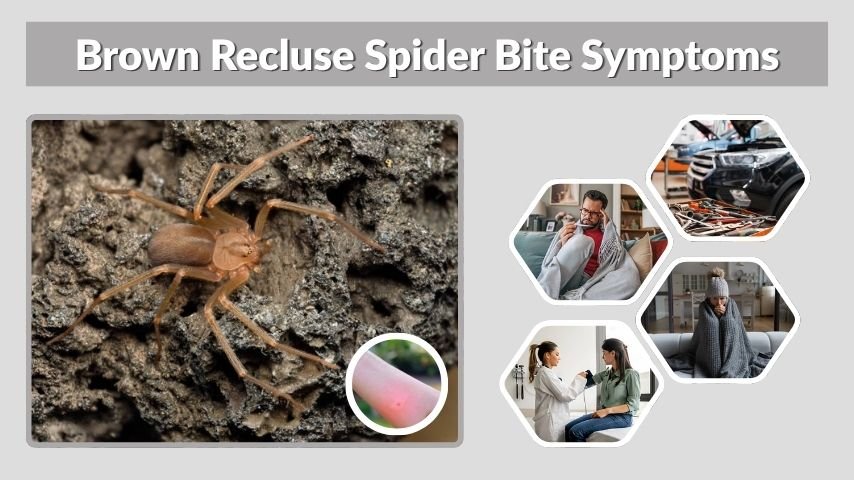
Brown recluse spider bite symptoms can be mild at first and become more noticeable over several hours or days. Some bites cause only redness, itching, and soreness, while others may lead to blistering, skin discoloration, or an open wound. Because many skin infections and insect bites can look similar, it is important to understand the symptoms, watch the timeline, and seek medical care if the bite worsens.
What Are the Symptoms of a Brown Recluse Spider Bite?
Brown recluse spider bite symptoms often begin near the bite area. The first sign may be a small red bump, mild swelling, itching, or a stinging feeling. Some people do not feel the bite when it happens. Others notice discomfort within a few hours.
The bite may become more painful over time. The skin can turn red, pale, purple, blue, or dark in the center. A blister may form. In more serious cases, the skin may break down and become an open sore.
Common symptoms include:
- Redness around the bite
- Mild to moderate swelling
- Itching or burning
- Pain that increases over several hours
- Tenderness when touched
- A blister or pale center
- Skin discoloration
- A wound that slowly grows
- Fever, chills, nausea, or body aches in some cases
Not every bite causes all of these symptoms. Some people have only a mild reaction, while others develop more serious skin damage.
Early Symptoms of a Brown Recluse Spider Bite
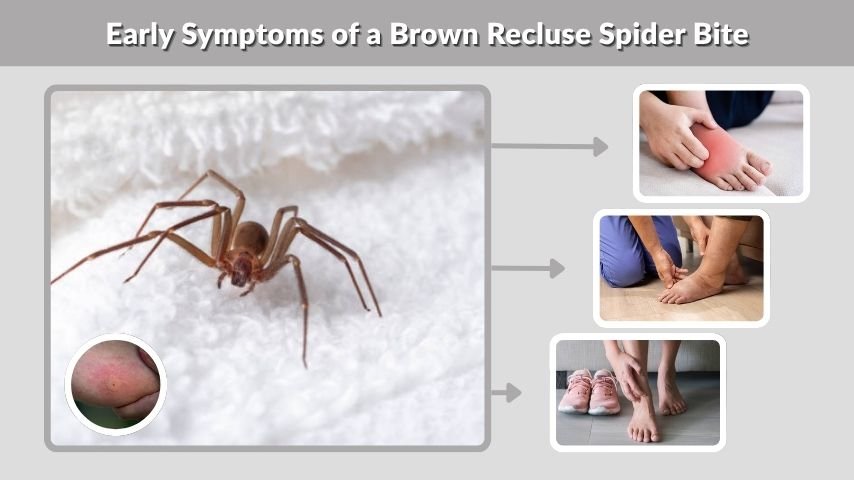
Early symptoms can be easy to miss. A brown recluse bite may look like a mosquito bite, ant bite, pimple, ingrown hair, or small skin irritation. In the first few hours, it may not look dangerous.
First Few Hours
During the first few hours, the bite may appear as a small red or pink spot. It may itch, burn, or feel tender. Some people feel a mild sting at the time of the bite, but others feel nothing.
The skin around the bite may begin to swell. A pale area may appear in the middle. The bite may feel warm compared with nearby skin.
Day 1 Symptoms
On the first day, the bite may become more noticeable. Redness may spread slightly, and pain may increase. A blister may develop. Some bites begin to show a darker or purplish center.
Day 1 symptoms may include:
- Increasing pain
- More visible redness
- Swelling around the bite
- Itching or burning
- A small blister
- Skin that feels warm or tight
- A pale or discolored center
If the bite is rapidly worsening on day 1, it should be checked by a healthcare provider.
Brown Recluse Spider Bite Symptoms Timeline
The symptoms of a brown recluse spider bite can change slowly. Some bites start mild and improve within a few days. Others worsen before they heal.
| Time After Bite | Possible Symptoms | What to Watch For |
| 0 to 6 hours | Mild redness, itching, stinging, or little pain | A bite that becomes more painful instead of improving |
| 6 to 12 hours | Burning, tenderness, swelling, or a pale center | Spreading redness or blister formation |
| Day 1 | Redness, swelling, pain, blister, or discoloration | Purple, blue, gray, or dark skin changes |
| Day 2 | Pain may increase; blister or wound may become clearer | A growing sore or worsening inflammation |
| Days 3 to 7 | Mild bites may improve; severe bites may open or darken | Fever, chills, nausea, or expanding wound |
| Weeks after bite | Healing continues; severe wounds may take longer | Slow healing, infection, or tissue damage |
This timeline is a general guide. A bite that looks severe, spreads quickly, or causes whole-body symptoms needs medical attention.
Symptoms Day 2 Brown Recluse Spider Bite Stages
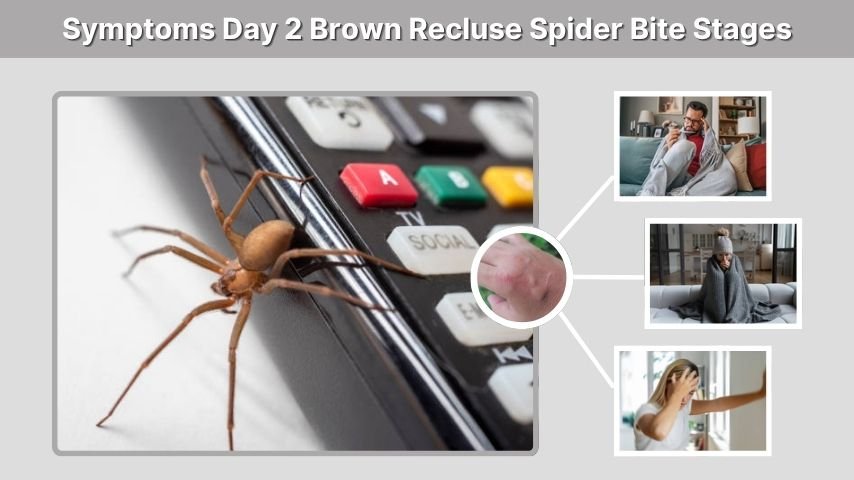
Day 2 is often when people become more concerned. The bite may be more painful than it was on day 1. A blister may be larger, or the center may look pale, purple, blue, gray, or dark.
Some bites develop a “bullseye-like” appearance, but this is not always present. A dark center can be a sign of skin injury. If the wound is growing, becoming very painful, or changing color, it is safer to contact a doctor.
Day 2 Warning Signs
Get medical advice if day 2 symptoms include:
- Pain that is getting worse
- A blister that is enlarging
- A dark or sunken center
- Redness spreading outward
- Skin that feels hot and swollen
- Drainage or pus
- Fever, chills, or nausea
- A wound that appears to be opening
Do not cut, squeeze, or drain the bite at home. This can increase the risk of infection.
Severe Brown Recluse Spider Bite Symptoms
Most suspected spider bites are not severe, but brown recluse bites can sometimes cause serious skin damage. Severe symptoms may affect the bite area or the whole body.
Severe Skin Symptoms
Severe local symptoms may include intense pain, expanding redness, a large blister, dark skin in the center, or an open wound. The area may feel hot, tight, and very tender.
The skin may gradually break down. This does not always happen, but when it does, the wound can take weeks or longer to heal.
Systemic Symptoms
Systemic symptoms are symptoms that affect the whole body. These are less common but more concerning.
Possible systemic symptoms include:
- Fever
- Chills
- Nausea
- Vomiting
- Weakness
- Muscle aches
- Headache
- Dizziness
- Rash away from the bite
- Dark urine or unusual fatigue in serious cases
Children, older adults, and people with existing health problems may be at higher risk of complications. Any systemic symptoms after a suspected brown recluse bite should be taken seriously.
Brown Recluse Spider Bite Symptoms and Pictures
Many people search for brown recluse spider bite symptoms and pictures because they want to compare their skin mark. Pictures can be useful for general awareness, but they cannot confirm the cause of a bite.
A brown recluse bite may look like a red bump, blister, bruise-like patch, or open sore. However, many other conditions can look almost the same.
Possible look-alikes include:
- Bacterial skin infection
- Abscess
- Ingrown hair
- Mosquito or flea bite
- Bed bug bite
- Tick bite
- Allergic reaction
- Contact dermatitis
- Shingles
- Diabetic skin wound
This is why symptoms, location, timing, and medical evaluation matter more than pictures alone.
Brown Recluse Spider Identification, Habitat, and Bite Symptoms
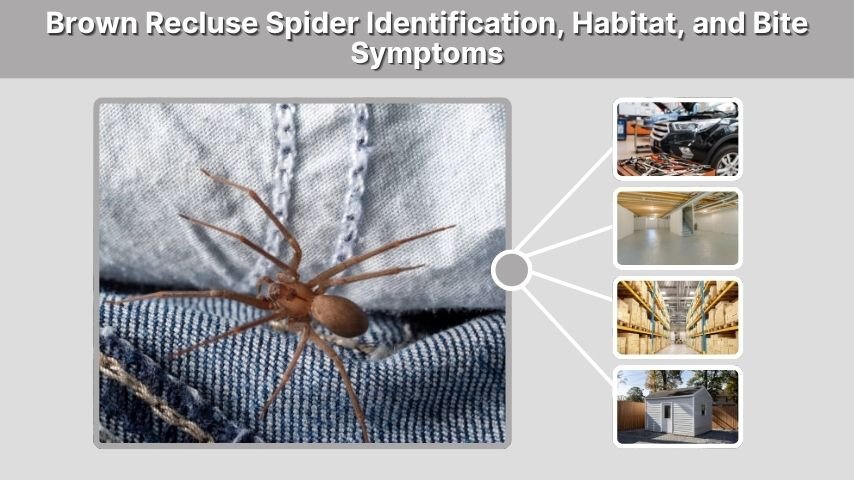
Brown recluse spiders are usually light to dark brown. They are known for a violin-shaped marking on the upper body, although this mark can be hard to see. They are commonly found in parts of the central and southern United States.
They prefer quiet, dark, undisturbed areas such as:
- Closets
- Garages
- Basements
- Storage boxes
- Sheds
- Woodpiles
- Attics
- Shoes or clothing left unused
- Corners behind furniture
Brown recluse spiders are not usually aggressive. Bites often happen when the spider is trapped against the skin, such as inside clothing, shoes, bedding, or gloves.
Brown Recluse Spider Bite vs Black Widow Symptoms
Brown recluse and black widow bites can both be serious, but their symptoms are often different.
A brown recluse bite is more likely to cause local skin symptoms, such as redness, blistering, discoloration, and a wound. Pain may develop gradually.
A black widow bite is more likely to cause sharp pain followed by muscle cramps, abdominal pain, sweating, nausea, and widespread body symptoms. The bite area may not always look severe.
Both types of bites should be taken seriously. If you suspect either spider and symptoms are worsening, seek medical help.
Brown Recluse Spider Bite Symptoms and Treatment Basics
Treatment depends on how serious the bite is. Mild symptoms may be managed with basic first aid, but worsening symptoms need medical care.
First Aid Steps
After a suspected bite:
- Wash the area with soap and water
- Apply a cold compress or wrapped ice pack
- Keep the bite area elevated if possible
- Avoid scratching
- Take a clear photo to track changes
- Mark the edge of redness with a pen
- Use over-the-counter pain medicine only as directed
- Contact a healthcare provider if symptoms worsen
Do not apply heat, cut the wound, use harsh chemicals, or try to drain the bite yourself.
Medical Treatment
A healthcare provider may clean the wound, check for infection, recommend pain control, update tetanus protection, or provide wound care instructions. Antibiotics may be used if there is a bacterial infection, but not every bite needs antibiotics.
Severe cases may require follow-up wound care. Rarely, hospitalization may be needed if systemic symptoms or serious complications occur.
How Long Do Brown Recluse Spider Bite Symptoms Last?
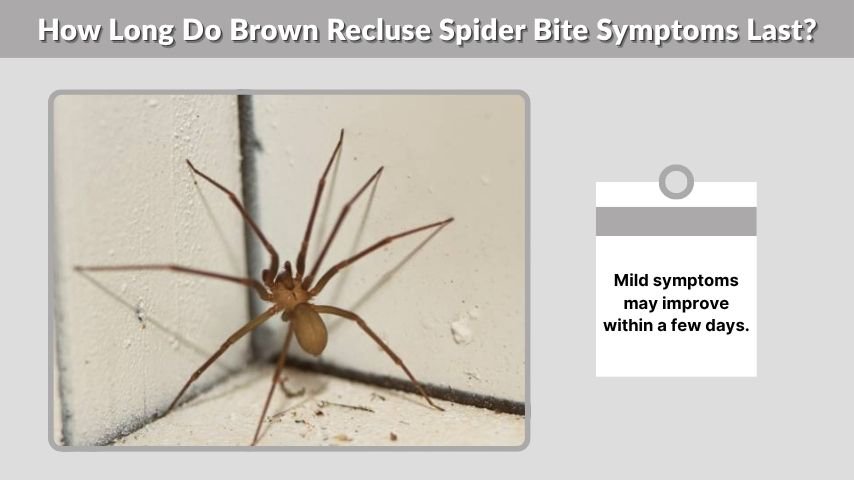
Mild symptoms may improve within a few days. Redness, itching, and soreness should gradually decrease. More serious bites can take weeks to heal, especially if the skin breaks down.
If the bite keeps growing, becomes more painful, or does not improve, it should be checked. Slow healing can happen, but worsening symptoms should not be ignored.
Signs the Bite Is Improving
A bite is likely improving when:
- Pain is decreasing
- Redness is no longer spreading
- Swelling is going down
- Skin feels less warm
- The blister is not enlarging
- The wound is closing
- No fever or body symptoms appear
Signs the Bite Is Not Improving
The bite may be getting worse if pain increases, the center darkens, redness spreads, pus appears, or you develop fever, chills, nausea, or weakness.
Brown Recluse Spider Bite Symptoms in Dogs
Dogs can also be bitten by brown recluse spiders, although symptoms may be difficult to notice at first. A dog may lick or bite at the area, seem sore, or develop swelling and redness.
Possible symptoms in dogs include:
- Redness or swelling
- Pain when touched
- Limping if bitten on a leg or paw
- Skin discoloration
- A blister or sore
- Low energy
- Fever
- Loss of appetite
If you think your dog was bitten by a brown recluse, contact a veterinarian. Do not give human medication unless a vet specifically tells you to.
When to Seek Medical Care
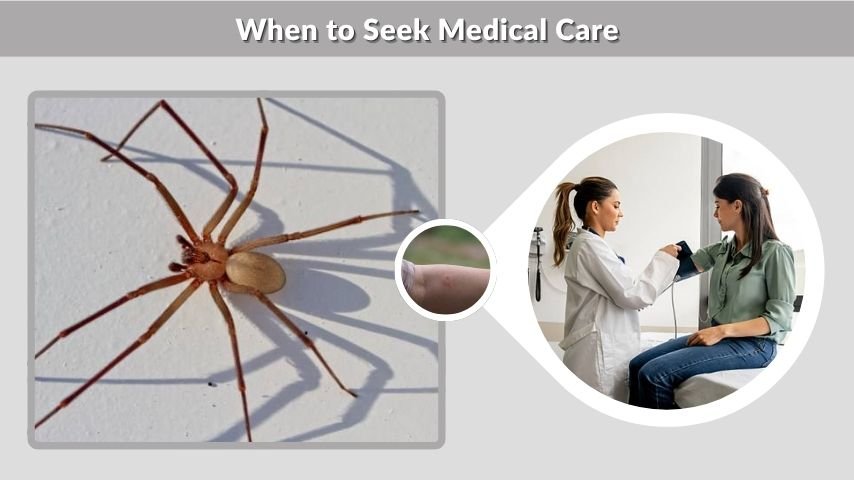
You should seek medical care if you suspect a brown recluse bite and symptoms are worsening. It is especially important to get help for children, older adults, people with health conditions, or bites on sensitive areas such as the face, eye area, genitals, or near a joint.
Get urgent care for:
- Severe pain
- Spreading redness
- A dark, blue, purple, or black center
- A growing blister or open wound
- Fever or chills
- Nausea or vomiting
- Weakness or dizziness
- Trouble breathing
- Signs of infection
- Symptoms that worsen after day 1 or day 2
When in doubt, it is better to have the bite evaluated than to wait until the wound becomes harder to treat.
FAQs
What are the first symptoms of a brown recluse spider bite?
The first symptoms may include a small red bump, itching, burning, mild swelling, or tenderness. Some people feel a sting, while others do not notice the bite at first. Pain may increase over several hours, and a blister or pale center can develop later.
What are symptoms of a brown recluse spider bite on day 2?
On day 2, the bite may become more painful, swollen, or discolored. A blister may enlarge, and the center may look pale, purple, blue, gray, or dark. If redness spreads, pain increases, or the wound starts opening, medical care is recommended.
Can brown recluse spider bite symptoms be delayed?
Yes, symptoms can be delayed. Some people do not notice much at first, then develop pain, burning, redness, or blistering several hours later. More serious skin changes may appear over one to three days, which is why monitoring the bite is important.
What are severe symptoms of a brown recluse spider bite?
Severe symptoms may include intense pain, spreading redness, a large blister, dark skin, an open wound, fever, chills, nausea, vomiting, weakness, or body aches. These symptoms need medical evaluation, especially if they are getting worse or affecting a child or older adult.
How long do brown recluse spider bite symptoms last?
Mild symptoms may improve within several days, but more serious wounds can take weeks or longer to heal. Healing time depends on the amount of venom, wound severity, infection risk, and the person’s overall health. A bite that keeps worsening should be checked by a healthcare provider.