Brown recluse spiders are often feared, but their actual size is smaller than many people expect. These spiders are usually not large, bulky, or easy to spot from a distance. Their body, legs, color, and violin-shaped marking can help with identification, but size alone is not enough. Understanding the real size of a brown recluse spider helps separate it from wolf spiders, house spiders, hobo spiders, and other brown spiders commonly found indoors.
How Big Is a Brown Recluse Spider?
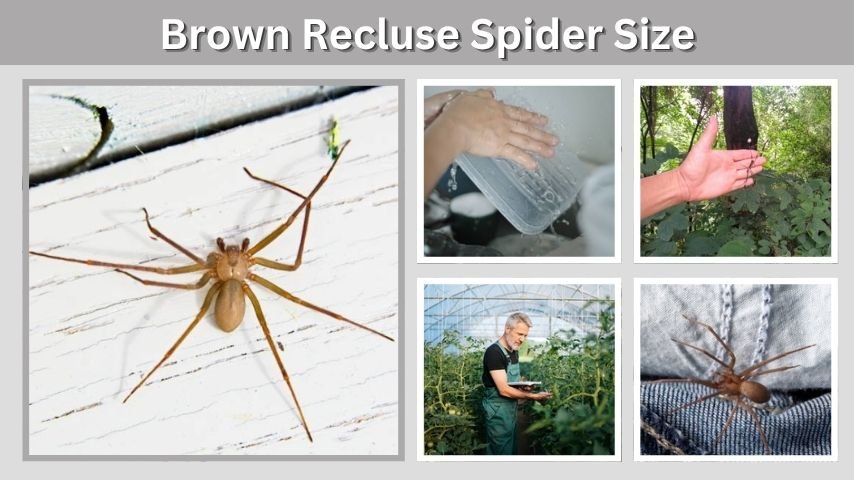
A brown recluse spider is a small to medium-sized spider with a narrow body and long, thin legs. Most adults are not bigger than a coin when their legs are spread out. Their size can vary slightly based on age, sex, and nutrition, but they usually stay within a fairly predictable range.
Average Brown Recluse Spider Size
An adult brown recluse spider usually has a body length of about ¼ to ½ inch. When the legs are included, the total size is commonly around ¾ inch to 1 inch across. Some individuals may appear slightly larger because their legs are stretched out, but the body itself remains quite small.
Females are often a little larger and heavier-bodied than males. Males may look leggier because their legs can appear longer compared with their slimmer bodies. Young brown recluse spiders are much smaller and may be difficult to identify without close inspection.
Actual Size With Legs Included
The actual size of a brown recluse spider depends on whether you are measuring only the body or the full leg span. The body is the more reliable measurement because leg position changes how large the spider looks. A relaxed spider may seem smaller, while one with spread legs may look wider.
| Measurement Type | Usual Size |
| Body length | ¼ to ½ inch |
| Leg span | About ¾ to 1 inch |
| Young spider body size | Smaller than ¼ inch |
| Large adult appearance | Near 1 inch with legs spread |
Brown Recluse Body Size and Shape
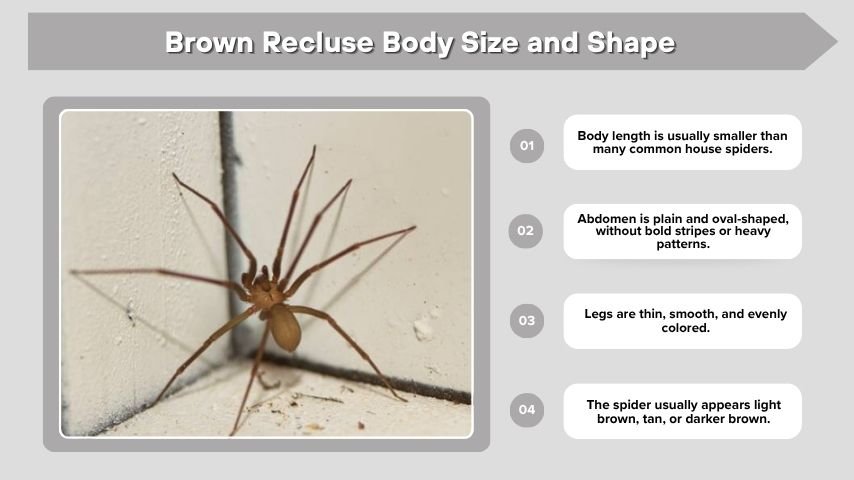
The brown recluse has a simple, smooth-looking body shape. It is not thick, hairy, or bulky like many large household spiders. Its size can be misleading because its long legs make it look wider than its body really is.
Body Features
- Body length is usually smaller than many common house spiders.
- Abdomen is plain and oval-shaped, without bold stripes or heavy patterns.
- Legs are thin, smooth, and evenly colored.
- The spider usually appears light brown, tan, or darker brown.
- It has a flat, delicate look rather than a thick or fuzzy body.
- The violin-shaped marking is on the top of the cephalothorax, not the abdomen.
- Adult size is generally modest, even when the legs are fully extended.
Why Size Alone Is Not Enough
Size can help narrow down identification, but it should not be the only clue. Many harmless brown spiders are close to the same size as a brown recluse. Some young wolf spiders, cellar spiders, house spiders, and sac spiders can overlap in size.
A true brown recluse has a combination of traits: plain brown body, long thin legs, six eyes arranged in three pairs, and a dark violin-like marking on the front body section. However, the violin mark can be faint or confusing, especially on young spiders.
Brown Recluse Spider Size Comparison
Comparing a brown recluse with other spiders is one of the easiest ways to understand its real size. Many spiders that people mistake for a brown recluse are actually larger, hairier, faster, or more patterned.
Brown Recluse vs Wolf Spider Size
Wolf spiders are usually larger, bulkier, and hairier than brown recluse spiders. A wolf spider may have a body length ranging from about ½ inch to more than 1 inch, depending on the species. With legs included, some wolf spiders can look much larger.
A brown recluse usually looks slimmer and smoother. It does not have the thick legs or hairy appearance of a wolf spider. Wolf spiders also often have stripes or mottled patterns, while brown recluse spiders are usually plainer in color.
Brown Recluse vs House Spider Size
Common house spiders vary in size, but many are similar to or slightly larger than brown recluse spiders. Some house spiders have rounder abdomens, longer web-building legs, or patterned bodies. Brown recluse spiders usually have a flatter, more uniform body.
House spiders are often found in webs in corners, windows, basements, and ceilings. Brown recluse spiders do not build large catching webs. They hide in quiet, dark areas and hunt at night.
Brown Recluse vs Hobo Spider Size
Hobo spiders are often larger than brown recluse spiders and have a more patterned body. Their legs and abdomen may show markings that a brown recluse usually lacks. A hobo spider can look more robust, while a brown recluse looks smoother and less patterned.
Because both can appear brown, they are sometimes confused. However, size, pattern, location, and body shape can help tell them apart.
Brown Recluse vs Black Widow Size
Black widows and brown recluses are both medically important spiders, but they look very different. A black widow has a shiny, rounded body and thin legs. Females often appear more bulbous than brown recluse spiders.
Brown recluses are not shiny black and do not have a round, glossy abdomen. Their size may overlap with some black widows, but their shape and color are very different.
Brown Recluse vs Woodlouse Spider Size
Woodlouse spiders are often larger-looking because of their thick body, reddish front section, and large jaws. They may have a body length of around ½ inch or more and can look intimidating. Brown recluse spiders are more delicate, thinner-legged, and less colorful.
Woodlouse spiders also have a very different appearance, with a reddish-orange cephalothorax and pale abdomen. A brown recluse is usually more evenly tan or brown.
Baby Brown Recluse Spider Size
Young brown recluse spiders are much smaller than adults. They may look like tiny pale brown spiders with long legs and a delicate body. Because they are immature, their markings may not be as clear as those of adults.
How Small Are Young Brown Recluse Spiders?
Baby brown recluse spiders can be only a few millimeters long when they first emerge. As they grow, they molt several times and slowly develop adult proportions. Their small size makes them easy to overlook in boxes, closets, stored clothing, and cracks.
Young spiders may not be easy to identify by size alone. Their body color can be lighter, and the violin marking may be less obvious. For this reason, small brown spiders should not automatically be assumed to be brown recluses.
Growth From Juvenile to Adult
A brown recluse spider grows through stages. After hatching, the spiderlings remain small and gradually increase in size with each molt. Food supply, temperature, and shelter can affect how quickly they mature.
As they grow, their legs become longer, their body becomes more defined, and adult markings become easier to see. Fully grown adults are still relatively small compared with many spiders people commonly notice indoors.
Where Size Helps With Identification
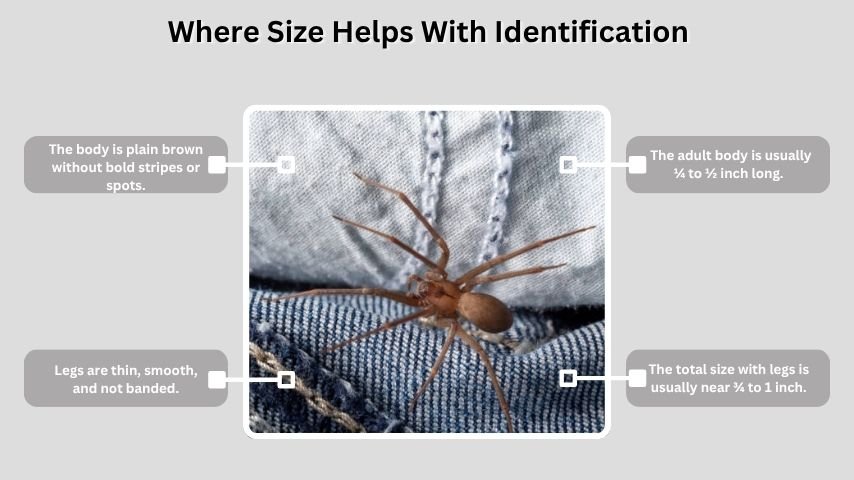
Size is useful when combined with other features. A spider that is very large, heavily hairy, or strongly patterned is less likely to be a brown recluse. A spider that is small, plain brown, smooth-bodied, and found in a quiet indoor hiding spot may deserve closer attention.
Helpful Identification Clues
- The adult body is usually ¼ to ½ inch long.
- The total size with legs is usually near ¾ to 1 inch.
- The body is plain brown without bold stripes or spots.
- Legs are thin, smooth, and not banded.
- Abdomen is oval and simple-looking.
- The spider has a dark violin-like mark on the front body section.
- It prefers hidden areas such as closets, boxes, attics, basements, and storage spaces.
Common Mistakes
Many spiders are wrongly called brown recluses because they are brown. Size confusion is also common. A large hairy spider is often a wolf spider, not a brown recluse. A long-legged spider in a messy web may be a cellar spider or house spider. A reddish spider with large jaws may be a woodlouse spider.
The brown recluse is not the biggest brown spider in a home. In many cases, it is smaller and less noticeable than the spiders people fear most.
Brown Recluse Size by Location
Brown recluse spiders are most strongly associated with the central and southern United States. Their size does not change dramatically by state, but reports often vary because other spiders are mistaken for them.
Missouri, Arkansas, Kansas, and Nearby Areas
In core range areas such as Missouri, Arkansas, Kansas, Oklahoma, and nearby states, brown recluse spiders are more likely to be encountered indoors. Adults still usually measure about ¼ to ½ inch in body length. In homes where they are established, both adults and juveniles may be found.
Reports From Other States
Reports from places outside the common range should be treated carefully. In states where brown recluses are uncommon or not established, similar-looking spiders are often misidentified. The spider’s size may match a brown recluse, but that does not confirm the species.
For example, a small brown spider in California, Michigan, Florida, Colorado, Hawaii, or Washington may not be a brown recluse. Other local spiders can be similar in size and color.
Does Bite Size Show Spider Size?
A spider bite mark cannot reliably show the size of the spider. Skin reactions vary from person to person, and many marks blamed on spiders are caused by other things. The size of a red spot, blister, or sore does not prove that the spider was large or small.
Why Bite Size Is Unreliable
A small spider can cause a noticeable reaction, while a larger spider may cause only mild irritation. Infection, scratching, allergic response, and delayed healing can all change the appearance of a skin mark. Brown recluse bites are also often overdiagnosed when no spider was seen or captured.
If a serious skin reaction develops, medical advice is more important than guessing the spider’s size. Identification is strongest when the spider itself is available for expert review.
How to Measure a Brown Recluse Spider Safely
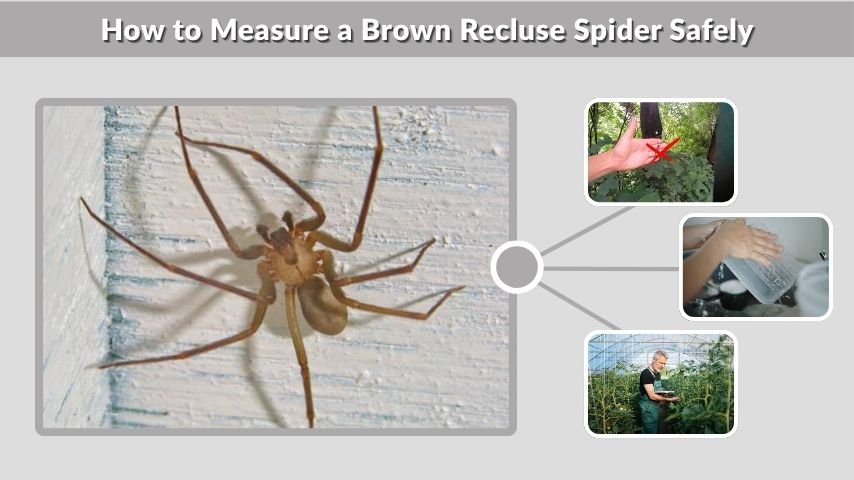
Measuring a spider is not worth direct handling. Brown recluse spiders are shy, but they can bite if pressed against skin or trapped in clothing. If you need to check size, do it from a safe distance.
Safe Measuring Tips
- Do not pick up the spider with bare hands.
- Place a clear container over it if capture is needed.
- Slide stiff paper under the container to move it safely.
- Compare body length with a ruler from outside the container.
- Measure body length separately from leg span.
- Avoid crushing the spider if identification is needed.
- Contact local pest control or extension services for confirmation if necessary.
Best Size Reference
The best reference is body length, not leg spread. A brown recluse body is commonly around ¼ to ½ inch long. With legs included, the spider often appears close to the size of a U.S. quarter or smaller, depending on how the legs are positioned.
Why Brown Recluse Spiders Look Bigger Than They Are
Fear can make spiders seem larger, especially when they move quickly in low light. Brown recluse spiders are usually noticed in basements, closets, garages, storage boxes, shoes, or bedding. These surprise encounters can make their size feel exaggerated.
Leg Span Creates a Larger Appearance
The thin legs of a brown recluse spread outward, making the spider look wider than its body. A small body with long legs may seem more threatening than it really is. This is why measuring the body gives a more accurate idea of size.
Lighting and Movement Matter
A spider running across a floor at night may look larger because the legs blur with movement. Shadows can also make the spider appear bigger. Once still, an adult brown recluse usually looks much smaller than expected.
FAQs
How big is a brown recluse spider?
An adult brown recluse spider usually has a body length of about ¼ to ½ inch. When the legs are included, it may appear around ¾ inch to 1 inch across. The body is the best measurement because leg position can make the spider look larger or smaller.
Is a brown recluse bigger than a wolf spider?
No, a brown recluse is usually smaller than a wolf spider. Wolf spiders are often bulkier, hairier, and more patterned. Brown recluse spiders have a smoother, slimmer body and thinner legs. Many large brown spiders found indoors are actually wolf spiders, not brown recluses.
What is the actual size of a baby brown recluse spider?
A baby brown recluse spider can be only a few millimeters long after hatching. Young spiders are much smaller than adults and may have lighter coloring. Their violin-shaped marking may also be less clear, so small brown spiders should not be identified by size alone.
Can a brown recluse spider be the size of a quarter?
Yes, an adult brown recluse can appear close to the size of a U.S. quarter when its legs are spread out. However, the body itself is much smaller, usually around ¼ to ½ inch long. Measuring the body gives a more accurate size than looking at the full leg span.
Does spider bite size show if it was a brown recluse?
No, bite size does not reliably prove that a brown recluse caused it. Skin reactions can vary because of infection, irritation, allergies, or other causes. A brown recluse identification is strongest when the spider is actually seen, captured safely, and checked by an expert.