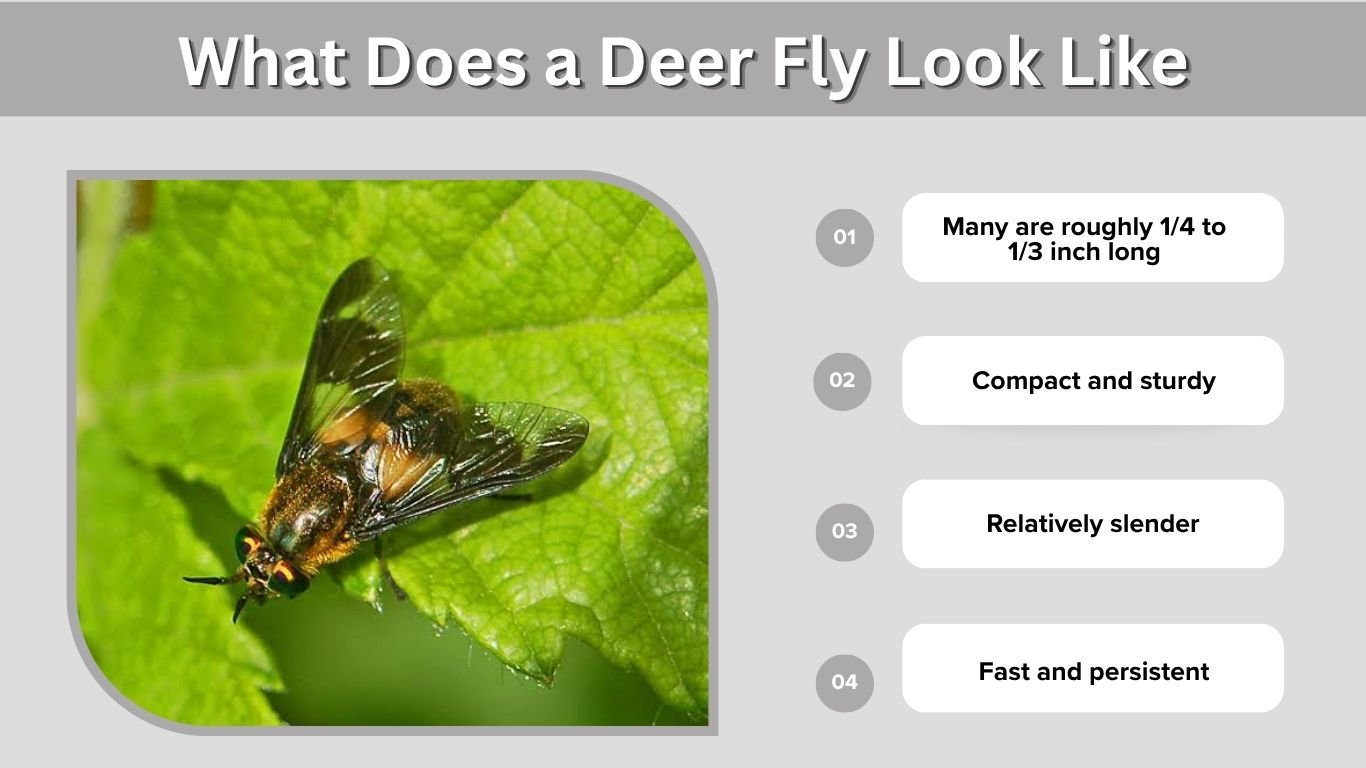
If you are wondering what a deer fly looks like, look for a small to medium-sized fly with large colorful eyes, a sturdy body, and distinctive dark markings across otherwise clear wings. Deer flies belong mainly to the genus Chrysops and are closely related to horse flies. They are fast daytime flyers commonly found around wetlands, ponds, streams, and wooded areas. Female deer flies can deliver painful bites to people and animals. This guide explains deer fly identification, bite appearance, behavior, habitat, and how to distinguish them from similar flies.
What Does a Deer Fly Look Like?
Deer flies are relatively robust flies, but they are usually smaller than horse flies. Many species are gray, brown, yellowish, or patterned, with dark bands or patches across their wings. Their most noticeable feature is often their large compound eyes, which can display striking green, blue, yellowish, or purple coloration.
Deer Fly Identification
Common characteristics include:
- Size: Many are roughly 1/4 to 1/3 inch long
- Body: Compact and sturdy
- Color: Brown, gray, yellow, black, or combinations
- Eyes: Very large and often brightly colored
- Wings: Usually clear with distinctive dark bands or patches
- Antennae: Relatively slender
- Legs: Six, usually dark or yellowish
- Flight: Fast and persistent
- Activity: Primarily active during daylight
Wing markings are particularly useful because deer flies typically have more obvious dark wing patterns than many horse flies.
What Do Deer Flies Look Like Up Close?
At close range, a deer fly has a broad head dominated by its compound eyes. Its body appears more solid than that of a mosquito, while the wings extend over or beside the abdomen when resting. Females also possess specialized cutting mouthparts used for blood feeding.
Deer Fly Eyes and Wings
The eyes may be one of the first features you notice. Depending on the species and lighting, they can appear metallic green, blue, yellow-green, or patterned with colored bands.
The wings provide another useful clue. Many deer flies have transparent wings crossed by dark brown or black bands and patches, giving them a noticeably patterned appearance while resting.
Male vs. Female Deer Fly
Male and female deer flies may look similar at first, but their feeding behavior differs significantly. Females take blood meals, whereas males feed on plant-derived sugars such as nectar, sap, or honeydew and do not bite for blood.
Deer Fly vs. Horse Fly Appearance
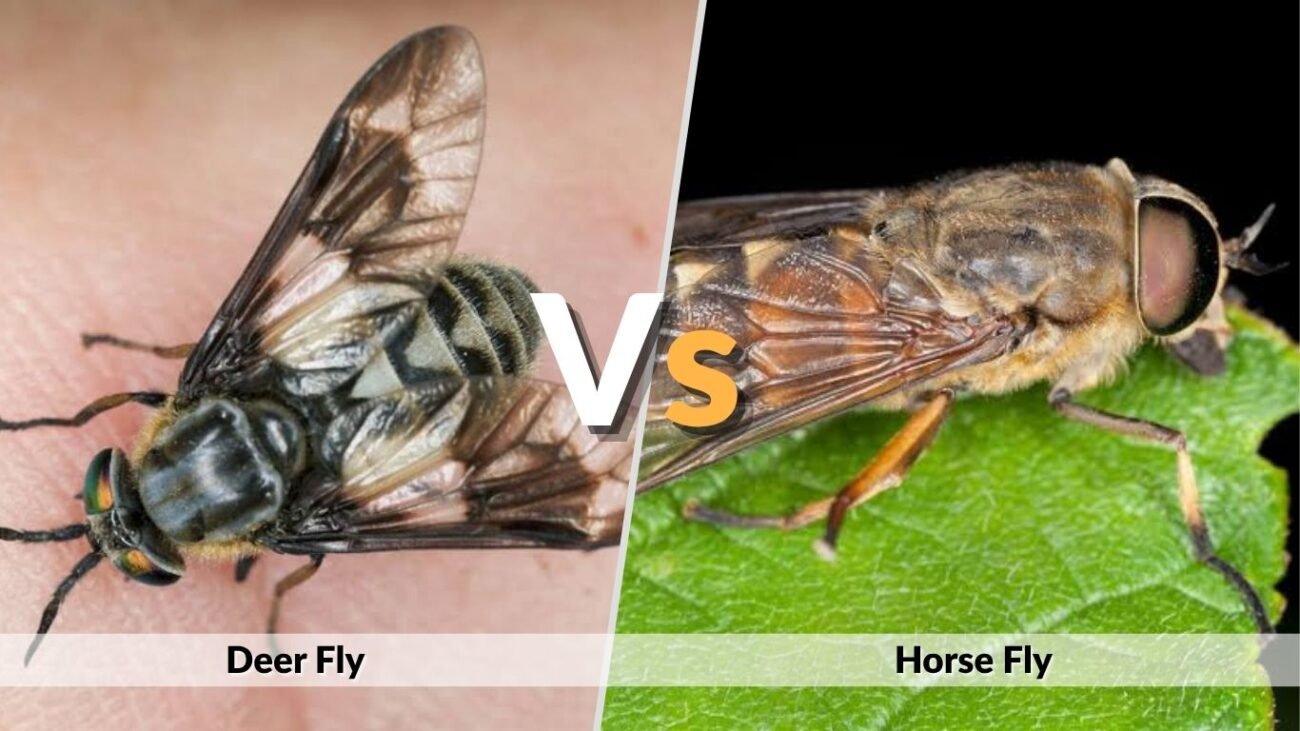
Deer flies and horse flies belong to the same family, Tabanidae, so confusing them is easy. Size and wing pattern are two of the most useful differences.
Main Identification Differences
| Feature | Deer Fly | Horse Fly |
| Typical size | Smaller | Usually larger |
| Body | Compact | Robust and often heavy-bodied |
| Wings | Often dark-patterned | Often clear or uniformly cloudy |
| Eyes | Large and colorful | Large and often colorful |
| Human biting | Common among females | Varies by species |
| Common genus | Chrysops | Tabanus, Hybomitra |
Purdue Extension notes that nearly all deer flies are around 0.25–0.33 inches long, while many horse flies range from about 0.5 to 1.25 inches.
What Does a Deer Fly Bite Look Like?
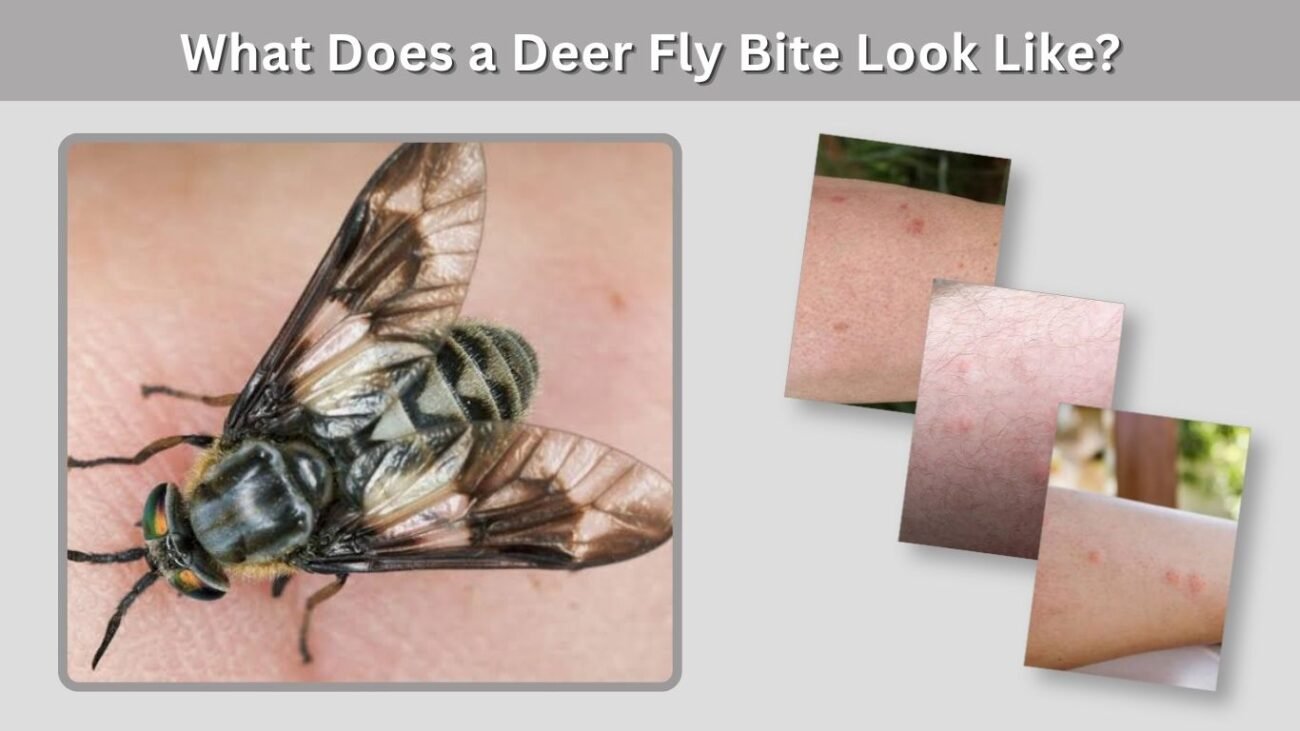
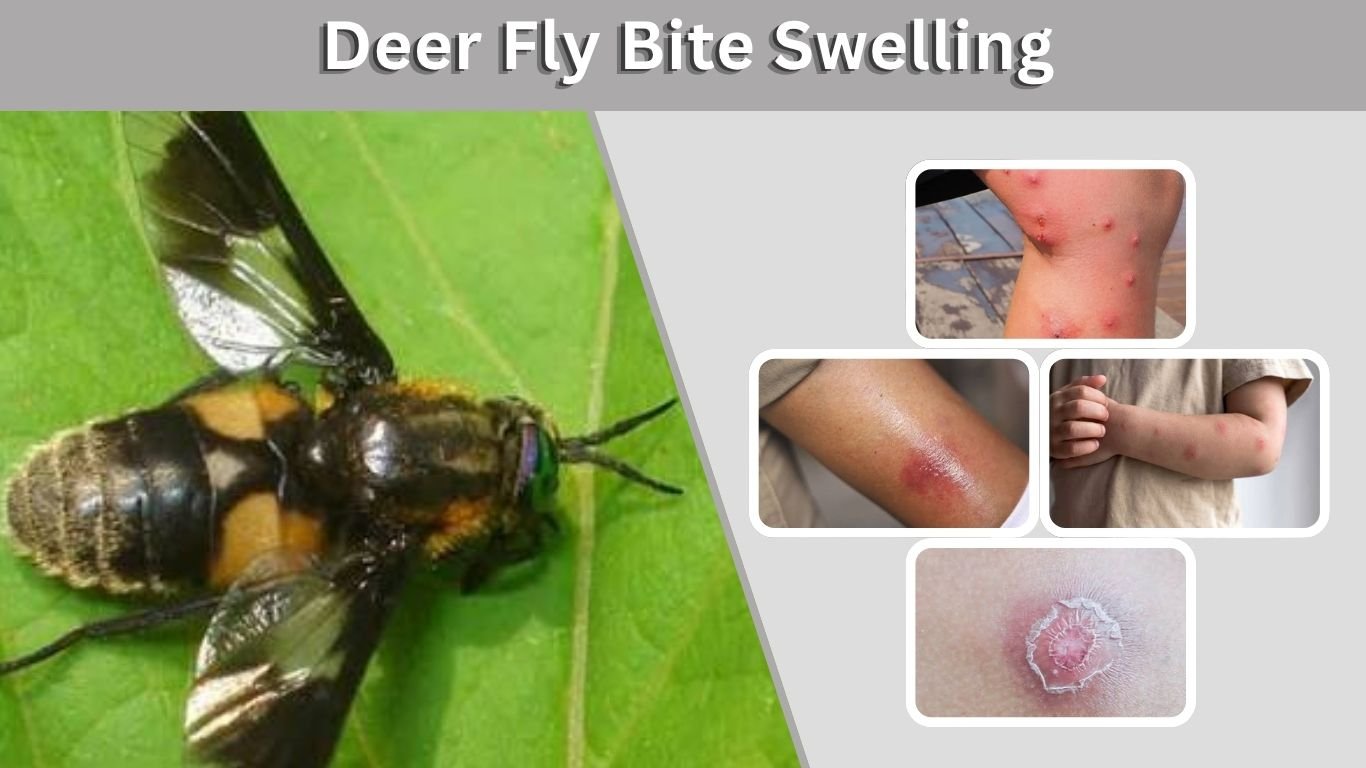
A deer fly bite may initially appear as a small red, irritated area and can develop into a raised welt. Minor bleeding can sometimes occur because females cut the skin rather than piercing it with a mosquito-like feeding tube.
Common Deer Fly Bite Appearance
A bite may involve:
- Redness
- Localized swelling
- Raised welt
- Small central bite mark
- Itching
- Tenderness
- Minor bleeding immediately after the bite
Reactions vary among people, so not every deer fly bite looks identical.
What Does a Deer Fly Bite Feel Like?
Deer fly bites are often immediately painful. The female’s mouthparts contain cutting structures that lacerate the skin, allowing blood to collect at the surface before the fly feeds. This feeding method explains why a deer fly bite can feel sharper and more noticeable than a mosquito bite.
Why Do Deer Flies Bite People?
Only female deer flies take blood meals. Blood provides nutrients needed for egg development in many species. Males instead obtain their energy from nectar, plant sap, honeydew, and other sugar sources.
Why Do Deer Flies Like Me?
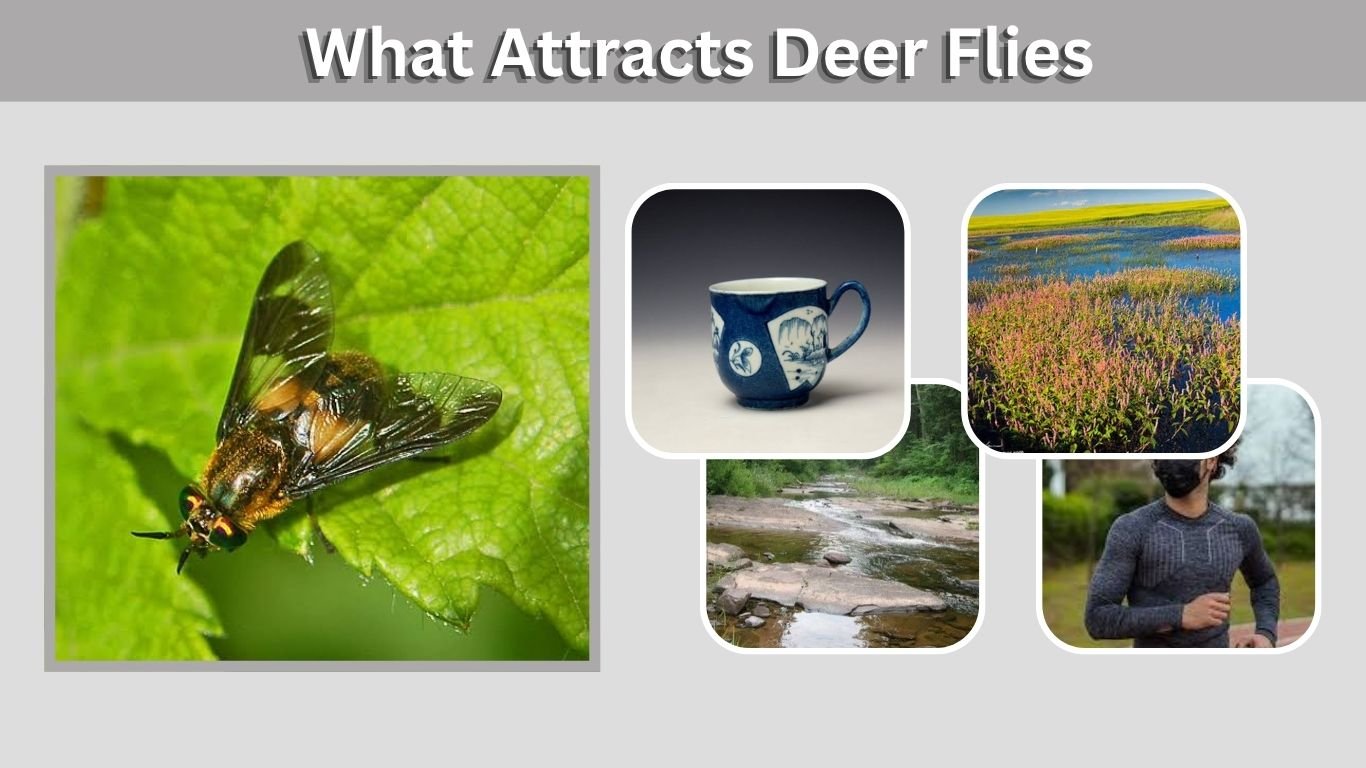
Female deer flies use several cues to locate potential hosts. These include carbon dioxide, movement, body size, shape, and visual contrast. Dark colors can also act as visual attractants once the insect is close to a host.
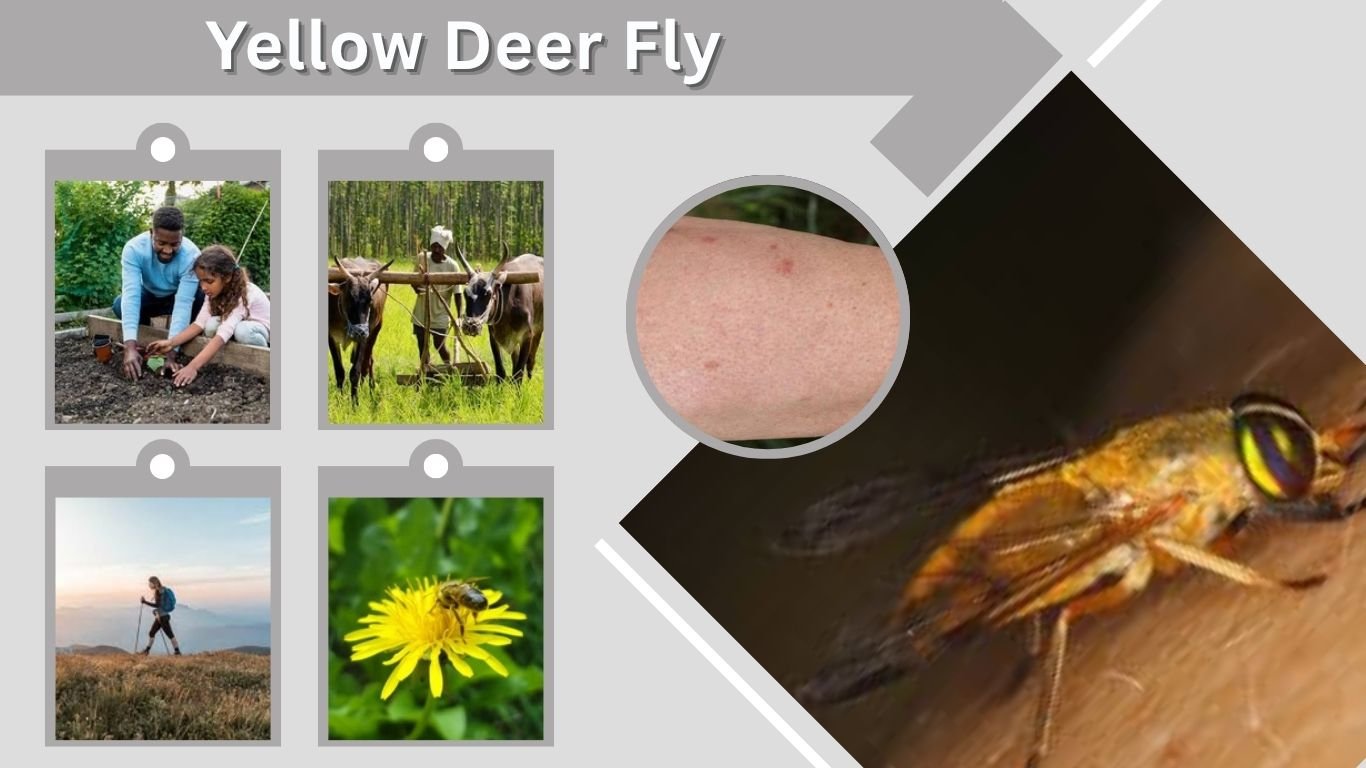
This is why a person walking, hiking, gardening, or working outdoors may suddenly attract a persistent deer fly.
Do Deer Flies Prefer Sun or Shade?
Deer flies are primarily daytime insects and may be encountered in sunny openings as well as vegetation around wet habitats. When they are not actively feeding or mating, adults can rest on shrubbery and tall grasses.
When Are Deer Flies Active?
Adults are most noticeable during warm portions of the year, although the exact season depends on species and region.
Unlike many mosquitoes, deer flies do not depend on nighttime conditions to search for hosts. Their excellent vision helps them locate moving animals during daylight.
Where Do Deer Flies Live?
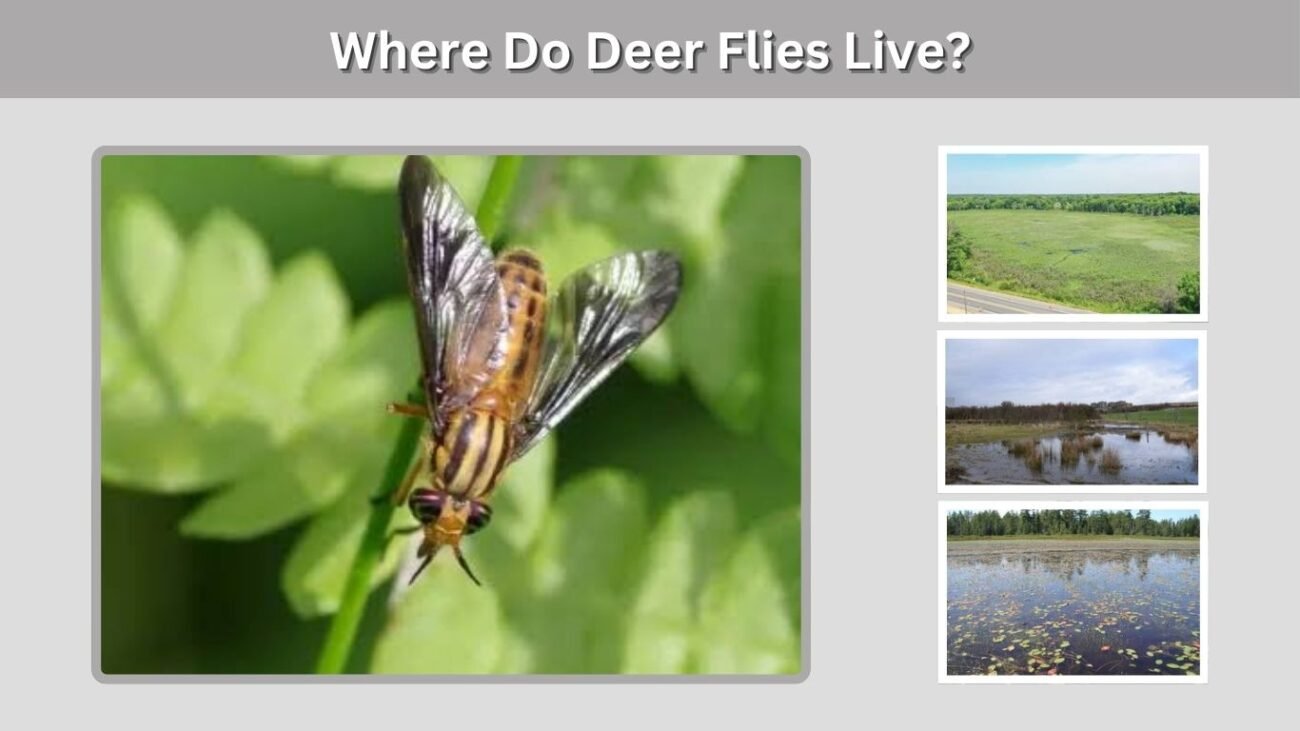
Deer flies are closely associated with wet environments because their immature stages commonly develop in aquatic or saturated habitats.
Adults may move away from these locations while searching for hosts, but wetlands remain important to their life cycle.
Common Deer Fly Habitats
They may occur around:
- Ponds
- Marshes
- Streams
- Wetlands
- Swamps
- Wet woodland edges
- Tall grasses
- Shrub-covered areas
Females commonly place eggs on vegetation near water, and newly hatched larvae drop into water or saturated soil to continue development.
What Do Baby Deer Flies Look Like?
A “baby deer fly” does not look like a miniature adult.
Deer flies undergo complete metamorphosis, progressing through egg, larva, pupa, and adult stages. Their immature larvae are elongated and live in wet or aquatic environments rather than flying around vegetation.
Deer Fly Life Cycle
The basic stages are:
- Egg – Deposited on vegetation near wet habitats.
- Larva – Develops in water, mud, or saturated material.
- Pupa – The final transformation occurs before adulthood.
- Adult – Emerges as a winged deer fly.
Most species have seasonal life cycles, although development varies considerably among species and climates.
Deer Fly Bite vs. Mosquito Bite
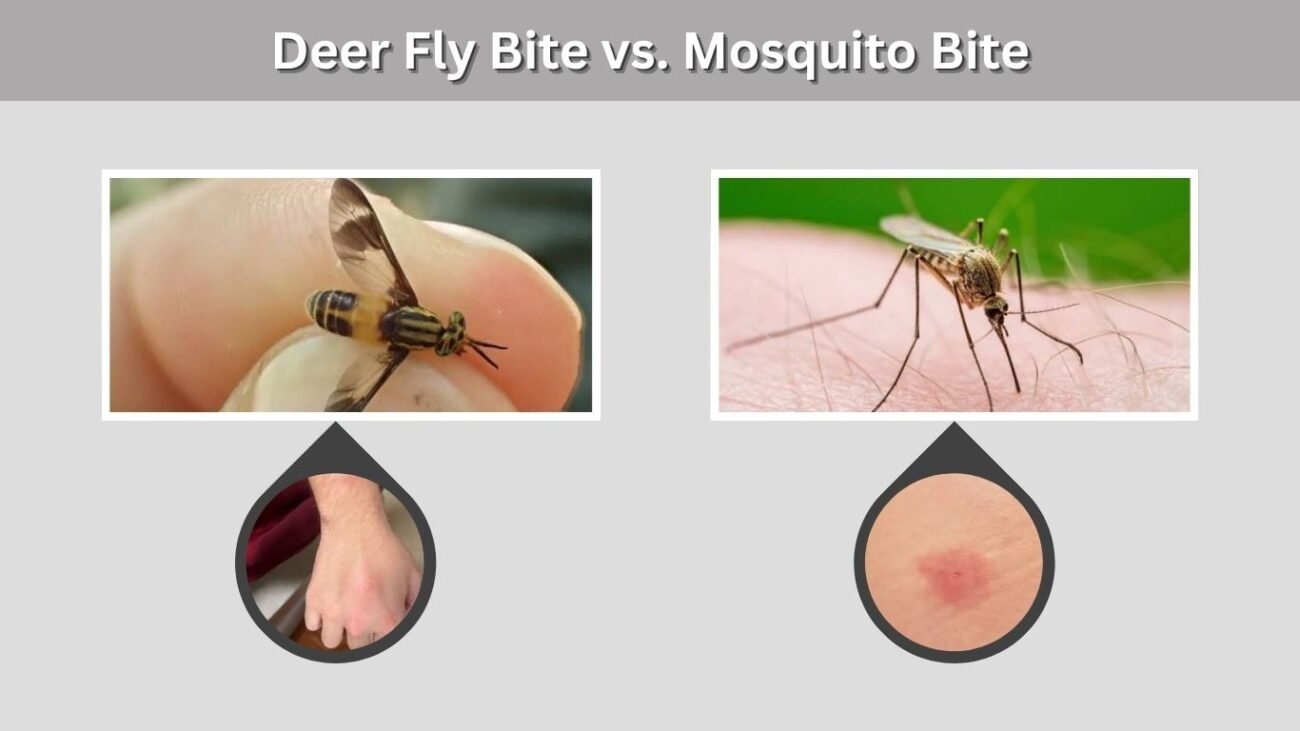
Both can produce redness and itching, but deer fly bites tend to be more immediately painful because the insect cuts the skin.
Key Differences
A mosquito usually leaves a relatively small itchy bump. A deer fly bite may be more painful at the moment of feeding, with a larger irritated area, swelling, or a visible small wound.
However, bite appearance alone is not always enough to determine which insect caused it.
Are Deer Fly Bites Dangerous?
Most deer fly bites are primarily painful local injuries. However, deer flies can transmit tularemia in some areas. CDC specifically identifies deer fly bites as one possible route of infection and notes documented transmission by Chrysops species in the western United States.
When to Seek Medical Attention
Get medical care if you develop concerning symptoms following a suspected deer fly bite, particularly fever, a persistent skin ulcer, or swollen lymph nodes. CDC notes that ulceroglandular tularemia can produce an ulcer at the entry site together with swollen regional lymph glands.
For a typical uncomplicated bite, keep the area clean and avoid excessive scratching.
Deer Fly vs. House Fly
A deer fly can also be confused with an ordinary house fly, but there are important differences.
How to Tell Them Apart
Deer flies generally have large colorful eyes and dark-patterned wings, while house flies have gray bodies and do not have the characteristic deer fly wing bands.
More importantly, house flies do not bite humans, whereas female deer flies are aggressive blood feeders.
Quick Deer Fly Identification Guide
If an unknown fly is circling your head outdoors, use several characteristics together rather than relying on color alone.
Look for These Signs
It may be a deer fly if it:
- Has dark patches or bands across its wings
- Has unusually large colorful eyes
- Is approximately 1/4–1/3 inch long
- Flies aggressively around you outdoors
- Is active during daylight
- Occurs near wetlands or wooded areas
- Delivers an immediately painful bite
These combined characteristics provide a much stronger identification than any single feature.
FAQs
What Color Is a Deer Fly?
Deer fly coloration varies by species. Many are brown, gray, yellowish, or patterned with darker areas. Their eyes can be especially colorful, sometimes appearing green, blue, purple, or yellowish. Many species also have distinctive dark bands or patches across their otherwise clear wings.
How Big Is a Deer Fly?
Deer flies are generally smaller than horse flies. Many species measure approximately 1/4 to 1/3 inch in length. Their broad heads, large compound eyes, sturdy bodies, and patterned wings can make them look larger than their actual body length.
What Do Deer Fly Bites Look Like?
A deer fly bite may appear as a red, swollen, tender welt with a small central wound. Minor bleeding can sometimes occur immediately because female deer flies cut the skin while feeding. The exact reaction differs from person to person.
What Does a Deer Fly Bite Feel Like?
The bite often feels sharp and painful immediately. Female deer flies use cutting mouthparts that lacerate the skin and produce a small pool of blood from which they feed. Itching, soreness, or swelling may continue afterward.
Why Do Deer Flies Keep Flying Around My Head?
Female deer flies commonly attack moving hosts and often target the head and shoulders. They locate hosts using cues that include movement, carbon dioxide, body shape, and visual contrast, which can make them persistent around people walking outdoors.