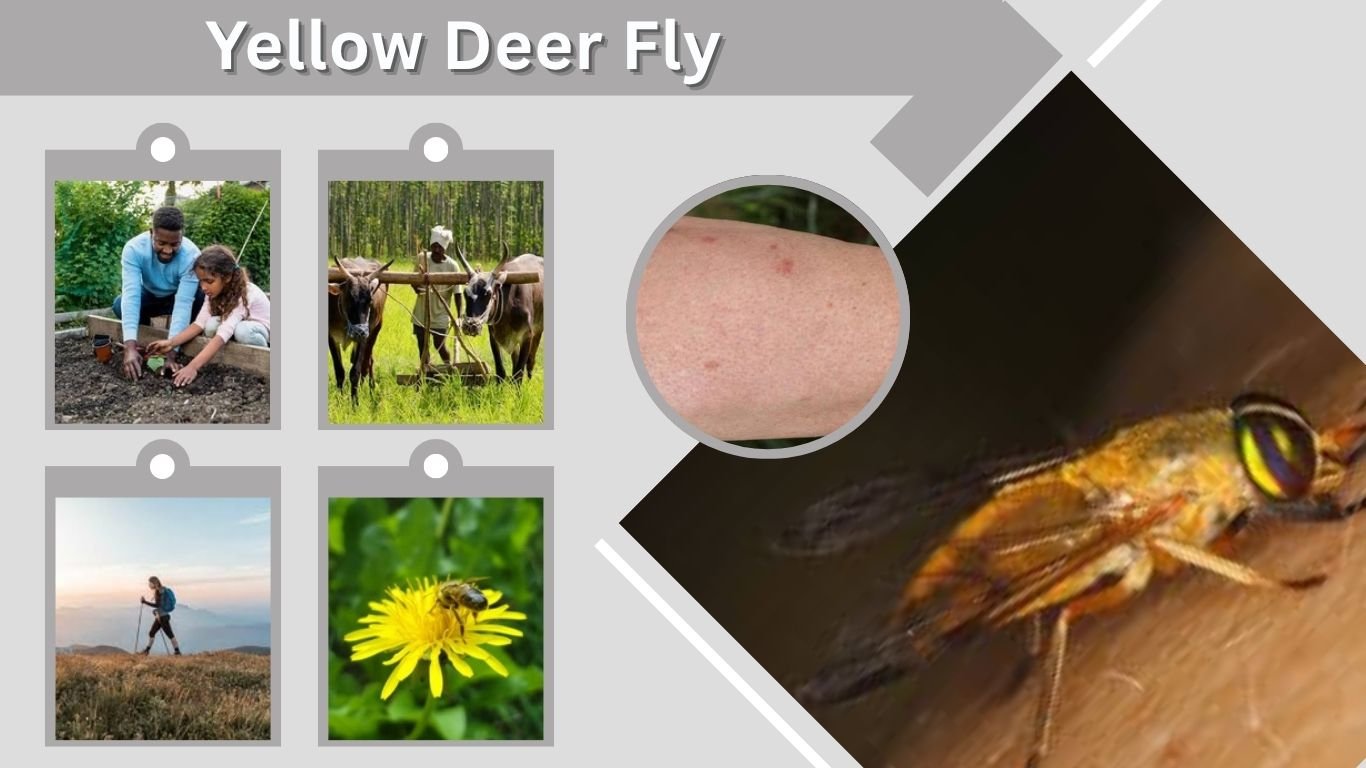
The yellow deer fly is a biting fly commonly associated with warm, humid environments, wetlands, wooded areas, and places where people or animals spend time outdoors. The terms “yellow fly” and “deer fly” are sometimes used interchangeably, but they do not always describe the same species. Both belong to the horse and deer fly family, Tabanidae, and females can deliver painful bites while seeking blood. Understanding their appearance, bite symptoms, habitat, and differences can make identification easier and help you reduce encounters.
What Is a Yellow Deer Fly?
“Yellow deer fly” is an informal description that may refer to yellowish members of the deer fly group or to the insect commonly called the yellow fly, Diachlorus ferrugatus. Deer flies generally belong to the genus Chrysops, whereas D. ferrugatus belongs to a different genus within the same family. This explains why these insects can look and behave similarly without being exactly the same species.
Yellow Deer Fly Identification
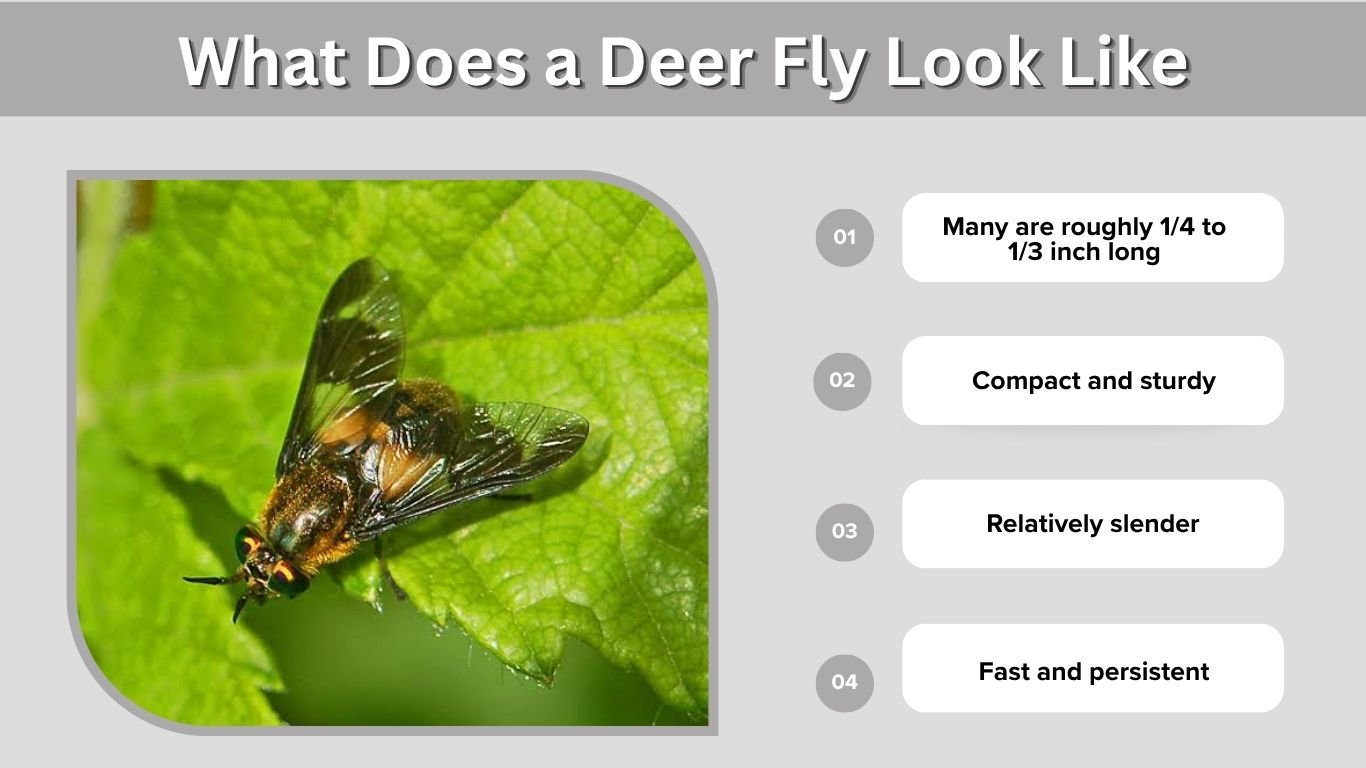
Typical features to look for include:
- Yellow, yellow-brown, or dark patterned body
- Large, colorful compound eyes
- One pair of functional wings
- Dark or brown markings on the wings in many deer flies
- Strong, fast flight
- Short antennae
- Cutting mouthparts in biting females
- Usually active during daylight
The Florida yellow fly, Diachlorus ferrugatus, is about 3/8 inch long and predominantly yellow, with striking blue-green eyes crossed by purple bands. Its wings are mostly clear but have distinctive darker markings.
Yellow Fly vs. Deer Fly
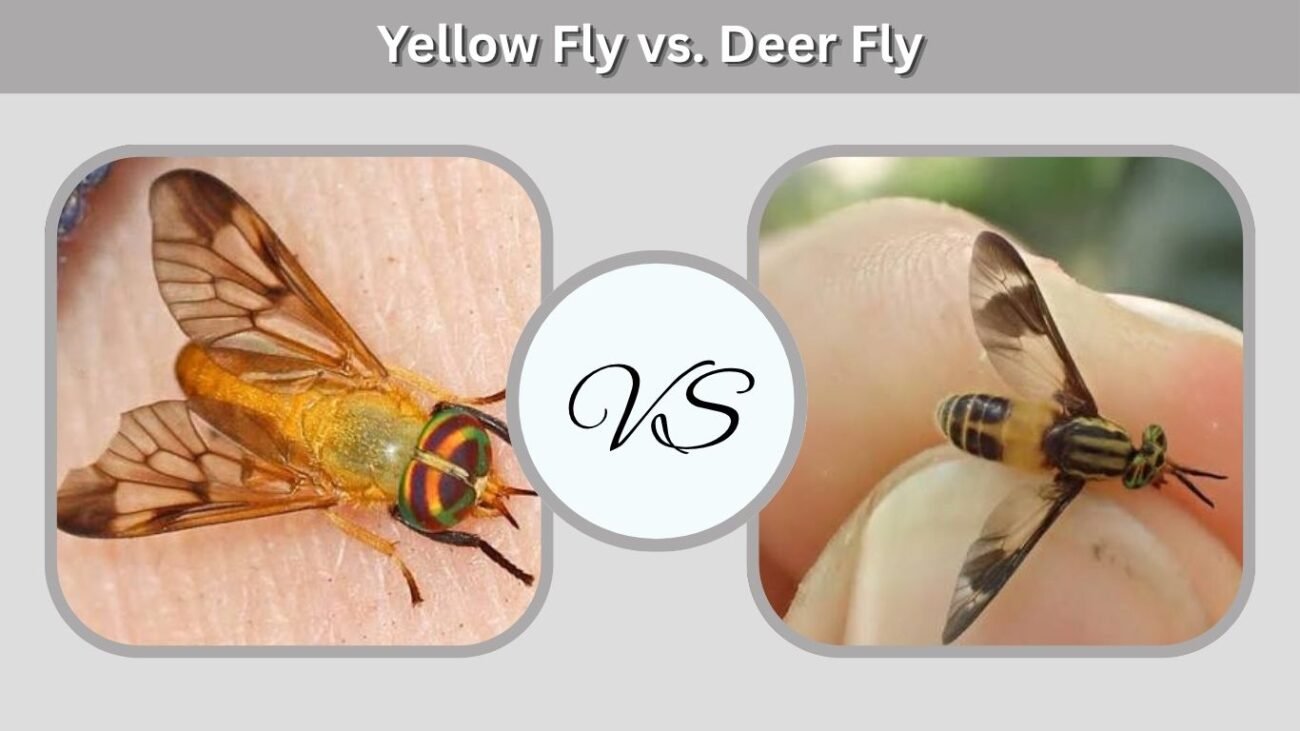
Yellow flies and deer flies are closely related, which is why distinguishing them can be confusing. Both belong to Tabanidae, both have large eyes, and females of both groups may seek blood meals. However, “deer fly” commonly refers to Chrysops species, while the well-known yellow fly is Diachlorus ferrugatus.
Are Yellow Flies and Deer Flies the Same?
Not exactly.
| Feature | Yellow Fly | Deer Fly |
| Common example | Diachlorus ferrugatus | Chrysops species |
| Family | Tabanidae | Tabanidae |
| Typical color | Predominantly yellow | Variable, often yellow/brown/dark |
| Wings | Clear with darker areas | Often patterned with dark patches |
| Female bites | Yes | Yes |
| Male feeding | Primarily plant sugars | Primarily plant sugars |
| Main concern | Painful bites | Painful bites |
So, a yellow fly is closely related to deer flies, but calling every yellow fly a deer fly is not technically accurate.
Yellow Deer Fly Bite
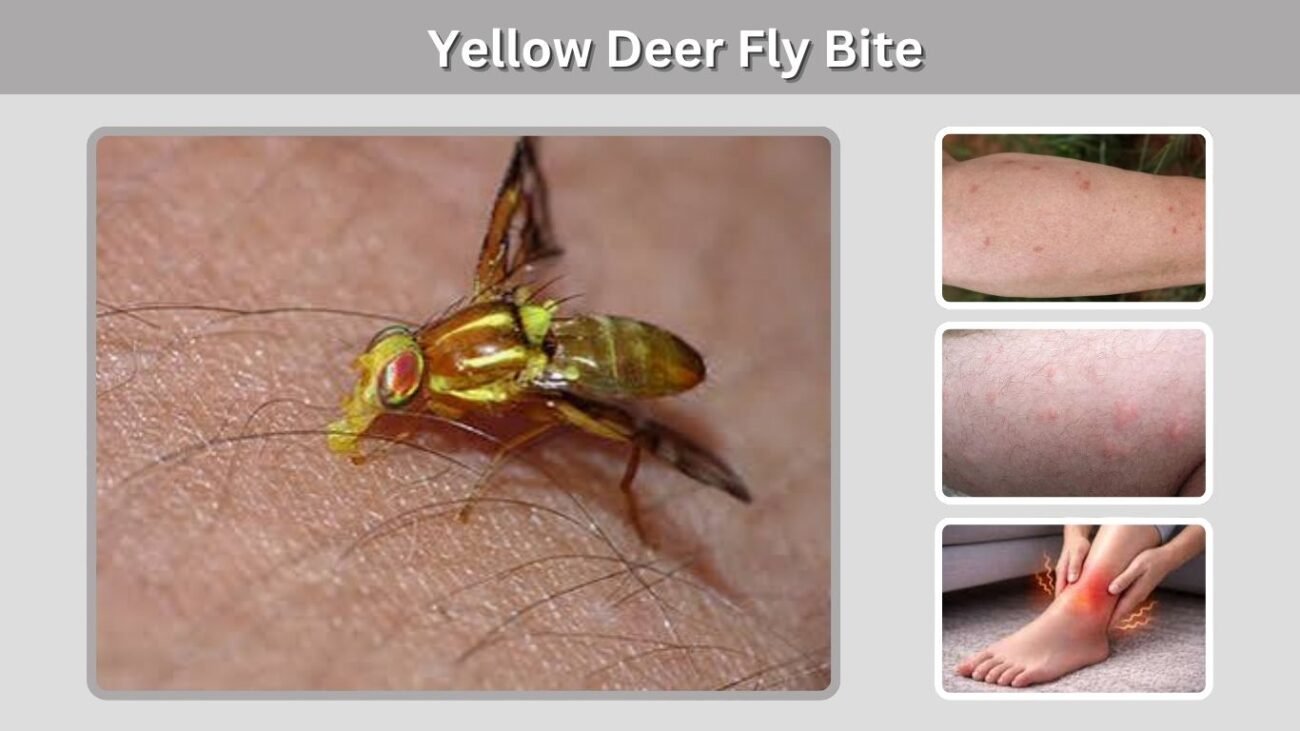
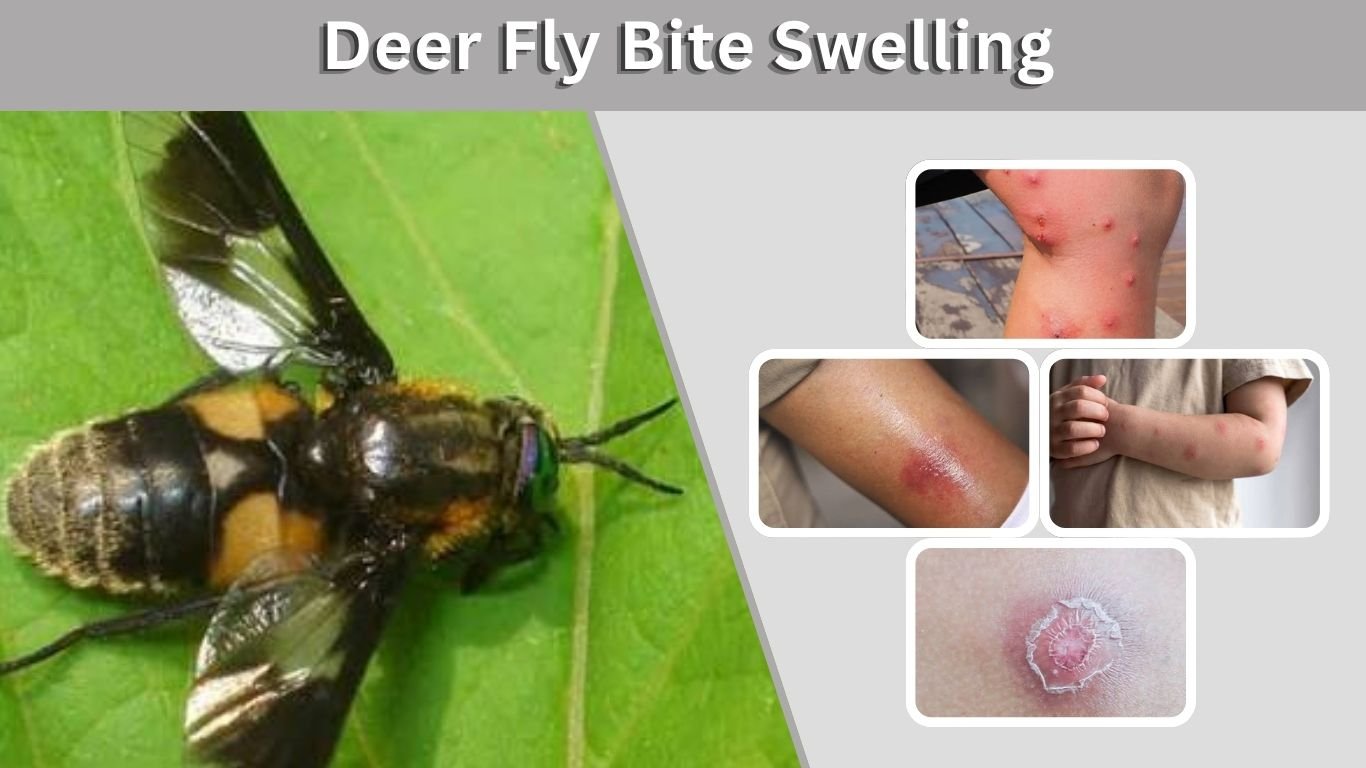
A yellow deer fly bite can be surprisingly painful. Unlike mosquitoes, which penetrate the skin with slender mouthparts, deer and horse flies cut the skin and feed on blood that collects around the wound. This feeding method can cause immediate irritation and noticeable soreness.
What Does a Yellow Deer Fly Bite Feel Like?
Common reactions can include:
- Sudden sharp pain
- Redness
- Local swelling
- Itching
- Tenderness
- A visible bite mark
- Minor bleeding immediately after the bite
Most uncomplicated insect-bite reactions remain localized, although individual reactions vary.
Why Are Their Bites So Painful?
Female tabanid flies use cutting mouthparts to create a wound rather than quietly inserting a fine feeding tube. Blood then flows from the damaged tissue and is consumed by the fly. This relatively traumatic feeding method explains why deer fly and yellow fly bites are often immediately noticeable.
Yellow Deer Fly Bite Treatment
Most minor bites can be managed with basic wound care and measures aimed at reducing irritation. Avoid excessive scratching because damaged skin can become secondarily infected.
What to Do After a Bite
For a routine bite:
- Wash the area gently with soap and water.
- Apply a cold compress to help with swelling and discomfort.
- Avoid scratching or repeatedly touching the wound.
- Monitor the area for unusual or worsening symptoms.
- Seek medical advice if you develop significant swelling, signs of infection, fever, or other concerning symptoms.
Deer flies can transmit tularemia in some regions of the United States, although this is uncommon. CDC advises telling a healthcare professional about possible deer fly exposure if compatible illness develops.
Where Do Yellow Deer Flies Live?
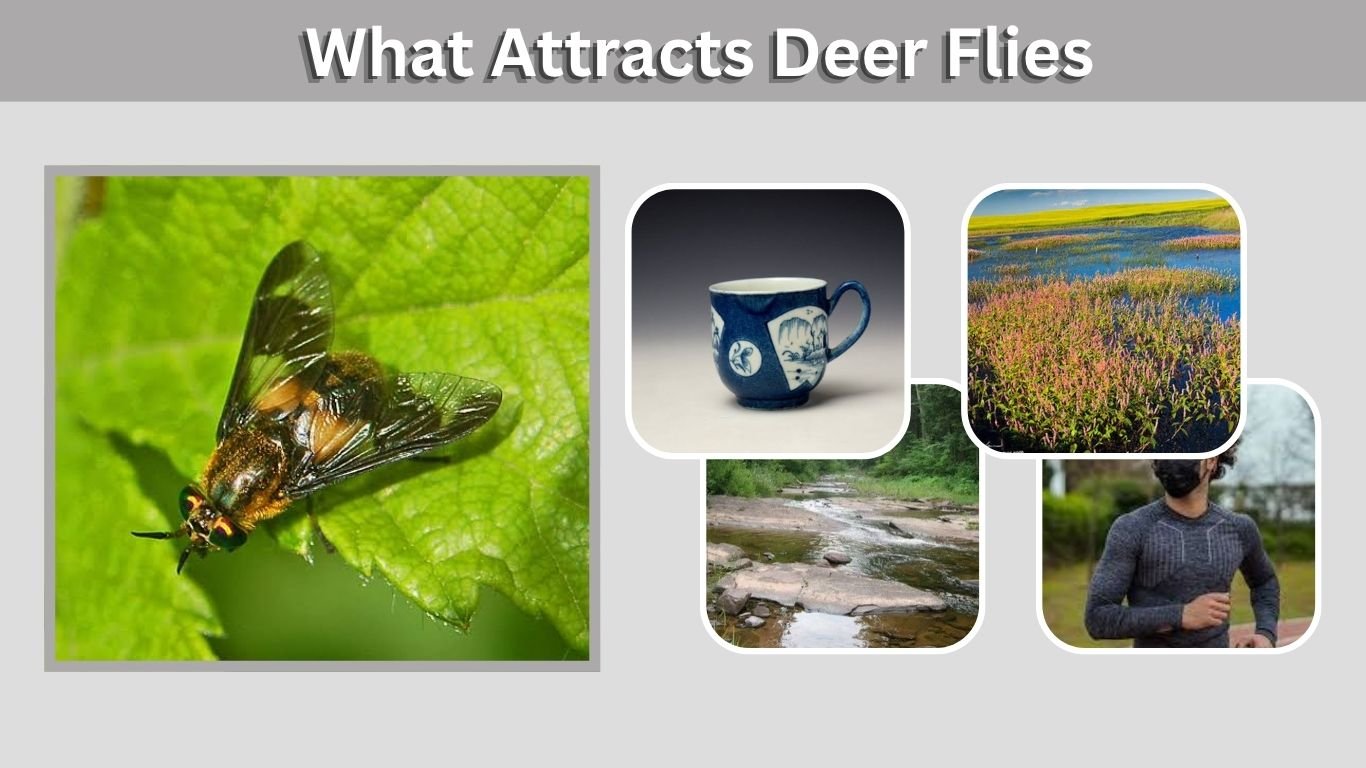
Deer flies and related tabanid flies are commonly associated with moist environments. Their immature stages may develop in mud or wet soils around streams, ponds, marshes, roadside ditches, and other damp habitats. Adults can travel away from breeding sites in search of food or hosts.
Common Habitats
You may encounter them around:
- Marshes
- Swamps
- Pond edges
- Streams
- Wet woodlands
- Coastal wetlands
- Shaded trails
- Fields near wet areas
- Livestock areas
Warm weather generally brings greater adult activity.
What Do Yellow Deer Flies Eat?
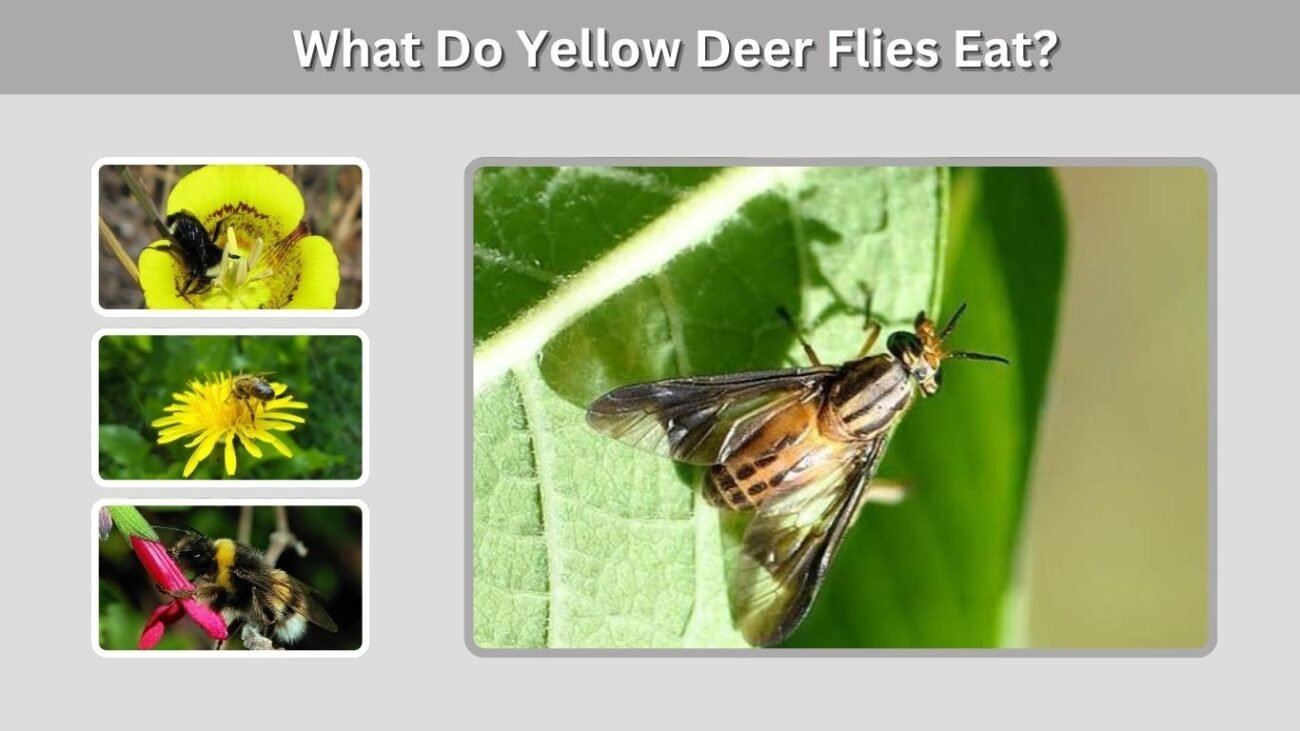
Female deer flies require blood meals for reproduction, whereas males feed primarily on plant-derived sugars such as nectar. Females may bite humans and various mammals when searching for blood.
Common Hosts
Biting females may target:
- Humans
- Deer
- Horses
- Cattle
- Other mammals
Their strong flight allows them to actively approach moving hosts rather than simply waiting for accidental contact.
How to Get Rid of Yellow Deer Flies
Yellow deer flies can be difficult to eliminate because adults are strong flyers and may travel from breeding areas outside your property. Broad treatment of a yard usually provides limited long-term control compared with preventing bites and reducing exposure.
Yellow Deer Fly Control
Helpful approaches include:
- Wear long sleeves and long pants in heavily infested locations.
- Use an appropriate EPA-registered insect repellent on exposed skin.
- Avoid highly active areas when fly populations are severe.
- Use physical barriers such as screens where practical.
- Reduce unnecessary time near known breeding habitat during peak activity.
- Use traps as a supplemental measure rather than expecting complete elimination.
CDC recommends EPA-registered repellents containing active ingredients such as DEET, picaridin, IR3535, oil of lemon eucalyptus/PMD, or 2-undecanone when used according to label directions.
Yellow Deer Fly Repellent
Repellent can be particularly useful when hiking, gardening, fishing, camping, or working around wet habitats where biting flies are common.
How to Reduce Bites
Wear clothing that covers exposed skin and apply a properly labeled insect repellent according to the manufacturer’s instructions. Permethrin-treated clothing and gear may provide additional protection, but permethrin products intended for clothing should not be applied directly to skin.
Yellow Deer Fly Trap
Traps are sometimes used to catch deer flies and related biting flies. Because these insects locate hosts partly through visual and movement cues, certain traps use dark moving objects or contrasting shapes to attract them.
Do Deer Fly Traps Work?
Traps may reduce the number of flies in a small area, but they are unlikely to eliminate an entire population.
Adults can travel into a property from wetlands or other breeding areas, meaning new flies may continue arriving even after many individuals have been captured.
For this reason, traps work best as one component of a broader bite-prevention strategy.
Yellow Fly vs. Yellow Jacket
A yellow deer fly should not be confused with a yellow jacket.
Yellow jackets are wasps, while yellow flies and deer flies belong to the fly order Diptera.
Major Differences
| Feature | Yellow Deer Fly | Yellow Jacket |
| Insect type | Fly | Wasp |
| Functional wings | One pair | Two pairs |
| Main defense | Biting/escape | Stinging |
| Female feeding | May take blood | Does not take blood |
| Body shape | Fly-like | Narrow-waisted wasp |
| Nest | No social wasp nest | Social colonies build nests |
A deer fly bite results from feeding, whereas a yellow jacket sting is primarily defensive.
Why Are Yellow Deer Flies Attracted to People?
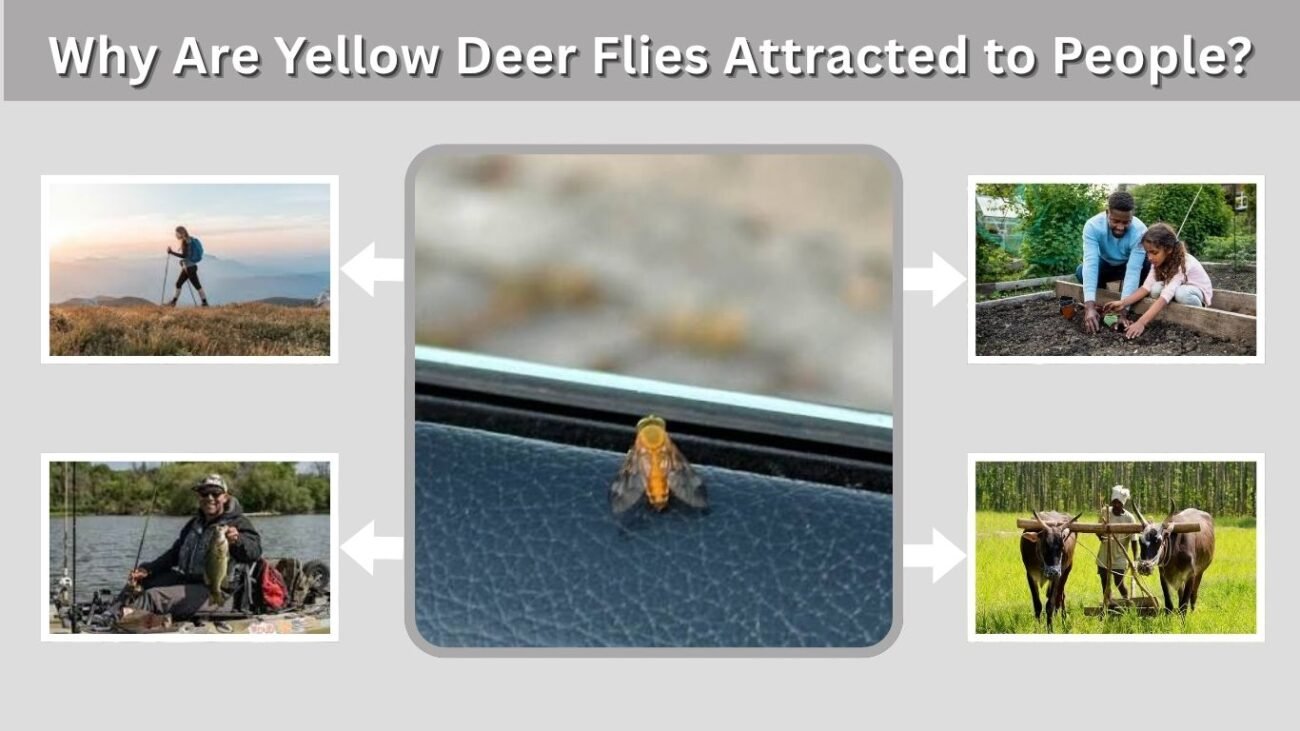
Female biting flies need blood to support egg production and actively search for suitable hosts.
Outdoor activity around their natural habitat increases the chance of encountering them.
When Are Encounters Most Likely?
People are more likely to notice biting flies while:
- Hiking
- Fishing
- Gardening
- Working around livestock
- Walking near wetlands
- Spending time along wooded trails
- Camping near water
Protective clothing and repellent are particularly useful when entering areas with known biting-fly activity.
Interesting Yellow Deer Fly Facts
Yellow flies and deer flies are more than just irritating outdoor pests. Their unusual eyes, powerful flight, and specialized feeding behavior make them distinctive members of the fly family Tabanidae.
Quick Facts
- Deer flies belong to the family Tabanidae.
- Many deer flies belong to the genus Chrysops.
- The well-known yellow fly is Diachlorus ferrugatus.
- Female yellow flies and deer flies can bite.
- Males generally obtain food from plant sugars.
- Their bites can be immediately painful.
- Deer flies often have patterned wings.
- Immature stages commonly develop in wet habitats.
- Adults are strong and mobile flyers.
- Bite prevention is often easier than population control.
FAQs
Are Deer Flies and Yellow Flies the Same?
No. They are closely related members of the family Tabanidae, but the names do not always refer to the same species. Deer flies commonly belong to Chrysops, while the well-known yellow fly is Diachlorus ferrugatus.
What Is the Difference Between a Yellow Fly and Deer Fly?
The main difference involves classification and appearance. Many deer flies have patterned wings and belong to Chrysops. The yellow fly Diachlorus ferrugatus is predominantly yellow with distinctive blue-green eyes and characteristic wing markings. Females of both can deliver painful bites.
Are Yellow Deer Fly Bites Dangerous?
Most bites mainly cause local pain, redness, itching, or swelling. However, deer flies can transmit tularemia in some areas. Seek medical care for severe allergic symptoms, significant worsening, fever, an unusual ulcer, or other concerning symptoms following a bite.
How Do You Keep Yellow Deer Flies Away?
Protective clothing and EPA-registered insect repellents can reduce bites. Avoiding highly active biting-fly areas can also help. Products containing ingredients such as DEET or picaridin are among the repellents recommended by CDC for preventing insect bites when used as directed.
Why Do Yellow Deer Flies Bite?
Only females require blood meals associated with egg development. Their mouthparts cut the skin and allow them to consume blood from the resulting wound. Males do not take blood meals and primarily obtain nutrition from plant sugars.