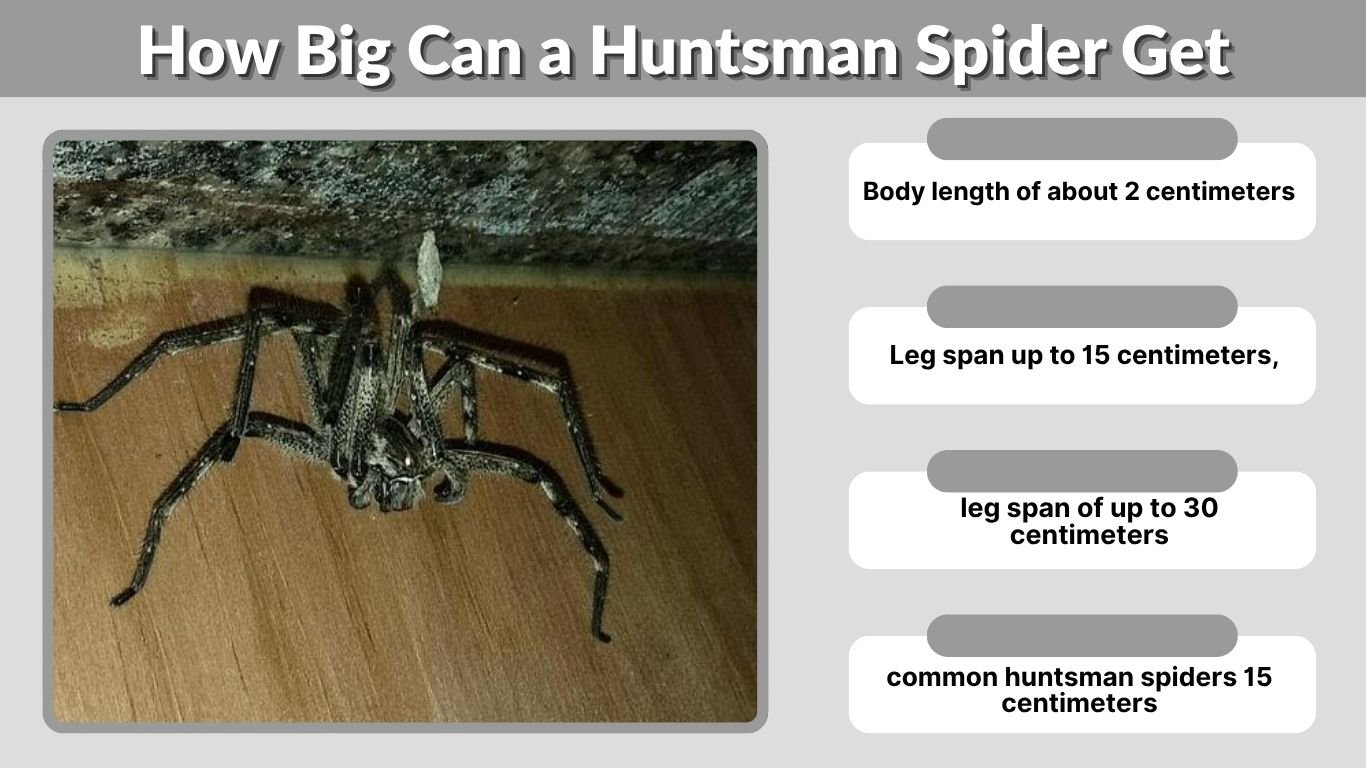
A huntsman spider can get much bigger than many common house spiders, especially because of its long legs. Most common huntsman spiders have a body length of about 2 centimeters and a leg span up to 15 centimeters, or nearly 6 inches. However, the giant huntsman spider can reach a leg span of up to 30 centimeters, or about 12 inches, making it one of the largest spiders in the world by leg span.
How Big Can a Huntsman Spider Get?
Most huntsman spiders look huge because their legs spread sideways like a crab. Their bodies are usually much smaller than their full leg span. A huntsman spider on a wall may look the size of a human hand, but much of that size comes from the long, thin legs.
The Australian Museum lists huntsman spiders with body lengths around 2 centimeters for females and 1.6 centimeters for males, with a leg span up to 15 centimeters. That means many common huntsman spiders are large, but not as gigantic as online photos sometimes make them appear.
| Type of Measurement | Common Huntsman Spider Size |
|---|---|
| Female body length | About 2 cm |
| Male body length | About 1.6 cm |
| Leg span | Up to 15 cm |
| Visual size | Often looks hand-sized |
| Main reason it looks large | Long sideways legs |
Why Do Huntsman Spiders Look So Big?
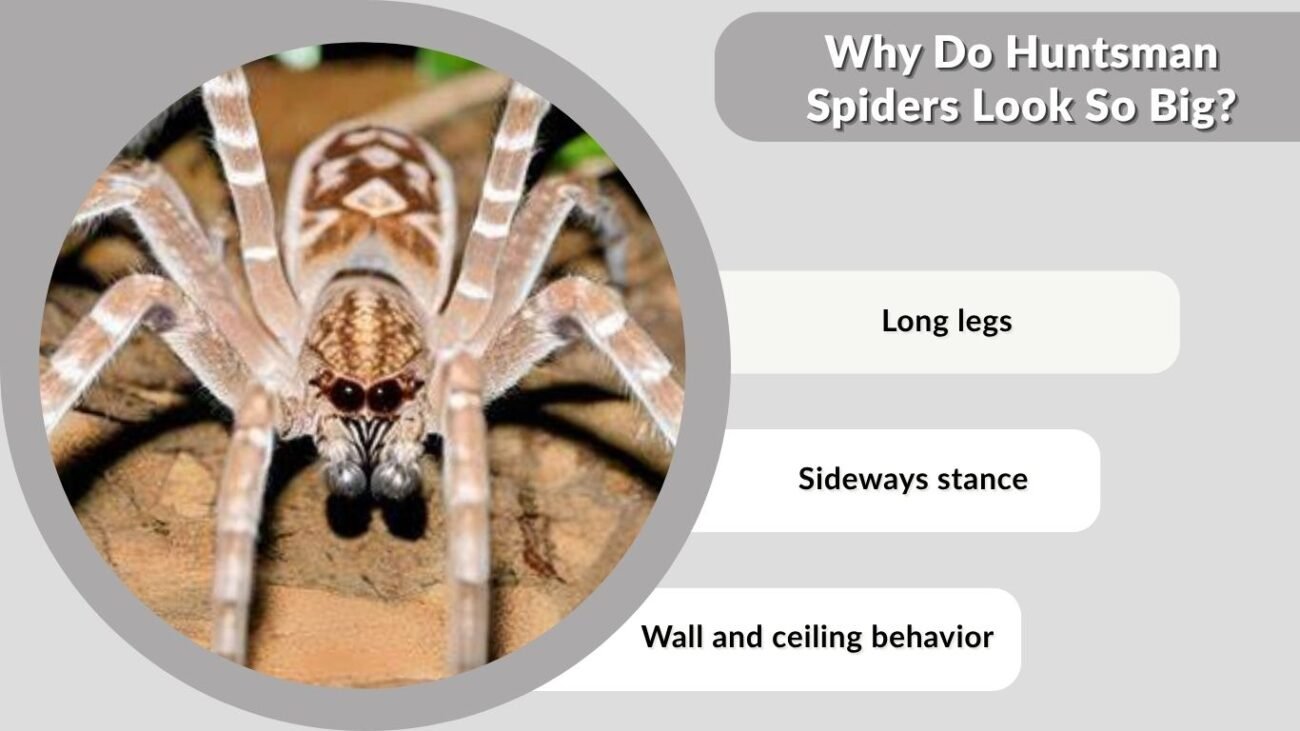
Huntsman spiders look large because their legs are long, spread out, and angled sideways. This gives them a wide, flat shape. Their bodies are not as thick or bulky as tarantulas, but their leg span can make them appear just as frightening to people who dislike spiders.
Their flattened bodies are useful in nature. Many huntsman spiders hide under loose bark, in tree holes, or in narrow rock crevices. The Australian Museum notes that huntsman spiders are adapted to habitats such as peridomestic areas, tree holes, and under bark.
Main Reasons They Appear Huge
- Long legs
Their legs stretch far beyond the body. - Sideways stance
Their crab-like leg position makes them look wider. - Fast movement
A large, fast spider feels more alarming than a slow one. - Wall and ceiling behavior
Seeing one above your head makes it seem bigger. - Online photos
Close-up images can exaggerate their size.
How Big Can a Giant Huntsman Spider Get?
The giant huntsman spider is much larger than an average huntsman. It is often called the world’s largest spider by leg span. Live Science reports that the giant huntsman spider can have a leg span up to 12 inches across. Guinness World Records also lists the giant huntsman spider, Heteropoda maxima, as having a leg span that can grow to 30 centimeters across.
This does not mean every huntsman spider in a home can reach that size. The giant huntsman spider is a specific species, not just a very large house huntsman.
| Spider Type | Approximate Maximum Leg Span |
|---|---|
| Common huntsman spider | Up to 15 cm / nearly 6 inches |
| Giant huntsman spider | Up to 30 cm / about 12 inches |
| Large Australian huntsman types | Often around hand-sized |
| Tarantulas | Often heavier-bodied, but not always wider |
How Big Can a Huntsman Spider Get in Australia?
In Australia, common huntsman spiders can reach impressive sizes, but many are around 15 centimeters across when measured by leg span. The Australian Museum gives a leg span of up to 15 centimeters for huntsman spiders.
Australia also has several large huntsman species. The Queensland Museum describes the giant grey huntsman spider as one of Australia’s largest spider species by leg span and says it is widely distributed through eastern Queensland.
However, the true giant huntsman spider, Heteropoda maxima, is not the same as the common Australian huntsman. It is associated with Laos, not ordinary Australian homes.
Huntsman Spider Size vs Body Size
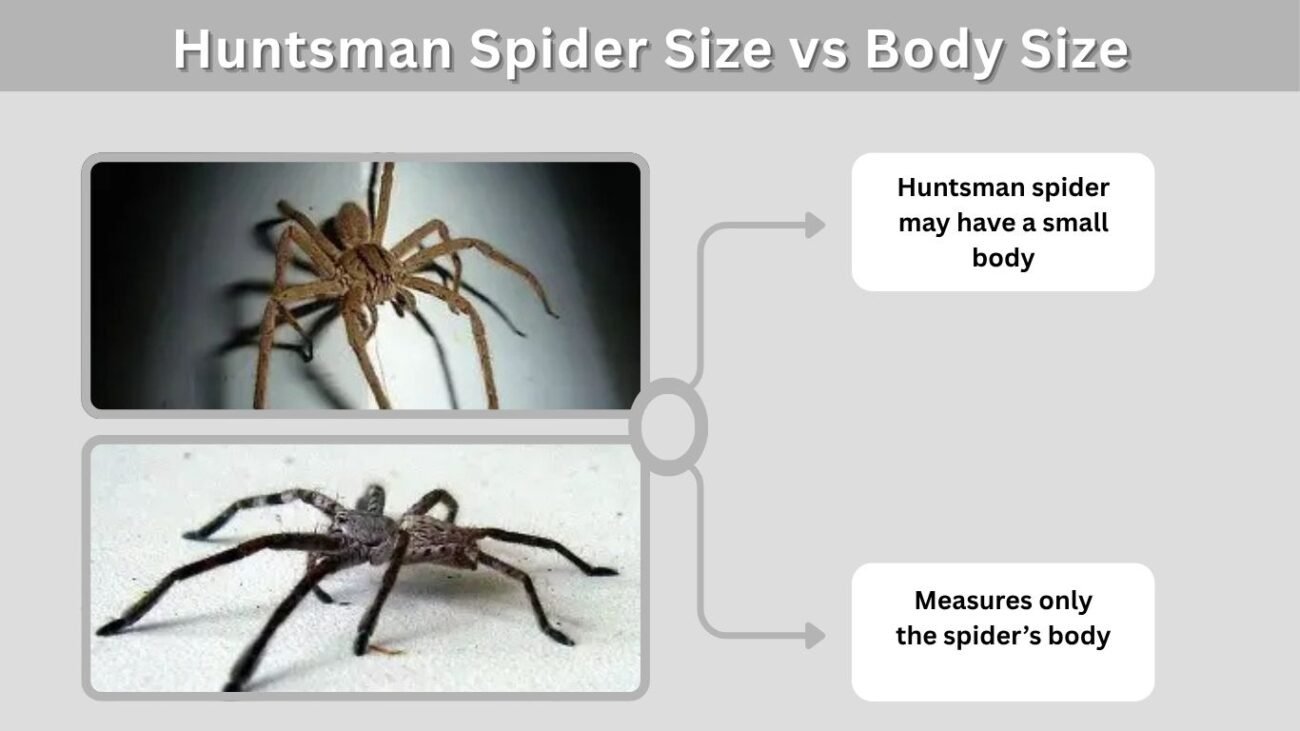
When asking how big a huntsman spider can get, it is important to separate body length from leg span. Body length means the spider’s main body without the legs. Leg span means the distance from the tip of one outstretched leg to the opposite leg.
A huntsman spider may have a small body but still look huge because of its legs. This is why people often overestimate the spider’s size when they see one running across a wall.
Body Length vs Leg Span
- Body length: Measures only the spider’s body.
- Leg span: Measures the full width across the legs.
- Visual size: What people notice when the spider is on a wall.
- Actual bulk: Huntsman spiders are often flatter and lighter than they appear.
A tarantula may have a heavier body, while a huntsman may have a wider leg spread. This is why “biggest spider” can mean different things depending on whether you measure weight, body length, or leg span.
Are Bigger Huntsman Spiders More Dangerous?
A bigger huntsman spider is not automatically more dangerous. Huntsman spiders are venomous, but they are not considered dangerous to humans in most cases. The Australian Museum says huntsman spiders are not considered dangerous, although they do have venom and a bite may cause some ill effects. It also notes they are reluctant to bite and usually try to run away.
Their size can make them look terrifying, but they usually use speed to escape rather than attack. A large huntsman spider may bite if trapped, squeezed, or handled, but it does not chase people to bite them.
| Concern | Reality |
|---|---|
| Large size | Mostly due to long legs |
| Venom | Present, but usually not medically serious |
| Aggression | Usually avoids humans |
| Bite risk | Higher if handled or trapped |
| Main danger | Panic, falls, or unsafe removal attempts |
What Happens If You Get Bitten by a Huntsman Spider?
A huntsman spider bite can be painful, but serious effects are uncommon. Symptoms may include local pain, redness, swelling, itching, or mild nausea. Some huntsman groups, such as badge huntsman spiders, may cause stronger local symptoms. The Australian Museum says badge huntsman bites may cause local severe pain and swelling, and sometimes sweating, nausea, and vomiting.
Most bites happen when people try to pick up the spider, press it against skin, or trap it accidentally in clothing, towels, bedding, or shoes.
Possible Bite Symptoms
- Sharp pain
- Redness
- Swelling
- Itching
- Mild nausea
- Sweating
- Local tenderness
- Rare stronger reactions
Medical help is a good idea if symptoms are severe, spreading, or persistent, or if the person has trouble breathing, dizziness, facial swelling, or signs of an allergic reaction.
How to Get Rid of a Huntsman Spider in the House
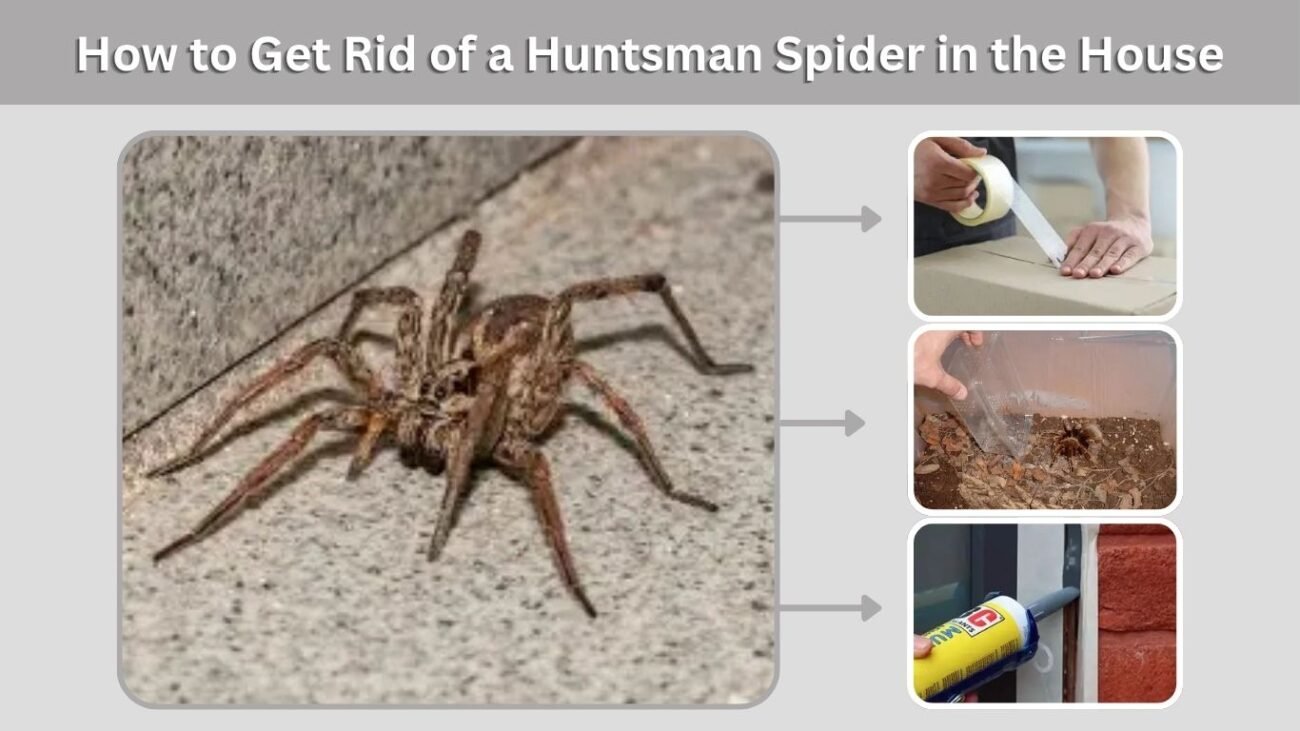
Many people search size questions because they have just found a large huntsman spider indoors. The safest way to remove one is to stay calm and avoid touching it with bare hands.
Huntsman spiders are fast, so sudden movement can make them run unpredictably. Do not try to grab one. Do not hit it while standing on a chair or ladder, because panic can cause injury.
Safe Removal Method
- Place a large container over the spider.
- Slide stiff cardboard underneath.
- Hold the cardboard firmly against the container.
- Carry the spider outside.
- Release it away from doors and windows.
- Seal gaps where it may have entered.
If the spider is too high on a wall or ceiling, wait until it moves lower or call someone comfortable with spider removal. Professional pest control can help if there are repeated sightings.
How to Get a Huntsman Spider Out of Your Car
A huntsman spider in a car can be more dangerous because it may startle the driver. If you see one while driving, pull over safely before trying to deal with it.
Do not swat at it while driving. Do not slam the brakes unless there is an immediate road danger. A calm stop is safer than panicking.
Car Removal Tips
- Park safely.
- Open doors and windows.
- Use a container if the spider is visible.
- Check sun visors, dashboard gaps, and door seals.
- Shake out items stored in the car.
- Avoid pesticide sprays inside the cabin.
- Get help if the spider disappears into the car interior.
Huntsman spiders may enter cars through small gaps, especially in warm areas where they are common around garages, trees, sheds, and outdoor parking spaces.
How to Keep Huntsman Spiders Away
You cannot always prevent huntsman spiders, especially in warm regions, but you can reduce entry points and insect activity around your home.
Prevention Tips
- Seal cracks around doors and windows.
- Repair fly screens.
- Reduce outdoor insects near lights.
- Keep garages and sheds tidy.
- Store boxes off the floor.
- Shake out shoes and towels left outside.
- Trim branches touching the house.
- Check cars parked near trees or sheds.
- Keep clutter away from walls and corners.
Huntsman spiders often enter homes while searching for shelter or prey. Reducing insects can make your home less attractive to them.
Why Online Huntsman Spider Photos Look Enormous
Many viral huntsman spider photos look bigger than the spider really is. Camera angle, close-up shots, shadows, and perspective can make a spider appear massive. A spider photographed near the camera may look much larger than a hand, wall, or door behind it.
This does not mean huntsman spiders are small. They really can be large. But many “monster spider” images online exaggerate the size.
An ordinary huntsman may look huge on a wall because of its wide legs. A giant huntsman spider is genuinely enormous by leg span, but it is not the typical spider found in most houses.
Huntsman Spider Size Compared With Other Spiders
Huntsman spiders are among the largest-looking spiders because of their wide leg span. But they are not always the heaviest spiders.
| Spider | Size Impression | Notes |
|---|---|---|
| Huntsman spider | Very wide | Long legs and flat body |
| Giant huntsman spider | Extremely wide | Up to 30 cm leg span |
| Tarantula | Heavy-bodied | Often thicker and bulkier |
| Wolf spider | Medium to large | Strong ground hunter |
| House spider | Small to medium | Usually much smaller |
| Golden orb-weaver | Large web spider | Long legs and large web |
The giant huntsman is famous for leg span, while some tarantulas are famous for body mass. So the “biggest” spider depends on how size is measured.
FAQs
How big can a huntsman spider get?
A common huntsman spider can reach a leg span of up to about 15 centimeters, or nearly 6 inches. The giant huntsman spider can reach up to 30 centimeters, or about 12 inches, across.
How big can a huntsman spider get in Australia?
Many Australian huntsman spiders can reach around 15 centimeters across by leg span. Some Australian species are very large, but the true giant huntsman spider is from Laos.
How big can a giant huntsman spider get?
The giant huntsman spider can reach a leg span of about 30 centimeters, or 12 inches. It is often described as the largest spider in the world by leg span.
What happens if you get bitten by a huntsman spider?
A bite may cause pain, redness, swelling, itching, or mild nausea. Serious effects are uncommon, but medical help is needed if symptoms are severe or persistent.
How do you get rid of a huntsman spider?
Use a container and cardboard to catch and release it outside. Avoid handling it with bare hands, and do not panic if it runs quickly.