





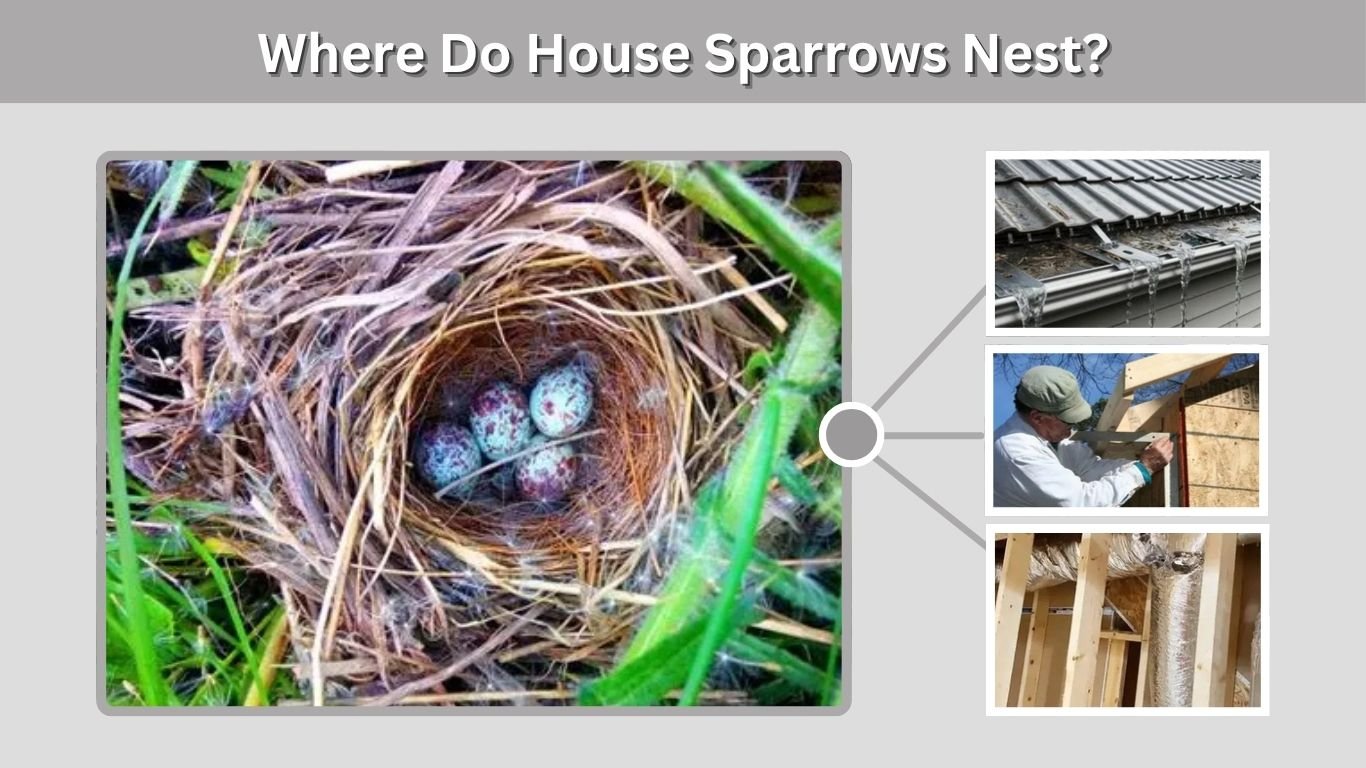
A house sparrow nest is usually a messy, bulky structure made from dry grass, straw, feathers, paper, string, and other available materials. House sparrows often nest close to people, using roof gaps, vents, eaves, wall holes, signs, sheds, and nest boxes. They are cavity-nesting birds, but they can also build loose nests in sheltered corners. Understanding house sparrow nesting habits helps you identify their nests, protect native birds, and decide when nest removal may be needed.
What Does a House Sparrow Nest Look Like?
A house sparrow nest usually looks untidy, thick, and loosely packed. Unlike neat cup-shaped nests made by many songbirds, house sparrow nests are often stuffed into cavities until the space is nearly filled. Cornell Lab notes that house sparrows use coarse dry vegetation and line the nest with finer materials such as feathers, string, and paper. They may also build nests next to each other and reuse old nests.
House Sparrow Nest Identification
You can identify a house sparrow nest by these common features:
- Messy, bulky shape
- Dry grass, straw, weeds, twigs, paper, and string
- Soft lining made of feathers, hair, or fine plant fibers
- Often packed tightly inside a hole or cavity
- May hang out from vents, roof gaps, or birdhouse entrances
- Usually found close to buildings or human activity
- Often reused or added to over time
House sparrow nests can look different depending on where they are built. In a birdhouse, the nest may fill much of the box. In a roof gap, it may look like a loose pile of grass and trash. In a protected outdoor corner, it may look like a rough dome or mound.
Where Do House Sparrows Nest?
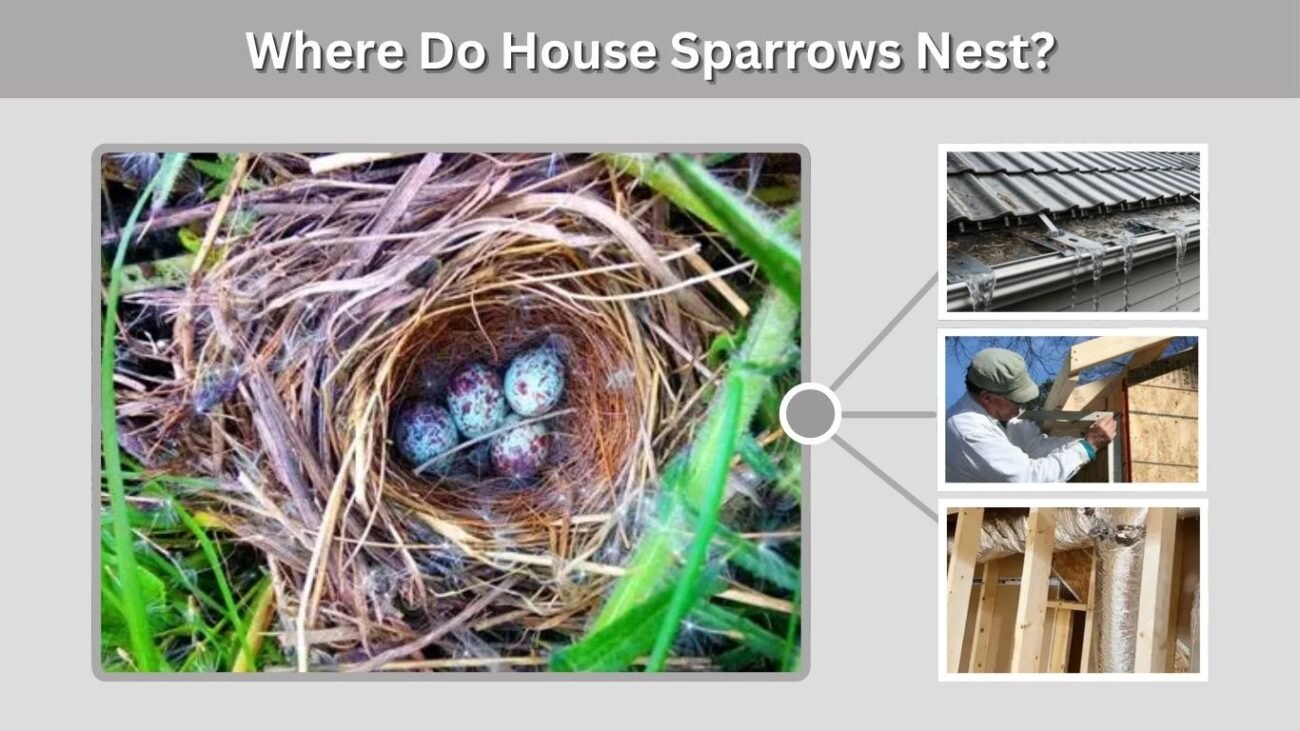
House sparrows are strongly associated with human settlements. They commonly nest on houses, buildings, farms, warehouses, stores, and urban structures. They prefer protected cavities and small openings where the nest is hidden from rain and predators.
Common house sparrow nesting sites include:
- Roof eaves
- Gutter gaps
- Wall cavities
- Dryer vents
- Attic openings
- Store signs
- Barns and sheds
- Porches
- Streetlights
- Nest boxes
- Tree holes
- Dense vines or shrubs
House sparrows may also nest in birdhouses meant for bluebirds, wrens, chickadees, or other native cavity-nesting birds. This is one reason many bird watchers pay close attention to house sparrow nest identification.
House Sparrow Nesting Habits
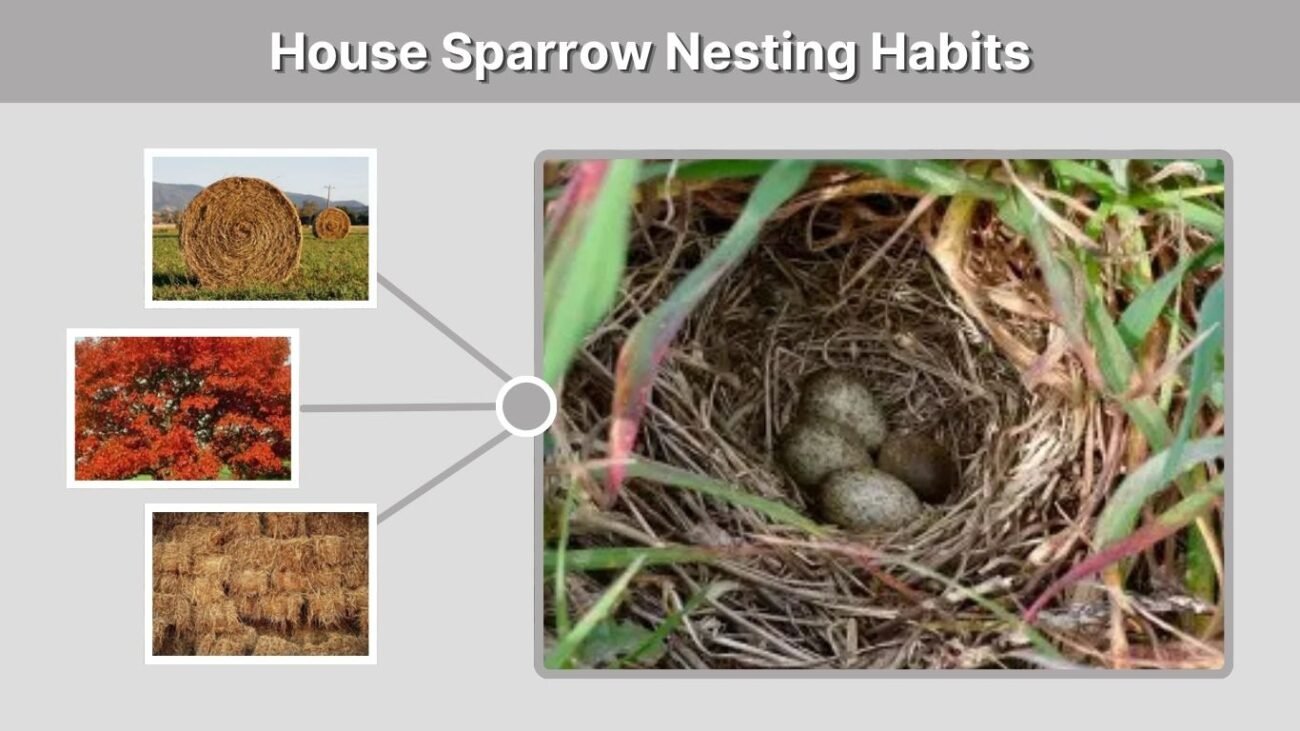
House sparrows are social birds. They often nest near other house sparrows and may form loose nesting colonies. They are also persistent nest builders. If a nest is removed early, they may quickly rebuild in the same place unless the opening is blocked.
Nest Building Behavior
Both male and female house sparrows may help with nest building. The male often chooses a nest site and may begin placing material there to attract a mate. Once paired, the birds continue adding materials and shaping the nest.
House sparrows use almost anything they can carry. Their nesting material may include grass, hay, straw, leaves, small roots, feathers, cloth fibers, plastic, paper, and pieces of string. In cities, they often use human-made materials because they are easy to find.
House Sparrow Nesting Season
House sparrow nesting season can vary by climate, but in many areas it begins in spring and continues through summer. In warm regions, they may start earlier and continue longer. Because they can raise multiple broods in one season, nests may remain active for months.
A pair may lay eggs, raise young, and then reuse the same nest for another brood. This repeated nesting habit is one reason house sparrows can become abundant around homes and farms.
When Do House Sparrows Start Nesting?
House sparrows often start nesting in early spring when temperatures rise and food becomes more available. In some mild climates, they may begin courtship and nest building before many native birds start nesting.
When Do House Sparrows Stop Nesting?
They usually stop nesting by late summer or early fall, depending on the region. In warm areas, nesting may continue longer. After breeding ends, some birds may still use protected nest sites for roosting.
House Sparrow Eggs and Nest
House sparrow eggs are small and usually whitish, grayish, or pale greenish with brown or gray spots. A typical clutch often contains several eggs. The eggs are laid in the soft inner lining of the nest, usually hidden inside the bulky outer material.
| Nest Feature | Description |
|---|---|
| Nest type | Messy cavity nest or bulky sheltered nest |
| Main materials | Grass, straw, weeds, feathers, paper, string |
| Egg color | Whitish, grayish, or pale greenish with spots |
| Nest location | Buildings, roof gaps, vents, signs, nest boxes |
| Reuse | Often reused or rebuilt |
How Long Do House Sparrows Stay in the Nest?
House sparrow chicks usually stay in the nest for about two weeks after hatching, though the exact time can vary with food supply, weather, and disturbance. After leaving the nest, young sparrows may still be fed by parents for a short time while they learn to fly and forage.
If you find a young sparrow on the ground, check whether it is a nestling or fledgling. A feathered fledgling may be learning to fly and often does not need help. A naked or barely feathered nestling may need to be returned to the nest if possible.
House Sparrow Nest Box
A house sparrow nest box is a birdhouse designed to provide a safe cavity for nesting. In places where house sparrows are declining or where people want to support them, a nest box can help. In other regions, especially where house sparrows compete with native birds, people may avoid encouraging them.
House sparrows often like boxes placed on buildings, under eaves, or in protected areas. They are social, so they may use terrace-style nest boxes that provide several separate nesting chambers.
House Sparrow Nest Box Hole Size
A common entrance hole size for a house sparrow nest box is about 32 mm. The RSPB recommends a nest hole around 32 mm for house sparrows.
A sparrow terrace box may include several separate compartments. One RSPB sparrow terrace design uses three separate nest boxes in one unit, each with a 32 mm entrance hole.
House Sparrow Nest Box Placement
Good placement depends on whether you want to attract house sparrows. If you do, place the box in a sheltered area, preferably on a building or wall, away from heavy rain and strong direct sun.
Helpful placement tips include:
- Place the box under eaves or on a sheltered wall
- Keep it away from easy predator access
- Avoid placing it where cats can reach
- Face the entrance away from strong afternoon sun
- Use a sturdy design with drainage and ventilation
- Do not disturb the box during active nesting
House Sparrow Nest vs Bluebird Nest
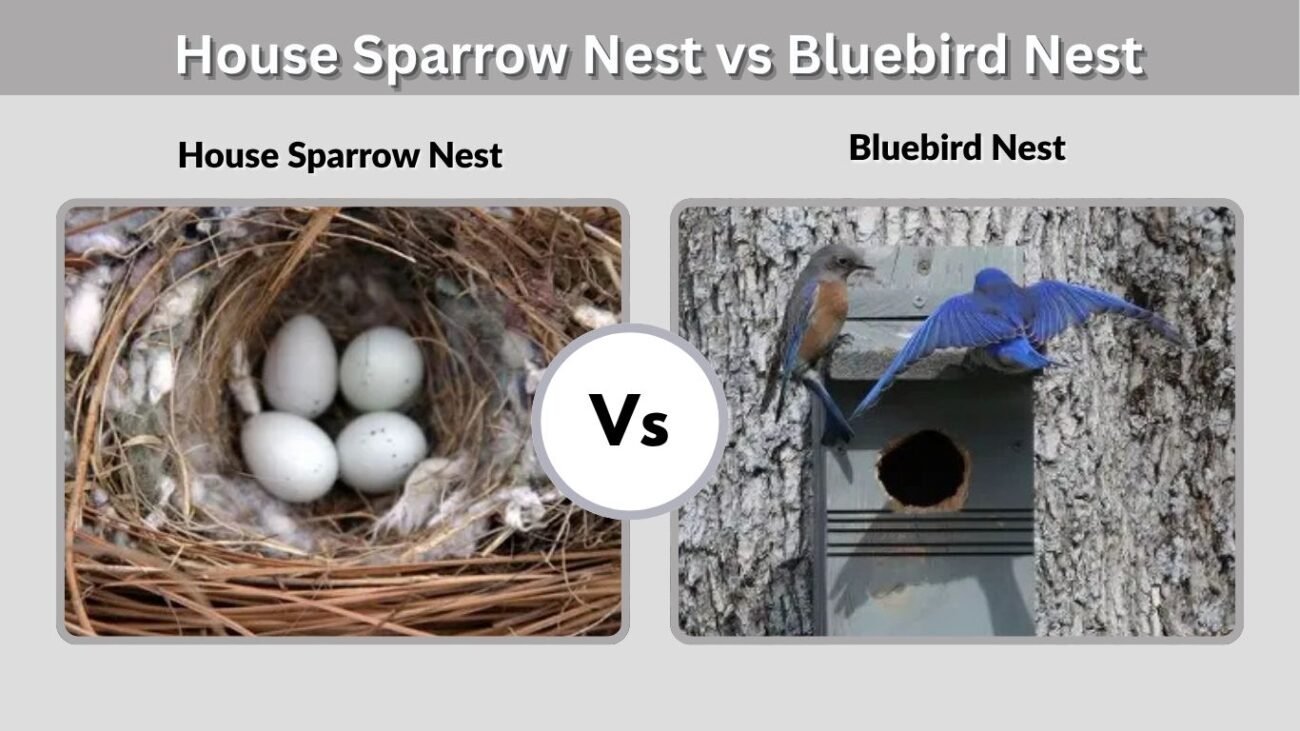
A house sparrow nest and a bluebird nest can both appear in nest boxes, but they usually look different. House sparrow nests are messier, bulkier, and often include trash-like materials. Bluebird nests are usually neater and made mostly of fine grasses or pine needles.
| Feature | House Sparrow Nest | Bluebird Nest |
|---|---|---|
| Shape | Messy, bulky, often overfilled | Neater cup |
| Materials | Grass, feathers, paper, string, trash | Fine grass or pine needles |
| Location | Buildings, cavities, nest boxes | Open habitat nest boxes |
| Behavior | May compete aggressively | Native cavity nester |
| Reuse | Often reused or rebuilt | Often builds cleaner cup nests |
House sparrows may take over nest boxes used by bluebirds and other cavity-nesting birds. In some regions, this is a serious concern because house sparrows can compete with native species for nesting space.
House Sparrow Nest Removal
House sparrow nest removal depends on your location and local wildlife laws. In the United States, most native bird nests are protected under the Migratory Bird Treaty Act when they contain eggs or dependent young. However, House Sparrows and European Starlings are non-native species and are not protected under that federal law, according to NestWatch. The U.S. Fish & Wildlife Service also notes that most bird nests are protected and that destroying nests with eggs or chicks is illegal for protected migratory birds unless permitted.
Because laws vary by country, state, and region, always check local rules before removing any bird nest. In the UK and many other areas, rules may be different, especially because house sparrows are native or conservation-relevant in parts of their range.
Should I Remove a House Sparrow Nest?
You may consider removing a house sparrow nest if it is inactive, unsafe, blocking a vent, causing fire risk, or threatening native nesting birds in a managed nest box. Avoid removing any nest if you are unsure which species built it.
If the nest contains eggs or chicks, use extra caution. Even when removal is legal, it may be better to contact a wildlife professional, local extension office, or bird conservation group for guidance.
How to Prevent House Sparrows From Nesting
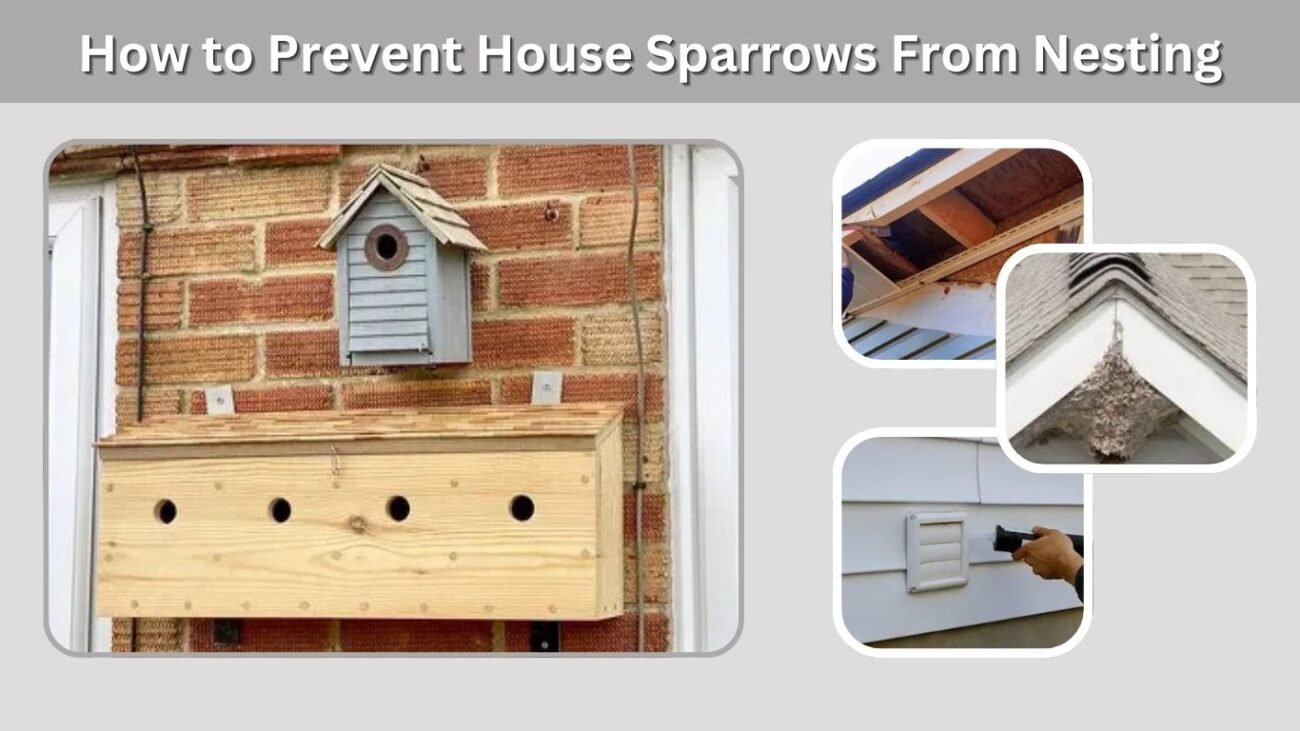
If house sparrows are nesting in unwanted areas, prevention is usually better than repeated removal. Once they choose a site, they may return or rebuild quickly.
Ways to discourage house sparrow nesting include:
- Seal gaps in roofs, siding, and wall cavities
- Cover vents with proper bird-safe vent guards
- Remove loose nesting material from inactive sites
- Repair damaged eaves and soffits
- Keep garage and shed doors closed when possible
- Use nest boxes designed for target native birds only
- Monitor birdhouses regularly during nesting season
- Avoid leaving easy nesting material near problem areas
Never block an opening if you think birds are trapped inside. Make sure the nest is inactive before sealing the space.
Sparrow Nest in House: Good or Bad?
Some people see a sparrow nest in a house as a sign of good luck, while others see it as a problem. From a practical view, it depends on where the nest is located. A nest outside under a safe eave may not cause trouble. A nest inside a vent, roof cavity, or electrical area can create health, odor, fire, or blockage concerns.
If you enjoy house sparrows, you can provide a safer nest box away from vents and sensitive building areas. If they are nesting in a risky place, wait until the nest is inactive if possible, then remove the material and seal the entry point.
FAQs
What does a house sparrow nest look like?
A house sparrow nest looks messy, bulky, and loosely built. It is often made of dry grass, straw, feathers, paper, string, and small debris. In cavities or nest boxes, house sparrows may stuff the space until it is nearly full.
Where do house sparrows nest?
House sparrows nest in roof gaps, eaves, vents, wall cavities, sheds, barns, store signs, nest boxes, tree holes, and other sheltered spaces. They prefer places close to people and often use buildings as nesting sites.
Do house sparrows reuse their nests?
Yes, house sparrows often reuse nests. They may repair, add to, or rebuild nests in the same location. This habit is why blocking old entry points after nesting ends is important if you do not want them to return.
How long do house sparrows stay in the nest?
House sparrow chicks usually remain in the nest for about two weeks after hatching. After leaving, they may still depend on their parents briefly while learning to fly and find food.
Can I remove a house sparrow nest?
It depends on your location, the species, and whether the nest is active. In the U.S., house sparrows are non-native and not federally protected under the MBTA, but many native bird nests are protected. Check local rules before removing any nest.