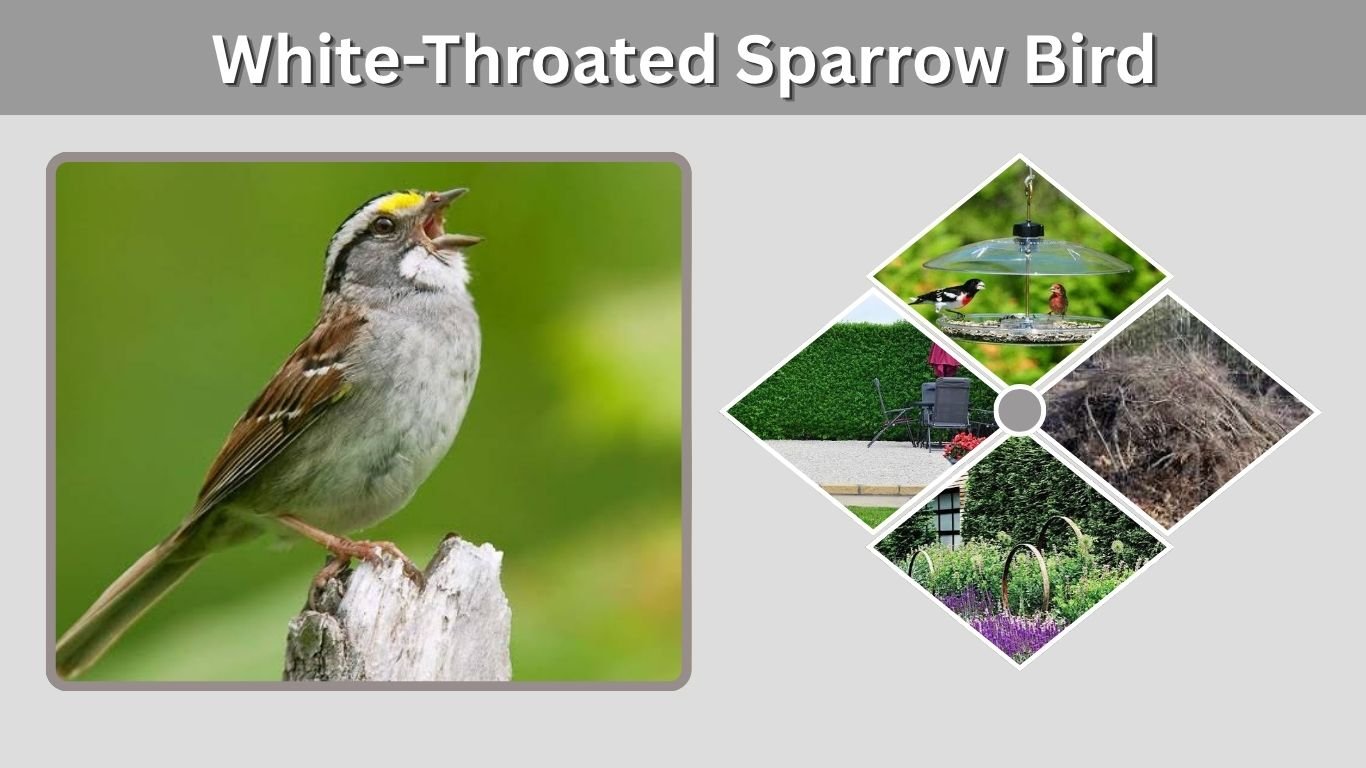
The white-throated sparrow bird is a beautiful North American songbird known for its bright white throat, striped head, and clear whistled song. Many birdwatchers recognize it by its sweet “Oh-sweet-Canada” style song, often heard in forests, thickets, and backyard shrubs. Although it looks similar to other sparrows, the white throat patch and yellow marks near the eyes make it easier to identify. This guide covers the white-throated sparrow’s appearance, call, song, range, habitat, diet, nesting behavior, migration, and differences from similar birds.
What Is a White-Throated Sparrow?
The white-throated sparrow is a medium-sized sparrow with a rounded body, long tail, and bold head pattern. Its scientific name is Zonotrichia albicollis. It belongs to the New World sparrow family and is commonly found across Canada and the United States.
This bird is especially popular because of its clear, whistled song. During spring and summer, males sing from shrubs, low trees, and forest edges. In winter, these sparrows often visit backyards, parks, and brushy places where food and cover are available.
White-Throated Sparrow Identification
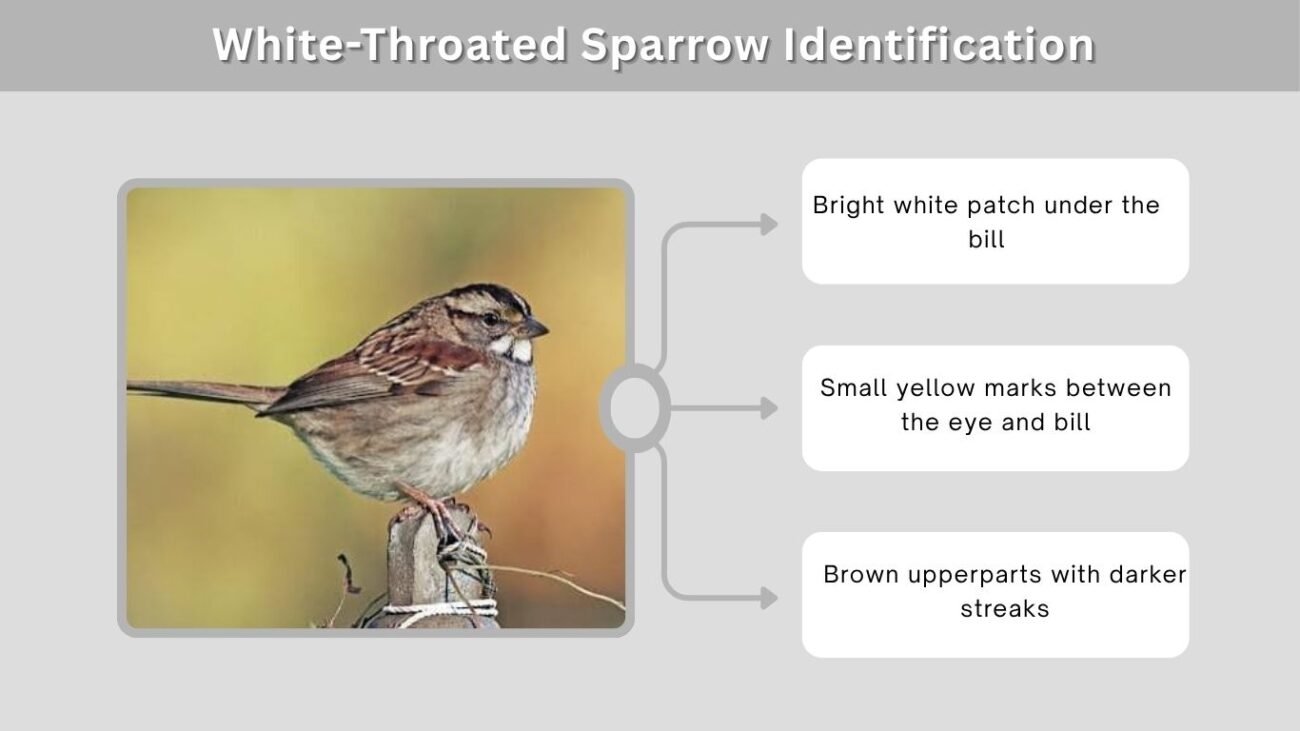
White-throated sparrows are easier to identify than many other brown sparrows because they have strong facial markings. Their body is mostly brown and gray, but the head and throat are more distinctive.
Key Identification Marks
- White throat patch: Bright white patch under the bill
- Yellow lores: Small yellow marks between the eye and bill
- Striped head: Black-and-white or brown-and-tan crown stripes
- Gray breast: Pale gray chest with a cleaner look than many streaked sparrows
- Brown back: Brown upperparts with darker streaks
- Rounded body: Plump sparrow shape with a fairly long tail
- Bill: Short, conical bill used for seeds and insects
Not all white-throated sparrows look exactly the same. Some have bold white head stripes, while others have duller tan stripes. These are called color morphs.
White-Throated Sparrow Song
The white-throated sparrow song is one of the most famous bird songs in North America. It is usually a clear, whistled tune that sounds sweet, slow, and musical. Many people describe it as “Oh-sweet-Canada-Canada” or “Old-Sam-Peabody-Peabody.”
The song is most often heard during breeding season, especially in northern forests. Males sing to defend territory and attract females. The sound carries well through wooded areas because it is clear and whistled.
What Does a White-Throated Sparrow Sound Like?
- Clear whistled notes
- Slow, repeated phrases
- Sweet and mournful tone
- Often sung from shrubs or small trees
- Most common in spring and early summer
The song may vary slightly by region and individual bird. Some birds sing a two-note opening, while others sing a slightly different rhythm. Even with variation, the whistled quality is usually easy to recognize.
White-Throated Sparrow Call
The white-throated sparrow call is different from its song. The call is shorter and sharper. It may sound like a thin “seet,” “pink,” or chip note. These calls are used for communication between birds, especially when they are feeding in brush or moving through dense cover.
White-throated sparrows also give alarm calls when predators are nearby. Because these birds often stay hidden in shrubs and leaf litter, you may hear the call before you see the bird.
Male vs Female White-Throated Sparrow
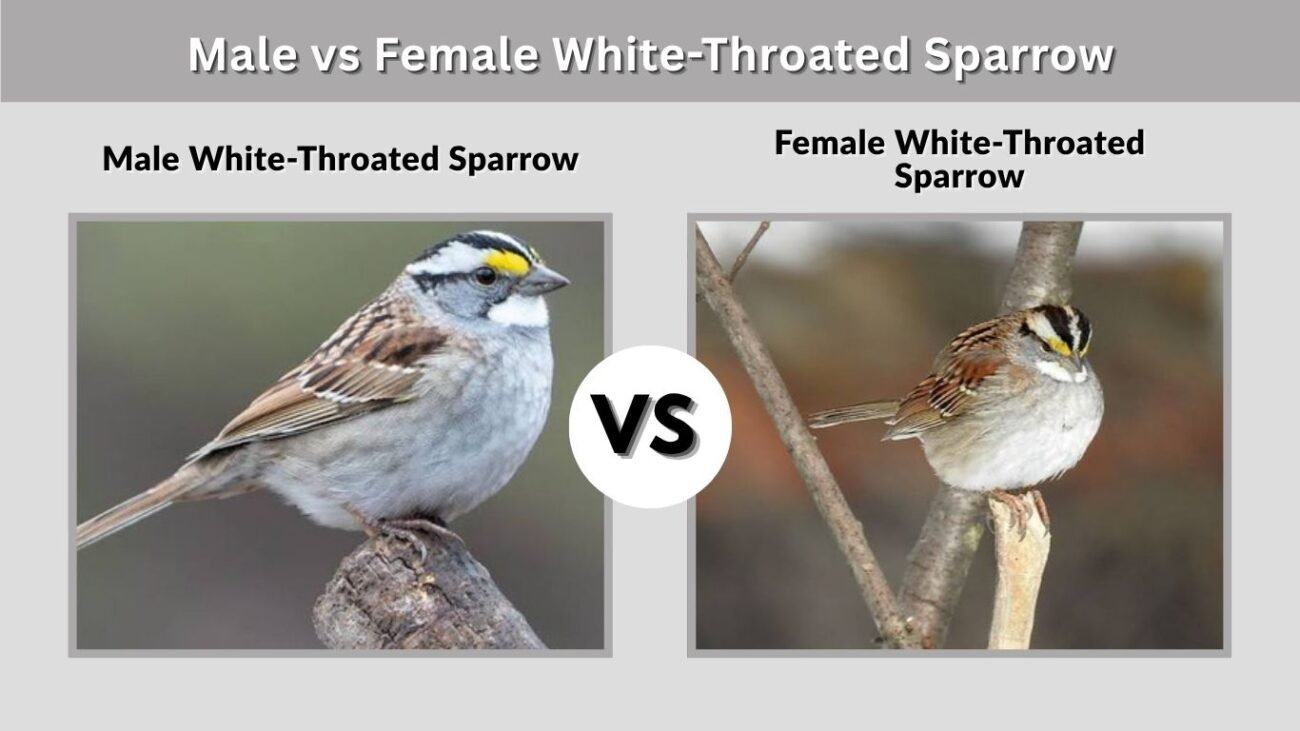
Male and female white-throated sparrows look very similar. Unlike many colorful songbirds, males and females do not have dramatically different plumage. However, males may sing more often, especially during breeding season.
The bigger difference is not always male vs female, but color morph. White-throated sparrows have two main morphs: white-striped and tan-striped.
| Feature | Male | Female |
|---|---|---|
| Size | Similar | Similar |
| Color | Similar, sometimes slightly brighter | Similar, sometimes duller |
| Song | Sings more often | May call, but sings less often |
| Behavior | More territorial in breeding season | More focused on nesting and feeding young |
Because the sexes look alike, it can be difficult to identify a female white-throated sparrow by appearance alone.
White-Striped and Tan-Striped Morphs
One of the most interesting things about white-throated sparrows is that they occur in two color morphs. Some birds have bold black-and-white head stripes. Others have softer brown-and-tan head stripes.
White-striped birds usually look brighter and more contrasting. Tan-striped birds look duller and warmer brown. Both morphs can be male or female.
White-Throated Sparrow “Four Sexes” Meaning
You may see people talk about the white-throated sparrow having “four sexes.” This does not mean the bird truly has four biological sexes. It refers to the unusual combination of sex and color morph: white-striped males, white-striped females, tan-striped males, and tan-striped females.
These morphs are linked to behavior and pairing patterns. White-striped birds often pair with tan-striped birds, making this species especially interesting to scientists and birdwatchers.
Juvenile and Immature White-Throated Sparrow
Juvenile white-throated sparrows can be harder to identify than adults. Young birds often look duller, with less obvious head stripes and a less distinct white throat. They may also show more brownish tones overall.
Immature birds gradually develop clearer markings as they grow. By the time they reach adult plumage, the white throat and yellow lores become easier to see.
White-Throated Sparrow Range
The white-throated sparrow has a wide range in North America. It breeds mainly in Canada and parts of the northern United States. During winter, many move south into the eastern and central United States.
Some may also be seen in western regions during migration or winter, but they are more common in the East.
Seasonal Range
| Season | Where They Are Common |
|---|---|
| Breeding season | Canada, northern forests, northeastern U.S. |
| Migration | Across much of eastern and central North America |
| Winter | Eastern, southern, and central United States |
| Year-round areas | Some parts of the northeastern U.S. and nearby regions |
White-throated sparrows migrate at night and often travel in loose groups. During migration, they may stop in backyards, parks, woodlots, and weedy fields.
Habitat of White-Throated Sparrows
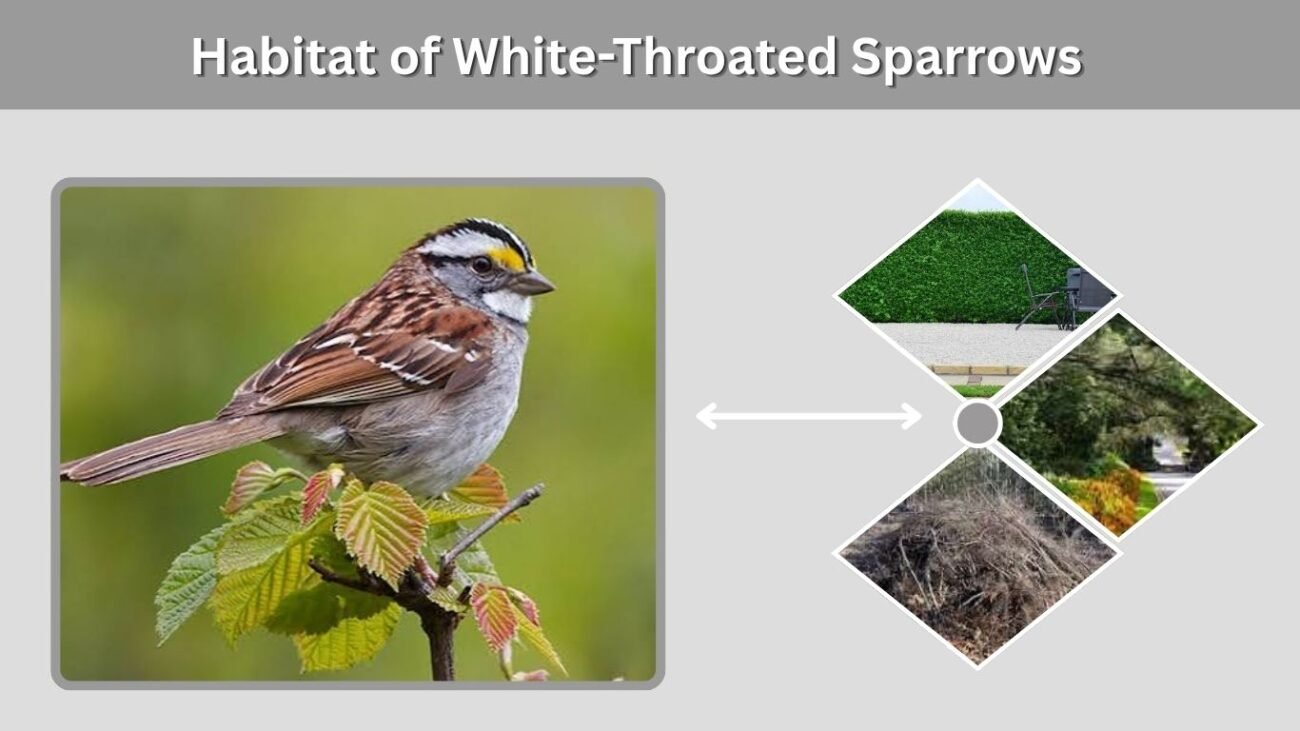
White-throated sparrows prefer areas with dense cover. During breeding season, they are often found in coniferous or mixed forests, especially near openings, bogs, edges, and shrubby areas.
In winter, they use a wider variety of habitats, including backyard hedges, thickets, woodland edges, and brush piles. They usually stay close to the ground, where they scratch through leaves for food.
Common Habitats
- Boreal forests
- Mixed woodlands
- Forest edges
- Shrubby fields
- Backyard hedges
- Parks and gardens
- Brush piles
- Wet thickets
Dense vegetation is important because it gives them protection from predators.
What Do White-Throated Sparrows Eat?
White-throated sparrows eat seeds, insects, fruits, and small plant material. Their diet changes by season. During spring and summer, insects become important, especially for feeding young birds. In fall and winter, seeds make up much of their diet.
They often feed on the ground by scratching through leaf litter with both feet. This behavior can help you spot them under shrubs or near feeders.
Common Foods
- Weed seeds
- Grass seeds
- Berries
- Small fruits
- Beetles
- Caterpillars
- Ants
- Spiders
- Flies
- Cracked corn
- Millet
At bird feeders, they often prefer seed scattered on the ground or placed on platform feeders. They are less likely to cling to tube feeders like finches.
White-Throated Sparrow Nest and Eggs
White-throated sparrows usually nest on or near the ground. The nest is often hidden under shrubs, grasses, roots, or low branches. This helps protect the eggs from predators, although ground nests can still be vulnerable.
The female builds the nest using grasses, twigs, bark strips, moss, and leaves. The inside is lined with softer material.
Nesting Details
- Nest type: Open cup nest
- Nest location: Ground or low shrubs
- Egg number: Usually 3–5 eggs
- Egg color: Pale blue-green or whitish with brown markings
- Incubation: Mainly by the female
- Young birds: Fed by both parents
The young leave the nest after a short period but still depend on their parents for food and protection.
White-Throated Sparrow Migration
Many white-throated sparrows migrate between breeding and wintering areas. They breed mostly in northern forests and move south for winter. Migration usually happens in spring and fall.
During migration, they can appear in many places where they are not seen during summer. Birdwatchers often notice them in backyard shrubs, parks, and woodland edges during these seasons.
They are usually more visible in winter and migration because they move into human-friendly habitats more often.
White-Throated Sparrow vs White-Crowned Sparrow
White-throated sparrows and white-crowned sparrows are often confused because both have striped heads. However, they have important differences.
| Feature | White-Throated Sparrow | White-Crowned Sparrow |
|---|---|---|
| Throat | Bright white throat patch | No bold white throat patch |
| Yellow lores | Present near bill | Usually absent |
| Head stripes | White or tan stripes | Bold black-and-white crown |
| Breast | Grayish and plain | Grayish, cleaner |
| Song | Clear whistled repeated phrase | Clear whistles and buzzier notes |
The yellow spot near the eye is one of the best clues for identifying a white-throated sparrow.
White-Throated Sparrow vs Song Sparrow
The song sparrow is another common brown sparrow, but it looks different when seen clearly. Song sparrows usually have heavy streaking on the chest, often with a central dark spot. White-throated sparrows have a cleaner gray breast and a clear white throat.
The songs are also different. Song sparrows sing varied notes and trills, while white-throated sparrows give clear whistled phrases.
Are White-Throated Sparrows Rare?
White-throated sparrows are not rare in most of their range. They are common during migration and winter in many areas of the eastern and central United States. In breeding season, they are common in northern forests.
However, they may seem rare if you live outside their normal range or if you are looking during the wrong season. Habitat also matters. They are easier to find in places with shrubs, brush, and leaf litter.
How to Attract White-Throated Sparrows
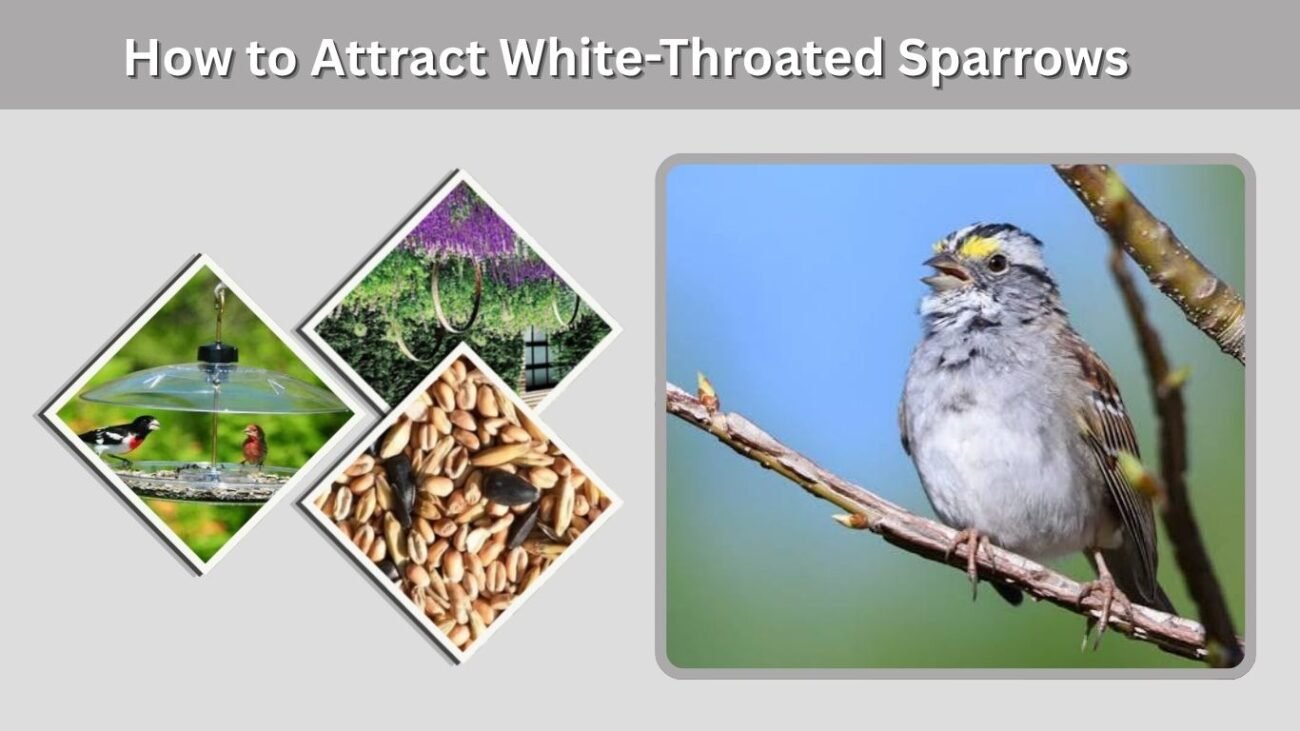
White-throated sparrows are ground-feeding birds, so they are more likely to visit yards with low cover and natural food sources. A clean, open yard with no shrubs may not attract them.
Backyard Attraction Tips
- Scatter millet or mixed seed on the ground
- Use platform feeders
- Keep native shrubs and hedges
- Leave some leaf litter under bushes
- Plant berry-producing shrubs
- Avoid heavy pesticide use
- Keep cats indoors
- Create brush piles for shelter
They often feed quietly under shrubs, so watch the ground near cover.
FAQs
What does a white-throated sparrow look like?
A white-throated sparrow has a bright white throat patch, yellow marks near the eyes, a striped head, grayish breast, and brown streaked back. Some birds have bold black-and-white head stripes, while others have softer tan-and-brown stripes.
What does a white-throated sparrow song sound like?
The song is a clear, sweet whistle often described as “Oh-sweet-Canada-Canada” or “Old-Sam-Peabody-Peabody.” It is slow, musical, and easy to recognize. Males usually sing from shrubs, trees, or forest edges during breeding season.
What do white-throated sparrows eat?
White-throated sparrows eat seeds, berries, insects, and small fruits. In winter, they feed heavily on seeds. During breeding season, they eat more insects, including beetles, caterpillars, ants, spiders, and flies, especially when feeding young birds.
Do white-throated sparrows migrate?
Yes, many white-throated sparrows migrate. They breed mostly in Canada and the northern United States, then move south for winter. During spring and fall migration, they may appear in backyards, parks, thickets, and woodland edges.
What is the difference between a white-throated sparrow and a white-crowned sparrow?
A white-throated sparrow has a white throat patch and yellow marks near the eyes. A white-crowned sparrow has bold black-and-white crown stripes but lacks the bright white throat and yellow lores. Their songs and typical habitats can also differ.