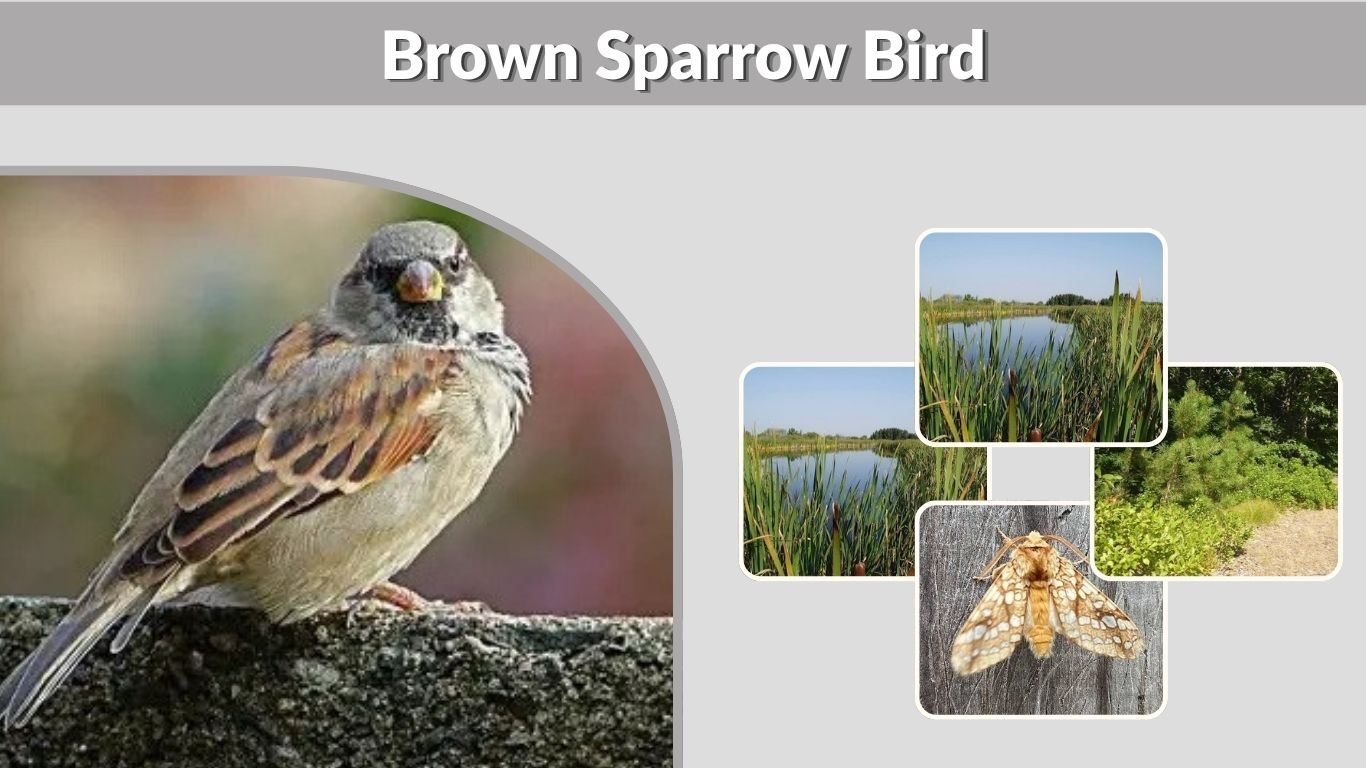
A small brown bird hopping beneath a feeder or hiding in a hedge is often called a “brown sparrow bird.” However, this description can refer to several sparrow species, female finches, wrens, or other similar songbirds. The best way to identify one is to examine its bill, breast markings, head pattern, tail, size, and behavior. This guide explains how to recognize common brown sparrows and distinguish them from the many small brown birds that look like sparrows.
What Is a Brown Sparrow Bird?
“Brown sparrow” is a descriptive phrase rather than the official name of one species. Most sparrows combine brown, gray, black, buff, or rusty feathers that provide camouflage in grass, shrubs, and leaf litter. Many also have short, conical bills adapted for opening seeds.
In North America, common possibilities include the Song Sparrow, Chipping Sparrow, American Tree Sparrow, and female House Sparrow. In the UK, people may also use the term for a House Sparrow or Dunnock.
Why Brown Sparrows Are Difficult to Identify
Many sparrows share a similar body shape and streaked brown plumage. Their appearance may also change with sex, age, season, and geographic location. Juveniles are especially confusing because they frequently have duller colors and heavier streaking than adults.
True Sparrows and Sparrow-Like Birds
The familiar House Sparrow belongs to the Old World sparrow family, while most native North American birds called sparrows belong to the New World sparrow family. Finches, wrens, cowbirds, and Dunnocks may resemble sparrows but belong to different bird families.
How to Identify a Brown Sparrow Bird
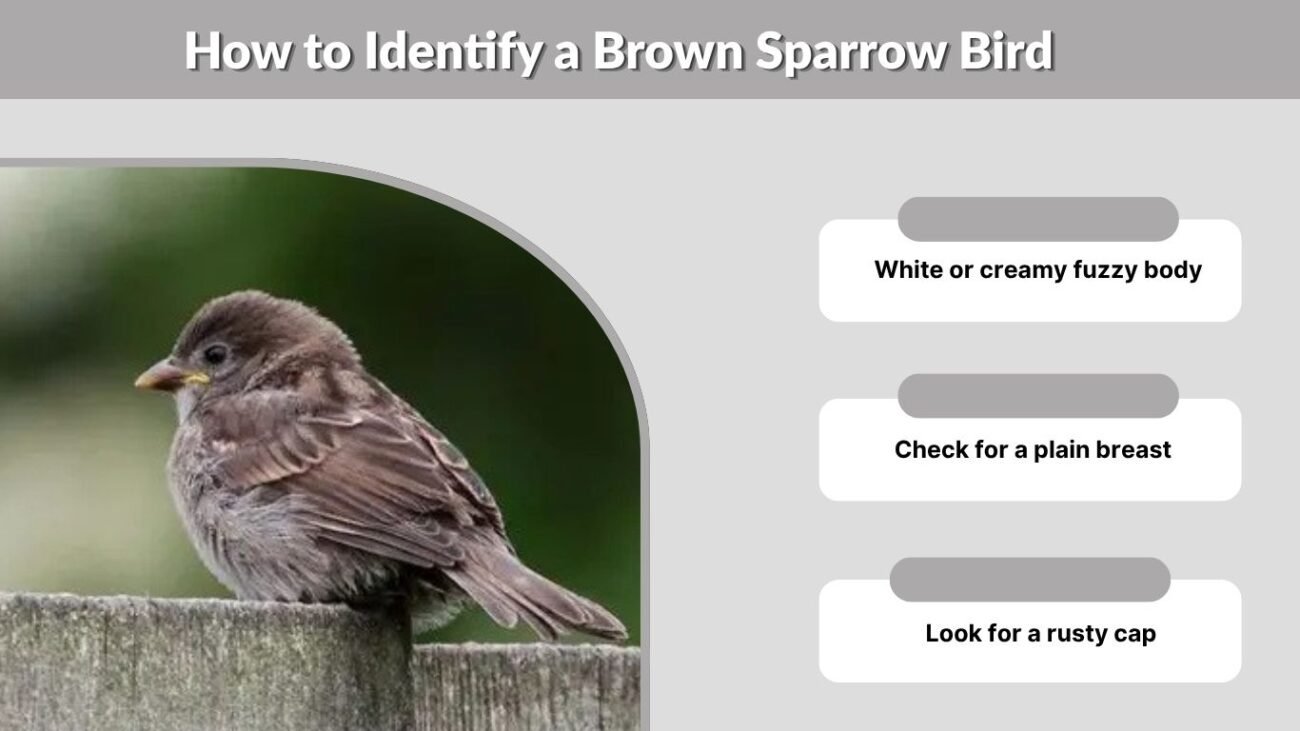
Do not rely on brown coloration alone. First observe the bird from a distance, noting how it moves and where it feeds. Then focus on several physical details rather than trying to identify it from one marking.
Look for the following features:
- Bill: True sparrows usually have short, thick, triangular bills.
- Breast: Check for a plain breast, blurry streaks, sharp streaks, or a central spot.
- Head: Look for a rusty cap, pale eyebrow, dark eyeline, gray crown, or black bib.
- Wings: Note wing bars, yellow edges, white patches, or heavy striping.
- Tail: Determine whether it is long, short, rounded, notched, or held upright.
- Size: Compare the bird with a chickadee, House Sparrow, robin, or nearby feeder.
- Behavior: Watch whether it scratches the ground, joins flocks, climbs vegetation, or cocks its tail.
Sparrows generally have conical seed-cracking bills, although their subtle plumage patterns can make identification challenging.
Common Types of Brown Sparrow Birds
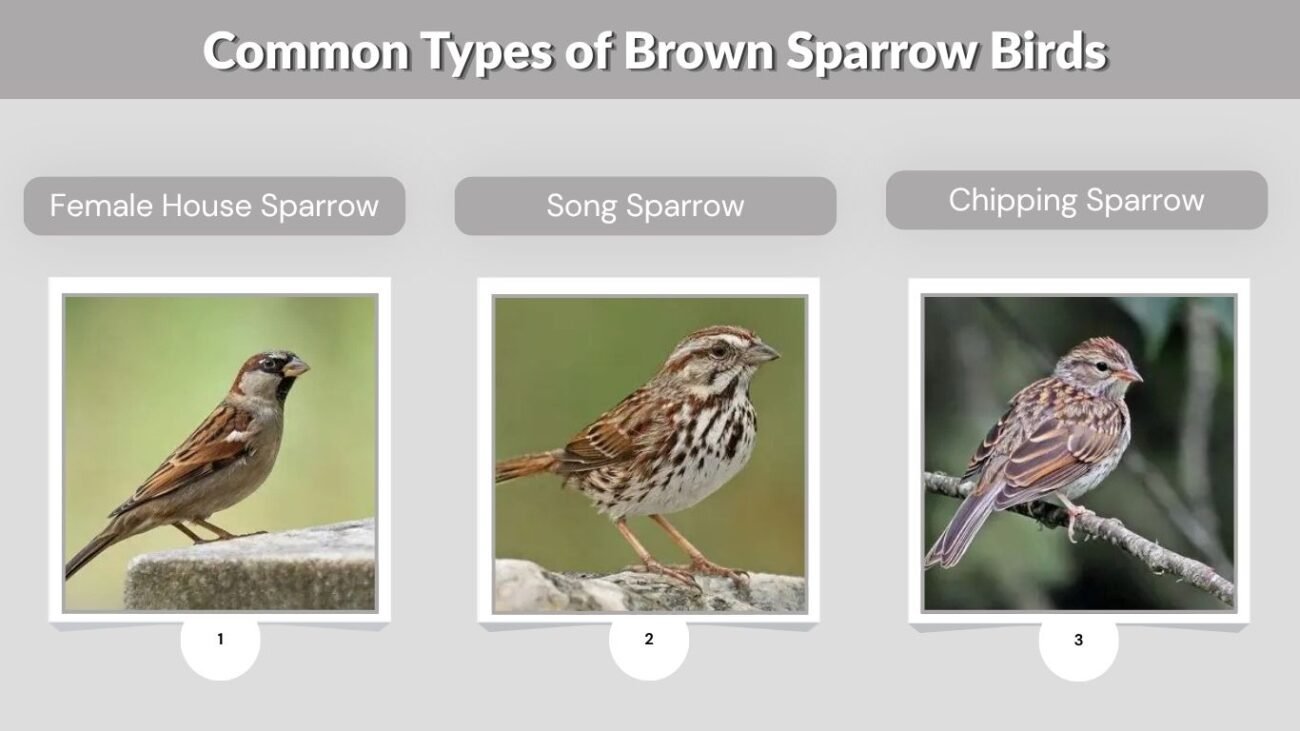
Several species regularly match searches for a “small brown sparrow-like bird.” Location and season will help narrow the possibilities, but the following birds are useful starting points.
Female House Sparrow
A female House Sparrow is one of the most likely identifications around buildings, sidewalks, farms, parking areas, and backyard feeders. She is primarily buffy brown, with gray-brown underparts and a pale stripe behind the eye. Her back is patterned with black, brown, and buff.
The male looks noticeably different, displaying a gray crown, white cheeks, chestnut neck, and black bib. Both sexes have full bodies, rounded heads, and stout bills.
Song Sparrow
The Song Sparrow is a medium-sized brown bird with bold streaks running down its pale chest and sides. These streaks often gather into a darker spot near the center of the breast. Its head usually shows rusty-brown stripes and a broad brown mustache mark.
Song Sparrows are frequently found in brushy fields, gardens, marsh edges, and low vegetation. Their long, rounded tails and heavily streaked breasts are among their most useful identification features.
Chipping Sparrow
An adult Chipping Sparrow in breeding plumage has a bright rusty crown, a clear black line through the eye, a pale eyebrow, and smooth gray underparts. It is slimmer and more delicate than a Song Sparrow.
Winter adults are duller, while juveniles may have brown crowns and streaked underparts. The species has a relatively small bill and a fairly long tail.
American Tree Sparrow
The American Tree Sparrow is a plump, long-tailed sparrow with a rusty cap, rusty eyeline, pale wing bars, and mostly unstreaked underparts. A small dark spot often appears in the middle of its breast.
Its bicolored bill is particularly helpful: the upper half is dark, while the lower half is yellowish. Despite its name, this species frequently forages on the ground in weedy or shrubby areas.
Field Sparrow
The Field Sparrow is a small, softly colored bird with a rusty crown, pale gray face, pink bill, and plain breast. Its face looks relatively uncluttered compared with the strongly marked faces of many other sparrows.
It commonly occupies brushy fields, woodland edges, and areas with scattered shrubs. Its small size and pink bill help separate it from female House Sparrows.
Brown Sparrow Identification Chart
| Bird | Main identification marks | Breast pattern | Helpful clue |
| Female House Sparrow | Pale eyebrow, striped brown back, thick bill | Plain gray-brown | Common around buildings |
| Song Sparrow | Rusty head stripes, long rounded tail | Heavy streaks and central spot | Often near dense vegetation |
| Chipping Sparrow | Rusty cap and black eyeline | Plain gray in adults | Slim body and trilling song |
| American Tree Sparrow | Rusty cap, bicolored bill | Plain with one dark spot | Mostly seen farther south in winter |
| Field Sparrow | Pink bill and plain face | Unstreaked | Found in open brushy habitat |
| House Finch | Plain face and notched tail | Blurry brown streaks | Frequently stays at feeders |
Small Brown Birds That Look Like Sparrows
Not every sparrow-sized brown bird is a sparrow. Bill shape, tail position, and feeding behavior often reveal that the bird belongs to another group.
Female House Finch
Female House Finches are grayish brown with thick, blurry streaking across the chest and belly. Their faces usually lack the crisp stripes shown by many sparrows. They also have sturdy conical bills and notched tails.
Compared with Song Sparrows, their breast markings tend to look less sharply defined.
Northern House Wren
A Northern House Wren is a small, subdued brown bird with a relatively long, slightly curved bill. Its wings and tail show fine dark bars, and it often carries its tail raised.
The thin bill immediately separates it from most seed-eating sparrows. Wrens also move energetically through shrubs, branches, and cavities while searching for insects.
Dunnock or Hedge Sparrow
The small brown garden bird sometimes called a “hedge sparrow” in the UK is the Dunnock. Despite its nickname, it is not a true sparrow. It has a thin, pointed bill, gray face and chest, and streaky brown upperparts.
Dunnocks usually forage quietly on the ground or beneath hedges, often alone rather than in noisy flocks.
Pine Siskin
A brown sparrow-sized bird with yellow wings may be a Pine Siskin. It is heavily streaked, has a sharply pointed bill, and displays subtle yellow edging in its wings and tail.
Its bill is narrower and more pointed than the bill of a House Sparrow or House Finch.
Identifying a Brown Bird by Size and Markings
Size descriptions can help, but they work best when combined with plumage and bill shape. A bird may also look larger when its feathers are fluffed in cold weather.
Brown Bird Smaller Than a Sparrow
A very small brown bird may be a Northern House Wren, Winter Wren, Pacific Wren, or another tiny insect-eating species. Look for a thin bill and a tail that is frequently held upward. Sparrows normally have thicker bills and more horizontal body postures.
Brown Bird Bigger Than a Sparrow
A brown bird slightly larger than a typical sparrow could be a Fox Sparrow, female Brown-headed Cowbird, thrush, towhee, or large sparrow species. Fox Sparrows have heavy bills and bold reddish or dark streaking, while thrushes usually have slimmer bills and spotted breasts.
Brown Bird With a Spotted Breast
A sparrow-sized brown bird with a central breast spot is likely a Song Sparrow or American Tree Sparrow. Song Sparrows have numerous coarse streaks surrounding the spot. American Tree Sparrows usually have a cleaner, unstreaked breast with one isolated dark mark.
Brown Bird With a Pointed Beak
A long or pointed bill suggests that the bird may be a wren, Dunnock, warbler, or other insect eater. Most sparrows and finches have deeper, triangular bills designed for cracking seeds. Bill shape is often more reliable than the exact shade of brown.
Where Brown Sparrow Birds Are Commonly Seen
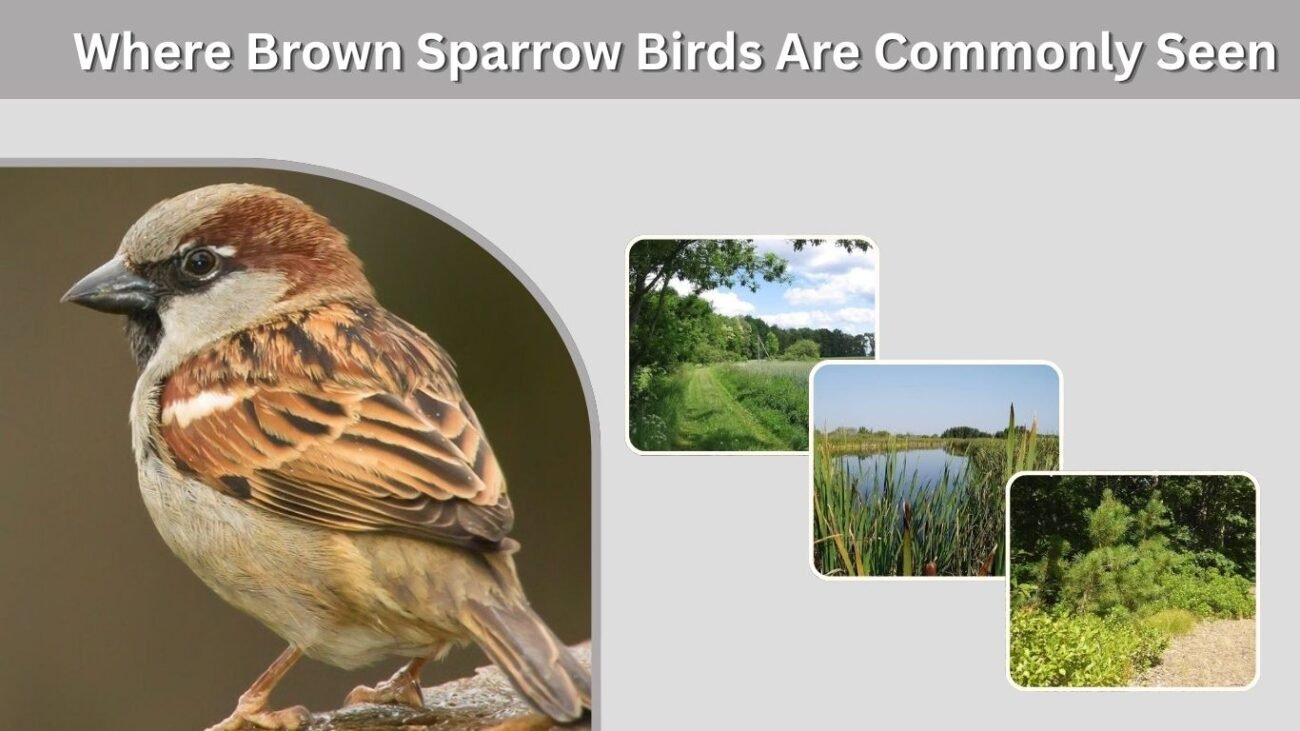
Brown sparrows inhabit backyards, hedgerows, open fields, woodland edges, marshes, farms, and urban areas. Female House Sparrows are strongly associated with people and buildings, while Song Sparrows favor brushy cover near open ground or water.
Chipping Sparrows often use lawns and open woodland with scattered trees. American Tree Sparrows appear in weedy fields and shrubby habitats during migration and winter. Recording the habitat can therefore eliminate several otherwise similar species.
Tips for Photographing an Unknown Brown Bird
A clear photograph makes identification much easier. Try to capture:
- The bird from the side, showing its bill and complete body shape
- A front view showing breast streaks or spots
- The crown, eyebrow, and eyeline
- Wing bars, yellow edges, or white patches
- The tail’s length, shape, and markings
- Nearby plants, feeders, or objects that provide a size reference
Also record the location, date, habitat, flock size, song, and feeding behavior. Seasonal information is important because juvenile and nonbreeding plumages can differ substantially from an adult bird’s most familiar appearance.
FAQs
What is the most common brown sparrow bird?
Around houses and urban areas, the bird is often a female House Sparrow. She has a buffy-brown body, striped back, pale eyebrow, and thick seed-eating bill. In brushy North American habitats, a heavily streaked brown bird is more likely to be a Song Sparrow.
How can I tell a House Finch from a brown sparrow?
Female House Finches have blurry streaks across their underparts, relatively plain faces, conical bills, and noticeably notched tails. Sparrows often show more defined head stripes, wing bars, or sharper breast patterns. Behavior also helps because House Finches commonly remain at feeders while cracking seeds.
What small brown bird is called a hedge sparrow?
The Dunnock is commonly called a hedge sparrow in the UK, although it is not closely related to true sparrows. It has brown-streaked upperparts, a gray face and chest, and a thin pointed bill. Dunnocks usually move quietly beneath hedges and feed on the ground.
What brown sparrow has a spot on its chest?
Song Sparrows commonly have heavy breast streaks that merge into a central dark spot. American Tree Sparrows may also have a breast spot, but their underparts are otherwise much cleaner. The Tree Sparrow also has a rusty cap and distinctive dark-and-yellow bicolored bill.
What is a brown sparrow-sized bird with yellow wings?
A heavily streaked brown bird with narrow yellow markings in the wings or tail may be a Pine Siskin. This small finch has a pointed bill and notched tail. Observe the markings in natural light because sunlight, shadows, pollen, and photography can make buff feathers appear yellow.