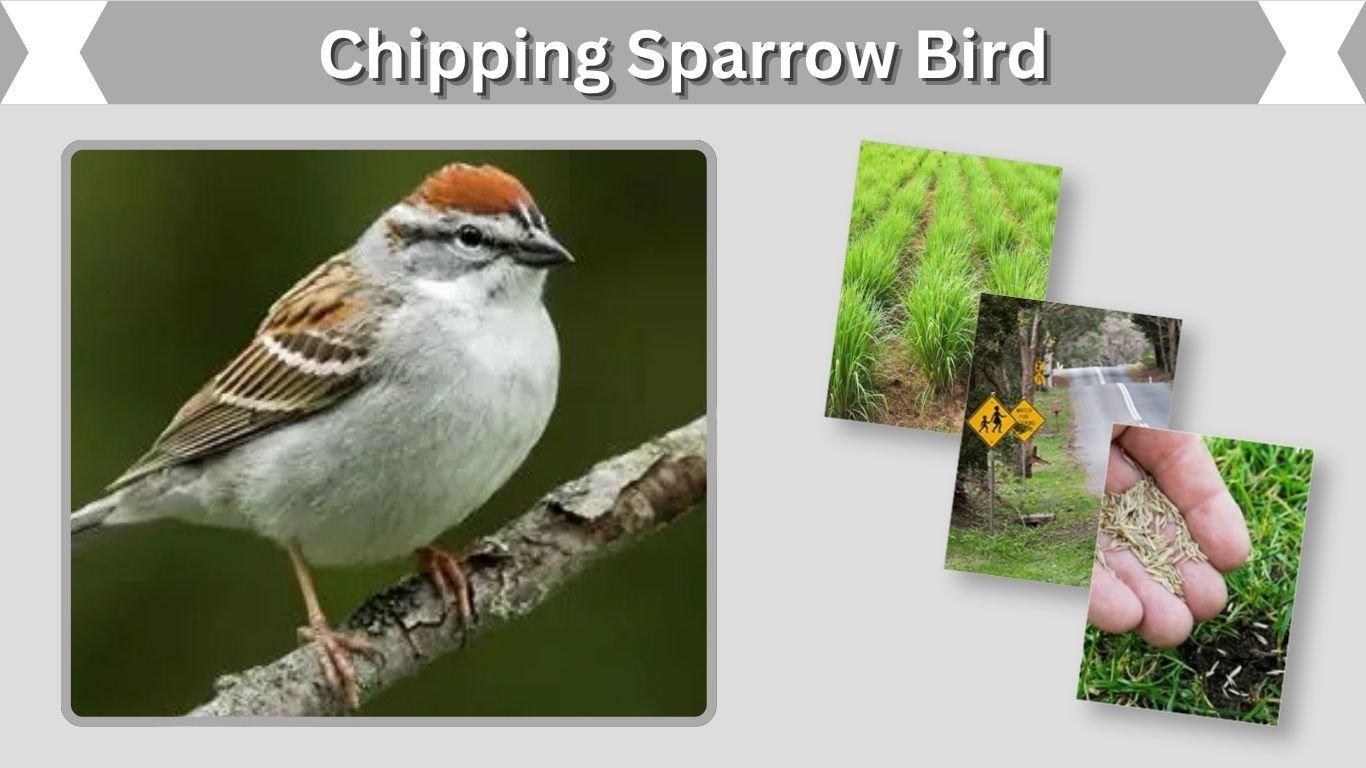
The Chipping Sparrow bird is a small North American sparrow best known for its rusty-red cap, black eye line, pale eyebrow, and clean grayish underparts. Its scientific name is Spizella passerina. This bird is common across much of North America, especially where trees grow near grassy openings, parks, yards, roadsides, and open woodlands. In spring and summer, its fast, dry trill is one of the most familiar sounds in suburban yards and woodland edges.
What Is a Chipping Sparrow Bird?
The Chipping Sparrow is a small songbird in the New World sparrow family, Passerellidae. It is not the same as the House Sparrow, which belongs to a different family and has a heavier, more urban appearance. Chipping Sparrows are slimmer, cleaner-looking birds with a longer tail, a neat face pattern, and a small bill for a sparrow.
Adults are easiest to recognize during the breeding season. Their bright rufous crown makes them look like a “small bird with a red cap on head,” which matches many backyard searches. In winter, the cap becomes duller and the whole bird looks less crisp, but the dark eye line often remains visible.
Chipping Sparrow Bird Identification
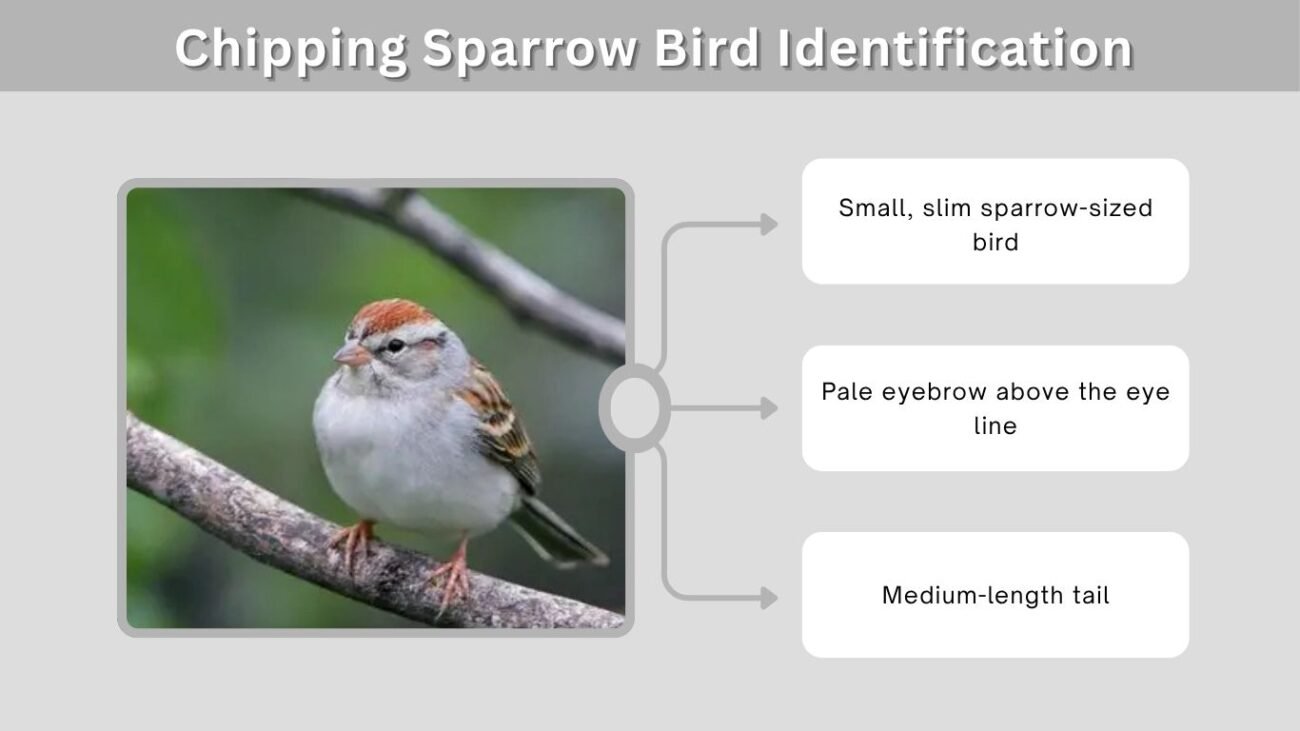
The Chipping Sparrow has a clean, delicate look compared with many streaky sparrows. Breeding adults show a rusty crown, white eyebrow, black line through the eye, pale gray underparts, and brown-streaked wings and back. Juveniles are more confusing because they have streaked underparts and a streaked brown crown.
Key Identification Features
- Small, slim sparrow-sized bird
- Bright rusty-red cap in breeding adults
- Black eye line through the face
- Pale eyebrow above the eye line
- Grayish, unstreaked underparts in adults
- Brown-streaked back and wings
- Medium-length tail
- Small, neat bill compared with many sparrows
| Feature | Chipping Sparrow Bird |
| Scientific name | Spizella passerina |
| Family | Passerellidae |
| Length | 4.7–5.9 in / 12–15 cm |
| Weight | 0.4–0.6 oz / 11–16 g |
| Wingspan | About 8.3 in / 21 cm |
| Best field mark | Rusty cap and black eye line |
Chipping Sparrow Small Bird With Red Cap on Head
The phrase “chipping sparrow small bird with red cap on head” describes the breeding adult very well. In spring and summer, the crown is warm rusty-red or chestnut. This red cap is not the same as the red face of a House Finch or the full red body of a Northern Cardinal.
A Chipping Sparrow’s red is mostly limited to the top of the head. The face is pale with a black eye line, and the chest is usually plain grayish-white. If the bird has a red face and red chest, it is more likely a finch. If it has only a rusty cap and a clean pale chest, Chipping Sparrow is a strong possibility.
Chipping Sparrow Bird Song and Call
The Chipping Sparrow song is a fast, even trill. Audubon describes it as a thin musical trill on one note, similar to the whir of a sewing machine. This song is often heard from the upper branches of small trees, especially during the breeding season.
What Does a Chipping Sparrow Sound Like?
The common song is not very complex. It is usually a steady, dry trrrrrrr or chip-chip-chip-chip sound delivered quickly. Birders often locate the bird by sound first, then look near the top or outer branches of a nearby tree. Cornell notes that males sing a long, loud trill in spring and summer.
A bird that sounds like a Chipping Sparrow may also be another trilling species, such as a Pine Warbler, Dark-eyed Junco, or some insects in the background. To confirm the ID, match the song with the bird’s rusty cap, black eye line, and pale underparts.
Chipping Sparrow Bird Habitat and Range
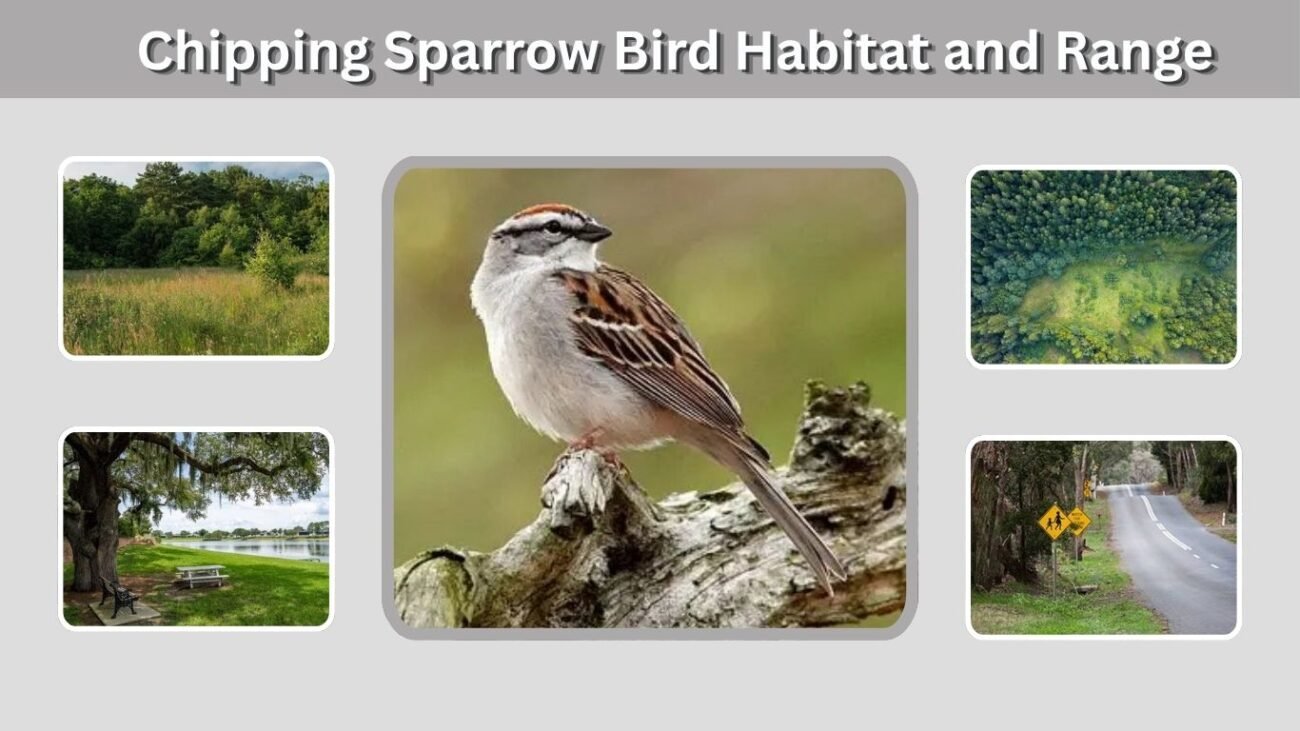
Chipping Sparrows live around trees but spend much of their feeding time on the ground. They are common in open woodlands, forest edges, parks, shrubby yards, orchards, tree-lined backyards, roadsides, and grassy clearings. They often use evergreens where available, but they also occur around deciduous trees such as oak, birch, aspen, pecan, and ornamental trees.
They are found across much of North America. Audubon lists the species across many regions, including the Mid-Atlantic, Great Lakes, Southeast, Plains, Southwest, Texas, California, Northwest, and Canada.
Chipping Sparrow Birds of Pennsylvania
In Pennsylvania, Chipping Sparrows are familiar spring and summer birds in yards, parks, open woods, farms, and suburban areas with trees. They are especially noticeable when males sing from exposed branches. During colder months, some birds migrate south, while others may be seen depending on local conditions and food availability.
Chipping Sparrow Birds in Texas
Texas can have Chipping Sparrows during migration, winter, and in some breeding areas depending on region. They are often seen in open woods, brushy edges, fields with trees, parks, and feeder areas. Winter flocks may feed on the ground with other sparrows.
Chipping Sparrow Birds in North Carolina
In North Carolina, Chipping Sparrows are common around open woods, lawns, neighborhoods, parks, and rural edges. Their red cap and trilling song make them easier to identify during spring and summer. In winter, they may appear duller and gather in small flocks.
Chipping Sparrow Food and Feeding Behavior
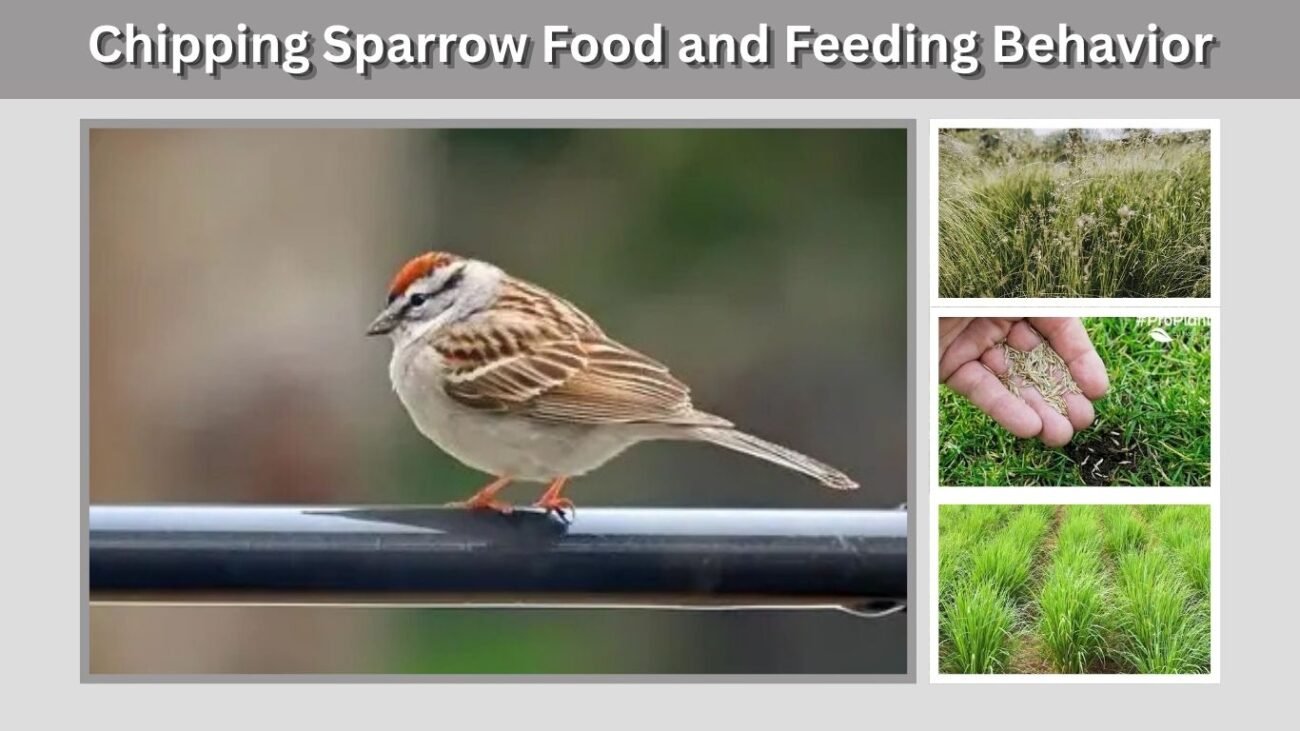
Chipping Sparrows mainly eat seeds from grasses and herbs. During the breeding season, they also eat protein-rich insects, which become an important part of the summer diet. They may also eat small fruits, including cherries.
They usually forage on the ground, hopping or running through grass while searching for seeds. Cornell also notes that they take cover in shrubs and sing from small trees, often evergreens. Outside the nesting season, they may form loose flocks and feed together in grassy areas or near feeders.
Backyard Feeding Tips
Chipping Sparrows may visit feeders for seeds, especially black oil sunflower seeds and seed mixes scattered on the ground. Shrubs and small trees in a yard may also encourage them to stay nearby or nest.
Do Chipping Sparrows Use Bird Houses?
Chipping Sparrows do not usually use enclosed bird houses like bluebirds, chickadees, or wrens. They are not typical cavity nesters. Instead, females usually build open cup nests in shrubs or trees, often 3–10 feet above the ground and hidden in foliage near the end of a branch.
A “chipping sparrow bird house” is usually not the best nesting option. A better way to help them is to provide native shrubs, small trees, brushy edges, and safe open ground for feeding. They may nest in evergreens, crabapple trees, honeysuckle tangles, maples, ornamental shrubs, or similar plants.
Nesting, Eggs, and Baby Chipping Sparrows
Female Chipping Sparrows build the nest, while males may guard the female but do not build the nest. The nest is a loose, delicate cup made from rootlets and dried grasses, lined with softer materials such as animal hair and fine plant fibers. Cornell notes that the nest can be so flimsy that light may pass through it.
| Nesting Fact | Chipping Sparrow |
| Nest type | Open cup |
| Nest placement | Shrub or tree |
| Typical nest height | 3–10 ft |
| Clutch size | 2–7 eggs |
| Egg color | Pale blue to white with dark markings |
| Incubation | 10–15 days |
| Nestling period | 9–12 days |
| Broods | 1–3 per year |
Baby Chipping Sparrows hatch naked, helpless, and with closed eyes. Cornell describes new hatchlings as having only a few wispy down feathers on the head and body.
Chipping Sparrow Lifespan
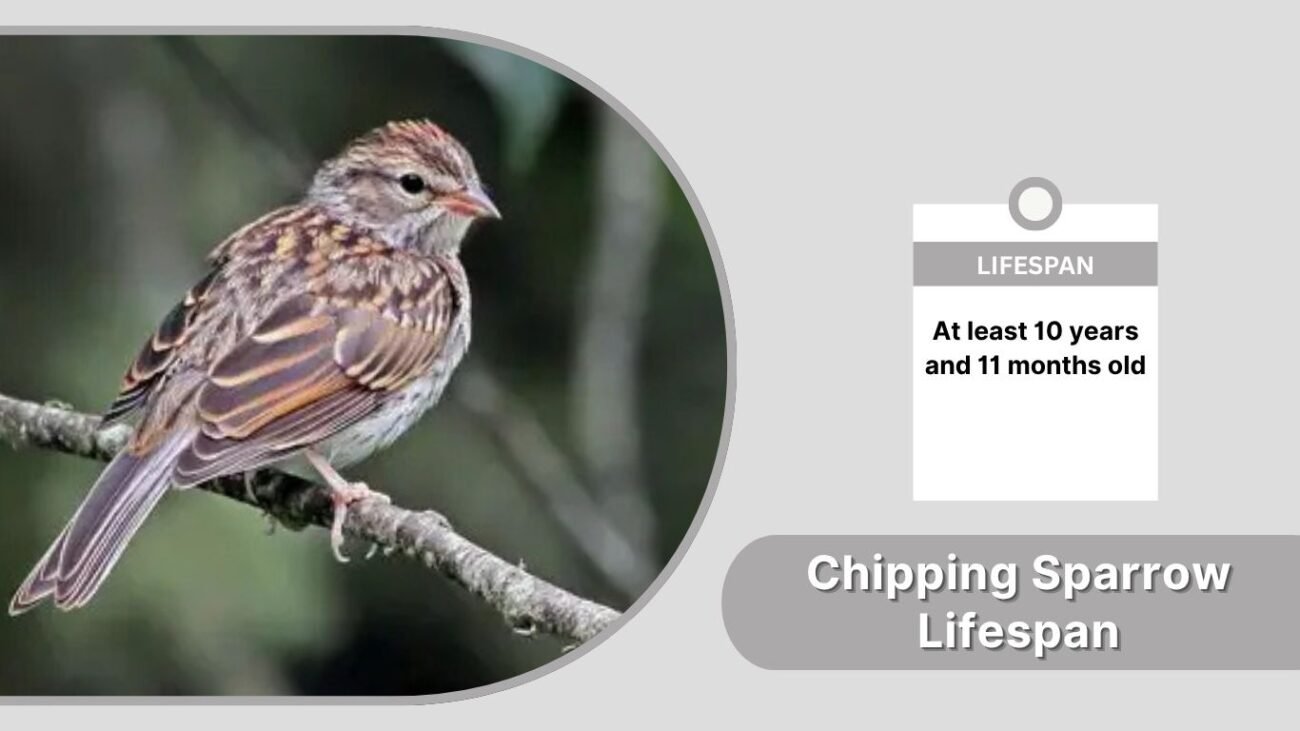
The oldest recorded Chipping Sparrow was at least 10 years and 11 months old, based on banding records from Ontario. Most wild small birds do not live that long, because survival depends on predators, weather, migration risks, food supply, and nesting success.
Birds Similar to Chipping Sparrow
Several birds can look or sound like a Chipping Sparrow, especially in nonbreeding plumage. The most confusing species are usually American Tree Sparrow, Field Sparrow, Clay-colored Sparrow, Brewer’s Sparrow, and juvenile sparrows with streaky underparts.
How to Avoid Confusion
- American Tree Sparrow: rusty cap, but usually has a central dark breast spot and a different face pattern.
- Field Sparrow: pink bill, plain face, and softer overall look.
- Clay-colored Sparrow: pale face pattern and buffy tones, often more western/central.
- Brewer’s Sparrow: very plain, dull, and less sharply marked.
- House Sparrow: chunkier, heavier bill, different face pattern, and often closer to buildings.
For a breeding adult Chipping Sparrow, the best combination is rusty cap + black eye line + pale eyebrow + clean grayish chest.
Conservation Status
Chipping Sparrows are still common and widespread. Cornell lists them as a species of low conservation concern, with an estimated global breeding population of about 240 million, although Breeding Bird Survey data showed a long-term decline between 1966 and 2019.
They often do well in suburbs, parks, and open tree-filled landscapes. Audubon lists the species as Least Concern and notes that it has adapted well to gardens, parks, and altered habitats.
FAQs
What does a Chipping Sparrow bird look like?
A Chipping Sparrow is a small, slim sparrow with a rusty-red cap, black eye line, pale eyebrow, grayish underparts, and brown-streaked back. Breeding adults look crisp and clean, while juveniles and winter birds are duller and more streaked.
What is the Chipping Sparrow bird song?
The Chipping Sparrow song is a fast, thin, musical trill on one note. It is often compared to the whir of a sewing machine. Males usually sing from the upper branches of trees during spring and summer.
Do Chipping Sparrows use bird houses?
Chipping Sparrows usually do not use enclosed bird houses. They normally build open cup nests in shrubs or trees, often hidden in foliage. Planting shrubs and small trees is more helpful than adding a standard nest box.
How long do Chipping Sparrow eggs take to hatch?
Chipping Sparrow eggs usually hatch after about 10–15 days of incubation. The young stay in the nest for about 9–12 days before leaving. The eggs are pale blue to white with dark streaks or spots.
Are Chipping Sparrows common backyard birds?
Yes, Chipping Sparrows are common backyard birds in many parts of North America, especially where yards have trees, shrubs, grassy areas, and seed sources. They may visit feeders for black oil sunflower seeds and ground-scattered seed mixes.