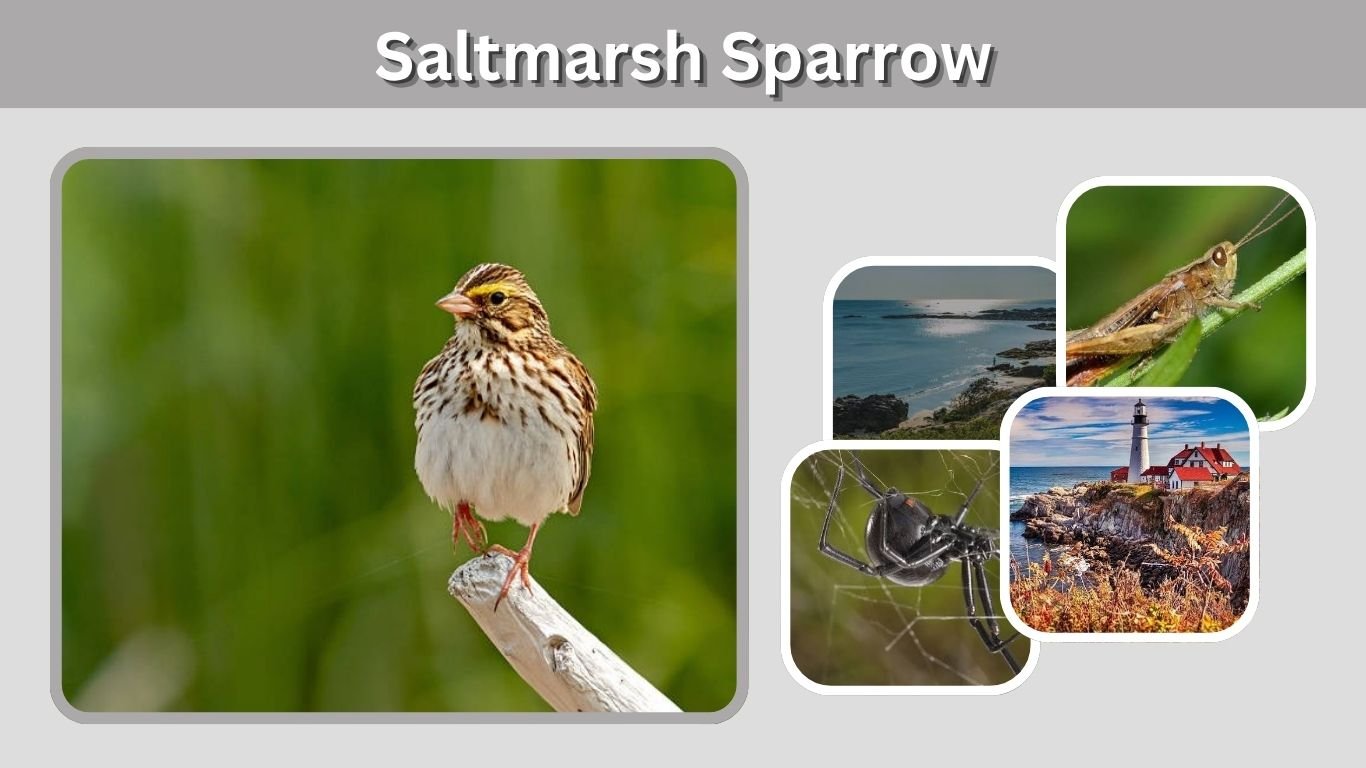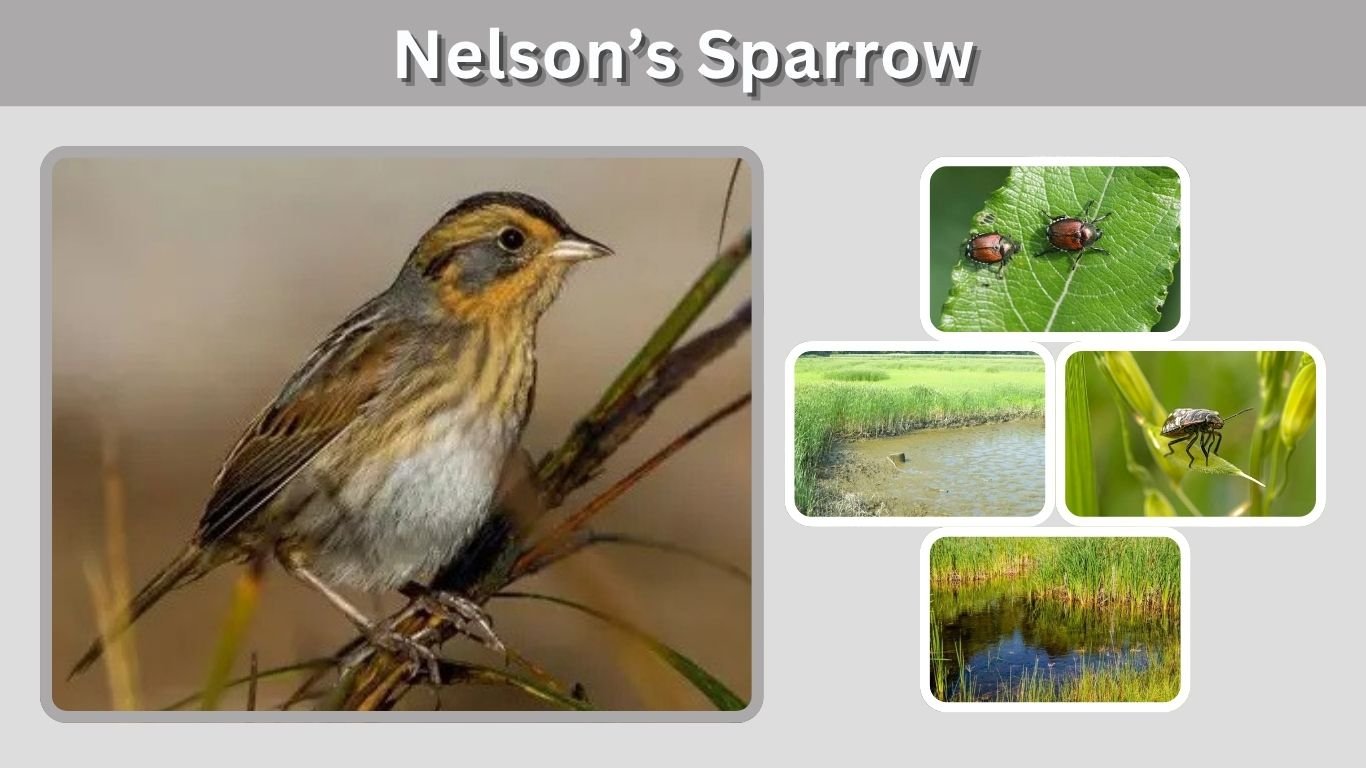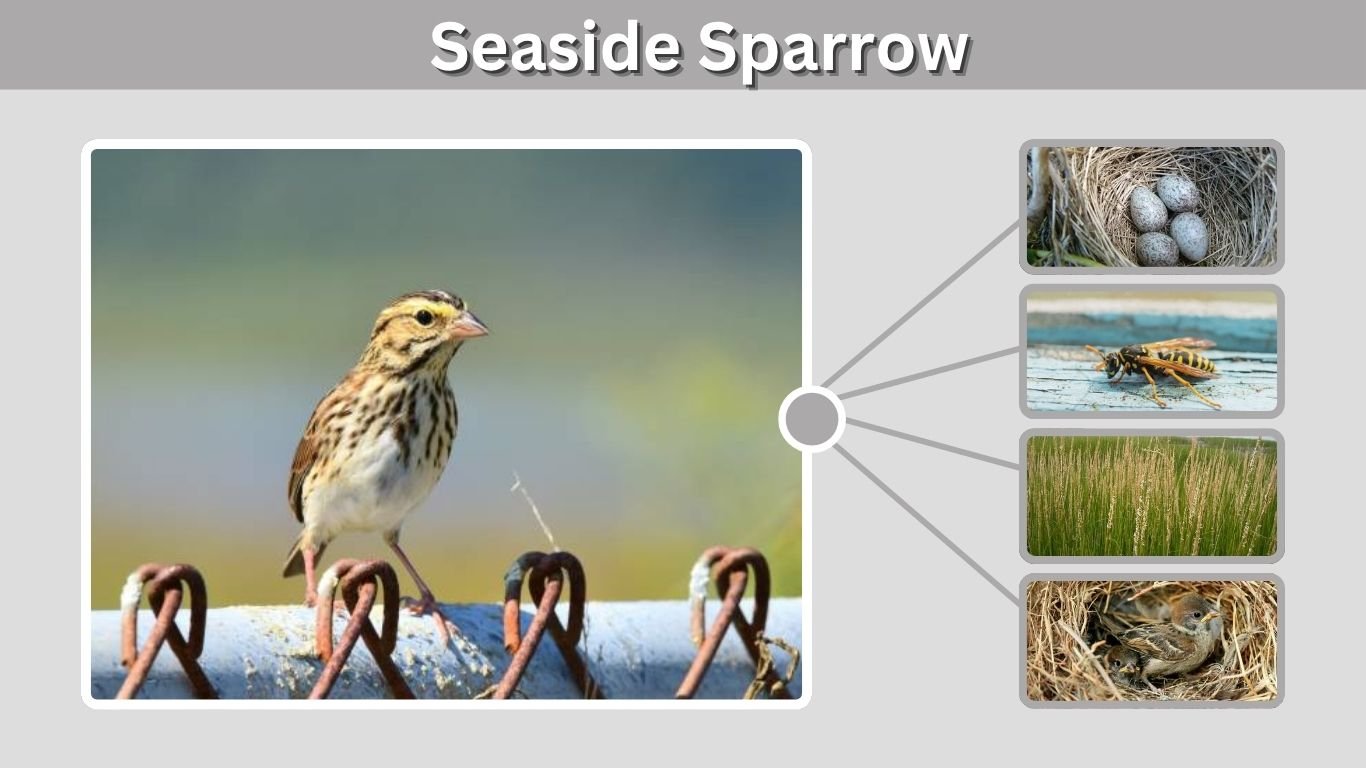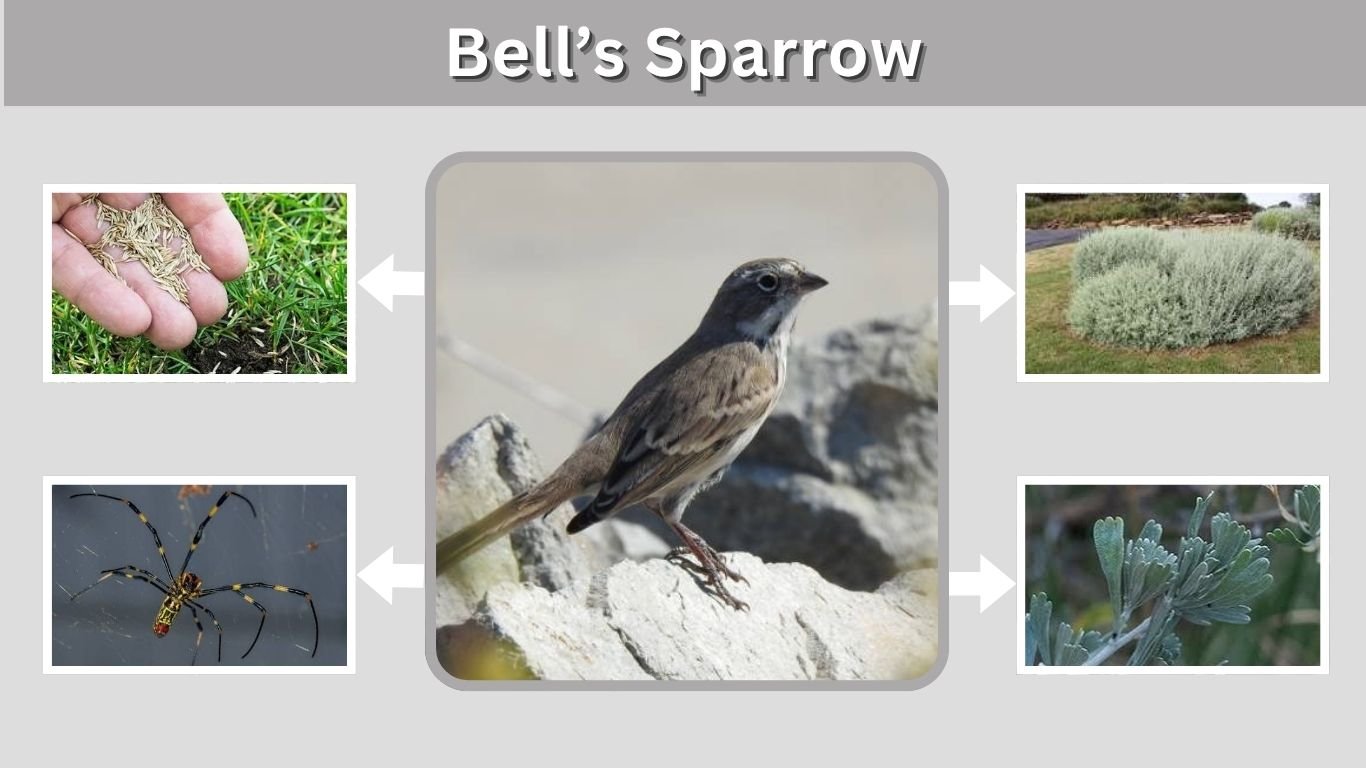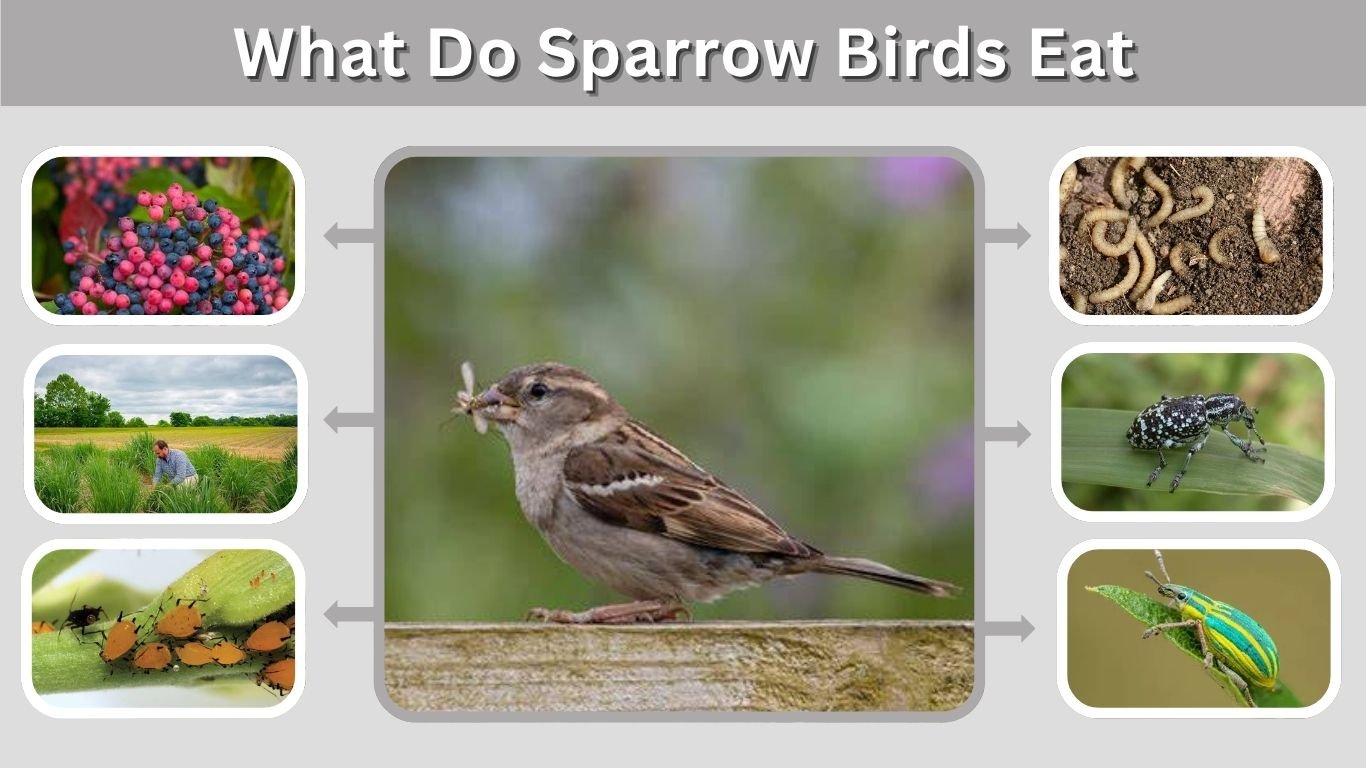
Sparrow birds eat a varied diet that includes seeds, grains, insects, fruits, and other readily available foods. Their exact diet changes with species, habitat, season, and age. Adult sparrows usually consume more seeds, while growing chicks depend heavily on protein-rich insects. House Sparrows also adapt well to cities and may eat food scraps around homes and restaurants. Understanding what sparrows naturally eat can help you choose healthier feeder foods and avoid giving them items that may cause nutritional or digestive problems.
What Do Sparrow Birds Eat in the Wild?
Most sparrows are opportunistic feeders. They search on the ground, in shrubs, and around seed-producing plants for whatever food is abundant.
Although sparrows are commonly described as seed eaters, many species rely heavily on insects during spring and summer. Their short, conical bills allow them to crack seeds, while their quick movements help them catch small invertebrates.
10 Common Foods Sparrow Birds Eat
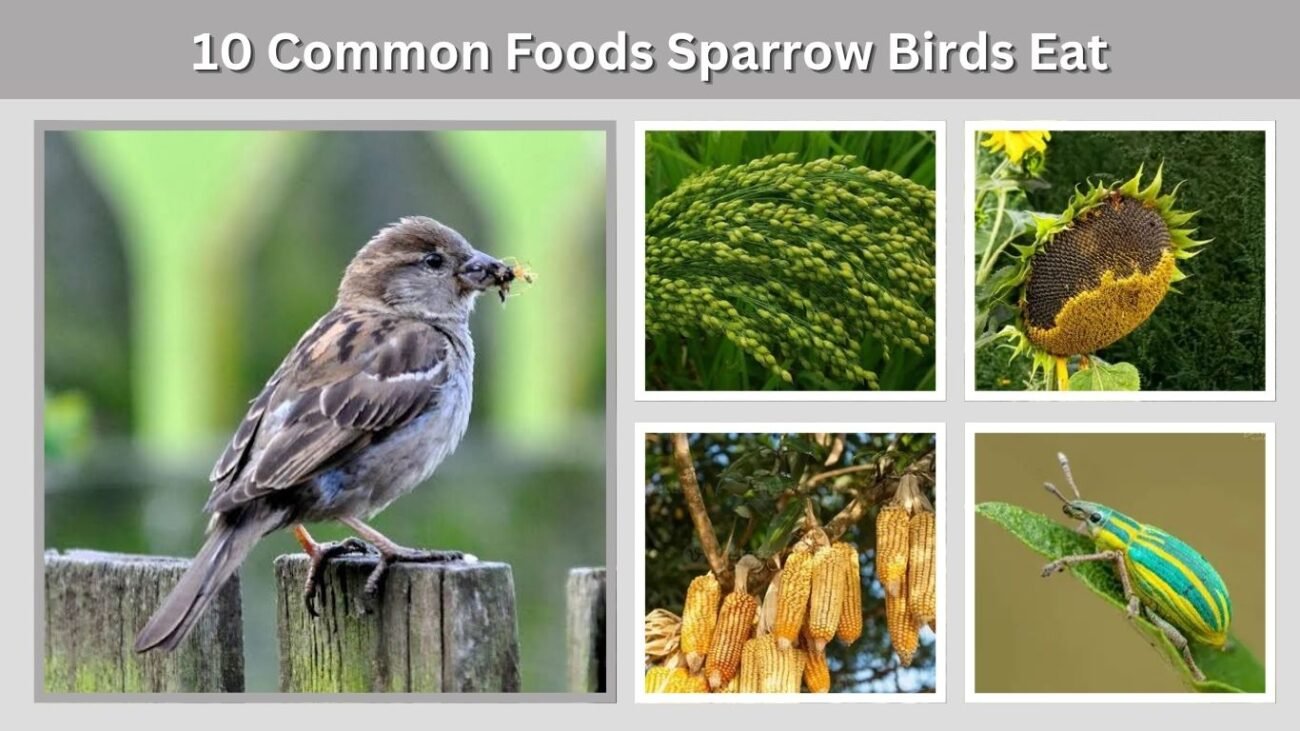
The following foods make up a large part of the diet of House Sparrows, Song Sparrows, Chipping Sparrows, and many other sparrow species.
1. Grass Seeds
Grass seeds are among the most important natural foods for sparrows. The birds forage beneath tall grass, along roadsides, and in open fields where mature seed heads are available.
They may eat seeds from native grasses, lawn grasses, and agricultural plants. Allowing a small section of grass to produce seeds can create a useful feeding area for local sparrows.
2. Millet
Millet is one of the most attractive feeder foods for many sparrow species. White proso millet is especially popular with ground-feeding birds.
You can scatter a small amount beneath a feeder or place it in a low platform feeder. Avoid leaving large quantities on wet ground because damp seed can spoil or develop mold.
3. Sunflower Seeds
Sparrows may eat black oil sunflower seeds, especially when the shells are already broken. Some sparrows can open whole seeds, but their relatively small bills may make hulled sunflower kernels easier to consume.
Sunflower hearts provide calories, protein, and fat, making them particularly useful during colder weather.
4. Cracked Corn
House Sparrows and other grain-eating birds may consume small pieces of cracked corn. It is commonly included in inexpensive birdseed mixtures and is often eaten from platform or ground feeders.
Only offer clean, dry corn in moderate quantities. Large pieces may be difficult for small birds to swallow, while wet corn can spoil quickly.
5. Wheat and Other Grains
Sparrows frequently eat wheat, oats, barley, rice, and other grains, particularly around farms, livestock areas, and grain-storage facilities.
House Sparrows have adapted especially well to human environments because grain is often abundant near buildings. Whole grains are generally more nutritious than highly processed or salted foods.
6. Beetles
Beetles and their larvae provide valuable protein for adult sparrows and growing chicks. Sparrows may capture small beetles on the ground, among leaves, or on plant stems.
Insect consumption increases during the breeding season because young birds require protein to develop muscles, bones, and feathers.
7. Caterpillars
Caterpillars are soft-bodied and easy for parent birds to carry back to a nest. They are an important food source for baby sparrows.
Native plants support more caterpillars than many ornamental plants. Growing native shrubs, grasses, and flowers can therefore improve natural food availability for nesting birds.
8. Flies, Ants, and Other Insects
Sparrows eat many small invertebrates, including flies, ants, aphids, grasshoppers, crickets, spiders, and insect larvae.
The birds may pick insects from the ground or chase them through low vegetation. Even species that mainly eat seeds as adults often feed insects to their chicks.
9. Berries and Soft Fruits
Some sparrows eat small berries and pieces of soft fruit when available. They may feed on wild berries, fallen fruit, and fruiting shrubs.
Fruit usually represents a smaller portion of their diet than seeds or insects. Suitable options include tiny pieces of apple, pear, or berries without added sugar, salt, syrup, or seasoning.
10. Plant Buds and Tender Shoots
When seeds and insects are scarce, sparrows may eat flower buds, tender leaves, shoots, and other soft plant material.
This behavior is more noticeable during early spring or in agricultural areas. House Sparrows may occasionally damage seedlings, although their overall diet remains varied.
Sparrow Diet at a Glance
| Food type | Examples | When commonly eaten |
| Seeds | Millet, grass seed, sunflower | Throughout the year |
| Grains | Wheat, oats, cracked corn | Especially near farms and towns |
| Insects | Beetles, ants, flies, caterpillars | Spring and summer |
| Fruits | Berries, apple, pear | Summer and fall |
| Plant material | Buds, shoots, tender leaves | When other food is limited |
What Do Baby Sparrows Eat?
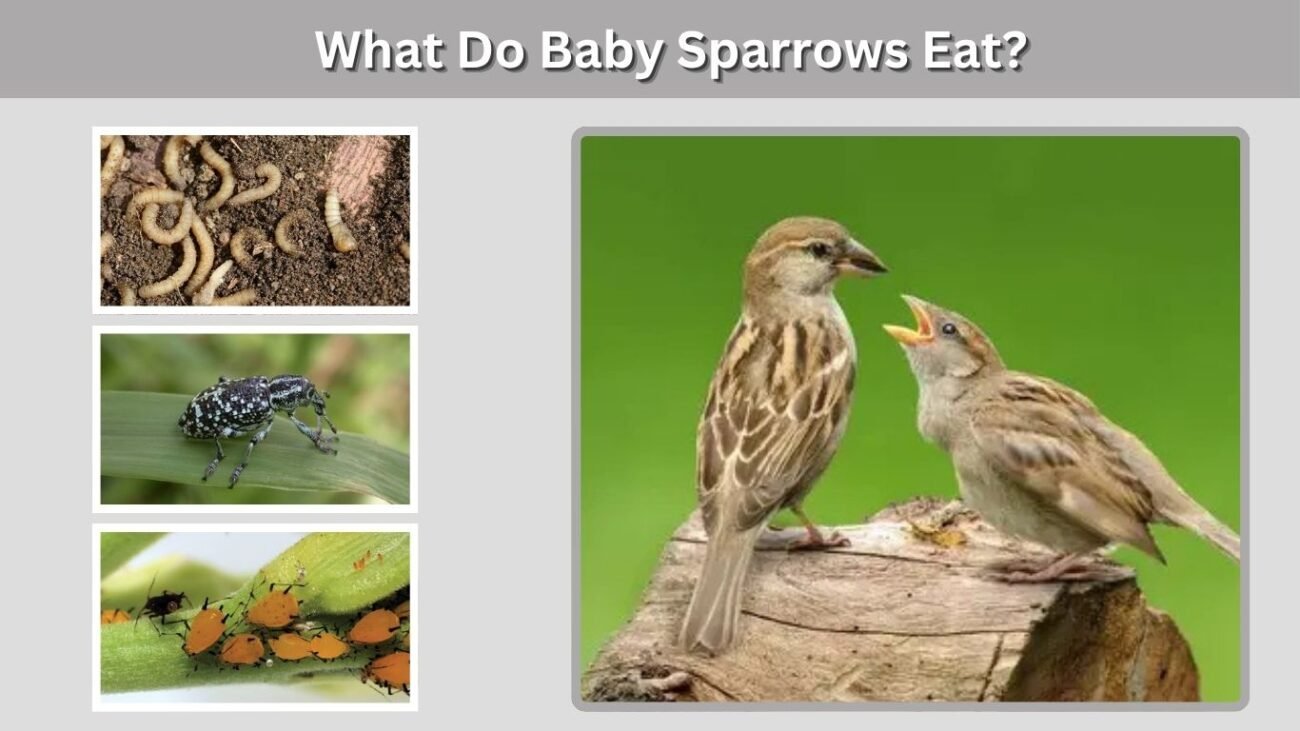
Baby sparrows need significantly more protein than adults. Their parents commonly feed them insects, spiders, larvae, and other small invertebrates.
A nestling may receive food many times each hour during daylight. Insects provide the amino acids and nutrients required for rapid growth.
Common Foods Given to Sparrow Chicks
Parent sparrows may bring:
- Caterpillars
- Small beetles
- Flies and fly larvae
- Aphids
- Grasshoppers
- Spiders
- Soft-bodied insects
Do not give a baby sparrow milk, bread, water by dropper, or dry seeds. Incorrect feeding can cause choking, aspiration, digestive problems, or death. An injured or orphaned chick should be taken to a licensed wildlife rehabilitator.
What Do House Sparrows Eat?
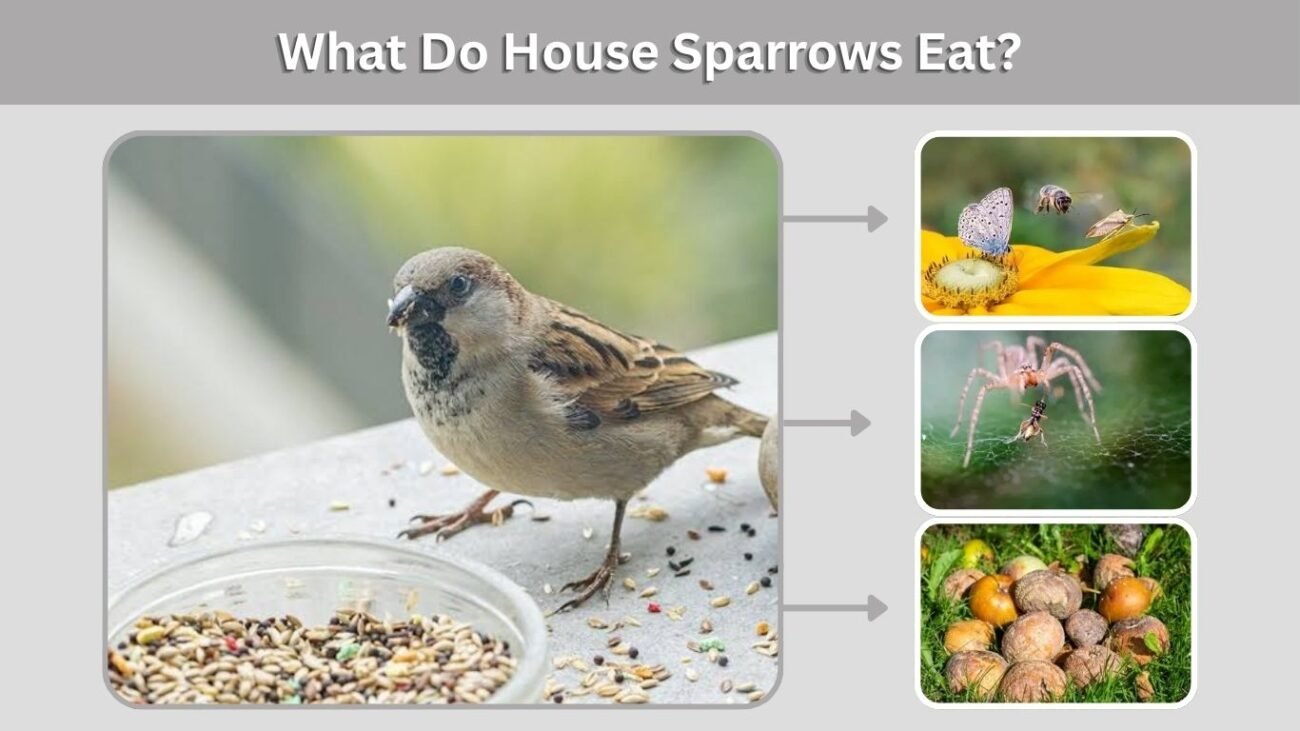
House Sparrows eat grains, seeds, insects, fruit, and many foods associated with people. They commonly forage around sidewalks, farms, parking lots, outdoor dining areas, and animal-feeding sites.
Their adaptability allows them to survive in heavily developed areas. However, human foods are not always healthy for them.
House Sparrows may eat:
- Birdseed and livestock grain
- Weed and grass seeds
- Insects and spiders
- Fallen fruit
- Food crumbs
- Small amounts of vegetable matter
Although they may eat bread, chips, or processed scraps, these foods contain little useful nutrition and may include harmful levels of salt, sugar, or fat.
What Should You Feed Sparrows?
A balanced bird-feeding setup should emphasize clean seeds rather than bread or table scraps. Ground-feeding sparrows often prefer low trays, platform feeders, or seed scattered sparingly beneath hanging feeders.
Good Foods for Sparrow Feeders
Suitable choices include:
- White proso millet
- Hulled sunflower seeds
- Black oil sunflower seeds
- Cracked corn
- Nyjer seed
- Finely chopped unsalted peanuts
- Commercial wild birdseed mixtures
Offer only as much food as the birds can consume before it becomes wet or spoiled. Sweep up old seed regularly to reduce mold, rodents, and disease transmission.
How Does a Sparrow’s Diet Change by Season?
Food availability changes throughout the year, so sparrows adjust their diet accordingly.
Spring and Summer
During warmer months, insects become more abundant. Adult sparrows eat insects and carry large numbers of them to their chicks.
Seeds, buds, and early fruits may supplement the diet.
Fall
Mature grasses, weeds, and crops produce plentiful seeds. Sparrows spend more time feeding on the ground and may gather in larger flocks.
Berries and fallen fruits can also become available.
Winter
Insects become scarce in colder regions, causing sparrows to depend more heavily on seeds and grains. High-energy sunflower kernels can be especially useful during freezing conditions.
Foods Sparrows Should Not Eat
Sparrows may investigate almost any edible-looking item, but some foods provide poor nutrition or create serious health risks.
Avoid offering:
- Salty chips or crackers
- Chocolate
- Avocado
- Onions and garlic
- Moldy bread or seed
- Sugary desserts
- Milk and dairy products
- Alcohol or caffeinated drinks
- Heavily seasoned leftovers
- Uncooked dry beans
- Foods containing artificial sweeteners
Bread is not immediately poisonous in small amounts, but it fills the bird’s stomach without supplying enough protein, vitamins, or minerals. Regular bread feeding can replace healthier natural foods.
How to Create a Sparrow-Friendly Feeding Area
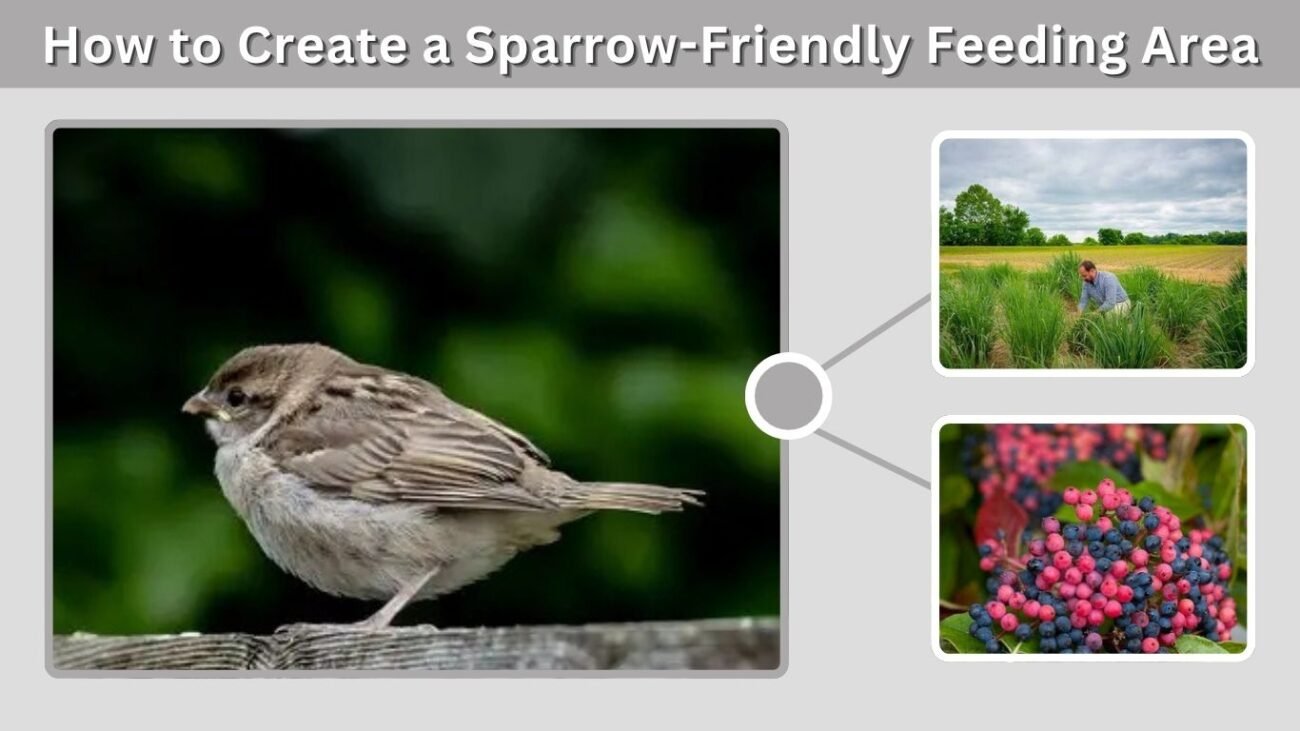
Food is only one part of a useful backyard habitat. Sparrows also need drinking water, shelter, nesting vegetation, and protection from predators.
You can support them by:
- Planting native seed-producing grasses
- Growing berry-producing shrubs
- Avoiding unnecessary insecticides
- Providing a shallow birdbath
- Cleaning feeders regularly
- Keeping pet cats indoors
- Leaving some fallen leaves beneath shrubs
- Placing feeders near cover but away from ambush areas
Reducing pesticide use is particularly important during nesting season because sparrow chicks depend on insects.
FAQs
Do sparrows eat bread?
Sparrows will eat bread, but it is not a healthy regular food. Bread provides calories without enough protein, vitamins, or minerals. Moldy bread can also be dangerous. Seeds, grains, and natural insects are much better choices for feeding wild sparrows.
Do sparrows eat rice?
Sparrows can eat both cooked and uncooked rice. The common claim that uncooked rice expands and harms birds is incorrect. However, rice should be plain and offered only occasionally. Avoid rice prepared with salt, oil, sauce, spices, or other seasonings.
Do sparrows eat worms?
Sparrows may eat small worms, but insects, spiders, caterpillars, and larvae are generally more important in their diet. Parent sparrows often carry soft-bodied invertebrates to their chicks because these foods provide the protein and moisture needed for rapid development.
What is the best birdseed for sparrows?
White proso millet is one of the best seeds for many sparrow species. They may also eat sunflower kernels, cracked corn, nyjer, and mixed grains. A low platform feeder is useful because numerous sparrows naturally prefer feeding close to the ground.
How often do sparrows eat?
Wild sparrows feed repeatedly throughout the day rather than eating one large meal. Their feeding frequency depends on temperature, food availability, and breeding activity. Nesting parents make especially frequent trips because rapidly growing chicks require numerous small insect meals during daylight hours.