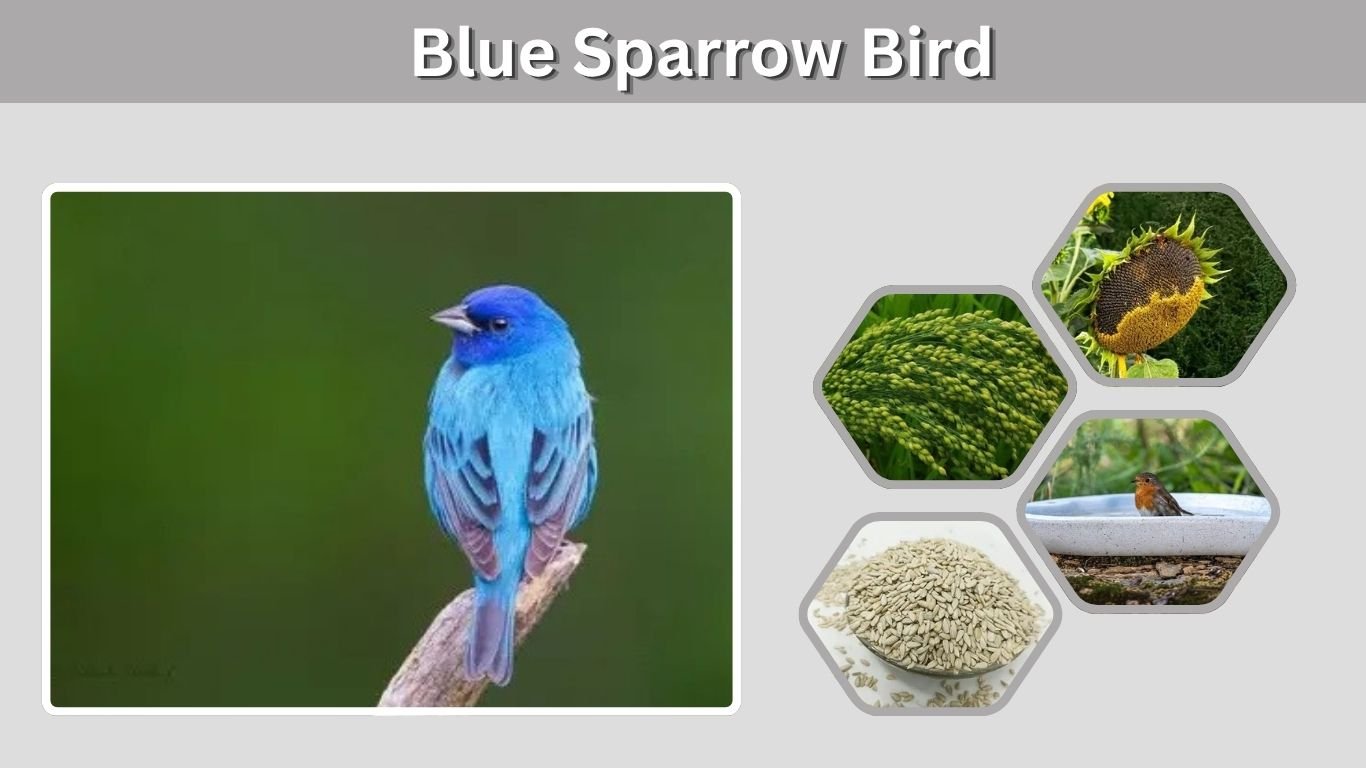
Seeing a tiny blue bird perched on a fence or feeding among grasses may lead you to call it a “blue sparrow bird.” However, this phrase does not usually refer to a single official species. In North America, the bird is more likely an Indigo Bunting, Blue Grosbeak, Lazuli Bunting, or another sparrow-sized songbird. Examining its bill, wing markings, chest color, size, location, and seasonal plumage can help you determine which blue bird you have found.
Is There a Bird Called a Blue Sparrow?
“Blue sparrow” is generally an informal description for a blue bird with a sparrow-like size and shape. Most likely candidates are buntings or grosbeaks rather than true sparrows. These birds often have short, conical bills that make them resemble familiar seed-eating sparrows.
There is an actual species called the Blue Bunting, but it is different from the birds most North American observers commonly encounter.
The Blue Bunting
The male Blue Bunting has contrasting areas of deep and bright blue, along with a thick, stubby bill. Females are warm brown and lack the male’s blue coloration. This sparrow-sized species primarily inhabits Mexico and northern Central America and is only a rare visitor to far southern Texas.
How to Identify a Blue Sparrow-Like Bird
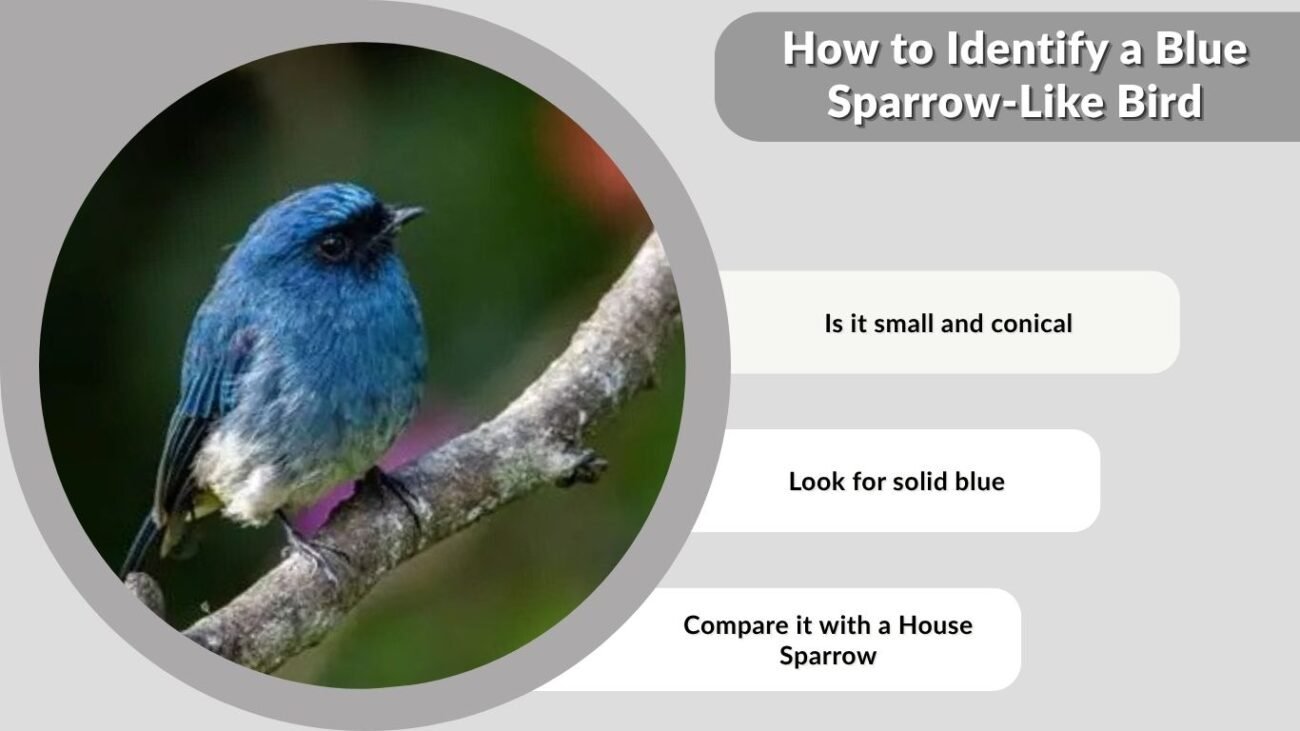
Color alone is not enough for accurate identification. Bright sunlight can make dark feathers appear vivid blue, while shade may make a blue bird look almost black. Seasonal molt, sex, and age also influence plumage.
Examine these features:
- Bill: Is it small and conical, unusually heavy, or thin and pointed?
- Chest: Look for solid blue, orange, white, streaked, or pale underparts.
- Wings: Check for chestnut, white, or buff-colored wing bars.
- Body size: Compare it with a House Sparrow, finch, or robin.
- Tail: Determine whether it is short, long, rounded, or notched.
- Habitat: Note whether the bird is in brush, woodland edges, fields, or an open yard.
- Season: Males may become brown or patchy outside their breeding plumage.
Common Birds Mistaken for a Blue Sparrow
Several birds match the description of a small blue sparrow. The Indigo Bunting is often the closest match, although location and physical markings may point to another species.
Indigo Bunting
The male Indigo Bunting is a small, stocky bird that is bright blue across nearly its entire body. Its head may appear slightly deeper blue, and it has a short tail and small silver-gray conical bill. Its size and shape strongly resemble those of a sparrow.
Females are primarily brown with faint breast streaks, a pale throat, and occasional blue tinges on the wings, rump, or tail. Immature and nonbreeding males may have irregular patches of blue and brown, making them harder to recognize.
Indigo Buntings favor weedy fields, hedgerows, roadsides, and brushy locations where open areas meet woodland. Males frequently sing from exposed treetops, shrubs, and utility wires.
Blue Grosbeak
A Blue Grosbeak resembles a large, heavily built Indigo Bunting. Adult males are rich blue, with chestnut-colored wing bars and a small black mask around the base of the bill.
The most noticeable feature is its enormous triangular bill. The Blue Grosbeak is larger than an Indigo Bunting and slightly smaller than a Brown-headed Cowbird. Females and young birds are mostly cinnamon brown, with wing bars and unstreaked underparts.
Blue Grosbeaks commonly occupy old fields, hedgerows, scrubland, and shrubby areas near water. The combination of deep blue feathers, chestnut wings, and a massive bill separates them from smaller buntings.
Lazuli Bunting
The Lazuli Bunting is a western sparrow-sized bird with a brilliant blue head and back, pumpkin-orange breast, white belly, and white shoulder patch. It has a small conical bill and a slightly notched tail.
Females and immature birds are warm gray-brown, with buff wing bars, an unstreaked pale cinnamon breast, and subtle blue in the wings or tail. Lazuli Buntings inhabit brushy hillsides, streamside vegetation, thickets, agricultural hedges, and gardens in western North America.
Eastern Bluebird
An Eastern Bluebird may initially look like a large blue sparrow. Adult males have blue upperparts, a reddish-orange throat and chest, and a white belly. Females have softer gray-blue wings and a paler orange breast.
Bluebirds are generally larger and more upright than buntings. Their bills are straight and relatively thin rather than deep and conical. Eastern Bluebirds measure approximately 6–8 inches long, making them noticeably larger than an Indigo Bunting.
Black-Throated Blue Warbler
A male Black-throated Blue Warbler is a tiny bird with dark blue upperparts, a black face and throat, a white belly, and a distinct white wing patch. It is about sparrow-sized but has a thin insect-eating bill rather than a heavy seed-cracking bill.
Females are mostly olive-brown and may be difficult to connect with the brightly colored male. The bill shape and white wing patch are especially useful identification clues.
Blue Sparrow Bird Comparison Chart
| Bird | Primary coloration | Most useful identification feature | Relative size |
| Indigo Bunting | Nearly solid bright blue | Small bill and no obvious wing bars | Sparrow-sized |
| Blue Grosbeak | Deep blue | Huge bill and chestnut wing bars | Larger than a sparrow |
| Lazuli Bunting | Blue, orange, and white | Orange breast and white belly | Sparrow-sized |
| Blue Bunting | Bright and dark blue patches | Thick, stubby bill and no wing bars | Sparrow-sized |
| Eastern Bluebird | Blue, orange, and white | Thin bill and upright posture | Larger than a sparrow |
| Black-throated Blue Warbler | Blue, black, and white | Black throat and white wing patch | Sparrow-sized |
Indigo Bunting vs. Blue Grosbeak
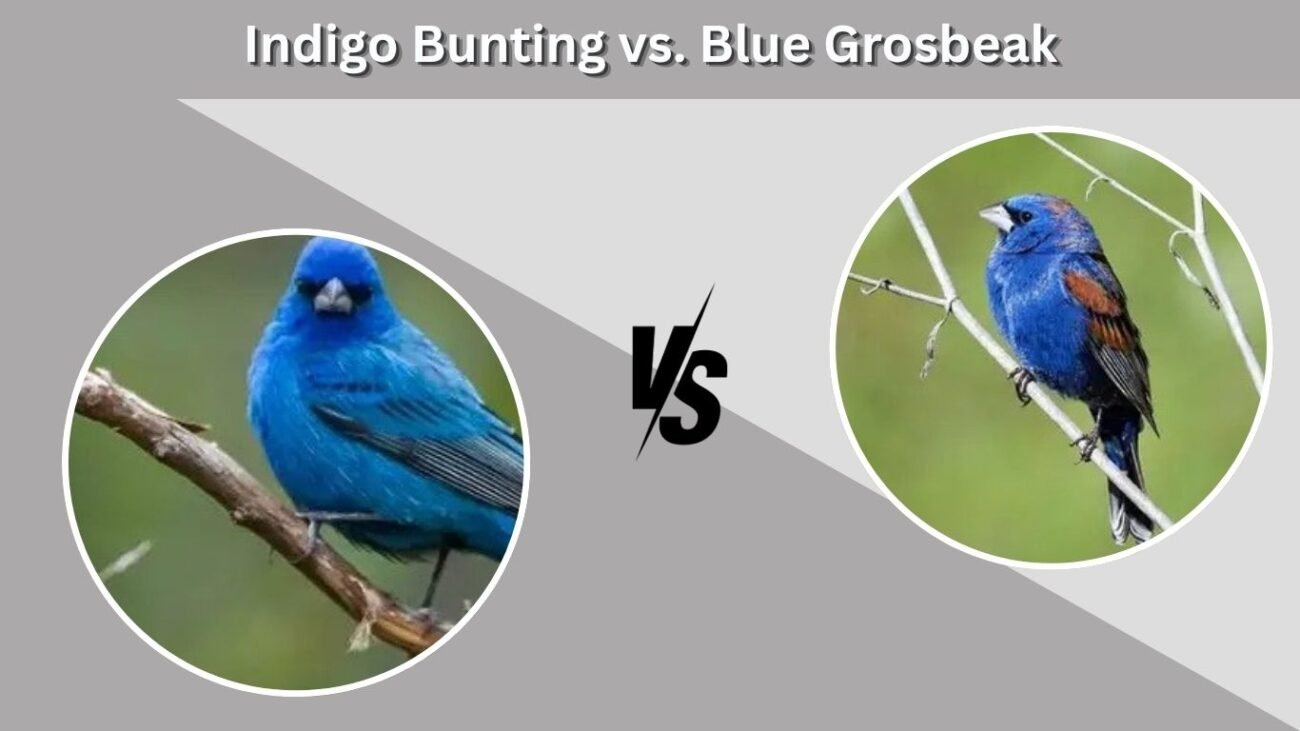
These two species are frequently confused because both males are blue and live in brushy, open habitats. Size, bill structure, and wing markings provide the quickest separation.
Bill and Body Size
An Indigo Bunting has a relatively small conical bill and compact body. A Blue Grosbeak has a disproportionately large bill, broad head, and heavier build. Blue Grosbeaks measure approximately 5.9–6.3 inches, while Indigo Buntings are generally 4.7–5.1 inches long.
Wing Markings
Male Blue Grosbeaks have prominent rusty or chestnut wing bars. Indigo Buntings lack those obvious rusty bars and appear more evenly blue. This distinction is often visible even when the bird is perched at a distance.
Why Does a Blue Bird Sometimes Look Brown?
Blue feather color can change dramatically with lighting. In shaded locations, an Indigo Bunting may appear dark gray or almost black. When sunlight reaches its feathers, their structure reflects blue wavelengths, producing a much brighter appearance.
Plumage also changes seasonally. Nonbreeding male Indigo Buntings become mottled blue and brown, while immature males may show only scattered blue feathers. Females remain mostly brown throughout the year, although blue highlights may be visible on their wings and tails.
Where to Look for Small Blue Birds
Most blue sparrow-like birds are associated with open areas containing shrubs, weeds, grasses, or scattered trees. They may remain concealed while feeding and then fly to an exposed perch to sing.
Good places to search include:
- Woodland edges and clearings
- Overgrown fields and rural roadsides
- Hedgerows and dense brush
- Streamside shrubs
- Recently cleared or regenerating land
- Gardens bordering natural vegetation
- Seed-producing grasses and wildflower patches
Indigo Buntings often use brushy field edges, while Blue Grosbeaks prefer old fields and scrubby growth. Lazuli Buntings are especially associated with western thickets, hillsides, and streamside vegetation.
How to Attract Blue Sparrow-Like Birds
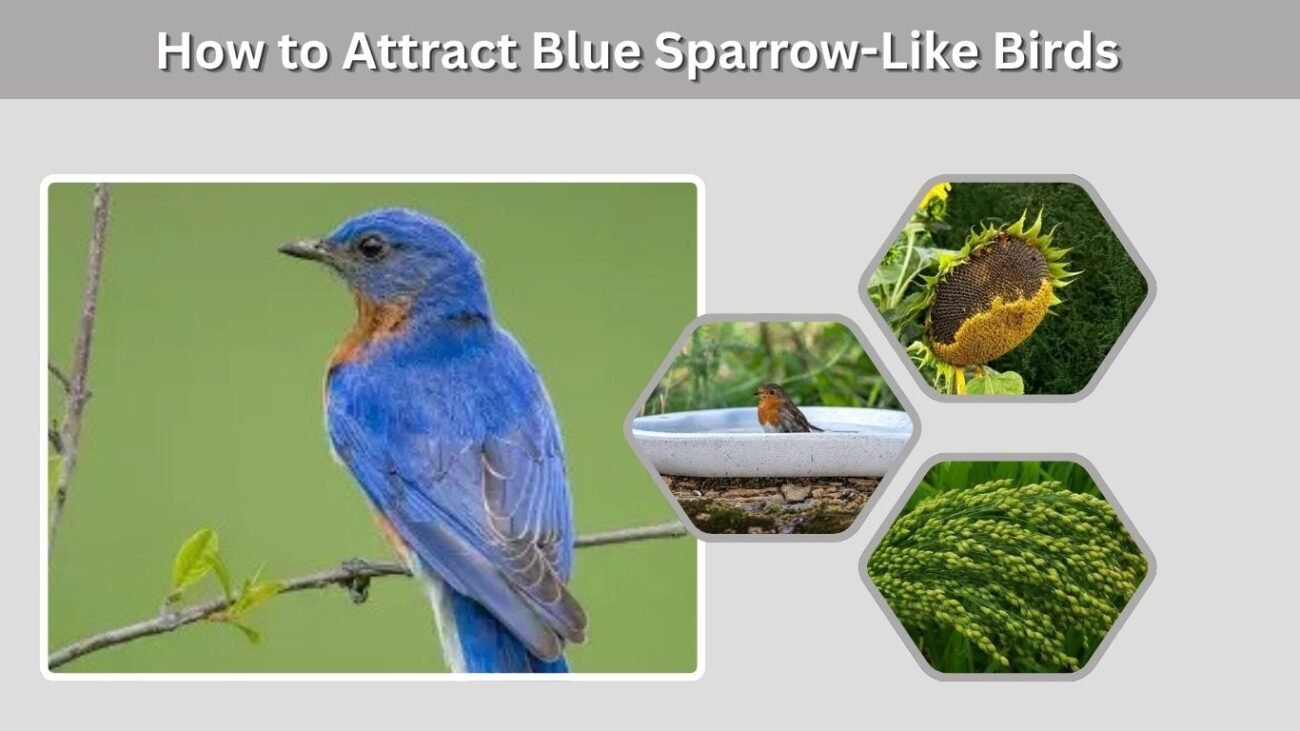
Buntings may visit yards that provide seeds, insects, protective vegetation, and fresh water. Maintaining a slightly natural area is often more useful than creating a completely open lawn.
Consider providing:
- White proso millet
- Nyjer or thistle seed
- Sunflower seeds
- Native seed-producing grasses
- Dense native shrubs
- Pesticide-free insect habitat
- A shallow birdbath
- Quiet cover near the feeding area
Lazuli Buntings may visit feeders offering white proso millet, sunflower, or nyjer seed. Indigo Buntings also consume seeds, berries, and insects and may enter yards offering suitable food and nearby brush.
FAQs
What is the small bright-blue bird that looks like a sparrow?
The bird is most likely a male Indigo Bunting, especially when it is almost entirely blue and has a small conical bill. Blue Grosbeaks are larger and have chestnut wing bars, while Lazuli Buntings have orange breasts and white bellies.
Are there any true blue sparrows?
The phrase “blue sparrow” is usually descriptive rather than an official name. Most bright-blue, sparrow-sized birds are buntings or grosbeaks. There is a species called the Blue Bunting, but it primarily lives in Mexico and northern Central America.
What is the difference between a bluebird and a blue sparrow-like bird?
Bluebirds are larger, stand more upright, and have relatively thin bills. Male Eastern Bluebirds also have reddish-orange chests and white bellies. Indigo Buntings are smaller, more compact, and have short, thick, seed-eating bills.
What blue bird has brown or orange wings?
A male Blue Grosbeak has deep-blue plumage and two rusty or chestnut wing bars. It also has an exceptionally large triangular bill. A bird with an orange breast rather than orange wings may instead be a Lazuli Bunting or Eastern Bluebird.
Why is the female blue sparrow bird brown?
In species such as Indigo, Lazuli, and Blue Buntings, females have subdued brown plumage that provides camouflage while nesting and moving through vegetation. Young males may also look brown before developing their brighter adult-blue feathers.