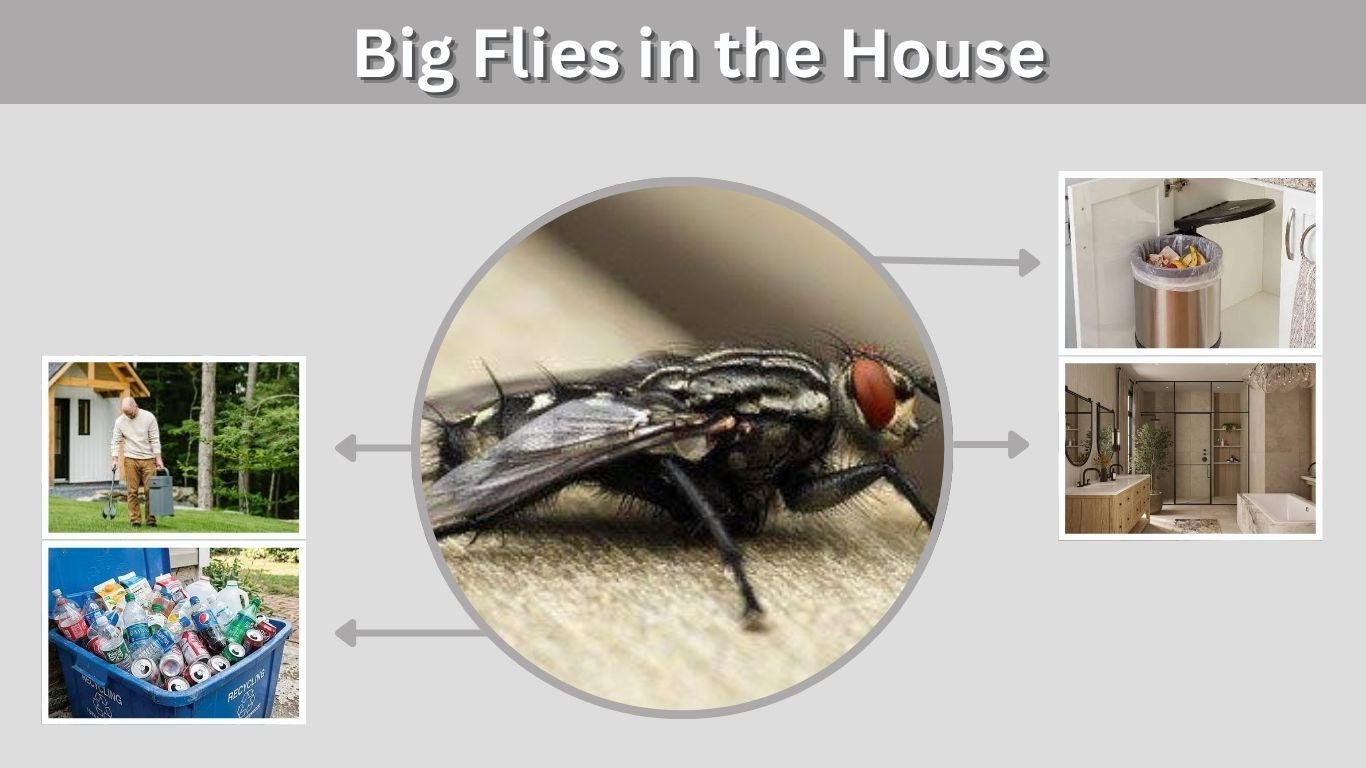
Big flies appearing inside a house are usually cluster flies, blow flies, bottle flies, flesh flies, or ordinary house flies. Large numbers emerging suddenly may indicate overwintering adults leaving wall cavities or maggots developing in garbage, animal waste, or a dead rodent. Their color, behavior, location, and season provide important identification clues. While most large indoor flies do not bite, species associated with waste can contaminate food and surfaces. Finding and removing the source is more effective than killing individual adults.
What Are the Big Flies in Your House?
A common house fly is only about ¼ inch long. Flies noticeably larger than this are often different species that entered for winter shelter or developed in decaying organic material. Examining their body color, movement, and where they gather can narrow down the possibilities.
Quick Identification Guide
| Appearance and behavior | Most likely insect |
| Large, dark gray, slow-moving | Cluster fly |
| Metallic blue body | Bluebottle fly |
| Shiny green body | Greenbottle fly |
| Large, gray body with checkered abdomen | Flesh fly |
| Dull gray with four dark thoracic stripes | House fly |
| Large eyes and painful bite | Horse or deer fly |
| Very long legs and mosquito-like body | Crane fly |
| Four equal-length wings and straight antennae | Flying termite |
| Narrow waist and bent antennae | Flying ant |
How Big Can a House Fly Get?
Adult house flies generally measure 5–7 mm, or approximately ¼ inch. Females are slightly larger than males, but true house flies do not become unusually large or “giant.” A fly measuring ⅜–½ inch is more likely to be a cluster fly, blow fly, flesh fly, or another large species.
Why Are Big Flies Suddenly Appearing?
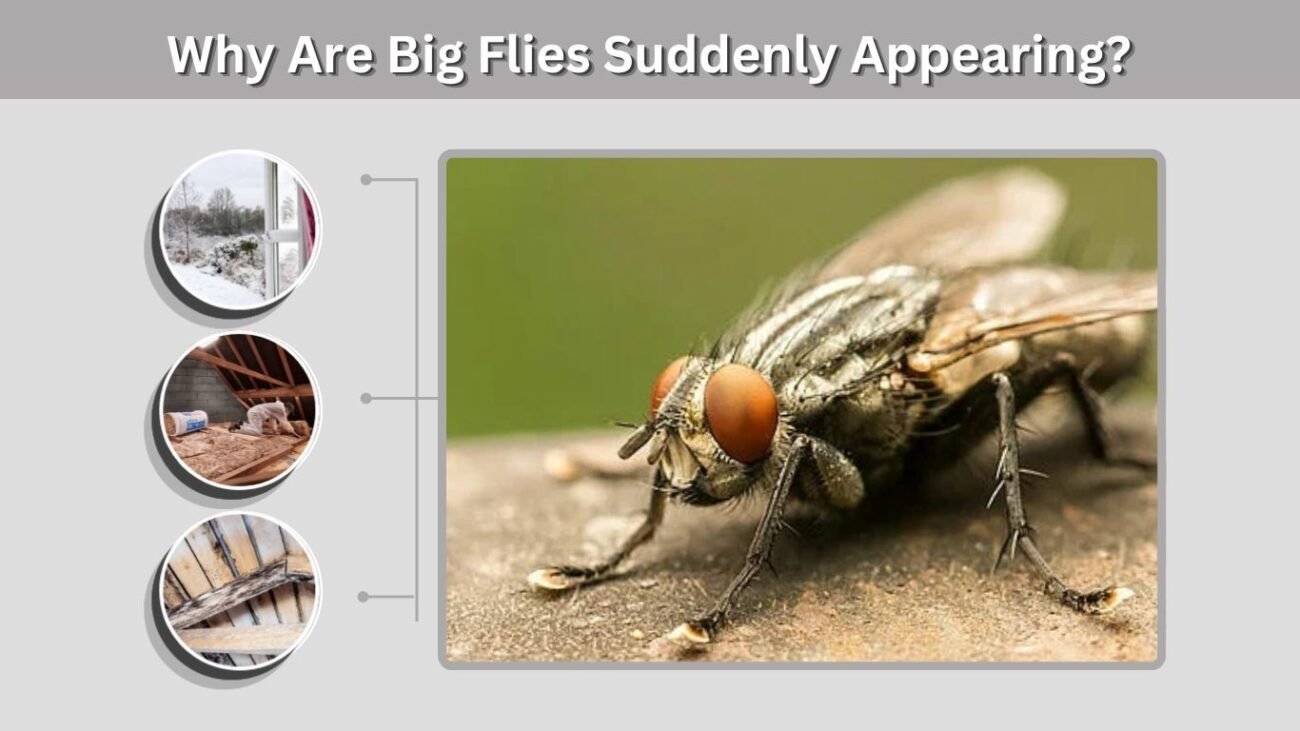
A sudden appearance usually means several adults emerged from the same hidden location. The source may be a wall cavity used for overwintering or a place where maggots completed development. The season helps determine which explanation is more likely.
Overwintering Flies Becoming Active
Large, slow flies appearing around windows during winter or early spring are often cluster flies. Adults entered cracks in the building during late summer or autumn and remained dormant inside walls or attics.
Sunlight or indoor heating can awaken them. They then move toward windows and lamps while trying to reach the outdoors. Cluster flies do not reproduce inside houses, so their presence does not indicate dirty indoor conditions.
A Dead Animal Inside the Building
Numerous blow flies or flesh flies appearing during warm weather may indicate a dead mouse, rat, squirrel, bird, or other animal in an attic, chimney, crawl space, or wall cavity. Their larvae feed on recently dead animals before crawling to drier areas to pupate.
Adults may emerge together after development is complete. The problem often ends after the carcass dries, but removing the animal is preferable when its location is accessible.
Garbage or Animal Waste
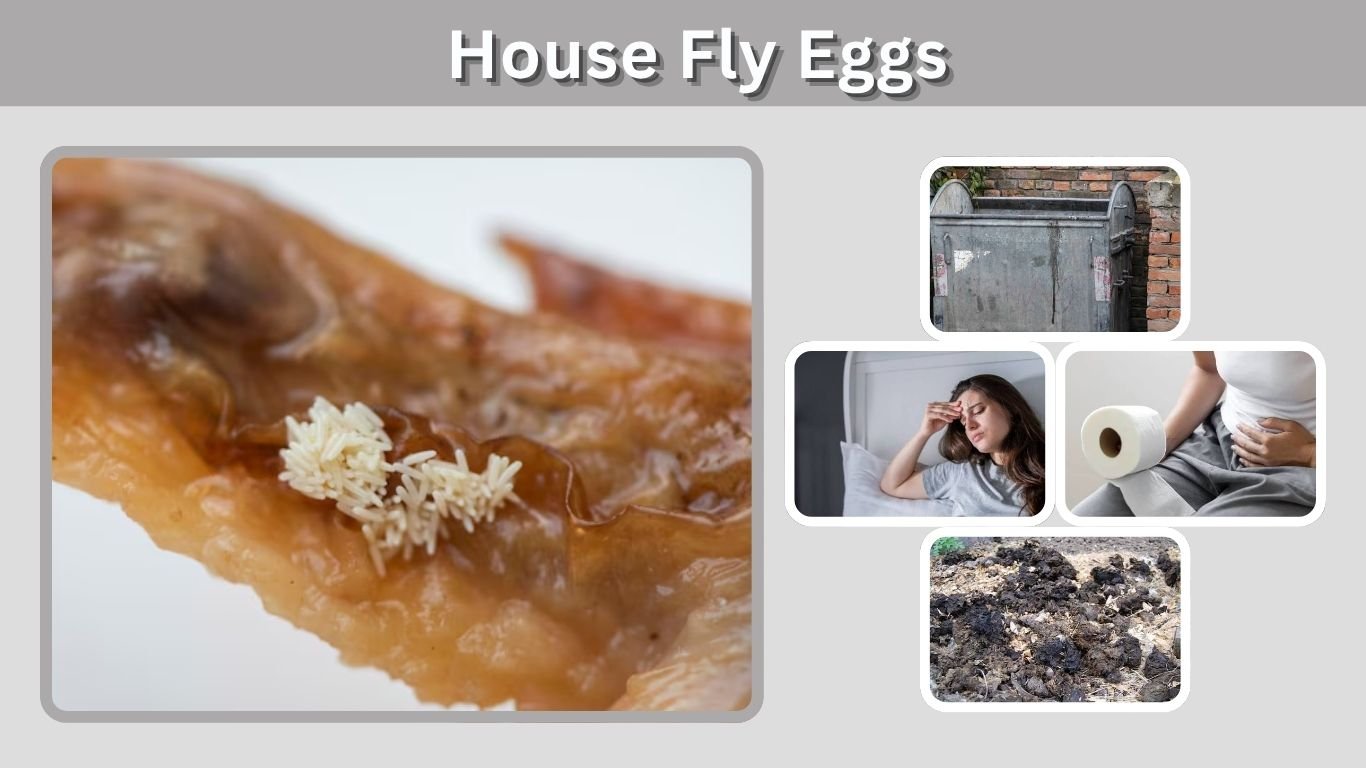
House flies and blow flies can reproduce in dirty garbage cans, spoiled meat, pet waste, manure, and other moist organic matter. Warm conditions allow their life cycle to be completed within one or two weeks. A small overlooked source can therefore produce many adults very quickly.
Flies Entering Through Openings
Individual flies may enter through open doors, torn screens, unscreened vents, chimneys, roof gaps, or spaces around pipes. Cluster flies particularly favor openings on sunny upper sections of buildings.
Common Types of Large Indoor Flies
Different large flies require different control methods. Cluster flies must be excluded before autumn, while blow flies and flesh flies require removal of the decaying material supporting their larvae.
Cluster Flies
- Adults measure approximately ⅜–½ inch.
- The body is dark gray or grayish-brown.
- Short golden hairs cover parts of the thorax.
- Adults fly slowly, lazily, and somewhat erratically.
- They gather near windows and lights.
- Most appear from autumn through early spring.
Cluster fly larvae develop outdoors as parasites of earthworms. Adults enter buildings only to overwinter and neither feed nor reproduce there. Those leaving wall cavities usually die within a couple of weeks if they cannot escape outside.
Blow Flies and Bottle Flies
- Adults are usually ¼–½ inch long.
- Bodies may be metallic blue, green, black, or gray.
- Their flight is fast and produces a noticeable buzzing sound.
- Adults are attracted to meat, garbage, carrion, and feces.
- Large numbers may indicate a dead animal nearby.
Bluebottle, greenbottle, and black blow flies primarily develop in animal-based materials. A single fly entering through a door is not necessarily concerning. Numerous adults repeatedly emerging in one room justify checking for a breeding source.
Flesh Flies
- Adults are larger and more robust than house flies.
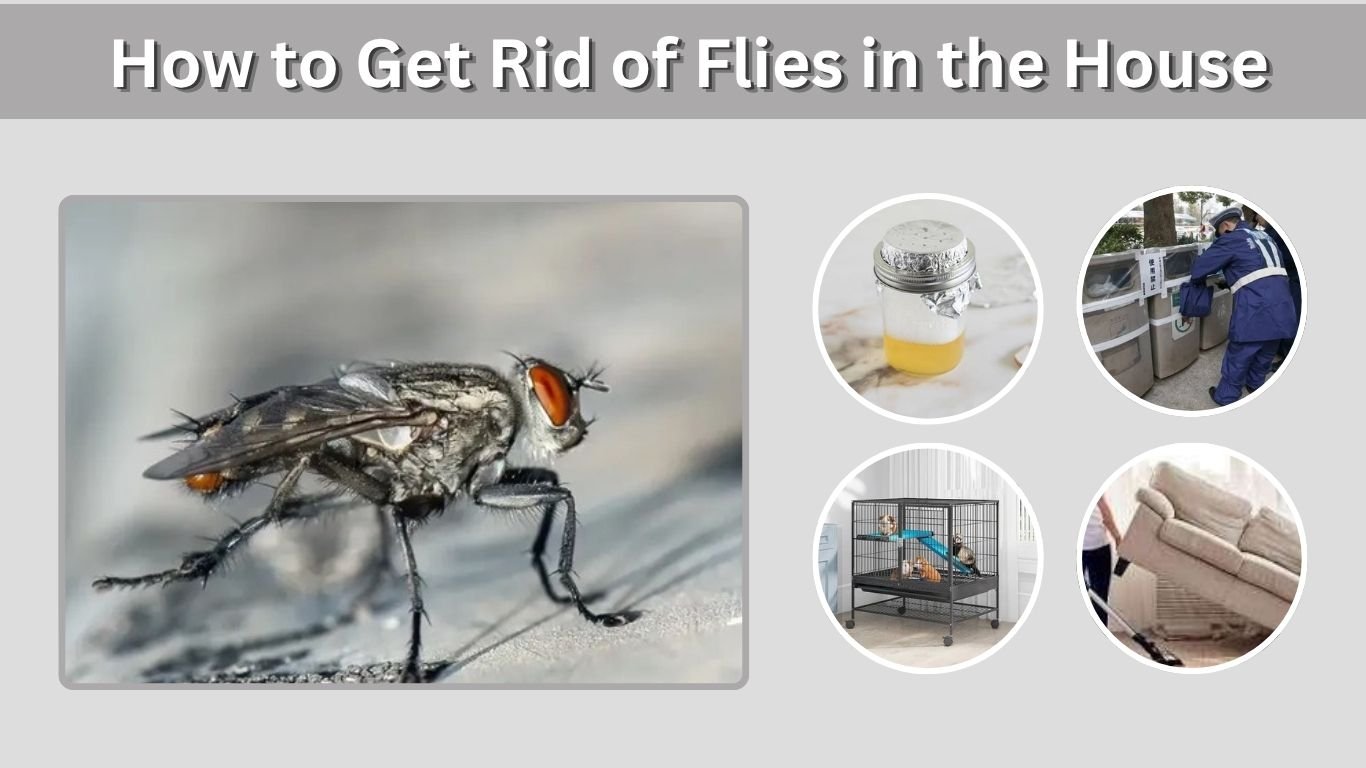
- The body is gray with three dark stripes on the thorax.
- The abdomen commonly has a checkered pattern.
- Eyes are often reddish.
- Adults do not normally bite people.
- They are associated with carrion, waste, and decaying material.
Flesh flies appearing suddenly during summer may have developed in a dead animal inside a wall, attic, chimney, or similar area. They can mechanically carry bacteria from contaminated materials onto food and surfaces.
Large House Flies
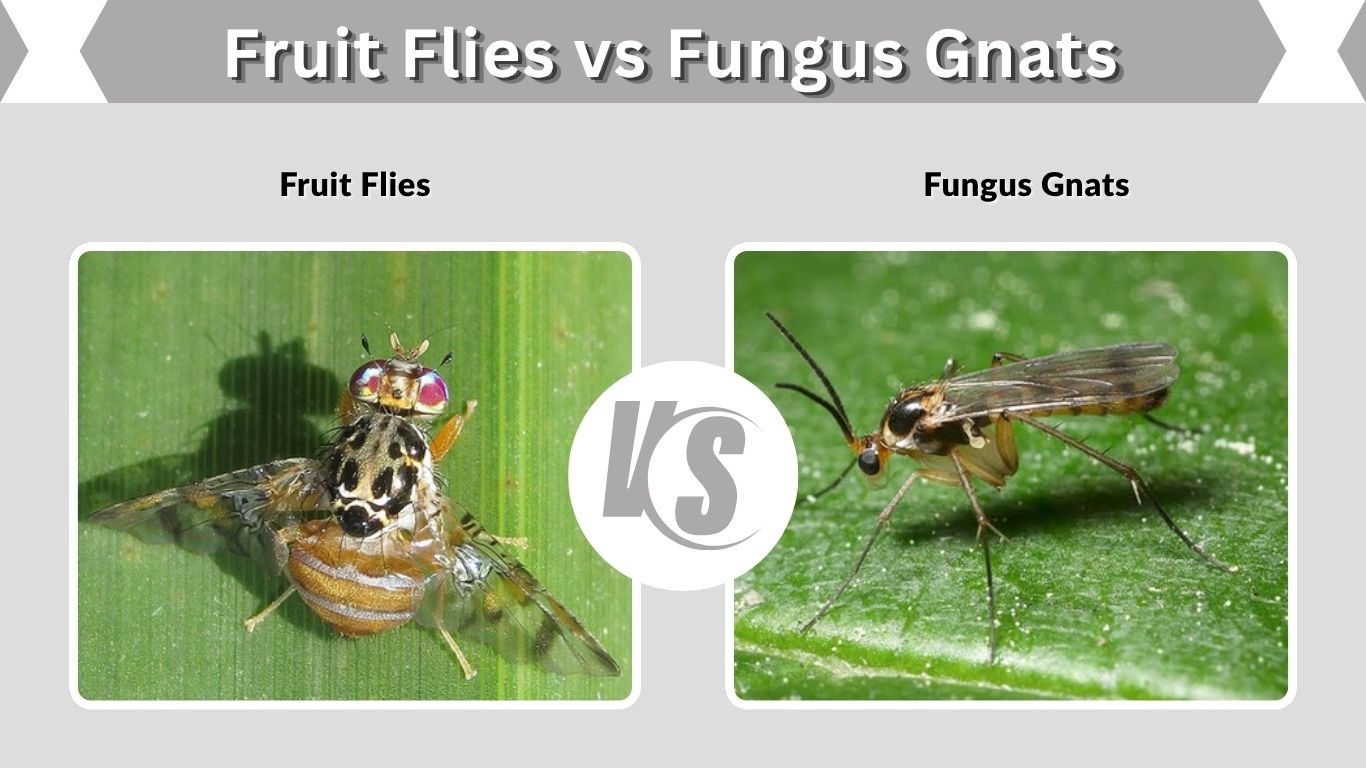
House flies have dull gray bodies, reddish eyes, and four dark stripes behind the head. They breed in garbage, manure, spoiled food, and other moist waste. Their size can appear exaggerated when viewed closely or compared with tiny fruit flies.
Why Do Big Flies Appear in Different Rooms?
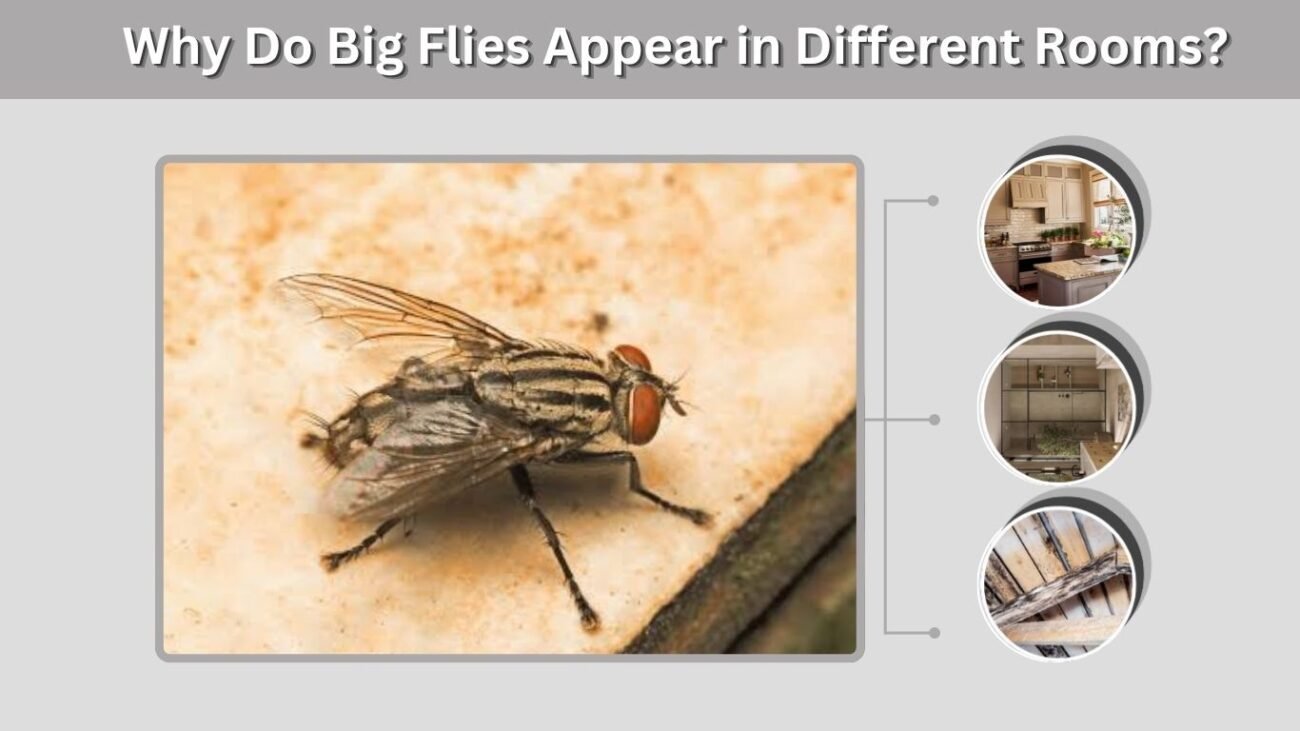
The room where flies gather is not always where they developed. Adults commonly move toward sunlight and may travel through wall cavities before entering living spaces. Nevertheless, room location can provide useful clues.
Kitchen
Check garbage cans, spoiled food, recycling containers, pet bowls, and food beneath appliances. A metallic blue or green fly may have entered from outside or developed in animal-based waste.
Bathroom
Big flies in a bathroom may enter through an open window, vent, ceiling gap, or wall opening. Drain flies are much smaller and moth-like, so a large fly is unlikely to be breeding in an ordinary sink drain.
Attic or Upper Floor
Cluster flies commonly concentrate in attics and upper floors because they move upward within buildings. Blow flies may also appear there if a bird, bat, squirrel, mouse, or other animal has died beneath insulation or inside a wall.
Basement
Inspect window wells, floor-level openings, garbage, rodent activity, sump areas, and crawl spaces. Adult flies may also move downward through wall cavities after emerging.
How to Get Rid of Big Flies in the House
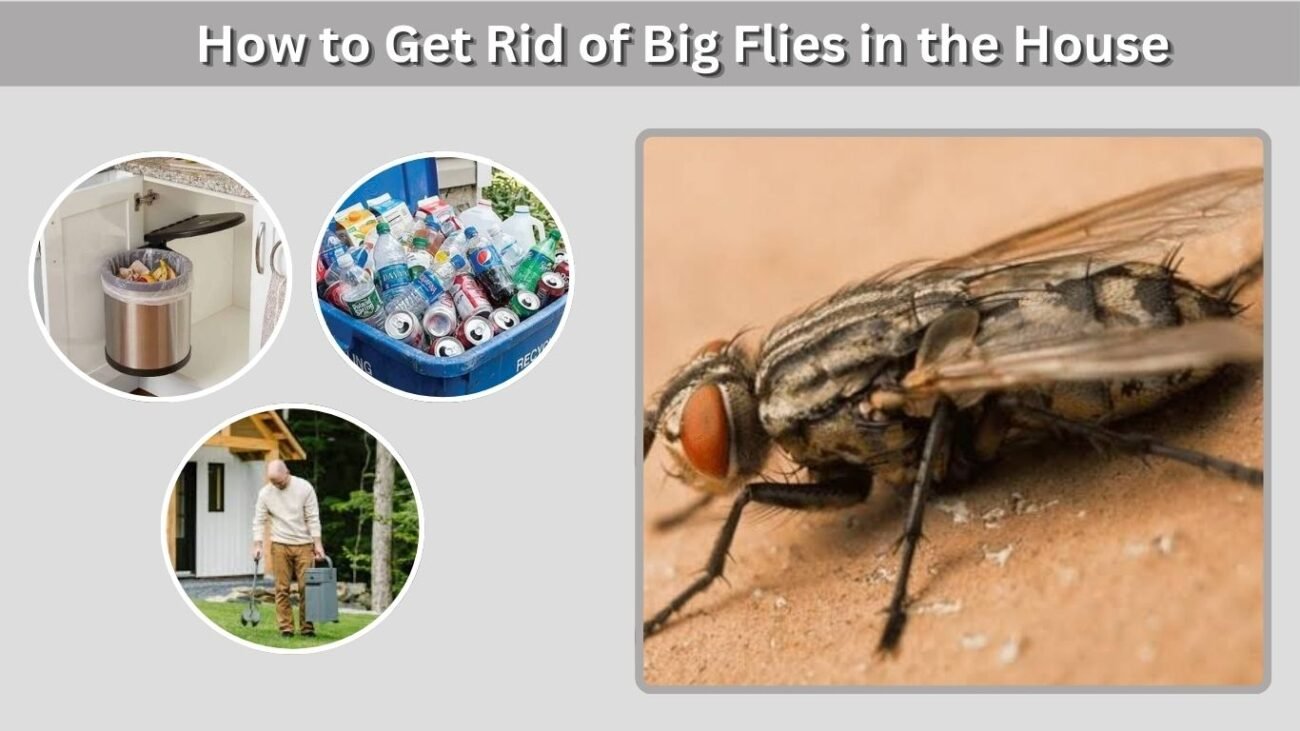
Killing adults provides temporary relief, but lasting control depends on correct identification and source removal. If new flies continue appearing daily, assume that an entry point or breeding source remains.
Find and Remove the Source
- Empty, wash, and dry indoor garbage containers.
- Remove spoiled food and clean beneath appliances.
- Clean recycling cans and beverage containers.
- Pick up pet waste indoors and outdoors.
- Inspect attics, chimneys, crawl spaces, and wall-access areas.
- Look for dead rodents, birds, or other animals.
- Check for rodent entry points and damaged vent screens.
- Examine seldom-used rooms where waste may have been forgotten.
Wear gloves when handling dead animals or contaminated materials. If the source is inaccessible inside a wall, a pest-management or wildlife-removal professional may be needed.
Remove Adult Flies
Vacuuming is an effective way to collect slow cluster flies from windows and walls. Fly swatters, sticky strips, and properly placed light traps can reduce remaining adults. Empty the vacuum container outdoors afterward.
Avoid placing electric bug zappers near kitchens or dining areas because they can scatter insect fragments. Indoor pesticide sprays rarely solve a breeding problem and must only be used according to their labels.
Prevent More Flies from Entering
- Repair torn window and door screens.
- Install screens over vents and chimney openings.
- Caulk gaps around windows, soffits, siding, and pipes.
- Add weatherstripping beneath exterior doors.
- Keep garbage containers tightly covered.
- Remove animal waste regularly.
- Seal exterior openings that allow rodents to enter.
For cluster flies, complete exterior sealing before late summer or early autumn, when adults begin searching for overwintering shelters.
Do Big Flies in the House Have a Meaning?
Big flies have no scientifically established spiritual meaning. Their appearance has a biological explanation, such as seasonal sheltering, open entry points, garbage, animal waste, or a dead animal. Sudden numbers are more useful as a practical warning to inspect the building than as a supernatural sign.
FAQs
Why Are Big Black Flies Appearing All of a Sudden?
During winter or spring, they are probably cluster flies emerging from wall cavities. During summer, sudden numbers of black blow flies or flesh flies may indicate garbage, animal waste, or a dead animal.
Why Are the Big Flies Moving So Slowly?
Large, sluggish flies near windows in cold weather are usually cluster flies. They have recently emerged from dormancy and may be weak, dehydrated, or affected by low temperatures.
Do Big House Flies Bite?
House flies, cluster flies, blow flies, and flesh flies do not normally bite people. Horse flies and deer flies can bite, but they usually enter houses individually rather than establishing indoor infestations.
Will Big Flies Eventually Go Away?
Cluster flies emerging indoors generally die or escape within a couple of weeks. Flies breeding in garbage or carrion will continue appearing until the source is removed or becomes unsuitable for larval development.
When Should I Call a Professional?
Seek professional assistance when dozens of flies appear daily, a strong odor suggests a dead animal, the breeding source is inside an inaccessible wall, or rodent activity is present. A professional can identify the species and locate hidden sources more safely.